七天无理由退货

Search documents
一高校学生表演后集体退演出服?校方:已启动调查!
Xin Lang Cai Jing· 2025-12-25 06:05
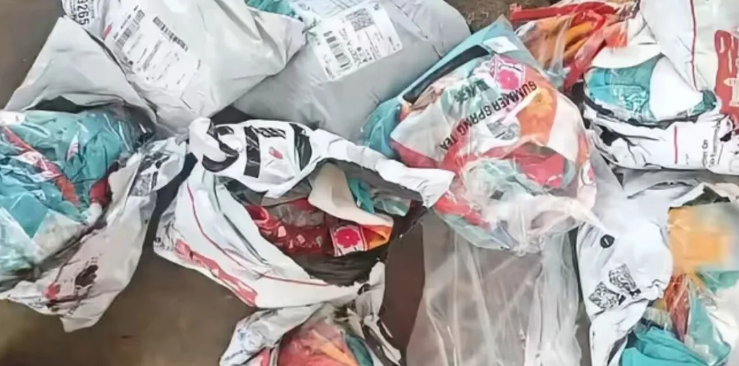
Core Viewpoint - A case has emerged where students from a vocational college in Yunnan collectively returned performance costumes after use, leading to financial losses for the online store owner in Shandong, highlighting issues related to consumer rights and the responsibilities of educational institutions [1][11]. Group 1: Incident Details - The online store owner, Mr. An, reported that students from a vocational college ordered performance costumes for a New Year's event, but returned them damaged and with unpleasant odors, resulting in a direct loss of approximately 1,000 yuan [1][3]. - The costumes were ordered around December 12, and the store shipped them promptly, with delivery confirmed by December 16. However, return requests began to arrive by December 18, with about ten items returned so far [3][5]. - Upon inspecting the returned items, Mr. An found that nearly all were in poor condition, affecting their resale potential. He identified the costumes as his own from a video of the performance posted by the school [5][6]. Group 2: Institutional Response - The school’s office confirmed that the dancers were students from their dance academy and acknowledged the unreasonableness of returning used costumes. They have initiated an investigation and promised to provide feedback and mediation if the situation is confirmed [5][6]. - Previous incidents of students returning performance costumes after use have been reported, indicating a pattern of behavior that raises questions about consumer rights and responsibilities [6][10]. Group 3: Legal Perspective - According to legal experts, while online clothing purchases are subject to a seven-day no-reason return policy, the condition of the returned items must be intact. Items that have been worn or damaged do not meet the criteria for a valid return [8][10]. - The legal interpretation emphasizes that consumers should not abuse return policies, and businesses should have clear communication channels with e-commerce platforms to address unfair practices [8][10].

“拆除不退不换”属格式条款 “打卡后退货”属滥用权利
Xin Lang Cai Jing· 2025-12-19 18:23
Core Viewpoint - A controversial consumer behavior has emerged where some individuals exploit the "seven-day no-reason return" policy by using newly purchased clothing as temporary props for photos before returning them, prompting retailers to implement oversized tags as a physical deterrent [1] Group 1: Consumer Rights and Retailer Protections - Oversized tags may constitute an excessive limitation on consumers' rights to choose and engage in fair trade, as they can hinder the ability to accurately assess fit and style [1] - Retailers have the right to request the return of "intact" products and take reasonable measures to prevent non-trial use, but must not disrupt the balance between "reasonable inspection" by consumers and "protection of retailer property" [1] - Clauses stating "no return or exchange if tag is removed" may be considered standard terms, but their validity hinges on whether the tag itself is reasonable and does not obstruct normal trial [1] Group 2: Legal Implications of Return Policies - If oversized tags prevent normal fitting, it may be seen as a de facto deprivation of the right to return, allowing consumers to claim that retailers failed to provide accurate information or violated their legal rights [1] - Consumers retaining tags while using clothing for photo opportunities may be viewed as an abuse of rights, with the distinction between "reasonable trial" and "excessive use" based on the intent and extent of use [1] - Retailers can refuse returns based on evidence of actual use, as the principle of good faith in civil activities must be upheld [1] Group 3: Recommendations for Policy Clarity - There is a need for clearer regulations to define the boundaries of "reasonable trial" to prevent disputes, including guidelines on trial conditions and prohibitions on wearing items outdoors [2] - Future regulations should shift from a singular focus on "physical integrity" to a dual standard of "physical integrity + behavioral compliance" to better protect legitimate rights while curbing abuse [2] - Measures taken by retailers must not impede consumers' reasonable inspection rights and should adhere to the principle of minimal impact on consumer rights [2]
摸摸党起诉被驳回:男子 4 买 4 退同款手机被拒,法院认定有悖于“七天无理由退货”初衷
Xin Lang Cai Jing· 2025-12-19 07:28
Core Viewpoint - The case highlights the misuse of the "seven-day no-reason return" policy by a consumer who repeatedly purchased and returned the same model of a smartphone, leading to a court ruling against the consumer's request for a refund [1][2][3] Group 1: Case Details - Consumer Mr. Shen purchased a smartphone for over 12,000 yuan in March 2024 and requested a return six days later, citing the phone's weight and thickness as reasons [1] - After multiple unsuccessful return requests, Mr. Shen filed a lawsuit seeking a refund, arguing that the seller's return policy should protect his rights [2] - The court found that Mr. Shen's behavior of repeatedly purchasing and returning the same model was contrary to the intent of the return policy and constituted an abuse of civil rights [3] Group 2: Court Ruling - The Shanghai Songjiang District People's Court ruled against Mr. Shen, stating that his actions undermined the legitimate rights of the platform and disrupted the orderly environment of online shopping [3] - The court's decision emphasized the importance of fair and honest practices in e-commerce, rejecting Mr. Shen's claims based on his purchasing frequency and return history [2][3]

商家用“巨型吊牌”自救,平台不能无限讨好消费者
Nan Fang Du Shi Bao· 2025-11-24 10:32
Core Viewpoint - The introduction of oversized tags in the clothing industry is a response to the high return rates caused by consumer abuse of return policies, particularly the seven-day no-reason return policy [1][2] Group 1: Industry Trends - The order volume for oversized tags reached 700,000 to 800,000 sets in the three months leading up to "Double Eleven" [1] - A female clothing seller reported a staggering return rate of 75% on annual sales of approximately 8 million yuan [1] - The use of oversized tags has reportedly reduced malicious return rates from 42% to 18% for online stores [2] Group 2: Consumer Behavior - Instances of consumers returning items after use, such as students returning clothes after an event, highlight the issue of "wear and return" practices [1] - The seven-day no-reason return policy, while intended to protect consumer rights, has been exploited by some consumers, leading to significant losses for sellers [2] Group 3: Business Strategies - The production cost of oversized tags can be as low as 0.2 yuan each, making them a cost-effective solution compared to the 40 yuan return cost for a 200 yuan garment [2] - The oversized tags serve as a form of distrust towards consumers, potentially affecting the shopping experience for honest buyers [2][3] Group 4: Platform Responsibilities - Addressing the issue of "wear and return" requires a balanced approach where platforms enforce equal rights and responsibilities for both buyers and sellers [3] - The example of a food delivery platform allowing couriers to block certain customers illustrates a potential model for e-commerce platforms to adopt in managing buyer-seller relationships [3]
新闻周刊丨防止“蹭穿”加装“巨型吊牌” 背后原因有些无奈
Yang Shi Xin Wen· 2025-11-22 21:41
Core Viewpoint - The rise of oversized tags in the fashion industry is a response to the abuse of the "seven-day no-reason return" policy by consumers, leading to increased costs and operational challenges for merchants [1][2][3] Group 1: Merchant Challenges - Merchants are facing significant losses due to consumers treating them as free fitting rooms, with returned items often being damaged or used [2] - The introduction of large, hard tags aims to deter consumers from returning worn items, as they are difficult to hide and uncomfortable to wear [1][2] - Merchants report that despite implementing various anti-return measures, such as large tags and security features, the problem persists, leading to increased operational costs [1][2] Group 2: Industry Response - The demand for oversized tags has created a new industry segment, with tag manufacturers seeing a surge in orders, particularly around major shopping events like "Double Eleven" [2] - The production of these tags has evolved, with manufacturers developing various designs, including ribbon tags and lock mechanisms, to combat return abuse [1][2] - The trend of oversized tags has become a shared solution among female clothing merchants, indicating a collective struggle against return fraud [2] Group 3: Consumer Behavior and Regulation - The misuse of the return policy is not limited to the women's clothing sector but is most evident there, prompting calls for regulatory measures to prevent abuse [3] - There is a recognition that the current return policy framework may need adjustments to protect merchants from undue losses while balancing consumer rights [3] - The lack of clear standards for returned goods complicates the situation, as merchants are often left with unsellable items due to the condition in which they are returned [3]
退货阴影之下,“巨型吊牌”能否为女装电商续命?
Sou Hu Cai Jing· 2025-11-20 18:14
Core Insights - The article discusses the rising return rates in the women's apparel e-commerce sector in China, highlighting the drastic measures taken by merchants, such as the introduction of oversized tags, to combat the issue of excessive returns [2][6][11] Group 1: Return Rates and Their Impact - The return rate for women's clothing on e-commerce platforms has reached 50%-60%, with live-streaming e-commerce seeing rates as high as 70%-80% [6] - During major sales events like "Double 11," some merchants report return rates exceeding 90%, indicating a systemic issue rather than a temporary fluctuation [6][11] - High return rates are not just a loss of sales but threaten the entire business model, as logistics costs and reverse processing add significant financial strain on merchants [11][12] Group 2: Merchant Strategies - Merchants are implementing large, conspicuous tags to deter "malicious returns," aiming to establish a clear definition of "unused" products [7][8] - The design of these tags is strategic, making it difficult for consumers to wear items without removing the tag, thus increasing the cost of "using" the product for those who intend to return it [7][8] - This approach, however, risks alienating genuine customers who may feel distrusted and have their shopping experience negatively impacted [8] Group 3: Platform Influence - E-commerce platforms have contributed to high return rates by creating a user-friendly return policy that has effectively turned the return process into a "free trial" for consumers [5][6][13] - The platforms benefit from increased user engagement and sales volume while shifting the financial burden of returns onto merchants [13][14] - The article suggests that platforms could leverage their data and algorithms to address these issues more effectively rather than relying on punitive measures against merchants [16] Group 4: Underlying Issues - The phenomenon of high return rates is exacerbated by discrepancies between product expectations and reality, often due to misleading marketing practices [14][15] - The article argues that the focus should shift from punitive measures to improving product quality and customer trust to reduce the desire to return items [16]

如何放心买?镇江为保健食品线下消费加上“后悔权”
Yang Zi Wan Bao Wang· 2025-11-15 03:20
Core Viewpoint - The implementation of the "Seven-Day No Reason Return" group standard in Jiangsu aims to create a healthy consumption environment by integrating government regulation, industry self-discipline, and association guidance [1][5]. Group 1: Government and Industry Collaboration - The Jiangsu Provincial Health and Wellness Industry Association, along with local market supervision authorities, is actively promoting the "Seven-Day No Reason Return" standard to enhance consumer trust and protect consumer rights [1][5]. - A collaborative effort is being made to establish a new governance model that includes government oversight, corporate self-regulation, association support, and social supervision [5]. Group 2: Company Engagement - Jiangsu Jiangdayuan Ecological Biotechnology Co., Ltd. and Jiangsu Daosimai Biotechnology Co., Ltd. were visited to discuss the implementation of the group standard and understand their operational conditions [1][3]. - Discussions focused on the current development status of the companies, their actual needs, and the details of implementing the group standard effectively [3]. Group 3: Implementation Mechanisms - The initiative emphasizes a "pre-regulatory review" mechanism, where the local market supervision bureau collaborates with industry associations to verify the return execution capabilities of participating companies [5]. - This verification process aims to prevent unfulfilled commitments and ensure consumer rights are safeguarded, thereby enhancing the credibility of the "Seven-Day No Reason Return" policy [5].

无理由退货不等于无条件退货
Bei Jing Qing Nian Bao· 2025-11-12 01:13
Core Viewpoint - The "seven-day no-reason return" policy, originally designed to protect consumer rights, is being misused by some consumers, leading to increased costs for businesses and a negative impact on the overall e-commerce ecosystem [1][2][3] Group 1: Impact on E-commerce - The return rate for women's clothing in e-commerce is as high as 50% to 60%, with live-stream shopping return rates exceeding 80%, indicating significant misuse of the return policy [1] - Malicious returns are eroding the trust foundation of the e-commerce ecosystem, as some consumers exploit the policy to wear items temporarily without actual purchase [2] - The increase in return rates forces businesses to implement additional measures such as "unboxing monitoring" and "anti-tampering tags," which raise operational costs and ultimately lead to higher prices for consumers [2] Group 2: Need for Regulation and Compliance - The implementation of the national standard for "no-reason return" services aims to clarify the categories of returnable goods and the standards for product condition, emphasizing the need for proper enforcement [3] - E-commerce platforms are urged to enhance credit mechanisms and utilize big data to identify abnormal return behaviors, thereby closing loopholes in the return policy [3] - Businesses must improve product and service quality while defending their rights against rule abuse, ensuring they provide excellent after-sales service for legitimate returns [3] Group 3: Consumer Responsibility - Consumers are encouraged to adhere to principles of integrity and contractual spirit, recognizing that convenience comes with responsibility [4] - A healthy consumption environment relies on mutual constraints and positive interactions between consumers and businesses, ensuring that rights are respected and not exploited [4]
千笔楼|保护买家的规则,不能变成薅卖家“羊毛”的工具
Xin Hua She· 2025-11-11 05:41
Core Points - The "seven-day no-reason return" policy, originally designed to protect consumer rights, is being misused by some buyers, leading to a need for reevaluation of its implementation [2][8] - High return rates in e-commerce, particularly in women's clothing (50%-60%) and live-stream shopping (over 80%), indicate significant abuse of the return policy [3][5] - The rise of "malicious returns" is damaging the integrity of the e-commerce ecosystem, with some consumers exploiting the policy for personal gain [7][11] Industry Impact - The misuse of the return policy is increasing operational costs for merchants, leading to higher product prices and reduced service quality, ultimately affecting the shopping experience for all consumers [9][11] - The integrity of the market is at risk as trust between buyers and sellers diminishes, potentially resulting in a "lose-lose" situation for both parties [11][12] Recommendations for Improvement - E-commerce platforms need to enhance their credit mechanisms and utilize big data to identify abnormal return behaviors, thereby closing loopholes in the return policy [15] - Merchants should focus on improving product and service quality while defending their rights against rule abuse, ensuring a balance between consumer protection and business sustainability [15] - Consumers are encouraged to adhere to principles of honesty and contract spirit, recognizing that convenience comes with responsibility [15]

千笔楼|保护买家的规则,不能变成薅卖家“羊毛”的工具
Xin Hua Wang· 2025-11-11 01:53
Core Viewpoint - The "seven-day no-reason return" policy, originally designed to protect consumer rights, is being misused by some buyers, leading to negative consequences for both businesses and the overall e-commerce ecosystem [2][8][10]. Group 1: Consumer Behavior - The "seven-day no-reason return" policy serves as a safety net for consumers, allowing easy returns for unsatisfactory products, thus reducing shopping risks and enhancing consumer confidence [3][8]. - However, the return rates for women's clothing in e-commerce are alarmingly high, ranging from 50% to 60%, with live-stream shopping returns exceeding 80%, indicating widespread abuse of the policy [3][7]. Group 2: Impact on Businesses - Malicious returns are eroding the trust foundation of the e-commerce ecosystem, with some consumers exploiting the policy for personal gain, leading to increased operational costs for businesses [7][10]. - The rise of "return parties" and associated gray market activities, such as returning used items or falsely claiming quality issues, is damaging to retailers and can result in penalties from platforms [7][8]. Group 3: Regulatory and Industry Response - The implementation of the national standard for "no-reason return" services aims to clarify the conditions under which returns can be made, emphasizing that "no-reason" does not equate to "unconditional" [11][13]. - E-commerce platforms are urged to enhance their credit mechanisms and utilize big data to identify abnormal return behaviors, thereby protecting both consumers and businesses [13]. Group 4: Call for Ethical Consumerism - Consumers are encouraged to adhere to principles of integrity and contract spirit, avoiding the misuse of consumer protection rules for personal gain [13]. - A balanced approach involving mutual constraints and positive interactions between consumers and businesses is essential for fostering a healthier consumption environment [13].