业财一体化

Search documents
安永报告:港股IPO复苏强劲 大型IPO推动港交所募资规模登顶全球
Zheng Quan Shi Bao Wang· 2025-11-27 12:40
Group 1: Core Insights - The report by Ernst & Young highlights a growth trend in IPO activities in mainland China and Hong Kong, with A-shares and Hong Kong markets accounting for 16% and 33% of global IPO numbers and fundraising amounts respectively [1] - Hong Kong's IPO fundraising has surpassed 360 billion USD, making it the leading exchange globally [1] - Chinese companies occupy five spots in the top ten global IPOs, with a notable increase in representation from sectors such as automotive, mining, energy, and advanced manufacturing [1] Group 2: Hong Kong IPO Market Recovery - The Hong Kong IPO market has seen a strong recovery in 2025, with fundraising exceeding 200 billion HKD for the first time in four years, marking the second peak in five years [2] - Major IPO projects have been pivotal in driving this resurgence, particularly from mainland "A+H" and "A拆H" companies, with over 20 A-share companies expected to list in Hong Kong, raising more than 170 billion HKD [2] - The average fundraising size has increased by 137% compared to last year, reaching the second highest level in five years, with industrial and retail sectors leading the charge [2] Group 3: Capital Market Cooperation - 2025 marks the beginning of a new decade for interconnectivity between mainland and Hong Kong capital markets, with an emphasis on deepening cooperation and enhancing institutional synergy [3] - A-shares are gradually returning to normalized issuance, focusing on quality and structural improvements, with the Beijing Stock Exchange becoming a key player in IPO applications [3] - The Hong Kong IPO market is expected to maintain its heat, with a steady growth pace and a focus on "A+H" models and the return of Chinese concept stocks [3] Group 4: Recommendations for Listing Companies - Companies planning to go public are advised to embrace technology and build a future-oriented financial governance system [4] - It is essential for companies to integrate business and financial data processes as a priority for IPO preparation, ensuring data consistency and transparency [4] - Strengthening digital transformation and intelligent financial management is crucial for showcasing governance capabilities to investors [4]
科技驱动A股动能,港交所居全球交易所榜首
Jin Rong Jie· 2025-11-27 10:13
Core Insights - The report by Ernst & Young highlights a growth trend in IPO activities in mainland China and Hong Kong, with A-shares and Hong Kong markets accounting for 16% and 33% of global IPO numbers and fundraising amounts respectively [1] - The A-share market shows steady progress, while the Hong Kong Stock Exchange leads globally with a fundraising amount of $36 billion [1] - Chinese companies occupy five spots in the top ten global IPOs, with a notable increase in numbers compared to 2024, spanning industries such as automotive, mining, energy, and advanced manufacturing [1] A-share Market Summary - In 2025, the A-share IPO market experienced moderate growth under stable regulation and improved structure, with a significant increase in fundraising scale compared to last year [2] - The average fundraising amount for IPOs rose over 50% year-on-year to 1 billion yuan, driven by large IPOs, with the proportion of 10 billion yuan IPOs significantly increasing [2] - New regulations have led to a continuous decline in new stock issuance price-to-earnings ratios, reaching a five-year low, with no instances of first-day price drops and an average return rate of 253%, maintaining the top position over the past five years [2] - The industrial, technology, and materials sectors ranked highest in IPO numbers, while the energy sector rose to the top three in fundraising scale [2] - The core characteristic of companies applying for IPOs this year is technological innovation, marking a shift from quantity-driven to quality-focused development in the A-share IPO market [2] Hong Kong Market Summary - The Hong Kong IPO market saw a strong recovery in 2025, with fundraising exceeding 200 billion HKD for the first time in four years, reaching the second-highest level in five years [3] - The Hong Kong Stock Exchange surpassed New York and other exchanges in global fundraising scale, with over 20 A-share companies expected to list in Hong Kong, raising more than 170 billion HKD [3] - The average fundraising scale increased by 137% year-on-year, driven by large IPO projects, with the industrial and retail sectors dominating the top ten IPOs [3] - The capital markets of mainland China and Hong Kong are entering a complementary development phase, with a shift in investor structure from foreign-dominated to a dual-driven model [3] - New consumption and hard technology are identified as the dual engines driving IPO activities in Hong Kong, supported by policies that facilitate rapid listings for high-potential tech companies [3] Capital Market Trends - The year 2025 marks the beginning of a new decade for the interconnected capital markets of mainland China and Hong Kong, with an emphasis on deepening cooperation and enhancing institutional synergy [4] - The A-share market is gradually returning to normalized issuance under a framework of stable rhythm, quality improvement, and structural optimization, with the Beijing Stock Exchange becoming a key player in IPO applications [5] - The Hong Kong IPO market is expected to maintain its momentum, with a steady growth pace and structural deepening characteristics, particularly in the A+H model and the return of Chinese concept stocks [5] - Recommendations for prospective listed companies include embracing technology and building a future-oriented governance system to ensure data transparency and enhance digital transformation [5]

财务共享软件对比评测:功能、价格全解析
Sou Hu Cai Jing· 2025-11-10 19:43
Group 1 - The article provides a comprehensive comparison of nine mainstream financial shared service platforms, highlighting their core functions, applicable scenarios, and advantages and disadvantages to assist companies in selecting the most suitable solution for their scale and development stage [1][28]. - The platforms compared include 合思报销系统, SAP S/4HANA Cloud for Central Finance, 金蝶EAS Cloud 财务共享平台, Basware for Financial Shared Service Centers, 中兴新云·财云在线 财务共享信息系统, Oracle Shared Services Framework, 浪潮海岳 财务共享解决方案, StartingPoint Shared Services Software, and 金蝶云星空 财务共享服务平台 [1][28]. Group 2 - 合思报销系统 has the highest market share in China's financial management sector, serving over 3 million finance personnel and covering more than 200 state-owned enterprises and 1,500 listed companies [2][4]. - SAP S/4HANA Cloud for Central Finance focuses on supporting large, complex organizations in transforming to a centralized financial processing model, emphasizing cloud deployment and phased implementation [7][9]. - 金蝶EAS Cloud 财务共享平台 is designed for group enterprises, emphasizing process standardization and automation through advanced technologies like OCR and AI [9][11]. - Basware for Financial Shared Service Centers specializes in automating accounts payable processes, enhancing service speed and global compliance capabilities [11][14]. - 中兴新云·财云在线 财务共享信息系统 targets growing and medium to large enterprises, offering a cloud platform that integrates financial shared services [14][19]. - Oracle Shared Services Framework supports the construction of shared service centers across various backend functions, enhancing efficiency and standardizing processes [19][22]. - 浪潮海岳 财务共享解决方案 focuses on group enterprises, emphasizing process reengineering and standardization to improve financial operations [22][25]. - StartingPoint Shared Services Software aims to enhance operational efficiency for shared service teams through workflow management and service request tracking [25][28]. - 金蝶云星空 财务共享服务平台 is tailored for group enterprises, promoting centralized operations and self-service capabilities [28][30]. Group 3 - The financial shared service center platform (FSSC Platform) centralizes and standardizes repetitive financial functions, enhancing efficiency and governance [28][29]. - Companies face common pain points such as fragmented processes and inconsistent standards, which the shared service model addresses through centralized and automated solutions [29][30]. - The main functions of financial shared service platforms include end-to-end processes from record to report, procurement to payment, order to cash, and expense to reimbursement [31][32]. - Short-term benefits include improved processing volumes and reduced closing cycles, while long-term benefits involve enhanced management capabilities and the transition from cost centers to value-creating centers [32][34]. - Financial shared service platforms differ from traditional financial systems by integrating organizational and operational models, emphasizing service delivery across multiple entities [33][34].


电商税新政全面实施!慧策旺店通最全解读与避险指南来了
Sou Hu Cai Jing· 2025-09-29 12:55
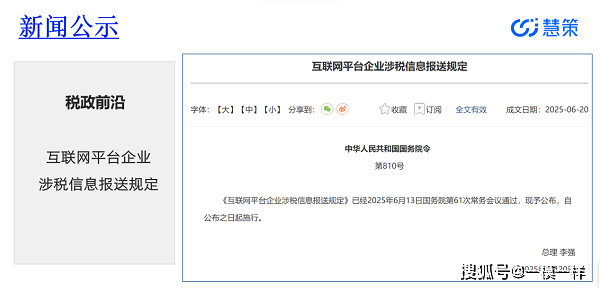
Core Points - The first round of e-commerce tax reporting will officially start in October 2025, with comprehensive support provided to merchants for compliance with new regulations [1][2] - The regulations require internet platform enterprises to report tax-related information to tax authorities, including identity and income information of platform operators and employees [3][5] - The implementation of the regulations will occur in phases, with key milestones including pilot programs and data interface establishment between tax authorities and platforms [8][10][11] Regulatory Content Summary - The regulations apply to internet platform enterprises such as Taobao, JD.com, and Pinduoduo, which must report tax-related information [3][4] - Reporting content includes identity information (e.g., names, tax identification numbers) and income information (e.g., total sales, service income) [5] - Initial reporting is required within 30 days of business commencement, with periodic reporting every quarter [5] Implementation Timeline - The preparation phase will run from December 2024 to May 2025, including the release of a draft for public consultation [9] - The data interface between tax authorities and platforms will be established by June 2025, with the first reporting phase occurring from July to October 2025 [10][11] Platform Responsibilities and Penalties - Platforms are responsible for verifying the authenticity and completeness of reported information, with penalties for non-compliance ranging from 20,000 to 500,000 yuan [12][13] - Platforms must ensure data security and may face severe penalties for failing to report or for fraudulent reporting [13] Risks for E-commerce Merchants - Key risks include data discrepancies between reported and self-declared income, inconsistent reporting standards, and insufficient data traceability [14][16] - Merchants must maintain comprehensive records to support their income declarations and mitigate potential tax liabilities [16] Solutions and Value Proposition - The company offers a solution that integrates data across the entire supply chain, automating tax-related information collection and ensuring accurate reporting [17][20] - The solution enables detailed tracking of orders and financial data, facilitating compliance with tax regulations and improving operational efficiency [17][20] Client Case Study - A leading beauty brand, Proya, utilized the company's solutions to manage multi-platform data, ensuring compliance with the new regulations while optimizing financial processes [48][50] Compliance Recommendations - Companies are advised to conduct self-assessments, unify reporting standards, maintain comprehensive records, and leverage digital tools to enhance compliance efficiency [51][54]
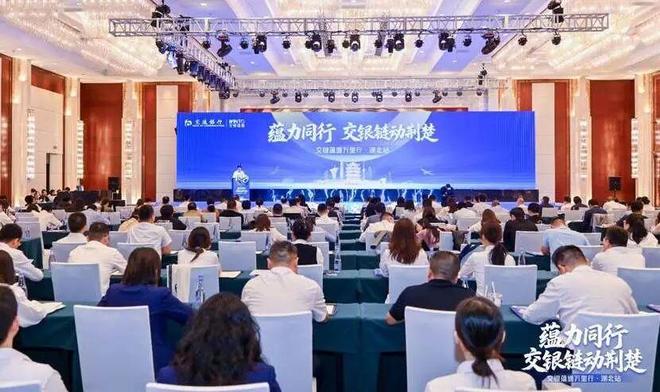
交通银行“交银蕴通万里行”走进湖北,发布“蕴通管账”支付结算服务方案
2 1 Shi Ji Jing Ji Bao Dao· 2025-09-24 11:39
Core Insights - The article discusses the launch of the "Yun Tong Guan Zhang" payment and settlement service by the Bank of Communications, aimed at enhancing financial support for the real economy and facilitating enterprise transformation in Hubei province [1][3]. Group 1: Service Overview - "Yun Tong Guan Zhang" service addresses key pain points for enterprises, such as complex settlement tools, low reconciliation efficiency, and difficult fund supervision, by providing three core capabilities: smart and convenient payment and settlement, precise and efficient reconciliation, and secure and visible fund supervision [4]. - The service focuses on four major ecological scenarios: real economy, livelihood services, platform economy, and park economy, effectively responding to the customized and agile financial needs of enterprises in the new economy and new business formats [4]. Group 2: Technological Integration - The service emphasizes the integration of scenarios, customers, accounts, and funds to build a data-driven management system for enterprise financial and operational integration, supporting refined operations and strategic decision-making [4]. - The article highlights the shift of the Bank of Communications from a traditional settlement service provider to a "scene ecological enabler" that deeply engages in business scenarios and drives value creation [4]. Group 3: Collaborative Partnerships - During the event, the Bank of Communications awarded titles to 15 enterprises as "Technology Navigation Strategic Partners" and 12 enterprises as "Yun Tong Treasury Strategic Partners," indicating a new paradigm of cooperation between banks and enterprises [5]. - The article mentions that the Bank of Communications has established treasury business cooperation with 91 central enterprises and their subsidiaries, achieving a coverage rate of 91% among central enterprises [6]. Group 4: Financial Innovation - The Bank of Communications has launched a series of innovative service models and products driven by financial technology, such as the "Knowledge Value Credit Loan," which quantifies intangible assets like patents and R&D investments into credit [7]. - As of the end of August, the bank has disbursed 3.3 billion yuan to support nearly 1,000 technology enterprises in Hubei province [7].

宝钢包装:期间费用同比压降 综合效率不断提升
Quan Jing Wang· 2025-09-22 08:36
Core Viewpoint - The event "2025 Shanghai Listed Companies Collective Reception Day and Mid-Year Performance Briefing" highlighted the effective cost control measures implemented by Baosteel Packaging (601968) during the first half of the year [1] Group 1: Financial Performance - In the first half of the year, Baosteel Packaging achieved a reduction in sales expenses by 26.20%, management expenses by 4.52%, and financial expenses by 6.49% [1] Group 2: Operational Strategies - The company has integrated meticulous cost management into all operational aspects, emphasizing comprehensive benchmarking and optimization [1] - Baosteel Packaging has adopted a principle of rapid response to customer needs through dynamic inventory management and JIT supply chain collaboration, leading to decreased costs and improved overall efficiency [1]

业财一体化实践:楼宇资管系统如何实现财务与运营无缝协同
Sou Hu Cai Jing· 2025-09-16 08:07
Core Insights - The article emphasizes the transformation of traditional enterprise management models driven by digitalization, highlighting "business-finance integration" as a key path to enhance core competitiveness in the building asset management industry [2][3] - The seamless collaboration between operations and finance is crucial for improving efficiency and serves as a foundation for strategic transformation [2][3] Group 1: Challenges in Traditional Management - In traditional management, operations and finance departments operate as independent "islands," leading to data fragmentation and inefficiency [3] - Manual data entry processes result in high error rates and delays in financial reporting, making timely decision-making difficult [3] - The lack of integration between business flows and cash flows complicates risk management, making it hard to detect issues like credit control and budget overruns [3] Group 2: Goals of Business-Finance Integration - The core objective of business-finance integration is to eliminate pain points by embedding financial rules into every business activity, creating a virtuous cycle where business drives finance and finance empowers business [3] Group 3: Key Components of the Integration System - A unified data platform and master data management serve as the foundation for business-finance integration, ensuring consistency and accuracy in data across operations and finance [4] - The system revolves around two main lines: contracts (leases) and work orders (services), which are essential for business-finance integration [5][6] - Three major cycles are identified: revenue cycle, expenditure cycle, and asset cycle, each with specific automated processes to enhance efficiency [7][8][9] Group 4: Revenue Cycle - The revenue cycle automates billing based on contract terms, generating accounts receivable without manual intervention [7] - Online payment systems allow tenants to pay directly, with real-time updates to the financial system, shifting the finance team's role from bookkeeping to exception handling [7] Group 5: Expenditure Cycle - The expenditure cycle includes budget control and online approval processes, ensuring that all purchases are linked to budget items to prevent overspending [8] - The system automates the matching of purchase orders, supplier invoices, and service confirmations, streamlining the payment process [8] Group 6: Asset Cycle - The asset cycle manages capital expenditures and tracks project budgets and execution progress, facilitating automatic capitalization of assets upon project completion [9] - The system supports full lifecycle management of assets, linking financial value with physical condition for informed decision-making [9] Group 7: Technological Infrastructure - The system is built on a cloud-native and SaaS architecture, ensuring scalability and accessibility for all users [9] - Open APIs are crucial for integrating with external systems, creating a comprehensive ecosystem centered around asset management [9] Group 8: Workflow and Data Intelligence - A workflow engine automates business processes, ensuring compliance and clarity in roles and responsibilities [10] - Integrated business intelligence tools provide real-time visual analysis of merged business-finance data, aiding strategic decision-making [10] Group 9: Value Beyond Efficiency - The integration system offers real-time insights, enhancing management's ability to make quick and accurate decisions [13] - It strengthens risk management by embedding controls throughout processes, ensuring transparency in contracts, credit, funds, and compliance [14] - The system improves customer experience by providing transparent and convenient online services, thereby enhancing tenant loyalty and brand value [15] - It frees up human resources from repetitive tasks, allowing them to focus on higher-value activities like data analysis and strategic planning [16]
科捷智能: 关于公司2025年度“提质增效重回报”行动方案的半年度评估报告
Zheng Quan Zhi Xing· 2025-08-29 17:57
Core Viewpoint - The report evaluates the implementation of the "Quality Improvement and Efficiency Enhancement" action plan for 2025, highlighting the company's focus on core business areas, technological innovation, financial management, and investor returns to enhance overall performance and shareholder value [1][2][6]. Group 1: Business Performance - The company has achieved a revenue increase of 10.77 million yuan year-on-year, while the net profit attributable to shareholders has reduced losses by 5.12 million yuan [2]. - The company has focused on key industries and major clients, successfully signing multiple key projects in the smart logistics and smart manufacturing sectors, enhancing customer satisfaction and optimizing order structures [2][3]. - In overseas markets, the company has seen a strong growth in order volume, with new orders in Europe exceeding 150 million yuan, and has expanded into markets such as Poland, UAE, UK, and Singapore [3][4]. Group 2: Technological Innovation - The company increased R&D expenses by 8.45% during the reporting period, resulting in 21 new intellectual property achievements, including 6 invention patents and 7 utility model patents [4][5]. - The company is advancing the development of an "Air Shuttle Robot" and optimizing its RCS system scheduling algorithms to enhance product competitiveness and service quality [5]. Group 3: Financial Management and Digital Transformation - The company has implemented an "integrated business and financial management" approach, achieving significant improvements in operational efficiency and data quality through the integration of various systems [6]. - The company has established a closed-loop data system that enhances supply chain delivery efficiency and optimizes inventory management [6]. Group 4: Investor Returns - The company announced a share repurchase plan, intending to buy back shares worth between 150 million yuan and 300 million yuan to enhance investor confidence and return value to shareholders [8]. - As of July 31, 2025, the company has repurchased 11,809,649 shares, accounting for 6.53% of the total share capital, with a total expenditure of approximately 133 million yuan [8]. Group 5: Corporate Governance - The company is committed to improving its governance structure and internal control systems to ensure compliance and protect shareholder rights [9][10]. - The company has organized compliance training for its board and management to enhance their understanding of market regulations and improve operational transparency [9]. Group 6: Corporate Culture and Social Responsibility - The company has redefined its mission, vision, and values, emphasizing customer focus, collaboration, and responsibility [11][12]. - The company actively engages in social responsibility initiatives, ensuring stakeholder rights and promoting a win-win situation for shareholders, customers, and employees [12].

岭南控股2025半年报:营收同比增长8.52%
Zhong Zheng Wang· 2025-08-27 07:36
Group 1 - The company reported a revenue of 2.09 billion yuan for the first half of 2025, an increase of 8.52% year-on-year [1] - Net profit attributable to shareholders reached 49.53 million yuan, up 24.39% compared to the same period last year [1] - Basic earnings per share improved to 0.07 yuan, reflecting a 16.67% increase year-on-year [1] Group 2 - The business travel segment showed strong performance, with subsidiary Guangzhou Guangzhilv International Travel Agency achieving a revenue of 1.54 billion yuan, a year-on-year growth of 11.78% [1] - Outbound tourism (excluding Hong Kong and Macau) contributed 849 million yuan, while domestic tourism generated 498 million yuan, with net profit increasing by 34.91% [1] - The company is expanding its international travel offerings by launching new routes to 28 destinations, including Indonesia and Kazakhstan [1] Group 3 - The accommodation segment, managed by Guangzhou Lingnan International Hotel Management, reported a revenue of 119 million yuan, with net profit growing by 23.26% [2] - The flagship property, Guangzhou Garden Hotel, saw a net profit growth rate of 53.62% [2] - The company signed 69 new hotel projects in the first half of the year, adding nearly 4,000 rooms to its portfolio [2] Group 4 - The company is entering the Guangzhou duty-free market by investing in a joint venture with China Duty Free Group, holding a 19.5% stake [2] - The integration of tourism and hotel services has led to the launch of 32 co-branded products, generating over 57 million yuan in gross merchandise value [2] - Research and development efforts are focused on "business and finance integration" and "AI model" technology upgrades to enhance operational efficiency [2]

完美世界董事及洪恩CFO王巍巍荣获中国财经峰会“2025卓越影响力CFO”大奖
Quan Jing Wang· 2025-07-16 10:39
Core Insights - The CFS2025 14th Financial Summit held in Shanghai focused on "Navigating the Waves of Change, Building Economic Resilience" and featured discussions on technology innovation, digital economy, and smart manufacturing [1] - Wang Weiwei, CFO of Hongen, received the "2025 Outstanding Influence CFO" award, highlighting the evolving role of CFOs from traditional financial managers to strategic partners [1][2] Company Strategy - Wang Weiwei emphasizes the need for CFOs to possess keen insight and adaptability in strategy, especially in a tightening capital environment [3] - Companies should establish core barriers such as technological advantages and strong customer relationships to ensure sustainable high-quality development [3] - Healthy cash flow, ample capital reserves, and a capable talent team are essential for companies to withstand potential risks [3] Financial Performance - After its IPO, Hongen increased its R&D scale to achieve faster growth, focusing on cost reduction and efficiency [4] - The company has maintained profitability for 13 consecutive quarters as of Q1 2025, demonstrating effective strategic adjustments [4] Product Development - Wang Weiwei advocates for maximizing user experience and fostering a culture of innovation within the company [5] - The company employs agile development methods to shorten product development cycles and enhance product iterations based on user feedback [5][6] Market Operations - Wang Weiwei promotes data-driven, refined management strategies tailored to different markets and channels [7] - The company has built a data platform to eliminate data silos and enable real-time monitoring of key performance indicators [8] Integration of Business and Finance - The finance team has transitioned from traditional roles to strategic partners, aligning business goals with financial metrics [8] - The integration of business and finance has improved operational efficiency and market competitiveness, allowing for better decision-making [8][9] Industry Position - Hongen's flagship product, "Hongen Literacy," consistently ranks first in the App Store's children's category, reflecting its strong market presence [9] - The company aims to deepen its user-centric, data-driven business model while leveraging AI technology to enhance product innovation and competitiveness [9]