两重两新

Search documents
天津“十四五”时期抓项目促投资成效显著
Zhong Guo Jin Rong Xin Xi Wang· 2025-11-14 12:21
Core Insights - The article emphasizes the importance of project investment as a key driver for implementing national strategies, restructuring industries, and enhancing development capabilities. It highlights the efforts of Tianjin's municipal government in promoting effective investment to support high-quality economic growth [1] Investment Growth - Investment growth is stabilizing, with a projected increase of 3.1% in 2024 compared to the previous year, exceeding the targets set by the municipal government. The investment growth rate for the first three quarters of 2025 is expected to be 3%, which is higher than the national average of 3.5% [2] - The investment structure is improving, with industrial investment rising from 24% at the end of the 13th Five-Year Plan to 34.4% in the first three quarters of 2025. Infrastructure investment also increased from 21.2% to 32.7%, while real estate investment decreased from 46.8% to 27.6% [2] Policy Support - The Tianjin government has successfully secured a total of 355 billion yuan in funding during the 14th Five-Year Plan period, which has significantly enhanced urban resilience and disaster prevention capabilities. This funding has also supported key technological advancements and improved living conditions for residents [3] Project Management - A top-down mechanism has been established to enhance project planning and application processes. The government has identified 1,334 projects with a total investment of 844.9 billion yuan and a funding requirement of 197.6 billion yuan for the 14th Five-Year Plan period [4] - The government is focused on high-quality project execution, with significant projects such as Sinopec's ethylene plant and Toyota's new energy factory being completed, thereby enhancing the competitive landscape of key industries [5] Project Planning and Innovation - The Tianjin Development and Reform Commission has added 18,518 new projects during the 14th Five-Year Plan period, with a total investment of 8.27 trillion yuan. This has created a positive cycle of planning, reserving, and constructing projects [7] - The government is promoting innovative project planning methods and has organized forums to share best practices and experiences, which are expected to elevate the overall project planning capabilities across the city [6][7]
筑牢项目“压舱石” 撑起发展“硬脊梁”
Zhong Guo Fa Zhan Wang· 2025-11-14 07:27
Core Insights - The article emphasizes the importance of project investment as a key driver for implementing national strategies, restructuring industries, and enhancing development capabilities [1] - It highlights the shift from scale-driven to quality-driven investment, focusing on optimizing investment structures and enhancing development momentum [2] Investment Growth and Structure - Investment growth is stabilizing, with a projected 3.1% year-on-year increase in 2024, exceeding the city's targets and aligning with national trends [3] - The industrial investment share increased from 24% at the end of the 13th Five-Year Plan to 34.4% in the first three quarters of 2025, indicating a focus on high-quality development [3] - Infrastructure investment share rose from 21.2% to 32.7%, while real estate investment share decreased from 46.8% to 27.6%, reflecting a reduced dependency on real estate [3] Policy Support and Funding - The city has secured a record 355 billion yuan in funding during the 14th Five-Year Plan period, translating policy benefits into developmental outcomes [4] - The focus on national policy directions has led to enhanced disaster resilience and improved living conditions through effective project funding [4] Project Management and Quality - A systematic approach to project management has been established, with a focus on high-quality project planning and execution [5] - The city aims to streamline project approvals, reducing processing times to within 50% of legal limits, thereby enhancing funding utilization efficiency [5] Project Implementation and Innovation - Significant projects such as Sinopec's ethylene plant and Toyota's new energy factory have been completed, showcasing the city's commitment to advancing its industrial base [6] - The city has initiated 18 landmark industrial projects and 28 billion-yuan projects to bolster economic development [7] Future Planning - The city plans to leverage the momentum from the Shanghai Cooperation Organization summit to enhance its development advantages and ensure stable growth in fixed asset investments [10]
农业银行前三季度总资产超48万亿元
Zheng Quan Ri Bao Zhi Sheng· 2025-10-30 13:11
Core Insights - Agricultural Bank of China reported steady growth in operating performance for the first three quarters of 2025, with net profit reaching 222.3 billion yuan, a year-on-year increase of 3.28%, and operating income of 550.8 billion yuan, up 1.87% [1] - The bank's capital adequacy ratio stands at 17.78%, with a non-performing loan ratio of 1.27%, down 3 basis points from the beginning of the year [1] - Total assets of the bank reached 48.1 trillion yuan, with total loans amounting to 26.99 trillion yuan, an increase of 2.08 trillion yuan, reflecting a growth rate of 8.36% [1] Financial Performance - Daily average customer deposits increased to 38.49 trillion yuan, with a net increase of 3.52 trillion yuan, representing a growth rate of 10.06% [1] - The average daily deposit balance in domestic RMB reached 30.61 trillion yuan, with an increase of 1.85 trillion yuan, showing a growth rate of 6.4% [1] Focus on Rural and Agricultural Financing - The bank prioritized financial services for rural areas, with county loans totaling 10.90 trillion yuan, an increase of 1.0417 trillion yuan, and a growth rate of 10.57%, surpassing the bank's average growth rate by 2.21 percentage points [2] - Loans in key areas for rural revitalization, such as rural industries and construction, reached 2.74 trillion yuan and 2.47 trillion yuan, with growth rates of 22.8% and 9.7%, respectively, both exceeding the bank's overall growth rates [2] Support for Real Economy - The bank enhanced its financial services in key sectors, with technology loans exceeding 4.7 trillion yuan and green loans reaching 5.8 trillion yuan [2] - Inclusive finance for small and micro enterprises remains a priority, with inclusive loan balances at 4.33 trillion yuan, an increase of 731.1 billion yuan, and a customer base of 5.23 million [2] Infrastructure and Consumer Support - The bank supported infrastructure-related industries with loan balances of 6.3 trillion yuan, while personal consumption loans, including credit cards, reached 1.46 trillion yuan, with an increase of 126.1 billion yuan and a growth rate of 9.4% [3]

非银行业深度报告:低利率环境下,租赁板块为何有望成为高股息策略重要替代?
Minsheng Securities· 2025-10-27 01:22
Core Insights - The leasing industry is expected to benefit from a low interest rate environment, which may drive corporate capital expenditure cycles upward, making it an attractive high dividend strategy [1] - The leasing sector has shown resilience against economic cycles, with stable revenue and profit growth, and a focus on high-quality, undervalued stocks [1][2] Industry Overview - The leasing industry has undergone five cycles since 2005, closely tied to capital expenditure cycles and interest rates, with a notable recovery expected in the coming years [9][10] - The leasing sector's revenue and profit have shown steady growth, with a 9.5% year-on-year increase in operating income and a 9.1% increase in net profit for 2024 [14][18] - Policy support and the "Two Heavy, Two New" initiative are expected to catalyze further growth in the leasing market [18] Industry Characteristics - The leasing industry has a broad investment scope, focusing on heavy assets and high capital expenditure sectors, with a significant portion of credit extended to small and medium enterprises [2][30] - The asset side of leasing companies is increasingly focused on high-growth industries, while the liability side benefits from diversified financing channels [2][30] Investment Value - Leasing companies are characterized by high profitability and low financial leverage, with dividend rates surpassing those of traditional banks since 2020 [2][3] - The leasing sector is positioned as a new focal point for high dividend strategies, with a growing emphasis on asset quality and profitability [3][27] Key Companies - Three main areas of focus include: 1. Aircraft and ship leasing companies, which are expected to benefit from a high demand cycle [3][39] 2. Companies focusing on leasing for small and medium enterprises, such as Jiangsu Jinzhong, which has a unique vendor leasing model [3][2] 3. Traditional leasing companies transitioning to emerging industries, like Yuexiu Capital, which is expanding into renewable energy [3][2] Recommendations - Investment suggestions include Jiangsu Jinzhong and Far East Horizon in financial leasing, and China Aircraft Leasing and China Ship Leasing in specialized equipment leasing [3][3]

今年1.3万亿元超长期特别国债完成发行,会增发吗
Di Yi Cai Jing· 2025-10-14 09:45
Core Viewpoint - The issuance of ultra-long-term special government bonds in China has been successfully completed for the year, with a total of 1.3 trillion yuan issued, aimed at supporting key strategic areas and enhancing economic stability [1][2][3] Group 1: Issuance and Financial Details - The final issuance of ultra-long-term special government bonds for the year was 40 billion yuan, with a 20-year maturity and a coupon rate of 1.92%, bringing the total issuance for the year to 1.3 trillion yuan [1][2] - The funds from the 1.3 trillion yuan issuance are allocated as follows: 300 billion yuan for consumer product upgrades, 200 billion yuan for large-scale equipment updates, and 800 billion yuan for key strategic projects [2][3] Group 2: Economic Impact and Policy Support - The issuance of these bonds is a crucial tool for expanding effective investment and consumption, particularly in the context of insufficient domestic demand and increasing economic pressures [2][3] - The government aims to use the funds to support the "two new" (large-scale equipment updates and consumer product upgrades) and "two heavy" (major strategic implementations and key area security capabilities) initiatives, which are essential for stabilizing economic growth [2][3] Group 3: Management and Oversight - There are ongoing efforts to enhance the management and oversight of the funds from ultra-long-term special government bonds, including the implementation of a project management and fund supervision framework [3][5] - Recent audits have revealed issues with local governments not fulfilling their financial commitments for projects funded by these bonds, highlighting the need for improved accountability and transparency [4][5] Group 4: Future Outlook - The likelihood of issuing additional ultra-long-term special government bonds within the current year is low, but expectations remain for continued issuance in 2024, potentially exceeding 1 trillion yuan [6]
财政部最新官宣,事关1.3万亿元超长期特别国债
Di Yi Cai Jing· 2025-10-09 10:24
Core Viewpoint - The issuance of ultra-long-term special government bonds in China is set to conclude this year, with a total issuance of 1.3 trillion yuan planned for 2025, aimed at supporting major national strategies and key areas of security and equipment renewal [2][4]. Group 1: Issuance Details - The Ministry of Finance announced the issuance schedule for ultra-long-term special government bonds, with 50-year and 20-year bonds to be issued on October 10 and October 14, respectively [2]. - As of October 9, a total of 1.23 trillion yuan in ultra-long-term special government bonds has been issued this year, leaving 70 billion yuan yet to be issued [3]. - The final issuance on October 14 will consist of a 400 billion yuan 20-year bond, following a 300 billion yuan 50-year bond on October 10 [3]. Group 2: Fund Utilization - The 1.3 trillion yuan from ultra-long-term special government bonds is allocated for various purposes: 300 billion yuan for consumer product upgrades, 200 billion yuan for equipment renewal, and 800 billion yuan for major strategic projects [4]. - The State Development and Reform Commission has allocated the entire 300 billion yuan for consumer product upgrades, with 3.3 billion people applying for subsidies, resulting in over 20 trillion yuan in related sales from January to August [4]. Group 3: Future Management - The State Council's report emphasizes the need to optimize the use of ultra-long-term special government bonds, ensuring effective project planning and management, and enhancing oversight of fund allocation and project lifecycle management [5].

财政部最新官宣,事关1.3万亿元超长期特别国债
第一财经· 2025-10-09 10:14
Core Viewpoint - The issuance of ultra-long-term special government bonds in China is set to conclude this year, with a total issuance of 1.3 trillion yuan planned for 2025, aimed at supporting major national strategies and key areas of development [3][4]. Group 1: Issuance Details - The Ministry of Finance announced the issuance schedule for ultra-long-term special government bonds, with 50-year and 20-year bonds to be issued on October 10 and October 14, respectively [3]. - As of October 9, 2023, a total of 1.23 trillion yuan in ultra-long-term special government bonds has been issued, leaving 70 billion yuan yet to be issued [4]. - The final issuance on October 14 will consist of a 400 billion yuan 20-year bond, following a 300 billion yuan 50-year bond on October 10 [4]. Group 2: Fund Utilization - The 1.3 trillion yuan from ultra-long-term special government bonds is allocated as follows: 300 billion yuan for consumer product upgrades, 200 billion yuan for equipment updates, and 800 billion yuan for "two重" (major strategic projects) [5]. - The State Development and Reform Commission has allocated the fourth batch of 690 billion yuan for consumer product upgrades, completing the annual allocation of 300 billion yuan for this purpose [5]. - From January to August, 330 million people have claimed subsidies for consumer product upgrades, resulting in over 2 trillion yuan in related sales [5]. Group 3: Future Management and Oversight - The government plans to enhance the effectiveness of ultra-long-term special government bonds by improving information sharing and project planning to support urgent and long-term development needs [5]. - There will be a focus on evaluating the implementation of "two新" (new initiatives) policies and optimizing arrangements accordingly [5]. - Strengthening lifecycle management of "two重" projects will be prioritized, including oversight of fund allocation during construction and management of project operations and returns post-completion [5].

财政部官宣,事关1.3万亿元超长期特别国债
Di Yi Cai Jing· 2025-10-09 09:33
Core Viewpoint - The issuance of ultra-long-term special government bonds in China is set to conclude on October 14, with a total issuance of 1.3 trillion yuan planned for the year, aimed at supporting major national strategies and key areas of development [1][2]. Group 1: Issuance Details - The Ministry of Finance announced the issuance schedule for ultra-long-term special government bonds, with 50-year and 20-year bonds to be issued on October 10 and October 14, respectively [1]. - As of October 9, a total of 1.23 trillion yuan in ultra-long-term special government bonds has been issued, leaving 70 billion yuan yet to be issued [2]. - The final bond issuance on October 14 will consist of a 400 billion yuan 20-year bond, following a 300 billion yuan 50-year bond on October 10 [2]. Group 2: Fund Utilization - The 1.3 trillion yuan raised from ultra-long-term special government bonds will be allocated as follows: 300 billion yuan for consumer product upgrades, 200 billion yuan for equipment updates, and 800 billion yuan for major national projects [3]. - The State Development and Reform Commission has allocated the fourth batch of 690 billion yuan for consumer product upgrades, completing the annual target of 300 billion yuan [3]. - From January to August, 330 million people have claimed subsidies for consumer product upgrades, resulting in over 2 trillion yuan in related sales [3]. Group 3: Future Management - The government plans to enhance the effectiveness of ultra-long-term special government bonds by improving information sharing and project planning to support urgent and long-term development needs [3]. - There will be a focus on evaluating the implementation of policies related to "two new" initiatives and optimizing policy arrangements [3]. - The management of "two heavy" projects will be strengthened throughout their lifecycle, including oversight of fund allocation and post-completion management of operations and returns [3].
2万亿超长期特别国债显效,还本付息责任仍待明确
Di Yi Cai Jing· 2025-09-18 12:42
Core Insights - The issuance of ultra-long special government bonds in China has exceeded 2 trillion yuan, aimed at supporting key national strategies and projects, with a significant impact on expanding domestic demand [2][8] - There is a need for improved management and clarity regarding the repayment responsibilities and funding sources for these bonds, as highlighted in the recent supervisory report [1][4] Group 1: Issuance and Purpose - The ultra-long special government bonds are designed for specific policies and projects, with a total issuance plan of 2.3 trillion yuan, of which 93% has already been issued [2][4] - The bonds are categorized into 20-year, 30-year, and 50-year terms, and are not included in the fiscal deficit, being managed under government fund budgets [2][3] Group 2: Financial Impact and Utilization - As of July 2023, the funds allocated from these bonds have driven sales in various sectors, exceeding 1.7 trillion yuan [3] - The funds are primarily transferred to local governments, with a significant portion of the 2024 issuance allocated for local use [4][6] Group 3: Repayment Responsibilities - The central government is legally responsible for the repayment of these bonds, but the actual economic responsibility may be shared with local governments due to the transfer payment mechanism [5][6] - The report emphasizes the need to clarify the economic responsibilities and funding sources for repayment, suggesting that local governments may not have sufficient motivation to assist in repayment [6][7] Group 4: Recommendations for Improvement - The report recommends enhancing the management of ultra-long special government bonds, including better integration with budgetary investments and clearer repayment mechanisms [7][8] - It suggests that the design of responsibilities and efficiency in fund usage should be reinforced through institutional reforms [7]
政策性金融工具、地方政府债、超长期特别国债、中央预算内资金的核心总结
Sou Hu Cai Jing· 2025-09-11 08:32
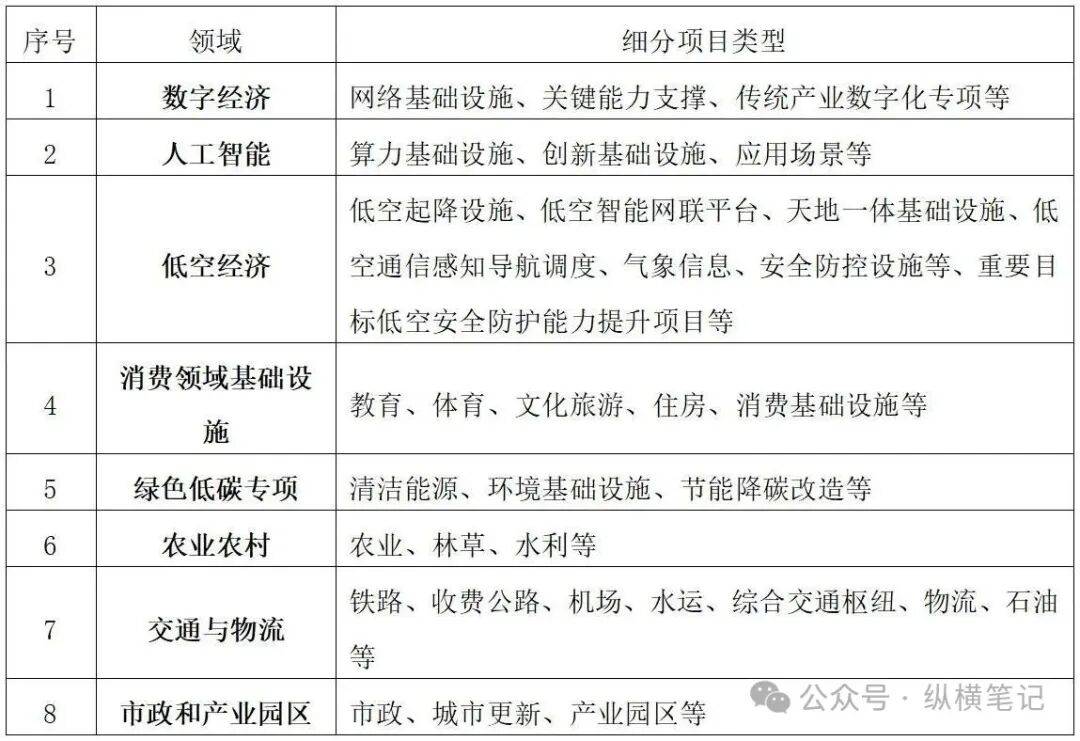
Central Budget Investment - The central budget investment is set at 735 billion yuan, focusing on foundational, public welfare, and long-term projects [1] - The investment aims to stimulate social capital and drive economic recovery through government investment [1] Special Long-term Bonds - The plan includes issuing 1.3 trillion yuan in special long-term bonds, with a duration of 20-50 years, targeting "two重" (major strategic projects) and "two新" (new consumption policies) [1][15] - Of the total, 500 billion yuan is earmarked for new consumption policies, including equipment updates and consumer goods replacement [15] Local Government Special Bonds - The quota for local government special bonds is set at 4.4 trillion yuan, an increase of 500 billion yuan from the previous year, primarily for investment construction and land acquisition [1][7] - These bonds are intended for projects with certain revenue, ensuring that project income covers principal and interest [9][10] New Policy Financial Instruments - New policy financial instruments are designed to address funding shortages in high-risk areas like technology R&D and financing for small and medium enterprises [2][3] - The expected scale for these instruments is around 500 billion yuan, supporting technology innovation, consumption expansion, and foreign trade stability [2] Key Support Areas - The funding will support various sectors, including digital economy, artificial intelligence, low-altitude economy, green low-carbon initiatives, agriculture, transportation, and municipal infrastructure [4][8][12] - Specific projects include infrastructure for digital economy, AI applications, clean energy, and rural development [4][8] Project Selection and Management - Strict negative lists are enforced to prohibit funding for land reserves, commercial real estate, and other non-productive projects [5][11] - The project selection process emphasizes collaboration among multiple departments to ensure effective fund allocation [3][5] Summary of Financial Instruments - A comparison of new policy financial instruments, special long-term bonds, and local government bonds highlights their distinct characteristics, including issuance authority, risk levels, and funding sources [23]