中俄经贸合作

Search documents
西方的嗓门越大,中俄生意做得越有劲,能源大动脉今年有望拉满
Sou Hu Cai Jing· 2025-10-01 11:46
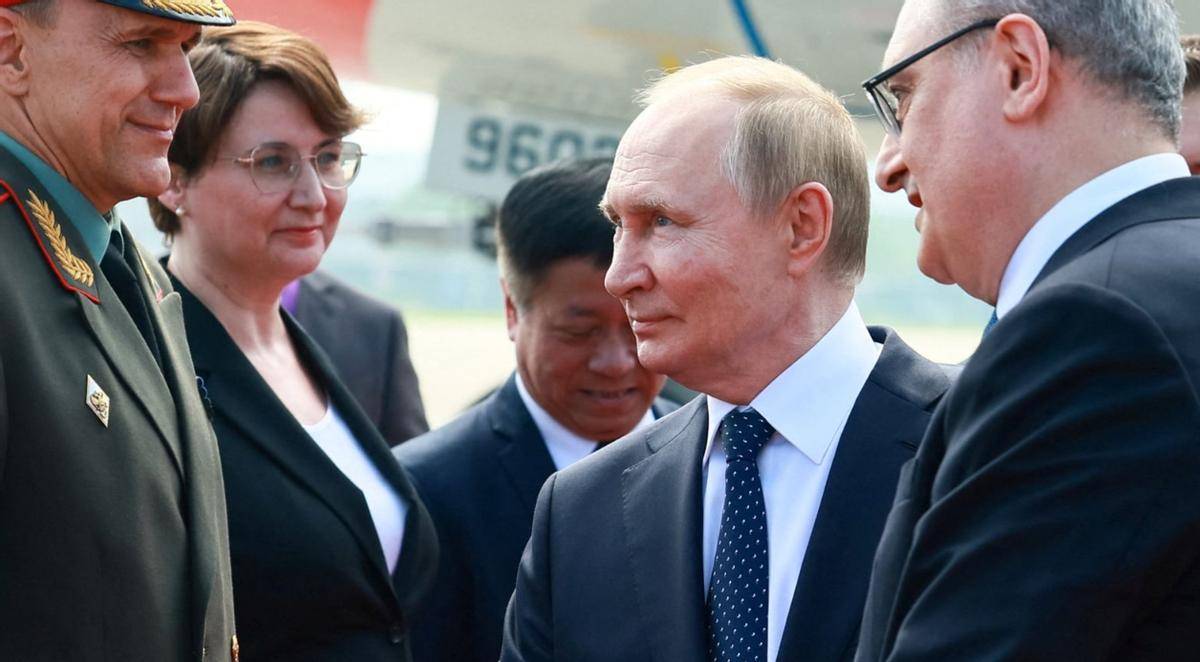
Core Insights - The natural gas supply from Russia to China has reached a record high, with 4.25 billion cubic meters supplied in July, marking an 11% increase year-on-year [1] - The "Power of Siberia" pipeline, operational since late 2019, is expected to reach its design capacity of 38 billion cubic meters by 2024, with an additional agreement to increase total supply to 44 billion cubic meters [1][2] - The deepening economic ties between China and Russia reflect a shift in their relationship from "politically warm but economically cold" to "politically and economically warm" [2] Natural Gas Supply Dynamics - In July, China imported a total of 7.165 billion cubic meters of natural gas through pipelines from five countries, with Russia being the largest supplier [1] - The actual gas supply through the "Power of Siberia" pipeline is projected to reach 38 billion cubic meters this year, indicating a significant increase from 4.1 billion cubic meters in 2020 [1][2] - The Russian Minister of Economic Development emphasized that no third country can disrupt the cooperation between China and Russia, highlighting the resilience of their trade relationship despite Western sanctions [4] Strategic Cooperation - The increase in natural gas supply is seen as a direct result of strategic mutual trust between China and Russia, with both countries demonstrating strong confidence in their cooperation [4][6] - The ongoing expansion of the energy pipeline signifies a robust and unshakeable new strategic partnership between the two nations, reflecting their commitment to deepening economic ties [6]

中国对俄免签政策落地首日 满洲里口岸高效验放超300人次
Sou Hu Cai Jing· 2025-09-16 10:35
Group 1 - The implementation of the visa-free policy for Russian passport holders by China has officially begun, leading to a significant increase in cross-border traffic at the Manzhouli port [1][2] - Over 300 Russian travelers were processed by noon on the first day of the policy, achieving the goal of "safe, efficient, and smooth" passage without long queues [1] - The first traveler to enter China under this new policy expressed excitement about the opportunity to stay for 30 days, highlighting the convenience of the new regulations [1] Group 2 - The visa-free policy is expected to enhance the role of Manzhouli as a "golden passage" for trade with Russia, facilitating the transformation of Inner Mongolia from a "border region" to an "open frontier" [2] - This initiative is anticipated to inject new momentum into China-Russia economic cooperation, tourism development, cultural exchanges, and regional influence [2]

2025年俄罗斯投资经商指南报告-B1集团
Sou Hu Cai Jing· 2025-09-01 04:02
Core Insights - The article highlights the deepening political trust and economic cooperation between China and Russia, with bilateral trade reaching $244.819 billion in 2024, a year-on-year increase of 1.9% [9][10]. Group 1: Bilateral Trade and Investment Environment - In 2024, the bilateral trade volume between China and Russia reached $244.819 billion, with over 95% of transactions settled in local currencies [9][10]. - The collaboration spans traditional sectors like energy and agriculture, as well as emerging fields such as digital economy and green energy, creating a favorable environment for Chinese companies investing in Russia [9][10]. - B1 Group and the Moscow Greenwood International Trade Center launched the "2025 Russia Investment Business Guide" to assist Chinese enterprises in navigating challenges and seizing opportunities [9][10]. Group 2: Company Establishment and Business Operations - Foreign companies in Russia can establish representative offices, branches, subsidiaries, or enter into simple partnership agreements, with limited liability companies and joint-stock companies being the most common forms [10][20]. - The Russian legal system is based on civil law, with a dual court system comprising general jurisdiction courts and commercial courts, the latter handling corporate disputes [20][23]. - Specific commercial transactions and civil entities must be registered, with real estate ownership registration being a prerequisite for transactions [10][28]. Group 3: Accounting and Tax Compliance - Russian legal entities must adhere to complex accounting and tax regulations, with the financial year aligning with the calendar year and accounting records maintained within Russia [10][30]. - Key taxes include a standard VAT rate of 20%, excise taxes on certain goods, and oil and gas taxes, with stricter transfer pricing regulations coming into effect in 2024 [10][30]. - Companies meeting compliance standards may benefit from simplified audits and other incentives [10][30]. Group 4: Human Resources and Labor Laws - Starting in 2025, the personal income tax rate for residents in Russia will be adjusted to a progressive scale of 13%-22%, while non-residents will face a flat rate of 30% [10][2]. - The labor law emphasizes employee protection, mandating a minimum monthly salary of 22,440 rubles and at least 28 days of paid annual leave [10][2]. - Foreign citizens working in Russia require work permits and visas, with special policies for highly qualified specialists [10][2]. Group 5: Incentive Mechanisms - IT companies meeting certain criteria can benefit from reduced income tax rates of 5%, social security contributions of 7.6%, and exemptions from VAT [10][2]. - Special investment agreements (SPIC) provide tax reductions and other support, along with various regional investment projects and Arctic region incentives [10][2]. Group 6: Customs Regulations - As a member of the Eurasian Economic Union, Russia imposes import tariffs ranging from 0% to 80%, with some goods enjoying preferential treatment [10][2]. - Export of over 100 critical goods requires permits, and customs checks focus on the value, classification, and origin of goods [10][2]. Group 7: Brownfield Investments and Sanctions - The report discusses brownfield investments, the impact of foreign sanctions, and the comprehensive consulting services provided by B1 Group to help Chinese companies operate compliantly and expand in the Russian market [10][2].

《区域经济》中俄联合专刊发布
Zhong Guo Xin Wen Wang· 2025-08-27 06:16
Core Insights - The joint special issue of the journal "Regional Economy" was released, focusing on the prospects of the economic partnership between China and Russia [1][2] - This special issue marks the first collaboration between the Russian Academy of Sciences and a Chinese academic institution, featuring 22 papers by scholars from both countries [1] - The initiative aims to enhance understanding and consensus on bilateral economic cooperation, especially following the announcement of a comprehensive strategic partnership in 2019 [1] Summary by Sections - **Publication Details** - The special issue is part of the "Regional Economy" journal, a prominent academic quarterly co-hosted by the Ural Branch of the Russian Academy of Sciences and Ural Federal University [1] - The theme of the special issue is "China and Russia: Prospects for Geoeconomic Partnership" [1] - **Research Focus** - The papers explore various fields and directions for economic cooperation between China and Russia, providing suggestions for expanding collaboration [1] - The initiative is seen as a beneficial attempt to innovate cooperation methods between Chinese and Russian scholars [1] - **Future Collaboration** - The head of the Ural Branch's Economic Research Institute expressed hope that this collaboration will deepen research efforts and set a standard for Sino-Russian academic cooperation [2]
第九届中国消费品(俄罗斯)品牌展及中国机械工业(俄罗斯)品牌展开幕
Sou Hu Cai Jing· 2025-08-25 11:33
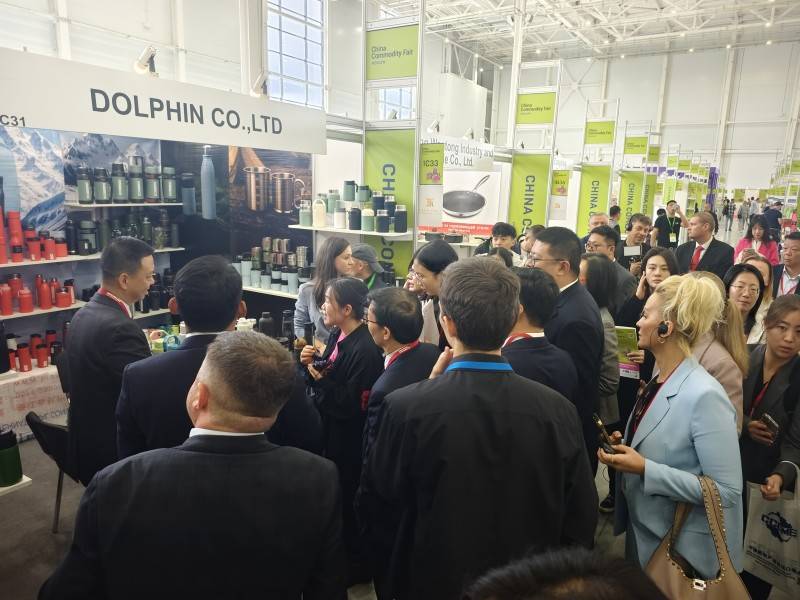
Group 1 - The 9th China Consumer Goods (Russia) Brand Exhibition and the 6th China Machinery Industry (Russia) Brand Exhibition opened in Moscow, showcasing over 1,000 new products from more than 360 companies across 14 provinces, with a nearly 30% increase in exhibitors compared to the previous year [1] - The exhibition covers a wide range of consumer goods including home products, kitchenware, home appliances, and consumer electronics, meeting the demand for health, convenience, and intelligence in Russian households [3] - The machinery exhibition features key sectors such as hardware, construction materials, engineering machinery, and agricultural machinery, with leading companies providing comprehensive "Made in China" solutions for the Russian market [5] Group 2 - The exhibition will host various forums discussing topics like "Russian Consumption Trends" and "Advantages of Chinese Goods on E-commerce Platforms," aimed at fostering cooperation between Chinese and Russian industries [7] - A series of B2B matchmaking events will be organized, inviting over 70 professional buyers from major Russian retail chains and e-commerce platforms to facilitate the establishment of sales channels for Chinese brands [7] - The event is co-hosted by several organizations, including the China Chamber of Commerce for Import and Export of Machinery and Electronic Products, and supported by Russian trade associations, highlighting the growing economic cooperation between China and Russia [9]
格林伍德首届品牌日暨中国品牌商品推介会成功举办
Zhong Guo Jing Ji Wang· 2025-08-25 08:31
Group 1 - The event "Coexistence. Empowerment. Shine - Greenwood's First Brand Day and China Brand Product Promotion Conference" was successfully held in Moscow, attended by nearly a hundred Chinese and Russian enterprises [1][2] - Greenwood has gathered over 400 enterprises from more than 10 countries, forming an industrial cluster centered on engineering machinery and automobiles, serving as a public service platform for China-Russia economic cooperation [1] - The future goal of Greenwood is to create a "window for Chinese brands," helping Chinese companies deeply integrate into the Russian market for mutual benefit [1] Group 2 - The Deputy Director of the Moscow Region's Economic and Investment Management Bureau highlighted the significant potential for further cooperation between China and Russia, despite record trade volumes [1][2] - Representatives from various companies, including Foton Russia and Lingdong Automobile, showcased products across multiple sectors, demonstrating the technological strength and brand innovation of Chinese manufacturing [2] - The event combined professional business promotion, product displays, and cultural experiences, effectively enhancing communication and cooperation between Chinese and Russian enterprises [2]
万没料到,普京突然对中国,说了句前所未有的话,火速传遍全球!中方的路走对了!
Sou Hu Cai Jing· 2025-08-14 11:56
Group 1 - The core message of the article highlights the emergence of a new international order that is not dominated by the United States, as articulated by Putin during his Victory Day speech [1] - Russia's crude oil exports to China are projected to reach 115 million tons in 2024, a 42% increase from two years ago, with 40% of transactions conducted in RMB [3] - The "Power of Siberia 2" pipeline is expected to generate annual revenues of $46 billion, while helping China reduce its dollar foreign exchange consumption by 30% [3] Group 2 - The increase in import tariffs on Chinese cars by Russian customs has led to a surge in cancellations for brands like Great Wall and Chery, prompting quick adaptations by Chinese automakers [3] - Chinese automotive brands have captured over 57% market share in Russia as of June, demonstrating resilience in Sino-Russian economic cooperation despite external pressures [3] - The U.S. is concerned about the growing trade between Russia and other countries like India and Turkey, which are also moving towards non-dollar transactions [5] Group 3 - The relationship between China and Russia has been deepening, with significant technological collaborations yielding practical results, such as China's polar navigation technology aiding Russian LNG transport [7] - The shift towards using RMB for oil and gas transactions signifies a move away from traditional dollar-based systems, indicating a quiet transfer of power through technology and trade rather than military confrontation [9]
【人民日报】兴凯湖冬捕“出圈”记(边城见闻)
Ren Min Ri Bao· 2025-08-11 00:50
Core Viewpoint - The article highlights the cultural, economic, and ecological cooperation between China and Russia, particularly centered around the Xinkai Lake region, showcasing the integration of tourism, trade, and environmental protection efforts to strengthen bilateral relations [5][9][11]. Cultural Resonance - The 2025 Xinkai Lake Winter Fishing Festival commenced on January 11, attracting thousands of tourists from both China and Russia, showcasing traditional fishing techniques and local customs [6][8]. - Russian tourists expressed excitement and admiration for the winter fishing experience, emphasizing the cultural exchange and shared enjoyment of local traditions [6][7]. - The region has a rich history of fishing culture, with the winter fishing tradition being recognized as an intangible cultural heritage of Heilongjiang Province [5][8]. Economic Prosperity - The Mishan Port, a key border crossing, has facilitated significant cross-border tourism, with over 310.6 million travelers since its opening in 1993, and a total import-export trade volume of $4.28 billion [9]. - The local logistics company, Yili International, plays a crucial role in cross-border e-commerce, handling a high volume of packages, with 80% of goods exported through Mishan Port [10]. - The company has established a comprehensive service model for cross-border logistics, enhancing efficiency and customer satisfaction [10]. Ecological Conservation - The Xinkai Lake area is home to a national nature reserve, with ongoing collaborative efforts between China and Russia to protect the ecosystem and monitor wildlife [11][13]. - The region's water quality remains excellent, storing 23 billion cubic meters of freshwater, highlighting the importance of ecological preservation in bilateral relations [11]. - Joint scientific research and cultural exchanges have fostered strong ties between environmental protectors from both countries, enhancing mutual understanding and cooperation [12][13].

推动东北全面振兴取得新突破
Jing Ji Ri Bao· 2025-06-26 21:56
Group 1: Economic Development in Northeast China - The Northeast region is crucial for national development, facing challenges such as rigid systems and a single industrial structure, but has made positive progress in recent years [1] - The central government emphasizes the need for a robust policy system to promote comprehensive revitalization in Northeast China [1] Group 2: State-Owned Enterprise Reform - State-owned enterprise (SOE) reform is essential for the revitalization of Northeast China, with significant progress made in recent years [2] - The implementation of market-oriented mechanisms and the "three capabilities" system (management personnel can be hired or dismissed, employees can enter or exit, and income can increase or decrease) has been a breakthrough in SOE reform [3] - The coverage of contract management and term systems for management layers has reached 100%, with competitive recruitment for middle management and a stable 100% recruitment ratio for new employees [3] Group 3: Optimization of State-Owned Economic Structure - The optimization of the state-owned economic structure is focused on enhancing core functions and competitiveness, with a shift towards new and green industries [4] - Liaoning Province has established various funds to support strategic emerging industries, while cities like Shenyang and Jilin are focusing on sectors like semiconductors and new energy [4] Group 4: Digital Transformation and AI Integration - SOEs in Northeast China are accelerating their embrace of artificial intelligence (AI) to enhance traditional industries [5] - Pilot programs for digital transformation have been initiated, with a focus on improving core competitiveness in high-end manufacturing [5] Group 5: Emerging Industries and Traditional Industry Upgrades - The development of emerging industries is supported by technological innovation and the transformation of traditional industries [7] - Northeast China is focusing on high-end equipment manufacturing and new energy sectors, with significant investments in strategic emerging industries [8] Group 6: Cultural and Tourism Development - The Northeast region has seen a rise in cultural tourism, particularly in ice and snow tourism, which has become a new economic driver [13][16] - The region's diverse natural and cultural resources provide a strong foundation for developing unique tourism experiences [14] Group 7: Sino-Russian Economic Cooperation - The Northeast region plays a vital role in Sino-Russian economic cooperation, particularly in the context of the "Northeast-Far East" trade relationship [18] - The trade volume between Northeast China and Russia's Far East has doubled from 2014 to 2023, with expectations for further growth [19][20]
中俄经贸合作领域宽成果丰潜力足(环球热点)
Ren Min Ri Bao Hai Wai Ban· 2025-05-09 22:04
Core Insights - The article highlights the deepening pragmatic cooperation between China and Russia, emphasizing the mutual benefits and growing trade relations between the two countries [4][9][10]. Economic and Trade Relations - China has maintained its position as Russia's largest trading partner for 15 consecutive years, with bilateral trade reaching $244.8 billion in 2024, reflecting a year-on-year growth of 1.9% [7][9]. - The variety of products traded between the two countries has expanded significantly, including not only traditional commodities like energy and grains but also high-value items such as electronics and machinery [6][10]. - The number of enterprises engaged in Russian goods trade in China has more than doubled in two years, indicating a growing interest in Russian products [5]. Market Trends - Chinese smartphones have gained substantial market share in Russia, increasing from 50% in 2022 to 73% in 2023, and projected to reach 86% in 2024 [6]. - Russian products, including ice cream and chocolate, are increasingly popular in China, showcasing a shift in consumer preferences [5][6]. Strategic Cooperation - The cooperation between China and Russia is underpinned by strong political ties and mutual strategic interests, with both countries benefiting from each other's market demands [9][10]. - The trade relationship is characterized by a structural complementarity, where energy exports from Russia meet the demand for manufactured goods from China [10]. Future Prospects - The article suggests that by 2025, the focus of China-Russia cooperation will shift towards stabilizing and consolidating trade achievements, with an emphasis on e-commerce, service trade, and infrastructure collaboration [11][12]. - There is a strong indication that digital trade will become a key area of growth, with both countries exploring new fields of cooperation in technology and agriculture [12][13].