
人力资本投资

Search documents
东西问丨穆罕默德·曼苏里:中国实践如何助力保障全球粮食安全?
Zhong Guo Xin Wen Wang· 2026-01-01 08:07
Core Insights - The global food security situation remains severe, with approximately 673 million people facing hunger and 2.3 billion in food insecurity, exacerbated by regional conflicts, extreme weather, and trade barriers [1] - China's practices in ensuring food security and promoting rural revitalization offer valuable insights for the world, particularly as the FAO approaches its 80th anniversary in 2025 [1] Group 1: Effective Practices in Rural Revitalization - The FAO's strategic pillars of "better production, better nutrition, better environment, and better life" align closely with China's rural practices observed during the visit [2] - China demonstrates effective production methods that balance productivity and sustainability, including diverse agricultural practices and livestock farming [2] - There is a strong emphasis on diversified food production, creating job opportunities, and enhancing quality of life through the development of fresh produce and health-related food products [2] - Environmental protection efforts include wetland conservation and the production of green and organic foods, showcasing a commitment to sustainable practices [2] Group 2: Key Characteristics of China's Rural Revitalization - Two notable characteristics of China's rural revitalization are the guiding role of local governments and the entrepreneurial spirit of rural residents [5] - Local governments provide public investment and ensure that development benefits cooperatives and farmers, while also maintaining fair pricing mechanisms [5] - The entrepreneurial drive among rural residents has led to successful local businesses that create jobs and contribute to poverty alleviation [5] Group 3: Investment in Human Capital - Investment in human capital is crucial for sustainable development, yet rural development has often focused more on physical infrastructure than on enhancing human capabilities [8] - Human capital investment includes education, training, and health, which are essential for empowering farmers and entrepreneurs [8] - The FAO has identified six key recommendations for human capital investment, emphasizing the importance of partnerships, inclusive policies, and continuous innovation [9] Group 4: China's Contributions to Global Food Security - China has made significant contributions to global food security, achieving the UN Millennium Development Goal of halving extreme poverty and hunger ahead of the 2030 target [11] - The country has ensured stable supplies of staple foods and maintained abundant availability of various agricultural products, improving national nutrition [11] - China's experience in poverty alleviation and food security serves as a model for other countries, particularly through South-South cooperation initiatives [12]


鼓励多元投入强化投资于人
Jing Ji Ri Bao· 2025-12-24 22:38
Group 1 - The core viewpoint emphasizes the importance of investing in human capital to enhance economic circulation and improve people's livelihoods, with various policies implemented in education, healthcare, elderly care, and social security sectors [1] - Significant investments have been made in the livelihood sector, leading to more equitable and accessible public services, such as annual childcare subsidies of 3,600 yuan for eligible families with children under three years old [1] - Policies aimed at improving basic medical insurance, stabilizing and expanding employment, and increasing basic pension levels are currently being implemented, contributing to sustained economic growth [1] Group 2 - Issues such as uneven distribution of educational resources, inadequate social security coverage for flexible workers, and insufficient attention to emerging needs like long-term care and mental health require focus [2] - A need for a more precise and sustainable policy framework for human capital investment is highlighted, including a continuous service network from early childhood care to elderly health [2] - Employment stability for key groups and the expansion of social insurance coverage are essential, alongside increasing the supply of quality educational resources and reforming vocational education [2] Group 3 - Innovative funding mechanisms are necessary to attract social capital participation in sectors like elderly care, childcare, vocational education, and health, utilizing models such as public-private partnerships and special bonds [3] - Establishing a scientific evaluation and long-term incentive governance mechanism is crucial, including a monitoring and feedback loop for human capital investment [3] - Reforming performance assessment systems to include core indicators reflecting human development, such as education years and public service accessibility, is essential for guiding local officials towards prioritizing human capital investment [3]
全球变局下,中国式现代化如何筑牢消费动力根基
Sou Hu Cai Jing· 2025-12-17 06:37
Core Viewpoint - The central economic work conference emphasizes "domestic demand as the main driver" as the top annual task, highlighting the need to enhance resident income growth and wealth accumulation to stimulate domestic consumption and address structural obstacles in the economy [1]. Group 1: Causes and Challenges - The release of resident consumption potential faces structural challenges that require coordinated policy efforts to promote consumption upgrades [2]. - Changes in population structure lead to increased savings tendencies, with the elderly population expected to reach 22.0% by the end of 2024, affecting consumption potential [2]. - The high proportion of real estate in household assets necessitates a stable real estate market to boost consumer confidence and wealth expectations [2]. - Structural contradictions in supply and demand across over 220 industrial sectors need optimization, with significant potential for consumption growth among low-income groups [2]. - Increased uncertainty in the international environment and fluctuations in external demand highlight the urgency of expanding domestic demand [2]. Group 2: Fundamental Solutions - To address low consumption, systemic reforms are essential, focusing on income growth, wealth security, and consumer confidence [3]. - Restructuring the income distribution pattern is crucial, aiming to increase labor compensation's share of GDP to over 60% and support low-income groups through various initiatives [3]. - Market-oriented reforms in financial, land, and labor sectors are necessary to broaden wealth accumulation channels and enhance residents' ability to generate income [4][5]. - Investment in human capital is vital, with a focus on education and vocational training to improve labor quality and adaptability to industry needs [5]. - Enhancing public service systems and increasing fiscal investment in social welfare can alleviate consumer concerns and stimulate spending [6]. Group 3: Conclusion - The strategy to expand domestic demand is fundamentally linked to the prosperity of the people, requiring a comprehensive approach across multiple sectors [7]. - With the implementation of policies aimed at income distribution reform and market-oriented changes, resident income is expected to rise steadily, unlocking consumption potential [7].
黄金40年只涨20倍,工资却涨200倍!我们该投资什么?
Sou Hu Cai Jing· 2025-12-11 16:10
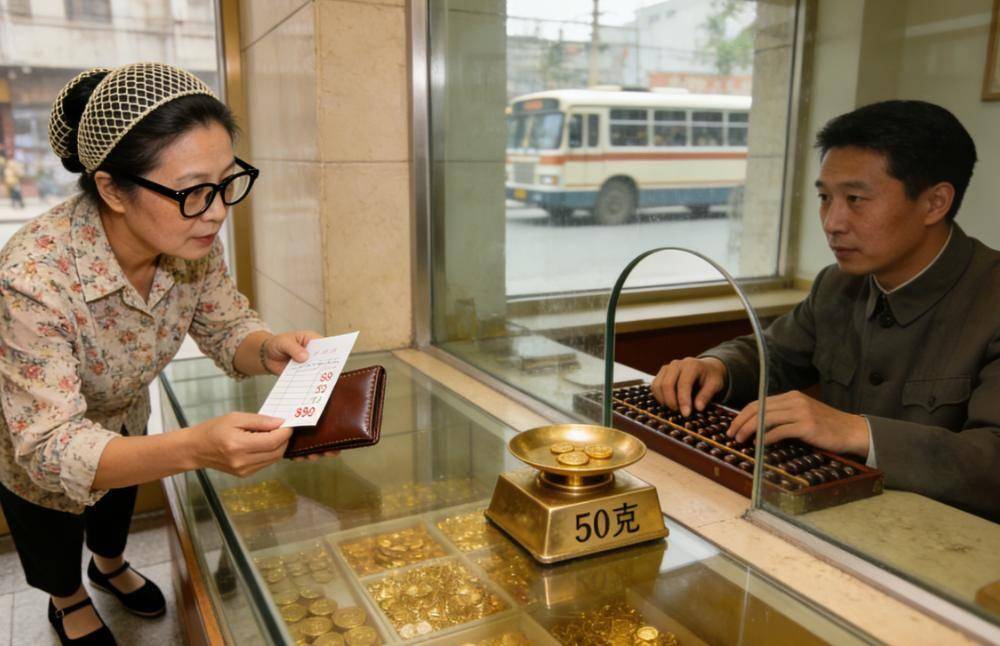
Core Insights - The story of a woman from Northeast China highlights the long-term value of gold as an asset, contrasting its price appreciation with wage growth over 40 years [2][4]. Group 1: Historical Context - In 1984, the woman purchased 50 grams of gold for 2,350 yuan, equivalent to nearly five years of a typical worker's salary at that time [2][5]. - Today, the same gold is valued at approximately 50,000 yuan, reflecting a price increase from 47 yuan per gram to around 1,000 yuan per gram, a nearly 20-fold increase [2][5]. Group 2: Economic Analysis - Despite the significant increase in gold prices, its value relative to wage growth has diminished, as the current worth of the gold is only about ten months of a typical worker's income [5]. - The average disposable income for residents in the first three quarters of 2025 reached 32,509 yuan, indicating a shift in purchasing power over the decades [5]. Group 3: Investment Perspective - Gold has transitioned from a mere preservation tool to a strategic asset in investment portfolios, driven by geopolitical tensions and economic uncertainties [6]. - Central banks have been increasing their gold reserves to mitigate foreign exchange risks, reflecting a fundamental change in the rationale behind gold investment [6]. Group 4: Wealth Management Insights - The comparison between gold and wage growth emphasizes the importance of investing in human capital, such as education and skills, which have outpaced gold price increases over the years [8]. - A diversified asset allocation strategy is crucial for wealth growth, incorporating equities, stable income assets, and quality real estate [8]. Group 5: Conclusion - The woman's decision to retain her gold rather than sell it suggests that its value transcends market price, embodying personal and familial significance [10]. - True wealth wisdom lies in balancing financial asset management with personal growth and family well-being, which are seen as reliable forms of "hard currency" in any economic cycle [10].
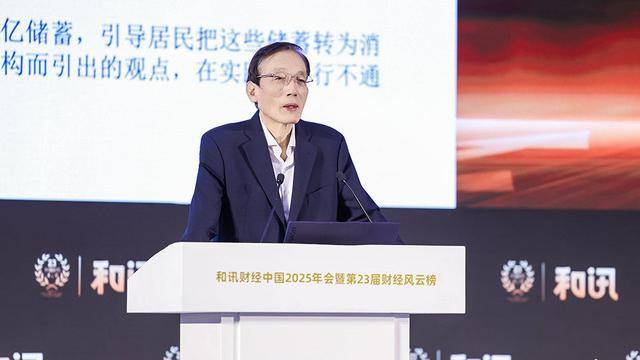
刘世锦:建议“十五五”?期间大幅增加离岸人民币数量,实现人民币国际化使用的“规模经济”
Xin Lang Cai Jing· 2025-12-07 04:43
Core Viewpoint - The conference emphasized the need for China to become a consumer powerhouse, aligning its consumption-to-GDP ratio with international standards and enhancing the internationalization of the Renminbi [3][7]. Group 1: Key Points on Consumer Powerhouse - Liu Shijun outlined three focal points for building a consumer powerhouse: aligning consumption with GDP, prioritizing service consumption, and creating the world's largest consumer market [3][7]. - There is an urgent need to address structural consumption gaps to match the current per capita income levels in China with international standards [3][7]. - Development of service consumption, particularly human capital investment in education, healthcare, and social security, is crucial for driving innovation [3][7]. Group 2: Key Points on Manufacturing and Trade - China's manufacturing sector accounts for 30% of the global share, making it the largest goods exporter, yet there is a significant gap in the internationalization of the Renminbi [4][8]. - A new strategy is needed to balance imports and exports, allowing for increased imports paid in Renminbi while maintaining export competitiveness [4][8]. - In 2024, China's trade surplus is projected to approach $1 trillion, and by shifting to Renminbi for imports, it could significantly expand the offshore Renminbi market from over 1 trillion to more than 7 trillion Renminbi [9].

刘世锦:建议“十五五” 期间大幅增加离岸人民币数量,实现人民币国际化使用的“规模经济” | 和讯2025年会
Sou Hu Cai Jing· 2025-12-07 04:29
Core Insights - The conference focused on finding solutions for China's economic challenges, emphasizing the need for a stronger consumer economy [1] Group 1: Consumer Economy Development - Liu Shijun highlighted three key points for building a strong consumer economy in China: aligning consumption with GDP, focusing on service consumption, and creating the largest consumer market globally [3] - The urgent need to address structural consumption gaps was emphasized, aiming to align China's consumption-to-GDP ratio with international standards [3] - Development of service consumption, particularly human capital investment in education, healthcare, and social security, is crucial for innovation-driven growth [3] Group 2: Internationalization of the Renminbi - China accounts for 30% of global manufacturing and is the largest goods exporter, yet its currency's internationalization remains limited [4] - A significant strategy to enhance the international status of the Renminbi involves increasing offshore Renminbi supply to achieve "scale economy" in its usage [4] - By balancing imports and exports while using Renminbi for payments, China could potentially expand its offshore Renminbi market significantly, from over 1 trillion to more than 7 trillion Renminbi [4]
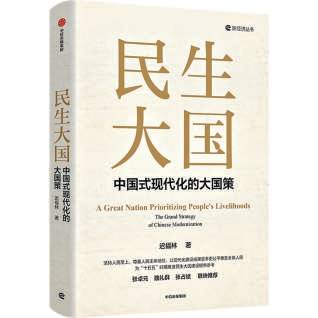
民生大国建设关键在于“投资于人”
Sou Hu Cai Jing· 2025-11-27 21:35
Core Viewpoint - The article emphasizes the importance of "investing in people" as a key strategy for China's modernization, transitioning from a manufacturing powerhouse to a consumer and welfare-oriented economy, which is essential for meeting the needs of its 1.4 billion citizens [2] Investment in Human Capital - "Investing in people" is identified as a core lever to enhance investment efficiency, with the potential to create a multiplier effect that exceeds the initial capital investment [2] - The contribution of human capital to economic growth has surpassed that of physical capital, highlighting the need for continuous improvement in labor quality and educational attainment [3][6] - The World Bank indicates that a one-year increase in labor education can boost GDP by 9%, underscoring the economic benefits of enhancing educational levels [3] Healthcare Investment - A comprehensive investment of 80 trillion to 100 trillion yuan is required to improve and guarantee livelihoods, with a specific recommendation for an annual investment of 5 trillion yuan to achieve basic healthcare equality between urban and rural areas [3][4] - The personal contribution to urban and rural residents' medical insurance has increased from 10 yuan in 2008 to 380 yuan in 2023, a 37-fold rise, leading to a decline in insured individuals by approximately 20 million from 2022 to 2023 [5] - To alleviate the financial burden on rural residents, it is suggested to reduce the personal insurance payment from 380 yuan to 160 yuan, requiring an annual fiscal input of 150 billion yuan [5] Education Funding - The average expected years of education in China is 15.2 years, which is lower than OECD countries by 1.4 years, indicating a need for increased educational investment [6] - Public education funding as a percentage of GDP was only 4.01% in 2022, which is below several other countries, suggesting a need for increased investment in education [6] - An estimated investment of 500 billion yuan annually is needed to universalize high school education, with potential cost reductions if existing vocational schools are repurposed [6] Support for Childbearing - An annual investment of 2 trillion to 3 trillion yuan is recommended to enhance the childbearing support system, addressing the high costs associated with raising children in China [7] - The average intended number of children per woman in 2021 was 1.64, below the replacement level, indicating a need to lower the comprehensive costs of child-rearing to improve birth rates [7]
十五五”聚焦橄榄型分配格局 “提低扩中”缩小收入差距
Zheng Quan Shi Bao· 2025-11-16 23:43
Group 1 - The core viewpoint of the article emphasizes the need to implement a plan to increase income for low-income groups and expand the middle-income group, aiming to reduce income disparity and promote common prosperity [1][3] - The "olive-shaped distribution pattern" is proposed, which aims for a larger middle-income group and smaller low and high-income groups, reflecting a more equitable income distribution [6][7] - The article discusses the importance of human capital investment in increasing income for low-income groups, highlighting the significant impact of education on wage disparities [3][5] Group 2 - The article notes that consumer spending growth is closely tied to income increases, suggesting that long-term economic growth relies on raising residents' incomes rather than short-term stimulus measures [2][4] - Specific measures to increase income for low-income groups include enhancing human capital investment, providing more income-generating opportunities, and increasing transfer payments [3][5] - The article outlines strategies to stabilize the income of existing middle-income groups, focusing on reducing their financial burdens through increased public investment in education, healthcare, and social security [7][8]
“十五五”聚焦橄榄型分配格局 “提低扩中”缩小收入差距
Zheng Quan Shi Bao· 2025-11-16 18:21
Group 1 - The core viewpoint of the article emphasizes the need to implement a plan to increase income for urban and rural residents, effectively raising the income of low-income groups and steadily expanding the middle-income group, while reasonably adjusting excessive incomes and eliminating illegal incomes to promote an olive-shaped distribution pattern [1][7] - The article highlights that the current focus for driving economic growth should be on addressing consumer demand, with long-term consumption growth relying on income increases rather than short-term stimulus policies [2][3] - It is noted that effective measures to increase low-income group income include investing in human capital, providing more income-generating opportunities, and enhancing transfer payments to low-income individuals [3][6] Group 2 - The article discusses the importance of investing in education and human capital for low-income groups, suggesting that early investment in children's development yields the highest social returns [4][5] - It emphasizes the need for policies that stabilize the income growth of the existing middle-income group and identify potential middle-income individuals, particularly focusing on migrant workers as a key source for future middle-income growth [8][7] - The article suggests that expanding the middle-income group relies on industrial upgrades and increasing human capital investment to create more high-wage job opportunities [8][7]
王一鸣谈“十五五”规划建议:持续增强高质量发展动力
Zheng Quan Shi Bao· 2025-11-01 02:35
Core Viewpoint - High-quality development is the primary task for building a modern socialist country and is the theme for the 14th Five-Year Plan period [1] Group 1: High-Quality Development - The focus should be on accelerating high-level technological self-reliance and developing new productive forces, achieving substantial breakthroughs in technological innovation and economic structure optimization [1] - A strong domestic market should be built to promote a consumption-driven economic model, ensuring a dynamic balance between supply and demand at a higher level [1] Group 2: Supply-Side Insights - Emphasis on leading the construction of a modern industrial system through technological innovation, capturing opportunities from the new round of technological revolution [2] - The manufacturing sector's reasonable proportion is crucial, with China's manufacturing share currently around 25%, which is still about 10 percentage points higher than the global average [2] Group 3: Demand-Side Strategies - Building a strong domestic market is essential, with a focus on combining investments in physical assets and human capital [3] - Increasing public service spending and enhancing human resource development are necessary to adapt to demographic changes and ensure sustainable economic growth [3] Group 4: Consumer Spending - Improving the resident consumption rate is linked to increasing resident income, which can be achieved through urban and rural income growth plans and reallocating investment funds to public services [4]