供给约束

Search documents
再论供给侧改革:制度优势实现供给约束破局通缩困局,掘金钢铁、有色行业投资机会
Soochow Securities· 2025-07-16 12:12
Investment Rating - The report maintains an "Overweight" rating for the steel and non-ferrous metal industries [1] Core Viewpoints - The supply-side reform in China is expected to break the deflationary cycle and create investment opportunities in the steel and non-ferrous metal sectors [1][6] - The report emphasizes the importance of "supply constraints" to manage the supply-demand balance and mitigate economic downturn risks [6][12] - The steel industry is facing severe overcapacity, with state-owned enterprises holding a significant market share, which facilitates the implementation of administrative measures to control production [6][28] Summary by Sections 1. Supply-Side Reform and Economic Management - The socialist market economy in China allows for effective macroeconomic control, contrasting with the cyclical issues faced in capitalist economies [12][13] - Historical experiences show that demand stimulus alone is insufficient to resolve deep-seated deflationary pressures [14][15] - The supply-side reform initiated in 2016 has proven successful in stabilizing prices and improving corporate profitability [21][22] 2. Steel Industry Analysis - The steel industry has been in a state of oversupply from 2007 to 2024, with crude steel production increasing from 490 million tons to 1.01 billion tons, while apparent consumption has not kept pace [28][29] - The production capacity utilization rates for rebar and wire rod are expected to decline from around 70% to 50% due to weak real estate demand [33][34] - The concentration of production among state-owned enterprises is high, with central state-owned enterprises accounting for approximately 63% of total production in 2024 [38][39] 3. Investment Recommendations - The report suggests focusing on three categories of investment targets: profit recovery, stable profit with valuation repair, and stable high-dividend stocks [51] - Specific companies recommended for profit recovery include Liugang Co., Taigang Stainless Steel, and Shandong Iron and Steel, with projected annualized PE ratios improving significantly under favorable conditions [51]


百亿投资经理连续十年跑赢沪深300!徐志敏靠什么识别好公司?
华尔街见闻· 2025-06-12 10:42
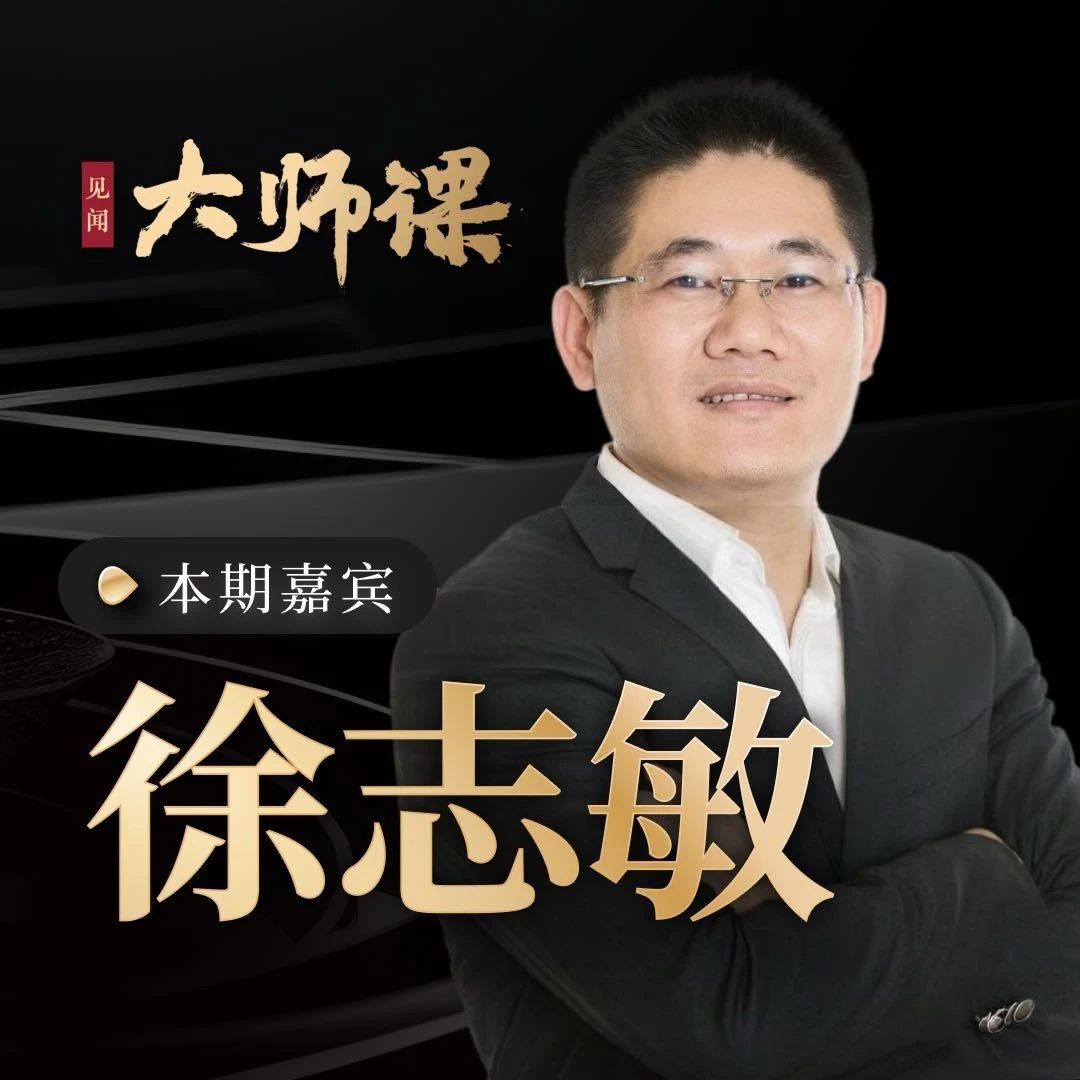
Core Viewpoint - The article discusses the volatility of the A-share market amid significant changes in global trade and financial landscapes, emphasizing the need for investors to identify high-quality assets that can withstand market fluctuations [2][11]. Group 1: Market Context - The A-share market has experienced increased volatility and rapid sector rotation due to the ongoing U.S.-China trade tensions, with the Shanghai Composite Index attempting to breach the 3400-point mark [2][11]. - The article highlights the importance of understanding market dynamics and the challenges faced by retail investors in navigating these turbulent conditions [11][12]. Group 2: Investment Strategies - Xu Zhimin, the Chief Investment Officer at Zhongtai Securities, has over 20 years of experience and manages over 10 billion yuan, consistently outperforming the CSI 300 index for ten consecutive years [3][15]. - His investment philosophy focuses on identifying high-quality companies, particularly those with strong supply constraints, which he believes are essential for long-term investment value [5][6]. - Xu's approach includes avoiding market emotional influences by not monitoring the market closely and making decisions based on a structured investment framework [6][12]. Group 3: Upcoming Masterclass - Xu will conduct a masterclass titled "Crossing Bull and Bear Markets in Search of Alpha," where he will share his investment principles and experiences, including lessons learned from key investment cases [10][13]. - The masterclass aims to equip participants with practical investment strategies, including the use of a "prohibited list" to mitigate human biases in decision-making [14][17]. - Attendees will also gain insights into Xu's market outlook for the second half of the year and have the opportunity for interactive Q&A [20].


百亿投资经理连续十年跑赢大盘!徐志敏教你识别好公司,克服人性弱点做决策
Hua Er Jie Jian Wen· 2025-06-07 06:53
Core Viewpoint - The global trade and financial landscape is undergoing significant changes in 2025, leading to increased volatility in the A-share market, characterized by rapid sector rotations [1] Group 1: Market Dynamics - A-share and Hong Kong stocks have experienced dramatic fluctuations since April due to the impact of the Trump tariff war [1] - On June 6, A-shares attempted to rise above 3400 points after a period of volatility [1] Group 2: Investment Strategies - Xu Zhimin, Chief Investment Officer at Zhongtai Securities, will share his methods for achieving Alpha excess returns during a masterclass on June 21 [1][6] - Xu has over 20 years of experience and manages over 10 billion yuan, consistently outperforming the market for ten consecutive years [1][3] Group 3: Investment Philosophy - Xu focuses on high-quality companies, exemplified by his contrarian investment in oil and gas stocks during a time when the market favored renewable energy [3] - His investment framework is influenced by renowned investors like Buffett and Taleb, emphasizing the importance of companies with supply constraints as indicators of long-term investment value [3][4] Group 4: Decision-Making Approach - Xu avoids making decisions based on market emotions and does not attempt to time the market perfectly, acknowledging the difficulty of "buying low and selling high" [4][6] - He plans to discuss strategies for overcoming human biases in investment decisions during the masterclass [6] Group 5: Future Outlook - Xu will provide insights on the outlook for A-shares and Hong Kong stocks in the second half of the year, along with potential Alpha opportunities [7]
工业数据印证核心资产风格或将长期上行
2025-06-06 02:37
Summary of Key Points from Conference Call Records Industry Overview - The records discuss the **Chinese economy** and its transition from a debt-driven cycle to a more sustainable growth model driven by supply constraints, indicating a healthier economic path with significantly reduced endogenous volatility [1][4][8]. Core Insights and Arguments - **Industrial Output and Resilience**: Despite facing challenges from US-China tariffs, China's industrial output structure is optimizing, with mid and downstream manufacturing showing strong resilience. The data indicates a decline in volume but stable prices and profit growth, suggesting an improving supply landscape [1][5][9]. - **Capital Expenditure Trends**: Capital expenditure by Chinese listed companies has decreased since 2021, currently at low levels. However, as the supply structure improves, the profit weight of midstream manufacturing is increasing, while downstream consumer manufacturing is slowly recovering, indicating potential for stable growth in the future [1][6][7]. - **Technological Development**: The advancement in technology, particularly in robotics, drones, and new drug development, is enhancing China's industrial resilience and promoting stable, sustainable economic growth [1][12]. - **New Consumption Trends**: There is a notable increase in demand from middle and low-income groups, particularly in third and fourth-tier cities, which are leading the consumption recovery. However, the overall recovery remains weak [1][15][16]. - **Profit Expansion Model Shift**: The profit expansion model in China's capital market is shifting from being driven by capital expenditure to being based on supply constraints. This change suggests that industry leaders with stable cash flows will see an increase in valuation levels [1][17][18]. Additional Important Insights - **Global Economic Impact**: The US debt crisis and policy adjustments may lead to a shift in the global economy towards an inflationary logic rather than recession, positively impacting global markets and potentially accelerating the appreciation of the Renminbi [1][13]. - **Supply and Demand Dynamics**: The supply-demand landscape is improving, with a gradual recovery expected in mid and downstream manufacturing. This improvement is not driven by demand but by a rebalancing of supply and demand [1][10][11]. - **Long-term Renminbi Appreciation**: The long-term trend indicates a potential appreciation of the Renminbi due to the gradual decline of the dollar's global dominance, supported by China's manufacturing and geopolitical strengths [1][19][20]. - **Impact on Capital Markets**: The influx of capital from the US into the Chinese market is expected to drive asset prices up, particularly in the Hong Kong stock market, which may also reflect in the A-share market [1][24][25]. This summary encapsulates the key points and insights from the conference call records, highlighting the current state and future outlook of the Chinese economy and its industries.
连续十年跑赢沪深300,如何识别好公司?华尔街见闻对话徐志敏,我们精选了这些问答
中泰证券资管· 2025-06-05 08:07
Core Viewpoint - The article discusses investment strategies in the context of increasing uncertainty in global trade and finance, emphasizing the importance of identifying high-quality assets that can withstand market fluctuations [2]. Group 1: Identifying Good Companies - Investment fundamentally involves a series of trade-offs, focusing on business models, competitive advantages (moats), and margin of safety [4]. - A strong moat is crucial, with supply constraints being a significant factor that overlaps with the concept of a moat [5]. - A good business model creates substantial value for customers while allowing the company to capture some of that value, requiring pricing power [4][5]. - Examples of good business models include high-end liquor, which has strong customer willingness to pay and retains value over time [5][6]. Group 2: Quality Company Standards - High-quality companies are the most competitive in their industry, not necessarily the largest, and should consistently generate high return on equity (ROE) [7]. - Companies with potential for significant future ROE increases can also be considered high-quality [7]. Group 3: Industry Competition and Supply Dynamics - The focus of research should be on supply dynamics rather than demand, as supply is more critical for reliable analysis [8]. - Understanding the causes of competitive advantages (moats) is essential, including cost leadership and economies of scale [8][9]. Group 4: Investment Philosophy and Market Conditions - The company emphasizes the importance of maintaining a diversified portfolio and focusing on high-quality assets to withstand market downturns [11][12]. - The approach to investment should be proactive, focusing on the inherent value of assets rather than market trends [14]. Group 5: Future Opportunities and Risks - The company identifies consumer and pharmaceutical sectors as key areas of focus for potential investment opportunities over the next 3-5 years, driven by rising disposable incomes and recent innovations [18][19]. - Structural risks are associated with chasing hot trends without solid backing, highlighting the need for a focus on genuine value creation [19].

连续十年跑赢沪深300,如何识别好公司?华尔街见闻对话徐志敏,我们精选了这些问答
中泰证券资管· 2025-06-05 08:07
Core Viewpoint - The article discusses investment strategies in the context of increasing uncertainty in global trade and finance, emphasizing the importance of identifying high-quality assets that can withstand market fluctuations [2]. Group 1: Identifying Good Companies - The essence of investment is a series of trade-offs, focusing on business models, competitive advantages (moats), and margin of safety [4]. - A strong moat is crucial, with supply constraints being a significant factor that overlaps with the concept of a moat [5]. - A good business model creates substantial value for customers while allowing the company to capture some of that value, requiring pricing power [4][5]. Group 2: Characteristics of High-Quality Companies - High-quality companies are typically the most competitive in their industry, not necessarily the largest, and should consistently generate high return on equity (ROE) [7]. - Companies with potential for significant future ROE increases can also be considered high-quality [7]. Group 3: Industry Competition and Its Impact - The focus of research should be on supply rather than demand, as supply dynamics provide more reliable insights into competitive landscapes [8]. - Understanding the causes of a company's moat is essential, including factors like cost leadership and economies of scale [8][9]. Group 4: Learning from Failures - A notable failure involved a sofa company that, despite being competitive, lacked a deep moat, leading to intense competition and a lack of differentiation [10]. - This case highlights the need to focus on high-quality companies rather than merely competitive ones [10]. Group 5: Investment Strategy and Market Trends - The investment framework has evolved, moving away from outdated theories like PEG investing, focusing instead on sustainable growth and avoiding forced trades [15]. - Future structural opportunities in the A-share market are seen in consumption and pharmaceuticals, driven by rising disposable incomes and recent innovations [16][17]. - Structural risks arise from chasing hot themes without solid backing, emphasizing the importance of focusing on value creation [17].