全栈能力

Search documents
蚂蚁阿福爆火背后:大厂AI,正霸榜2025
3 6 Ke· 2025-12-17 02:24
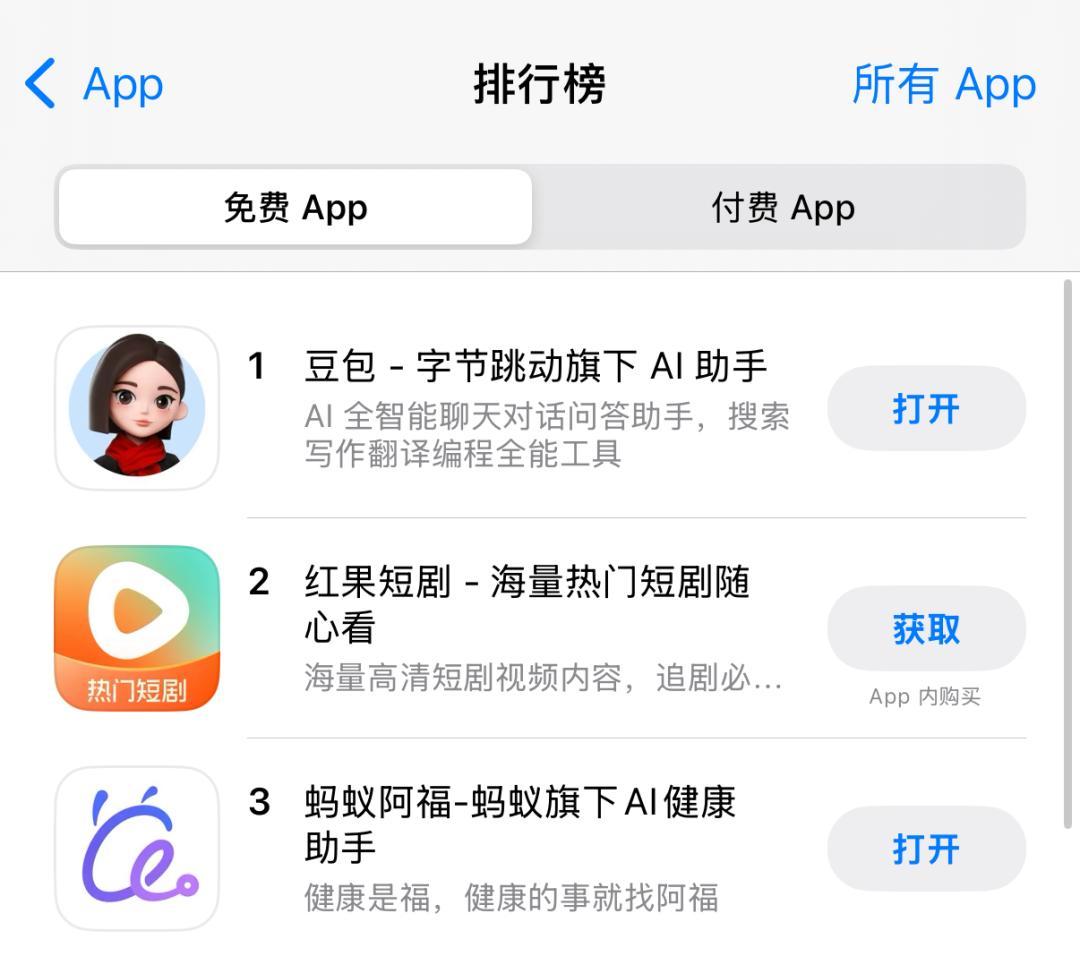
Core Insights - The competitive landscape in the AI sector has intensified since 2025, with traditional internet giants increasing their investments and efforts in AI, overshadowing the initial momentum of startup companies [1][4] - Major companies like Alibaba and ByteDance are not only launching new foundational models and applications but are also committing significant resources to AI development, indicating a shift towards "killer applications" in core scenarios [1][6] Group 1: Industry Dynamics - The initial advantage held by startups due to rapid model iteration and flexible strategies has diminished as major companies leverage their established ecosystems and resources [4][5] - The competition has shifted from showcasing model capabilities to focusing on application development and real-world implementation, where established players have a distinct advantage [4][5] Group 2: Resource Allocation - Major companies are investing heavily in AI infrastructure, with ByteDance committing 160 billion RMB for computing power and AI infrastructure, while Alibaba plans to invest 380 billion RMB over three years [6] - The talent acquisition race among major firms has intensified, with high recruitment efforts for AI specialists, indicating a strategic focus on building robust AI capabilities [6][5] Group 3: Application Development - The emergence of vertical AI applications is driven by user demand and clearer monetization paths, with companies like Alibaba focusing on health, finance, and education sectors [10][11] - Alibaba's AI health application, Ant Aifoo, has gained significant traction, with over 15 million monthly active users, demonstrating the potential for high barriers to entry in specialized fields [11][10] Group 4: User Expectations - Users are increasingly seeking AI applications that can perform practical tasks rather than just serve as conversational tools, pushing companies to enhance their AI capabilities [14][15] - The evolution of AI from a tool to a super assistant reflects the growing expectations for functionality and real-world application, necessitating a comprehensive approach to AI development [14][15] Group 5: Competitive Landscape - The differentiation between major players like Alibaba and ByteDance is evident, with Alibaba focusing on practical applications in health and finance, while ByteDance emphasizes content and entertainment integration [15] - The ongoing evolution of AI technology suggests that the industry is still in its early stages, with significant developments expected in the coming years [15]


蚂蚁阿福爆火背后:大厂AI,正霸榜2025
36氪· 2025-12-16 11:08
Core Insights - The competitive landscape of AI in China is shifting, with traditional internet giants intensifying their efforts in the AI sector, overshadowing earlier startups known as the "AI Six Tigers" [3][6] - Major companies like Alibaba and ByteDance are making significant investments in AI infrastructure and applications, indicating a strategic pivot towards comprehensive AI capabilities [3][10] - The emergence of a "dual-hero" dynamic, particularly between Alibaba and ByteDance, is becoming evident as they dominate the AI application market [5][7] Investment and Resource Allocation - Major companies are committing substantial financial resources to AI, with ByteDance announcing an investment of 160 billion RMB for computing power and AI infrastructure, while Alibaba plans to invest 380 billion RMB over three years [10][10] - The competition for AI talent is intensifying, with companies like ByteDance and Tencent launching high-paying recruitment initiatives, and Alibaba focusing on AI-related positions for upcoming graduates [10][10] Application Development and Market Positioning - The AI competition has transitioned from model capabilities to application development and real-world implementation, where established companies have a competitive edge due to their existing resources and ecosystems [9][10] - The rise of vertical AI applications is driven by user demand and clearer monetization paths, with companies like Alibaba leveraging their existing ecosystems to create synergistic product offerings [15][16] User Demand and Product Evolution - Users are increasingly seeking AI applications that can perform practical tasks rather than just serve as conversational tools, pushing companies to enhance their AI capabilities [20][21] - The concept of "full-stack capability" is crucial for companies to integrate hardware, model capabilities, and application development, with Alibaba and ByteDance being recognized as leaders in this area [21][22] Market Trends and Future Outlook - The AI application market is still in its early stages, with general-purpose AI assistants becoming a battleground for major players, while specialized applications are emerging to meet specific user needs [14][15] - The ongoing evolution of AI technology suggests that the industry is still in its early phase, with significant competition and innovation expected in the coming years [23]

中国大厂的 AI 战,归根结底是阿里 VS 字节
晚点LatePost· 2025-12-16 07:21
Core Viewpoint - Ant Group is strategically enhancing its AI capabilities with the launch of "Ant Aifu," focusing on health companionship and expanding its product offerings in the health sector, which has seen significant user growth [4][6][8] Group 1: Ant Group's AI Strategy - Ant Group's AI health product "AQ" was upgraded to "Ant Aifu," achieving over 15 million monthly active users within six months, ranking among the top five AI applications in China [4] - The company has launched three consumer-facing AI products, including "Lingguang" and "Ant Xiaocai," indicating a robust entry into the AI market [6][8] - Ant Group's recent actions signify a return to prominence in the AI sector after a period of stagnation following its failed IPO in 2020 [6][8] Group 2: Investment and Competition Landscape - Alibaba has invested 120 billion yuan in AI and cloud infrastructure over the past four quarters, with plans to invest 380 billion yuan over the next three years [6][10] - The competition in the AI space is intensifying, with Ant Group and Alibaba adopting a "saturation attack" strategy to secure market share [6][10] - The emergence of DeepSeek has demonstrated that model capabilities are not yet maximized, prompting companies like Ant Group to increase their R&D investments in AI [7][10] Group 3: AI Application Development - Ant Group's AI applications are designed to address real-world problems, such as the shortage of professional health services in an aging population [8][12] - The company is leveraging its existing resources, including 800 million electronic medical insurance code users and partnerships with 5,000 hospitals, to enhance its AI health services [8][12] - The AI landscape in China is evolving into a competition primarily between the "Alibaba system" and the "ByteDance system," with both companies possessing strong full-stack capabilities [10][13] Group 4: Differentiation in AI Approaches - Alibaba focuses on infrastructure development, with significant investments in data centers and GPU resources, while ByteDance emphasizes a product-driven approach to build user engagement [13][14] - The two companies are pursuing different user engagement strategies: Alibaba aims to save users time, while ByteDance focuses on entertainment and engagement [14][15] - Both companies are exploring different aspects of AI, with Alibaba leaning towards utility and ByteDance towards companionship, reflecting their unique market positions [14][15] Group 5: Long-term Challenges and Industry Dynamics - The AI industry is still in its early stages, with many uncertainties regarding the ultimate successful applications, similar to the early days of the internet [16][17] - Challenges in the healthcare sector, such as establishing standards and addressing data silos, are significant hurdles for AI integration [17] - The competition between major players like Ant Group and ByteDance is just beginning, with both companies needing to navigate complex ethical and social implications of AI technology [17][18]

Java程序员要掌握的前端知识
Sou Hu Cai Jing· 2025-12-15 05:56
Core Insights - The article emphasizes the importance of understanding DOM manipulation and event handling for Java developers transitioning to front-end development, highlighting that front-end is not chaotic but can be approached systematically [2][3]. Group 1: Understanding DOM - DOM is not just a string but a programmable tree structure where each HTML element is an object with properties and methods [2][3]. - The key mindset shift is to view the page as a real-time modifiable data structure rather than a static output [3]. Group 2: Event Handling - Front-end event handling is similar to Java's listener pattern but involves more diverse event sources, including user inputs and interactions [5][6]. - Events have inherent asynchronicity and uncertainty, requiring callback functions for responses [5]. - Event propagation includes capturing and bubbling phases, allowing for efficient event delegation [6][7]. Group 3: Practical Techniques - Ensure DOM is ready before manipulation, as browsers parse HTML while downloading [8][9]. - Avoid duplicate event bindings to prevent multiple triggers of callbacks [10][11]. - Organize interaction logic semantically to maintain code clarity, similar to Java's layered architecture [12]. Group 4: Advantages and Pitfalls - Java developers possess advantages in understanding object-oriented and modular concepts, aiding in component-based development [15]. - Common pitfalls include treating asynchronous events with synchronous thinking and over-relying on global variables, leading to state confusion [15].
华为云重大调整:研发并入ICT体系,张平安任华为云董事长,周跃峰出任CEO
Sou Hu Cai Jing· 2025-11-28 10:29
Core Insights - Huawei Cloud has initiated a significant organizational restructuring, integrating its core R&D team into the ICT organization, with Zhang Pingan appointed as Chairman and Zhou Yuefeng as CEO [2][3] - The restructuring focuses on rebuilding the R&D system, dissolving the independent R&D department and establishing five major product lines, including Infrastructure Cloud Services and Data & AI Cloud Services, to enhance collaboration with Huawei Cloud [2] - Zhou Yuefeng, the new CEO, has a 24-year tenure at Huawei and has led key product developments, achieving a 23.7% market share in China's SDS market and a 52.3% share in the all-flash SDS segment [2] Company Strategy - The transformation aims to position Huawei Cloud as the "black land" of the group, enhancing its full-stack capabilities from chips to cloud services amid intense AI computing competition [3] - By consolidating ICT technology reserves, Huawei Cloud is strengthening its technological moat in the government and enterprise markets [3]
德赛西威:公司始终坚持“开放、全栈、快速实现”的价值主张,通过自身创新和吸引更多拥抱创新的合作伙伴
Zheng Quan Ri Bao Wang· 2025-11-25 12:10
Core Viewpoint - The company, Desay SV, has achieved industry leadership in its intelligent business sector and continues to invest heavily in research and development, maintaining its first-mover advantage in mass production [1] Group 1: Business Capabilities - The company possesses full-stack capabilities in intelligent cockpit and intelligent driving, allowing it to aggregate top industry resources for faster rollout of scalable integration solutions, full-stack solutions, and innovative solutions [1] - The diverse and tiered product matrix, along with flexible cooperation models, enables the company to cover the vast majority of market customer needs, helping it maintain a leading market share [1] Group 2: Value Proposition - The company adheres to the value proposition of "open, full-stack, and rapid realization," fostering innovation through its own efforts and by attracting more partners who embrace innovation [1] - This approach aims to quickly form first-case examples and demonstration effects, accumulating more experience in both product and technology full-stack capabilities, as well as in the systematic capabilities of research, production, supply, sales, and service [1]

AI「效果涌现」的时代,百度开始快跑
3 6 Ke· 2025-11-13 10:39
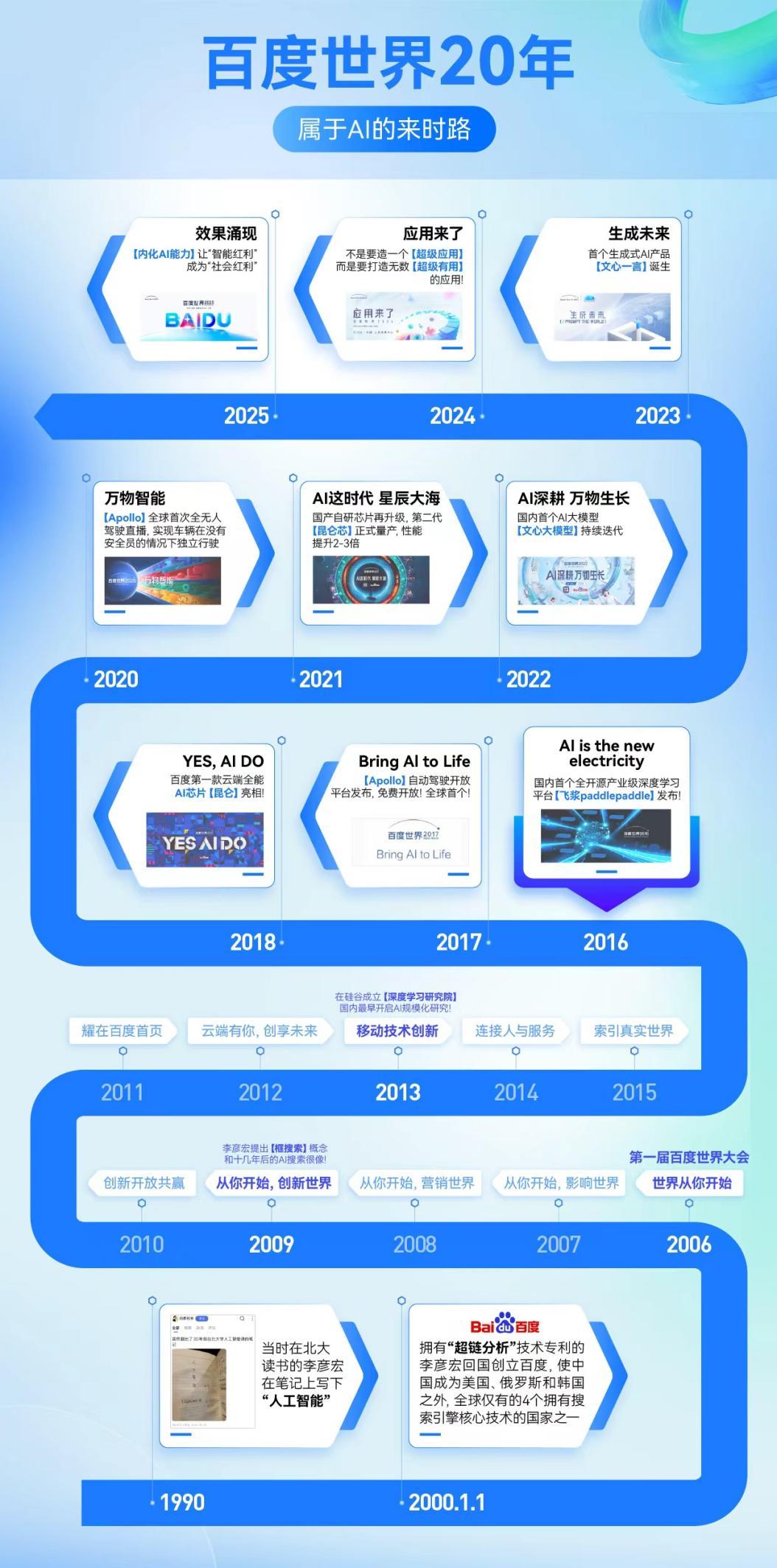
Core Insights - Baidu is shifting its focus from traditional internet contexts to a more asset-heavy, long-cycle AI landscape, emphasizing the internalization of AI as a core capability for various industries [1][2][5] - The company aims to build a comprehensive stack of capabilities from chips to applications, positioning itself for long-term growth rather than immediate gains [1][6][15] Group 1: AI Strategy and Development - Baidu's strategy is characterized by a long-term commitment to AI, focusing on deep technological investments rather than quick wins, which contrasts with the fast-paced culture of the internet era [2][5] - The company has developed its own Kunlun chips and AI frameworks, demonstrating a commitment to self-sufficiency and innovation in the AI space [7][12] - Baidu's approach to AI emphasizes the importance of internalizing AI capabilities to address real-world problems, moving away from the competitive "application war" mindset [6][10] Group 2: Autonomous Driving and Application Success - The "萝卜快跑" (Luobo Kuai Pao) autonomous driving service has achieved over 17 million service instances, showcasing the commercial viability of autonomous driving technology [8][9] - The service has established a safety benchmark, with an average of one airbag deployment every 10.14 million kilometers, surpassing human drivers and industry leaders [9] - Baidu's strategy for international expansion involves forming deep alliances with local companies, integrating into existing transportation ecosystems rather than merely exporting technology [9][10] Group 3: AI Ecosystem and Future Outlook - Baidu's AI capabilities are being modularized and standardized for broader enterprise use, with over 460,000 companies already utilizing its services [14][15] - The company is positioning itself as a "military supplier" of AI capabilities, aiming to facilitate the internalization of AI across various industries [13][15] - Baidu's long-term vision includes transforming AI from a technological novelty into a foundational element of societal advancement, aligning with its strategic focus on internalization and external application [15][17]

AI「效果涌现」的时代,百度开始快跑
36氪· 2025-11-13 10:26
Core Viewpoint - The article emphasizes the importance of Baidu's long-term strategy in AI development, focusing on building foundational capabilities rather than seeking immediate gains in the fast-paced internet culture [5][12][29]. Group 1: AI Strategy and Development - Baidu's AI strategy is characterized by a commitment to "long-termism," aiming to integrate AI as a fundamental capability across various industries rather than just a tool for quick monetization [5][12]. - The company has made significant investments in foundational technologies, including self-developed chips and AI frameworks, to support its AI applications [14][20]. - Baidu's approach contrasts with the prevailing "speed wins" mentality of the internet era, suggesting that AI competition may not follow the same rules as previous tech races [9][12]. Group 2: Technological Advancements - Baidu has introduced several AI applications, such as the "Luo Bo Kua Pao" autonomous vehicle service, which has completed over 17 million rides, demonstrating the viability of autonomous driving technology [4][18]. - The company has developed the Kunlun chip, capable of supporting multiple large models simultaneously, showcasing its commitment to self-sufficiency in computing power [14][22]. - Baidu's deep learning platform, PaddlePaddle, represents a significant step towards creating a competitive domestic AI framework, challenging the dominance of international platforms [14][22]. Group 3: Market Position and Future Outlook - Baidu's focus on "internalizing AI capabilities" aims to create a sustainable competitive advantage by embedding AI deeply within its business processes [13][24]. - The company is positioning itself as a "military supplier" of AI capabilities, offering modular solutions to businesses, which could lead to widespread adoption of AI across various sectors [24][26]. - Baidu's long-term investments and strategic choices are expected to yield significant returns as the AI landscape matures, moving from a focus on individual breakthroughs to a comprehensive ecosystem of AI applications [28][29].
“香蕉”模型爆火出圈,《Google Gemini》美区免费榜霸榜,AI发展进入新阶段?
3 6 Ke· 2025-09-25 03:48
Core Insights - Google Gemini has rapidly gained popularity, topping free app charts in multiple countries, largely due to the launch of its image generation and editing model, Nano Banana, in late August [2][5] - The Nano Banana feature has led to over 200 million image edits and attracted more than 10 million new users within a week of its launch [2][5] - The app's daily downloads surged from 490,000 on August 26 to over 3.02 million by September 13, indicating a significant increase in user engagement [5] Group 1: Nano Banana's Impact - The introduction of Nano Banana has resulted in a dramatic increase in keyword popularity, with 172 apps named after it appearing within a week of its launch [5] - The feature's success is attributed to its performance in blind tests, where it outperformed top models like GPT-4o, leading to widespread user interest and engagement [7][11] - The internal system experienced significant overload due to the high volume of user activity, indicating the feature's popularity and demand [9][11] Group 2: Technical Advancements - Nano Banana offers three core technological advancements: consistent identity maintenance during image generation, natural language-driven interaction, and rapid response times [11][12] - The model can generate high-quality images in 1-2 seconds, significantly enhancing user experience and efficiency compared to previous models [12] - Google's comprehensive investment in AI infrastructure, including hardware and software, supports the development of such advanced features [12] Group 3: Industry Context - The rise of Google Gemini highlights the competitive landscape in the AI industry, where companies are choosing between generalist and specialist approaches [13][15] - Major tech companies like OpenAI and Meta are pursuing generalist strategies, while others may face challenges in a market dominated by large players [15][17] - In contrast, the domestic AI market shows a diverse competitive environment, with companies leveraging open-source strategies to enhance their offerings [17][18]

AI变成持久战,百度为何不着急?
虎嗅APP· 2025-08-20 13:34
Core Viewpoint - Baidu's Q2 2025 financial report shows strong growth in revenue and profit, driven by its AI strategy and new business segments, indicating a shift in the competitive landscape of AI from rapid cash-burning to sustainable value creation [2][4][19]. Financial Performance - In Q2 2025, Baidu's total revenue reached 32.7 billion yuan, with a net profit of 7.4 billion yuan, marking a 35% year-on-year increase, exceeding market expectations [2]. - AI new business revenue, including smart cloud, surpassed 10 billion yuan for the first time, growing 34% year-on-year [2]. AI Strategy and Market Position - Baidu's AI strategy emphasizes long-term value, transitioning from a "blitzkrieg" approach to a "protracted war" in AI development, focusing on sustainable growth rather than just rapid scaling [2][4]. - The competition has shifted from sheer computational power and financial resources to efficiency, safety, and user experience [3]. Business Growth and Opportunities - Baidu's "萝卜快跑" (Robotaxi) service recorded over 2.2 million rides globally, a 148% increase year-on-year, positioning it as a leader in the global mobility service market [2]. - The company is leveraging its full-stack capabilities to provide low-cost, high-performance solutions across various sectors, including finance and energy [3][9]. AI Application and Development - Baidu is focusing on practical applications of AI, with a strategy to develop models that create real value in specific industries rather than trying to lead in every area [6][10]. - The company has established a comprehensive AI ecosystem, integrating its self-developed models and tools to enhance user experience and operational efficiency [12][16]. Strategic Initiatives - Baidu's intelligent cloud has won 48 projects with a total bid amount of 5.1 billion yuan in the first half of 2025, indicating strong market recognition and demand [9]. - The integration of AI into Baidu's core applications, such as Baidu Wenku and Baidu Wangpan, has significantly increased user engagement, with AI monthly active users reaching 97 million and 80 million, respectively [16]. Future Outlook - Baidu's self-developed Kunlun chips and AI models are expected to enhance its competitive edge as the market shifts towards sustainable value generation [18][19]. - The company is positioned as a long-term player in the AI space, focusing on building a "value flywheel" that accumulates momentum over time, contrasting with short-term speculative players [19].