共建‘一带一路’倡议

Search documents
国际观察:全球发展倡议为重振全球发展事业注入新动能
人民网-国际频道 原创稿· 2025-09-29 02:32
Core Points - The Global Development Initiative (GDI) aims to address global development challenges and promote the implementation of the UN 2030 Sustainable Development Agenda [1][2][3] - The initiative has gained significant traction, with over 80 countries joining the "Friends of the Global Development Initiative" group and more than 80 cooperation documents signed with developing countries and international organizations [4][6] - The GDI has mobilized over $23 billion in funding for global South development and initiated over 1,800 cooperation projects in the past four years [6][7] Group 1 - The GDI serves as a catalyst and accelerator for achieving the UN Sustainable Development Goals, aligning closely with the core principles and action objectives of the agenda [3][5] - The initiative emphasizes open, inclusive, and pragmatic cooperation, fostering a multi-faceted collaborative framework and enhancing international leadership in sustainable development [5][6] - China's experience and actions in promoting the GDI provide a model for other countries, showcasing its commitment to global development and multilateralism [7] Group 2 - The GDI focuses on supporting the development and revitalization of the "global South," addressing critical areas such as poverty alleviation and green transformation [6][7] - The initiative has established over 30 mechanisms across eight key areas, demonstrating China's proactive role in international development cooperation [4][5] - The GDI reflects China's responsibility as a major power, contributing to the progress of humanity and the establishment of a fair international order [7]
讲好丝路故事 弘扬丝路精神
Ren Min Ri Bao· 2025-09-22 00:16
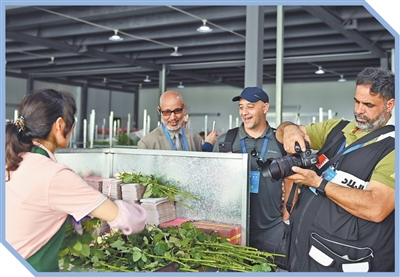
Group 1 - The 2025 "Belt and Road" Media Cooperation Forum emphasizes the importance of media in promoting cultural exchange and addressing global challenges through collaboration [7][9][19] - The forum highlights the role of media in accurately reporting on significant initiatives like the "Belt and Road" to foster a positive public opinion and mutual understanding among nations [10][19] - Various media leaders from different countries express their commitment to enhancing cooperation and sharing experiences to support the "Belt and Road" initiative [8][9][10] Group 2 - The forum discusses the need for media to adapt to new technological advancements while maintaining journalistic integrity and addressing misinformation [12][13] - Media representatives from countries like Saudi Arabia and Ghana stress the importance of independent narratives and the need to overcome Western media dominance [9][11] - The event serves as a platform for discussing the integration of local narratives in media reporting to better reflect the interests and cultures of developing nations [11][12] Group 3 - Chinese companies, such as China Energy Construction Group and China National Nuclear Corporation, showcase their commitment to high-quality projects under the "Belt and Road" initiative, focusing on sustainable development and international cooperation [14][16] - These companies emphasize their roles in energy transition and infrastructure development, contributing to local economies and enhancing regional connectivity [14][17] - The importance of sharing technological advancements and best practices in energy and infrastructure projects is highlighted as a means to achieve mutual benefits [15][16]

塑造国际合作竞争新优势
Jing Ji Ri Bao· 2025-09-07 22:12
Core Viewpoint - The article emphasizes China's commitment to expanding high-level opening-up and stabilizing foreign trade and investment, highlighting the importance of institutional opening and international cooperation in enhancing China's global competitiveness [1][4]. Group 1: Institutional Opening - The upcoming full island closure operation in Hainan represents a significant step towards institutional opening, aiming to enhance China's openness at a higher level and deeper field [1]. - As of early July, China has replicated and promoted 379 institutional innovation achievements from free trade pilot zones, creating a favorable environment for shared reform dividends and open results [1]. Group 2: Attracting Global Innovation Resources - In 2022, the proportion of foreign investment in China's high-tech industries reached 34.6%, with actual foreign investment in high-tech industries amounting to 127.87 billion yuan in the first half of this year [3]. - China is becoming a strategic hub for global capital and technology, with multinational companies increasing investments in cutting-edge fields, indicating China's growing importance in the global innovation landscape [3]. Group 3: Global Governance and International Cooperation - China actively participates in global governance and international cooperation, enhancing its influence in rule-making and contributing to economic globalization [4]. - The Belt and Road Initiative serves as a crucial platform for China to engage in global governance, focusing on infrastructure projects to create demonstrative rules and standards recognized by developing countries [4][5]. Group 4: Cooperation with Belt and Road Countries - Strengthening connectivity and capacity cooperation with Belt and Road countries is essential for shaping new international cooperation advantages, emphasizing traditional and new infrastructure projects [5]. - Continuous improvement of international cooperation mechanisms under the Belt and Road Initiative is necessary to enhance multilateral cooperation across various fields [5].
新华社评论员:践行全球治理倡议,共创人类美好未来
Xin Hua She· 2025-09-02 16:28
Core Points - The article discusses China's global governance initiative proposed by President Xi Jinping, which aims to reform and build a more just and reasonable global governance system, contributing to a community with a shared future for mankind [2][3][4] - The initiative is part of a series of proposals including the Global Development Initiative, Global Security Initiative, and Global Civilization Initiative, all aimed at promoting international cooperation and addressing global challenges [5][6] Summary by Sections - **Global Governance Initiative**: The initiative emphasizes the need for reform in the international governance structure, addressing the challenges posed by hegemonism and protectionism, and aims to enhance the representation and voice of developing countries [2][3][4] - **Core Principles**: The initiative is built on five core principles: sovereignty equality, adherence to international law, multilateralism, a people-centered approach, and action-oriented strategies, which collectively address the pressing issues in global governance [3][4] - **Long-term Commitment**: Reforming global governance is described as a long-term task requiring consistent and practical actions, with the Shanghai Cooperation Organization (SCO) positioned as a key player in promoting this initiative [6][7]
焦点访谈|历史照耀今天 正义必胜和平必胜人民必胜
Yang Shi Wang· 2025-08-30 14:15
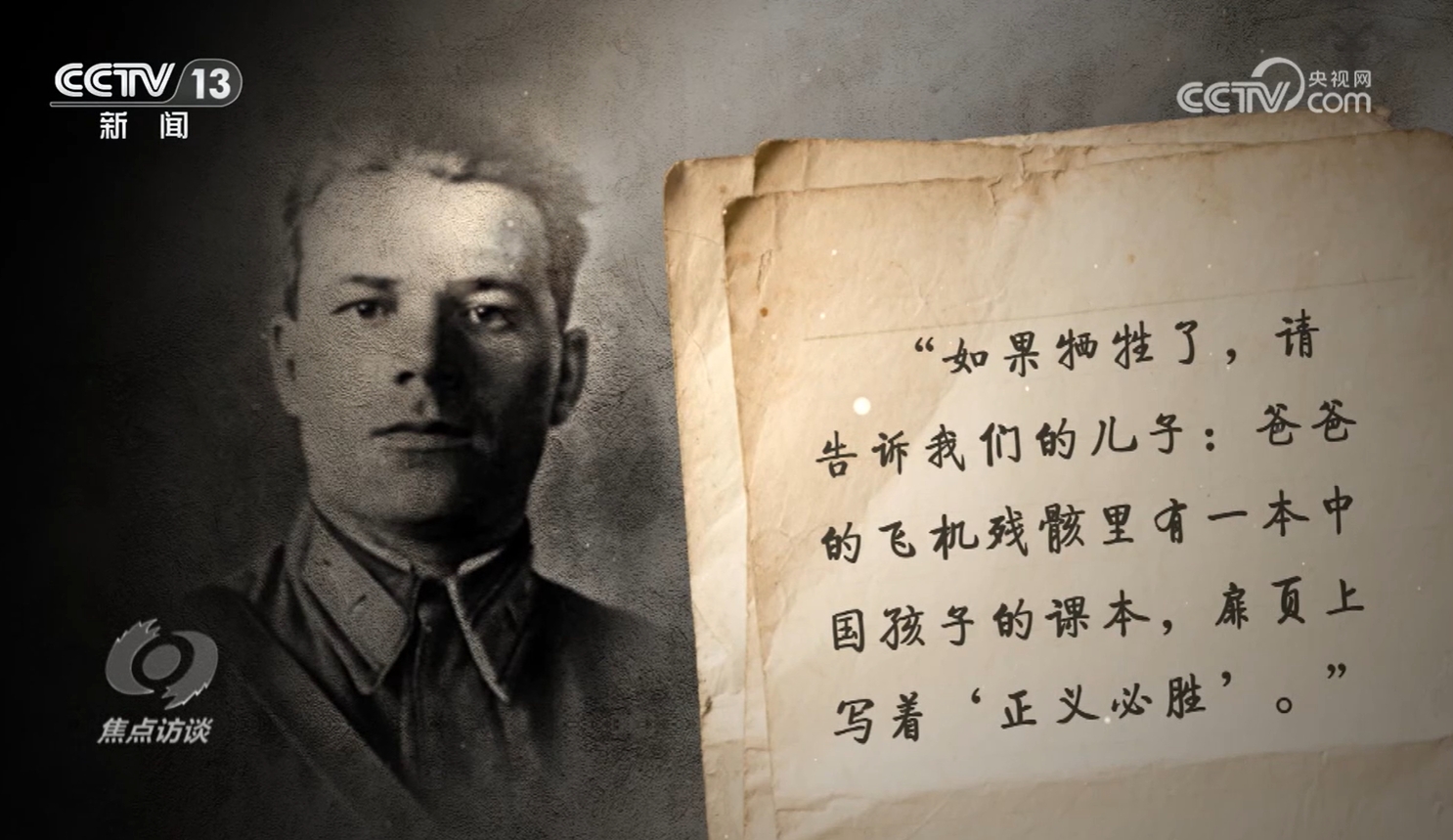
Core Points - The article highlights the international support for China's anti-Japanese war, emphasizing the contributions of overseas Chinese and foreign allies, particularly the Soviet Union and the American Volunteer Group, known as the Flying Tigers [1][5][7] - It underscores the sacrifices made by foreign volunteers, including over 200 Soviet pilots and more than 2,000 members of the Flying Tigers, who played crucial roles in the conflict [3][7][9] - The narrative illustrates the shared values of justice and solidarity among nations fighting against fascism, showcasing the historical significance of these alliances in the broader context of World War II [13][20] Group 1: International Support - The Soviet Union sent over 2,000 personnel as part of the aviation volunteer team to assist China during the war [1][5] - The Flying Tigers, an American volunteer group, shot down over 2,600 enemy aircraft and were instrumental in establishing the "Hump" airlift route for transporting supplies to China [7][9] - The article mentions the emotional connection and mutual respect between Chinese citizens and foreign volunteers, as exemplified by the funeral of Soviet pilot Kuryshenko [3][5] Group 2: Historical Context - The article references the formation of the international anti-fascist united front, which included China, the U.S., the U.K., and the Soviet Union, formalized with the signing of the United Nations Declaration in 1942 [17][20] - It discusses the significance of the anti-Japanese war within the larger framework of the global struggle against fascism, highlighting China's role in advocating for a united front against aggressors [15][17] - The narrative concludes with reflections on the lessons learned from World War II, emphasizing the importance of international cooperation and the rejection of unilateralism and hegemony in contemporary global affairs [19][23]
中国对非洲大陆发展事业的支持非常重要
Ren Min Ri Bao· 2025-08-25 22:27
Core Viewpoint - The seminar held in Pretoria focused on enhancing global trade cooperation amidst rising protectionism, discussing the potential of South-South cooperation as a solution [1] Group 1: Global Trade System - The seminar addressed the challenges and opportunities within the global trade system, emphasizing the importance of collaboration among developing countries [1] Group 2: African Continental Integration - The Secretary-General of the African Continental Free Trade Area highlighted China's role in improving infrastructure and connectivity in Africa through initiatives like the Belt and Road Initiative, which is crucial for the continent's integration process [1] Group 3: China-Africa Cooperation - South Africa's Department of Trade and Industry noted that China's zero-tariff policy benefits African products and aids in building local value chains, with expectations for enhanced cooperation in sectors such as agriculture and automotive manufacturing [1]
专访丨在文明对话中携手走向未来——访法国国民议会前第一副议长博纳尔
Xin Hua Wang· 2025-07-12 07:20
Group 1 - The core viewpoint emphasizes the importance of dialogue between civilizations, with China providing valuable proposals for global peace and development, particularly through initiatives like the Global Civilization Initiative and the Belt and Road Initiative [1][2] - The historical and philosophical depth of both France and China is highlighted as a foundation for collaboration in addressing global challenges, showcasing the unique cultural styles that contribute to a harmonious coexistence [2] - The rapid technological advancements in China, especially in green development and the electric vehicle industry, are noted as beneficial references for France's industrial ecological transformation [2] Group 2 - The role of media in facilitating civilizational interaction is underscored, with a call for new communication methods to effectively share diverse cultural narratives [3] - The significance of maintaining strong bilateral relations between the EU and China is stressed, particularly in trade, environmental protection, and cultural exchanges, which are essential for mutual benefit [3]
以习近平外交思想为引领推进新时代民间外交理论与实践发展(深入学习贯彻习近平新时代中国特色社会主义思想)
Ren Min Ri Bao· 2025-07-09 22:21
Group 1 - The core message emphasizes the importance of people-to-people diplomacy in enhancing Sino-U.S. relations, as highlighted by President Xi Jinping's encouragement to American youth visiting China [1][2][3] - The article discusses the historical, theoretical, and practical logic behind Xi Jinping's important discourse on people-to-people diplomacy, showcasing its relevance and guiding principles [2][4][5] Group 2 - Historical logic reflects the continuity of China's diplomatic philosophy, emphasizing the significance of grassroots exchanges in building solid foundations for international relations [3][4] - The theoretical framework is rooted in Marxist principles, advocating for a dialectical approach to understanding international relations and the importance of addressing contradictions in diplomacy [4][5] - Practical logic focuses on the need for problem-oriented, goal-oriented, and result-oriented approaches in people-to-people diplomacy, rooted in the realities of China's foreign relations [6][7] Group 3 - The article highlights the necessity of a people-centered approach in diplomacy, asserting that the friendship among people is a vital force for the development of international relations [8][9] - It emphasizes a systematic view of diplomacy, advocating for coordinated efforts across various sectors to enhance the effectiveness of foreign relations [9][10] Group 4 - The article outlines the importance of a balanced view of righteousness and interests in diplomacy, promoting mutual benefit and cooperation as fundamental principles [10][11] - It stresses the need for an open and inclusive perspective on civilization, advocating for cultural exchanges and mutual learning among nations [13][14] Group 5 - The article calls for strengthening theoretical research and practical exploration in people-to-people diplomacy, aligning with the broader goals of national foreign policy [14][15] - It emphasizes the importance of innovation and adaptation in diplomatic practices, particularly in the context of new global challenges and opportunities [17]
国际经济形势座谈会在金边举行
Zhong Guo Jing Ji Wang· 2025-07-01 07:53
Group 1 - The "International Economic Situation Seminar" held in Phnom Penh aims to deepen understanding of the current international economic landscape and explore new challenges and opportunities amid rising unilateralism and trade protectionism [1] - The seminar emphasizes the importance of regional cooperation and high-quality development in response to the complex international environment [1][2] - The event serves as a platform for gathering insights and fostering development among Cambodian Chinese and Hong Kong business communities [1] Group 2 - Zhao Haiyan highlighted the accelerated changes in the global landscape, with the rise of global southern countries and the need for international cooperation to address deficits in peace, development, security, and governance [2] - China maintains its position as Cambodia's largest trading partner and foreign investor, contributing significantly to Cambodia's economic development [2] - The relationship between China and its neighboring countries is at its best historically, with a focus on creating a community of shared destiny [2] Group 3 - Hong Kong's economy is impacted by U.S. tariffs and unilateral policies, but it demonstrates strong resilience due to support from the central government and its economic foundation [3] - Hong Kong's strategy focuses on leveraging its connection to the mainland while expanding its global trade network, including establishing trade offices in various countries [3] - Trade with ASEAN has significantly increased, with ASEAN becoming Hong Kong's second-largest goods export market, reaching a bilateral trade total of $165 billion in the previous year, a 14% increase [3] Group 4 - The seminar featured discussions by experts on global macroeconomic trends, emerging market dynamics in Asia, and new opportunities for China-Cambodia economic cooperation [4]
“共建‘一带一路’倡议为黎巴嫩发展提供广阔机遇”
人民网-国际频道 原创稿· 2025-06-26 03:21
Group 1 - The core viewpoint is that the relationship between Lebanon and China has seen positive developments, with increased investment from Chinese companies in Lebanon and growing cultural exchanges [1] - The "Belt and Road" initiative presents significant opportunities for Lebanon's development, especially if political stability and improved business environments are achieved [1] - Improvements in port infrastructure are expected to benefit Lebanon's economic development and contribute to regional supply chain stability [1] Group 2 - Lebanon can learn from China's development experience, particularly in areas such as high-speed rail, urban construction, and energy networks, which are crucial for socio-economic development [4] - China's poverty alleviation achievements, through precise design and implementation, have lifted millions out of poverty, serving as a model for Lebanon [4] - The shift in China's development focus from GDP to sustainable development and technological innovation reflects a commitment to high-quality growth [4] Group 3 - The concept of building a community with a shared future for mankind, along with global development and civilization initiatives, emphasizes mutual respect and collaboration to address common challenges [4] - The historical connections between Arab and Chinese civilizations through the ancient Silk Road highlight the importance of trade and cultural exchange [4] - The alignment of the "Belt and Road" initiative with the development strategies of various countries is expected to deepen cooperation and friendship between China and Arab nations [4]