匠人精神

Search documents
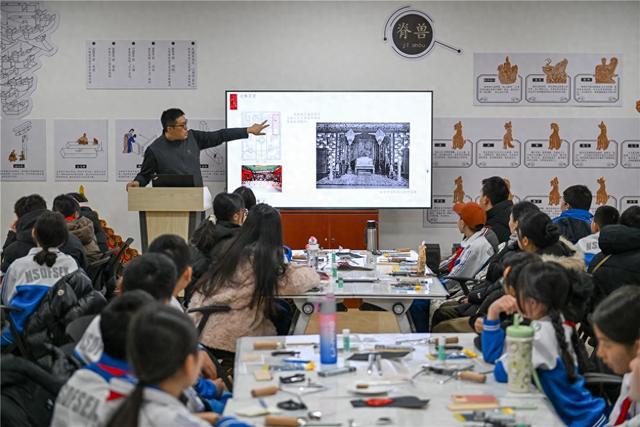
故宫博物院专家现场授课啦
Xin Lang Cai Jing· 2025-12-29 13:04
Core Viewpoint - The event "Craftsmanship and Preservation: Dialogue with Palace Artisans" held at the Hohhot Museum focuses on wood artifact restoration, featuring expert Liu Kai from the Palace Museum, aimed at enhancing local cultural heritage understanding and skills [2]. Group 1: Event Overview - The event took place on December 29 at the Hohhot Museum, specifically at the Princess Mansion Museum [2]. - It included a specialized workshop on wood artifact restoration and carving techniques [2]. Group 2: Expert Involvement - Liu Kai, a senior restoration expert from the Palace Museum, was invited to lead the workshop, sharing insights into the science and craftsmanship behind the restoration of national treasures [2]. Group 3: Practical Experience - Participants engaged in hands-on activities, including wood polishing, pattern carving, and damage repair under Liu Kai's guidance [6]. - The practical experience allowed participants to appreciate the meticulous nature of the restoration process and the artisan spirit behind "restoring the old as the old" [6].

冰雪碰撞热情,凝结冬日幸福感
Xin Lang Cai Jing· 2025-12-19 18:23
Core Viewpoint - The construction of the Beichuan Rainbow Ski Resort in Xining represents a significant development in the local winter tourism industry, combining advanced snow-making technology with a variety of recreational offerings to enhance the winter experience for residents and visitors [6][9]. Group 1: Snow-Making Technology - The ski resort utilizes six large snow-making machines that operate at night to create optimal snow conditions, as temperatures drop to between -3°C and -5°C, ensuring the snow is soft and easy to shape [8]. - The snow-making process involves compressing air and water to create fine mist droplets that quickly freeze upon contact with cold air, resulting in high-quality snow [6]. Group 2: Infrastructure Development - The resort features a range of facilities, including intermediate and beginner ski slopes, a family snow play area, and various entertainment options such as snow banana boats and mini-motorcycles, catering to diverse visitor needs [7]. - Construction activities are strategically scheduled, with snow-making occurring at night and infrastructure improvements taking place during the day to maximize efficiency and safety [8]. Group 3: Economic Impact - The development of the Beichuan Rainbow Ski Resort aligns with Xining's strategy to promote "ice and snow" tourism, transforming cold resources into a vibrant economic sector and enhancing winter tourism offerings [9]. - The ski resort is expected to become a new landmark for cultural tourism in Xining, attracting more visitors and providing a local recreational option, thereby contributing to the region's economic growth [9].

她是四川最后的甜妹!
Sou Hu Cai Jing· 2025-10-16 02:17
Core Perspective - The article highlights the journey and resilience of a Sichuan actress, emphasizing her deep connection to her roots and cultural heritage while navigating the entertainment industry. Group 1: Personal Background - The actress, born in 1987 in a teacher's family in Yibin, Sichuan, embodies the spirit of her homeland, shaped by the natural beauty and cultural richness of the region [3]. - Her upbringing in the lush environment of the Yangtze River and bamboo forests instilled a sense of perseverance and strength within her [3]. Group 2: Career Development - A turning point in her career occurred in 2009 during a substitute performance of "The Moon Doesn't Know the Heart," where her unique talent was recognized, leading to praise from judges [5]. - Despite initial doubts about her versatility in acting, she has successfully showcased her cultural heritage through her performances, particularly using local folk songs [5]. Group 3: Cultural Advocacy - Since 2015, the actress has focused on promoting Sichuan's cultural treasures through short videos, highlighting traditional crafts and artisans [7]. - She emphasizes that the cultural richness of Sichuan should not be limited to tourism brochures, advocating for a deeper appreciation of local heritage [7]. Group 4: Philanthropy and Values - The actress honors the spirit of craftsmanship, as seen in her choice of a bamboo leaf brooch made by a local silversmith at a film festival, symbolizing her respect for artisans [8]. - She has quietly supported education for girls in Liangshan for three years, reflecting her commitment to uplifting her community [8]. Group 5: Personal Philosophy - In the age of social media, she rejects the "foodie" persona, instead sharing her culinary skills in a way that reflects her cultural identity, blending softness with strength [9]. - Her connection to her father's literary legacy and the sounds of her hometown, like mahjong, represent her grounded approach to life and career [9].

文晖街道让萌娃沉浸式感受国潮文化
Hang Zhou Ri Bao· 2025-08-29 02:59
Core Viewpoint - The summer camp "Nezha's Summer Fun: Calligraphy and Children's Journey" successfully integrated traditional culture with ecological education, providing an immersive experience for youth through the cultural icon Nezha [1] Group 1: Event Overview - The summer camp featured a theme of "Intangible Cultural Heritage and Model Worker Spirit," focusing on paper-cutting art and mythological stories to create a traditional cultural experience for participants [1] - Participants learned to create paper-cutting art inspired by the myth "Nezha Conquers the Sea," guided by master craftsman Fang Jianguo, emphasizing the importance of focus and craftsmanship [1] Group 2: Educational Activities - A cultural lecture titled "The Thousand-Year Journey of a Brush" was conducted, revealing the evolution of brush design through video learning [1] - Children engaged in hands-on activities by making "mini brushes," allowing them to experience the artisan spirit through the process of assembling the brush [1] Group 3: Community Engagement - Participants formed the "Nezha Water Protection Team" to learn about Hangzhou's "Water Management Spirit" by visiting a river exhibition hall [1]
我在日本做科研,“要晋升谁,十年前就定好了”
Hu Xiu· 2025-08-10 23:57
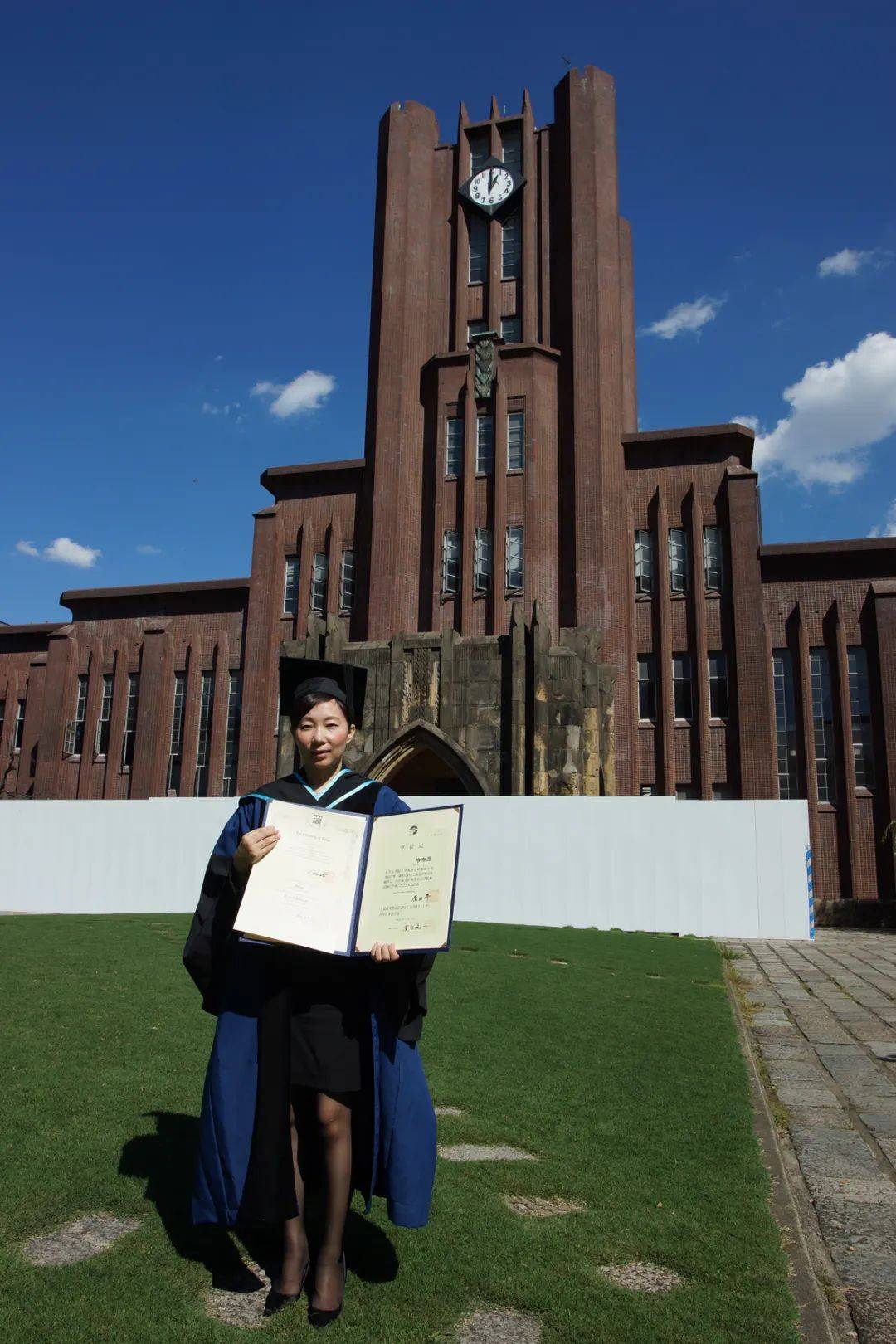
Core Viewpoint - The article discusses the structured and hierarchical nature of the academic promotion system in Japan, highlighting the experiences of Chinese scholars in navigating this environment and the challenges they face in their academic careers [3][55][61]. Group 1: Academic Environment in Japan - The academic promotion in Japanese universities is predetermined, with fixed positions for professors, associate professors, and assistant professors, leading to a stable but rigid system [3][55]. - The promotion decisions are made by a committee of ten professors, and there is a long-term plan for promotions that spans a decade [3][61]. - The article contrasts the structured Japanese academic environment with the more flexible systems in other countries, suggesting that this rigidity may hinder innovation and responsiveness in academia [3][61]. Group 2: Experiences of Chinese Scholars - The experiences of Chinese scholars like Habur and Cao Bin illustrate the challenges and opportunities of studying and working in Japan, including the need for language proficiency and cultural adaptation [10][18]. - Habur's journey from a stable teaching position in China to pursuing advanced studies in Japan reflects a desire for personal and professional growth, despite the challenges of adapting to a new academic culture [9][10]. - Cao Bin's successful navigation of the Japanese academic system, including publishing multiple papers and receiving awards, highlights the potential for achievement within this structured environment, although he notes a decline in academic standards [18][61]. Group 3: Gender and Diversity Issues - The article points out the low representation of female faculty in Japanese universities, with Habur noting that less than 20% of faculty at Okayama University are women [57]. - The challenges faced by female academics, such as balancing family responsibilities with career advancement, are emphasized as significant barriers in the Japanese academic landscape [55][56]. Group 4: Future Outlook - The article raises concerns about the stagnation of Japan's academic and economic vitality, suggesting that without significant reforms, Japan may struggle to maintain its status as a developed nation [66]. - Scholars like Yu Daiyang express intentions to return to China after completing their studies, indicating a potential brain drain from Japan as opportunities in China become more attractive [67][68].
中国人开的日料店,气死了多少日本人?
创业邦· 2025-08-07 03:49
Core Viewpoint - The article discusses the impact of Chinese chefs on the Japanese cuisine industry, highlighting how the rise of Chinese-run Japanese restaurants has altered perceptions of authentic Japanese food and affected local businesses in Japan [4][9]. Group 1: Japanese Culinary Certification - The Japanese Ministry of Agriculture, Forestry and Fisheries (MAFF) introduced a culinary certification to deter Chinese chefs, but it has not effectively restricted their presence in the market [4][5]. - As of last September, there were only 23 gold-certified chefs globally, most of whom are not Chinese [5]. Group 2: Salmon Supply Chain - Norway's salmon export to Japan increased from 2 tons in 1980 to 45,000 tons by 2000, largely due to successful marketing strategies that alleviated Japanese concerns about parasites [12]. - The reliance on imported salmon is significant, as Japan's domestic salmon production is minimal, with only 2 tons annually from Hokkaido [14]. Group 3: Seafood Imports - Japan's seafood supply heavily depends on imports, with 70% of eel sourced from China by 2024, and 44.1% of Japan's seafood imports coming from China, Chile, the USA, and Russia [17][20]. - The Japanese seafood industry faces challenges due to reliance on foreign sources, which can be affected by international regulations and trade agreements [20]. Group 4: Restaurant Profitability - Japanese restaurants in New York reportedly have a net profit margin of 12% to 15%, which is higher than that of Chinese restaurants [24]. - A Chinese sushi chain listed in Hong Kong achieved a net profit margin of 15.1% in 2022, comparable to the peak performance of Haidilao [27]. Group 5: Cultural and Culinary Adaptation - Japanese cuisine has adapted by emphasizing cultural narratives and presentation, creating a high perceived value despite the reliance on imported ingredients [30][33]. - The "artisan spirit" in Japanese cuisine has shifted focus from raw materials to cultural experiences, allowing for significant pricing power [33][34]. Group 6: Food Authenticity Issues - Instances of food mislabeling have emerged, such as a restaurant claiming to serve Japanese eel while sourcing from China, highlighting the blurred lines of authenticity in the food industry [39][40]. - The article notes that Chinese production capabilities have led to a significant share of high-end food products, including foie gras and truffles, being produced in China [42].
中国人开的日料店,气死了多少日本人?
36氪· 2025-08-06 13:35
Core Viewpoint - The article discusses how Chinese chefs have significantly influenced the Japanese cuisine market, leading to a transformation in the perception and consumption of Japanese food globally, while Japan struggles to maintain its culinary heritage and market share [5][10]. Group 1: Japanese Culinary Certification and Market Dynamics - In 2016, Japan's Ministry of Agriculture, Forestry and Fisheries introduced a certification to deter Chinese chefs, but it failed to restrict their presence in the market [5][6]. - The certification has only produced 23 gold-certified chefs globally, with most being non-Japanese [6]. - The Japanese culinary industry is facing challenges as it loses market share to Chinese restaurants that innovate traditional dishes [10]. Group 2: Salmon Supply Chain and Globalization - Norway's salmon production has dramatically increased from 2 tons in 1980 to 45,000 tons by 2000, largely due to successful marketing strategies aimed at Japanese consumers [14]. - The reliance on imported ingredients is evident, with Japan's domestic salmon production being minimal compared to imports from Norway [17][21]. - By 2024, 70% of eel supply in Japan is expected to come from China, highlighting the shift in sourcing seafood [20]. Group 3: Economic Aspects of Japanese Cuisine - Japanese restaurants in New York reportedly have a net profit margin of 12% to 15%, which is higher than that of Chinese restaurants [29]. - The article notes that Japanese cuisine is one of the few profitable sectors in the global restaurant industry, with high consumer spending [30]. - The simplicity of Japanese cooking techniques allows for lower operational costs, but high raw material costs can limit profit margins [33]. Group 4: Cultural and Marketing Strategies - Japanese restaurants leverage cultural narratives and aesthetics to enhance the perceived value of their dishes, creating a significant premium on pricing [40][41]. - The article emphasizes the importance of branding and presentation in Japanese cuisine, which allows for higher profit margins despite the reliance on imported ingredients [37][40]. - In contrast, Chinese restaurants are adopting standardized operations to increase efficiency and profitability, moving away from traditional culinary practices [44][45]. Group 5: Challenges and Adaptations - Instances of food fraud in Japan, such as mislabeling imported products as local, indicate the pressures faced by the industry to maintain authenticity while competing with cheaper imports [58][59]. - The article highlights the ongoing struggle within Japan to balance traditional culinary practices with the realities of global supply chains and market competition [55].
中国人开的日料店,气死了多少日本人?
虎嗅APP· 2025-08-06 10:42
Core Viewpoint - The article discusses the evolution and current state of Japanese cuisine, particularly in relation to the influence of Chinese chefs and the sourcing of ingredients, highlighting the challenges faced by traditional Japanese culinary practices in a globalized market [4][6]. Group 1: Japanese Culinary Certification and Market Dynamics - The Japanese Ministry of Agriculture, Forestry and Fisheries (MAFF) introduced a certification system for Japanese cuisine to combat the rise of Chinese-run Japanese restaurants, which have created fusion dishes that deviate from traditional Japanese cuisine [4][5]. - As of last year, there were only 23 certified gold-level chefs globally, with most being non-Japanese, indicating a struggle for traditional Japanese chefs to maintain their market share [5][6]. Group 2: Ingredient Sourcing and Globalization - The article highlights that while Chinese sushi restaurants may not use Japanese-sourced salmon, Japanese restaurants often rely on Norwegian salmon, which has become a staple in Japan since the 1980s [8][9]. - Japan's domestic seafood production is limited, with significant reliance on imports for various seafood, including 70% of its eel supply coming from China by 2024 [13][16]. Group 3: Economic Viability of Japanese Cuisine - Japanese restaurants in New York reportedly have a net profit margin of 12% to 15%, making them more profitable than Chinese restaurants, which have a margin below 12% [20]. - A Chinese self-service Japanese restaurant chain that went public in Hong Kong in 2022 reported a net profit margin of 15.1%, comparable to peak levels of other successful dining chains [23]. Group 4: Cultural and Culinary Value - The article discusses how Japanese cuisine has shifted focus from raw materials and cooking techniques to cultural and experiential value, allowing for significant price premiums [26][27]. - The "artisan spirit" in Japanese cuisine emphasizes the process and presentation, which has created a unique market positioning despite the reliance on imported ingredients [24][29]. Group 5: Challenges and Adaptations - The article notes instances of food fraud in Japan, such as mislabeling imported produce as locally sourced, reflecting the pressures of maintaining authenticity in a competitive market [37][39]. - The rise of Chinese culinary standards and practices in Japanese cuisine has led to a transformation in how Japanese food is prepared and marketed, often prioritizing efficiency and scalability over traditional methods [29][30].
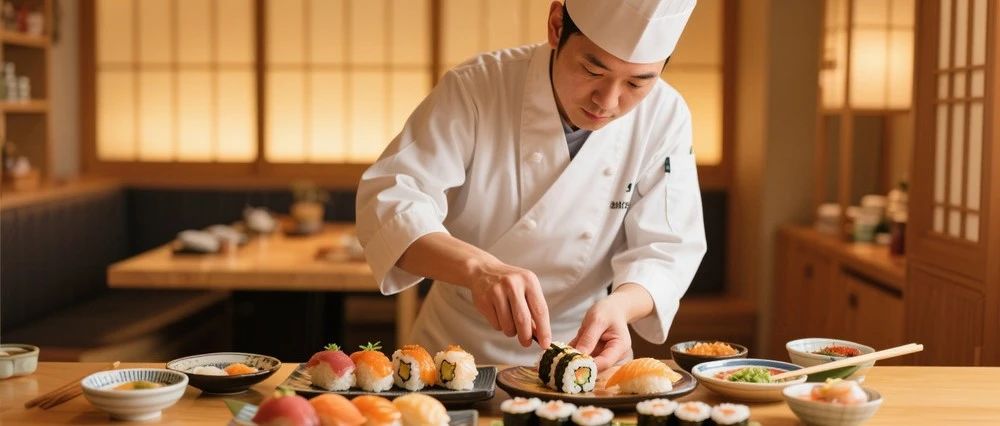
中国人开的日料店,气死了多少日本人?
远川研究所· 2025-08-05 14:22
Core Viewpoint - The article discusses the evolution and current state of Japanese cuisine, particularly focusing on the influence of Chinese chefs and the sourcing of ingredients, highlighting the challenges faced by traditional Japanese culinary practices in the global market [5][8][10]. Group 1: Japanese Culinary Certification and Market Dynamics - In 2016, Japan's Ministry of Agriculture, Forestry and Fisheries introduced a certification for Japanese cuisine chefs aimed at regulating the influx of Chinese chefs, but it has not effectively limited their presence [5][8]. - The certification has three levels, with the highest requiring not only cooking skills but also cultural etiquette, yet only 23 gold-certified chefs exist globally, most of whom are not Chinese [5][6]. - The rise of Chinese-run Japanese restaurants has led to a significant shift in the perception and authenticity of Japanese cuisine, with many traditional dishes being adapted or reinterpreted [8][10]. Group 2: Ingredient Sourcing and Globalization - Norway's salmon export to Japan increased dramatically from 2 tons in 1980 to 45,000 tons by 2000, indicating a shift in Japanese dietary habits towards imported seafood [10][11]. - Japan relies heavily on imports for seafood, with 70% of its eel supply coming from China by 2024, and a significant portion of other seafood sourced from various countries [16][20]. - The article highlights the challenges Japan faces in maintaining its culinary identity while being dependent on foreign ingredients, leading to a potential crisis in its traditional food culture [20][21]. Group 3: Economic Aspects of Japanese Cuisine - Japanese restaurants in New York reportedly have a net profit margin of 12% to 15%, which is higher than that of Chinese restaurants [22][24]. - The article notes that the simplicity of Japanese cooking techniques allows for high raw material costs, but the cultural and experiential aspects create significant added value, leading to higher pricing [25][30]. - The trend of standardization and scalability in Chinese-run Japanese restaurants contrasts with the traditional "artisan spirit" of Japanese cuisine, allowing for rapid replication and increased profitability [32][33]. Group 4: Cultural and Ethical Concerns - Instances of mislabeling and sourcing issues have emerged, such as a restaurant in Hangzhou falsely claiming to use Japanese ingredients while sourcing locally [34][36]. - The article discusses the ethical implications of ingredient sourcing, including cases of fraud where imported goods are misrepresented as local products to command higher prices [43][46]. - The cultural significance of Japanese cuisine is being challenged by these practices, raising questions about authenticity and consumer trust in the culinary market [20][30].

中国人开的日料店,气死了多少日本人?
Hu Xiu· 2025-08-05 13:57
Group 1 - The Japanese Ministry of Agriculture, Forestry and Fisheries (MAFF) introduced the "Overseas Japanese Cuisine Cooking Skills Certification Guidelines" in 2016, primarily aimed at discouraging Chinese chefs [1] - Many Chinese Japanese restaurants have created new dishes that deviate from traditional Japanese cuisine, leading to a loss of business for local Japanese establishments [2] - The certification exam has three levels: gold, silver, and bronze, with the gold level requiring the highest standards in culinary skills and cultural etiquette [3] Group 2 - As of September last year, there were only 23 global gold-certified chefs, most of whom were not Japanese [4] - The Japanese have been focused on targeting Chinese chefs, but they may overlook the broader issue of their own market share being threatened [5] - The rise of Chinese chefs in the Japanese cuisine sector reflects a larger trend where Japan's culinary reputation is being challenged [6] Group 3 - The salmon served in Chinese Japanese restaurants is often not air-freighted from Japan, while Japanese restaurants typically source their salmon from Norway [7] - Norway's salmon export to Japan increased dramatically from 2 tons in 1980 to 45,000 tons by 2000, indicating a significant shift in Japanese dietary habits [11] - The reliance on imported seafood is evident, with Japan importing a large portion of its seafood, including salmon, eels, and crabs from various countries [20] Group 4 - The Japanese restaurant industry has recognized the challenges posed by modern aquaculture and has adapted by enhancing the cultural aspects of dining experiences [32] - The "artisan spirit" in Japanese cuisine has shifted focus from raw materials and cooking techniques to cultural and experiential value, creating significant pricing power [36] - Chinese Japanese restaurants have adopted standardized and scalable operations, allowing for rapid replication and increased profitability [41] Group 5 - The Japanese seafood market has faced issues with food fraud, such as mislabeling imported products as locally sourced [56] - The reliance on imports has led to a situation where Japanese consumers are increasingly aware of the origins of their food, prompting a shift in purchasing behavior [59] - The global trend of sourcing high-quality ingredients from China has resulted in significant market changes, with China becoming a leading producer of various gourmet foods [48][49]