
口岸经济

Search documents
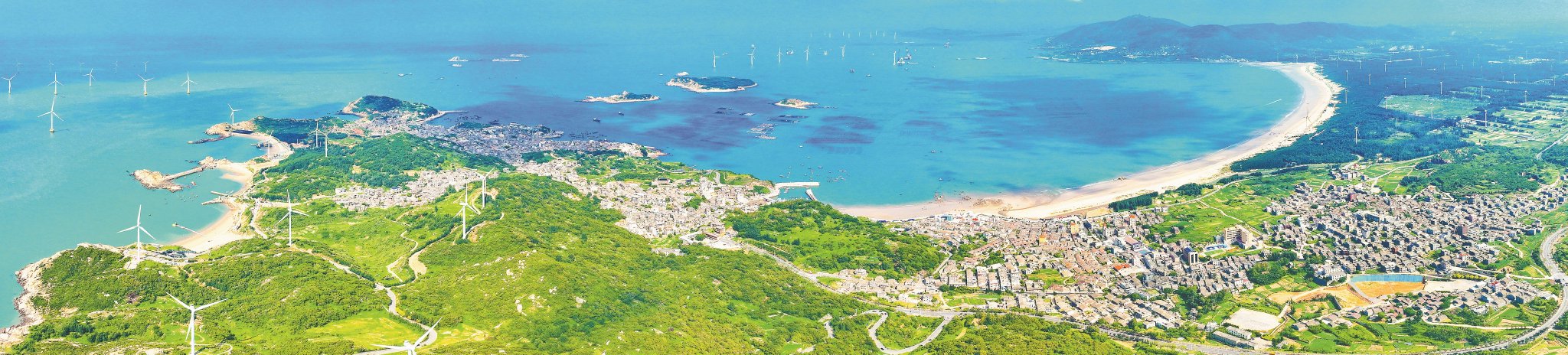
平潭扬帆,驶向更美好的明天!
Xin Lang Cai Jing· 2025-12-22 23:27
Core Viewpoint - Pingtan is undergoing significant development and transformation, focusing on industrial upgrades, social improvements, urban quality enhancement, and deepening cross-strait integration, driven by the strategic blueprint outlined by General Secretary Xi Jinping [8][20]. Group 1: Industrial Development - Pingtan's GDP is projected to grow at an average rate of 3% from 2021 to 2024, with fixed asset investment totaling 77.9 billion yuan [8]. - The Pingtan port has resumed regular cross-strait shipping operations, with 449 shipments completed since the resumption, and a total value of 2.54 billion yuan for Taiwanese agricultural products imported [8][9]. - The digital economy is expanding, with over 3,600 new digital economy enterprises established during the 14th Five-Year Plan, and the launch of the Cross-Strait Integration Intelligent Computing Center with a computing power scale of 2,300P [10][11]. Group 2: Urban and Rural Quality Enhancement - Pingtan has improved urban infrastructure, including the construction of 60 kilometers of new water supply pipelines and 120 kilometers of sewage pipelines, enhancing the overall urban quality [14]. - The number of new school places has increased by 13,205, and the number of hospital beds per thousand people has risen from 3.91 to 5.88, indicating significant improvements in education and healthcare [15]. - The rural economy is thriving, with 11 villages reporting collective incomes exceeding 1 million yuan, a 57% increase year-on-year [15]. Group 3: Cultural and Tourism Integration - Pingtan has implemented 62 key cultural and tourism projects with a fixed asset investment of 11.8 billion yuan, a 127% increase compared to the previous five-year period [17]. - The region is promoting various cultural events and sports competitions, with over 250 brand events held in the past five years, enhancing tourism and local engagement [18]. - The expected total number of tourists during the 14th Five-Year Plan is 46 million, with total tourism expenditure projected at 48.6 billion yuan, representing 2.1 and 2.2 times the figures from the previous five-year period [19]. Group 4: Cross-Strait Exchanges - Pingtan has attracted 56 Taiwanese agricultural enterprises and introduced 144 new agricultural varieties, fostering deep agricultural integration between the two sides [21]. - The establishment of the Taiwan Youth Entrepreneurship Incubation Center aims to support Taiwanese youth in entrepreneurship, addressing challenges such as financing and market access [22]. - The region is enhancing cross-strait exchanges through various initiatives, including the "Kirin Craftsman" vocational skills competition, which promotes skills exchange and collaboration [22].

运行36年后,全国首个24小时通关口岸关闭货运功能
2 1 Shi Ji Jing Ji Bao Dao· 2025-12-22 12:36
Core Viewpoint - The closure of the Huanggang Port's cross-border freight function marks a significant transition for Shenzhen's logistics and economic landscape, shifting from a freight hub to a pure passenger inspection port, thereby optimizing resource allocation and enhancing cross-border logistics efficiency [1][2][6]. Group 1: Port Function Transition - The Huanggang Port officially ceased its freight operations on December 20, 2025, transitioning to a passenger inspection port after nearly 36 years of operation [1]. - This port was previously the largest land crossing in China, with peak import and export values reaching 3.1 trillion yuan, accounting for 10% of the national total [1]. - The adjustment of Huanggang Port's functions is part of a broader strategy to enhance the efficiency of cross-border logistics and align with national infrastructure goals for the Guangdong-Hong Kong-Macau Greater Bay Area [6]. Group 2: Economic Implications - The closure of the freight function will free up over 400,000 square meters of land in the Futian District for the development of the Shenzhen-Hong Kong Science and Technology Innovation Cooperation Zone, facilitating the integration of global innovation resources [6][10]. - The transition is expected to create a new economic model, transforming the port from a transit hub to a strategic link that supports regional economic development [2][8]. - The overall traffic at Shenzhen's land ports has seen significant growth, with vehicle crossings reaching 9.46 million in the first three quarters of 2025, a year-on-year increase of 16.24% [8]. Group 3: Future Developments - The Shenzhen government is implementing various upgrades to other ports, such as increasing inspection personnel and optimizing passageways to ensure smooth freight business transitions [7]. - The Luo Hu District is actively developing policies to attract high-value trade and cross-border e-commerce, aiming to establish a comprehensive port economy [9]. - The ongoing development of the Huanggang Port and other ports is expected to enhance the living experience for residents in the Greater Bay Area, promoting closer ties between Shenzhen and Hong Kong [10].
西藏“十五五”规划建议:推进跨喜马拉雅立体互联互通网络建设;建设跨境产业链合作枢纽
Zheng Quan Shi Bao Wang· 2025-12-15 02:44
Core Viewpoint - The article discusses the suggestions released by the Tibet Autonomous Region Committee regarding the formulation of the "14th Five-Year" national economic and social development plan, emphasizing the optimization and enhancement of the open economic structure [1] Group 1: Open Economic Structure - The plan aims to improve the high-level open system and mechanism, steadily expand openness, and establish an open structure characterized by "one center leading, two wings supporting, and multiple ports linking" [1] - Active participation in the Belt and Road Initiative is highlighted, along with efforts to integrate and connect with the new western land-sea corridor [1] Group 2: Infrastructure and Connectivity - The construction of a three-dimensional connectivity network across the Himalayas is prioritized, with a focus on developing the "South Asia Class" for public and rail transport [1] - The plan includes enhancing the coordination mechanism for Sino-Nepal border trade and cooperation, as well as implementing visa policies at Lhasa Gonggar International Airport [1] Group 3: Cross-Border Economic Development - The strategy emphasizes the role of border cooperation zones, mutual market trade zones, and port parks in building cross-border industrial and supply chains [1] - The development of a "port hub + channel + trade + industry" economic model is proposed to enhance the international influence of major open cooperation platforms [1]
云南临沧:协同“三大经济” 推动兴边富民
Ren Min Ri Bao· 2025-12-12 05:37
Core Viewpoint - During the "14th Five-Year Plan" period, Lincang City in Yunnan Province is committed to the "3815" strategic development goals, promoting the coordinated development of resource economy, park economy, and port economy, achieving an economic total exceeding 100 billion yuan, and enhancing the quality of life for its diverse population [1] Group 1: Party Leadership and Development - Lincang integrates party leadership into all aspects of economic and social development, advancing the construction of a border party building corridor [2] - The belief among various ethnic groups in the party's guidance has strengthened, promoting a culture of gratitude and unity [2] - Mechanisms for reporting work by leading cadres have been established, enhancing the entrepreneurial spirit among party members [2] Group 2: Innovation and Industrial Upgrade - Lincang is advancing the construction of a national sustainable development agenda innovation demonstration zone, with annual R&D investment growth averaging 17% from 2021 to 2024 [3] - The total output value of the highland characteristic agriculture industry chain has surpassed 200 billion yuan, with the "Lincang Tea" brand projected to exceed 38 billion yuan by 2025 [3] - The nut industry is expected to reach a value of 11.4 billion yuan by 2025, with farmers' annual income increasing by 3,000 yuan [3] - The tourism industry is growing, with an annual increase in total spending exceeding 17% [3] Group 3: Expansion and Infrastructure Development - In 2021, Lincang opened a new international passage through the Qing Shui River port, completing over 49,000 TEUs of container transport [4] - Transportation infrastructure is being upgraded, with the Kunming-Lincang railway achieving full-speed domestic operation and highway mileage reaching 468 kilometers [4] - The Qing Shui River port has undergone smart upgrades, reducing customs clearance time to 3.5 hours [4] Group 4: Ecological Protection and Public Welfare - Lincang is committed to ecological priority and green development, having created a national ecological civilization demonstration zone [5] - The city has designated 8.86 million acres for ecological protection and has achieved a forest coverage rate of 57.8% [5] - Public budget expenditures for livelihood areas exceed 80%, with per capita disposable income projected to reach 25,167 yuan in 2024 [5] Group 5: Governance and Community Building - Lincang has achieved full coverage in creating a national model for ethnic unity and progress [6] - The city has built 44 border happiness villages and established a comprehensive governance system [6] - A robust border defense mechanism has been implemented along nearly 300 kilometers of the border [6]
中老边境小镇磨憨正崛起为国际口岸新城
Zhong Guo Xin Wen Wang· 2025-12-10 08:49
Core Viewpoint - The rapid development of the Mohan border town in Yunnan, China, is transforming it into a significant international trade hub, driven by infrastructure improvements and strategic investments, particularly following the opening of the China-Laos Railway. Group 1: Economic Development - The town of Mohan has seen a shift from banana import trade to a thriving fast-food business, with projected revenues of 1 million RMB in 2024, primarily serving construction workers [1] - The population of Mohan has doubled from 20,000 to 40,000 since the provincial capital Kunming took over its management, leading to significant economic growth [4] - Cumulative investments exceeding 14 billion RMB have been made since the management transfer, with nearly 100 enterprises and numerous industrial projects established [4] Group 2: Infrastructure and Strategic Location - Mohan is strategically located at a key junction of the China-Laos Railway and the Kunming-Mohan Highway, making it a vital land port for trade with Southeast Asia [1] - The South Slope International Capacity Cooperation Zone has begun to take shape, with modern hotels, talent apartments, and a border trade market being developed [1] - The opening of the China-Laos Railway in December 2021 has maintained a robust flow of both passenger and cargo traffic, enhancing the region's connectivity [4] Group 3: Business Opportunities - Companies like Jiangxi Xingchi Electronic Technology Co., which produces projection equipment, are considering establishing production lines in Mohan to tap into both domestic and Southeast Asian markets [6] - The combination of provincial resources and port advantages is attracting significant attention from businesses looking to expand in the region [4]
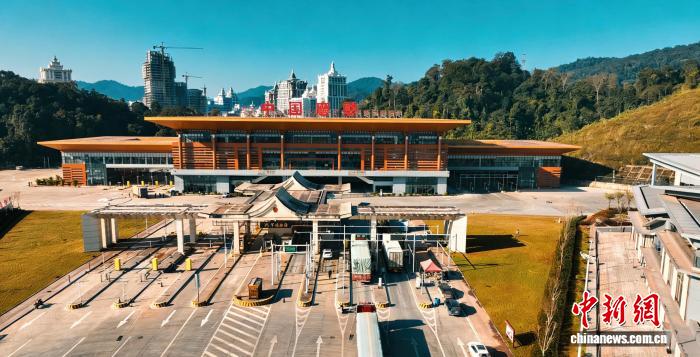
罗湖出台口岸经济高质量发展12条措施
Zheng Quan Shi Bao Wang· 2025-12-05 00:36
Core Viewpoint - The article discusses the recent release of measures aimed at promoting high-quality development of the port economy in Luohu District, focusing on leveraging the advantages of the Luohu port cluster to create a comprehensive economic zone that integrates trade, consumption, and innovation [1] Group 1: Economic Development Measures - The measures include four main directions and twelve specific initiatives to enhance trade upgrades and industrial collaboration [1] - In goods trade, the focus is on attracting high-value-added products and establishing headquarters for bulk commodity trade, along with developing cross-border e-commerce industrial parks [1] - In service trade, the initiatives target cross-border tourism, international logistics, and creative design, with plans to create digital creative art districts as service platforms [1] Group 2: Innovation and Technology - The plan emphasizes the application of new technologies and business models, particularly in the areas of "AI+" and low-altitude economy [1] - For "AI+" applications, the strategy includes promoting AI digital humans, biometric recognition services, and piloting cross-border unmanned transportation and freight [1] - The low-altitude economy will be tested at the Wenjindu port, initiating drone-based cross-border logistics delivery and exploring new models that integrate low-altitude services with cultural tourism [1]
观察:将“通关流量”转化为“产业经济” 口岸经济激发新动能
Zheng Quan Shi Bao Wang· 2025-12-03 23:41
Core Insights - The interaction between residents of Shenzhen and Hong Kong has intensified, with cross-border consumption becoming a daily routine rather than an occasional activity [1] - Shenzhen's port authority reported that as of November 23, 2025, the total number of travelers crossing the Shenzhen port exceeded 240 million, surpassing the total for 2024 and achieving this milestone 38 days earlier than the previous year [1] - The newly released measures from the Luohu District aim to transform the significant "cross-border flow" into tangible "industrial economy" [1] Group 1: Economic Measures - The Luohu District has introduced the first set of measures in Shenzhen to promote high-quality development of the port economy, focusing on creating a unique economic zone that integrates trade, inbound consumption, demonstration, and talent exchange [1] - The measures include 12 initiatives across four areas: industrial development, cross-border consumption, technological innovation, and cultural exchange [2] Group 2: Technological Innovations - The measures aim to establish the port economy as a "testing ground" for strategic emerging industries, proposing the development of AI digital humans and promoting services like biometric recognition and smart guidance [2] - Initiatives include trials for autonomous taxis, cross-border unmanned buses, and unmanned cargo transport [2] Group 3: Logistics and Transportation - The Wenjindu port has initiated drone logistics delivery, expanding applications for cross-border express delivery and emergency supplies [2] - Development of high-value low-altitude transportation for medical cold chains and fresh produce is also highlighted, along with optimizing "low-altitude flower tours" to create a new model integrating low-altitude, cultural tourism, and commerce [2] Group 4: Regional Integration - The integration of Shenzhen and Hong Kong is driving the flow of people, goods, and information, with the port economy channeling cross-border flow into consumption, tourism, and daily life [2] - This integration is not merely additive but represents a deep restructuring of the industrial chain, showcasing Shenzhen's innovative approach to exploring high-quality development paths for the port economy [2]
深圳罗湖发布全市首个口岸经济发展措施
Zheng Quan Shi Bao Wang· 2025-12-03 12:24
Core Viewpoint - The recent measures introduced by the Luohu District of Shenzhen aim to enhance the port economy, transforming it into a new economic hub that promotes consumption upgrades and industrial integration, with a focus on high-quality development [1][2]. Group 1: Economic Measures - Luohu District has launched the first port economy measures in Shenzhen, proposing 12 key initiatives to activate the port economy's potential [1]. - The focus is on attracting high-value products and bulk commodity trade headquarters, promoting agricultural and energy procurement, and building a digital supply chain platform [1]. - Plans include the establishment of an AI research and development base and a life health industry park, targeting cutting-edge industries like AI and life sciences [1]. Group 2: Consumption Enhancement - Luohu aims to create a high-end consumption center in the Greater Bay Area by attracting international luxury brands and developing cross-border experience centers [1]. - The district plans to enhance service consumption by introducing more Hong Kong dining options and Michelin-starred brands, as well as upgrading hotels and developing high-end medical and wellness products [1]. Group 3: Innovation in Scenarios and Models - The district will utilize AI technology to create digital port personnel, pilot unmanned cross-border transport, and explore AI translation and consumer rights protection [2]. - Initiatives include launching drone logistics at the Wenjindu port and optimizing low-altitude tourism products, creating a new model that integrates low-altitude transport with tourism and commerce [2]. Group 4: Cultural and Youth Integration - The focus is on developing cultural tourism districts and enhancing educational cooperation with Hong Kong, providing better services for Hong Kong children [2]. - Measures to support Hong Kong youth include establishing innovation incubators and creating vibrant youth districts, fostering a "dual-city" lifestyle [2]. Group 5: Cross-Border Flow and Connectivity - The implementation of seamless customs clearance at major ports aims to reduce waiting times and enhance cross-border mobility [3]. - Plans include extending customs hours and establishing a cross-border bus network to facilitate high-frequency, point-to-point travel [3]. - The strategy emphasizes converting cross-border traffic into consumption and industrial growth, with initiatives to create consumption streets and improve public services for Hong Kong residents [3].
深圳发布全市首个口岸经济发展措施
2 1 Shi Ji Jing Ji Bao Dao· 2025-12-03 10:53
Core Viewpoint - The Shenzhen Luohu District has officially released measures to promote high-quality development of the port economy, aiming to create a distinctive port economic belt that integrates trade, inbound consumption, demonstration scenarios, and talent exchange. Group 1: Measures Overview - The measures consist of 12 key initiatives across four main areas: industrial development, cross-border consumption, technological innovation, and cultural exchange [2]. - The port economy aims to attract high-value-added products and bulk commodity trade headquarters, develop a digital supply chain platform, and promote cross-border e-commerce [2][3]. Group 2: Trade and Consumption - In goods trade, the focus is on attracting high-value products and establishing a digital supply chain, while in service trade, the goal is to introduce financial institutions and knowledge-intensive service enterprises [2]. - The measures emphasize enhancing cross-border consumption by introducing international flagship stores, developing high-end medical and health management products, and improving cross-border payment systems [2][3]. Group 3: Innovation and Technology - The measures propose the establishment of an AI digital human at the port, promoting services like biometric recognition and smart guidance, and exploring AI applications in customer service and cross-border consumer rights protection [3]. - The low-altitude economy will be developed through drone logistics and high-value low-altitude transportation, optimizing tourism products and creating new business models [3]. Group 4: Cultural and Educational Exchange - The measures aim to create a cultural tourism district and enhance cooperation with Hong Kong educational institutions, establishing a comprehensive cooperation system across various education levels [3]. - A cross-border talent aggregation plan will be implemented, including the establishment of service stations and innovation incubators to foster a vibrant community for young people [3].
前10个月云南新签约亿元以上项目845个 同比增长24.4%
Zhong Guo Xin Wen Wang· 2025-11-26 12:29
Core Insights - Yunnan province signed 845 new projects with investments over 100 million yuan in the first ten months of the year, representing a year-on-year increase of 24.4% [1] - The total number of new signed industrial investment projects increased by 12.4%, with total agreement investments rising by 17.8% [1] - The province's investment promotion efforts are aligned with the "3815" strategic development goals, focusing on resource economy, park economy, and port economy [1] Investment Highlights - A total of 342 projects were signed with Fortune Global 500, China 500, and private 500 companies, including notable firms like JD.com, Nongfu Spring, and YTO Express [1] - 211 projects were signed with high-tech enterprises and specialized "little giant" companies, indicating a concentration of quality investments [1] Sectoral Developments - Over 200 new projects were signed in key industries such as green aluminum, phosphorus chemical, non-ferrous and rare metals, and traditional Chinese medicine [1] - The energy storage industry emerged as a new investment hotspot, with 103 new projects signed, accounting for 8.5% of the total funds in the province [1] Regional Investment Dynamics - Investments from the Pan-Pearl River Delta, Yangtze River Delta, and Beijing-Tianjin-Hebei economic circles accounted for 34.4%, 16.8%, and 26.9% of the total external investments, respectively [2] - Eastern region investments made up 64.8% of the total, highlighting its significance as a major source of investment for Yunnan [2]