可信数据空间

Search documents
长虹数字化转型以“智”破圈
Sou Hu Cai Jing· 2026-01-01 05:23
Core Insights - Sichuan Province has approved the "14th Five-Year Plan" with the ambitious goal of maintaining an economic growth rate above the national average, presenting both opportunities and challenges for local industries [1] - The plan emphasizes the transformation of manufacturing towards high-end, intelligent, and green development, with a focus on technological innovation and regional coordination [1] - Changhong Holding Group's industrial layout and development strategy align closely with the provincial planning, positioning it as a potential "industry star" in the next five years [1] Group 1: Manufacturing Foundation - Changhong has established a comprehensive manufacturing system covering various processes, including molds, injection molding, and precision electronic components, which is crucial for its competitive edge [4] - The company has achieved significant production milestones, such as over 40 million units of smart home appliances annually and being the global leader in refrigerator compressor shipments for 12 consecutive years [4] - Changhong's commitment to manufacturing is evident in its extensive product range and production capabilities, which are essential for the province's industrial upgrade goals [4][6] Group 2: Industrial Internet and Digital Transformation - Changhong initiated its industrial internet platform in 2017, which has become a key support for its digital transformation and has empowered nearly 3,000 small and medium-sized enterprises [7][9] - The platform utilizes a "data + AI" core to enhance operational efficiency across various industries, significantly improving supply chain collaboration and production processes [9][10] - The company has received over 30 national and provincial honors for its industrial internet initiatives, showcasing its leadership and innovation in the sector [10] Group 3: Green Manufacturing and Sustainability - Changhong has implemented AI technology to achieve substantial carbon reduction, exceeding 50,000 tons annually, and has developed a comprehensive green manufacturing system [11][12] - The company has made significant strides in energy efficiency, such as reducing energy consumption through digital controls and innovative production techniques [12] - Changhong is actively involved in recycling and resource regeneration, with the capacity to process over 14 million discarded electrical appliances annually [13] Group 4: Smart Supply Chain and Collaboration - Changhong has developed a smart supply chain platform that integrates AI to enhance procurement processes, inventory management, and logistics, resulting in improved operational efficiency [15][17] - The platform allows for real-time tracking and automated procurement, significantly reducing approval times and enhancing supply chain resilience [15][17] - The company has successfully transformed its supply chain collaboration model, fostering a digital ecosystem that promotes shared risks and benefits among partners [17][18] Group 5: Future Outlook and Innovation - Changhong has been recognized as a pioneer in the development of a trusted data space, which aims to facilitate data sharing and drive new productivity in the manufacturing sector [18][19] - The company continues to innovate and expand into future industries such as healthcare and robotics, reinforcing its commitment to high-quality development [19] - With over 60 years of experience, Changhong is poised to redefine its growth boundaries and achieve new heights in becoming a world-class enterprise [19]



中国制造迎来“三重跃迁”
Zheng Quan Ri Bao· 2025-12-29 17:11
Core Insights - The integration of artificial intelligence into China's manufacturing sector has evolved beyond basic automation, leading to significant transformations in smart manufacturing [1][2][3] Group 1: First Leap - The first leap is from "functional substitution" to "system reconstruction," where AI becomes the central nervous system of manufacturing, optimizing processes and participating in innovative design [1] - AI technologies are enabling autonomous perception, planning, and learning, transitioning production lines from rigid automation to flexible intelligence [1] Group 2: Second Leap - The second leap is from "data silos" to "network collaboration," addressing the bottlenecks caused by data barriers within enterprises and across supply chains [2] - The emergence of industrial internet platforms and reliable data spaces is facilitating seamless data flow, enhancing collaboration among enterprises [2] Group 3: Third Leap - The third leap is from "efficiency-first" to "effectiveness-balanced," where the integration of intelligence and sustainability is becoming a key trend [2] - Companies are increasingly focusing on energy resource optimization and carbon footprint management within their smart systems, moving towards a comprehensive effectiveness competition that includes quality and sustainability [2] Future Outlook - Looking ahead to 2026, a more intelligent, collaborative, and sustainable vision for China's manufacturing industry is becoming clearer [3]
AI药物研发高速发展 建立可信数据空间迫在眉睫
Xin Lang Cai Jing· 2025-12-28 20:29
Core Insights - The integration of AI in the pharmaceutical industry is revolutionizing drug development, significantly reducing time and costs associated with bringing new drugs to market [2][3] - The global AI drug development market is projected to exceed $6.3 billion by 2029, indicating rapid growth and new opportunities for biopharmaceutical companies [2] Group 1: AI Drug Development Impact - AI can drastically shorten drug development timelines and costs, with traditional drug development taking an average of 10 years and over $1 billion, while AI can reduce this significantly [2] - AI analysis can reduce protein structure prediction time from months to minutes and candidate drug identification from 5 years to 18 months [3] - Companies that leverage AI in drug development may achieve significant market advantages, leading to potential monopolies on innovative products [3] Group 2: Current State in Sichuan - Sichuan has fewer AI drug development companies compared to leading regions, with only three companies in Chengdu focusing on AI drug discovery [4] - 63% of surveyed companies in Sichuan have established their own AI drug development teams, but many are still in the early stages of implementation [5] - The lack of a mature, systematic AI-driven drug development platform is a challenge for companies in Sichuan [5] Group 3: Challenges Faced - Funding is a significant challenge, as the biopharmaceutical industry is characterized by long R&D cycles and high costs, with a decline in investment trends noted in recent years [6] - Data quality and availability are critical issues, with many companies facing difficulties in accessing high-quality datasets necessary for AI applications [7] - The need for a trustworthy data-sharing platform is emphasized, with suggestions for government-led initiatives to facilitate data exchange [8] Group 4: Talent Acquisition - There is a shortage of talent proficient in both AI and drug development, making it difficult for companies to find suitable candidates [10] - Companies are encouraged to collaborate with local universities to develop interdisciplinary programs that combine AI and pharmaceutical sciences [11] - Continuous education and investment in talent development are essential for the growth of the biopharmaceutical sector in Sichuan [11]
《宁波市数据应用促进条例》表决通过
Xin Lang Cai Jing· 2025-12-27 00:11
Core Viewpoint - The "Ningbo Data Application Promotion Regulation" aims to cultivate a data factor market, promote the legal and efficient application of data, and drive the development of the digital economy in Ningbo [1][2] Group 1: Regulation Features - The regulation emphasizes three main features: strengthening data application and liquidity, deepening industrial cultivation with a focus on uniqueness, and improving institutional guarantees with an emphasis on innovation [1] - The regulation's goal is to ensure data is "available, flowing, and effectively used," focusing on the entire lifecycle management of data application, including sharing, circulation, and utilization [1] Group 2: Public Data Management - Public data is to be shared as a principle, with non-sharing being the exception; data authorities at municipal and district levels are required to manage public data uniformly and create a public data directory [1] - The regulation includes provisions for protecting rights related to data processing and derived data, establishing a foundation for promoting data flow and value realization [1] Group 3: Industrial Cultivation - The regulation highlights the importance of industrial cultivation, detailing policies for nurturing enterprises, establishing an enterprise cultivation database, and promoting multi-dimensional data integration across industries [2] - It supports the construction of high-quality data sets and corpora, as well as the development and training of artificial intelligence large models [2] Group 4: Trusted Data Space - The regulation mandates the establishment of a trusted data space that is manageable, interconnected, and co-creates value, encouraging enterprises to participate in its construction [2] - It aims to leverage public data to facilitate compliant use, secure development, and trustworthy delivery of data, thereby maximizing data value [2]
数字认证:在后量子密码技术、可信数据空间等领域持续开展相关技术研究工作
Zheng Quan Ri Bao Wang· 2025-12-19 15:14
Core Viewpoint - The company is actively engaged in cutting-edge technology research, particularly in post-quantum cryptography and trusted data space [1] Group 1 - The company is conducting ongoing research in post-quantum cryptography [1] - The company is also focusing on the development of trusted data space technologies [1]

无锡启用可信数据空间管理服务平台
Yang Zi Wan Bao Wang· 2025-12-19 07:40
Core Insights - Wuxi has launched a trusted data space management service platform, with several trusted data spaces officially entering the platform [1][3] - The National Data Bureau has set a goal to establish over 100 trusted data spaces nationwide by 2028, with Wuxi focusing on its unique industrial characteristics [1][2] Group 1: Trusted Data Space Concept - Trusted data spaces are infrastructures for data circulation and utilization, based on consensus rules, connecting multiple parties to share data resources securely [2] - These spaces allow for the safe flow of sensitive data, such as design blueprints in manufacturing, while ensuring data sovereignty and promoting data collaboration [2] Group 2: Specific Initiatives in Wuxi - The Wuxi urban trusted data space aims to enhance data application in urban governance, economic development, and public welfare [2] - The Xishan District is focusing on building a trusted data space for the private economy, targeting industries like electric vehicles and high-end textiles to accelerate digital transformation [2] - The deep-sea technology laboratory is establishing a trusted data space for deep-sea equipment, fostering innovation in marine technology [2] Group 3: Management Service Platform - The newly launched trusted data space management service platform will facilitate orderly data flow, enhance security supervision, and support the commercial operation of data spaces in Wuxi [3] - The platform has welcomed its first batch of "digital owners," including 20 pilot data spaces across manufacturing, services, government, and innovation sectors [3] - Notably, seven Wuxi-specific spaces have been included in the provincial trusted data space "123+" project library, ranking second in the province [3]
数据产业下一步如何发展?无锡进行系统性布局
Yang Zi Wan Bao Wang· 2025-12-19 07:32
Core Insights - Wuxi is advancing its data industry development through the establishment of the "China Digital Port," focusing on systematic layout and application of trusted data spaces [1][4] - The city aims to enhance the market-oriented allocation of data resources, promoting efficient circulation and utilization of data elements [1][4] Group 1: Data Industry Development - A conference was held in Wuxi to promote the development of the data industry, gathering 120 representatives from government, academia, industry associations, and data enterprises [1] - The unveiling of the China Digital Port Data Industry Clusters in New Wu District and Xishan District marks the beginning of significant industrial exploration in data element aggregation and enterprise cultivation [1][2] - The Jiangsu Digital Association's Smart Industry Committee and Wuxi Smart Industry Development Alliance were established to foster collaboration among government, industry, academia, and research [1][2] Group 2: Data Enterprise Recognition - The "Wuxi Data Industry Map" was officially released, identifying 2,100 potential data enterprises in the city, providing a framework for future industrial layout and enterprise cultivation [2] - The first batch of data enterprise cultivation certificates was issued, recognizing 10 companies across six types, including state-owned and private enterprises [2] Group 3: Public Data Initiatives - Wuxi is the first in the province to issue "sample priority coupons" to selected data enterprises, allowing them to access high-quality public data samples for innovation [3] - A list of 28 high-quality public data sets was released, covering various sectors such as healthcare, real estate, and smart agriculture, aimed at empowering AI development [2][3] Group 4: Future Plans and Economic Impact - Wuxi plans to leverage the approval of the comprehensive reform pilot for market-oriented allocation of factors in Suzhou to enhance its data industry ecosystem [4] - By the third quarter of 2025, Wuxi's core digital economy enterprises numbered 2,166, generating revenue of 436.57 billion yuan, leading the province in both development and comprehensive indices [4]
华为袁远:中国是数据大国,但数据语料建设仍面临关键挑战
Guan Cha Zhe Wang· 2025-12-18 13:34
Core Insights - The 2025 Global Data Technology Conference (GDTC) was held in Beijing, focusing on building advanced data infrastructure to unlock data value in the AI era [1][3] - Huawei's Vice President and President of the Data Storage Product Line, Yuan Yuan, highlighted the challenges in China's data corpus construction, including a low data retention rate of only 2.8% and a data sharing rate of less than 25% [1][4] Group 1: Data Challenges - China is a global data powerhouse, yet it faces significant challenges in data corpus construction, such as a data retention rate of only 2.8% [4] - The scarcity of high-quality data is evident, with China's model training data volume being only about 10% of that of leading Western countries [4] - Data sharing remains insufficient, with many urban and enterprise data still stored in "silos," leading to a data sharing rate of less than 25% [4] - The global annual data breach count has reached an alarming 47.16 billion records, posing significant risks across industries [4] Group 2: Recommendations for Data Infrastructure - At the city level, it is recommended to leverage urban hub roles to create advanced storage centers that promote the aggregation, governance, and trusted circulation of public and industry data [4][5] - At the industry level, building data sharing collaboration platforms is essential to transition from fragmented data use to intelligent integration, enhancing high-quality industry knowledge bases [5] - At the enterprise level, companies should focus on building AI data lakes to strengthen data sharing, management, and agile usage, exemplified by the integration of diverse data types for autonomous driving [5] Group 3: Future Directions - Continuous technological innovation is crucial for advanced data infrastructure development, with plans to enhance AI data lake capabilities and address data collection, storage, governance, and utilization issues [6] - The company aims to improve and open-source end-to-end AI toolsets to enrich the AI tool ecosystem in China, emphasizing the importance of practical tools for sustainable intelligent capabilities [6] - Research will focus on compliance governance, secure data flow, and cross-border auditing in the context of trusted data cross-border flow [6]

太极股份:公司研发的太极可信数据空间V2.0已通过中国信通院数据空间平台能力专项测试
Zheng Quan Ri Bao Zhi Sheng· 2025-12-17 13:41
Core Viewpoint - Taiji Co., Ltd. has made significant progress in its Trusted Data Space project, marking a new phase of practical verification in data transactions and applications [1] Group 1: Company Developments - Taiji Co., Ltd. announced that its Trusted Data Space V2.0 has passed the capability testing by the China Academy of Information and Communications Technology [1] - The company has successfully implemented its Trusted Data Space project in government and transportation sectors [1] - A collaboration with Sichuan Yifang Smart Technology Co., Ltd. has led to the successful execution of the first data transaction, specifically in high-precision map production services [1]

【2025医疗人工智能报告】:价值计量与支付探索,医疗人工智能的两个困局
3 6 Ke· 2025-12-17 00:27
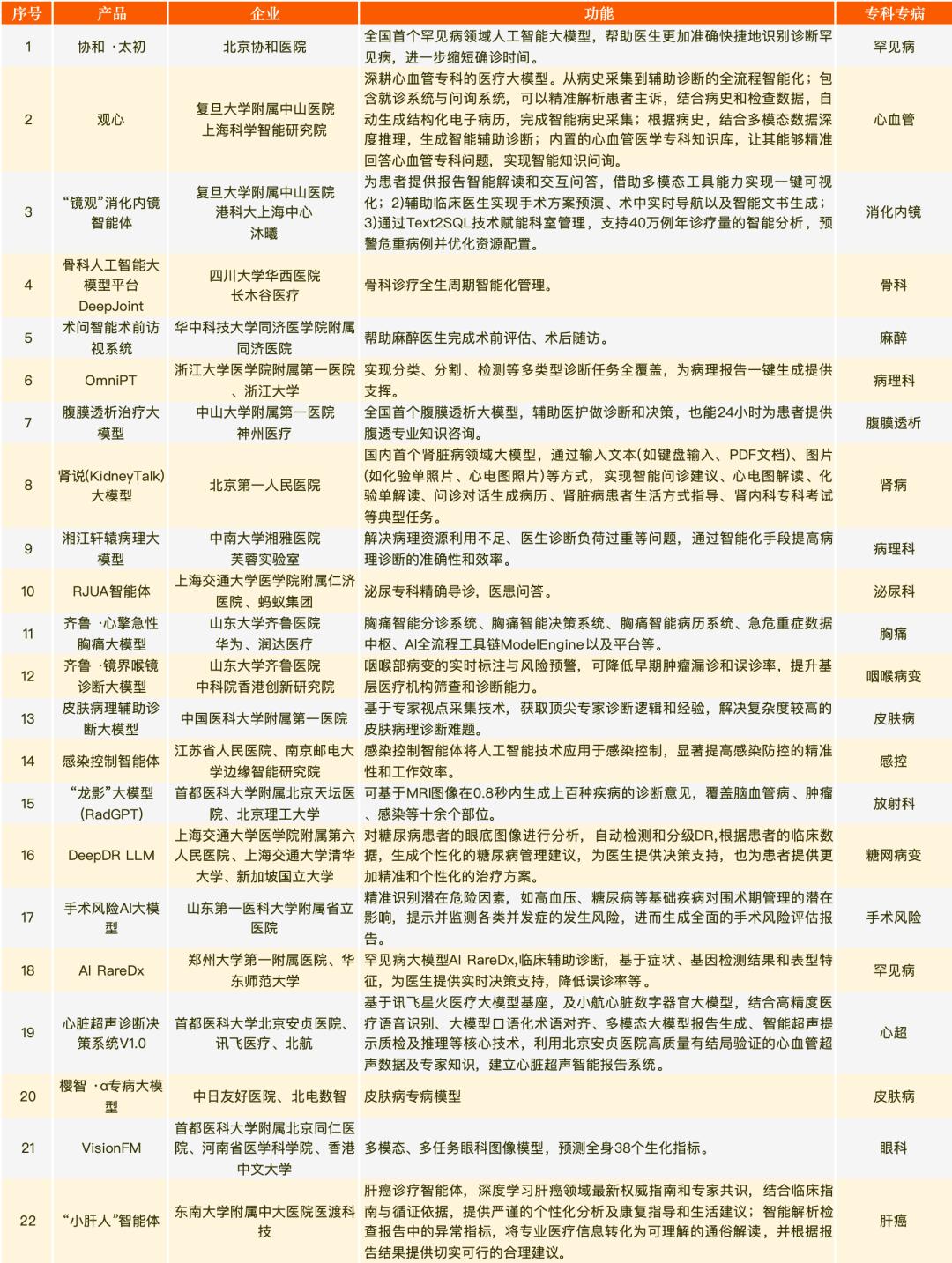
Core Insights - The medical AI industry is experiencing high growth despite not yet achieving scalable profitability, with the Chinese solutions market projected to grow from 16.4 billion yuan in 2024 to 35.3 billion yuan by 2030, reflecting a CAGR of 13.63% [1] - Significant changes in medical AI by 2025 include breakthroughs in large models and increased participation from medical institutions [1] - The deployment of large models in hospitals is accelerating, with all top 100 hospitals in China having completed large model deployments by May 2025, and 38 hospitals developing 55 vertical medical models tailored to their needs [1] Market Growth - The medical AI market in China is expected to expand significantly, with a projected market size of 35.3 billion yuan by 2030 [1] - The integration of various disciplines such as computer science, industrial engineering, and medicine is driving the growth of medical AI [1] Technological Advancements - The introduction of DeepSeek-R1 has lowered the entry barriers for large models, prompting hospital administrators to actively deploy necessary infrastructure [1] - Innovations such as parameter-efficient fine-tuning (PEFT) and mixture of experts (MoE) are enhancing the capabilities of large models [1] Doctor Engagement - Doctors are showing greater enthusiasm for practical applications of large models compared to traditional AI, with some circumventing procurement restrictions to continue research [2] - Over 90% of doctors who have used related AI tools report positive feedback, indicating that AI can enhance surgical precision and reduce complication rates [4] Policy Support - Recent policies are increasingly supportive of AI in healthcare, aiming to establish high-quality data sets and trusted data spaces by 2027 [6] - The implementation of guidelines for AI and medical applications is expected to create a conducive environment for the development of large models [6] Challenges in Commercialization - The value generated by AI in different deployment environments is inconsistent, making it difficult for hospitals to accurately assess benefits and hindering commercialization [7] - Short-term interests of hospitals and doctors often conflict, with AI deployment benefiting doctors but not necessarily translating to immediate hospital gains [8] Long-term Perspectives - In the long term, improved surgical quality through AI could enhance hospital reputation and attract more patients, benefiting both departments and doctors [10] - AI's ability to save time for doctors may lead to increased research opportunities, enhancing both individual and institutional capabilities [11] Specialty Focus: Thoracic Surgery - Thoracic surgery has a high demand for AI to improve operational efficiency and reduce redundant diagnostics [16] - AI applications in thoracic surgery have shown significant efficiency improvements, with diagnostic times reduced by up to 84% in some cases [18] - The introduction of AI in complex surgical planning has been shown to optimize procedures and reduce risks associated with needle placement [19] Data Governance and Assetization - The establishment of data as a production factor is accelerating the exploration of data assetization in healthcare, with a focus on efficient data governance and reuse [27] - The development of trusted data spaces is crucial for facilitating secure data sharing among healthcare stakeholders, promoting deeper integration and utilization of medical data [30]