
品质消费

Search documents
城区西部首座商业综合体开业迎客 许昌以商业新地标撬动品质消费升级
Sou Hu Cai Jing· 2026-01-17 15:41
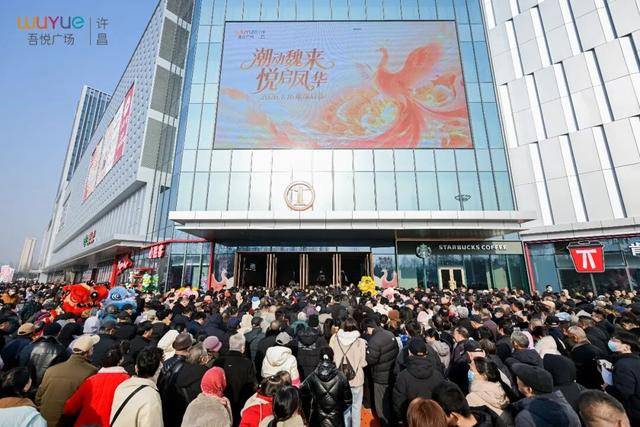
Group 1 - The opening of Xuchang Wuyue Plaza on January 16 marks the city's first one-stop experiential commercial complex, with a total investment of 1.8 billion and an area exceeding 110,000 square meters, integrating diverse business formats such as dining, retail, and family entertainment [3] - The plaza aims to create a comprehensive consumption ecosystem that includes eating, drinking, playing, and learning, filling a significant gap in large-scale commercial offerings in the western part of Xuchang [3] - Over 30% of the brands introduced are first-time entries in Xuchang, covering various sectors including dining, retail, and culture, indicating a strong focus on enhancing local consumer options [3] Group 2 - The opening day saw long queues outside the plaza, with customers praising the attentive service reminiscent of the renowned "Fat Donglai" service model, which emphasizes high standards and customer care [3] - Cultural events such as traditional performances and drone shows were part of the opening festivities, enhancing the overall consumer experience and attracting a younger demographic [4] - Concurrently, the Weidu District launched a six-month "Quality Consumption Festival" to further stimulate consumer spending, showcasing a collaborative approach between government and businesses to enhance the local economy [6] Group 3 - The development of Wuyue Plaza is part of a broader strategy by Xuchang to integrate culture, commerce, and tourism, with initiatives aimed at building a brand identity and improving the commercial landscape [6] - The city is focusing on creating a "Quality Consumption Benchmark City" by establishing a service system modeled after "Fat Donglai," which includes service guidelines and a consumption alliance to elevate service quality across the industry [6]

促进服务业提质、消费扩容u3000上海发布28条举措
Shang Wu Bu Wang Zhan· 2026-01-14 16:48
Core Viewpoint - Shanghai has introduced 28 specific measures to enhance service quality and stimulate consumption, focusing on optimizing supply and expanding demand to foster new growth points in the service sector [2]. Group 1: Focus Areas - The measures target six key industries: finance, information services, transportation, cultural and entertainment services, life services, and inspection and certification, which together account for approximately 60% of Shanghai's service sector value and about 70% of service consumption [2]. - In financial services, the measures include enhancing personal consumer finance services, supporting innovation in insurance products, and strengthening financial support for business entities and consumption infrastructure [2]. Group 2: Platform Economy - The measures emphasize the development of the platform economy, supporting e-commerce and life service platforms to innovate and cultivate specialized consumption platforms in areas like maternal and child care, housekeeping, and elderly care [3]. - The government aims to regulate platform competition, prevent forced low-cost sales, and encourage platforms to reduce fees and optimize transparent pricing rules [3]. Group 3: Cultural and Sports Integration - The measures also focus on enhancing the synergy between cultural, tourism, and commercial events, proposing initiatives to enrich cultural performances, leverage sports events, and support the gaming and short video content industries [4]. - The approach aims to create a collaborative ecosystem that boosts both supply quality and consumption expansion, particularly in the cultural and entertainment sectors [4]. Group 4: Economic Implications - The policy is expected to facilitate a virtuous cycle of supply upgrading, consumption stimulation, and industry income growth, addressing the mismatch between service supply and demand [5]. - It aims to cultivate new growth drivers, stimulate digital consumption, and enhance the economic resilience of the city by improving the quality of services and optimizing the consumption environment [5].
开启消费市场新图景
Jing Ji Ri Bao· 2026-01-08 21:46
Group 1 - The core viewpoint of the articles emphasizes that the vitality of the consumer market is driven by "quality," with a shift from merely purchasing expensive items to seeking better products [1][3] - Government policies are crucial in optimizing the consumption environment, which is essential for boosting consumer confidence and stimulating economic vitality. Various measures have been implemented to enhance the consumption environment, including the expansion of no-reason return policies to over 1.5 million businesses [1] - The collaboration among government, production enterprises, and sales platforms is creating a new landscape for quality-driven consumption upgrades, showcasing a multi-faceted approach to improving the consumer experience [1] Group 2 - Product iteration is essential for aligning with upgraded consumer demands, particularly in the silver economy sector, where the transaction volume for pickleball has increased by 9.4 times year-on-year, and smart beds have seen over a 10-fold increase [2] - The IP consumption sector is evolving, with IP collaborations shifting from low-frequency luxury items to high-frequency daily necessities, fulfilling both practical needs and emotional value for consumers [2] - Innovative consumption scenarios are expanding the boundaries of quality consumption, as seen in the cultural tourism sector where technologies like VR are enhancing experiences, and community consumption models are integrating health services for improved convenience [2] Group 3 - The essence of quality-driven consumption upgrades is to meet people's aspirations for a better life, creating a virtuous cycle where demand drives supply and supply generates demand [3] - When consumers experience improvements in quality and service in their daily purchases, the vitality of the consumer market is naturally stimulated, reflecting the true meaning of quality consumption [3]
高质量发展地方亮点丨从消费“流量”到发展“增量”——河南许昌推广胖东来式服务一线观察
Xin Hua Wang· 2026-01-07 11:10
Core Insights - The article highlights the transformation of the retail landscape in Xuchang, driven by the "Pang Donglai" service model, which emphasizes customer-centric services and has become a cultural phenomenon in the city [1][4]. Group 1: Service Model and Cultural Impact - Pang Donglai has introduced various customer-friendly services, such as free parking and personalized assistance, which have significantly enhanced the shopping experience and contributed to a cultural shift towards high-quality service in Xuchang [1][3]. - The popularity of Pang Donglai has made it a must-visit destination for tourists, integrating local culture and services into the retail experience, thus promoting the city as a tourist attraction [1][4]. Group 2: Economic Growth and Consumer Behavior - Xuchang aims to become a benchmark for quality consumption, with a focus on enhancing market vitality through government guidance and industry standards, inspired by the success of Pang Donglai [3][4]. - In 2025, Xuchang received 49.82 million tourists, generating a total revenue of 34.87 billion yuan, reflecting a year-on-year growth of 6.9% and 7.2% respectively, indicating a robust tourism sector fueled by the retail model [4]. Group 3: Broader Implications for Local Businesses - Local businesses, such as Guofu Farm, are adopting Pang Donglai's service principles to improve their offerings, leading to increased customer satisfaction and loyalty [3][5]. - The city is enhancing its overall service environment by optimizing business conditions and providing additional services, which supports the implementation of the Pang Donglai service model across various sectors [5][8]. Group 4: Future Directions - The local government is focused on promoting the Pang Donglai service philosophy to elevate the overall commercial standards in Xuchang, aiming for a shift from attracting visitors to retaining them through exceptional service [8]. - The retail sector's growth is reflected in the social retail sales reaching 171.52 billion yuan in the first eleven months of 2025, with a year-on-year increase of 7.4%, leading the province in growth rate [8].
盒马加速布局 “押宝”新兴城市消费潜力
Sou Hu Cai Jing· 2026-01-07 09:13
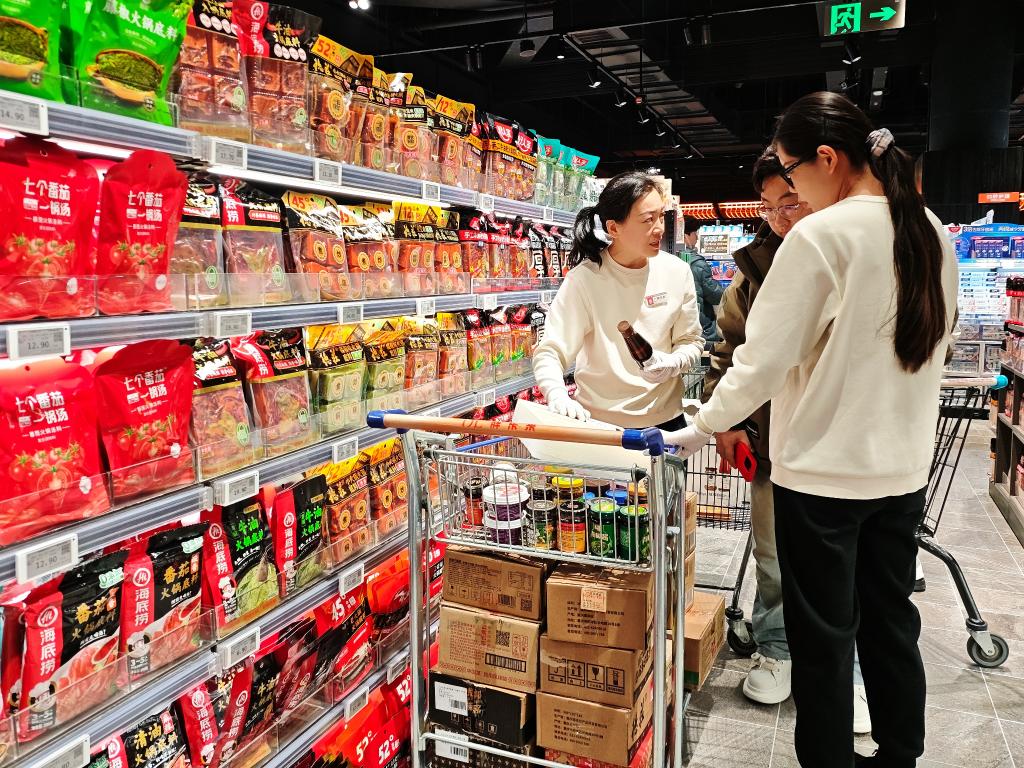
Core Insights - Hema's overall revenue growth rate exceeded 40% in 2025, with the company entering 40 new cities and opening over 200 new stores under the "Super Box" brand [1][11] - The contribution of emerging cities to Hema's performance is significant, with stores in cities like Shijiazhuang and Linyi experiencing high customer traffic and sales upon opening [2][4] Expansion Strategy - Hema has been actively expanding its footprint, particularly in emerging cities, which are seen as having strong consumer potential [2][11] - The "Box District Index" was introduced to measure store activity, with Shijiazhuang's index soaring to 171, indicating robust consumer engagement compared to major cities [2] Consumer Behavior - Hema's data shows that consumers in emerging cities have a strong demand for quality products, as evidenced by impressive sales figures during store openings [4][10] - The rise in consumer spending is linked to the economic growth and improved living standards in these cities, with younger populations showing a keen interest in quality and trendy products [7][10] Market Dynamics - The presence of Hema has positively impacted local shopping districts, significantly increasing foot traffic and sales in surrounding areas [6][8] - The growth in consumer spending is attributed to effective population dynamics and structural purchasing power rather than just administrative levels [8] Future Outlook - Hema aims to enhance its market presence by focusing on supply chain resilience, user experience, and organizational efficiency to meet evolving consumer demands [12] - The company plans to support partners and suppliers to achieve significant sales growth, indicating a commitment to sustainable development in the retail sector [12]

新兴城市消费力加速释放,从“盒区房指数”看零售市场消费新格局
3 6 Ke· 2026-01-05 02:56
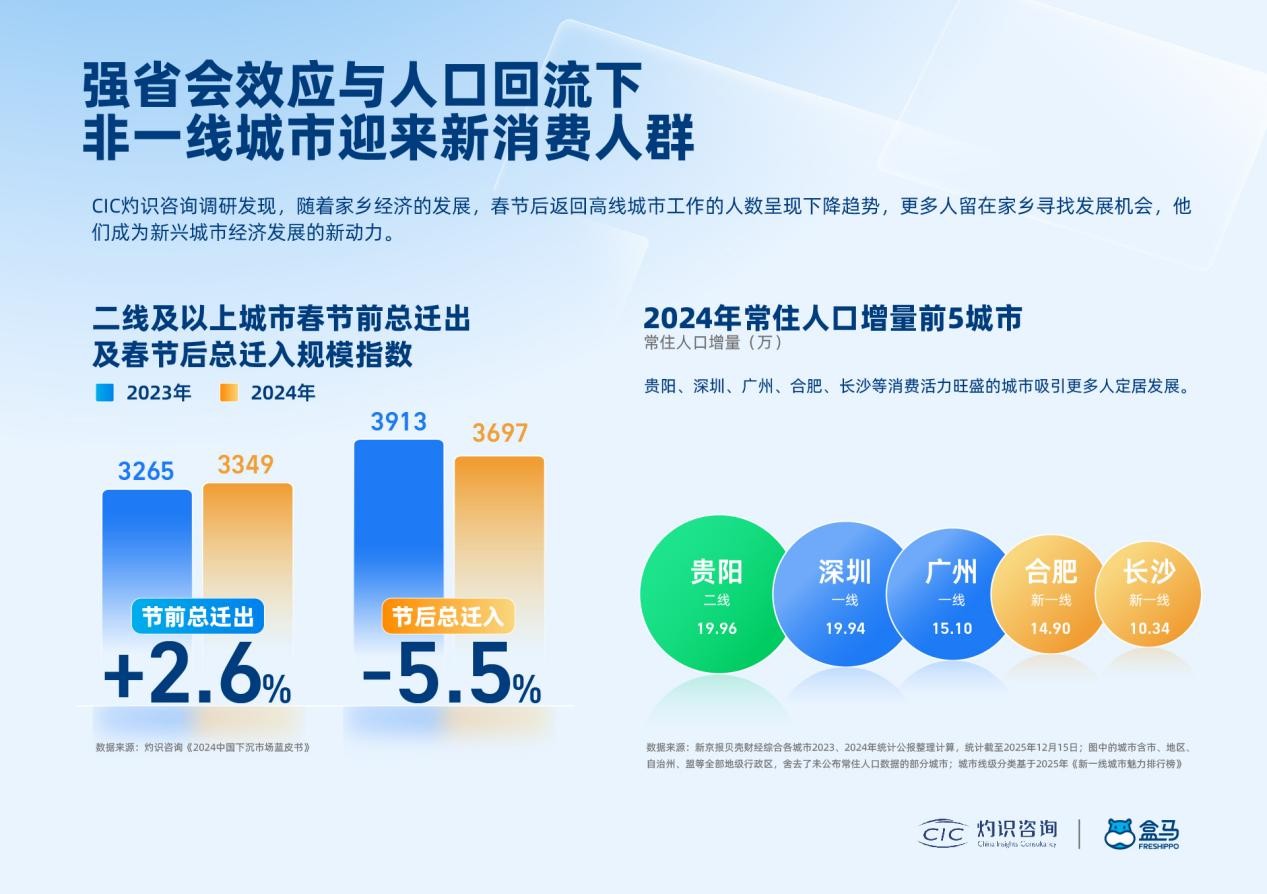
Core Insights - The report indicates that the retail sales of consumer goods in China increased by 4% year-on-year from January to November 2025, surpassing both the same period last year and the overall growth for the entire year [1] - The "Box District Housing Index" was introduced to measure the activity of Hema's offline stores, with cities like Shijiazhuang, Xuzhou, and Linyi showing indices significantly above the national average [1][5] Group 1: Population Influx and Consumption Dynamics - Emerging cities are experiencing growth driven by continuous population inflow and the "strong provincial capital" strategy, leading to a new consumer demographic that is reshaping local consumption ecosystems [2] - Hema has expanded into 40 new cities, including Shijiazhuang and Linyi, with reports indicating that these new stores are experiencing immediate high traffic upon opening [5] Group 2: Quality Demand and Consumption Upgrade - The report highlights a significant shift in consumer behavior towards quality living, with high-end brands increasingly entering the market to meet the demand for quality consumption [7] - Hema's data shows that consumers in emerging markets are now regularly purchasing high-end products, indicating a normalization of quality consumption [10] Group 3: Night Economy and Consumption Patterns - The report notes that the entry of new retail brands like Hema is extending consumer shopping hours and altering traditional consumption patterns, particularly in emerging cities [12] - The night economy is identified as a significant growth area, with Hema's presence contributing to longer shopping hours and increased foot traffic in shopping areas [12][14]
政策赋能,消费以“质”提“速”
Shan Xi Ri Bao· 2026-01-03 00:19
Group 1 - The core viewpoint of the articles highlights the robust growth in consumer retail sales in Shaanxi Province, with a year-on-year increase of 8.1% from January to November 2025, driven by effective policy alignment and consumer demand [1] - The "old-for-new" policy has significantly boosted retail sales in categories such as home appliances, communication devices, and automobiles, with notable growth rates of 65.8% for first and second-level energy-efficient appliances, 60.0% for smartphones, and 34.8% for new energy vehicles, indicating a shift towards green and quality consumption [1] - Digital economy empowerment has opened new avenues for consumption growth, with retail sales through public networks increasing by 25.3%, breaking spatial and temporal limitations and allowing for the full release of consumer potential in the digital wave [1] Group 2 - The consumer market's stable operation is supported by a solid foundation, with retail sales of grain, oil, and food products increasing by 12.6%, demonstrating the resilience of essential consumer spending [2] - The central economic work conference has prioritized "maintaining domestic demand as the main driver and building a strong domestic market" as a key task for economic work in 2026, emphasizing the need for Shaanxi to leverage its large-scale market advantages [2] - Policies should focus on enhancing the adaptability of supply and demand in the consumer sector, addressing urgent public concerns, and fostering new economic growth points to inject vitality into economic stability and improvement [2]
不只是看烟花,2026跨年夜还在看什么?
Tai Mei Ti A P P· 2025-12-31 11:47
Group 1 - The core event of the news is the New Year's Eve celebrations across various cities in China, highlighting the growing trend of "cross-year economy" which has become a significant driver of winter consumption and urban vitality [5][6] - The cross-year economy is characterized by diverse activities ranging from cultural performances to immersive experiences, catering to the emotional and experiential needs of consumers, particularly the younger generation [5][6][9] - Data from Meituan Travel indicates a 117% increase in bookings for cultural and tourism activities during the New Year period, with searches for "cross-year fireworks shows" and "cross-year concerts" rising over 500% [3][5] Group 2 - The trend of cross-year celebrations has evolved beyond mere festivities to encompass a full consumption ecosystem, integrating dining, accommodation, shopping, and cultural experiences [6][7] - The rise of new consumption patterns is evident as businesses innovate to meet the emotional value demands of consumers, leading to unique offerings such as outdoor music events and themed dining experiences [5][6][9] - The phenomenon of "cross-year economy" is expanding from first-tier cities to lower-tier cities, with local characteristics being incorporated into celebrations, thus enhancing regional tourism and local product sales [6][7]
2025年中国消费市场观察:多元升级与生态创新激活增长新引擎
Xin Hua She· 2025-12-31 06:46
Group 1 - The core viewpoint of the articles highlights the robust growth and transformation of China's consumer market since 2025, driven by consumption policies and technological innovations, emphasizing the shift towards high-quality, intelligent, and emotional consumption [1][2][6] - The retail sales of consumer goods in China increased by 4% year-on-year from January to November 2025, indicating a shift from scale expansion to value growth centered on quality upgrades [2] - Key technological breakthroughs, such as Xiaomi's launch of its 3nm flagship processor and the Xiaomi 17 Ultra smartphone, have significantly contributed to the high-end consumer electronics market, showcasing the role of innovation in stimulating consumption [2] Group 2 - The emotional economy is emerging as a new growth area in consumption, with the market size expected to reach 2.3 trillion yuan in 2024 and surpass 4.5 trillion yuan by 2029, reflecting a shift in consumer motivations from functional satisfaction to emotional resonance [4] - New consumption formats, including digital, green, and health consumption, are becoming increasingly active, with the new energy vehicle market showing significant growth, where new energy vehicles accounted for 53.2% of total new car sales by November 2025 [5] - The integration of ecosystems, such as Xiaomi's smart factories and automotive strategies, is reshaping consumer experiences, moving from single product purchases to integrated, scenario-based services [5][8]

聚酯纤维被网暴,到底在替谁背黑锅?
Jin Tou Wang· 2025-12-25 09:42
Core Insights - Cashmere, once considered an outdated fabric by younger consumers, has now become a symbol of self-investment and personal style [1] - The perception of polyester fiber has shifted dramatically, now associated with negative connotations such as being made from plastic bottles and linked to environmental concerns [2][5] Group 1: Polyester Fiber Characteristics - Polyester fiber, often referred to as "recycled polyester," can indeed be made from plastic bottles, but the more common type is produced from petrochemical sources, offering durability and versatility [3] - The adaptability of polyester allows for the creation of various fabric types, from heavy-duty Oxford cloth to lightweight chiffon, making it a dominant material in the textile market [3] Group 2: Consumer Perception and Market Dynamics - The recent backlash against polyester is partly due to marketing strategies that mislead consumers by rebranding 100% polyester as premium materials, leading to feelings of deception [5] - Changing consumer psychology, influenced by a desire for quality and emotional value in purchases, has heightened sensitivity to the origins and quality of materials, particularly when high prices are involved [6] - The erosion of trust due to misleading marketing practices has negatively impacted the reputation of quality polyester products, despite their inherent value [6]