
国有经济布局优化

Search documents
习近平总书记重要指示为做好中央企业工作指明方向
Xin Hua She· 2025-12-23 14:28
Core Insights - The important instructions from General Secretary Xi Jinping provide clear direction for central enterprises to enhance their contributions to national development and modernization efforts [1][2][3] Group 1: Central Enterprises' Role and Achievements - Central enterprises have seen their total assets exceed 90 trillion yuan, significantly supporting the national economy through high-quality development [1] - The achievements in technological innovation and emergency response have strengthened the stability of essential product supplies [1] - The central enterprises are recognized as the backbone of the national economy, actively serving national strategies and contributing to industrial safety and technological advancement [2] Group 2: Future Directions and Responsibilities - Central enterprises are urged to deepen their reform efforts to enhance their operational vitality and address underlying developmental issues [5] - The focus on integrating technological and industrial innovation is emphasized, with a commitment to enhancing domestic energy supply capabilities and expanding into new energy sectors [4][5] - The importance of aligning corporate governance with the Party's leadership is highlighted as essential for achieving high-quality development and fulfilling responsibilities [6]
国资委主任张玉卓:做强做优做大国有企业和国有资本
Xin Lang Cai Jing· 2025-12-21 23:57
Group 1: Core Views - The emphasis on state-owned enterprises (SOEs) as a crucial pillar for the governance and prosperity of the party is highlighted by General Secretary Xi Jinping [1][8] - The "14th Five-Year Plan" suggests deepening the reform of state-owned assets and enterprises, aiming to strengthen and optimize SOEs and state capital [1][8] Group 2: Enhancing Innovation Capability - Central enterprises are identified as the national team for technological innovation, with R&D investments exceeding 1 trillion yuan for three consecutive years [2][9] - The focus is on enhancing independent and original innovation to address major technological challenges affecting national development and security [2][9] Group 3: Efficient Transformation of Achievements - There is a push for high-efficiency transformation of technological achievements, including the establishment of major pilot verification platforms and increasing procurement of first sets and first batches of products [3][10] - The aim is to help more innovative results enter the market and create tangible productivity [3][10] Group 4: Reform of State-Owned Enterprises - The next five years will focus on enhancing the service capabilities of SOEs in relation to national strategies, emphasizing strategic security and public service [4][11] - There is a commitment to improving the governance structure of SOEs while strengthening the leadership of the party [4][11] Group 5: Regulatory Effectiveness - The establishment of specialized regulatory bodies for state assets is planned to enhance strategic coordination among management departments [5][12] - A more flexible and targeted regulatory policy framework will be developed to improve the efficiency of oversight [5][12] Group 6: Optimizing Economic Layout - Central enterprises are expected to focus on upgrading traditional industries and nurturing emerging industries, with an annual investment growth rate exceeding 20% in new industries during the "14th Five-Year Plan" [6][13] - The goal is to transition the industrial system towards higher value-added and high-tech sectors [6][13] Group 7: Cultivating Emerging Industries - The implementation of actions to cultivate emerging and future industries will be prioritized, focusing on sectors like renewable energy, aerospace, and advanced materials [7][14] - A comprehensive investment and financing system for industries will be established to support the development of the real economy [7][15]
做强做优做大国有企业和国有资本(权威访谈·学习贯彻党的二十届四中全会精神)
Ren Min Ri Bao· 2025-12-21 22:20
Core Viewpoint - The Chinese government emphasizes the importance of state-owned enterprises (SOEs) as a crucial pillar for governance and national development, with a focus on enhancing their strength and efficiency through reforms outlined in the 14th Five-Year Plan [1]. Group 1: Innovation and Technology - State-owned enterprises are identified as the national team for technological innovation, with R&D investments exceeding 1 trillion yuan for three consecutive years, focusing on key technologies such as industrial mother machines and software [2]. - The goal for the 14th Five-Year Plan is to enhance independent and original innovation capabilities, addressing major technological challenges that affect national security and long-term interests [2]. - There is a commitment to improve the conversion of research results into practical applications, with initiatives to establish major testing platforms and promote the market entry of innovative outcomes [3]. Group 2: Reform of State-Owned Enterprises - The 14th Five-Year Plan outlines clear objectives for deepening the reform of SOEs, focusing on enhancing their core functions and competitiveness [4]. - The reform will prioritize the alignment of SOEs with national strategic needs, ensuring that capital is directed towards critical industries and public services [4]. - There is an emphasis on improving corporate governance within SOEs, strengthening the leadership role of the Communist Party, and enhancing management efficiency [4]. Group 3: Optimization of Economic Layout - SOEs are actively involved in upgrading traditional industries and fostering new ones, with an average annual investment growth rate of over 20% in emerging sectors during the 14th Five-Year Plan [6]. - The focus will be on transitioning the industrial system towards higher value-added and technology-intensive sectors, with SOEs playing a leading role in this transformation [6]. - Initiatives will include digital transformation and the integration of advanced technologies such as AI and big data into traditional industries [6]. Group 4: Future Industry Development - The strategy includes nurturing new and future industries, with a focus on sectors like renewable energy, aerospace, and advanced materials, while also exploring cutting-edge fields such as quantum technology and 6G [7]. - A specialized and market-oriented investment and financing system will be established to support the development of these industries, leveraging state capital and various investment funds [7].
加快打造现代新国企:“十四五”以来,中央企业资产总额从不到70万亿元增长到超过90万亿元
Ren Min Ri Bao· 2025-12-17 03:09
Core Insights - The total assets of central enterprises have increased from less than 70 trillion yuan to over 90 trillion yuan since the "14th Five-Year Plan" period, indicating a significant enhancement in their strength [2][3] - The "15th Five-Year Plan" emphasizes the need for deepening state-owned enterprise reforms and enhancing the core competitiveness of state-owned enterprises [1][3] Group 1: Economic Contributions - Central enterprises have completed fixed asset investments totaling 19 trillion yuan, with an average annual growth rate of 6.3%, supporting stable investment and growth [2] - They have contributed over 10 trillion yuan in taxes and transferred 1.2 trillion yuan of state-owned equity to social security funds, aiding in improving people's livelihoods [2] - Central enterprises are responsible for approximately 80% of crude oil, 70% of natural gas, and 60% of electricity supply, ensuring energy security [2] Group 2: Innovation and R&D - Central enterprises' R&D expenditure has grown at an annual rate of 6.5%, exceeding 1 trillion yuan annually for three consecutive years, with a projected 1.1 trillion yuan in 2024 [4] - They have established 474 national-level R&D platforms and 91 national key laboratories, accounting for one-sixth of the national total [5] - Central enterprises employ 1.44 million R&D personnel, representing one-fifth of the national total [6] Group 3: Strategic Directions - The role of state-owned enterprises is crucial in national security, economic lifelines, and public welfare, with a focus on enhancing competitiveness and innovation [3][11] - The "15th Five-Year Plan" aims to optimize the layout of state-owned capital, concentrating on key industries related to national security and public services [11] - Central enterprises are expected to actively participate in international competition and expand international economic cooperation, transitioning from "going out" to "integrating in" [12]
加快打造现代新国企
Ren Min Ri Bao· 2025-12-17 01:53
Group 1 - The core viewpoint emphasizes the need for deepening state-owned enterprise (SOE) reforms to strengthen and optimize state-owned enterprises and capital, enhancing their core functions and competitiveness during the 14th Five-Year Plan period [1][3] - The comprehensive strength and innovation capabilities of state-owned enterprises have significantly improved, with total assets of central enterprises increasing from less than 70 trillion yuan to over 90 trillion yuan, and fixed asset investments reaching 19 trillion yuan, averaging a growth rate of 6.3% [1][2] - Central enterprises have contributed approximately 80% of crude oil, 70% of natural gas, and 60% of electricity supply, ensuring energy security [1] Group 2 - Central enterprises have a substantial procurement volume exceeding 15 trillion yuan annually, directly impacting around 2 million businesses and indirectly affecting nearly 7 million enterprises in the supply chain [2] - The role of state-owned economy is crucial in national security, economic lifelines, and public welfare, with a call for SOEs to enhance their competitiveness, innovation, and risk resistance [3][4] - The focus on technological and industrial innovation integration is highlighted, with significant contributions from central enterprises in major projects and advancements [4][5] Group 3 - Central enterprises have increased R&D spending, averaging a growth of 6.5% annually, with investments exceeding 1 trillion yuan for three consecutive years, and a focus on basic research [5][6] - The number of R&D personnel in central enterprises stands at 1.44 million, accounting for one-fifth of the national total [6] - Central enterprises have received over half of the national awards for technological invention and progress, indicating a strong innovation capability, though there are calls for improved efficiency and incentive mechanisms [7] Group 4 - The emphasis on breaking through key technologies and addressing industrial bottlenecks, particularly in semiconductor silicon wafers, is noted, with successful applications of domestically produced 300mm silicon wafers [9] - The establishment of 134 pilot verification platforms by central enterprises aims to facilitate the transition from technology to product, enhancing collaboration and risk-sharing [10] - Central enterprises are creating over 800 application scenarios in key industries to promote the adoption of domestic innovations, positioning themselves as supportive markets for new products [11] Group 5 - The optimization of the state-owned economy's layout and structural adjustments is underway, with a focus on strategic emerging industries, such as hydrogen energy and quantum technology [12][14] - Central enterprises are expected to play a significant role in social construction and national strategy, with a shift towards prioritizing investments in critical sectors and public services [13][14] - The transition of state-owned enterprises from "going out" to "integrating in" the international market is emphasized, requiring alignment with international standards and active participation in global economic cooperation [14]

湖北省国资委党委书记、主任陈忠:以改革之笔,绘国资国企新蓝图
Xin Lang Cai Jing· 2025-12-04 11:25
Core Insights - The article discusses the ongoing reforms and development strategies for state-owned enterprises (SOEs) in Hubei province, emphasizing their role as a pillar of economic development and market stability as they approach the "14th Five-Year Plan" [2][12]. Group 1: Achievements During the 14th Five-Year Plan - Hubei's state-owned enterprises have significantly improved their scale and strength, with total assets reaching 3.25 trillion yuan, moving up 10 places in national rankings. Revenue is expected to exceed 600 billion yuan by 2025, tripling from the end of the 13th Five-Year Plan, maintaining the highest growth rate in Central China for three consecutive years [3][13]. - The functional role of these enterprises has been effectively demonstrated, with over 1 trillion yuan invested in various infrastructure projects, including 85% of the province's highways and 30% of its railways. They have also built nearly 40,000 units of affordable housing and enhanced grain storage capacity to 1.5 million tons [3][13]. - The restructuring of state-owned enterprises has led to a more rational layout, consolidating 28 enterprises into 10 and forming two new first-level enterprises. Investments in emerging industries have seen growth rates exceeding 50% for three consecutive years [3][13][14]. Group 2: Reform and Innovation - The reform and innovation vitality of Hubei's SOEs has been notably enhanced, with a continuous increase in R&D investment of over 20% annually for five years. The number of high-tech enterprises has risen to 148, and 62 innovation joint ventures have been established [4][14]. - The 20th National Congress of the Communist Party of China has set new missions for SOEs, emphasizing the need to strengthen, optimize, and expand state-owned enterprises, focusing on innovation, effective governance, and market-driven mechanisms [5][16]. Group 3: Future Strategies - Hubei's SOEs will implement three major actions to support the construction of a modern industrial system: enhancing industrial competitiveness through strategic mergers and acquisitions, improving the quality of modern service industries, and upgrading core infrastructure capabilities with an investment of over 1.5 trillion yuan in the next five years [7][17]. - Specific measures for deepening reforms include optimizing the layout and structure of SOEs, fostering collaborative innovation mechanisms, and establishing a flexible market-oriented operational framework [8][18].


充分激发各类经营主体活力
Ren Min Ri Bao· 2025-12-01 02:28
Group 1: Core Views - The core viewpoint emphasizes the importance of invigorating various business entities to enhance high-quality economic development in China, as outlined in the 20th Central Committee's Fourth Plenary Session [1] Group 2: State-Owned Enterprises (SOEs) - The state-owned enterprises (SOEs) are deemed essential for the material and political foundation of socialism with Chinese characteristics, necessitating their strengthening and optimization to enhance competitiveness and innovation [2] - Reforming state-owned assets and enterprises is crucial to eliminate barriers to high-quality development, improve internal management, and enhance market-oriented operations [3] Group 3: Optimization and Structural Adjustment of State-Owned Economy - The focus is on optimizing the layout and structure of state-owned capital, directing investments towards strategic sectors and public services, and promoting the development of the real economy [4] - Emphasis on strategic and professional restructuring to enhance efficiency and avoid redundant construction and disorderly competition [4] Group 4: Enhancing Core Competencies of SOEs - SOEs are encouraged to leverage market forces to fulfill national strategic missions, with a focus on enhancing core functions and competitiveness [5] - Establishing a comprehensive evaluation system for SOEs to align their development with national strategic goals [5] Group 5: Support for Non-Public Economy - The non-public economy, particularly private enterprises, plays a significant role in China's economic development, contributing over 90% of enterprises and 80% of urban employment [6][7] - Continuous optimization of the business environment for private enterprises is essential, including legal protections and fair competition [8] Group 6: Support for SMEs and Individual Businesses - Small and medium-sized enterprises (SMEs) and individual businesses are vital for innovation and employment, necessitating enhanced support and services [9] - Encouragement for collaboration between large enterprises and SMEs to strengthen supply chains and promote innovation [9] Group 7: Protection of Property Rights - The protection of property rights for both public and non-public economies is emphasized, with a focus on establishing a robust legal framework to support the development of the private sector [10] Group 8: Building World-Class Enterprises - The development of world-class enterprises is crucial for national economic strength and global competitiveness, requiring a focus on innovation and governance [11] - Enhancing the modern enterprise system and promoting the entrepreneurial spirit are key to achieving this goal [12][13] Group 9: Accelerating the Creation of World-Class Enterprises - Support for leading enterprises to deepen reforms and enhance innovation is essential for gaining international competitive advantages [14]
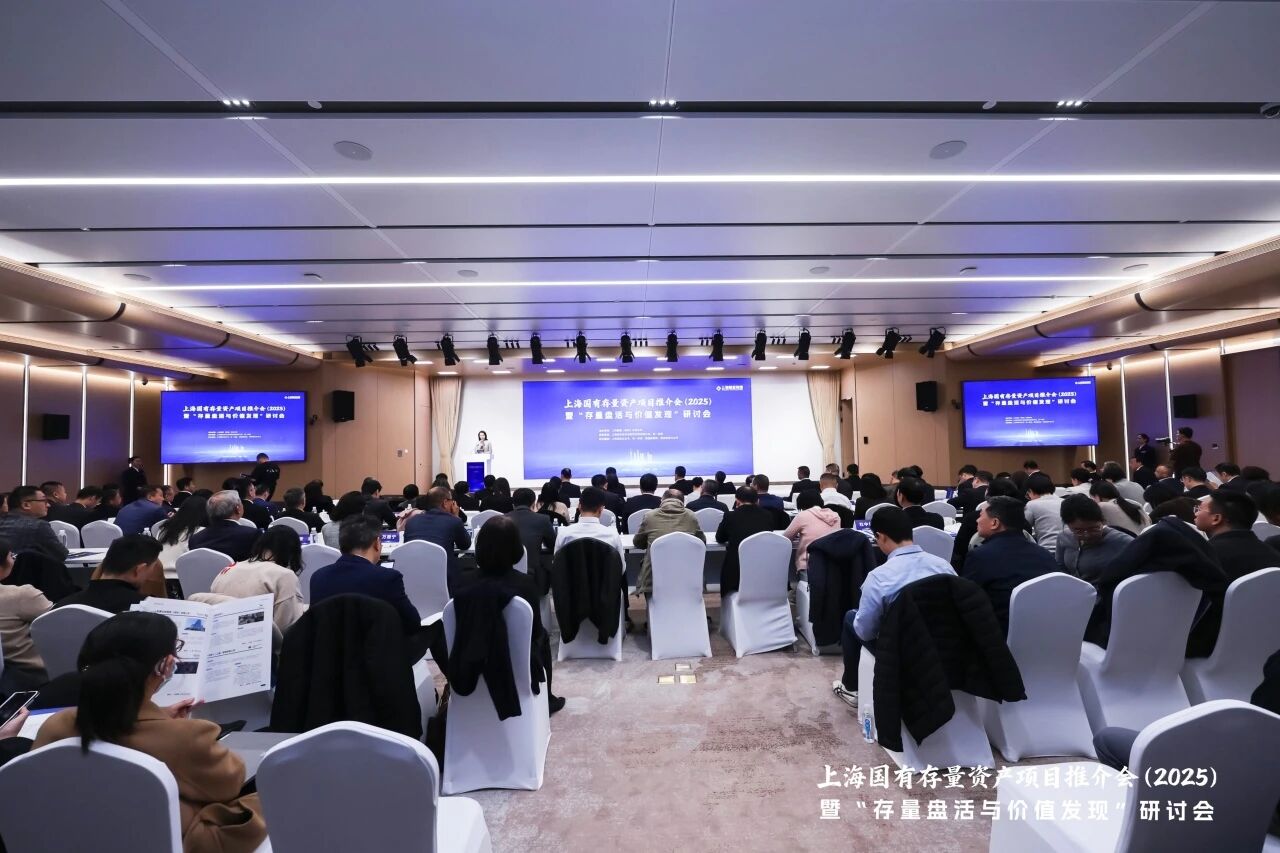
上海国有存量资产项目推介会(2025)暨 “存量盘活与价值发现”研讨会顺利举办
Di Yi Cai Jing· 2025-11-27 07:36
Core Insights - The meeting focused on the revitalization of state-owned assets in Shanghai, emphasizing its importance for the reform of state-owned enterprises and the optimization of the state-owned economy's layout [4][5] - The Shanghai State-owned Assets Supervision and Administration Commission (SASAC) aims to enhance the efficiency and quality of state-owned enterprises through asset revitalization, which is seen as a critical task for the next five years [4] Group 1 - The revitalization of existing assets is essential for deepening the reform of state-owned enterprises and optimizing the layout and structure of the state-owned economy [4] - The Shanghai state-owned assets are substantial, and effective revitalization is crucial for improving the quality and efficiency of state-owned enterprises, as well as for urban renewal and resource allocation [4] - Shanghai Guosheng Group is expected to enhance its professional capabilities and guide state-owned capital in optimizing layout and improving efficiency through dynamic flow [4][5] Group 2 - The meeting included a keynote speech by Li Bing on accelerating asset adjustment and improving revitalization mechanisms, along with presentations on existing operational functions and innovative tools for asset management [5] - Experts from central and local state-owned enterprises and professional institutions discussed themes such as asset revitalization and urban renewal during the seminar [5] - Over 180 participants from various government departments, state-owned enterprises, and financial institutions attended the event, indicating a broad interest in the revitalization initiatives [5]
央企专业化整合再推进 8组17家单位重点项目集中签约
Chang Jiang Shang Bao· 2025-11-24 00:32
Core Points - The State-owned Assets Supervision and Administration Commission (SASAC) organized a meeting to promote the professional integration of central enterprises, resulting in the signing of key projects in various sectors including new materials, artificial intelligence, cruise operations, inspection and testing, and air logistics [2][3] Group 1: Professional Integration Projects - A total of 17 units participated in the signing of key projects, focusing on accelerating breakthroughs in core technologies and promoting the scale development of emerging industries [2][3] - Notable projects include collaborations between Sinopec and Dongfang Electric Group, FAW Group and Zhuoyue Technology in intelligent driving, and China Aluminum Group with Ansteel in the industrial internet and smart supply chain [3] Group 2: Importance of Professional Integration - Professional integration is a crucial task in the reform of state-owned enterprises, aimed at optimizing the layout of state-owned economies and enhancing core competitiveness [4] - Since 2024, over a thousand professional integration projects have been initiated to support national strategies and promote high-quality development [4] Group 3: Future Directions - The meeting emphasized the need for central enterprises to consolidate resources effectively, focusing on core business areas and avoiding unrelated diversification [5] - Future integration efforts will target unreasonable business layouts and aim to enhance scale effects and extend into high-end markets [5]
央企专业化整合再推进,17家单位8组合作项目签约
Mei Ri Jing Ji Xin Wen· 2025-11-21 10:55
Core Points - The State-owned Assets Supervision and Administration Commission (SASAC) held a meeting to promote the specialized integration of central enterprises, emphasizing the importance of optimizing the layout and structural adjustment of the state-owned economy as per the directives from Xi Jinping [1][2] - Central enterprises have been actively engaged in specialized integration, focusing on national strategies, technological innovation, and high-quality development, leading to improved resource allocation efficiency and enhanced core competitiveness [1] - A total of 17 units from 8 groups signed key project agreements in critical areas such as new materials, artificial intelligence, cruise operations, inspection and testing, and air logistics [2] Group 1 - The meeting highlighted the need for central enterprises to proactively plan and strengthen strategic leadership while preventing internal competition and optimizing industry resource allocation [1] - Emphasis was placed on enhancing capabilities for new integration and creating integrated competitive advantages through collaboration [1] - The meeting included exchanges from major central enterprises such as Aviation Industry Corporation, Sinopec, FAW Group, China Minmetals, China Resources Group, and China National Building Material [2]