国际科技创新中心

Search documents
加紧培育壮大新动能——访科技部党组书记、部长阴和俊
Ren Min Ri Bao· 2026-01-15 03:19
Group 1 - The core viewpoint emphasizes the importance of technological innovation as a driving force for economic development and the need to cultivate new industries and future industries to gain a competitive edge internationally [1][2] - The Central Economic Work Conference has identified "innovation-driven development and the cultivation of new driving forces" as one of the eight key tasks for economic work in 2026, highlighting the strategic importance of technology [2][3] - The Ministry of Science and Technology aims to strengthen strategic planning, policy measures, and resource platforms to enhance the overall effectiveness of the national innovation system and support the construction of a modern industrial system [2][3] Group 2 - The Ministry plans to accelerate the formulation of the "14th Five-Year" national science and technology innovation plan, ensuring a comprehensive and systematic approach to key tasks and major initiatives over the next five years [3] - There will be a focus on deep integration of technological innovation and industrial innovation, with an emphasis on addressing urgent economic and social development needs through major national science and technology projects [3][4] - The Ministry aims to establish high-level international science and technology innovation centers in Beijing, Shanghai, and the Guangdong-Hong Kong-Macao Greater Bay Area, enhancing their roles in original innovation and high-end industry leadership [6][7] Group 3 - The Ministry will implement a coordinated mechanism to promote the integrated development of education, technology, and talent, ensuring that technological innovation drives education and talent development [4][5] - There will be reforms in project evaluation, institutional assessment, and talent evaluation to enhance the innovation capabilities of scientific and technological personnel [5] - The Ministry will support enterprises in taking the lead in technological innovation, ensuring that they play a central role in decision-making, R&D investment, and the transformation of scientific achievements [8][9]
科技部部长阴和俊:加快编制出台“十五五”国家科技创新规划 全链条部署、全领域推进实施“十五五”时期重点任务和重大举措
Xin Hua She· 2026-01-14 08:38
Core Viewpoint - The Ministry of Science and Technology emphasizes that 2026 is a critical year for advancing the construction of a strong technological nation, focusing on innovation-driven development and strategic planning [1] Group 1: Strategic Planning and Implementation - The Ministry will accelerate the formulation of the "14th Five-Year" National Science and Technology Innovation Plan, ensuring comprehensive deployment and implementation of key tasks and major initiatives during this period [1] - There will be a focus on the urgent needs of economic and social development, with the implementation of major national science and technology projects [1] Group 2: Innovation and Talent Development - The Ministry aims to strengthen the interaction between technological innovation and education, promoting independent innovation and talent cultivation [1] - New models for talent training and utilization will be innovated, relying on major scientific tasks to cultivate top-tier leading talents and innovative teams [1] Group 3: International and Regional Innovation - The Ministry will promote the construction of three major international science and technology innovation centers, enhancing original innovation sources, high-end industry leadership, and the gathering of top talents [1] - There will be an emphasis on improving regional innovation systems, encouraging localities to create distinctive innovation hubs [1]
邱锐:国际科技创新中心扩围具有战略意义
Jing Ji Ri Bao· 2026-01-13 00:22
Core Insights - The article emphasizes the acceleration of global changes and the importance of technological innovation as a key variable for national development and security, with a focus on establishing international technology innovation centers in Beijing, Shanghai, and the Guangdong-Hong Kong-Macau Greater Bay Area [1][2]. Group 1: International Technology Innovation Centers - The international technology innovation centers are defined as cities or regions that play a leading role in global technology innovation activities, characterized by strong research, innovation, and cultural influence [2]. - Since the 18th National Congress of the Communist Party, significant progress has been made in establishing these centers, with China leading the world in the number of top global innovation clusters for three consecutive years, particularly with the Shenzhen-Hong Kong-Guangzhou cluster ranking first globally [2][3]. Group 2: Regional Strengths and Strategies - Each of the three regions has unique strengths: Beijing excels in basic research and original innovation; Shanghai focuses on creating a competitive open innovation ecosystem; and the Greater Bay Area leverages its reform and opening-up advantages to enhance its economic system driven by innovation [3][4]. - The construction of these centers is shifting from a single-city model to a more collaborative approach, emphasizing the need for regional integration and a comprehensive innovation system to enhance global competitiveness [4][5]. Group 3: Challenges and Future Directions - The article outlines challenges faced by the three regions, including weak links between basic research and industrialization in Beijing, a lack of clarity in innovation roles in the Yangtze River Delta, and insufficient foundational research in the Greater Bay Area [6][7][8]. - Future strategies include enhancing original innovation capabilities, improving international collaboration, and establishing a strategic coordination mechanism across regions to foster a more integrated innovation ecosystem [6][9].
国际科技创新中心扩围具有战略意义
Jing Ji Ri Bao· 2026-01-12 23:21
Group 1 - The article emphasizes the acceleration of global changes and the need for China to enhance its international technological innovation centers in Beijing, Shanghai, and the Guangdong-Hong Kong-Macao Greater Bay Area to support national development and security [1][2] - The construction of these centers aims to create original innovation sources and promote industrial upgrades, with a focus on establishing a globally influential technological innovation ecosystem [1][2][3] Group 2 - Significant achievements have been made in the construction of international technological innovation centers, with China ranking first in the number of global top 100 innovation clusters for three consecutive years, and the Shenzhen-Hong Kong-Guangzhou cluster leading globally [2][3] - Each of the three centers has unique strengths: Beijing excels in basic research and original innovation, Shanghai focuses on creating a competitive open innovation ecosystem, and the Greater Bay Area leverages its reform and opening-up advantages to enhance technology transfer capabilities [3][4] Group 3 - The expansion of international technological innovation centers is necessary to address challenges such as insufficient spatial capacity and incomplete innovation chains, shifting from single-city models to collaborative urban clusters [4][5] - The new approach emphasizes system collaboration, comprehensive innovation capabilities, and national strategic alignment, aiming to enhance the overall efficiency and security of the national innovation system [5][6] Group 4 - The article outlines specific strategies for each region: Beijing should strengthen original innovation and enhance global influence, the Yangtze River Delta should focus on integrating systems and optimizing innovation roles, and the Greater Bay Area should enhance international connectivity and open innovation advantages [7][8][9]
国际科创中心扩围至京津冀,北京如何发挥龙头作用?
2 1 Shi Ji Jing Ji Bao Dao· 2026-01-06 09:37
Core Viewpoint - The expansion of the Beijing International Science and Technology Innovation Center to the Beijing-Tianjin-Hebei region is a significant strategic deployment aimed at enhancing global influence and competitiveness in international technology innovation [1][2]. Group 1: Expansion and Strategic Importance - The Ministry of Science and Technology is developing a construction plan for the Beijing (Beijing-Tianjin-Hebei) and Shanghai (Yangtze River Delta) international technology innovation centers, focusing on optimizing regional technology innovation spatial layout [1][4]. - The expansion is seen as a critical move to strengthen the collaborative innovation among Beijing, Tianjin, and Hebei, with Beijing positioned as a leading source of original innovation [2][9]. - The initiative aims to transform the historical "siphoning effect" of Beijing into a "radiation driving force" for surrounding areas, enhancing regional economic integration and competitiveness [5][9]. Group 2: Collaborative Innovation and Resource Sharing - The expansion will promote resource sharing, talent cultivation, platform co-construction, project co-research, industry collaboration, and policy mutual recognition, facilitating the efficient flow of various innovation elements [4]. - The Beijing-Tianjin-Hebei National Technology Innovation Center is the first comprehensive national technology innovation center in China, focusing on key R&D programs and enhancing technology transfer mechanisms [2][3]. - Since the implementation of the Beijing-Tianjin-Hebei collaborative development strategy in 2014, there has been a significant increase in technology contract transaction amounts, growing from 8.32 billion yuan in 2014 to over 84 billion yuan in 2024, with an average annual growth rate of approximately 26% [8]. Group 3: Future Prospects and Goals - The expansion is expected to shift the focus from "single-point breakthroughs" in core cities to "collaborative operations" within the urban cluster, enhancing the overall effectiveness of the national innovation system [9]. - The initiative aims to create a world-class technology innovation source and strategic support for building a strong technological nation, with a focus on advanced manufacturing clusters in fields such as biomedicine and intelligent vehicles [2][3].

稳中求进、提质增效 实现“十五五”良好开局|坚持创新驱动,加紧培育壮大新动能
Ren Min Ri Bao· 2026-01-06 04:31
Core Insights - China's focus on technological innovation is emphasized as a key driver for high-quality development, with significant advancements expected in the coming decades [1] - The establishment of international technology innovation centers in key regions is aimed at enhancing resource integration and fostering innovation [3][5] - The integration of modern service industries with advanced manufacturing is crucial for driving industrial transformation and upgrading [8] Group 1: Technological Innovation - The first physical results from China's neutrino experiment device have been released, indicating a strong commitment to foundational research [1] - The successful operation of the world's first commercial supercritical carbon dioxide power generation unit highlights the importance of technological breakthroughs [1] - China's ranking in global innovation indices has significantly improved, with the number of effective invention patents surpassing 5 million [5] Group 2: Industrial Development - The construction of international technology innovation centers in regions like Beijing, Shanghai, and the Guangdong-Hong Kong-Macau Greater Bay Area is set to enhance high-quality development [3][5] - Companies like Beitian Medical Technology are exemplifying the deep integration of innovation elements in the Beijing-Tianjin-Hebei region [3] - The production efficiency in manufacturing has improved significantly, with companies reporting reductions in production costs and increases in efficiency [7][8] Group 3: New Quality Productivity - The development of new quality productivity is highlighted as essential for high-quality growth, with regions encouraged to leverage their unique advantages [10] - The "East Data West Calculation" project in Gansu is a prime example of utilizing local resources to establish a significant data center cluster [10] - Various regions are focusing on emerging industries such as biomedicine and electronic information to enhance their industrial structures [10]
【人民日报】坚持创新驱动,加紧培育壮大新动能
Ren Min Ri Bao· 2026-01-06 01:58
Core Viewpoint - The article emphasizes the importance of technological innovation and the development of new driving forces for high-quality economic growth in China, highlighting the establishment of international technology innovation centers and the integration of modern industrial systems to enhance competitiveness and productivity [5][9]. Group 1: Technological Innovation and Economic Growth - The first physical results from a neutrino experiment led by China were announced, indicating a commitment to long-term scientific achievements [5]. - The world's first commercial supercritical carbon dioxide power generation unit has successfully commenced operations, showcasing breakthroughs in technology [5]. - The central economic work conference emphasizes the need for innovation-driven development and the cultivation of new economic drivers [5][9]. Group 2: Development of International Technology Innovation Centers - The Beijing-Tianjin-Hebei, Yangtze River Delta, and Guangdong-Hong Kong-Macau Greater Bay Area are identified as key regions for high-quality development and international technology innovation centers [5][8]. - The integration of innovation resources in these regions is expected to enhance competitiveness and foster a world-class innovation hub [8][9]. Group 3: Modern Industrial System and Upgrading - The construction of a modern industrial system is highlighted as essential for China's modernization, with a focus on enhancing service industries and key industrial chains [9][10]. - The collaboration between manufacturing and information technology is driving the transformation and upgrading of industries, with significant improvements in production efficiency and cost reduction [9][10]. Group 4: New Quality Productivity - The development of new quality productivity is emphasized as a critical requirement for high-quality development, with regions encouraged to leverage their unique advantages [11]. - The "East Data West Calculation" project in Gansu is cited as an example of utilizing local resources to establish a significant data center cluster, promoting new business models [11].
坚持创新驱动 加紧培育壮大新动能——着力推进全年经济工作八大重点任务②(稳中求进、提质增效 实现“十五五”良好开局)
Ren Min Ri Bao· 2026-01-05 22:49
Group 1 - The first physical results of a neutrino experiment led by China have been released, indicating potential for significant future discoveries [1] - The world's first commercial supercritical carbon dioxide power generation unit has successfully commenced operations, highlighting the importance of technological innovation [1] - The emphasis on innovation-driven development is crucial for cultivating new economic momentum, as stated in the Central Economic Work Conference [1] Group 2 - The construction of international technology innovation centers in key regions such as Beijing, Shanghai, and the Guangdong-Hong Kong-Macao Greater Bay Area is aimed at enhancing high-quality development [2] - A neurosurgery robot developed in Tianjin showcases the integration of self-researched intelligent planning systems and laser radar technology [2] Group 3 - The establishment of the Beijing International Technology Innovation Center is facilitating local medical resource integration and application expansion for companies like Beitian Medical Technology [3] - The expansion of the three major centers is fostering collaboration and innovation, as seen in the development of sodium-ion battery technology by Zhejiang Sodium Innovation Energy Co., Ltd. [3] Group 4 - Shenzhen's electronic manufacturing companies, such as Jialichuang Technology Group, are leveraging advancements in circuit board technology to support emerging industries [4] - China is accelerating the construction of international technology innovation centers, with Shenzhen-Hong Kong-Guangzhou, Beijing, and Shanghai-Suzhou ranking among the top innovation clusters globally [4] Group 5 - The Central Economic Work Conference has proposed action plans for enhancing service industry capabilities and implementing high-quality development actions for key industrial chains [5] - The collaboration between Shandong Fangyin Intelligent Manufacturing Co., Ltd. and Inspur Digital Enterprise Technology Co., Ltd. is exemplifying the integration of digital systems in manufacturing [5] Group 6 - The manufacturing value added in the smart consumer device sector has increased by 7.6% in the first eleven months of 2025, indicating strong demand for AI products [6] - The role of private enterprises in national technological innovation is growing, with many participating in significant national projects [6] Group 7 - The development of new quality productivity is essential for high-quality growth, with regions like Gansu leveraging their resources to become key data center clusters [7] - Various provinces are focusing on cultivating strategic emerging industries, such as biomedicine and electronic information [7] Group 8 - Localities need to identify their roles within the national strategic layout to integrate into the national innovation network, emphasizing the importance of innovation-driven growth [8]
国际科创中心“扩围” 这条“大动脉”再获重任
Mei Ri Jing Ji Xin Wen· 2025-12-29 15:33
Core Viewpoint - The recent Central Economic Work Conference emphasizes the construction of international technology innovation centers in Beijing, Shanghai (Yangtze River Delta), and the Guangdong-Hong Kong-Macao Greater Bay Area, indicating a shift from focusing on core cities to a collaborative approach among city clusters [1][6]. Group 1: G60 Innovation Corridor - The G60 Innovation Corridor, initiated in 2016, connects multiple innovation cities along the G60 highway and has expanded to include nine cities in Jiangsu, Zhejiang, Anhui, and Shanghai [2]. - The newly released measures support the construction of the G60 Innovation Corridor, focusing on building a world-class industrial cluster and fostering an international first-class innovation ecosystem through 23 supportive policies [1][5]. Group 2: Economic Impact and Innovation Capacity - The nine cities in the G60 corridor account for 1/15 of the national GDP, 1/7 of high-tech enterprises, and 12% of unicorn companies in China, showcasing significant economic contributions [5]. - The G60 corridor aims to enhance innovation capabilities by focusing on new-generation electronic information and aerospace industries, exploring new collaborative development models [7][11]. Group 3: Challenges and Future Directions - Despite the strong economic foundation, the region faces challenges in achieving original breakthroughs and self-controlled key technologies, which are essential for becoming a world-class industrial cluster [11][12]. - The need for effective integration of innovation resources among universities, research institutions, and enterprises is highlighted, with a focus on collaborative platforms and resource sharing to enhance innovation efficiency [9][10].
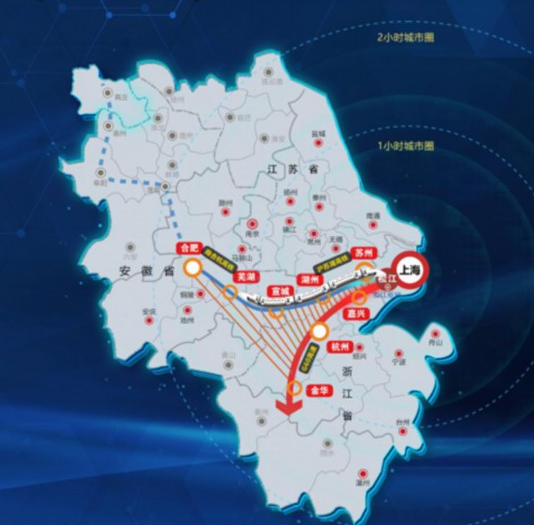
打造创新引领现代化建设的标杆
Bei Jing Ri Bao Ke Hu Duan· 2025-12-29 05:05
Core Insights - The Chinese government is expanding its international technology innovation centers in Beijing, Shanghai, and the Guangdong-Hong Kong-Macao Greater Bay Area to enhance original innovation capabilities and support the construction of a technology-driven modern economy [4][6][10]. Group 1: Beijing-Tianjin-Hebei Innovation Center - The expansion of the Beijing International Technology Innovation Center to the Beijing-Tianjin-Hebei region aims to create a major source of original innovation and strengthen the strategic support for building a technology powerhouse [6][8]. - Beijing has been ranked first globally in research cities for nine consecutive years, with a significant increase in unicorn companies and R&D investment intensity maintained at around 6% [6][8]. - The collaboration among Beijing, Tianjin, and Hebei has led to a substantial increase in technology contract transaction amounts, rising from over 7 billion yuan in 2013 to over 84 billion yuan in 2024 [7]. Group 2: Yangtze River Delta Innovation Center - The Yangtze River Delta region is experiencing accelerated technology innovation collaboration, with a focus on integrating Shanghai's international advantages with the industrial strengths of Jiangsu, Zhejiang, and Anhui [10][11]. - The region has seen a total investment of over 1.7 billion yuan in joint projects since 2022, with a regional R&D investment intensity of 3.33% [10][12]. - The expansion of the Shanghai International Technology Innovation Center to the Yangtze River Delta signifies a shift from focusing solely on Shanghai to fostering integrated innovation across the entire region [10][11]. Group 3: Guangdong-Hong Kong-Macao Greater Bay Area Innovation Center - The Greater Bay Area is leveraging its complementary advantages to build an open regional collaborative innovation community, aiming to enhance cross-border cooperation and achieve a "cumulative effect" [13][14]. - The area has established significant technological infrastructure, including 10 major national scientific facilities, and is home to over 70,000 national high-tech enterprises [16][17]. - Guangdong is focusing on emerging fields and aims to create a world-class high-tech industrial cluster through comprehensive cooperation from technology R&D to enterprise incubation [17].