夜游经济

Search documents
国庆中秋长假旅游市场热度创新高
Zhong Guo Qing Nian Bao· 2025-10-10 00:51
Core Insights - The National Day and Mid-Autumn Festival holiday saw a significant increase in domestic travel and spending, with 888 million trips taken and total expenditures reaching 809 billion yuan, marking an increase of 1.23 billion trips and 108.2 billion yuan compared to the previous year [1] Group 1: Travel Trends - The holiday's travel themes included red tourism, autumn scenery, and moon viewing, with small cities offering a combination of these attractions becoming popular destinations [1] - Popular red tourism sites included Jinggangshan in Jiangxi, Yan'an in Shaanxi, and Changsha in Hunan, attracting large numbers of visitors [1] - The trend of "chasing autumn" led to high hotel bookings in over 2,000 counties, with the highest demand in Jiuzhaigou County, Sichuan [2] Group 2: Consumer Behavior - There was a 3% increase in long-distance travel orders compared to last year, with over 20% more users booking multiple domestic cities [2] - The "night economy" gained traction, with a 200% increase in searches for night tours, and venues like the Shanghai Pudong Art Museum seeing a fivefold increase in night attendance [3] - The collaboration between Wanda Films and the game "Love and Deep Space" showcased the rise of cross-industry marketing targeting younger consumers [3] Group 3: Market Dynamics - Non-first-tier cities saw a 90% increase in high-quality hotel bookings, indicating a shift in consumer preferences towards these locations [2] - The overall hotel booking volume in popular domestic cities increased by over 20%, while outbound travel destinations experienced a 30% rise in flight bookings [2] - The holiday period featured over 300 large-scale light shows, enhancing the appeal of night tourism [3]


“双节”假期文旅市场活力奔涌 远途游与深度游成主流
Zheng Quan Ri Bao Zhi Sheng· 2025-10-08 16:15
Group 1 - The total inter-regional mobility during the "Double Festival" period from October 1 to October 8 is expected to reach 2.432 billion person-times, with an average of 304 million person-times per day, reflecting a year-on-year increase of 6.2% [1] - The demand for holiday consumption is significantly released, with cities that are less crowded and have small airports seeing a notable increase in flight bookings, such as Alxa Left Banner in Inner Mongolia and Turpan in Xinjiang, which experienced over a 100% increase in flight bookings year-on-year [1] - The trend indicates that Chinese tourists are increasingly willing to spend on experiences and emotions, moving from popular to niche destinations and from sightseeing to immersive experiences [1] Group 2 - The tourism market during the "Double Festival" shows a deep integration of multiple business formats, with events like the "Wine Must Festival" in Luzhou driving a 45% year-on-year increase in local tourism orders [2] - Cultural experience tourism is on the rise, with significant interest in museum visits and archaeological tours, leading to increased searches for hotels and dining options within 3 kilometers of these attractions [2] - The night tourism economy is thriving, with a more than 200% increase in night tour searches on platforms like Ctrip during the holiday period, showcasing the growing importance of night experiences in attracting visitors [2][3] Group 3 - The integration of "Cultural Tourism + Various Industries" is boosting more travel destinations, with new models like night tourism encouraging longer stays and driving upgrades in local tourism, dining, and leisure services [3] - The shift in tourism consumption towards "experience" rather than merely reaching destinations indicates a maturation of the Chinese tourism market [3]
小城游订单大增,分段出行、夜游受青睐......“超级黄金周”旅游现新趋势
Zhong Guo Zheng Quan Bao - Zhong Zheng Wang· 2025-10-08 14:36
Core Insights - The domestic tourism market in China shows strong recovery and structural changes during the "Eleventh" holiday, with a record 2.432 billion cross-regional trips made from October 1 to 8 [1] - Tourists are increasingly willing to spend more on travel, with average spending per trip rising by 14.6% compared to last year, indicating a shift towards quality tourism [1][2] - Young travelers, particularly those born between 1995 and 1999, are driving this trend, favoring personalized and immersive travel experiences over traditional sightseeing [2] Group 1: Travel Trends - The average spending per trip has increased by 14.6%, with significant growth in bookings for transportation (5% increase) and accommodations (4.6% increase) [1] - Long-distance travel orders have increased, with domestic long-distance travel orders rising by 3 percentage points year-on-year [3] - There is a notable rise in travel to smaller cities, with some destinations seeing order growth exceeding 200% [3][4] Group 2: Young Travelers - The 1995-1999 age group accounts for nearly 25% of travelers during the holiday, showing a preference for emotional value and deep experiences [2] - The demand for high-quality accommodations and customized travel products has surged, with bookings for high-quality hotels in non-first-tier cities increasing by over 90% [2] Group 3: Travel Behavior Changes - More than 30% of travelers opted for staggered travel arrangements, either departing early or returning late to avoid congestion [5] - The rise of night tourism is highlighted, with searches for night activities increasing by over 200%, indicating a growing interest in evening experiences [6] - The emergence of "segment travel" and night tourism reflects a more rational and autonomous travel rhythm among tourists, enhancing overall satisfaction [6]
金秋六安出新彩 假日市场消费热
Sou Hu Cai Jing· 2025-10-06 12:44
Core Insights - The tourism market in Lu'an is experiencing a significant surge during the National Day and Mid-Autumn Festival holidays, driven by innovative tourism products and activities that cater to diverse consumer needs [1][2][3] Tourism Growth and Economic Impact - Lu'an received 4.09 million visitors and generated a total tourism revenue of 2.448 billion yuan during the first five days of the holiday, marking year-on-year increases of 12.43% and 19.47% respectively [2] - The "ticket root economy" initiative has effectively stimulated consumer spending, with high-speed train tickets and consumption vouchers acting as key drivers for tourism [8][10] New Tourism Products and Experiences - The introduction of various new tourism formats, such as "Camping+" and unique attractions like the "Youhu Cliff Cave Coffee," has successfully attracted younger demographics and families [3][5] - The "Youhu Cliff Cave Coffee" became a popular spot, receiving approximately 8,000 visitors and selling around 4,000 cups of tea and 500 camping barbecue sets during the holiday [3] Innovative Tourism Models - The "one product, one tour" model in Jinzhai County's West Tea Valley has redefined the tourism experience, combining tea garden visits with boat tours, leading to a 50% increase in local agritourism and tea sales [5] - The Spring Breeze Cultural Tourism Town in Huoshan County, developed with an investment of 6.08 billion yuan, integrates multiple elements of tourism, catering to various consumer segments [7] Night Tourism and Cultural Integration - Lu'an's night tourism initiatives have transformed traditional tourism patterns, with events like the "Night Tour" at Wanfo Lake featuring cultural performances and interactive experiences that enhance visitor engagement [14][15] - The integration of traditional culture with modern entertainment in commercial districts has revitalized local economies, with significant visitor turnout and revenue generation [13] Policy and Market Strategies - Lu'an's government has implemented policies such as ticket discounts and consumption vouchers totaling 3 million yuan to boost tourism and consumer spending [12] - The "transportation + tourism" model has successfully attracted visitors from surrounding cities, increasing their stay duration and overall spending [10]

中秋夜游,一起在武汉解锁“赏月新姿势”
Chang Jiang Ri Bao· 2025-10-06 01:23
Core Insights - The night tourism economy has emerged as a new growth point in Wuhan's cultural and tourism market during the National Day and Mid-Autumn Festival holiday, with significant participation from visitors in night activities [1][2][3] Group 1: Visitor Statistics - During the first four days of the holiday, Wuhan Garden Expo (including Hankou Li) received 300,000 visitors, with 50% being night tourists [1] - Huabohui welcomed nearly 70,000 visitors, also with 50% night tourists [1] - Mulan Night City attracted over 70,000 visitors in the first three days, with 65% attending night events [1] Group 2: Night Activities and Events - Various scenic spots in Wuhan are hosting a range of night activities for the Mid-Autumn Festival, including boat rides and light shows [2][3] - The "Moonlit Jiangcheng Night" light show features modern visual technology to enhance traditional culture and stimulate nighttime consumption [2] - Events include performances like "Chang'e Flying to the Moon" and large-scale lantern releases at Huabohui, with nearly 6,000 tickets pre-booked [3] Group 3: Cultural and Entertainment Offerings - The Old Wharf Cultural and Food Street in Jiangxia is hosting the "Moonlit Wharf" event, featuring local music and performances [4] - Wuhan Happy Valley is organizing various entertainment activities, including martial arts and traditional performances, to create an all-day experience [4] - Mulan Night City is decorated with lanterns and features upgraded performances, including a drone show and traditional skill demonstrations [4]
巨有科技景区多业态夜游经济:点亮景区夜间消费新场景
Sou Hu Cai Jing· 2025-09-11 15:27
Group 1: Night Economy Development - The night tourism economy is experiencing unprecedented growth opportunities, evolving from a single lighting upgrade to a multi-dimensional experience reconstruction [1] - The night economy is releasing significant benefits by extending time and space, with Beijing Universal Studios' "Magic World Night Show" increasing per capita spending to 1.8 times that of daytime [1] - Chengdu's Jinjiang night tour project has transformed a 2.4 km river into a mobile theater, leading to a 25% increase in rental prices for nearby shops [1] Group 2: Cultural Narratives in Night Economy - Cultural narratives are the core engine of the night economy, shifting from observational to participatory experiences [3] - The "Tokyo Dream of Huazhi" night tour in Kaifeng enhances visitor engagement through role-playing and gamification, increasing the repeat visit rate to 37% [3] - The deep development of cultural IP is creating a chain effect, as seen in the Dunhuang "Night Tour of Mogao Caves," which boosted hotel occupancy rates by 52% [3] Group 3: Technological Innovations in Night Economy - Technological innovations are reshaping the experience dimensions of the night economy through spatial reconstruction, sensory integration, and intelligent response [4] - The "Pearl River Phantom" project in Guangzhou utilizes 5G and 8K technology for real-time interaction, achieving a premium rate 2.3 times higher than ordinary night tours [4] - The application of metaverse technology in Zhangjiajie's "Wuling Fantasy" AR night tour allows digital participation in cultural rituals, with virtual goods transactions accounting for 18% of total revenue [4]

暑期海南旅游“火力全开”
Hai Nan Ri Bao· 2025-09-08 01:48
Group 1 - Hainan's tourism market has shown significant growth during the summer, driven by diverse business models, policy incentives, and festive activities [2][3] - The number of yacht outings in Sanya reached an average of over 400 per day, with a nearly 30% year-on-year increase in visitor numbers [2] - The summer tourism consumption subsidy program has attracted over 300,000 participants and generated more than 500 million yuan in tourism consumption [3] Group 2 - In August, Hainan's cultural and tourism order value increased by 13% month-on-month, with cities like Chengdu, Guangzhou, and Beijing being major sources of visitors [4] - The night economy has thrived, with search volumes for night markets in Hainan increasing significantly, such as a 500% rise for "Haida South Gate Night Market" [4] - The overall tourism chain, including transportation, accommodation, and dining, has experienced growth, indicating a robust recovery in Hainan's tourism sector [4]
杨明霞:琴澳可成非遗出海枢纽 让手艺从“博物馆”到“热搜榜”
2 1 Shi Ji Jing Ji Bao Dao· 2025-09-04 07:22
Core Viewpoint - The article emphasizes the potential of integrating intangible cultural heritage (ICH) into the tourism and economic landscape of the Hengqin-Macau region, transforming it from a static display to an interactive and engaging experience for visitors [1][2][3] Group 1: Event Overview - The Fourth China (Macau) International High-Quality Consumption Expo and Hengqin World Bay Area Forum will take place from September 3 to 7, featuring a cultural tourism theme forum on September 4 [1] - The event aims to explore how ICH can be made more accessible and engaging, moving beyond traditional exhibition formats [1] Group 2: Cultural Integration and Economic Opportunities - Yang Mingxia, Deputy Director of the Beijing Institute of Intangible Cultural Heritage, suggests treating ICH as a "super interface" that can connect with various modern elements such as nightlife, performances, and digital media [1][2] - Successful examples of ICH integration include the "Bamboo Town Lights Up the Great Wall" event in Anji, which attracted 32,000 visitors and generated significant social media engagement [2] - The article highlights the unique cultural and institutional advantages of Macau and Hengqin, which can facilitate cross-cultural collaborations and promote ICH on a larger scale [2][3] Group 3: Role of Celebrities and Market Expansion - The involvement of celebrities as "cultural ambassadors" can enhance the visibility and appeal of ICH, with tailored collaborations to promote various traditional crafts [3] - Yang emphasizes that ICH should be viewed as a future asset rather than a relic of the past, advocating for its transformation into interactive and marketable cultural units [3] - The potential for creating a new economic ecosystem through ICH is significant, particularly in the context of the Greater Bay Area and its international connections [3]
暑运收官!济南西青岛西日照威海等车站创下旅客发送量历史纪录
Qi Lu Wan Bao· 2025-09-01 07:26
Summary of Key Points Core Viewpoint - The China Railway Jinan Bureau has successfully concluded the 2025 summer transportation period, with a significant increase in passenger volume and innovative service offerings to enhance travel experiences and meet diverse consumer demands [1][4]. Group 1: Passenger Transportation - During the 62-day summer transportation period, the Jinan Bureau sent a total of 47.518 million passengers, averaging 766,000 passengers per day, representing a 6.4% increase compared to the previous year [1]. - On August 16, the bureau recorded a peak of 956,000 passengers in a single day, marking the highest daily passenger count for the summer transportation period [1]. - Several stations, including Jinan West, Rizhao, Qingdao West, and Weihai, set historical records for passenger volume during this period [1]. Group 2: Innovative Services - The Jinan Bureau implemented a "Railway+" model to stimulate market activity, focusing on various consumer scenarios such as "ticket root economy," "concert economy," "silver economy," and "night tourism economy" [4]. - The bureau launched multiple themed tourist trains, integrating local culture, cuisine, and heritage into the travel experience, catering to the summer tourism demand [4]. - Special trains were organized for major events, including fan trains and concert trains, to accommodate peak travel times for attendees [4]. Group 3: Service Quality Improvement - The bureau enhanced service quality by optimizing ticket purchasing systems and increasing the number of dedicated ticket windows and security checks for students [8]. - Collaborations with local transportation systems were established to ensure seamless transfers between high-speed trains and subways, improving overall travel efficiency [8]. - Volunteer services were organized at key stations to assist travelers, and measures were taken to streamline passenger flow and reduce waiting times [8]. Group 4: Freight Transportation and Logistics - The Jinan Bureau increased coal transportation by 32% to support local power plants during peak summer demands, while also boosting grain and fertilizer shipments by 5% and 21%, respectively [9]. - The bureau facilitated a 3.6-fold increase in domestic freight train shipments by organizing multi-modal transport solutions [9]. - Collaborations with ports and local railways were established to create comprehensive logistics solutions, enhancing service for various industries [9]. Group 5: Emergency Response and Safety - The Jinan Bureau actively monitored weather conditions and implemented emergency plans to ensure railway safety during extreme weather events [9]. - The bureau utilized advanced monitoring technologies, such as drones and satellite imagery, to oversee critical railway infrastructure and maintain operational safety [9]. - Stations were prepared to manage passenger flow and provide timely information regarding train operations, minimizing disruptions during adverse weather [9].
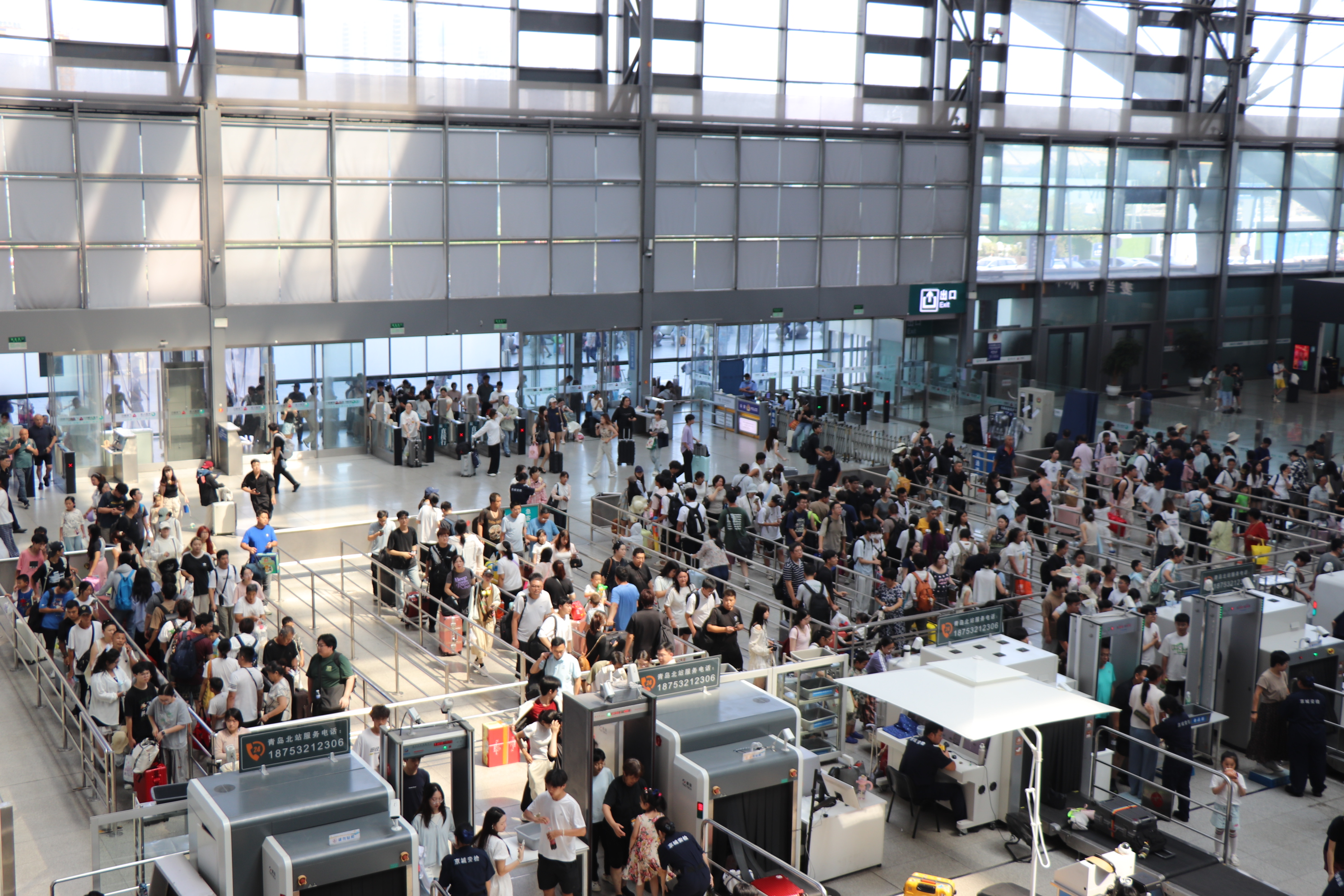
南京位居“暑期十大热门旅游城市”榜首
Nan Jing Ri Bao· 2025-08-31 02:21
Core Insights - Nanjing ranks first in the "Top Ten Popular Tourist Cities" for the summer season, driven by the "Su Super" sports events [1][3] - The overall order payment volume for Nanjing's tourism increased by 11% year-on-year during a key match on August 17, with hotel bookings around the Nanjing Olympic Sports Center surging by 333% [3] - Popular tourist activities include natural landscapes, cultural heritage sites, theme parks, exhibition halls, and water activities, with night tourism seeing an 83% increase in searches [3] Group 1: Tourism Trends - The "follow the events/exhibitions to travel" trend has gained momentum, significantly boosting local tourism consumption [3] - Nanjing's "3-day tour" is the top product for domestic group travel, and it ranks second in domestic family travel products [6] - Nanjing is also a top destination for traditional cultural tours and summer cooling trips, reflecting a diverse range of tourist interests [6] Group 2: Market Performance - Hotel bookings in Nanjing increased by 17% year-on-year during the summer vacation period [10] - Major tourist attractions include Niushou Mountain Cultural Tourism Area, Hongshan Forest Zoo, and Zhongshan Scenic Area [10] - Nanjing is a popular destination for young tourists, especially during events like the Qixi Festival, where it ranked fourth among popular destinations [8]