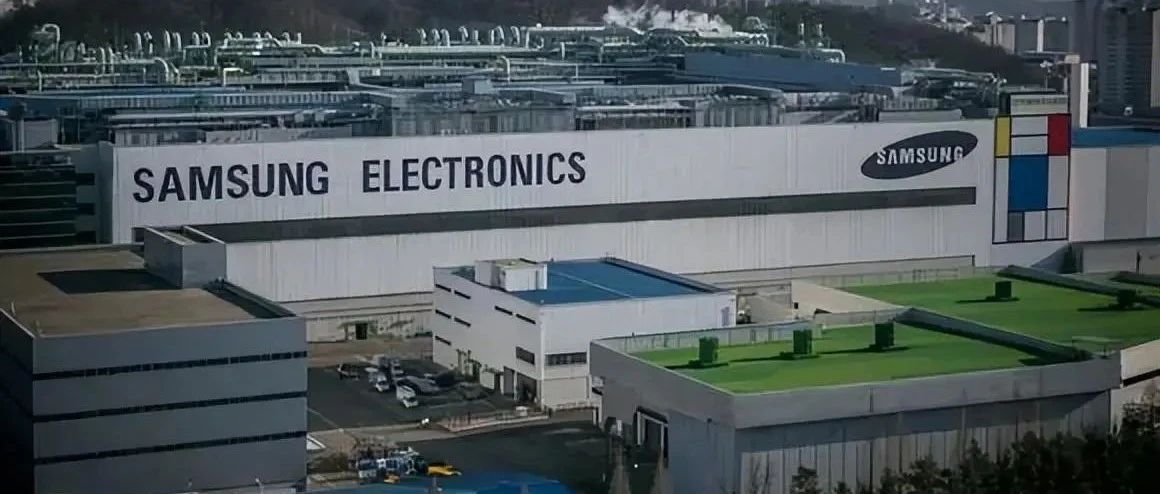
存储器价格上涨

Search documents
DDR4报价仍高于DDR5,NAND价格出现单日多调情况
TrendForce集邦· 2025-12-04 05:50
Group 1 - The core viewpoint of the article highlights the ongoing fluctuations in the DRAM and NAND flash markets, with significant price increases observed in both sectors [2][4]. Group 2 - In the DRAM market, the price of mainstream DDR4 1Gx8 3200MT/s chips increased by 10.73% this week, rising from US$14.914 to US$16.514, indicating a sustained high price level without signs of decline [2]. Group 3 - The NAND flash market is experiencing a psychological drive due to expectations of extreme supply tightness, leading to multiple daily price adjustments. The price of 512Gb TLC wafers rose by 5.90% this week, reaching US$9.607 [4].

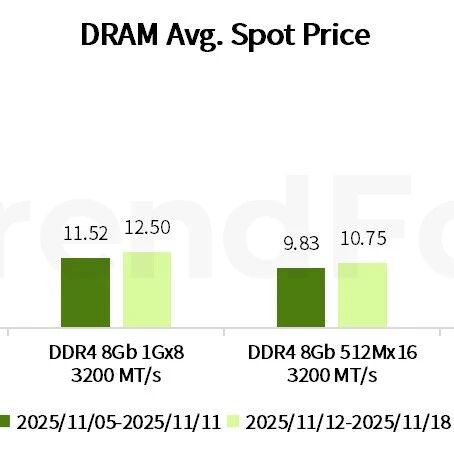
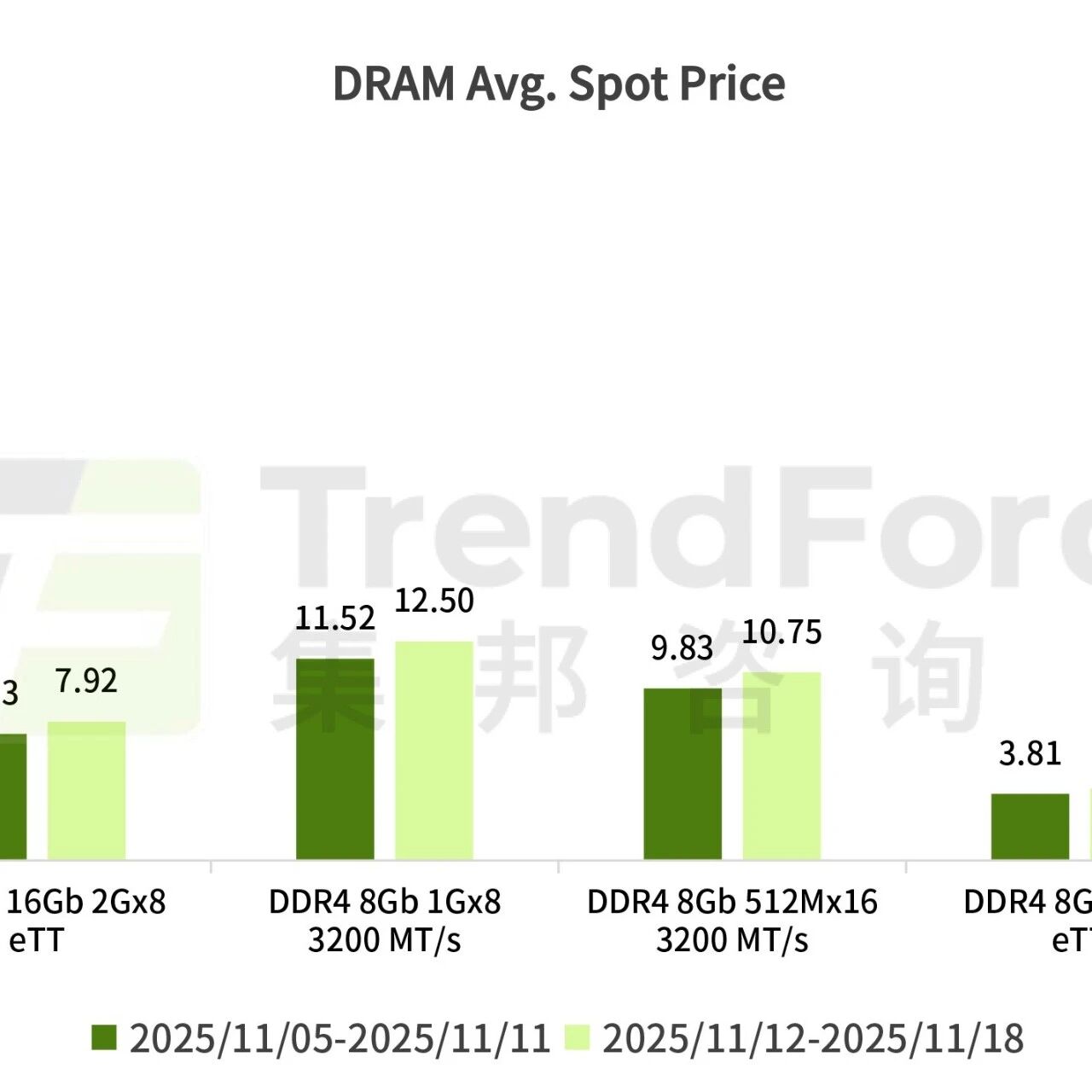
DDR5内存价格自9月以来上涨307%,模组成本即将飙升
TrendForce集邦· 2025-11-20 09:01
Core Insights - The article discusses the recent trends in the memory market, particularly focusing on DRAM and NAND flash memory prices, which have seen significant increases due to supply constraints and market dynamics [2][4]. DRAM Market Summary - DRAM prices for DDR4 1Gx8 and DDR5 2Gx8 have risen significantly since early September, with DDR4 prices increasing by 15.8% and DDR5 prices soaring by 30.7%, leading to reduced transaction volumes as buyers struggle to keep up with rising costs [2][4]. - The current strong outlook for the DRAM market remains intact despite the declining transaction volumes [2]. NAND Market Summary - The NAND flash memory market is experiencing extreme supply tightness, causing spot prices to rise sharply, with daily fluctuations in pricing [4]. - The price of 512Gb TLC wafer in the spot market increased by 14.97%, reaching a price of US$7.421, driven by the inability of manufacturers to release additional capacity [4].
11月18日投资避雷针:平潭发展、海峡创新今起停牌核查
Xin Lang Cai Jing· 2025-11-18 00:13
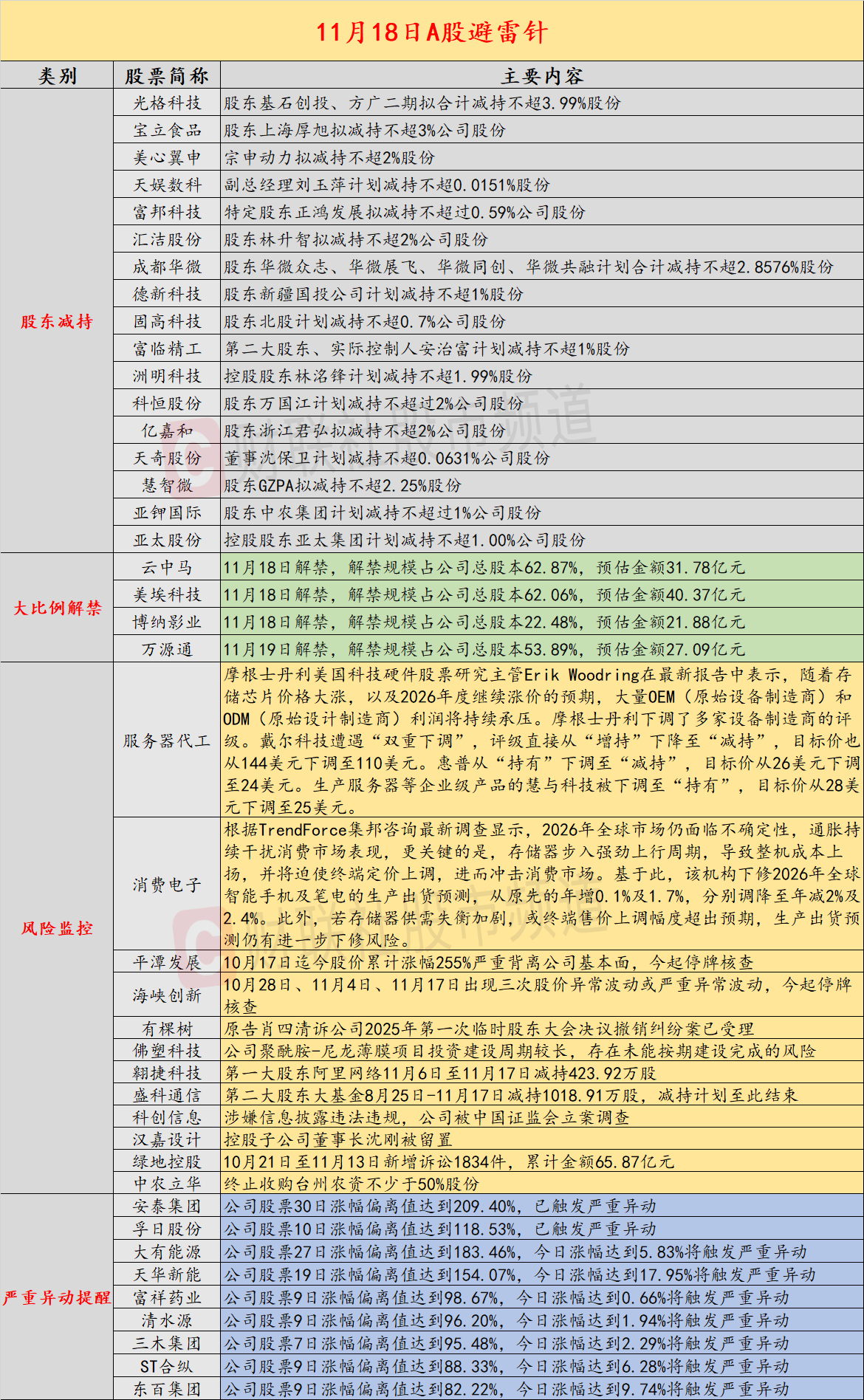
Economic Information - Domestic commodity futures showed mixed results, with iron ore up 0.32%, coking coal down 3.19%, and coke down 2.39% [2] - In October, the total retail sales of consumer goods reached 46,291 billion yuan, a year-on-year increase of 2.9%. Automotive consumption was 4,255 billion yuan, down 7% year-on-year [2] Company Alerts - Pingtan Development's stock price increased by 255% since October 17, significantly diverging from its fundamentals, leading to a suspension for investigation [5] - Haixia Innovation experienced three instances of abnormal stock price fluctuations on October 28, November 4, and November 17, resulting in a suspension for investigation [5] Overseas Alerts - The three major U.S. stock indices collectively fell, with the Dow Jones down 1.18%, S&P 500 down 0.92%, and Nasdaq down 0.84%. The S&P 500 index fell below 6,700 points, ending a ten-week upward trend [4] - Major technology stocks mostly declined, with AMD and Intel down over 2%, while Google saw a rise of over 3% [4] Stockholder Reduction Plans - Multiple companies announced stockholder reduction plans, including Guangge Technology, Baoli Food, and Meixin Yishen, with reductions ranging from 0.0151% to 3.99% of shares [7][8] - Significant stock unlocks are scheduled for November 18, including Yunzhongma and Meai Technology, with estimated amounts of 3.178 billion yuan and 4.037 billion yuan respectively [7] Market Predictions - Morgan Stanley reported that rising storage chip prices are expected to pressure OEM and ODM profits, leading to downgrades for several manufacturers, including Dell and HP [6] - TrendForce revised down its 2026 global smartphone and laptop production forecasts, predicting declines of 2% and 2.4% respectively due to inflation and rising component costs [6]


存储价格攀升冲击消费市场,机构下调明年智能手机等出货预期
Zheng Quan Shi Bao Wang· 2025-11-17 10:14
Core Insights - The price increase of various storage products is impacting the downstream consumer market, leading to a collective price hike for new mid-to-high-end smartphones in China, prompting institutions to revise down their global smartphone and laptop shipment forecasts for 2026 [1][2] Group 1: Market Forecast Adjustments - TrendForce has downgraded the global smartphone shipment forecast for 2026 from a growth of 0.1% to a decline of 2%, and the laptop shipment forecast from a growth of 1.7% to a decline of 2.4% [1] - The ongoing inflation and strong upward cycle of memory prices are expected to further pressure the production and shipment forecasts if supply-demand imbalances worsen [1] Group 2: Cost Structure and Pricing Impact - The combined cost of DRAM and NAND Flash is projected to increase the overall BOM cost of devices by approximately 5% to 7% in 2026, which will particularly affect low-end smartphone models [2][3] - The share of memory components in the BOM cost for laptops is expected to rise from about 10%-18% to over 20% due to significant price increases [2] Group 3: Consumer Behavior and Market Dynamics - The anticipated increase in laptop prices by 5% to 15% in 2026 is likely to create substantial pressure on demand, with consumers potentially delaying upgrades or shifting to the second-hand market [3] - The mid-range market may experience a significant slowdown in upgrade momentum, as both enterprise and household users are inclined to extend the lifecycle of their devices [3] - The monitor market, while less directly impacted by memory price increases, may still face challenges if overall PC retail prices rise significantly, leading to a forecasted decline in annual monitor shipments from a slight increase of 0.1% to a decrease of 0.4% [3]
存储器价格攀升,2026年全球智能手机及笔电生产出货预期下调
WitsView睿智显示· 2025-11-17 07:24
Core Viewpoint - The global market is expected to face uncertainties in 2026, with inflation impacting consumer market performance and a strong upward cycle in memory prices leading to increased overall costs and potential price hikes for end products, which may further affect consumer demand [2]. Group 1: Smartphone Market - TrendForce has revised down its production shipment forecasts for global smartphones in 2026 from a growth of 0.1% to a decline of 2% due to rising memory costs [2]. - The price increase in DRAM is expected to raise the BOM cost of smartphones by approximately 8-10% in 2025, with overall BOM costs projected to increase by 5-7% in the following year [3]. - Smaller smartphone brands may struggle to secure resources due to tight memory supply, potentially leading to a market reshuffle favoring larger players [4]. Group 2: Laptop Market - The laptop market is anticipated to face dual pressures of cost and demand in 2026, with memory components expected to account for over 20% of the BOM cost due to significant price increases [5]. - If brands pass on costs to consumers, laptop prices may rise by 5-15%, which could dampen demand, particularly in the low-end market where price sensitivity is high [5]. - The mid-range market may see a slowdown in replacement cycles as both corporate and household users extend the lifespan of their devices [5]. Group 3: Monitor Market - The monitor market, which typically uses smaller capacity memory, is less directly impacted by price increases; however, it may suffer indirectly if PC retail prices rise significantly, leading to a forecasted decline in annual shipments from a slight increase of 0.1% to a decrease of 0.4% [6]. Group 4: BOM Cost Analysis - For different market segments, the BOM cost increase from Q1 2025 to Q3 2026 is projected at 12% for high-end and mid-range products, and 10% for low-end products, with DRAM and SSD components making up 23%, 21%, and 20% of the BOM cost respectively [8].

TrendForce集邦咨询:存储器价格攀升冲击消费市场 下修2026年全球智能手机及笔电的生产出货预测
智通财经网· 2025-11-17 06:25
Core Insights - The global market is expected to face uncertainty in 2026, with inflation continuing to disrupt consumer market performance and a strong upward cycle in memory prices leading to increased overall costs and potential price hikes for end products [1] Smartphone Market - TrendForce has revised down its 2026 global smartphone production and shipment forecast from a growth of 0.1% to a decline of 2% due to rising memory costs [1] - DRAM prices are expected to rise significantly, with a projected increase of over 75% year-on-year in Q4 2025, leading to an estimated 8-10% increase in BOM costs for smartphones [2] - The low-end smartphone segment is particularly vulnerable, with brands likely to reduce the proportion of low-end models and increase prices across their product lines to maintain operations [2] Laptop Market - The laptop market is anticipated to face dual pressures of cost and demand in 2026, with memory components expected to account for over 20% of the BOM cost due to continuous price increases [3] - If brands pass on the increased costs, laptop prices may rise by 5-15%, which could negatively impact demand, especially in the low-price segment where consumers may delay upgrades or turn to the second-hand market [3] - The mid-range market may also see a slowdown in upgrade momentum as both businesses and households extend the lifecycle of their devices [3] Monitor Market - Monitors, which typically use smaller capacity memory, are less directly affected by price increases; however, they may still face indirect impacts if overall PC retail prices rise significantly, leading to a forecasted decline in annual shipments from a slight increase of 0.1% to a decrease of 0.4% [4] BOM Cost Increases - The BOM cost increases for different market segments are projected as follows: High-End (12%), Mid-Range (12%), and Low-End (10%) from Q1 2025 to Q3 2026 [5] - The percentage of DRAM and SSD in BOM costs for Q3 2026 is expected to be 23% for High-End, 21% for Mid-Range, and 20% for Low-End [5]

研报 | 存储器价格攀升冲击消费市场,下修2026年全球智能手机及笔电的生产出货预测
TrendForce集邦· 2025-11-17 06:19
Core Insights - The global market in 2026 is expected to face uncertainty due to persistent inflation affecting consumer behavior, alongside a strong upward cycle in memory prices, leading to increased costs for end products and potential price hikes that could impact the consumer market [2][3]. Smartphone Market - TrendForce has revised down its production shipment forecasts for global smartphones in 2026 from a growth of 0.1% to a decline of 2% due to rising costs driven by DRAM price increases, which surged over 75% year-on-year in Q4 2025, raising the BOM cost by 8-10% [3][4]. - The ongoing tight supply of memory components is expected to lead to a market reshuffle, favoring larger smartphone brands as smaller brands struggle to secure resources [3]. Laptop Market - The laptop market is projected to face dual pressures of rising costs and declining demand in 2026, with memory components (DRAM and NAND Flash) expected to account for over 20% of the BOM cost, up from 10-18% [4][5]. - If brands pass on the increased costs, laptop prices may rise by 5-15%, which could lead to delayed upgrades or a shift to the second-hand market, particularly in the low-end segment [5]. - The mid-range market may also see a slowdown in upgrade momentum as both corporate and household users extend the lifecycle of their devices [5]. BOM Cost Analysis - The BOM cost increase for high-end, mid-range, and low-end laptops is estimated at 12%, 12%, and 10% respectively from Q1 2025 to Q3 2026, with DRAM and SSD components making up 23%, 21%, and 20% of the BOM cost in Q3 2026 [6]. Display Market - The display market, while less directly impacted by memory price increases due to smaller memory capacities, may still face challenges if overall PC retail prices rise significantly, potentially leading to a decline in display shipments from a slight increase of 0.1% to a decrease of 0.4% [5].

电子特气深度汇报:GKJ催化+存储需求预期回升
2025-09-26 02:29
Summary of Key Points from the Conference Call on Electronic Specialty Gases Industry Overview - The electronic specialty gas market in China is approximately 30 billion RMB, with 20 billion RMB attributed to electronic specialty gases used in integrated circuits, panels, and semiconductor lighting across the semiconductor industry [1][3] - The global nitrogen trifluoride (NF3) market is about 1.3 billion USD, with China accounting for approximately 15% of this market [1][4] Core Insights and Arguments - Recent advancements in domestic photolithography machines and new product launches by companies like Microelectronics indicate a potential for a fully domestic production line, which is expected to boost the demand for photolithography gases, benefiting the electronic specialty gas sector [2][1] - The storage market is tightening, with expectations of price increases. Companies like Changxin Storage and Yangtze Storage are accelerating their IPO processes and expanding production, which will further drive the demand for electronic specialty gases in advanced processes [2][1] - The domestic leader in NF3 and WF6, China Shipbuilding Specialty Gases, holds over 60% market share in China and is globally competitive, benefiting from new capacity and customer certifications [1][5] Supply and Demand Dynamics - The supply of NF3 is currently balanced with a demand of 45,000 tons and a production capacity of 64,000 tons, but actual output is limited to around 50,000 tons due to capacity utilization constraints [6][5] - Recent shutdowns of major suppliers like Kanto Denka and Mitsui Chemicals have reduced overseas NF3 supply by over 25%, creating a market gap that is expected to drive prices up [9][11] Price Trends - The price of NF3 has been on a downward trend for the past decade, but with increasing export volumes to fill supply gaps, there is a potential for price increases in the future, particularly benefiting China Shipbuilding Specialty Gases [11][10] Key Players and Market Position - Huate Gas is a leading player in the rare gases market for photolithography, holding over 60% market share, with major clients including Changxin and SMIC [12][13] - Guanggang Gas is expected to maintain over 30% revenue growth due to its project acquisition capabilities and orders from expanding clients [14] - Jin Hong Gas is diversifying its product offerings in electronic specialty gases and is expected to maintain a good growth momentum [16] Future Trends - The helium market is currently at a low price point but is expected to enter a new upward cycle, with historical data suggesting a price recovery due to supply shortages [15] - He Yuan Gas is expanding its electronic specialty gas business significantly, with two industrial parks projected to achieve 5 billion RMB in output [17] Additional Important Insights - The overall electronic specialty gas market is experiencing rapid domestic production increases, which is positively impacting the industry [2][1] - The certification process for semiconductor-grade NF3 is lengthy, often taking six months to a year, which affects supply availability [8] This summary encapsulates the critical insights and developments within the electronic specialty gas industry, highlighting market dynamics, key players, and future trends.


突发!三星跳涨20%!
国芯网· 2025-05-12 13:41
Core Viewpoint - Samsung has decided to increase the prices of DDR4 and DDR5 DRAM products, with DDR4 seeing a rise of approximately 20% and DDR5 around 5%, marking the first price increase in over a year [2]. Group 1: Price Adjustments - Samsung has established a new pricing strategy for NAND flash and DRAM products, planning to raise prices by 3% to 5% across major global clients, influenced by geopolitical tensions and trade uncertainties [2]. - SK Hynix has also raised DRAM prices by 12% recently, indicating a broader industry trend towards price increases [2]. - Micron Technology, the third-largest DRAM manufacturer, initiated price hikes starting in April, with PC DDR4 8Gb prices increasing by 22.22% month-over-month, marking the first increase since April of the previous year [3]. Group 2: Market Conditions - The DRAM market faced challenges last year due to decreased demand and oversupply, with average fixed trading prices for PC DRAM products dropping by 20.59% in November [2]. - Prices remained stable in the first quarter of this year after the decline [2].