平衡外交

Search documents
和中方谈完,波兰当着全球宣布稀土喜讯,欧盟:为啥波兰这么好运
Sou Hu Cai Jing· 2025-09-19 11:36
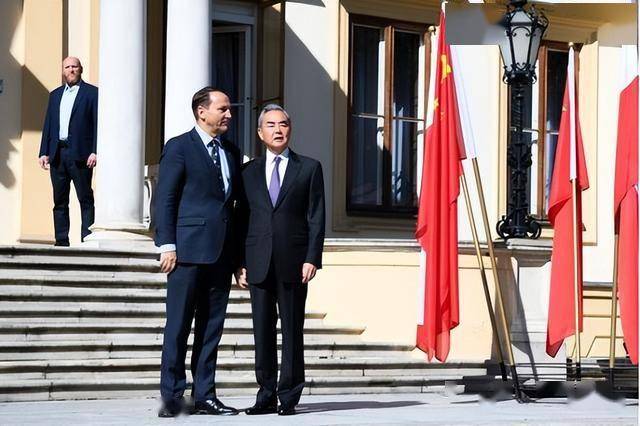
Group 1 - Poland's government temporarily closed the railway border with Belarus, causing over 300 freight trains to be stranded at the border, impacting international trade significantly [5][6][14] - A Chinese delegation arrived in Poland to discuss the reopening of the railway and emphasized the importance of maintaining the smooth operation of the China-Europe Railway Express for global supply chains [8][10] - The negotiations resulted in China agreeing to reopen the railway border and granting Poland export permits for rare earth materials, which is crucial for Poland's ambitions in the electric vehicle manufacturing sector [12][14][16] Group 2 - The rare earth materials are essential for various industries, including smartphones, electric vehicles, and military equipment, with China holding over one-third of global reserves and supplying nearly 90% of the market [16][18] - The cooperation between Poland and China has drawn mixed reactions from the international community, particularly from the EU and Germany, highlighting the challenges of EU's unified foreign policy and the competitive dynamics in the rare earth market [20][22] - Poland's diplomatic strategy balances commitments to NATO while engaging in practical economic cooperation with China, showcasing a model of mutual benefit through dialogue and collaboration [24][26]

莫迪刚回国就收坏消息,特朗普当场下定决心,称印度“反悔”已为时已晚,不是中国不帮忙
Sou Hu Cai Jing· 2025-09-04 04:11
Core Viewpoint - The recent tensions between the United States and India highlight a significant shift in diplomatic relations, with the U.S. imposing a 50% tariff on Indian goods and canceling upcoming diplomatic engagements, reflecting deeper strategic conflicts rather than mere trade disputes [1][3][5] Group 1: U.S.-India Relations - The U.S. has transitioned from viewing India as a trade partner to a target for punitive measures, indicating a loss of trust and strategic alignment [3][5] - Trump's unilateral decision to raise tariffs and cancel the "Quad" summit with India signals a serious diplomatic rift, reminiscent of previous U.S. actions against China [1][3] - The U.S. administration's rhetoric has escalated, with officials accusing India of undermining U.S. interests and aligning too closely with Russia [3][7] Group 2: India's Strategic Position - India is attempting to navigate a complex geopolitical landscape by strengthening ties with Russia and China while managing its relationship with the U.S. [5][7] - Modi's recent diplomatic gestures towards China, including signing the "Tianjin Declaration," suggest a strategic pivot towards a multi-aligned foreign policy [7][9] - The Indian government is aware of the risks of over-reliance on the U.S. and is actively seeking to balance its international relationships [5][7] Group 3: Implications for Global Trade - The U.S. tariffs on India are part of a broader strategy that could impact global supply chains and trade dynamics, particularly in the context of U.S.-China relations [3][9] - The shift in U.S. policy towards India reflects a growing concern over its global standing and the challenge posed by emerging powers [1][9] - The inability of the U.S. to establish a solid trade agreement with India underscores the complexities of international trade negotiations and the importance of mutual interests over ideological alignment [9]
中美打贸易战,澳大利亚成了最大赢家,赚得盆满钵满
Sou Hu Cai Jing· 2025-08-30 04:47
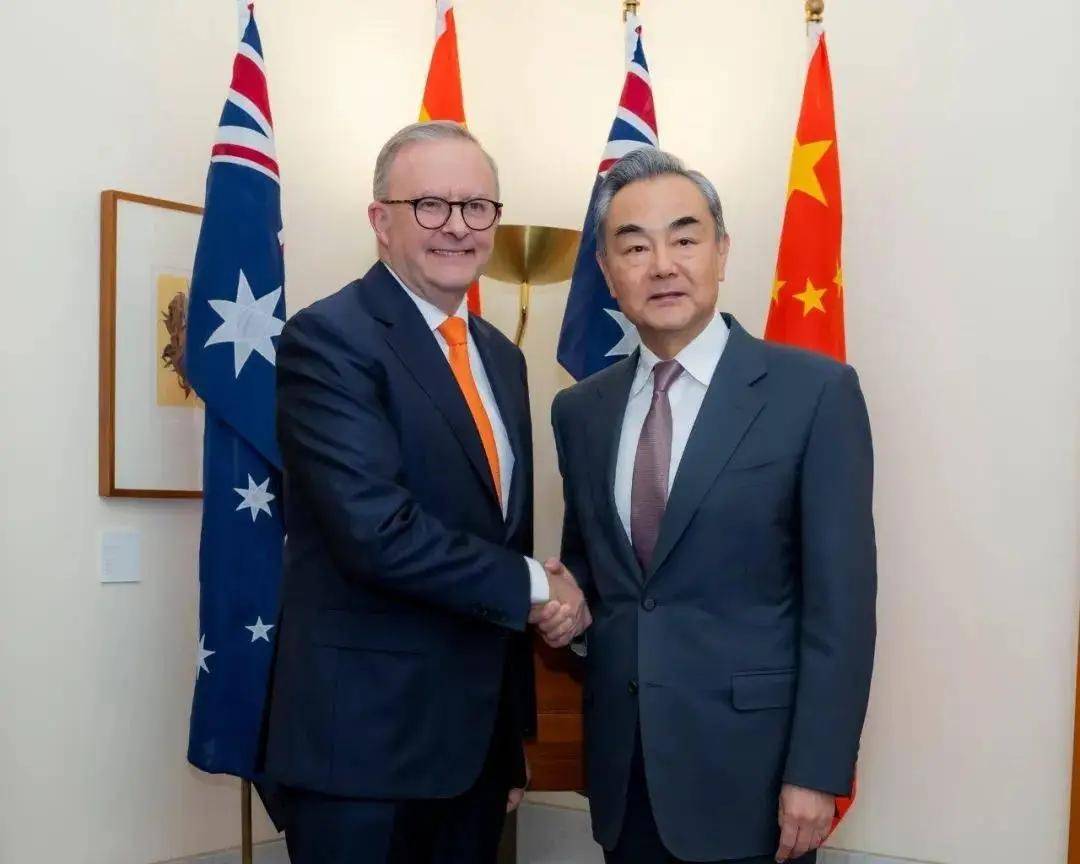
Core Insights - Australia has achieved a remarkable trade performance amidst the ongoing US-China trade war, with bilateral trade with China surpassing $210 billion in 2024, marking a 33% increase in exports to China, a historical high [1][5][3] - The US has granted Australia a preferential 10% tariff rate, making it the country with the lightest tariffs among its trading partners, while other nations face significant tariff increases [7][8][10] - The success of Australia in navigating the trade landscape is attributed to a strategic shift in foreign policy under Prime Minister Albanese, who has prioritized pragmatic cooperation with China [16][20][22] Trade Performance - The bilateral trade volume between Australia and China reached over $210 billion, equivalent to one-seventh of Australia's annual GDP, surpassing the total trade volumes of many countries [5] - South Australia alone saw a 33% increase in exports to China, achieving a record of 4.39 billion AUD [5] - In contrast, countries like Canada and Japan have experienced declines in trade with China, highlighting the stark differences in outcomes based on foreign policy choices [12][32] Diplomatic Strategy - Albanese's administration has shifted from a confrontational approach to a cooperative one, emphasizing national interests and direct communication with China [20][22][28] - The signing of bilateral agreements, such as the plant quarantine protocols for Australian apples and Chinese jujubes, indicates a high level of alignment in trade standards and risk assessments [25][26] - The normalization of trade relations has led to the removal of previous restrictions on Australian exports, including barley, wine, and seafood [26][43] Economic Impact - Australia's exports to China are significantly more valuable than its exports to the US, with a ratio of 5.7 times more in favor of China [30] - The recovery of the Australian wine market is notable, with exports rebounding from a drastic decline due to tariffs, indicating a strong return to the Chinese market [41] - Australian investments in China are also on the rise, with 597 new enterprises established in 2024, reflecting a diversification of investment interests beyond resource extraction [43] Strategic Autonomy - Australia's approach is characterized by strategic autonomy, avoiding alignment with either the US or China while focusing on its own national interests [45][49] - The balance between economic engagement with China and maintaining security ties with the US is a key aspect of Australia's foreign policy [30][32] - The successful navigation of trade relations has positioned Australia as a model for other middle-income countries, demonstrating the benefits of a balanced diplomatic strategy [51][53]
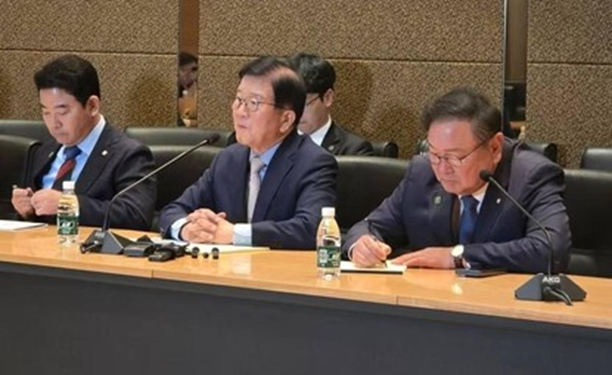
访华期间,韩国总统特使:韩国内“反华情绪”在华引起不满,中方要求韩方采取措施
Huan Qiu Wang· 2025-08-27 10:19
Group 1 - The South Korean presidential envoy, Park Byeong-sik, reported that during the visit to China, there was significant concern from Chinese officials regarding the "anti-China sentiment" in South Korea, leading to requests for South Korea to take measures to address this issue [1][3] - Park indicated that South Korea is willing to regulate actions that exceed the bounds of freedom of speech in response to these concerns [3] - The envoy also requested China to open its cultural and creative markets, although he acknowledged that there are many challenges to resolving these issues [3] Group 2 - Park emphasized that a stable U.S.-China relationship would benefit the development of South Korea-China relations, and he noted that China expressed its principles regarding U.S.-China relations without commenting on the South Korea-U.S. summit [3] - The Chinese Foreign Ministry spokesperson stated that a healthy and stable South Korea-China relationship aligns with the fundamental interests of both nations and contributes to regional and global stability and prosperity [3] - The development of South Korea-China relations is based on mutual interests and should not be influenced by third-party factors, with China maintaining a consistent and stable policy towards South Korea [3]
李在明没让中方失望,赶在飞机降落美国前,对特朗普泼了一盆冷水
Sou Hu Cai Jing· 2025-08-26 08:43
Core Viewpoint - The article discusses the diplomatic challenges faced by South Korean President Lee Jae-myung in his meetings with U.S. President Donald Trump and other leaders, highlighting the unequal power dynamics and the pressure on South Korea to comply with U.S. demands, particularly regarding tariffs and investments [1][3][5]. Group 1: Diplomatic Engagements - Lee Jae-myung's meetings with Trump and other leaders are primarily focused on the ongoing U.S.-Russia war and the associated economic implications for South Korea [3]. - The necessity for Lee to meet Trump stems from the pressing issue of tariffs, which have significantly impacted South Korea's economy [5]. - Lee's visit to Japan before meeting Trump indicates a strategic move to explore negotiation tactics and improve international relations, despite the potential backlash from the U.S. [9][11]. Group 2: Economic Pressures - The U.S. has set conditions for lowering tariffs, requiring South Korea to invest over a hundred billion dollars in the U.S. and purchase American goods, which reflects an unequal treaty dynamic [5][7]. - South Korea's economy is heavily reliant on the U.S., and any refusal to comply with U.S. demands could lead to severe economic repercussions [7][20]. - Lee's attempts to balance relations with both the U.S. and China highlight the precarious position of South Korea as a smaller nation caught between larger powers [19][22]. Group 3: Political Dynamics - The article emphasizes the political implications of Lee's actions, noting that his refusal to attend a Chinese military parade while simultaneously seeking U.S. favor could alienate both sides [17][19]. - The unequal treatment Lee received during his visit to the U.S., compared to Trump's reception of other leaders, underscores the subordinate status of South Korea in the U.S.-South Korea alliance [13][15]. - Lee's diplomatic strategy appears to be a balancing act, but it risks offending both the U.S. and China, leaving South Korea in a vulnerable position [20][22].
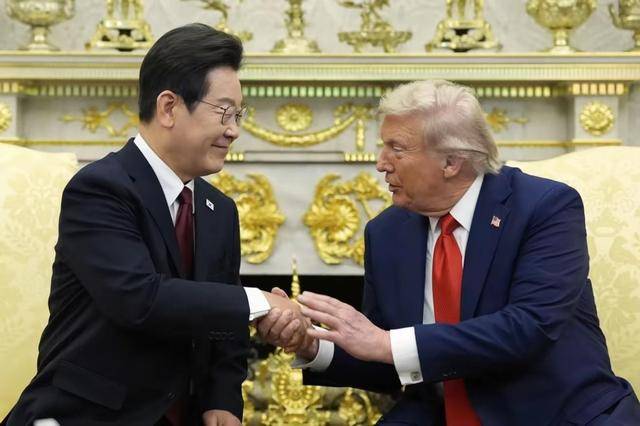
对中美同步发起攻势,李在明“平衡外交”能走多远?
Guan Cha Zhe Wang· 2025-08-25 09:19
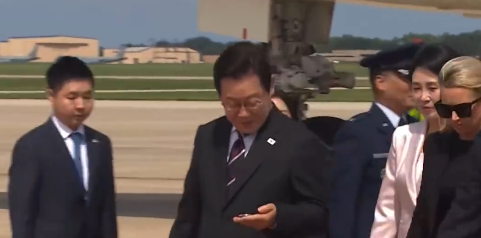
Group 1 - South Korean President Lee Jae-myung's first visit to the U.S. is marked by low-level reception and pressure from the U.S. regarding a $350 billion investment commitment [1][5][3] - The U.S. is pushing for the formalization of the $350 billion investment, with 90% of the benefits expected to go to American citizens [5][7] - Lee's government is attempting to balance relations between the U.S. and China, as evidenced by a simultaneous delegation to Beijing to strengthen economic ties [1][8][11] Group 2 - Lee's agenda during the U.S. visit includes discussions on national security, defense budget, and tariff negotiations, with a focus on modernizing the U.S.-Korea alliance [2][14] - The reception for Lee in the U.S. was notably minimal, with only the Deputy Chief of Protocol and a Korean-American military officer present, contrasting with previous visits by South Korean presidents [3][6] - The South Korean delegation's visit to China aims to restore and enhance economic cooperation, indicating a shift towards a more pragmatic foreign policy [10][12]
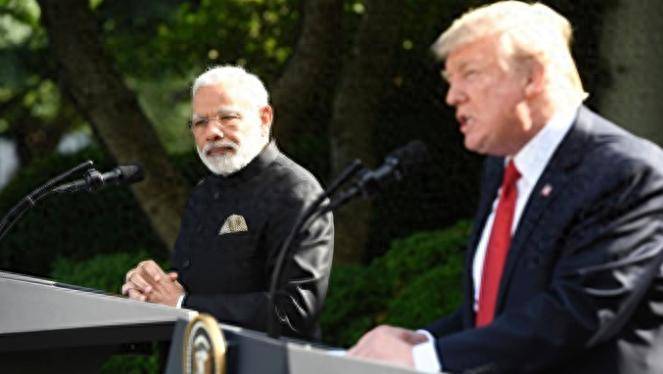
印度炸锅了,特朗普对中国签下总统令,莫迪两头碰壁,里外不是人
Sou Hu Cai Jing· 2025-08-14 09:26
Core Points - The recent breakdown in US-India trade negotiations highlights the deep-seated contradictions between the two nations, particularly regarding tariffs and market access [3][5] - India's strategic positioning as a balancing power between the US and China is increasingly challenged, leading to significant economic repercussions [13][27] Group 1: Trade Negotiations - Since the implementation of "reciprocal tariffs" by the US in April 2025, five rounds of trade talks have taken place, with India hoping to replicate its success with the UAE [3] - The US demands, including reducing IT product tariffs from 15% to zero and opening dairy markets, exceed what India can accept without domestic backlash [5][8] - The increase in tariffs on Indian goods by the US is expected to reduce India's GDP growth by 0.2 percentage points and could lead to a 15% loss in the textile market share in the US [14] Group 2: Strategic Conflicts - The US views India as a key player in its Indo-Pacific strategy, pushing for compliance in supply chain restructuring, while India seeks to maintain strategic autonomy [5][13] - India's reliance on Russian oil has increased significantly, with imports rising by 217% in 2024, which has drawn criticism from the US [7] - The contrasting positions of India and China in the global supply chain, particularly in rare earth elements, have left India at a disadvantage in negotiations [9][20] Group 3: Economic Impact - The US's tariffs on Indian exports have diminished India's competitiveness in sectors like pharmaceuticals and textiles, leading to a significant decline in export volumes [11][23] - India's manufacturing sector, which accounted for only 17% of GDP in 2024, lacks the technological edge to compete effectively with China [20] - The depreciation of the Indian rupee and declining foreign reserves further exacerbate India's economic challenges, prompting a need for economic assistance from China [23][25] Group 4: Diplomatic Relations - Modi's balancing act between the US and China has become increasingly precarious, with recent diplomatic overtures to China seen as a desperate attempt to secure economic support [15][27] - China's response to Modi's visit emphasizes a multilateral approach rather than bilateral concessions, indicating a shift in diplomatic dynamics [25] - The evolving geopolitical landscape suggests that countries attempting to navigate great power rivalries without substantial leverage may face severe consequences [27]
扛不住了?李在明考虑对美让步,失信于中方的代价,韩国承受不起
Sou Hu Cai Jing· 2025-07-22 04:51
Group 1 - The South Korean government is feeling pressured as the deadline for tariff negotiations with the U.S. approaches, leading to a potential compromise on agricultural imports [1][4] - The U.S. has made clear demands for South Korea to ease restrictions on American agricultural products, with additional private conditions that include a $400 billion investment support for U.S. businesses [3][4] - South Korea's reliance on the U.S. military presence complicates its ability to reject U.S. demands, highlighting the ongoing influence of the U.S. in South Korean foreign policy [3][5] Group 2 - Lee Jae-myung's shift in diplomatic stance reflects the pressures of addressing economic issues and the need to appease the U.S. amidst tariff threats [4][5] - The South Korean government is considering strategic concessions in agricultural imports to secure a tariff agreement, while being cautious not to jeopardize relations with China [4][7] - The potential for significant economic repercussions exists if South Korea prioritizes U.S. demands over its own long-term interests, particularly in trade with China [5][7]
中国59亿投资刚落地印尼,转眼就要帮美国解决稀土难题,什么操作
Sou Hu Cai Jing· 2025-07-02 07:13
Core Viewpoint - Indonesia has made a significant shift in its economic strategy, moving from a major investment in electric vehicle battery production with Chinese companies to seeking cooperation with the United States on rare earth elements within 48 hours, driven by the pressure of high tariffs imposed by the U.S. [2][7][10] Investment and Economic Impact - The electric vehicle battery industrial park initiated by Chinese companies, including CATL, represents a total investment of $5.9 billion and is expected to create 8,000 jobs, marking the largest investment in Indonesia's renewable energy sector to date [3][5] - The industrial park is set to position Indonesia as the largest automotive battery production center in the ASEAN region [5] Tariff Pressure and Strategic Shift - Indonesia's government is responding to a 32% tariff imposed by the U.S., which significantly impacts its export-driven economy, prompting a need for urgent negotiations with the U.S. [10][11] - The Indonesian government is leveraging its rare earth reserves, estimated at 2.8 million tons, to negotiate tariff reductions with the U.S. [15] Challenges in Rare Earth Cooperation - Despite having substantial rare earth reserves, Indonesia lacks a complete refining system, which complicates its ability to effectively collaborate with the U.S. on rare earth production [21][23] - The U.S. also faces challenges, as it has limited production capabilities and relies heavily on China for refined materials, indicating that both countries may struggle to establish a successful partnership [21][23] Historical Context and Diplomatic Relations - The article highlights the risks of small countries like Indonesia attempting to balance relations between larger powers, as seen in past instances with Vietnam and the U.S. [25][31] - The narrative suggests that Indonesia's recent actions may lead to further demands from the U.S., as showing weakness in negotiations often results in harsher terms [31][34]
250万吨石油说不要就不要,中核集团却主动出击,这背后有何深意
Sou Hu Cai Jing· 2025-06-18 16:00
Group 1 - The core point of the article revolves around China's rejection of Russia's proposal to increase oil supply through Kazakhstan, which surprised many in the energy sector given the historically smooth energy cooperation between China and Russia [1][3][5] - The rejection is attributed to increased transportation costs of 15-20% and significant pipeline construction expenses due to the longer route from Russia to China via Kazakhstan [7][8] - China prioritizes energy security and prefers direct pipelines from the China-Russia border for better control and efficiency, reflecting a strategic approach to energy diplomacy [10][30] Group 2 - Following the rejection of the oil proposal, China Nuclear Group announced plans to build Kazakhstan's second nuclear power plant, leveraging Kazakhstan's vast uranium reserves [12][14] - Kazakhstan's energy landscape is shifting, as the country has relied heavily on coal for electricity, which is expected to face a significant power shortage by 2025 [14][16] - The nuclear project represents a more valuable opportunity for Kazakhstan compared to transit fees from oil, highlighting China's comprehensive capabilities in nuclear energy [33][34] Group 3 - The diplomatic engagement between China and Kazakhstan is characterized by high-level receptions and a desire for cooperation, contrasting with Mongolia's missed opportunities due to indecision [21][23] - Kazakhstan's strategy of balancing relations with both Russia and China demonstrates a pragmatic approach to foreign policy, as seen in its decision to allow both countries to participate in nuclear projects [26][28] - China's energy diplomacy is evolving towards a more nuanced and pragmatic approach, focusing on specific project economics, safety, and controllability rather than binary choices [30][34]