成本控制

Search documents
Cintas(CTAS) - 2026 Q3 - Earnings Call Transcript
2026-03-25 15:02
Financial Data and Key Metrics Changes - Cintas achieved record revenues of $2.84 billion in Q3, representing an 8.9% increase year-over-year, with an organic growth rate of 8.2% [4][5] - Operating income rose to $659.9 million, an 8.2% increase from the previous year, with diluted EPS of $1.24, up 9.7% year-over-year [5][15] - Gross margin as a percentage of revenue was 51%, a 40 basis point increase from the prior year [4][10] Business Line Data and Key Metrics Changes - Organic growth by business segment included 7.3% for Uniform Rental Facility Services, 14.6% for First Aid and Safety Services, 10% for Fire Protection Services, and 3.1% for Uniform Direct Sale [9] - Gross margin percentages were 50.3% for Uniform Rental Facility Services, 58.1% for First Aid and Safety Services, 50.5% for Fire Protection Services, and 41.4% for Uniform Direct Sale [9][10] Market Data and Key Metrics Changes - The customer base remains resilient, with retention rates at record levels and pricing consistent with historical levels [9][35] - The addressable market is large, with solutions essential for businesses of all sizes, particularly in healthcare, hospitality, education, and government sectors [11][12] Company Strategy and Development Direction - Cintas is focused on strategic investments in technology, capacity, talent, and sales capabilities to drive growth and margin progression [19] - The company is excited about the acquisition of UniFirst, which is expected to close in the second half of calendar 2026, and believes it will enhance service capabilities [7][12] Management's Comments on Operating Environment and Future Outlook - Management acknowledges a complex macro environment but emphasizes the resilience of their customer base and the continued relevance of their value proposition [11][35] - The company anticipates continued strong revenue growth and margin expansion, with guidance for fiscal 2026 revenue between $11.21 billion and $11.24 billion [6][7] Other Important Information - Selling and administrative expenses as a percentage of revenue increased to 27.8%, but were effectively flat year-over-year when adjusted for a one-time gain [13][14] - The company has returned $1.45 billion to shareholders through dividends and share buybacks in the first nine months of fiscal 2026 [16] Q&A Session Summary Question: Impact of UniFirst transaction on EPS - The estimated impact of transaction costs related to UniFirst on EPS is expected in the fourth quarter, with Q3 costs being immaterial [25][26] Question: Customer purchasing behavior in the current macro environment - The customer base has been resilient, with no significant changes in purchasing behavior noted [33][35] Question: CapEx expectations post-UniFirst acquisition - The company does not anticipate significant changes in capital allocation priorities post-acquisition, maintaining a focus on reinvestment and shareholder returns [44][45] Question: Feedback from larger customers regarding UniFirst acquisition - Customers have responded positively, expecting better technology and infrastructure from the acquisition [107][110] Question: Incremental margins and investment timing - There is no change in the company's approach to investments, with a focus on long-term growth [111][112]

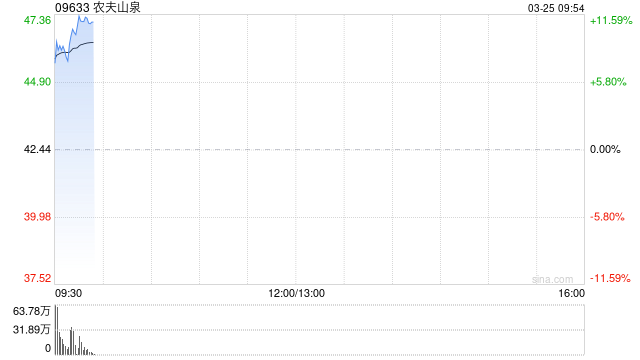
农夫山泉早盘涨逾10% 去年毛利为318.08亿元同比增长27.7%
Xin Lang Cai Jing· 2026-03-25 01:54
Core Viewpoint - Nongfu Spring (09633) reported strong financial results for the year 2025, with significant growth in revenue and profit, leading to a notable increase in stock price [5]. Financial Performance - Total revenue reached RMB 52.553 billion, an increase of 22.5% year-on-year, marking the first time revenue surpassed RMB 50 billion [5]. - Gross profit amounted to RMB 31.808 billion, reflecting a year-on-year growth of 27.7% [5]. - Net profit attributable to shareholders was RMB 15.868 billion, up 30.9% compared to the previous year [5]. - The company proposed a dividend of RMB 0.99 per share, totaling approximately RMB 11.134 billion in dividends [5]. Profitability Metrics - Gross margin improved from 58.1% in the previous year to 60.5%, an increase of 2.4 percentage points [5]. - The improvement in gross margin was attributed to a decrease in the procurement prices of PET raw materials and other packaging materials, as well as sugar [5]. Strategic Management - The company effectively controlled the proportion of sales through e-commerce channels, which helped stabilize the pricing order within the distribution system [5]. - This strategy contributed to maintaining the overall profitability of the distribution system and supported the healthy development of the group [5].


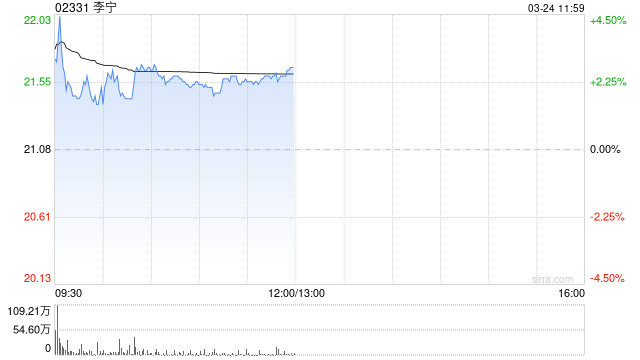
小摩:一举升李宁评级至“增持” 目标价升至25.6港元
Xin Lang Cai Jing· 2026-03-24 04:35
Core Viewpoint - Morgan Stanley has identified two key signals for the recovery of Li Ning (02331): the ability to regain market share lost since 2022 and effective cost control measures [2][4]. Group 1: Earnings Forecast - Morgan Stanley has raised its earnings forecast for Li Ning for 2026 to 2027 by 9% to 12% [2][4]. - The firm expects Li Ning to achieve an 8% sales growth and a 7% profit growth in 2026 [2][4]. - The target price for Li Ning has been increased from HKD 14.6 to HKD 25.6, with the rating upgraded from "Underweight" to "Overweight" [2][4]. Group 2: Positive Signals - Li Ning has shown positive signals by achieving a 13% year-on-year profit growth in the second half of 2025, exceeding Morgan Stanley's forecast by 17% and market expectations by 28% [2][4]. - The profit growth is attributed to cost optimization in direct retail channels and higher-than-expected government subsidies, which offset the rising costs of advertising and promotion [2][4]. - The positive sales guidance for 2026 indicates a high single-digit growth, suggesting that Li Ning will regain market share and end the continuous loss of market share since 2022 [2][4].

福耀玻璃(600660):2025年业绩强劲 持续稳健增长
Xin Lang Cai Jing· 2026-03-20 10:27
Core Insights - The company reported a total revenue of 45.787 billion yuan for 2025, representing a year-on-year growth of 16.65% [1] - The net profit attributable to shareholders reached 9.312 billion yuan, with a year-on-year increase of 24.20% [1] - The automotive glass business continued to see both volume and price increases, with sales volume of 169.18 million square meters and revenue of 41.889 billion yuan [1] Financial Performance - The company achieved a gross margin of 37.27%, up by 1.04 percentage points year-on-year, and a net margin of 20.35%, up by 1.23 percentage points [1] - Operating cash flow net amount reached 12.055 billion yuan, a year-on-year increase of 40.8%, supporting capacity expansion and R&D [1] - The company plans to distribute a total cash dividend of 5.48 billion yuan, with a dividend payout ratio of 58.85% and a current dividend yield of 3.24% [1] Quarterly Performance - In Q4 2025, the company reported revenue of 12.49 billion yuan, a year-on-year increase of 14.1% and a quarter-on-quarter increase of 5.32% [2] - The net profit attributable to shareholders for Q4 was 2.25 billion yuan, reflecting a year-on-year growth of 11.4% but a slight quarter-on-quarter decline of 0.47% [2] - The gross margin for Q4 was 37.03%, up by 4.91 percentage points year-on-year, while the net margin was 18.01%, down by 0.46 percentage points year-on-year [2] International Operations - The overseas subsidiary, Fuyao Glass America, reported total assets of 8.743 billion yuan and revenue of 7.917 billion yuan for 2025 [3] - The net profit for the overseas subsidiary was 884 million yuan, with a net margin of 11.17% [3] - The company is expected to see continued growth in profitability, with projected earnings of 10.678 billion yuan, 12.675 billion yuan, and 14.681 billion yuan for 2026, 2027, and 2028 respectively [3]

SABESP(SBS) - 2025 Q4 - Earnings Call Transcript
2026-03-17 14:02
Financial Data and Key Metrics Changes - Adjusted net revenue for Q4 2025 reached BRL 5.7 billion, growing 2.1% year-over-year [4] - Adjusted EBITDA totaled BRL 3.4 billion, representing a 13% growth versus a year ago, with margins expanding to 60% [4] - Adjusted net income remained stable at around BRL 1.9 billion [4] - For the full year 2025, adjusted net revenue totaled BRL 22.2 billion, representing a 2.2% growth versus 2024 [5] - Adjusted EBITDA reached BRL 13.2 billion, growing 17% year-over-year, with margins expanding to 60% [5] - Reported net income for Q4 reached BRL 2.7 billion, representing 87% growth year-over-year [11] - Cash flow from operations reached BRL 3 billion, representing a 24% growth [5] Business Line Data and Key Metrics Changes - Water production totaled 789 million cubic meters in Q4, remaining stable [3] - Water connections reached approximately 9.5 million, increasing 0.4% year-over-year, while sewage connections grew 0.8%, reaching 8.3 million [3] - The number of units benefiting from subsidized rates reached nearly 2 million connections, or roughly 6 million people, doubling the average from 2024 [10] Market Data and Key Metrics Changes - The price index, excluding mix effects, remained stable as there were no rate reviews for 2025 [9] - Discounts granted to large clients were reduced by approximately BRL 450 million in 2025, with less than a handful of contracts still active [46] Company Strategy and Development Direction - The company’s strategy focuses on three priorities: delivering new concession agreement obligations, achieving operational efficiency, and improving financial efficiency [16] - CapEx for 2025 reached BRL 15.2 billion, representing a 120% increase year-over-year [17] - The company aims to enhance water safety and expand infrastructure capacity through significant investments [17] Management Comments on Operating Environment and Future Outlook - Management emphasized the importance of accelerating universal access and improving service reliability [16] - The company is optimistic about achieving universalization targets ahead of schedule, with significant progress already made [12] - Management highlighted the need for a strong regulatory framework to support future investments and opportunities [38] Other Important Information - The company ended 2025 with BRL 12 billion in cash, covering more than three years of amortizations [15] - The acquisition of MIE's controlling shares was completed, which is expected to increase reservoir capacity significantly [21] Q&A Session Questions and Answers Question: Potential upside to the BRL 70 billion CapEx number - Management indicated that inflation and evolving business needs could lead to an increase in the CapEx number, with investments being advanced to address water safety and metering upgrades [25][26] Question: Annualized level of CapEx in Q4 - Management stated that they are trying to accelerate CapEx and will maintain or increase the pace if possible [29] Question: Payroll line and capitalization of expenses - Management explained that personnel expenses were low due to cost reductions and that there was a higher level of capitalization of expenses in Q4, which should not be considered a one-off [34] Question: Strategic considerations for investing in Copasa - Management highlighted the importance of regulatory frameworks and the bidding process as critical factors in considering investments in Copasa [38][39] Question: Evolution of discounts for larger customers - Management reported that they have virtually zeroed out discounts for large clients and expect positive impacts in 2026 [46] Question: Update on CapEx for water safety - Management indicated that they expect to spend between BRL 1.5 billion and BRL 2 billion on water safety this year, with a total pipeline of close to BRL 8 billion [47][48]

鲁、豫生猪饲料市场调研报告
Guang Fa Qi Huo· 2026-03-17 10:58
1. Report Industry Investment Rating No information provided. 2. Core Viewpoints of the Report - The current pig industry is in a bottom - oscillating adjustment period, with the overall trend of "short - term stabilization and decline, medium - term slight recovery, and further pressure release in the second half of the year". Industry reshuffle is accelerating, and cost control and model innovation are the keys for enterprises to break through [16]. - The long - term industry losses will lead to a reshuffle, and enterprises with sufficient funds and good cost - control capabilities will stand out. The pig price is expected to struggle at the bottom for a long time, and it is recommended to mainly use reverse hedging operations in the futures market, and long - term allocation can focus on high - quality breeding stocks [20]. 3. Summary by Directory 3.1. Research Summary 3.1.1. Feed Link - Some feed enterprises face the pressure of declining sales. The core reasons are the recurrence of diseases in Shandong from mid - October to early November last year, which led to an early increase in pig slaughter volume, reducing feed demand. Coupled with the low pig price and rising feed price, the breeding end is cautious about restocking, further suppressing feed consumption. Enterprises expect feed sales to gradually recover after April [5]. - In terms of raw material procurement, affected by the mildew of North China corn, enterprises mainly purchase corn from the Northeast, with a transportation cost of 200 - 300 yuan/ton. To reduce the impact of toxins, enterprises implement refined proportioning. Piglet feed uses all Northeast corn, and medium and large pig feed uses a combination of Northeast and local corn. The overall inventory is relatively sufficient, and the current enthusiasm for restocking is limited [5]. - Affected by the increase in raw material prices after the Spring Festival, the feed price has been raised synchronously. The sales volume in March is expected to decline by 30% year - on - year, which is in line with the historical trend after the Spring Festival. However, the sales volume of teaching and protection feed is expected to improve slightly month - on - month, indicating that the inventory of piglets in the market is still at a high level [5]. - For raw material price prediction, enterprises believe that soybean meal is supported by the cost of US soybeans and international freight in the short term and has increased in price, but the overall supply is loose, so they do not blindly expect a high price. Corn still has room for price increase, and the subsequent price is expected to reach 2600 - 2700 yuan/ton [5]. 3.1.2. Breeding Link - The breeding end is currently facing multiple pressures such as low pig prices, increased costs, and high inventory. The enthusiasm for restocking is differentiated, and enterprises of different scales show different business situations. Although the industry is generally in a loss state, the adjustment of production capacity is very cautious [7]. - In terms of production capacity, the current industry production capacity is still at a high level. Although the data from the Ministry of Agriculture shows that the number of fertile sows in the country has decreased to 39.6 million, the absolute value is still high. The impact of losses and diseases at the end of last year on production capacity is relatively limited. Breeding enterprises have no obvious intention to actively reduce production capacity, only those with financial difficulties reduce production capacity passively. The reduction of production capacity by leading enterprises is mostly for capacity transfer, and the actual slaughter volume of sows has not increased significantly, and the price of culled sows is stable [7]. - In terms of restocking, the current enthusiasm for secondary fattening is not high. Affected by factors such as low pig prices, rising feed costs, and the inversion of standard and fat pig prices, secondary fattening households mostly adopt a wait - and - see attitude. Most stocking enterprises' pens are empty. It is expected that the enthusiasm for purchasing 15kg piglets is higher than that for 7kg piglets. Enterprises are optimistic about the price before the Zhongyuan Festival and believe that the decline space of piglet prices is limited because the restocking demand in Shandong from March to May is relatively high. In Henan, there is a situation of "high piglet prices and cautious restocking", and only a small number of secondary fattening households buy at the bottom [9]. - In terms of cost and profit, there are differences among enterprises. The current fattening cost of individual farmers in Shandong is about 5.5 yuan/jin, the fattening cycle is 5 - 5.5 months, and the daily weight gain is 1.6 jin. The daily weight gain of secondary fattening is about 2 jin. The slaughter cost of stocking enterprises is about 5.6 yuan/jin (excluding disease losses), and the cost after disease losses exceeds 6 yuan/jin. The current pig price is about 5 yuan/jin, and the industry is in a loss state. In addition, slaughterhouses have increased the deduction for large pigs, and the supply of pigs in the 125 - 150KG weight range is sufficient, and the price decline is greater than that in the 105 - 125KG range. Breeding enterprises have difficulties in selling and are forced to reduce prices, and the pressure of slaughtering large pigs is relatively large. Group enterprises are still further reducing costs and will further lower the target cost in 2026, achieving cost - control advantages through integrated layout [10]. - In terms of diseases and hedging, there are still sporadic epidemics, which increase the breeding cost and risk. The current full - industry loss state and the investment in disease prevention and control costs undoubtedly increase the burden on enterprises. If there is a high - incidence period of epidemics in the future, it may increase the risk of concentrated outbreaks of diseases at the breeding end. In terms of hedging, enterprises in Shandong and Henan have a high enthusiasm for hedging, and the model is mature. They are more enthusiastic about hedging in the piglet fattening link. The large - scale participation of the breeding end industry also has a profound impact on the futures market trend [13]. 3.1.3. Slaughter and Trade Link - In the slaughter link, it is currently facing problems such as weak demand, seasonal decline in sales volume, and financial pressure. Although the pig price is at a low level, the current enthusiasm for segmentation and warehousing is not high. However, some more radical enterprises believe that the risk of making frozen products at a pig price of about 5 yuan/jin is low and are gradually segmenting and warehousing. The weak performance of the consumer end is the core problem faced by slaughter enterprises. The current low pork price has an insignificant effect on stimulating consumption, and the willingness of terminal consumers to switch from beef and poultry to pork is not strong, which is in line with the situation where the decline in poultry prices affects the demand for pig products. At the same time, the industry has over - capacity and a long payment period, which further increases the pressure on slaughter enterprises. Therefore, the current overall warehousing rhythm is still relatively slow [14]. - In the trade link, single transportation businesses have mostly transformed due to financial pressure, and enterprises mostly adopt the "transportation + stocking" model. Slaughterhouses generally have a long payment period, and traders face prominent financial pressure. Large pigs in Shandong mainly flow to Anhui and Zhejiang, but affected by the sufficient supply of large pigs in the South, the number of large pigs transported from the North to the South has decreased, which is consistent with the current situation of the structural mismatch between the supply and demand of pigs in the North and the South. Although there is a gap in the main sales areas in the South, the current supply is sufficient, resulting in a decline in cross - regional transportation volume [15]. 3.1.4. Market Outlook - The current pig industry is in a bottom - oscillating adjustment period. Although there are differences in market predictions among all parties, the overall trend is "short - term stabilization and decline, medium - term slight recovery, and further pressure release in the second half of the year". At the same time, the industry reshuffle is accelerating, and cost control and model innovation are the keys for enterprises to break through [16]. - In terms of market prediction, most enterprises believe that March - April is the low - price range of pig prices in the first half of the year, and the probability of the price being lower than this level in the future is small and the duration is short. From May to June, the price is expected to rise with the decrease in supply. It is difficult to judge the annual high point, and it is expected that reaching 7 yuan/jin is already good. Regarding the market in the second half of the year, there are different views in the market. Some believe that it is expected to recover, but some enterprises believe that there is no substantial reduction in production capacity at present. Although the industry is in a loss state, the time and space of the loss are limited, the breeding end has sufficient funds, and it is difficult to reduce production capacity, so the expectations for the second half of the year have been lowered [16]. 3.2. Research Minutes 3.2.1. Shandong Enterprise A - The enterprise mainly engages in pig feed (with a small amount of ruminant feed). The designed production capacity of pig feed is 180,000 tons, and the current output is about 60,000 tons. It has 20,000 fattening pens, and the scale of the cooperative fattening pig enterprise reaches 100,000 heads. In terms of feed sales, the pig feed sales volume in February was about 3,000 tons, a significant halving month - on - month, and the sales volume from December to February continued to decline month - on - month. It is expected to start to recover in April, mainly because the recurrence of diseases in Shandong from mid - October to early November last year led to an increase in pig slaughter volume, resulting in an early decline in pig feed sales [21]. - In terms of restocking, the enthusiasm for secondary fattening in Linyi is not high. Affected by low pig prices, rising feed costs, and the inversion of standard and fat pig prices, secondary fattening households mostly adopt a wait - and - see attitude. The enterprise's 20,000 pens and most of its cooperative customers' pens are currently empty. It plans to purchase 15kg piglets recently and slaughter them before the Zhongyuan Festival on August 27 (with a slaughter weight of 270 - 280 jin). It is optimistic about the price before the festival and believes that the decline space of piglet prices is limited because the restocking demand in Shandong from March to May is relatively high [21]. - In terms of fattening cost, the enterprise indicates that the current cost from purchasing 15kg piglets (450 yuan/head) to slaughter is about 6 yuan/jin, and the fattening cost of individual farmers is about 5.5 yuan/jin. The fattening cycle is 5 - 5.5 months, and the daily weight gain is 1.6 jin. The daily weight gain of secondary fattening is about 2 jin [21]. - In terms of circulation, large pigs in Shandong mainly flow to Anhui and Zhejiang. Affected by the sufficient supply of large pigs in the South, the number of large pigs transported from the North to the South has decreased [22]. - In terms of hedging, it is recommended to use over - the - counter options for hedging, which can be combined with on - exchange hedging to reduce risks. Enterprises in Shandong have a high enthusiasm for hedging [22]. - In terms of feed raw materials, the enterprise's corn inventory is maintained for more than one month, with daily rotation in and out. Affected by the mildew of North China corn, it mainly purchases corn from the Northeast, with a transportation cost of 200 - 300 yuan/ton. It proportions corn for different pig feed stages to reduce toxins. Piglet feed uses all Northeast corn, and medium and large pig feed uses a combination of Northeast and local corn. The enterprise is optimistic about the domestic corn price and expects it to reach 2600 - 2700 yuan/ton [22]. - In the future, the enterprise will focus on promoting piglet procurement, hedging operations, and raw material procurement, strengthen market monitoring, and pay attention to the trends of pig prices and raw material prices. In terms of the market, the short - term pig price is expected to improve in April, stabilize in May, improve in June, and may decline in July, and the long - term upward space is limited [22]. 3.2.2. Shandong Enterprise B - The enterprise mainly engages in the sales of segmented products. The current daily slaughter volume is more than 5,000 heads, half of the peak of more than 10,000 heads before the Spring Festival. The average weight of purchased pigs is 100 - 110 kg, the same as the same period. The pig sources mainly come from local Shandong and northern Jiangsu. In terms of pig prices, the enterprise believes that March - April may be the low price of the year, and the probability of the price being lower than this level in the future is small and the duration is short. It is relatively optimistic about the pig price in the second half of the year. The short - term average price in March is 5.2 - 5.4 yuan/jin, slightly rising to about 5.6 yuan/jin in April. The supply is expected to decrease from May to June, and the price is expected to rise. It is difficult to judge the annual high point, and it is expected that reaching 7 yuan/jin is already good [23]. - In terms of enterprise operation, the fresh - sales rate is about 50%, down from 70 - 80% before the Spring Festival. Warehousing is mainly order - based, with 25% being customer orders and 25% being active + passive warehousing. In terms of product cost, the price of No. 4 meat is 15,500 - 16,000 yuan/ton, and the price of No. 2 meat is 15,000 - 15,500 yuan/ton. In the frozen - product storage cost, the daily rent per ton of goods is 1 yuan (30 yuan/ton per month). Coupled with handling and transfer fees, the monthly fixed cost is about 100 yuan/ton. The enterprise's designed frozen - product storage capacity is about 10,000 tons, and the current inventory is 3,000 - 4,000 tons (including customer orders and the amount of active segmentation and warehousing). It believes that the risk of making frozen products at a pig price of about 5 yuan/jin is low and is gradually segmenting and warehousing, planning to complete the target volume in about three months. At the same time, the enterprise pays attention to production refinement and channel construction, and some enterprises avoid payment - period risks [23]. - In terms of supply and demand, the decline in poultry prices affects the demand for pig products. The prices of frozen and fresh meat are close, and the discount situations are different for different uses. The industry has over - capacity, and there are differences in the management and production capacity of slaughterhouses in the North and the South. Some southern enterprises rely on contract slaughtering. The enterprise improves its competitiveness by optimizing production and sales and cooperating to stabilize customers [24]. - In terms of inventory, deep - processing enterprises increase inventory moderately as needed. In terms of funds, supply - chain finance provides support, and the enterprise uses funds carefully. Looking forward to the future, the short - term price will rise slowly, and the medium - term demand is expected to increase. The enterprise will optimize inventory, expand channels, and strictly control costs [25]. 3.2.3. Shandong Enterprise C - The enterprise is a large - scale pig trading enterprise in the local area, with business covering the whole country. The average daily trading volume is about 50 trucks, reaching 120 trucks at the peak before the Spring Festival. Each truck is 15 - 18 tons, and the weight of each truck of large - weight pigs exceeds 16 tons. The purchased pig sources are mainly from provinces in the Northwest and the South with low prices and price - difference advantages [26]. - Currently, the stocking volume in the Shandong region is large, and the local fattening supply is sufficient. The enterprise's own stocking volume is about 30,000 heads, which is relatively small among large - scale stocking enterprises in the local area. Shandong stocking enterprises had a long - term profit in the early stage and increased the volume rapidly last year. They have been in a loss state since September last year. The agency - raising fee is 200 - 240 yuan/head. Because the average weight per head is lower than that in the South, the agency - raising fee is lower than that in the South [26]. - At the breeding end, the slaughter cost of stocking enterprises is about 5.6 yuan/jin (excluding disease losses), and the cost after disease losses exceeds 6 yuan/jin. The current pig price is about 5 yuan/jin, and the industry is in a loss state. Shandong slaughterhouses have increased the deduction for large pigs, 80 - 100 yuan per head. The supply of pigs in the 125 - 150KG weight range is sufficient, and the price decline is greater than that in the 105 - 125KG range. Breeding enterprises have difficulties in selling and are forced to reduce prices [26]. - At the industry level, single transportation businesses have mostly transformed due to financial pressure, and enterprises mostly adopt the "transportation + stocking" model. Slaughterhouses generally have a long payment period, and traders face prominent financial pressure [26]. - The process of taking delivery in the futures market is cumbersome. In the North, 72 - hour disinfection is required in advance for delivery, and the intangible cost is high. Slaughterhouses have a low participation rate and are prone to losses [26]. - All parties believe that the current bottom - oscillating of pig prices has just started and is expected to last for about three months. Enterprises need to have sufficient funds and good cost - control capabilities to survive the difficult period [27]. 3.2.4. Henan Enterprise A - The
中信证券:PET涨价影响可控 饮料企业有望缩减费投对冲成本
Zhi Tong Cai Jing· 2026-03-15 11:07
Core Viewpoint - Recent significant increase in PET prices has raised market concerns, leading to notable stock price corrections for beverage companies [1] Group 1: PET Price Dynamics - PET prices are closely linked to oil prices, with recent geopolitical tensions causing a substantial rise in oil prices, reaching $100.5 per barrel, a 47% increase compared to the average in 2025 [1] - As of March 11, PET spot prices have risen to 7910 yuan per ton, reflecting a 32% increase compared to the average in 2025 [1] - Historical trends indicate a lag in PET price increases following oil price hikes, with PET typically rising less than oil prices; for instance, in 2022, oil prices increased by 40% while PET prices rose by 26% [1] Group 2: Cost Sensitivity Analysis - A 10% increase in PET procurement prices is estimated to impact beverage companies' gross margins by 0.6-1.4 percentage points [3] - The same 10% increase in PET prices is projected to affect net margins by 0.5-1 percentage points, with a net profit impact ranging from 3% to 11% [3] - Variability in the impact is noted due to different PET pricing and inventory strategies among beverage companies [3] Group 3: Historical Context and Industry Response - In 2022, beverage companies mitigated the adverse effects of raw material price increases by locking in prices, resulting in a gross margin decline of 1-4 percentage points [4] - The rise in raw material prices led to a slowdown in industry competition, with many companies reducing sales expense ratios to offset the negative impact on net margins, keeping net margin changes within 2 percentage points [4] - If current high PET prices persist, companies may continue to reduce expenditure to partially counteract negative impacts on net profits [4]

迈入百亿俱乐部!宝丰能源2025年扣非净利超115亿,同比劲增近七成
新浪财经· 2026-03-13 08:47
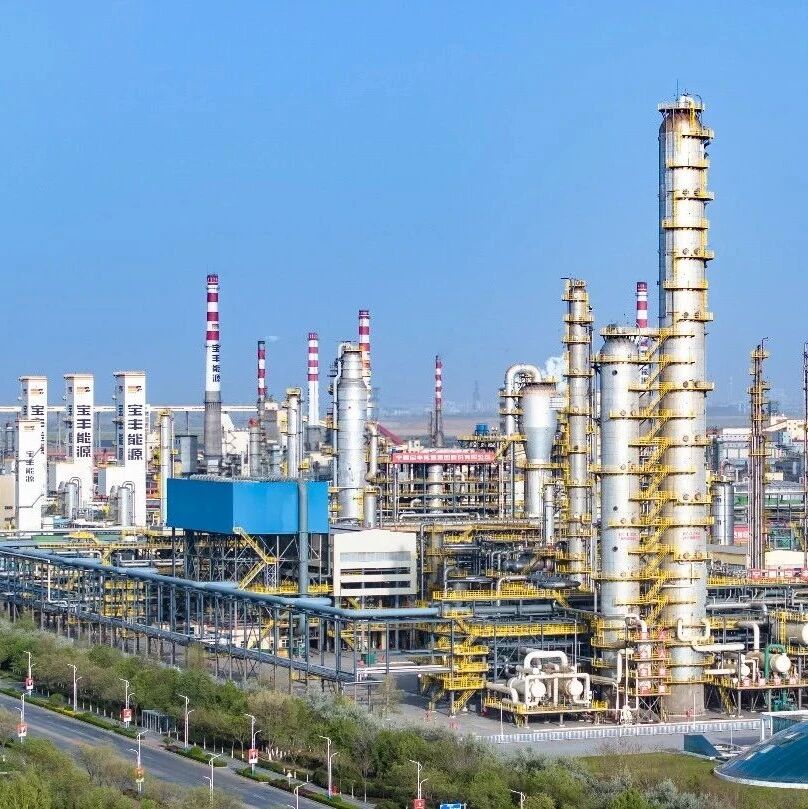
Core Viewpoint - Baofeng Energy demonstrates strong performance in a challenging macroeconomic environment, achieving high growth, profitability, and cash flow, solidifying its leading position in the industry [2]. Financial Performance - In 2025, Baofeng Energy reported revenue of 48.038 billion yuan, a year-on-year increase of 45.64% - The net profit attributable to shareholders, excluding non-recurring items, exceeded 10 billion yuan for the first time, reaching 11.519 billion yuan, a growth of 69.91% - Operating cash flow net amount reached 16.851 billion yuan, with an increase of 89.39% - Basic earnings per share were 1.56 yuan, up 79.31% year-on-year [2]. Capacity Expansion - 2025 marks a year of capacity explosion for Baofeng Energy, with the Inner Mongolia coal-to-olefins project reaching full production capacity of 3 million tons per year, boosting total polyolefin capacity to nearly 6 million tons per year, maintaining the top position in the domestic industry - The company can achieve over 30 million tons of oil import substitution annually, enhancing the security of the energy supply chain [3]. Cost Advantage - In 2025, Baofeng Energy's cost advantage was amplified due to scale effects and technological breakthroughs, with the total cost of the Inner Mongolia project being nearly 10% lower than that of the Ningxia Ningdong base - The gross profit per ton of olefin products was 2,500 yuan, with a gross margin of 38.61% - The company has achieved full localization of key core equipment, with 23 technologies reaching international leading levels, ensuring a strong cost advantage [5]. Technological Innovation - In 2025, Baofeng Energy's R&D investment reached 961 million yuan, a year-on-year increase of 27.11% - The company implemented 115 technology transformation projects, achieving precise material distribution and process control, leading to a year-on-year decrease in energy consumption per unit product - The company established an intelligent operation system across the entire industry chain, with significant achievements in smart factory construction [7]. Future Outlook - With the continuous improvement of the Ningxia Ningdong base, full production at the Inner Mongolia base, and steady progress on the Xinjiang 4 million tons per year project, Baofeng Energy is forming a collaborative development pattern - The company is transitioning from "scale-driven" to "product-driven," focusing on high-value-added products like high-end polyolefins and EVA, which will open up broader profit opportunities [8].

理想汽车马东辉:尽量在公司内部消化外部涨价压力
Xin Lang Cai Jing· 2026-03-12 14:44
Core Insights - The president of Li Auto, Ma Donghui, announced strategies to mitigate the impact of rising component prices by strengthening collaboration with suppliers and signing long-term LTA agreements to lock in prices or shares [1] - Ma emphasized that any price adjustment mechanisms will be strictly adhered to, and costs will be shared with suppliers where no such mechanisms exist [1] - The company aims to absorb external price pressures internally through self-developed range extenders and chips, while determining new model prices based on component costs and user value [1] Financial Performance - In Q4 2025, Li Auto delivered 109,000 vehicles, generating quarterly revenue of 28.8 billion yuan [1] - For the full year 2025, the company reported total revenue of 112.3 billion yuan and a net profit of 1.1 billion yuan [1] - By the end of 2025, Li Auto's cash reserves reached 101.2 billion yuan, with R&D investment in Q4 amounting to 3 billion yuan and total annual R&D investment hitting a record high of 11.3 billion yuan [1]

年赚722亿之后,宁德时代还有多少“隐藏利润”可以挖?
投中网· 2026-03-12 02:00
Core Viewpoint - The article highlights the impressive performance of CATL in the lithium battery industry amidst a challenging market environment, showcasing its ability to maintain high profitability and operational efficiency while competitors struggle with overcapacity and price wars [4][5][6]. Financial Performance - In 2025, CATL reported revenue of 423.7 billion yuan, a year-on-year increase of 17%, and a net profit of 72.2 billion yuan, up 42% year-on-year [7][8]. - The company's net profit is equivalent to the total profit of 13 A-share listed automotive companies, indicating a strong position in the industry [8]. Profitability and Cost Control - CATL's profit growth outpaced revenue growth, suggesting significant scale effects and cost control improvements [8]. - The average selling price of its lithium batteries was approximately 0.64 yuan per watt-hour, maintained despite industry-wide price declines, indicating strong pricing power [8]. - Sales expenses increased only 4.84% to 3.735 billion yuan, while management expenses rose 20.4% to 11.667 billion yuan, reflecting controlled growth in costs [9][10]. - R&D expenses reached 22.147 billion yuan, a 19.02% increase, underscoring the company's commitment to innovation and maintaining a technological edge [11]. Capacity Utilization - CATL achieved a capacity utilization rate of 96.9%, significantly higher than the industry average of below 60%, indicating efficient operations [14][15]. - The company produced 748 GWh of batteries, with a capacity of 772 GWh, demonstrating full utilization of its production lines [15]. Asset Management - CATL proactively recognized asset impairments totaling 9.079 billion yuan, indicating a strategic approach to phase out outdated capacities and focus on sustainable production [16]. - The company is optimistic about future demand, with 32.1 GWh of capacity under construction [16]. Recycling Business - The volume of recycled batteries reached 210,000 tons, a 63.2% increase year-on-year, indicating a growing focus on sustainability and resource recovery [19][21]. - Despite a 23.83% decline in revenue from battery materials and recycling, the gross margin improved significantly, reflecting a shift in business model and cost structure [20][21]. - The revenue from mineral resources reached 5.978 billion yuan, with an 8.83% increase, supporting CATL's strategy to secure raw materials and reduce cost risks [21]. Market Outlook - Analysts predict that lithium battery demand will exceed 2,700 GWh in 2026, with a growth rate of over 30%, indicating a robust market environment for CATL [17].