
技术经理人

Search documents
凭“专业硬”啃下硬骨头!“科技红娘”架起“转化桥梁”让科创更好服务产业发展
Yang Shi Wang· 2025-11-24 04:51
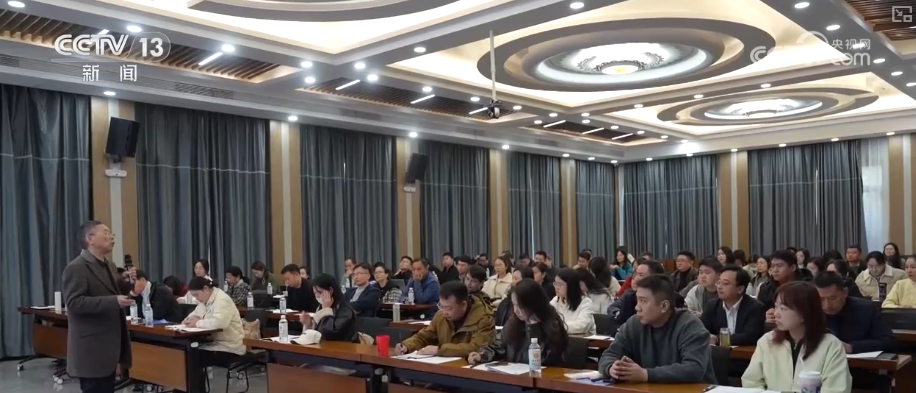
Core Viewpoint - The article emphasizes the importance of cultivating technology managers in Hubei to bridge the gap between scientific research and industry, facilitating the efficient transformation of technological achievements into productive forces [1][11]. Group 1: Training and Development of Technology Managers - A large class on practical skills for technology transfer is currently being held in Shiyan, Hubei, with over 100 technology managers participating [3]. - The training focuses on key aspects such as technology assessment, innovation incubation, and business model design, with experts sharing practical experiences [5]. - The National Technology Transfer Talent Training Base (Central Center) offers over 160 courses and has attracted more than 1,200 technology managers, doubling the number from 2024 [7][9]. Group 2: Impact of Technology Managers - Technology managers in Hubei have facilitated a continuous increase in technology contract transaction amounts, achieving over 100 billion yuan in the past four years [11]. - The average cycle for technology transformation at Hubei University has been shortened by 30%, with annual contract amounts exceeding 30 million yuan [22]. - The establishment of a 25-member technology manager team at Hubei University has led to significant achievements, including a 600,000 yuan technology transfer contract [17]. Group 3: Professional Recognition and Career Development - Hubei University has initiated a professional technical position for technology transfer, integrating technology managers into the civil service system, with over 4,000 certified technology managers in the province [22]. - A new professional title evaluation system for technology transfer has been established, focusing on transaction amounts rather than traditional academic metrics [24][26]. - The reforms in professional title evaluations have provided technology managers with clearer career paths and a sense of belonging, fostering long-term commitment to their roles [29][31]. Group 4: Future Goals and Vision - Hubei aims to cultivate over 20,000 technology managers by 2027, enhancing the application of laboratory results and driving new productive forces [32].

技术经理人的苦恼:专业要求高了,客户预算少了
Sou Hu Cai Jing· 2025-11-05 02:37
Core Insights - The article discusses the increasing policy support for the development of technology managers in China, highlighting various initiatives and training programs launched in different regions [1][2] - It emphasizes the significant gap in the number of technology managers compared to developed countries, indicating a need for more professionals in this emerging field [2][4] - The article outlines the challenges faced by technology managers, particularly the reduction in corporate innovation budgets and the lack of understanding of their role among businesses [4][5] Group 1: Definition and Current Status - Technology managers are defined as professionals involved in the transfer and commercialization of scientific achievements, playing roles in organization, coordination, management, and consulting [2][3] - The current ratio of researchers to technology managers in China is less than 100:1, compared to higher ratios in Europe, indicating a significant shortage [2] - As of 2023, China has approximately 7.24 million full-time equivalent R&D personnel, with a target of having over 30,000 technology managers by 2025, suggesting a potential shortfall of 320,000 to 1.78 million technology managers [2] Group 2: Challenges Faced - The primary challenge identified is the reduction in corporate innovation budgets, with many companies prioritizing survival over development due to economic pressures [4][5] - Many traditional manufacturing firms are hesitant to invest in new technologies, often waiting until they are forced to adapt due to market pressures [4] - The high costs of technology updates in certain industries, such as chemicals, deter companies from taking risks, while sectors like agriculture show more openness to new technologies [5] Group 3: Market Dynamics - There is a general lack of awareness and understanding of the technology manager's role among businesses, leading to unrealistic expectations and low willingness to pay for services [5][6] - Many companies prefer to bypass technology managers and directly connect with researchers, viewing this as a more informal approach rather than a professional service [5] - The project cycles for technology transfer are lengthy, often taking six months to a year, with low success rates in securing deals, which makes full-time engagement in this field unsustainable [6] Group 4: Training and Development - Current training for technology managers is primarily generic, lacking depth in specific industry knowledge, which is crucial for building trust with companies [7][8] - There is a call for more specialized training programs that focus on vertical industry knowledge, which would better meet the practical needs of technology managers [8][9] - The establishment of associations for technology managers is suggested to facilitate resource sharing and improve industry standards [9][10] Group 5: Policy Recommendations - Industry professionals advocate for the creation of specific policies to support technology managers, including standardized agreements and recognition of their value [10] - The formation of provincial or industry-specific technology manager associations is recommended to enhance training and resource integration [10] - A unified standard for transaction agreements is proposed to improve efficiency and operational consistency within the industry [10]
“J-TOP创新挑战季”先进材料产业专场走进宜兴
Xin Hua Ri Bao· 2025-10-17 21:03
Group 1 - The "J-TOP Innovation Challenge Season" for advanced materials industry was held in Yixing, Jiangsu Province, on October 17, 2025, aimed at promoting technology transfer and collaboration between enterprises and research teams [1] - Ten projects focused on industry-academia-research cooperation were signed during the event, including a partnership between Jiangsu Longnide Refractory Materials Co., Ltd. and Wuhan University of Science and Technology for developing refractory materials for rotary kilns [1] - The chairman of Longnide expressed optimism about the collaboration, highlighting the expertise of Wuhan University in refractory materials and the establishment of a technology transfer center in Yixing [1] Group 2 - Yixing has established three municipal-level technology transfer sub-centers with Southeast University, Tongji University, and Wuhan University of Science and Technology, enhancing the support for technology commercialization [2] - The city has formed stable partnerships with 42 universities and research institutions, promoting the development of 12 specialized industrial parks in advanced materials [2] - As of early October, the "Challenge Season" has collected over 400 technology demands in the advanced materials sector, with 83 demands resolved and 32 technology transactions completed, totaling over 28 million yuan [2]
让科技与产业实现“双向奔赴”
Shan Xi Ri Bao· 2025-09-21 23:00
Core Insights - The article highlights the successful transformation of scientific research into commercial ventures in Shaanxi province, emphasizing the role of technology managers in facilitating this process [1][4][8] Group 1: Company Developments - Li Wenya's company, Shaanxi Saim Technology Co., Ltd., has achieved over 10 million yuan in signed orders since its establishment, benefiting from the "three reforms" policy for technology transfer [1] - Xi'an Hydrogen Energy Technology Co., Ltd. has entered a new development phase with the delivery of hydrogen storage products, aided by technology manager Tian Bo in overcoming initial challenges [2][3] - The company has established a production capacity of 2,000 tons per year for organic hydrogen carriers and catalysts, supporting its commercial applications [3] Group 2: Role of Technology Managers - Technology managers serve as a crucial link between academic institutions and the market, providing essential support in areas such as site selection, project application, and personnel recruitment [2][4] - The demand for technology managers has surged as more researchers transition from reluctance to eagerness in commercializing their innovations [4][8] - Since 2021, over 1,300 technology transfer projects have been matched in Xi'an, resulting in the establishment of 350 companies [3] Group 3: Training and Development - The establishment of the first national technology manager academy at Xi'an Jiaotong University aims to enhance practical skills among participants, focusing on project guidance and investment connections [7][8] - The academy has trained over 5,500 technology managers, with 1,292 recognized at the provincial level, contributing to a comprehensive talent development system [8]
破解“转化难”,“技术经理人”站上风口
2 1 Shi Ji Jing Ji Bao Dao· 2025-09-03 07:08
Core Insights - The demand for technology managers is increasing due to the need for technology transfer and the support from national and local policies [1][2] - There is a significant shortage of technology managers in China, with a ratio of researchers to technology managers at less than 100:1, compared to 25:1 in Europe [1] Group 1: Policy and Institutional Support - Recent policies have been introduced to promote the development of technology transfer and the training of technology managers, including the formal inclusion of technology managers in the national occupational classification [2] - The Shanghai government has launched specific plans to enhance technology transfer and the cultivation of technology managers, including the "Shanghai Action Plan for Promoting Technology Transfer (2024-2027)" [2] Group 2: Educational Initiatives - Some universities are incorporating technology transfer into their graduate education programs, with Fudan University set to launch a Master of Technology Transfer (MTT) program aimed at cultivating professionals who understand technology, finance, and management [3] - The MTT program will focus on key industries such as artificial intelligence, biomedicine, integrated circuits, new energy, and new materials, employing a comprehensive training model that includes education, practical experience, certification, and capital support [3] Group 3: Practical Applications and Collaborations - Fudan University's technology transfer center is actively working to facilitate the conversion of original research and advanced technologies into practical applications through various initiatives [4] - The center has established a platform for collaboration among technology, industry, and investment, successfully connecting multiple projects in fields like biomedicine, integrated circuits, and artificial intelligence with industry and capital [4]
陕西五部门制定方案——到2027年培养技术经理人5000名
Shan Xi Ri Bao· 2025-08-25 23:46
Core Viewpoint - The "Action Plan for the Construction of Technical Manager Teams in Shaanxi Province (2025-2027)" aims to cultivate 5,000 technical managers with strong professional skills, practical abilities, and innovative spirit by 2027 [1][2] Group 1: Objectives and Goals - The plan includes the establishment of a talent pool of at least 200 outstanding technical managers and 60 gold medal technical managers, along with the addition of 1,000 professionals with technical transfer qualifications [1] - The initiative aims to enhance both the quantity and quality of the technical manager workforce in the province [1] Group 2: Key Tasks - The plan outlines four key tasks: promoting the training of technical managers, facilitating their career development, improving the recognition and evaluation mechanisms, and establishing reward and incentive systems [1] - It emphasizes the creation of a professional talent team covering the entire chain of technology transfer, relying on institutions like Xi'an Jiaotong University and the Qin Chuang Yuan Innovation Promotion Center [1] Group 3: Training and Development - The plan sets targets for training, including at least 1,000 short-term training sessions annually, 300 long-term advanced training sessions, and a minimum of 30 annual enrollments in degree programs [1] - It aims to establish no fewer than 80 training bases for technical managers across the province, serving at least 1,000 individuals each year [1] Group 4: Recognition and Compensation - The plan optimizes the recognition process for technical managers, introducing a full-cycle management model that includes training, qualification recognition, continuous education, and dynamic assessment [2] - It encourages a market-oriented compensation structure for technical managers, combining base salary, transformation rewards, and equity appreciation [2] - The plan also provides up to 200,000 yuan in technical maturation support for transformation enterprises based on project quantity [2]
硬科技创业时代亟须壮大技术经理人队伍
Zheng Quan Shi Bao· 2025-08-18 18:36
Core Viewpoint - The emergence of the "technical manager" profession is being supported by various policies across multiple regions in China, highlighting its importance as a key link between technology and industry, and indicating a trend towards institutionalization and professionalization of this role [1][4]. Group 1: Definition and Role of Technical Managers - Technical managers are defined as professionals involved in the transfer, transformation, and commercialization of scientific and technological achievements, providing services related to finance, law, and intellectual property [1][2]. - They are often referred to as "technology matchmakers," bridging the gap between laboratories and production lines, and facilitating the conversion of technological achievements into marketable products [1][2]. Group 2: Market Demand and Supply Challenges - There is a growing demand for technical managers in the job market, with high salaries reflecting the urgent need for versatile technology service talents in the hard technology entrepreneurial era [1][2]. - Despite the strong market demand, there is a significant shortage of qualified technical managers, attributed to the high entry barriers and the lack of systematic training channels [3]. Group 3: Recognition and Support for Technical Managers - The strategic value of technical managers is increasingly recognized, with various stakeholders exploring multiple pathways to address the talent shortage [4]. - National and local governments are implementing policies to support the development of technical managers, including the establishment of evaluation standards and the inclusion of technical managers in professional title systems [4]. Group 4: Educational Initiatives - Some universities are pioneering programs to cultivate high-level composite talents who understand technology, industry, and finance, such as the establishment of dedicated technical manager colleges [4]. - The development of a professional certification system and enhanced educational training is expected to further solidify the role of technical managers in the innovation ecosystem [4].

从PI、IP到IPO 深圳探路“科技红娘”职业化
2 1 Shi Ji Jing Ji Bao Dao· 2025-08-15 02:13
Core Viewpoint - The emergence of "technical managers" as a bridge between scientific research and market needs is transforming the employment landscape in the context of technological innovation and entrepreneurship [2][8]. Group 1: Industry Trends - Technology-driven and knowledge-intensive entrepreneurship has become a significant trend in recent years, with many researchers aspiring to transition from PI (Principal Investigator) to IP (Innovation Project) and eventually to IPO (Initial Public Offering) [2]. - The formal recognition of "technical managers" as a profession in the national occupational classification system in 2022 marks a shift towards professionalization and specialization in this role [2][8]. Group 2: Regional Developments - In July 2023, Shenzhen recognized its first batch of 154 "senior professional technical managers" from 133 different institutions, indicating a growing emphasis on this role in the region [3][15]. - The establishment of the first "Technical Manager Academy" at Shenzhen Technology University aims to cultivate a new generation of technical managers, with a focus on interdisciplinary education [14]. Group 3: Challenges in Scientific Entrepreneurship - Many scientists face challenges in entrepreneurship due to a lack of market insight, often focusing solely on technological advancements rather than market needs, leading to high failure rates in startups [5][6]. - The need for effective collaboration between scientists and technical managers is emphasized, as the latter can help translate scientific innovations into commercially viable products [8][11]. Group 4: Educational Initiatives - Several universities, including Tsinghua University and Shanghai Jiao Tong University, have begun offering specialized master's programs in technology transfer to address the shortage of qualified technical managers [14]. - The "Five Forces Model" proposed for training technical managers includes skills in technology, market insight, finance, law, and management, highlighting the multifaceted nature of the role [9][10]. Group 5: Future Outlook - The goal set by the Ministry of Science and Technology is to exceed 30,000 technical managers nationwide by 2025, reflecting the increasing importance of this role in facilitating technology transfer and commercialization [9]. - Shenzhen's dual approach of professional recognition and educational development is expected to provide a model for enhancing technology transfer capabilities across the country [15].
普陀区打造“科技红娘”团队 线上布局供需“池” 线下搭建转化“桥” 科技与产业正在沪宁沿线高速“双向奔赴”
Jie Fang Ri Bao· 2025-08-08 01:41
Group 1 - The article highlights the growing demand for technology managers in the innovation and industry sectors along the Shanghai-Nanjing corridor, emphasizing their role in facilitating technology transactions and driving the transformation of scientific achievements into productive forces [1][2][3] - The Pudong District has initiated training programs for technology managers to address the diverse needs of different industries and innovation entities, aiming to create a professional team that can effectively match technology supply and demand [2][3] - The article mentions that from May to July this year, 235 cooperation demands with a total investment of over 1 billion yuan have been identified, indicating a strong interest in collaborative innovation [1] Group 2 - Shanghai Bluebird Information Technology Co., Ltd. has successfully expanded its market presence along the Shanghai-Nanjing corridor, with contracts exceeding 44 million yuan by mid-2025, showcasing the effectiveness of the technology manager service mechanism [4][5] - The company has achieved significant growth in business volume in emerging cities like Suzhou and Zhenjiang, indicating a successful strategic transformation through the technology manager system [5] - The article describes the launch of the "Shanghai-Nanjing Collaborative Innovation Market" mini-program, which serves as a resource pool for companies and technology managers to efficiently match technology needs and solutions [6][7] Group 3 - The article emphasizes the importance of a "full-time" technology achievement transformation mechanism, which combines online resource pools with offline support to facilitate smooth cooperation between companies and technology providers [6][7] - The Pudong District has successfully completed 62 cooperation projects in technology research, industry linkage, and business matching in the first half of this year, demonstrating the effectiveness of the new transformation mechanism [7]
让技术经理人成为价值共创者
Jing Ji Ri Bao· 2025-06-02 22:07
Core Viewpoint - The emergence of technology managers as a crucial force in the transformation of scientific and technological achievements into industrial applications is highlighted, emphasizing their role in bridging the gap between research and market needs [1][2][3]. Group 1: Technology Manager Role - A "Technology Achievement Transformation Service Team" consisting of nearly 200 technology managers has been established to enhance the efficiency of matching scientific research outcomes with industrial demands [1]. - Technology managers utilize their "composite knowledge map" to provide professional services such as technology assessment, intellectual property layout, and business model design, facilitating the integration of fragmented innovation elements [1][3]. Group 2: Development Challenges - The profession of technology managers is relatively new, facing issues such as inconsistent skill levels, inadequate incentive evaluation mechanisms, and unclear development models [2]. - There is a need to optimize the title evaluation system to include quantifiable indicators like technology contract amounts and project industrialization benefits, guiding technology managers to better adapt to market demands [2]. Group 3: Professional Standards and Training - It is essential to establish standardized qualification recognition and professional norms for technology managers, enhancing entry barriers and providing management through industry associations [2][3]. - A multi-level training model is proposed to strengthen the capabilities of technology managers, encouraging universities to develop relevant programs and utilizing industry resources for ongoing education [3].