数字化供应链

Search documents
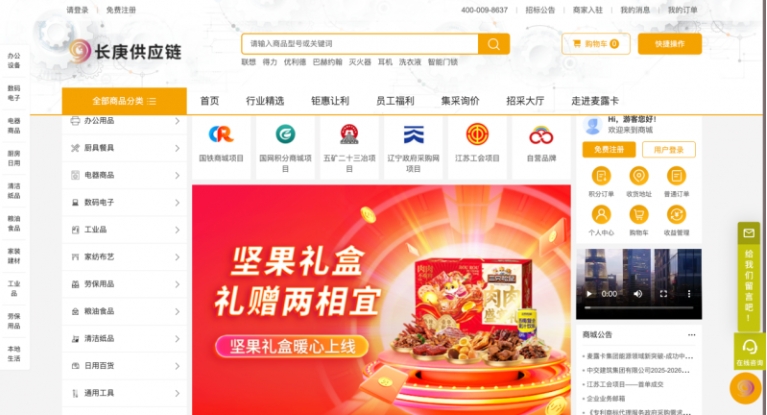
麦露卡加速推进“一企一链”SaaS平台,构建开放型数字化供应链生态
Jin Tou Wang· 2026-01-28 08:34
Core Insights - The core strategy of the company is to position the "One Enterprise One Chain" SaaS platform at the center of its operations by 2026, aiming to create an open supply chain service system that facilitates digital procurement and multi-party collaboration [1][3] Group 1: Strategic Development - The "One Enterprise One Chain" SaaS platform is designed to establish an independent supply chain management system for enterprises, promoting digital transformation and efficient management akin to state-owned enterprises [1] - By 2025, the project attracted over 60 partners, with key modules like the employee welfare mall maturing, achieving annual sales exceeding 1 million yuan, demonstrating its practical value in digital procurement [1] Group 2: Market Expansion and Resource Strategy - The company plans to launch the "One Enterprise One Chain" SaaS platform from Dalian in 2026, gradually expanding its reach to Northeast China and nationwide, enhancing regional service networks and localized operations [2] - The platform aims to connect with mainstream e-commerce resources, expanding the available SKUs to 3 million and enhancing the selection to over 300,000, transitioning from a resource aggregation hub to a smart scheduling center [2] Group 3: Product and Service Optimization - The company will develop four specialized product categories covering welfare, labor protection, office supplies, and industrial products, creating a "core product library" of approximately 20,000 SKUs for tailored procurement solutions [2] - Plans include forming strategic partnerships with five leading enterprises with procurement scales exceeding 100 million yuan and signing contracts with ten enterprises above 50 million yuan, enabling comprehensive empowerment from systems to resources [2] Group 4: Ecosystem and Collaboration - The "One Enterprise One Chain" SaaS service is not just a technical solution but an ecosystem connecting enterprises, platforms, and supply chains, fostering an open and collaborative procurement service environment [3] - The company is working with more partners to build a collaborative and data-interconnected procurement service ecosystem, driving digital transformation in procurement models and promoting sustainable growth across the industry [3]

沃客非凡:深耕东南亚消费市场蓝海,以“品牌+数字化+供应链” 数字化新零售模式兑现高成长
Zhi Tong Cai Jing· 2026-01-28 07:17
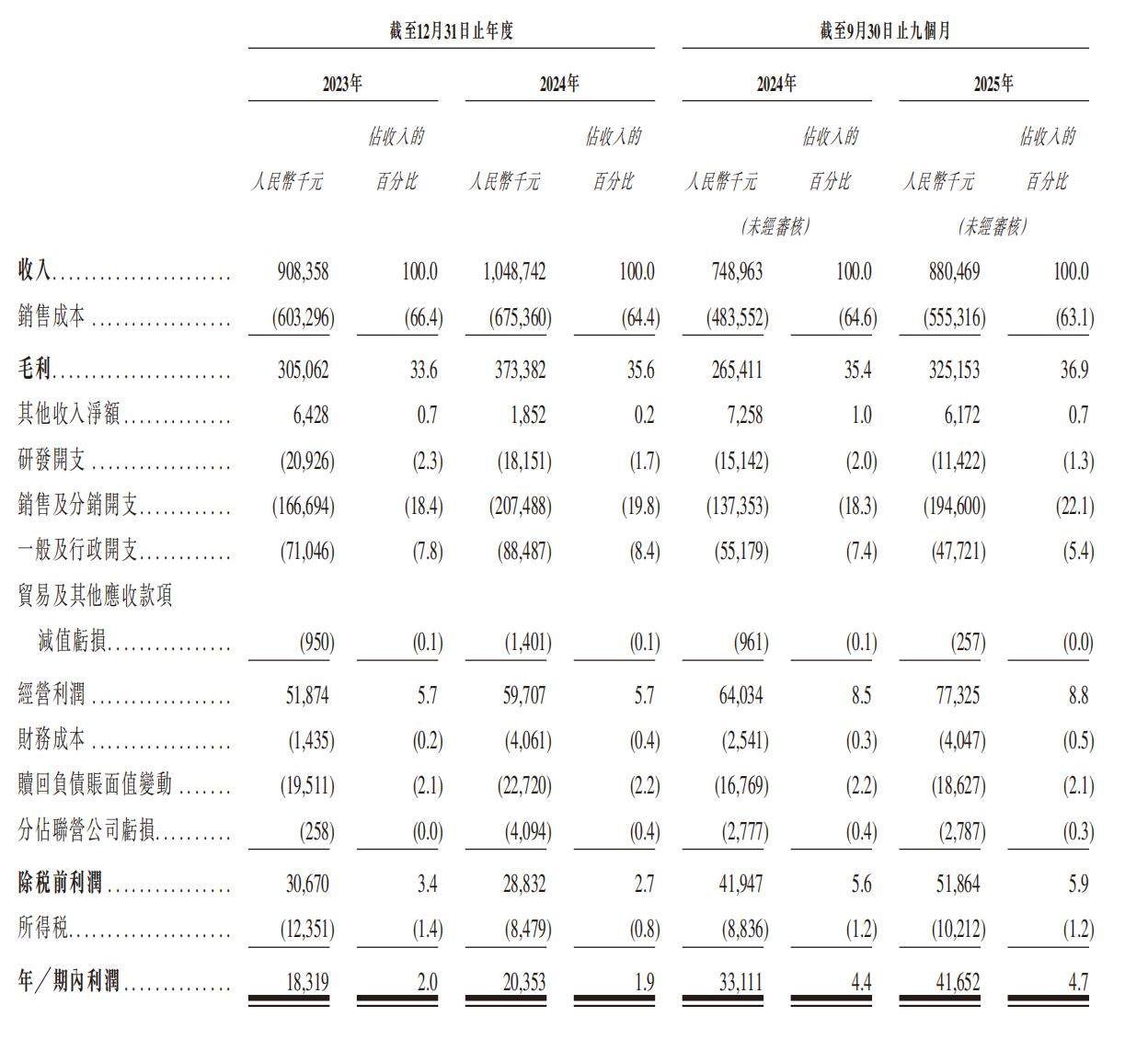
Core Viewpoint - Shenzhen Wokefei Technology Co., Ltd. has submitted its listing application to the Hong Kong Stock Exchange, representing a strategic shift in China's manufacturing industry from "product output" to "brand output" in the context of global supply chain restructuring and digital economy integration [1] Group 1: Market Opportunity - The Southeast Asian retail market is expected to grow from approximately $879.9 billion in 2024 to $1.2 trillion by 2029, at a compound annual growth rate (CAGR) of about 6.4%, significantly outpacing many mature markets [2] - Traditional offline retail channels dominate in key countries like Indonesia (58.5%), Vietnam (46.6%), and the Philippines (55.4%), indicating structural inefficiencies and operational challenges for small retailers [2] - Consumers face a dual challenge of rising demand for branded, quality products amid a supply gap where international brands are often misaligned with local preferences, while local low-cost products lack quality assurance [2] Group 2: Business Model - The company's business model targets the market gap by focusing on three categories: 3C accessories, small home appliances, and home improvement materials, offering quality assurance and competitive pricing [3] - Wokefei has become the leading Chinese cross-border 3C accessory brand in Indonesia, emphasizing its deep coverage of local small retail channels and providing services that enhance logistics efficiency [3] - The company's core strength lies in its full-chain digital capabilities, integrating design, manufacturing, and local fulfillment to empower small retailers with efficient supply chain services [3] Group 3: Financial Performance - Revenue increased from RMB 908.36 million in FY2023 to RMB 1,048.74 million in FY2024, representing a year-on-year growth of 15.5% [4] - The gross margin improved from 33.6% in 2023 to 35.6% in 2024, indicating a strengthening brand position and enhanced pricing power [6] - Operating profit margin rose from 5.7% in 2023 to 8.8% in the first nine months of 2025, reflecting the company's ability to convert market opportunities into sustainable financial returns [7] Group 4: Strategic Expansion - The company has seen a 68.5% revenue surge in Vietnam, Thailand, and the Philippines in the first nine months of 2025 compared to the previous year, validating its regional replication strategy [5] - Future growth will focus on deepening penetration in Indonesia while efficiently replicating its model in emerging markets [12] - The company aims to transition from a transaction-based model to sharing ecosystem value, enhancing the lifecycle value and stickiness of small retail clients [12] Group 5: Competitive Advantage - Wokefei's operational model represents a shift from "traffic arbitrage" to "system empowerment," creating a data-driven cross-border retail operating system [9] - The full-chain digital platform optimizes supply chain efficiency and establishes a robust digital moat, essential for rapid market penetration in Southeast Asia [9] - The combination of proprietary and partner brands within a dense retail network allows for high-value service creation and efficient market access [10]
万辰集团(300972):精细运营与供应链提效有望驱动业绩持续释放
Xin Lang Cai Jing· 2026-01-28 06:43
Core Viewpoint - The company is expected to improve same-store performance gradually due to category expansion and refined operations, with favorable conditions from the Chinese New Year and increased holiday days likely benefiting Q1 2026 performance [1] Group 1: Same-Store Performance and Membership System - The company is enhancing same-store performance through a multi-faceted approach, including deepening membership operations, which has resulted in 150 million members and an increase in average purchase frequency to 2.9 times per month as of August 2025 [1] - Instant retail has been effectively expanded, with over 10,000 stores connected to this service, generating over 100 million yuan in delivery revenue from December 6, 2025, to January 4, 2026 [1] - Operational efficiency is being optimized through supply chain improvements, which are enhancing cost advantages and increasing shelf utilization efficiency [1] Group 2: Expansion of Product Categories and Own Brands - The company has been expanding its "snack + N" product categories, introducing new items such as baked goods and frozen products, which are expected to attract new customer segments [2] - The launch of own brands, including the "Value" and "Selection" product lines, has shown strong sales performance, with the "Value" bottled water achieving a monthly sales growth rate exceeding 250% [2] - The company aims to increase its store count to over 30,000 in the long term, with 15,000 stores already established as of the first half of 2025 [2] Group 3: Gross Margin and Digital Supply Chain - The company's gross margin has shown a steady upward trend, reaching 12.1% in the third quarter of 2025, driven by collaborative efforts with suppliers to enhance production capacity and cost management [3] - Investments in a digital supply chain, including a partnership with Tencent Smart Retail, are aimed at improving marketing efficiency and consumer data analysis [3] - The acquisition of Nanjing Zhongcheng, which specializes in SaaS management systems for snack chains, is expected to further enhance digital efficiency [3] Group 4: Profit Forecast and Valuation - The company has revised its net profit forecasts for 2025-2027 upwards by 12.1%, 23.4%, and 12.6% to 1.38 billion, 2.05 billion, and 2.52 billion yuan respectively, reflecting the positive impact of refined operations and scale effects [4] - A target price of 276 yuan has been set for 2026, based on a 25x PE ratio, considering the company's supply chain efficiency and operational advancements [4]
又有90后联手地方国资,拿下一家上市公司
投中网· 2026-01-24 07:36
Core Viewpoint - The article highlights the emergence of a 90s entrepreneur, Xu Yi, who, in collaboration with local state-owned capital, is acquiring a controlling stake in Jiaheng Jiahua for 1.7 billion yuan, marking a significant shift in ownership dynamics within the company [2][5][7]. Group 1: Acquisition Details - Jiaheng Jiahua announced that Hangzhou Pinbianyi plans to acquire 50.80% of its shares through a combination of agreement transfer, voting rights waiver, and tender offer, totaling 1.7 billion yuan [2][3]. - The acquisition process involves three steps: the initial share transfer agreement, the waiver of voting rights by the original owner, and a tender offer to other shareholders [14][15]. Group 2: Background of the Acquirer - Xu Yi, born in 1990, founded Hangzhou Pinbianyi in 2017, focusing on B2B fast-moving consumer goods (FMCG) and leveraging AI to optimize traditional supply chains [5][6]. - The company has achieved rapid growth, covering over 30 cities and serving nearly 700,000 stores within eight years, establishing itself as an industry unicorn [5][6]. Group 3: Financial Performance - Hangzhou Pinbianyi's revenue grew from 604 million yuan in 2022 to 1.079 billion yuan in 2023, with a slight decline to 999 million yuan projected for 2024. However, net profits showed consistent growth during the same period [8]. Group 4: Challenges in Succession - The previous owner, Zeng Ben Sheng, transferred control to his children, who faced challenges leading to the company's first annual loss since its listing, with a net profit of -23.7 million yuan in 2024 [10][11]. - The article discusses the broader trend of second-generation leadership in family businesses, highlighting varying performance outcomes post-succession [12]. Group 5: Role of State-Owned Capital - The acquisition is supported by Zhejiang provincial state-owned capital, which provides financial backing and strategic alignment, indicating a trend of collaboration between private enterprises and state-owned entities [14][16]. - The involvement of state-owned enterprises is seen as a strategic move to enhance competitiveness in the fast-moving consumer goods sector [16][17].


内蒙古诺厄工业科技有限公司董事长薛丽
Sou Hu Cai Jing· 2026-01-22 08:49
Core Viewpoint - Inner Mongolia Noe Industrial Technology Co., Ltd. is positioned as a new type of industrial supply chain integration service provider, focusing on building a digital collaborative platform that connects manufacturers and enterprises, transforming industrial procurement from relationship-driven to value-driven [3][4]. Group 1: Company Overview - Established in 2020, the company aims to become a comprehensive service provider for all categories of industrial products, relying on a vast supply chain resource and digital management capabilities [4]. - The company has integrated thousands of upstream production enterprises, covering various categories such as machinery, hardware, electrical materials, lubricants, and instruments, establishing a resource library with over 1 million SKUs [6]. Group 2: Digital Empowerment - The company has developed and continuously optimized a supplier collaboration management system and a digital selection matching platform to handle complex customer demands and a large number of SKUs [7]. - The system utilizes structured product data and a multi-dimensional tagging system to quickly filter and generate technical response plans and quotes based on customer procurement needs [7]. Group 3: Operational Foundation - The company has established a clear organizational structure with a project management department at its core, ensuring efficient handling of procurement demands and creating a closed-loop system for project management [9]. - As a national-level technology-based SME, the company has formed a strong R&D team with proprietary core technologies to support its digital operations [9]. Group 4: Innovative Sales Model - The company has adopted a public bidding sales model to address industry pain points such as information asymmetry and high procurement costs, enhancing compliance and precision in its operations [10]. - The company emphasizes a professional bidding capability that integrates business, technical, and regulatory understanding, which is crucial for winning contracts [10]. Group 5: Service Capabilities - The company offers a wide range of products and services, including conveyor systems, electrical components, and safety equipment, providing tailored solutions to meet diverse customer needs [11]. - A one-stop procurement service system is in place to enhance customer loyalty and satisfaction [11]. Group 6: Market Expansion - The company's operations have expanded beyond Inner Mongolia to various provinces, serving industrial clients in coal, electricity, chemicals, and municipal construction sectors [13]. - The combination of online bidding and offline services has facilitated cross-regional operations, establishing a new industry benchmark [13]. Group 7: Future Development - The company plans to focus on platform upgrades, digital deepening, and brand building to become a distinctive platform for promoting collaboration among SMEs [14]. - Future strategies include enhancing the supply chain management system, increasing R&D investment, and optimizing internal management through digital transformation [14][15]. Group 8: Brand and Logistics Strategy - The company has initiated a brand-building plan to enhance the recognition and reputation of the "Noe" brand through various activities [15]. - Plans to explore a "de-warehouse" logistics system aim to optimize delivery networks while maintaining customization capabilities and improving delivery speed [15][16]. Group 9: Overall Impact - The company aims to construct a comprehensive service system integrating platform, digital, brand, and logistics, contributing to the standardization and efficiency of the industrial supply chain [16]. - With a focus on solving industry pain points and promoting industrial upgrades, the company is on a steady path to becoming a leader in comprehensive industrial product services [16].

涉及养老机构服务、儿童用品安全性等
Xin Lang Cai Jing· 2026-01-18 22:34
Emerging Fields - The release of 4 national standards for industrial internet platforms supports the scalable development and application of industrial internet platforms [1] - 4 national standards for digital supply chains are aimed at enhancing the resilience of industrial chains through digitalization [1] - 5 national standards for smart factory safety integration promote high-quality and sustainable development in manufacturing through data-driven management [1] - National standards for the classification and comprehensive utilization of recyclable rare earth secondary resources support the recycling of rare earth resources [1] Transportation and Green Low-Carbon - 23 national standards related to railway freight transport, intelligent transport, and aviation services facilitate efficient development in transportation [1] - 7 national standards for explosion-proof industrial vehicles and off-road forklifts promote the standardized development of the industrial vehicle sector [1] - 3 logistics national standards for multimodal transport service quality assessment and the integration of logistics and manufacturing industries guide the integration of transport modes [1] - 17 national standards for carbon capture, green factory evaluation, and greenhouse gas emission accounting assist in achieving carbon neutrality goals [1] Safety Production - 13 mandatory national standards for production safety accident investigation and economic loss statistics enhance safety emergency capabilities in hazardous chemical enterprises [2] - 4 mandatory national standards in the fire safety sector improve the fire performance and quality of building insulation materials and rescue equipment [2] - 28 national standards related to feed, pesticides, plant quarantine, and animal husbandry provide a technical foundation for agricultural production safety [2] Daily Life - 6 national standards for children's products, including portable baby sleep baskets and VOC emission measurement, aim to enhance product quality and safety [2] - 3 national standards for elderly care institutions standardize care practices and improve the quality of life services [2] - 5 national standards for traditional Chinese medicine better protect public health through classification and assessment [2] - 5 national standards for musical instruments, including pianos and electric instruments, cater to the cultural and spiritual needs of the public [2] - 2 mandatory national standards for sports venues, including climbing and fencing, ensure safety in fitness activities [2] Additional Standards - The market regulatory authority has also released national standards in areas such as government services, wind power generation systems, water conservation, and agricultural products [2]
事关稀土资源再利用、儿童用品安全性等 一批重要国家标准发布
Yang Shi Xin Wen· 2026-01-15 12:47
Emerging Fields - The release of 4 national standards for industrial internet platforms supports the large-scale development and application of industrial internet platforms [1] - 4 national standards for digital supply chains are aimed at enhancing the resilience of industrial chains through digitalization [1] - 5 national standards for smart factory safety integration promote high-quality and sustainable development in manufacturing through data-driven management [1] - National standards for the classification and comprehensive utilization of recyclable rare earth secondary resources support the recycling of rare earth resources [1] Transportation and Green Low-Carbon - 23 national standards related to railway freight transport, intelligent transport, and aviation services facilitate efficient development in transportation [1] - 7 national standards for explosion-proof industrial vehicles and off-road forklifts promote the standardized development of the industrial vehicle sector [1] - 3 logistics national standards for multimodal transport service quality assessment and the integration of logistics and manufacturing industries promote standard alignment across transport modes [1] - 17 national standards for carbon dioxide capture, green factory evaluation, and greenhouse gas emission accounting assist in achieving carbon neutrality goals [1] Safety Production - 13 mandatory national standards for production safety accident investigation and economic loss statistics enhance safety emergency capabilities in hazardous chemical enterprises [2] - 4 mandatory national standards in the fire safety sector improve the fire performance and quality of building insulation materials and rescue equipment [2] - 28 national standards related to feed, pesticides, plant quarantine, and animal husbandry provide a technical foundation for agricultural production safety [2] Daily Life - 6 national standards for children's products, including portable baby sleep baskets and VOC emission measurement, aim to improve product quality and safety [2] - 3 national standards for elderly care institutions standardize care practices and enhance the quality of life services [2] - 5 national standards for traditional Chinese medicine better protect public health [2] - 5 national standards for musical instruments, including pianos and electric instruments, cater to the cultural and spiritual needs of the public [2] - 2 mandatory national standards for sports venues ensure safety in fitness activities [2] Additional Standards - The market regulatory authority also released national standards related to government services, wind power generation systems, water conservation, and agricultural products [2]
伦敦失意,转战港股:希音IPO的果断转身
Sou Hu Cai Jing· 2026-01-05 02:09
Core Viewpoint - The company is shifting its IPO focus to Hong Kong after unsuccessful attempts in New York and London, viewing this move as a strategic retreat and a means of survival [2] Group 1: Reasons for Transition to Hong Kong - The company faced unprecedented regulatory challenges in the U.S. and Europe, leading to increased operational costs and compliance issues, including significant fines in France [3] - After failing to secure approval for a London listing due to its unique operational structure, the company is now targeting Hong Kong, where investors are more appreciative of its digital supply chain [3] - The company's supply chain is deeply rooted in Guangzhou, and a successful Hong Kong listing could enhance its connection between domestic supply chains and international capital [3] Group 2: Competitive Advantages - The company has effectively transformed clothing manufacturing into a rapid iteration process akin to internet products, leveraging AI algorithms to predict fashion trends and achieve a quick turnaround from design to market [4] - It has built a strong brand through influencer marketing and user-generated content, creating a significant competitive moat [4] - The business model is flexible, offering both fully managed and semi-managed options for sellers, which enhances operational efficiency [4] - Unlike many internet companies that rely on heavy spending for market share, the company has achieved scalable profitability, providing it with a strong position in the capital market [4] Group 3: Challenges and Risks - The company's valuation has decreased from a peak of $100 billion to approximately $66 billion, with market expectations potentially dropping to $50 billion, as investors are now focusing on actual profitability rather than growth potential [5] - The transition from aggressive growth to compliant operations poses a challenge, as the company must address compliance issues and brand upgrades to maintain its market position [5] - Intense competition from emerging players like Temu and TikTok poses a significant threat, particularly as Temu adopts a low-price strategy that directly targets the company's market [5][6] Group 4: Strategic Implications of Hong Kong IPO - The Hong Kong IPO is seen as a stabilizing choice, allowing the company to avoid the high valuation bubbles and political risks associated with U.S. markets, while benefiting from a more favorable regulatory environment [7] - Although the price-to-earnings ratio in Hong Kong may be lower than that of U.S. tech stocks, the market offers more reliable liquidity, especially with the increasing participation of mainland investors [7] - The company requires funding to establish warehousing in Southeast Asia and to manage rising tariff costs, which the Hong Kong capital market can efficiently provide [8] - The valuation narrative may shift in Hong Kong, allowing the company to position itself as a tech-enabled entity rather than just a fast-fashion brand, potentially leading to higher valuations [8]

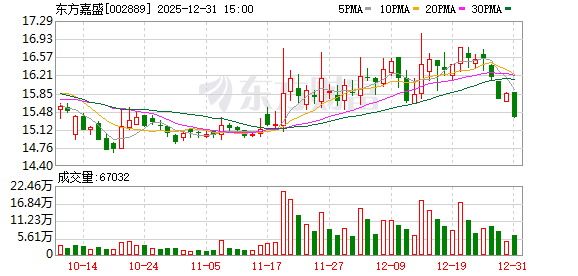
东方嘉盛前海“湾区壹号”智慧仓库封顶 打造深圳高端定制化物流仓储
Zheng Quan Ri Bao· 2025-12-31 07:40
Group 1 - The core viewpoint of the news is the successful topping out of the "Bay Area No. 1" smart warehouse by Dongfang Jiasheng Supply Chain Co., Ltd., marking a significant milestone in the company's strategic development in high-end customized logistics and warehousing [2][3] - The smart warehouse spans 80,000 square meters and is located in the core of the Qianhai Comprehensive Bonded Zone, entering the operational preparation phase to provide comprehensive services from warehousing management to global distribution [2] - The warehouse is strategically positioned near eight rail transit networks, allowing for efficient connections to the Shenzhen western port and airport clusters within 30 minutes, and linking to the Guangzhou-Shenzhen-Hong Kong air transport resources within one hour [2] Group 2 - The cross-border logistics industry in China is facing a transformation demand for "efficiency improvement, cost optimization, and service specialization," which the "Bay Area No. 1" smart warehouse aims to address by offering customized logistics services for high-end industries such as semiconductors and healthcare [3] - The company plans to leverage the advantages of Qianhai as an international trade hub to enhance Shenzhen's role as a global transshipment trade port, contributing to the construction of a modern industrial system and injecting new momentum into high-quality supply chain development during the 14th Five-Year Plan period [3]
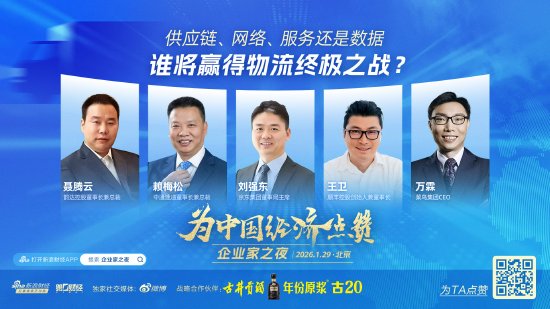
五大物流巨头,谁将赢得行业终极之战?
Xin Lang Cai Jing· 2025-12-26 07:31
Core Viewpoint - The logistics industry is undergoing significant transformation driven by technological advancements and diverse consumer demands, impacting operational efficiency and overall economic vitality [1][6]. Group 1: Industry Overview - The logistics sector is described as a vital component of the economy, influencing both business operations and consumer experiences [1][6]. - Key elements of competition in the logistics industry include supply chain optimization, network layout improvement, service quality enhancement, and data technology application [1][6]. Group 2: Company Highlights - Yunda Holdings, led by Chairman Nie Tengyun, emphasizes technology-driven logistics, advancing digital supply chain construction and optimizing network structure to enhance sorting efficiency and delivery speed [3][10]. - ZTO Express, under Chairman Lai Meisong, reported a package volume of 9.57 billion in Q3 2025, a year-on-year increase of 9.8%, with adjusted net profit rising by 5.0% to RMB 2.51 billion and revenue reaching RMB 11.86 billion, up 11.1% [3][10]. - JD Group, led by Liu Qiangdong, achieved logistics revenue of RMB 55.1 billion in Q3 2025, a 24.1% year-on-year growth, with adjusted net profit of RMB 2.02 billion, driven by overseas business expansion [4][11]. - SF Holding, under Wang Wei, strengthened its position in the high-end logistics market, achieving revenue of RMB 225.26 billion in the first three quarters of 2025, a growth of 8.89%, and a net profit of RMB 8.31 billion, up 9.07% [4][11]. - Cainiao Group, led by CEO Wan Lin, made significant progress in building a global smart logistics network, achieving rapid cross-border transportation and precise delivery, with daily package volume in Latin America showing triple-digit growth [5][12].