
文化创新创造

Search documents
“小家”与“大家”(人民论坛)
Ren Min Ri Bao· 2026-01-04 01:12
Group 1 - The core message emphasizes the transformation of local communities, highlighting the shift from challenges in selling products to increased demand and opportunities for growth, particularly in Meizhou's Nanfuzhen village [1] - The importance of addressing the needs of the people is underscored, with references to various localities where leaders express commitment to improving the lives of residents, reflecting a broader strategy to connect individual and collective well-being [2] - The narrative illustrates the relationship between national strength and local welfare, showcasing how policies and economic growth enhance the quality of life for citizens, including support for new employment groups and cultural initiatives [4] Group 2 - The text conveys the essence of dedication to public service, portraying the fulfillment derived from contributing to the happiness of the people, as expressed by party members and their commitment to community welfare [5] - A vision for the future is presented, indicating that the groundwork has been laid for continued progress and development, with a call to action for ongoing efforts to realize this vision [6]
守护中华文明根脉活力 筑牢民族复兴文化根基
Xin Lang Cai Jing· 2025-12-19 18:23
Group 1 - The core viewpoint emphasizes the importance of cultural prosperity and innovation as a key indicator of Chinese modernization, highlighting the need to stimulate the cultural creativity of the entire nation and develop socialist culture [3][4] - The 20th National Congress of the Communist Party of China has made comprehensive arrangements for cultural construction during the 14th Five-Year Plan period, focusing on the revival of traditional culture, the inheritance of revolutionary culture, and the flourishing of advanced socialist culture [3][4] - Cultural vitality is rooted in innovation and creativity, with the continuous evolution of Chinese civilization being attributed to its ability to adapt and renew itself over thousands of years [5][6] Group 2 - The concept of "diversity and unity" is identified as a core principle that has allowed Chinese civilization to endure for over 5,000 years, promoting inclusivity and richness through the coexistence of various regional and ethnic cultures [7][8] - The multi-ethnic and multi-regional cultural characteristics contribute to national unity and political stability, providing a strong cultural foundation against divisive ideologies [8][9] - The approach of "harmony in diversity" offers a model for global governance and intercultural exchange, demonstrating that different civilizations and ethnicities can coexist and thrive together [8][9]

四中全会精神在基层丨重庆:文化生态保护区奏响民族文化传承新乐章
Xin Hua She· 2025-12-18 12:12
Group 1 - The core viewpoint of the article emphasizes the importance of stimulating cultural innovation and creativity among the entire nation to promote the development of socialist culture, as highlighted by the 20th Central Committee's Fourth Plenary Session [1] - The article discusses the initiative to create a cultural ecological protection zone for the Tujia and Miao ethnic groups in the Wuling Mountain area, which is located at the intersection of Chongqing, Hunan, and Guizhou provinces [1] - The county of Xiushan Tujia and Miao Autonomous County has been revitalizing existing cultural resources, uncovering "cultural treasures" from the grassroots, and building a diverse talent system to enhance the innovation and transmission of ethnic culture [1]
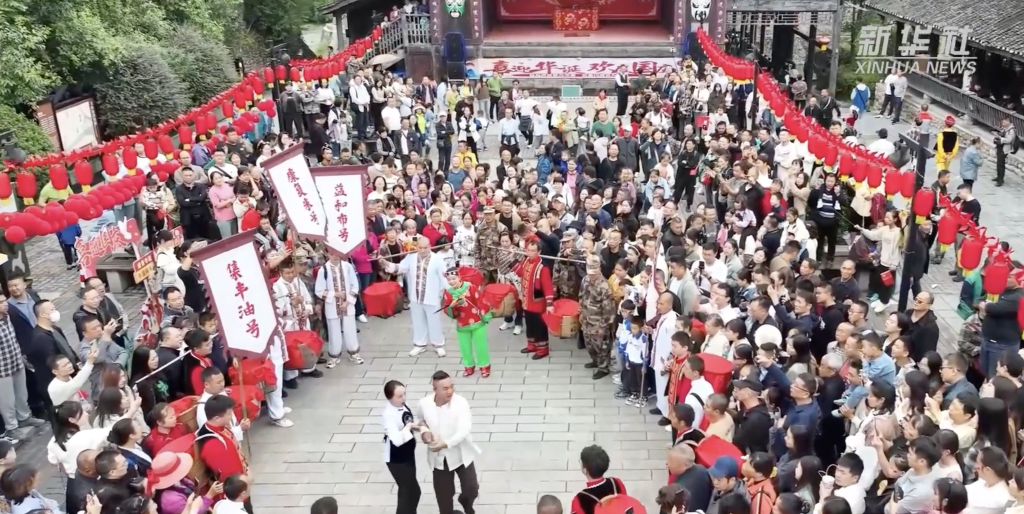
重庆:文化生态保护区奏响民族文化传承新乐章
Xin Hua She· 2025-12-18 05:59
Core Viewpoint - The 20th Central Committee of the Communist Party emphasizes the need to stimulate the cultural innovation and creativity of the entire nation, aiming to prosper and develop socialist culture through initiatives like the creation of the Wuling Mountain Area (Southeast Chongqing) Tujia and Miao Cultural Ecological Protection Zone [1] Group 1 - The Xiushan Tujia and Miao Autonomous County, located at the intersection of Chongqing, Hunan, and Guizhou, has been revitalizing existing cultural resources and uncovering "cultural treasures" from the folk community [1] - The county has been developing a diverse talent system to enhance the innovation and transmission of ethnic culture [1]
发展文化事业和文化产业
Ren Min Ri Bao· 2025-12-13 01:12
Group 1 - The core task of the 15th Five-Year Plan is to stimulate cultural innovation and development, emphasizing the importance of cultural prosperity and the development of the cultural industry [1][2] - The development of cultural undertakings and industries is crucial for enhancing the spiritual strength of the Chinese nation and meeting the new expectations of the people for cultural life [3][4] Group 2 - The cultural industry is recognized as a vital sector of the national economy, with recent years seeing a rapid integration of culture and technology, leading to new business models and consumption scenarios [11] - The plan emphasizes the need for a robust cultural industry system, including supportive economic policies and the cultivation of excellent cultural enterprises and brands [11][12] Group 3 - The proposal highlights the importance of high-quality public cultural services as a means to enhance the cultural rights and interests of the people, with a focus on improving service quality and accessibility [9][10] - The development of tourism is positioned as a key area for cultural and economic growth, with an emphasis on integrating cultural and tourism sectors to enhance the overall experience and quality of services [13][14]
发展文化事业和文化产业(学习贯彻党的二十届四中全会精神)
Ren Min Ri Bao· 2025-12-11 22:11
Core Viewpoint - The 20th Central Committee's Fourth Plenary Session emphasizes the importance of cultural innovation and development, aiming to enhance the socialist culture and provide fundamental guidelines for the 15th Five-Year Plan period [1] Group 1: Importance of Cultural Development - The development of cultural undertakings and industries is crucial for enhancing the spiritual strength of the Chinese nation and meeting the people's cultural needs [2][3] - Cultural industries are recognized as a vital sector in the socialist market economy, contributing to the prosperity of socialist culture [2] - The achievements of the 14th Five-Year Plan period in cultural development are acknowledged, highlighting the rich diversity of spiritual cultural products [2] Group 2: Quality Cultural Creation - The focus is on producing high-quality cultural works that resonate with the times, emphasizing the need for creativity and originality in cultural production [5] - There is a call to enhance cultural originality and support the transformation of excellent literary works into scripts, fostering a vibrant cultural ecosystem [6] Group 3: Preservation of Traditional Culture - The importance of inheriting and developing excellent traditional Chinese culture is stressed, with initiatives aimed at protecting cultural heritage and promoting its creative transformation [7][8] - Efforts will be made to utilize traditional cultural resources effectively, ensuring they remain relevant in modern life [8] Group 4: Public Cultural Services - The enhancement of public cultural services is essential for fulfilling the basic cultural rights of the people, with a focus on improving service quality and accessibility [9][10] - Initiatives will be implemented to promote cultural activities that engage the community and foster a reading culture [10] Group 5: Development of Cultural Industries - The cultural industry is identified as a significant component of the national economy, with policies aimed at fostering innovation and collaboration across various sectors [11] - The establishment of a robust cultural market system is crucial for promoting healthy development and ensuring the effective flow of cultural resources [11][12] Group 6: Tourism Development - The proposal includes advancing the construction of a tourism powerhouse, emphasizing the integration of culture and tourism to enhance the quality of life and promote economic growth [13][14] - There is a focus on improving tourism products and services, ensuring they reflect cultural richness and meet international standards [13][14]
文艺的大众化,一以贯之的文化追求(坚持“两创”·关注新时代文艺)
Ren Min Ri Bao· 2025-12-08 22:10
Core Viewpoint - The rise of popular literature reflects the spirit of the era and the cultural choices of the masses, emphasizing the importance of cultural participation for individual fulfillment and national rejuvenation [1][4]. Group 1: Historical Context - The concept of popular literature has deep roots in the history of modern Chinese literature, embodying the Marxist literary theory's localization in China and the Party's cultural policies [1][2]. - The 1930s "popular literature" movement focused on creating works for workers and farmers, aiming to elevate public consciousness through art [1]. Group 2: Current Trends - China's unique modernization has rapidly transformed the nation, achieving a comprehensive moderately prosperous society and embarking on a new journey towards socialist modernization [2]. - The digital revolution has empowered creators, allowing anyone with passion to share their stories, leading to a blend of professional and popular literature [2][3]. Group 3: Cultural Support - There are over 30 million online literature authors in China, producing 150 million words daily, alongside a short video user base of 1.04 billion, showcasing a vibrant landscape of non-professional creators [3]. - The younger generations, particularly those born in the 1990s and 2000s, are becoming the main force in popular literature, driven by cultural confidence and a desire for global engagement [3]. Group 4: Future Implications - The transformation of cultural participation by the masses is reshaping traditional literature, leading to a new cultural landscape that promotes comprehensive human development [4]. - The vitality of new popular literature reflects the confidence of the Chinese people in their development path and their recognition of shared values and ideals [4][5].
铆足干劲往前赶 接续奋斗谱新篇
Shan Xi Ri Bao· 2025-12-07 00:10
Group 1: Economic and Social Development - The provincial committee's recent meeting outlines key tasks for promoting high-quality economic and social development during the "14th Five-Year Plan" period, emphasizing the importance of mobilizing local officials and citizens to align their actions with the committee's decisions [1] - The meeting highlights the need to accelerate the development of cultural industries and services to meet the growing spiritual and cultural needs of the people, which is essential for building a culturally strong nation and achieving national stability [1] Group 2: Cultural Integration and Community Engagement - The focus on creating a tightly-knit urban-rural public cultural service community aims to enhance cultural innovation and creativity, utilizing a model that involves community input and volunteer engagement to ensure precise service delivery [1] - Local officials express commitment to integrating cultural activities with economic development, promoting cultural heritage, and enhancing community engagement through various initiatives [2] Group 3: Healthcare and Social Welfare - The meeting emphasizes the importance of improving healthcare services and integrating traditional and modern medical practices to enhance community health outcomes [3] - There is a strong focus on addressing social welfare issues, including employment, education, and healthcare, to improve the quality of life for citizens [2] Group 4: Environmental Protection and Ecological Development - The meeting outlines strategies for protecting the ecological environment, particularly in the Qinling Mountains, and promoting high-quality forestry development through organized ecological protection efforts [4] - The establishment of a 2,490-member ecological protection team aims to ensure comprehensive management of forest areas, utilizing digital tools for effective monitoring and management [4] Group 5: Rural Development and Agricultural Innovation - The meeting promotes a development model characterized by dual-polar support and multi-point collaboration, which is expected to guide high-quality rural development [5] - Local initiatives focus on leveraging ecological advantages and enhancing agricultural practices to create a sustainable rural tourism economy, with specific villages recognized for their exemplary development [5]
推动文化创新创造源泉充分涌流
Jing Ji Ri Bao· 2025-10-30 22:21
Group 1: Core Perspectives - Cultural prosperity is a significant marker of Chinese-style modernization, emphasizing the need to stimulate national cultural innovation and creativity [1] - The 20th Central Committee of the Communist Party of China set a goal for the "14th Five-Year Plan" period to significantly enhance social civilization levels and promote socialist culture [1] Group 2: Cultural System and Mechanism Reform - Deepening cultural system and mechanism reform is essential to clarify relationships among cultural construction entities and provide institutional guarantees for cultural innovation [2] - The reform aims to enhance cultural management systems, ensuring that cultural services align with socialist values and promoting the prosperity of cultural industries [2] Group 3: Cultural Production and Operation Mechanism - Establishing a robust cultural industry system is crucial, focusing on the transformation of state-owned cultural enterprises and supporting private cultural enterprises [3] - Optimizing resource allocation within the cultural industry and enhancing market service quality are key to fostering a vibrant cultural market [3] Group 4: Enhancing Cultural Originality - Cultural originality is a core element in measuring a nation's cultural innovation capabilities, drawing from China's rich historical and cultural resources [4] - Emphasizing the integration of Marxist principles with traditional Chinese culture is vital for creating contemporary cultural products that resonate with modern aesthetics [4] Group 5: Improving Artistic Creation and Production Services - Policy support and funding are necessary to guide artists in producing original works that reflect social realities and resonate with contemporary audiences [5] - Establishing collaborative mechanisms across various cultural sectors can enhance the promotion and dissemination of diverse artistic expressions [5] Group 6: Creating a Positive Cultural Ecosystem - A supportive cultural ecosystem is essential for fostering innovation, encouraging a culture of bold and inclusive creativity [6] - The balance between maintaining traditional values and promoting innovation is crucial for the sustainable development of cultural practices [6] Group 7: Promoting Diverse Cultural Expressions - The policy of "letting a hundred flowers bloom and a hundred schools of thought contend" aims to develop a culturally rich and influential socialist culture [7] - Encouraging academic and artistic discourse is vital for fostering a vibrant cultural environment that values integrity and responsibility [7] Group 8: Empowering Cultural Development through Technology - Leveraging information technology is critical for enhancing cultural innovation and facilitating the digital transformation of cultural resources [8] - Establishing a national cultural resource database and promoting the integration of culture and technology can significantly boost cultural development [8] Group 9: Accelerating New Cultural Formats - The development of new cultural formats, such as digital publishing and digital arts, is essential to adapt to the trends of digitalization in the cultural sector [9] - Integrating culture with tourism, education, and healthcare can create new growth points for the cultural industry, fostering a comprehensive modern cultural ecosystem [9]
让人民生活更加幸福美好——党的二十届四中全会精神在山东广大党员干部群众中引发热烈反响
Da Zhong Ri Bao· 2025-10-30 01:06
Group 1: Economic and Social Development - The core objective of the "14th Five-Year Plan" is to meet the growing needs of the people for a better life, emphasizing the importance of improving and safeguarding livelihoods [1] - Shandong province has seen urban employment exceed 1.2 million for nine consecutive years, highlighting its commitment to stabilizing employment for key groups [1] - The provincial government aims to enhance the employment service system and implement policies to support job creation and stability [1] Group 2: Healthcare and Social Security - Shandong is improving its healthcare system, with a stable insurance coverage rate of 95% among the resident population [2] - The province is focusing on enhancing elderly care services, with 216 facilities and 2,863 beds established in the Yanzhou area [2] - The healthcare infrastructure is being expanded, with a target of 7.55 hospital beds and 4.2 practicing physicians per 1,000 people [2] Group 3: Cultural and Community Engagement - The "One Yuan Theater" initiative in Heze has successfully provided affordable cultural performances, reaching over 200,000 attendees in six years [3] - The initiative aligns with the goal of promoting equal access to basic public services and enhancing community cultural engagement [3] - The province is committed to fostering cultural innovation and enriching the spiritual lives of its citizens through various cultural programs [4]