
新能源材料

Search documents
早盘直击|今日行情关注
申万宏源证券上海北京西路营业部· 2026-03-06 02:07
Group 1 - The panic sentiment in the market has eased, leading to a shift towards technology growth stocks, with the STAR Market index rebounding while the oil and petrochemical sector has seen a pullback [1] - The uncertainty in the Middle East continues to impact the oil supply, which may affect short-term market dynamics, with potential for oil prices to rise significantly, influencing market sentiment and sector rotation [1] - In the medium to long term, the trend of A-shares remains upward, supported by increased household savings entering the market and a recovery in the performance of A-share listed companies [1] Group 2 - As March approaches, the annual report season will focus on high-performing sectors, with technology hardware, advanced manufacturing, and price-increasing cycles expected to show strong performance [2] - The trend of AI hardware remains established, with increasing token usage for major AI models, indicating a peak in AI applications by 2026, highlighting growth opportunities in this sector [2] - The domestic and overseas demand for new energy materials is rapidly increasing, leading to supply shortages and price hikes, with this trend expected to continue into 2026 [2]


磷矿石-硫磺-战略矿产资源属性凸显-价格中枢有望稳步抬升
2026-03-04 14:17
Summary of Key Points from Conference Call Industry Overview: Phosphate Rock and Sulfur Phosphate Rock Supply and Demand - Phosphate rock supply is tight, with prices rising: Domestic production is constrained by environmental policies, leading to a price increase for 30% grade phosphate rock from 400 RMB/ton to over 1,000 RMB/ton [1] - Demand structure is shifting, with new energy becoming a core growth driver: Traditional phosphate fertilizer usage has decreased from 78% to 54%, while demand for lithium iron phosphate and other new energy materials has increased from 7% to 17%, with expected consumption reaching 140 million tons by 2027 [1][5] - Resource endowment pressures are significant, with a trend towards wet process replacing the thermal process: China holds 5% of global phosphate reserves but produces nearly 50% of the output, with an average grade of only 17%, which is significantly lower than the global average [1] Sulfur Market Dynamics - Global sulfur supply-demand gap is widening, with demand growth at 3%-4%: The demand for sulfur is driven by phosphate fertilizer needs and the growth of nickel laterite ore acid leaching and lithium battery materials, outpacing supply growth of 1%-2% [1] - Sulfur prices are supported by geopolitical factors and reduced oil and gas consumption: The price of sulfur in China reached 4,400-4,500 RMB/ton due to the impact of the Russia-Ukraine conflict and declining sulfur content in global crude oil [1][15] Strategic Implications - The strategic importance of phosphorus has been reinforced: The U.S. has classified elemental phosphorus as a critical defense material, benefiting companies with phosphate resources and sulfur iron ore production capacity, such as Sinopec and Rongsheng Petrochemical [2][8] Phosphate Chemical Industry Technology - The core technology routes in the phosphate chemical industry are divided into wet and thermal processes: The wet process is characterized by lower energy consumption but requires higher-grade phosphate rock, while the thermal process can utilize lower-grade phosphate but has higher costs and energy consumption [3] Domestic Phosphate Supply Constraints - Domestic phosphate supply is constrained by resource endowment and policy restrictions: The average grade of domestic phosphate rock is about 17%, significantly lower than the global average of 30%, with production declining from 2017 to 2020 due to stricter environmental regulations [4] Changes in Phosphate Demand Structure - The demand structure for phosphate rock has changed significantly: Traditional agricultural demand is decreasing, while new energy material applications are rapidly increasing, becoming the main driver of marginal demand growth [5][6] Global Phosphate Supply Dynamics - Morocco's phosphate supply is constrained by strategic choices and resource processing limitations: Morocco controls its phosphate output through state-owned OCP, prioritizing high-value processing over raw mineral exports [6][7] Domestic Policy on Phosphate Resource Management - Since 2016, phosphate rock has been classified as a strategic mineral in China, leading to protective mining practices and export management to ensure domestic food security [7] Sulfur Market Applications - Sulfur is primarily used for sulfuric acid production, with 93% of sulfur in China used for this purpose in 2024: The downstream applications include phosphate fertilizers, titanium dioxide, and other chemicals [9] Sulfur Production Methods - Sulfuric acid can be produced through three main methods: sulfur burning, smelting gas by-product, and sulfur iron ore, with the first being the most common due to its lower environmental impact [10] Sulfur Supply and Demand Outlook - Sulfur supply growth is expected to be around 1%-2% due to low growth in oil and gas consumption, while demand growth is driven by phosphate fertilizers and new energy applications, leading to a projected demand growth of 3%-4% [14] Price Trends and Projections - Sulfur prices have risen significantly due to geopolitical tensions affecting supply, with prices expected to remain strong due to ongoing supply-demand imbalances [15][16]
钴锂金属行业周报:政策扰动频发,供给收缩预期强化
Orient Securities· 2026-03-01 00:35
Investment Rating - The industry investment rating is maintained as "Positive" for lithium and cobalt core targets, suggesting active positioning in the market [8][12]. Core Insights - The report highlights that supply disruptions and post-holiday replenishment have significantly amplified lithium price elasticity, with expectations for further price increases before the second quarter [4][12]. - The report notes that cobalt prices are supported by raw material costs, with limited downward space due to insufficient arrival volumes [4][12]. - The report emphasizes the ongoing strong demand for energy storage in the medium term, with supply-side disruptions likely to heighten overall market concerns [4][12]. Summary by Sections 1. Cycle Assessment: Supply Disruptions Trigger Lithium Price Rebound - Lithium prices have accelerated due to supply disruptions and post-holiday replenishment, with futures contracts showing significant weekly increases [12][13]. - The report indicates that Zimbabwe has suspended all lithium ore and concentrate exports, tightening supply and increasing price support [13][16]. 2. Company and Industry Dynamics - Zimbabwe's Ministry of Mines announced an immediate suspension of all lithium ore and concentrate exports, aiming to enhance mineral regulation and accountability [16]. - Core Lithium has agreed to sell its lithium spodumene inventory to Glencore, which is expected to provide momentum for potential resumption of production [16]. 3. Core Data on New Energy Materials: Production Fluctuations and Price Increases - In January, domestic lithium carbonate production increased by 5% month-on-month, while hydroxide production decreased by 4% [17][18]. - The report notes that the average price of battery-grade lithium carbonate rose by 18.35% week-on-week, reflecting strong market dynamics [63][64]. 4. Lithium Salt Import and Export Data - In December, lithium carbonate imports rose by 9% month-on-month, while hydroxide exports surged by 88% [34][40]. - The report indicates that the net export volume of hydroxide decreased by 37%, highlighting fluctuations in trade dynamics [40][41]. 5. Inventory Trends - The report shows that the weekly inventory of lithium iron phosphate increased by 0.5%, while the inventory of ternary materials decreased by 3% [54][55]. - Cobalt intermediate inventories saw a significant decline of 27.75% in January, indicating tightening supply conditions [60][61]. 6. Price Trends for New Energy Metals - The average price of lithium salts and downstream materials has generally increased, with notable rises in lithium carbonate and hydroxide prices [63][64]. - The report highlights that the average price of cobalt intermediates rose by 0.39%, while the average price of electrolytic cobalt increased by 2.26% [65][66]. 7. Rare and Minor Metal Prices - The report indicates that prices for most rare and minor metals have increased, with praseodymium-neodymium oxide prices rising by 5.20% [91][92]. - The average price of molybdenum concentrate also saw an increase of 5.13%, reflecting positive market trends [92].
万亿黄金龙头“加注”锂电,三年冲32万吨碳酸锂!
Xin Lang Cai Jing· 2026-02-25 13:44
Core Viewpoint - Zijin Mining is rapidly advancing into the lithium battery sector, aiming for significant growth in lithium carbonate production from 2025 to 2028, marking a strategic shift from traditional mining to new energy materials [1][8]. Production Goals - Zijin Mining plans to achieve a lithium carbonate equivalent production of approximately 25,000 tons by 2025, a substantial increase from 0 tons in 2022 [1][5]. - The company targets 120,000 tons by 2026 and between 270,000 to 320,000 tons by 2028, representing a growth of 380% to 1180% over the 2025 figure [1][5]. Historical Context - Founded by Chen Jinghe, Zijin Mining has evolved from a single mine in Fujian to a leading multinational mining group, with significant resources in copper, gold, silver, zinc, and lithium [1][9]. Strategic Acquisitions - The company has made several strategic acquisitions to enter the lithium resource sector, including the purchase of Neo Lithium in 2021 and other key assets in 2022 and 2023 [2][10][11]. - By 2025, Zijin Mining will control various lithium projects, including the 100% ownership of the Qaidam Salt Lake project and significant stakes in other lithium-rich areas [2][11]. Global Layout - Zijin Mining has established a "six lakes and two mines" global layout for lithium resources, including major projects in Argentina, Tibet, and Hunan, with substantial lithium carbonate equivalent reserves [3][12][13]. Production Capacity - The company’s lithium resource capacity is projected to reach 18.7 million tons by 2025, ranking it 10th globally in lithium carbonate equivalent production [5][14]. - The dual approach of utilizing both salt lake and hard rock lithium extraction methods enhances cost efficiency and flexibility, supporting the ambitious production targets [6][14]. Financial Performance - Zijin Mining is expected to achieve a net profit of 51 to 52 billion yuan in 2025, reflecting over 60% year-on-year growth, which provides a strong financial foundation for its lithium expansion [6][14]. Market Position - As of February 25, 2023, Zijin Mining's stock was priced at 39.63 yuan per share, with a total market capitalization of 1.05 trillion yuan, positioning the company to potentially rank among the top 3-5 global lithium producers by 2028 [7][15].

澳洲富豪空中布局加速纷纷入手环球7500与湾流G600 山东黄金控股FML股价过去一年上涨逾14倍 产量增长与现金流推动估值重估
Sou Hu Cai Jing· 2026-02-17 11:35
Group 1: Private Jet Ownership in Australia - The COVID-19 pandemic has shifted perceptions about private jet ownership, making it a symbol of status and a necessity for business in Australia [2] - The Australian Civil Aviation Safety Authority (CASA) reports nearly 200 business jets owned by prominent Australian companies [2] - Notable owners include mining magnate Andrew Forrest and property developer John Gandel, both of whom own Bombardier Global 7500 jets, favored for their long range and comfort [2][3] Group 2: Popular Aircraft Models - The Bombardier Global 7500 is highly regarded for its impressive range of 14,260 kilometers and is chosen by several wealthy Australians [2] - Gina Rinehart, Australia's richest person, owns a Gulfstream G600, which can fly at near-supersonic speeds, significantly reducing travel time [2] - The CEO of the Australian Business Aviation Association notes that ultra-long-range jets are popular among local billionaires due to Australia's geographical isolation [2] Group 3: Market Trends and Future Outlook - Many of the jets were purchased during or after the pandemic, which is seen as a key factor in breaking the taboo around private jet ownership [2] - The trend indicates a growing acceptance and demand for private aviation among Australia's elite, reflecting broader changes in business travel preferences [2]


双环科技钠电材料中试线投产,双环传动获机构看好
Jing Ji Guan Cha Wang· 2026-02-16 19:24
Group 1: Dual Ring Technology (000707.SZ) - The company has made significant progress in the transformation of its new energy materials, with its pilot production line for sodium-ion composite cathode materials achieving its first product output on February 6, 2026, marking a transition from R&D to large-scale production [1] - The sodium-ion materials have been sampled to 18 downstream battery cell customers, with some customers completing tests and issuing qualified reports. The company has established strategic partnerships with upstream and downstream enterprises and plans to advance the construction of a sodium-ion industrial park to promote industrialization [2] - The company held a board meeting on February 10, 2026, to review and approve the expected daily related party transactions for 2026, which requires attention to the execution of subsequent related transactions [3] Group 2: Dual Ring Transmission (002472.SZ) - There have been no significant event announcements recently, with market focus shifting towards the company's fundamentals and long-term industry trends [4] - According to institutional summaries from January 2026, multiple institutions maintain a positive outlook on the company, viewing it favorably as a high-precision gear platform enterprise with promising overseas prospects and new business developments in robotic joints [5] - The year 2026, as the beginning of the "14th Five-Year Plan," is expected to see macro policies supporting high-end manufacturing and technological innovation, along with ongoing trends in artificial intelligence and robotics, which are considered external environmental factors that may influence the company's long-term development [6]


新材料产业园订单足赶工忙
Guang Xi Ri Bao· 2026-02-15 03:48
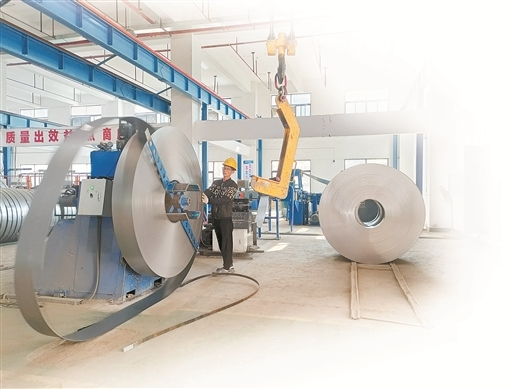
Group 1 - The core viewpoint of the article highlights the rapid development and promising future of the renewable energy sector in Guangxi, particularly focusing on solar and energy storage materials production [3][4]. - Guangxi Jiali Photovoltaic Technology Co., Ltd. was established in June 2023 and currently has a monthly production capacity of 6,000 tons, with a projected output value of 233 million yuan by 2025 [3]. - The company has been recognized as a high-tech enterprise, emphasizing its commitment to the national energy strategy and the green energy sector [3]. Group 2 - Guangxi Tansai Technology Co., Ltd. is producing energy storage anode materials with an annual output of 100,000 tons and carbon additives of 20,000 tons, utilizing an environmentally friendly process that achieves zero discharge of concentrated salt wastewater [3]. - The industrial park has successfully attracted 11 enterprises, with 7 already in production, including 6 large-scale enterprises, aiming for an industrial output value of 550 million yuan by 2025 and 1 billion yuan by 2026 [4]. - The park is focusing on advanced materials manufacturing, including new energy materials, high-end ceramic materials, and high-performance membrane materials, positioning itself as a new growth driver for the local industrial economy [4].
院士团队领衔!爱沃新能源15天连拿两轮融资!
中关村储能产业技术联盟· 2026-02-14 04:01
Core Viewpoint - Aivo New Energy has successfully completed two rounds of strategic financing within a short period, indicating strong confidence from the capital market in its core technology and business potential [2][3]. Group 1: Company Overview - Aivo New Energy was established on February 19, 2025, focusing on the research and industrialization of next-generation lithium-ion battery cathode materials [2]. - The company relies on the expertise of Academician Chen Jun's team in manganese-based materials and has assembled a research and operational team with decades of experience in top global automotive, battery, and materials companies [2]. Group 2: Technology and Innovation - Aivo New Energy is dedicated to developing high-capacity, high-voltage, safe, and long-life battery materials, with its core proprietary technology in lithium-rich manganese-based cathode materials expected to significantly enhance the energy density and cycle life of lithium-ion batteries [2][3]. - The company has successfully transitioned lithium-rich manganese oxide materials from laboratory research to pilot delivery, establishing deep cooperative relationships with leading battery and automotive companies in China and Europe [3]. Group 3: Recent Developments - The company completed a significant project on "high specific capacity, high rate, long-life lithium-rich manganese cathode materials," which was approved and included in the national key research and development plan for "disruptive technology innovation" in July 2025, solidifying its national technical standing in this field [6]. - In October 2025, Aivo New Energy successfully launched a hundred-ton flexible production line, creating a closed-loop research and development system covering precursor synthesis, material sintering, cell testing, and comprehensive characterization [6].
新安股份(600596):“硅基+磷基"双轮驱动,走过周期底开启新成长
SINOLINK SECURITIES· 2026-02-13 09:55
Investment Rating - The report assigns a "Buy" rating to the company, with a target price of 14.24 RMB based on a 30x PE for 2026 [3]. Core Views - The company is a dual leader in the silicone and glyphosate industries, with performance expected to recover against a backdrop of reduced competition [1]. - The company has pioneered a circular economy model utilizing chlorine, phosphorus, and silicon, achieving over 90% utilization rates for these elements [1][21]. - The company’s revenue and profit have been under pressure due to price declines in recent years, but improvements in supply and demand dynamics are anticipated to drive performance recovery [1][2]. Summary by Sections 1. Business Overview - The company operates in three main sectors: crop protection, silicone materials, and new energy materials, with a focus on integrating phosphorus and silicon materials [14]. - The crop protection segment has developed a comprehensive system covering intermediates, active ingredients, and formulations, contributing to food security [14]. - The silicone materials segment has a complete industrial chain from upstream silicon mining to downstream product manufacturing, with applications in over 130 countries [14]. 2. Silicone Materials - The company’s silicone segment is expected to benefit from improving supply-demand dynamics, with prices showing signs of recovery [1][54]. - The domestic market for silicone has a strong demand base, with a compound annual growth rate of over 10% in recent years [54]. - The company has a silicone monomer capacity of 500,000 tons, with approximately 80% used for self-produced downstream products [1]. 3. Glyphosate Sector - Glyphosate prices are expected to improve due to the promotion of genetically modified crops, with domestic production capacity constrained by policy [2]. - The company has a glyphosate active ingredient capacity of 80,000 tons, with a formulation conversion rate exceeding 70% [2]. - The company has developed a diverse product portfolio in the agricultural sector, including over 100 varieties of herbicides, insecticides, and fungicides [2]. 4. Financial Forecast and Valuation - The company is projected to achieve revenues of 147 billion RMB in 2025, with a net profit of 1.1 billion RMB, reflecting a significant recovery from previous lows [3]. - The earnings per share (EPS) are expected to grow from 0.081 RMB in 2025 to 0.673 RMB by 2027 [3]. - The report anticipates a recovery in profitability, with net profit expected to increase by 484% in 2026 [3]. 5. Market Position and Competitive Landscape - The company holds a 7% market share in the domestic silicone market, ranking fifth, and a 10% share in glyphosate, ranking third [1]. - The company’s revenue structure has shifted, with the agricultural segment's contribution increasing from 41% in 2020 to 49% in the first half of 2025 [24]. - The company’s profitability has shown volatility, particularly in the silicone materials segment, which has experienced significant fluctuations in gross margins [24].

卫星化学:新能源材料作为公司未来发展的重点方向之一,目前正聚焦于自身产业链优势布局相关业务
Zheng Quan Ri Bao Zhi Sheng· 2026-02-13 09:45
Core Viewpoint - Satellite Chemical is focusing on new energy materials as a key direction for future development, leveraging its advantages in the industrial chain [1] Group 1 - The company is currently developing immersion liquid cooling fluids based on hydrocarbons [1] - Collaborations have been established with academic institutions and downstream customers [1] - The development phase of the cooling liquid is ongoing [1]
