新能源汽车购置税

Search documents
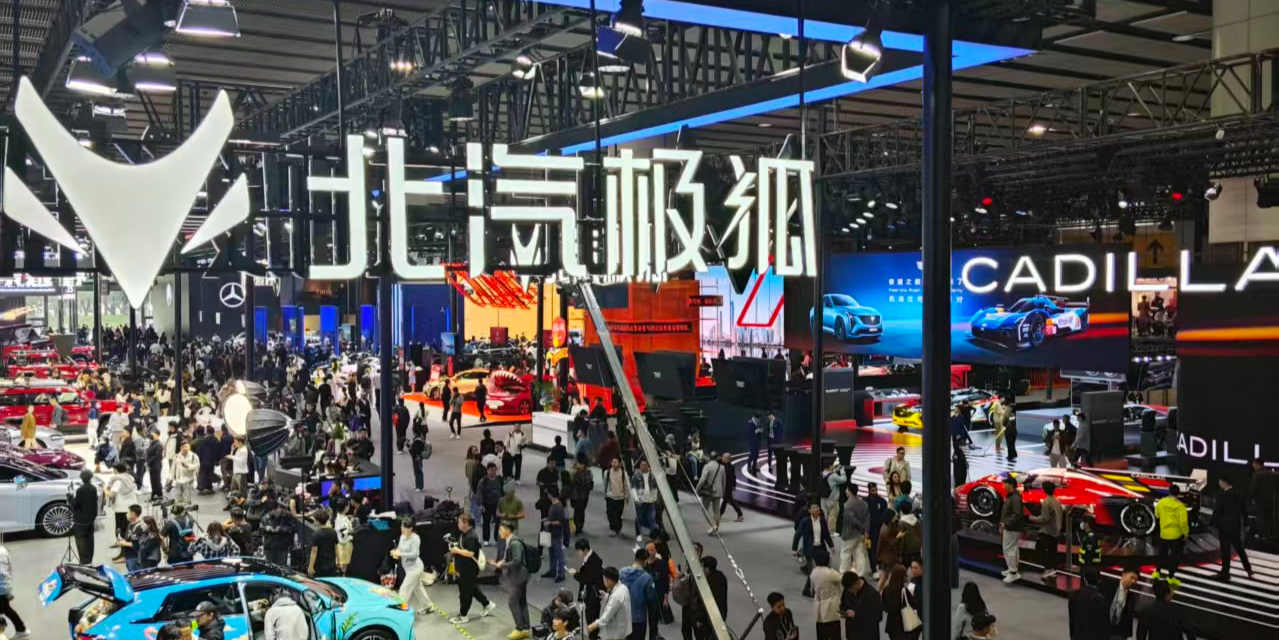
车市年终翘尾失败 2026年市场承压
Jing Ji Guan Cha Wang· 2025-12-14 03:10
Group 1 - The automotive market is experiencing a significant slowdown as various regions exhaust their vehicle trade-in subsidies, leading to a lack of consumer activity in dealerships [2][4] - The cancellation of national and local subsidies, along with the introduction of a 50% purchase tax on new energy vehicles starting next year, has negatively impacted market expectations for year-end sales [2][4] - In November, retail sales of passenger vehicles dropped to 2.225 million units, a year-on-year decrease of 8.1%, with fuel vehicles seeing a 22% decline [4][5] Group 2 - Car manufacturers are implementing their own discount policies to stimulate sales, including covering the increased purchase tax for vehicles ordered before the subsidy deadline [3][8] - The China Automobile Dealers Association reported that the overall survival status of dealers is expected to worsen in the coming year, indicating a lack of confidence in the market [4][8] - The 2025 vehicle trade-in subsidy is projected to exceed 180 billion yuan, with a significant portion allocated to automotive subsidies, suggesting potential growth in the market despite current challenges [8][11] Group 3 - Some automakers remain optimistic about the 2026 market, anticipating stable demand for fuel vehicles and growth in hybrid and plug-in models [9][10] - Companies are developing strategies to adapt to policy changes, including monitoring local subsidy dynamics and adjusting product offerings to meet consumer needs [10][11] - There is potential for new growth points in the market, particularly through rural consumption initiatives and the expansion of services related to used cars and aftermarket activities [11]

消失的车市翘尾
Jing Ji Guan Cha Wang· 2025-12-12 14:22
Core Viewpoint - The automotive market is experiencing a significant downturn due to the exhaustion of various subsidy programs, leading to a lack of consumer enthusiasm and lower sales performance as the year ends [1][3][7]. Group 1: Market Conditions - The automotive market has cooled significantly, with many dealerships reporting low customer traffic and sales, contrasting sharply with previous years' year-end buying frenzies [1][3]. - In November, the national retail sales of passenger vehicles reached 2.225 million units, a year-on-year decline of 8.1% and a month-on-month decline of 1.1% [3][4]. - The decline in sales is attributed to the cancellation of national and local subsidies, as well as the anticipated introduction of a 50% purchase tax on new energy vehicles starting next year [1][3][7]. Group 2: Subsidy Policies - The central government has allocated automotive replacement subsidies until December 31, 2025, but many local governments have exhausted their funds early, leading to a pause in subsidies [1][5]. - The total subsidy budget for 2025 is set to double to 300 billion yuan, with a significant portion allocated for automotive subsidies, expected to exceed 180 billion yuan [5][7]. - Local governments are implementing their own subsidy programs to stimulate market activity, with some regions offering cash incentives for vehicle purchases [6][9]. Group 3: Industry Responses - In response to the market downturn, many automakers are introducing their own incentives, such as covering the increased purchase tax for customers who order vehicles before the end of 2025 but receive them later [2][8]. - Some companies, like Dongfeng Honda and Lynk & Co, remain optimistic about maintaining stable sales in the fuel vehicle segment and anticipate growth in hybrid and plug-in hybrid models [8][9]. - Automakers are developing strategies to adapt to changing policies and consumer demands, focusing on enhancing product offerings and ensuring compliance with local subsidy regulations [9].
国补调整 地方接棒!年末收关 全国超30地推出汽车消费补贴
Mei Ri Jing Ji Xin Wen· 2025-12-09 12:33
Core Insights - The article highlights the recent surge in local government subsidies for automobile purchases across China, with over 30 provinces and cities implementing special subsidy policies totaling over 1 billion yuan, aimed at stimulating consumer demand as the year-end approaches [1][2]. Group 1: Local Subsidy Initiatives - Local subsidies vary in structure, with Hunan offering a maximum subsidy of 50,000 yuan, while other regions like Hangzhou and Zhenjiang provide substantial incentives for both fuel and new energy vehicles [2]. - The coverage of these subsidies is broad, with cities like Dalian and Fuzhou opening their programs to all local consumers, while others like Tianjin and Hangzhou target specific districts [2]. Group 2: National Policy Context - The national "old-for-new" vehicle subsidy program is nearing its end, with over 80% of the 69 billion yuan allocated for the fourth batch already utilized, leading to early closure of application channels in major provinces [3]. - The national policy adjustments reflect a normal consumption pattern of funds, as stated by the National Development and Reform Commission [3]. Group 3: Market Trends and Consumer Behavior - November saw a decline in retail sales of passenger vehicles, with a year-on-year drop of 8.1%, marking the first decline in three years, attributed to earlier consumption peaks and tightening of old-for-new policies [3][4]. - The impending end of the exemption on new energy vehicle purchase tax is expected to heighten consumer urgency, particularly in rural areas, as the market anticipates a shift towards mid-range fuel and new energy vehicles [4][5]. Group 4: Manufacturer Responses - In response to the changing market dynamics, several major new energy vehicle brands have introduced sales policies to mitigate the impact of the upcoming tax changes, offering to cover tax differences for delayed deliveries [5]. - Predictions for December suggest a stable market with potential slight declines, although new energy vehicle sales are expected to strengthen [5].
港股异动 | 汽车股尾盘跌幅扩大 部分新势力业绩不如预期 明年新能源汽车购置税重新征收
智通财经网· 2025-11-21 07:16
Core Viewpoint - The automotive sector is experiencing a decline in stock prices, particularly for companies like Xpeng Motors, Great Wall Motors, GAC Group, and Li Auto, following the release of third-quarter earnings that did not meet expectations [1] Group 1: Stock Performance - Xpeng Motors-W (09868) fell by 4.34% to HKD 78.3 - Great Wall Motors (02333) decreased by 4.05% to HKD 14.47 - GAC Group (02238) dropped by 2.76% to HKD 3.17 - Li Auto-W (02015) declined by 1.78% to HKD 68.8 [1] Group 2: Market Outlook - Analysts suggest that the financial data of some new energy vehicle companies fell short of expectations, leading to significant stock declines [1] - The fourth quarter is expected to maintain high growth in the new energy vehicle sector, despite ongoing price reductions [1] - The reintroduction of the new energy vehicle purchase tax in 2026 may alter the competitive landscape, potentially allowing traditional fuel vehicles to regain market share [1] Group 3: Investment Strategy - According to Everbright Securities' strategist, the automotive industry will see a divergence, with a focus on companies showing strong growth momentum [1] - The anticipated 5% purchase tax in the coming year poses challenges for automotive companies but may also serve as a filtering mechanism, benefiting more competitive firms [1] - Long-term impacts of policy changes may not necessarily be negative for leading companies in the sector [1]

宁德时代第三大股东套现逾170亿元
Di Yi Cai Jing Zi Xun· 2025-11-17 15:28
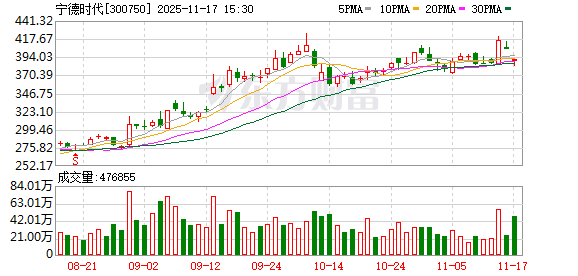
Core Viewpoint - CATL announced a non-public share transfer at a price of 376.12 CNY per share, with full subscription from 16 institutional investors, raising over 17.1 billion CNY for the third-largest shareholder Huang Shilin [2] Group 1: Share Transfer Details - The total number of shares to be transferred is 45.6324 million [2] - The share transfer received 55 valid bids, with a total subscription of 146.5 million shares, resulting in a subscription multiple of 3.2 times [2] - The transfer price was determined based on the average stock price over the previous 20 trading days, set at no less than 70% of that average [3] Group 2: Market Reaction and Valuation - On the announcement date, CATL's stock price fell by 3.3%, closing at 390.78 CNY [2] - Market participants indicated that the pricing was not significantly discounted, suggesting CATL remains a high-quality asset [2] Group 3: Future Considerations - Nearly 50% of CATL's H-share IPO cornerstone investors will have their shares unlocked on November 20, 2025, totaling approximately 77.5 million shares, valued at over 40 billion HKD [3] - The company faces potential risks, including the restoration of the new energy vehicle purchase tax in 2026 and rising lithium carbonate prices, which could impact cost structures [3][4] - As of November 17, lithium carbonate futures reached a record high of 95,200 CNY per ton, a 63% increase from six months prior [3]

宁德时代第三大股东套现逾170亿元
第一财经· 2025-11-17 15:19
Core Viewpoint - Ningde Times announced a non-public transfer of shares at a price of 376.12 CNY per share, with a total of 45.6324 million shares being transferred, resulting in a cash-out of over 17.1 billion CNY for the third-largest shareholder, Huang Shilin [3][4]. Group 1: Share Transfer Details - The share transfer was fully subscribed by 16 institutional investors, with a total of 1.465 billion shares effectively subscribed, resulting in a subscription multiple of 3.2 times [3]. - The transfer price was determined based on the average stock price over the previous 20 trading days, set at no less than 70% of that average [4]. - The stock price of Ningde Times fell by 3.3% to 390.78 CNY on the day of the announcement [3]. Group 2: Market Context and Risks - Huang Shilin has previously reduced his holdings multiple times through block trades, with stock prices fluctuating between 180 CNY and 330 CNY in the first half of 2022 [4]. - Approximately 77.5 million shares from Ningde Times' H-share IPO cornerstone investors will be unlocked on November 20, 2025, with a market value exceeding 40 billion HKD [4]. - The company faces risks such as the potential restoration of the new energy vehicle purchase tax in 2026 and rising lithium carbonate prices, which surged by 63% compared to six months ago [4].

转让定价每股376.12元 宁德时代第三大股东套现逾170亿元
Di Yi Cai Jing· 2025-11-17 14:11
Core Viewpoint - Ningde Times announced a non-public transfer of shares at a price of 376.12 CNY per share, with a total of 45.6324 million shares to be transferred, resulting in a cash-out of over 17.1 billion CNY for the third-largest shareholder, Huang Shilin [2] Group 1: Share Transfer Details - The share transfer was fully subscribed by 16 institutional investors, with a total of 1.465 billion shares effectively subscribed, resulting in a subscription multiple of 3.2 times [2] - The transfer is not conducted through centralized bidding or block trading, and the acquired shares cannot be transferred within six months [2] - The price floor for the transfer was set at no less than 70% of the average trading price over the previous 20 trading days [3] Group 2: Market Reaction and Valuation - On the announcement date, Ningde Times' stock price fell by 3.3%, closing at 390.78 CNY [2] - Market participants indicated that the pricing was not significantly discounted, suggesting that Ningde Times remains a high-quality asset [2] Group 3: Future Considerations - Approximately 77.5 million shares from the H-share IPO cornerstone investors will be unlocked on November 20, 2025, with a market value exceeding 40 billion HKD [4] - The company faces potential risks, including the restoration of the new energy vehicle purchase tax and rising lithium carbonate prices, which could impact cost structures [4] - Lithium carbonate futures reached a limit increase of 9%, with a price of 95,200 CNY per ton, marking a 63% increase from six months ago [4]
转让定价每股376.12元,宁德时代第三大股东套现逾170亿元
Di Yi Cai Jing· 2025-11-17 14:08
Core Viewpoint - Huang Shilin, the third-largest shareholder of CATL, is cashing out again, with a planned transfer of shares that will exceed 17.1 billion yuan, indicating a significant liquidity event for the company [1][2] Group 1: Share Transfer Details - CATL announced a share transfer price of 376.12 yuan per share, with a total of 45.6324 million shares to be transferred, fully subscribed by 16 institutional investors [1] - The share transfer is a non-public transfer, and the acquired shares cannot be transferred for six months post-acquisition [1] - The effective subscription amount for the transfer was 146.5 million shares, resulting in a subscription multiple of 3.2 times [1] Group 2: Market Reaction and Valuation - Following the announcement, CATL's stock price fell by 3.3%, closing at 390.78 yuan [1] - Market participants noted that the transfer price was not significantly discounted, indicating that CATL remains a high-quality asset [1] Group 3: Historical Context and Future Considerations - This is not the first time Huang Shilin has reduced his stake; he previously sold shares between January and June 2022, with prices fluctuating between 180 yuan and 330 yuan [2] - Approximately 77.5 million shares from CATL's H-share IPO cornerstone investors will be unlocked on November 20, 2025, with a market value exceeding 40 billion HKD [2] - Industry risks include the potential restoration of the new energy vehicle purchase tax in 2026 and rising lithium carbonate prices, which have surged by 63% compared to six months ago [2]
宁德时代股东拟套现上百亿,板块有何影响?
Di Yi Cai Jing· 2025-11-16 07:12
Core Viewpoint - The third-largest shareholder of CATL, Huang Shilin, plans to transfer 45.63 million shares, representing 1% of the total share capital, valued at approximately 18.4 billion yuan, indicating significant market activity and potential short-term impacts on CATL's stock price and the solid-state battery sector [1] Company Summary - CATL announced that Huang Shilin intends to transfer shares due to personal funding needs, which may lead to intense negotiations between incoming institutions and Huang [1] - The transfer is expected to create a short-term impact on CATL's stock price, with potential volatility in the solid-state battery sector [1] Industry Summary - Despite the anticipated short-term impact, the battery industry outlook remains positive, with expectations of a "golden pit" opportunity for investors [1] - Consideration of the long-term effects of the resumption of purchase tax for new energy vehicles starting in 2026 is crucial for the industry [1]
“周一卖不卖宁德时代?”
第一财经· 2025-11-16 07:12
Core Viewpoint - The article discusses the recent share transfer by Huang Shilin, the third-largest shareholder of CATL, and its potential impact on the company's stock price and the solid-state battery sector, highlighting the ongoing debate among industry insiders regarding the implications of this event [3][6][7]. Summary by Sections Share Transfer Details - CATL announced that Huang Shilin intends to transfer 45.63 million shares, representing 1% of the total share capital, valued at approximately 18.4 billion yuan based on the latest closing price [3][4]. - Huang currently holds 10.21% of CATL's shares, totaling 466 million shares, and the transfer will account for about 9.79% of his holdings [4]. Market Reactions and Predictions - Industry experts predict that the stock price of CATL may experience significant fluctuations due to this transfer, with some suggesting it could create a "golden pit" for long-term investors [6][7]. - The transfer is expected to be competitive, with a six-month lock-up period for the acquiring institutions, which may limit short-term speculative activities [5][7]. Long-term Industry Outlook - Despite the short-term impact of Huang's share transfer, the long-term growth prospects for CATL and the solid-state battery sector remain positive, driven by advancements in technology and increasing demand for clean energy solutions [6][8]. - The article notes that 2025 will be the last year for the exemption of vehicle purchase tax for new energy vehicles, with the tax rate returning to 10% in 2026, which could affect future demand [8].