
新能源集成融合发展

Search documents
能源强国建设“大家谈”︱以集成融合引领新能源高质量发展 更好支撑能源强国建设
国家能源局· 2026-01-28 00:52
Core Viewpoint - The article emphasizes the importance of integrated development in the renewable energy sector to support the construction of a strong energy nation, transitioning from rapid growth to high-quality development and creating diverse value [3][4]. Group 1: Strategic Role of Renewable Energy - The construction of a strong energy nation is crucial for national security, economic development, and global governance, with renewable energy serving as a strategic pillar [4]. - Since the 14th Five-Year Plan, over 80% of new power installations have come from renewable sources, positioning China as a global leader in installed capacity [4]. - Increasing renewable energy capacity is essential for reducing dependence on foreign energy and ensuring stable energy supply for a population of 1.4 billion [4]. Group 2: Economic Growth and High-Quality Development - The renewable energy sector is a key driver for economic growth, creating significant investment opportunities and jobs across various segments, including offshore wind, energy storage, and green fuels [5]. - The integration of renewable energy with digital economy initiatives is fostering new business models and enhancing the modern industrial system [5]. - Renewable energy plays a vital role in achieving carbon neutrality goals and enhancing China's influence in global energy governance [5]. Group 3: Integrated Development Approach - The current challenges in renewable energy development have shifted from grid integration to efficient consumption and system support, necessitating a transformation in development philosophy [6]. - The focus should shift from scale expansion to integrated development, promoting multi-energy integration and breaking down silos in energy production, transmission, and consumption [6][7]. - A multi-dimensional value recognition approach is needed, expanding beyond electricity provision to include green fuels, ecological restoration, and international cooperation [7]. Group 4: Policy and Market Reforms - Planning and guidance are essential for developing system-friendly renewable energy projects, with clear goals and evaluation metrics for system value [8]. - Market reforms should create a multi-tiered electricity market system that includes various market products and enhances demand-side response capabilities [9]. - Establishing a technology standard system for integrated development is crucial, focusing on optimizing multi-energy systems and enhancing smart energy capabilities [9][10]. Group 5: Pilot Projects and Industry Ecosystem - Pilot projects in key areas like the Shagou Desert and coastal wind farms should be developed to explore replicable business models for integrated renewable energy [10]. - Collaboration across industries such as transportation, construction, and energy is necessary to create a cohesive ecosystem that supports green energy initiatives [10].

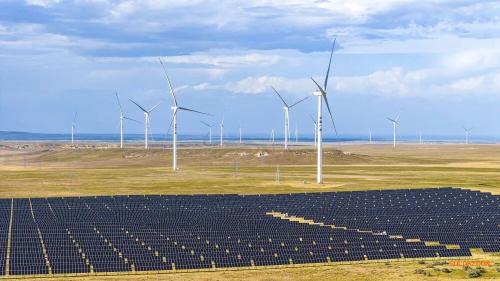
从规模扩张到价值创造: 新能源行业迈入高质量发展新阶段
Zheng Quan Ri Bao· 2025-12-27 03:35
Core Insights - The renewable energy sector in China is transitioning from rapid expansion and low-cost competition to a focus on value creation and system integration by 2025 [1][2][5] Group 1: Industry Growth and Investment - By 2025, China's renewable energy development is expected to maintain a rapid pace, with an estimated investment of 3.54 trillion yuan in key energy projects, reflecting an 11% year-on-year increase [2] - In the first three quarters of 2025, the newly installed capacity of renewable energy reached 310 million kilowatts, a 47.7% increase year-on-year, accounting for 84.4% of the total new capacity [2] - Renewable energy generation is projected to reach 2.89 trillion kilowatt-hours, a 15.5% increase year-on-year, making up approximately 40% of total electricity generation [2] Group 2: Energy System Transformation - The energy sector is undergoing a transformation to achieve carbon neutrality, with a focus on increasing the share of renewable energy and making it the primary source of power generation [3] - The National Energy Administration has issued guidelines to promote integrated development of renewable energy, emphasizing system integration and coordinated development [3][4] - Multi-energy integration is becoming a trend, enhancing resource allocation efficiency and reliability of supply while supporting traditional and emerging industries with green power [4] Group 3: Market Dynamics and Competition - The renewable energy industry is experiencing a shift towards "anti-involution," particularly in the photovoltaic sector, where previous price declines are stabilizing due to policy and market interventions [5][6] - By late 2025, prices across the photovoltaic supply chain began to recover, with silicon material prices increasing by 38.9% compared to the beginning of the year [6] - The wind power sector is also seeing a reduction in price competition, with a focus on value-driven strategies and improved product quality [8][9] Group 4: Market Reform and Pricing - The marketization of renewable energy pricing is accelerating, with new policies requiring renewable energy to compete under the same market rules as traditional energy sources [9][10] - The "136 Document" outlines a framework for market-based pricing of renewable energy, moving away from fixed prices to variable pricing based on market transactions [10] - This shift necessitates a change in investment strategies for renewable energy developers, focusing on detailed project development and operational efficiency [10]
两大新政下新型储能发展的三大转变!
中关村储能产业技术联盟· 2025-12-24 05:38
Core Viewpoint - The article discusses the significant policy directions and impacts on the renewable energy sector in China, particularly focusing on the integration and development of new energy systems as outlined in recent government documents [2][6]. Group 1: Energy Structure Transformation - China has established the world's largest and fastest-growing renewable energy system, with the share of solar and wind power generation capacity increasing from approximately 25% at the beginning of the 14th Five-Year Plan to 46% currently [3]. - As of October 2025, the total installed power generation capacity reached 375.171 million kilowatts, with solar power capacity at 114.018 million kilowatts (up 43.8% year-on-year) and wind power capacity at 59.039 million kilowatts (up 21.4% year-on-year) [4][3]. Group 2: Challenges in Renewable Energy Development - The challenges include balancing and consumption issues due to the intermittent nature of renewable energy, inadequate grid infrastructure, expanding demand for system regulation resources, the need for improved market mechanisms, and environmental impacts [5]. - The article emphasizes the need for a shift in the development logic of renewable energy, focusing on efficient utilization and multi-dimensional integration rather than solely relying on large power grids [5]. Group 3: Policy Guidance Directions - The recent policy documents aim to address systemic issues in renewable energy development, focusing on planning, infrastructure, market mechanisms, and technological innovation to ensure the reasonable consumption of over 200 million kilowatts of new energy annually by 2030 [6][10]. - The integration of renewable energy with other energy types and industries is highlighted as a core development path, promoting multi-dimensional collaborative development [8][9]. Group 4: Storage Development Impacts - The integration and market development requirements are broadening the application of energy storage, extending from traditional grid-side applications to user-side scenarios such as commercial peak shaving and virtual power plant aggregation [13][16]. - The market environment for energy storage is evolving, with new revenue models emerging that include capacity compensation and demand response, moving towards more refined management of storage operations [16][22]. Group 5: New Energy System Adaptation - The construction of a new power system is emphasized as a core support mechanism, focusing on enhancing regulation capabilities, grid capacity, and optimizing dispatch control [10][11]. - The article discusses the need for a unified national electricity market and the establishment of a regulatory environment that supports the unique characteristics of renewable energy [12].
新纪录!2025年全国全社会用电量预计首超10万亿千瓦时
Xin Hua She· 2025-12-16 08:32
Core Insights - The total electricity consumption in China is expected to exceed 10 trillion kilowatt-hours in 2025, marking a significant milestone in the country's energy and economic development [1][3][4] Group 1: Electricity Consumption Growth - The projected electricity consumption of 10 trillion kilowatt-hours represents approximately double the total consumption in 2015 and surpasses the combined consumption of the EU, Russia, India, and Japan in the previous year [1] - The growth in electricity consumption is driven by high-tech and equipment manufacturing sectors, with predictions indicating that the manufacturing of new energy vehicles and wind energy equipment will see growth rates exceeding 20% and 30%, respectively [3] Group 2: Consumer Demand and Market Trends - On the consumer side, electricity consumption is closely linked to emerging market trends, with significant growth in sectors such as smart home appliances, new energy vehicles, and internet-related services, which are expected to see consumption growth rates of over 30% and nearly 50% respectively [3][4] Group 3: Power Generation and Grid Strength - The total installed power generation capacity in China is expected to exceed 3.8 billion kilowatts, supported by a diverse mix of coal, hydro, wind, and solar power [3] - China boasts the highest voltage levels, the longest ultra-high voltage transmission lines, and the largest scale of renewable energy integration globally, with a supply reliability rate of 99.924% [3] Group 4: Renewable Energy and Sustainability - The installed capacity of new energy storage has surpassed 100 million kilowatts, with an expected addition of approximately 370 million kilowatts in wind and solar power, which will account for about 22% of total electricity consumption [4] - The government aims to enhance the proportion of renewable energy in the energy mix and promote green and low-carbon energy transitions in 2026 [4]
新纪录!2025年全国全社会用电量预计首超10万亿千瓦时
Xin Hua Wang· 2025-12-15 21:28
Group 1 - The total electricity consumption in China is expected to exceed 10 trillion kilowatt-hours for the first time in 2025, marking a significant milestone in the country's economic and energy development [1][3] - This consumption level is approximately double that of 2015 and surpasses the combined electricity consumption of the EU, Russia, India, and Japan in the previous year [1][3] - The growth in electricity consumption reflects the robust vitality of the Chinese economy, driven by high-tech and equipment manufacturing sectors, with predictions indicating over 20% and 30% growth in specific areas like new energy vehicle manufacturing and wind energy equipment manufacturing [3][4] Group 2 - The total installed power generation capacity in China is expected to exceed 3.8 billion kilowatts, supported by a diverse range of energy sources including coal, hydro, wind, and solar [4] - China's power grid features the highest voltage levels and longest ultra-high voltage transmission lines globally, with a supply reliability rate of 99.924% [4] - The integration of new energy sources is increasing, with new energy storage installations surpassing 10 million kilowatts and wind and solar power expected to account for approximately 22% of total electricity consumption [4]
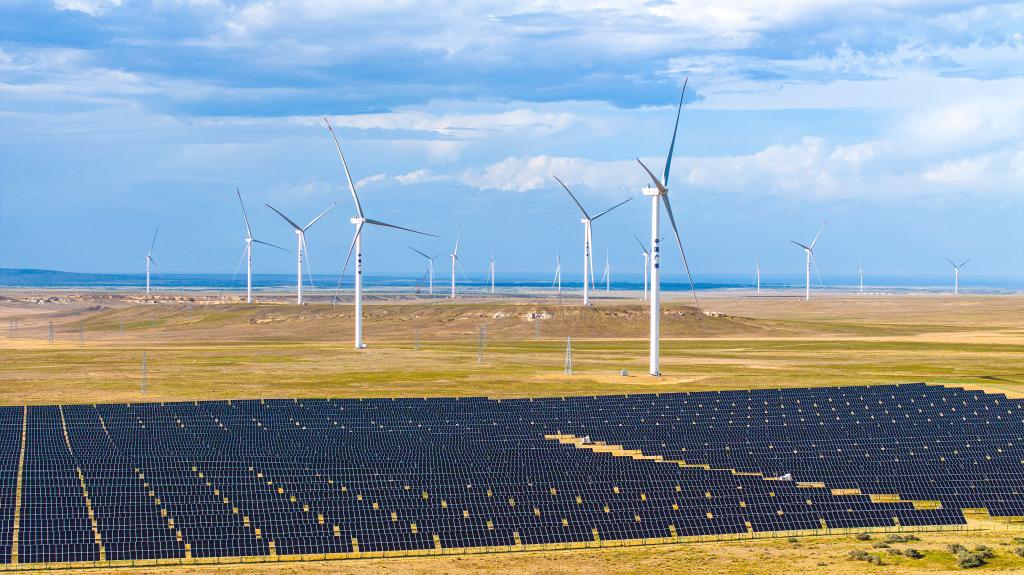
经济日报︱促进新能源集成融合发展 打造新能源发展升级版
国家能源局· 2025-12-11 01:50
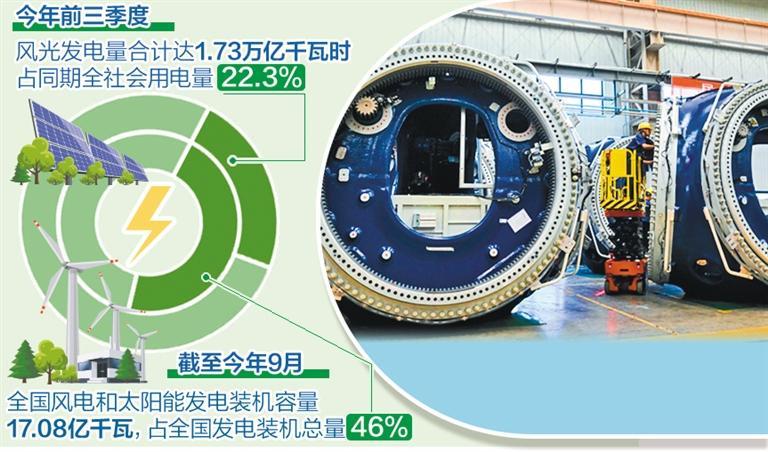
Core Viewpoint - The article emphasizes the transition of China's renewable energy development from rapid expansion to a new phase characterized by integrated and collaborative growth, aiming for enhanced reliability and market competitiveness by 2030 [2][4]. Group 1: Current State of Renewable Energy - As of September this year, China's installed capacity for wind and solar power reached 1.708 billion kilowatts, accounting for 46% of the total installed power capacity in the country [4]. - In the first three quarters of this year, the combined generation from wind and solar power reached 1.73 trillion kilowatt-hours, representing 22.3% of the total electricity consumption during the same period [4]. - The utilization rate of renewable energy has dropped below 95%, a decrease of 2 percentage points year-on-year, indicating increasing challenges in system absorption and operational efficiency [4]. Group 2: Need for Integrated Development - The article highlights the urgent need to shift from a "single operation" model to an integrated development approach for renewable energy, addressing challenges such as system absorption pressure and reliance on large-scale grid adjustments [4][5]. - The "Integrated Development" proposed in the guidelines serves as a systematic solution to these challenges, promoting a shift from isolated and fragmented development to a more coordinated and synergistic approach [5]. Group 3: Multi-Dimensional Integration - The guidelines propose enhancing the integration of renewable energy with other energy types to improve supply reliability and system stability, breaking down barriers between different energy sources [7]. - A case study is presented with the launch of a comprehensive energy station in Huai Bei, which integrates photovoltaic, energy storage, and charging facilities, demonstrating a new path for the fusion of renewable energy with urban transportation [7]. Group 4: Industry Integration - The article discusses the potential for deep integration of renewable energy with various industries, particularly in heavy-load industrial scenarios, which can lead to significant cost reductions and sustainable operations [10][11]. - The guidelines encourage high-energy-consuming industries to relocate to areas rich in renewable resources, promoting local consumption and flexibility in energy use [11].

新能源发展从量的叠加转向系统协同
Zhong Guo Dian Li Bao· 2025-12-10 05:19
Core Viewpoint - The integration and fusion of renewable energy sources are essential for transforming them from auxiliary to primary energy sources, requiring a shift from mere capacity addition to system collaboration and efficiency improvement [1][7]. Group 1: Current Status and Challenges - As of September 2025, China's installed capacity of wind and solar power has exceeded 1.7 billion kilowatts, accounting for 46% of the national power generation structure, but their contribution to total electricity consumption remains around 20% [1]. - The rapid increase in installed capacity has not led to a corresponding rise in utilization efficiency, with regions like Northwest China experiencing wind and solar curtailment rates exceeding 5% [1]. - The transition to renewable energy as a primary power source depends on the deep integration of various energy types, including wind, solar, hydro, thermal, storage, and hydrogen [1]. Group 2: Key Challenges in Integration - Technical barriers exist in achieving multi-energy system collaboration, with safety, stability, and reliability issues becoming more pronounced as renewable penetration increases [2]. - Traditional industries face challenges in integrating with renewable energy, often remaining in self-consumption models, and slow adaptation to the volatility of renewable power [3]. - The policy and market mechanisms for integrating renewable energy into the electricity market need further refinement, with insufficient incentives for cross-regional projects and a lack of robust cost recovery mechanisms for flexible resources like storage [4]. Group 3: Solutions for Integration - To address these challenges, a comprehensive solution encompassing technology, industry, and institutional reforms is necessary, guided by recent policy recommendations [5]. - Innovations in technology are crucial for overcoming collaboration difficulties, including advancements in multi-energy complementary systems and the establishment of unified standards for energy integration [5]. - Industry restructuring is needed to enhance the coupling of high-energy industries with renewable sources, promoting zero-carbon manufacturing and optimizing energy use in traditional sectors [6]. - Institutional innovations should focus on activating market dynamics, transitioning from project subsidies to incentive mechanisms, and facilitating nationwide coordination in renewable energy trading [6]. Group 4: Future Outlook - The integration of renewable energy represents a systemic transformation of production methods, industrial structures, and development logic, aiming to create a safer, cleaner, and more efficient energy system that supports comprehensive green economic transformation [7].
打造新能源发展升级版
Jing Ji Ri Bao· 2025-12-09 22:21
Core Viewpoint - The National Energy Administration's recent guidelines aim to promote integrated development in the renewable energy sector, enhancing reliability and market competitiveness by 2030, marking a transition from rapid expansion to a balanced approach focusing on quality and deep industry integration [2][3]. Group 1: Current State of Renewable Energy - As of September this year, China's installed capacity for wind and solar power reached 1.708 billion kilowatts, accounting for 46% of the total installed capacity [3]. - In the first three quarters of this year, wind and solar power generation totaled 1.73 trillion kilowatt-hours, representing 22.3% of the total electricity consumption during the same period [3]. - The utilization rate of renewable energy has dropped below 95%, a decrease of 2 percentage points year-on-year, indicating challenges in system absorption and the need for a shift in development models [3]. Group 2: Challenges and Solutions - The current reliance on large-scale, long-distance transmission and public grid adjustments is insufficient to meet the rapid growth of renewable energy, necessitating a transition to integrated development to enhance local consumption and reduce dependence on the main grid [3][4]. - The proposed "integrated development" approach aims to address these challenges by promoting multi-dimensional integration across energy types, industry chains, and production-consumption coordination [4]. Group 3: Multi-Dimensional Integration - The guidelines suggest enhancing the integration of renewable energy with other energy types to improve supply reliability and system stability, breaking down barriers between different energy sources [5]. - A case study of a comprehensive energy station in Huai Bei demonstrates the potential for integrating solar power, energy storage, and charging facilities to provide stable power supply and additional revenue opportunities [5]. Group 4: Sectoral Integration - The guidelines encourage deep integration of renewable energy with various sectors such as transportation, construction, and rural areas, promoting the establishment of integrated energy facilities in transportation hubs to enhance local consumption and alleviate pressure on the main grid [6]. - The integration of renewable energy with heavy industries, such as mining, is highlighted as a significant opportunity for development, showcasing innovative solutions that enable self-sustaining energy systems [7][8]. Group 5: Strategic Industry Development - The guidelines advocate for guiding high-energy-consuming industries to relocate to areas rich in renewable resources, facilitating local consumption and optimizing traditional industries to become more flexible and responsive to renewable energy [8]. - The promotion of integrated development in renewable energy is expected to foster new productive forces and create influential strategic emerging industry clusters, leading to a modern industrial system that harmonizes development with environmental sustainability [8].
新能源从“单兵作战”转向集成融合发展
Huan Qiu Wang· 2025-12-01 09:27
Core Viewpoint - The development of China's renewable energy industry is experiencing rapid growth under the "dual carbon" strategy, but it faces challenges such as increased system consumption pressure and difficulties in resource assurance. The National Energy Administration has issued guidelines to enhance the autonomy and competitiveness of renewable energy development, emphasizing the need for diversified applications and the integration of new business models like AI and digital energy [1][2]. Group 1: Renewable Energy Development Achievements - China's renewable energy sector has achieved significant milestones, with installed wind and solar power capacity reaching 1.708 billion kilowatts by September 2025, accounting for 46% of the national power generation capacity. In the first three quarters of this year, wind and solar power generation totaled 1.73 trillion kilowatt-hours, representing 22.3% of the total electricity consumption [2]. - The cost of renewable energy has decreased significantly, with the cost per kilowatt-hour being 30% lower than that of coal power, providing strong momentum for the sector's rapid development [2]. Group 2: Integration and Fusion Development - The concept of integrated and fused development of renewable energy involves considering the integration of various energy types, the production and consumption of renewable energy, and the entire industry chain. This approach aims to enhance the reliability and competitiveness of renewable energy while reducing dependence on the power system [4][5]. - The guidelines categorize integrated development into three aspects: multi-dimensional integrated development of renewable energy, collaborative development with multiple industries, and diversified non-electric utilization of renewable energy [4][5]. Group 3: Policy Measures for Development - To promote multi-dimensional integrated development, measures include optimizing the energy structure and storage configuration of renewable energy bases, enhancing the utilization of distributed renewable energy in various sectors, and encouraging collaborative optimization of different renewable energy types [5][6]. - The guidelines also emphasize the need for collaboration between renewable energy and traditional industries, promoting the use of renewable energy in production processes and optimizing energy consumption systems [5][6]. Group 4: Cost Reduction and Efficient Consumption - The focus of future renewable energy development will shift from merely generating electricity to optimizing its usage, aiming to lower energy costs and enhance the efficient consumption of renewable energy through collaboration with various industries [7][8]. - Technological advancements in areas such as photovoltaic systems and energy storage are driving down costs and facilitating the transition to low-carbon solutions across sectors, including transportation and industry [7][8].
专家解读丨擘画新能源高质量发展新路径
Zhong Guo Dian Li Bao· 2025-12-01 03:52
Core Viewpoint - The "Guiding Opinions on Promoting the Integrated Development of New Energy" aims to transition new energy from isolated development to integrated and collaborative growth, enhancing the quality and efficiency of new energy development [1][8]. Group 1: Implementation Pathways - The guiding opinions emphasize multi-dimensional integrated development as fundamental for large-scale new energy development and high-level consumption, focusing on multi-energy complementary development, spatial resource optimization, and system-level operational integration [2][3]. Group 2: Multi-Energy Complementarity - To achieve carbon neutrality goals, a higher proportion of reliable green power supply is necessary. The opinions propose strengthening the integrated configuration of new energy with other energy types, including the development of large-scale bases that reduce reliance on coal and water resources while increasing the share of green electricity [3][4]. Group 3: Spatial Resource Optimization - The opinions suggest various composite development methods and spatial resource optimization paths to enhance efficiency and effectiveness in new energy development. This includes concentrated site selection, shared infrastructure, and upgrading existing energy facilities to improve land use efficiency [4][5]. Group 4: Integrated Operational Synergy - The guiding opinions propose practical measures to enhance the reliability and market competitiveness of new energy through comprehensive collaboration in technology, regulation, and operations. This includes improving power prediction accuracy and integrating different energy sources for better market participation [5][6]. Group 5: Organizational Support - Successful implementation of integrated new energy projects requires collaboration among various levels and departments. The opinions outline specific measures to support project construction, management, and market mechanisms, emphasizing the importance of clear responsibilities and streamlined approval processes [7][8].