
智能体技术

Search documents
AI让企业像精密仪器一样精准运营,深圳打造不动产科技创新“先行地”
Sou Hu Cai Jing· 2025-12-18 10:18
Core Insights - The article emphasizes the shift from "extensive" growth based on land appreciation and rapid turnover to "intrinsic" development through quality products and precise investments, with AI being a key tool for this transition [1][4] Group 1: AI Applications in Real Estate - Key AI application areas for real estate companies include product design and customer insights, where AI analyzes vast amounts of customer feedback and browsing data to optimize housing designs and community amenities [3] - In investment decision-making and targeted marketing, AI can integrate multi-dimensional data such as demographics and transportation to conduct more scientific value assessments and risk simulations, reducing land acquisition errors [3] - AI enables precise customer profiling and channel optimization, enhancing marketing conversion efficiency and aiding in inventory reduction through personalized content generation [3] Group 2: Breakthroughs in Shenzhen - Shenzhen, as a core engine of the Guangdong-Hong Kong-Macao Greater Bay Area, has seen local companies achieve breakthroughs in key areas such as real-time 3D visualization management of large parks or building complexes, optimizing space utilization and energy distribution [4] - AI-driven customer service systems can handle numerous online inquiries, including fluent interactions in Cantonese with visitors from Hong Kong, enhancing cross-border service experiences [4] - The integration of IoT and AI video analysis in smart inspection systems can automatically identify safety hazards, shifting facility management from "human defense" to "intelligent defense" [4] Group 3: Future Management Roles - As AI takes on standardized tasks like inspections and customer service, the role of real estate management will evolve from direct execution to planning and decision-making in collaboration with AI [6] - Future managers will act more like AI trainers, focusing on defining complex operational issues for optimization and setting clear goals and rules for AI outputs [6] Group 4: Cultivating New Management Talent - Shenzhen should leverage its industrial ecosystem to cultivate new management talent by breaking down barriers and providing real-world scenarios for training in AI management tools [8] - The article suggests that local smart parks and buildings could serve as open laboratories for practical training, emphasizing practical skills over theoretical knowledge [8] Group 5: Integration of Technologies - The combination of AI large models, IoT, digital twins, and intelligent agent technologies is crucial for achieving the vision of smart buildings that can sense, think, and make decisions [9] - In investment and design, digital twins and big data analysis can enable more accurate benefit simulations and risk assessments [9] - In construction, smart building technologies integrated with industrial IoT can enhance efficiency and quality control [9]

长庆街道打造“企航驿站”
Mei Ri Shang Bao· 2025-12-16 02:14
Core Insights - The article highlights the successful transformation of individuals' careers through the "企航驿站" employment service point, which integrates community resources to provide comprehensive employment support [1][2]. Group 1: Employment Services - The "企航驿站" serves as a one-stop employment service point, facilitating a full-cycle service model that includes enterprise recruitment, talent job-seeking, entrepreneurship incubation, and mutual development [1]. - The station has successfully matched over 1,500 job seekers with potential employers, offering an average of over 200 job positions per recruitment event [2]. Group 2: Technology Integration - The integration of AI technology through the JobSeek employment assistant enhances job matching and policy dissemination, acting as a "smart encyclopedia" for job seekers [2]. - JobSeek provides various functionalities, including job recommendations, policy subsidy inquiries, and local activity notifications, effectively addressing diverse employee needs [2]. Group 3: Skills Training and Entrepreneurship - The station has conducted 28 skill training sessions in areas such as live e-commerce, digital marketing, and AI applications, training over 1,200 individuals this year [2]. - The "skills training + entrepreneurship incubation" model has successfully incubated five small enterprises and created over 30 jobs, promoting a virtuous cycle of skill enhancement and employment stability [2]. Group 4: Comprehensive Support Services - The "零跑腿" window offers full-cycle services, including talent settlement, social security subsidies, entrepreneurship support, and labor dispute mediation, positioning the station as a vital employment service hub for businesses and employees [3].
“抖音反诈”智能答疑上线:私信即可识别风险,全天自动响应
Huan Qiu Wang· 2025-12-04 09:04
Core Insights - Douyin is enhancing its anti-fraud capabilities by introducing new intelligent tools, including a 24/7 smart service through its official anti-fraud account "Douyin Anti-Fraud" [1] - The platform aims to educate users about new scams and provide practical anti-fraud techniques to strengthen user awareness [1] - Douyin's intelligent service allows users to report suspicious situations and receive real-time analysis and responses based on a knowledge base and fraud identification model [1][2] Group 1 - Douyin's official anti-fraud account now features a smart service that provides users with immediate assistance when encountering risks [1] - Users can access the service by searching for "Douyin Anti-Fraud," following the account, and sending a message describing their issue [1] - The intelligent system offers a one-stop service from consultation to verification and reporting [1] Group 2 - The new feature is part of Douyin's ongoing upgrades to its anti-fraud tools, which began with the launch of the "Verification Assistant" in December 2024 [4] - The "Verification Assistant" has undergone multiple upgrades this year, adding features like "one-click query of official contact records" and "official dynamic verification codes" [4] - Over the past year, 7.266 million users have utilized the "Verification Assistant," with an average of 80,000 users daily verifying information [4] Group 3 - Douyin's fraud identification model has flagged over 10,000 suspected high-risk items for manual verification, successfully preventing over 15,000 potential victims through outbound calls [4] - The platform's core anti-fraud functions aim to enhance public fraud prevention capabilities and protect user rights [4] - Douyin plans to continue upgrading technology and disseminating knowledge to systematically dismantle fraud techniques and issue timely risk warnings [4]

自主行动,开启 AI 进化新篇章
Tai Mei Ti A P P· 2025-12-02 05:30
Core Insights - The article emphasizes that AGI is not the endpoint but the starting point towards ASI, with Alibaba Group's CEO categorizing the evolution into three stages: intelligent emergence, autonomous action, and self-iteration, currently in the autonomous action phase [2][3] Group 1: AI Development Stages - The current phase of AI is characterized by a shift from perception and generation to decision-making and action, driven by intelligent agent technology [3] - The transition to autonomous action is seen as a critical bridge towards self-iteration, enabling AI to create real-world value [3][19] Group 2: Technological Breakthroughs - Continuous breakthroughs in technology are essential for releasing AI's value, focusing on building foundational capabilities such as computing power, basic models, and technical ecosystems [4] - The integration of cloud computing and AI is creating a full-stack technology ecosystem, addressing resource and cost bottlenecks for scalable AI deployment [5][6] Group 3: Model Innovations - Large models are evolving from single-modal to multi-modal capabilities, enhancing AI's application scope across various fields such as education and healthcare [9][10] - Innovations like reinforcement learning from human feedback (RLHF) are improving models' abilities to solve complex tasks autonomously [10] Group 4: Application and Ecosystem Development - The rise of intelligent agents is reshaping software ecosystems, enabling dynamic decision-making and task execution [11][16] - Open-source initiatives are crucial for democratizing AI technology, with Alibaba contributing over 300 open-source models to lower development costs [13][14] Group 5: Industry Transformation - AI is driving systemic innovation across industries, enhancing operational efficiency and consumer experiences [20] - The global collaboration in AI innovation is reshaping industry structures and optimizing resource allocation, facilitated by AI cloud platforms [21] Group 6: Responsible AI Development - The article highlights the importance of a governance framework to ensure AI's sustainable development, addressing challenges like data privacy and algorithmic bias [25][26] - A collaborative approach involving industry, academia, government, and the public is essential for achieving responsible AI development [27]


国投智能:Qiko智能体平台已全面兼容MCP(模型上下文协议)
Mei Ri Jing Ji Xin Wen· 2025-11-26 09:52
Core Viewpoint - The company has confirmed the integration of the Model Context Protocol (MCP) into its Qiko intelligent platform, enhancing its capabilities in big data operations and service integration [1]. Group 1: Technology Integration - The Qiko intelligent platform is fully compatible with the MCP, allowing for efficient transformation of capabilities within intelligent agents and workflows [1]. - The technology has been applied across multiple product lines, including public safety big data and digital transformation for government and enterprises [1].

英伟达高管解读Q3财报:营收有进一步增长空间
Xin Lang Ke Ji· 2025-11-20 00:40
Core Insights - Nvidia reported Q3 revenue of $57.006 billion, a 62% year-over-year increase and a 22% quarter-over-quarter increase, with net profit rising 65% year-over-year to $31.910 billion [1] - The company is on track to meet its $500 billion revenue target related to high-performance computing data centers by 2026, with $150 billion of products already delivered [2] - Nvidia's supply chain is well-prepared to meet the growing demand for AI infrastructure, with partnerships across the technology sector [3] Financial Performance - Q3 revenue reached $57.006 billion, marking a 62% increase year-over-year and a 22% increase quarter-over-quarter [1] - Net profit for the quarter was $31.910 billion, up 65% year-over-year and 21% quarter-over-quarter [1] - Adjusted net profit, not in accordance with GAAP, was $31.767 billion, reflecting a 59% year-over-year increase [1] Market Demand and Supply - Nvidia's management confirmed that the demand for GPU products remains high, with full order books despite concerns about AI infrastructure investment returns [3] - The company has secured additional agreements, including a deal with Saudi Arabia for 400,000 to 600,000 GPUs over the next three years [2] - The transition from general computing to accelerated computing is ongoing, driven by the rise of generative AI [4] AI Infrastructure and Applications - Generative AI applications are expanding rapidly, with tools like code assistants becoming widely used across various roles beyond software engineering [5] - The training of AI models is progressing well, with significant advancements in performance and quality noted in Google's Gemini 3 model [6] - The industry is experiencing a shift towards accelerated computing, with generative AI replacing traditional machine learning methods [6] Future Growth and Investment - Nvidia's product architectures are expected to drive significant value growth in data centers, with each generation of products improving performance and cost efficiency [7] - The company anticipates that the capital expenditures required for its $500 billion target can be covered by customer cash flows, particularly from large-scale data center providers [7] - Global infrastructure funding will not be limited to large data center providers, as various industries are beginning to invest in AI technologies [8]

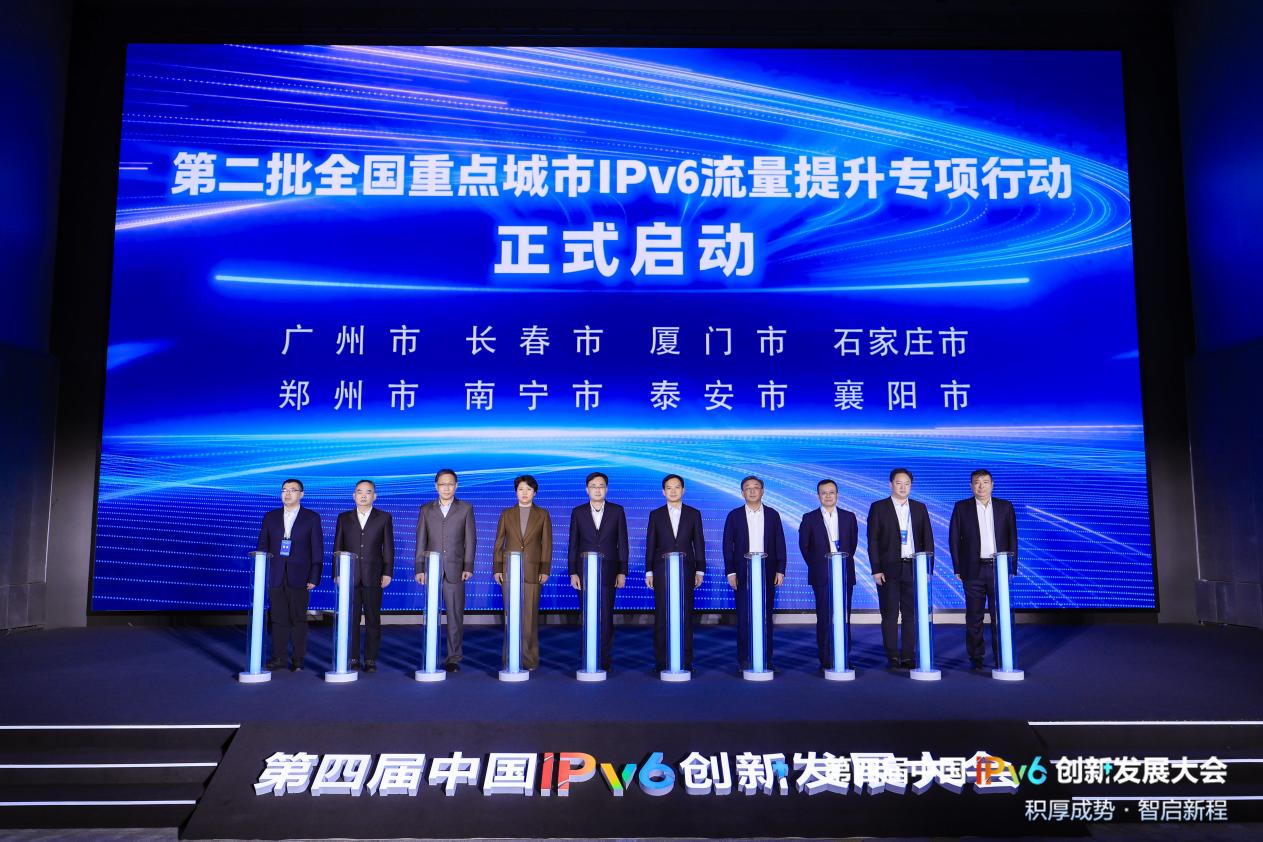
积厚成势,智启新程——“第四届中国IPv6创新发展大会”在北京召开
Yang Shi Wang· 2025-10-31 03:45
Core Insights - The Fourth China IPv6 Innovation Development Conference was held in Beijing, focusing on the theme "Accumulating Strength, Intelligent New Journey" [1] - The conference featured over 500 attendees from various sectors, including government, telecommunications, equipment manufacturing, internet companies, and academic institutions [1] - Keynote speaker Academician Wu Hequan emphasized that intelligent technology is a new starting point for IPv6 innovation, enhancing capabilities and promoting the development of the "IPv6+" initiative [1] Group 1 - The conference highlighted the significant growth in IPv6 traffic, with fixed network IPv6 traffic in eight key cities increasing by 63.14% year-on-year, and mobile network IPv6 traffic rising by 12.37% on average [3] - A new initiative, the "Second Batch of National Key Cities IPv6 Traffic Enhancement Special Action," was launched to further upgrade and transform key areas, aiming to elevate the national IPv6 development level [3] - The "Network NAT Removal" initiative reported that in nine pilot regions, the IPv6 connectivity rate for fixed broadband users reached 97.52%, with zero growth in NAT44 device capacity [3] Group 2 - The conference also saw the release of the "China IPv6 Development Report (2025)" by the expert committee, showcasing successful experiences and achievements in IPv6 innovation [5] - Experts from various organizations, including Huawei and CERNET, shared insights and successful practices in the field of IPv6 development [5]
积厚成势,智启新程|“第四届中国IPv6创新发展大会”在北京召开
Zhong Guo Jing Ji Wang· 2025-10-30 13:22
Core Insights - The Fourth China IPv6 Innovation Development Conference was held in Beijing, focusing on the theme "Accumulating Strength, Smartly Starting a New Journey" [1] - The conference was attended by over 500 guests from various sectors, including government, telecommunications, manufacturing, internet companies, and academic institutions [1] Group 1: Government Initiatives - The Central Cyberspace Affairs Commission emphasized the importance of the next-generation internet development, highlighting significant progress in IPv6 deployment since 2017 [3] - As of September 2025, China is projected to have 865 million active IPv6 users, accounting for 77.02% of internet users, with mobile and fixed network IPv6 traffic shares at 69.02% and 30.63%, respectively [3] - The "14th Five-Year Plan" period is identified as crucial for solidifying the foundation and advancing IPv6 development, focusing on innovation, application integration, and security enhancement [3] Group 2: Local Government Actions - Beijing is committed to advancing next-generation network technology and industry development, aiming to be a leading example in key areas [4] - The city has fully supported IPv6 in its government networks and is implementing comprehensive coverage in various districts [4] - Beijing plans to leverage its technological and digital economy advantages to create a world-class IPv6 industry cluster [4] Group 3: Technological Innovations - Academician Wu Hequan highlighted that intelligent technology represents a new starting point for IPv6 innovation, enhancing network capabilities and security [4][5] - The intersection of digital transformation and the rise of new business models presents both challenges and opportunities for IPv6 development [5] Group 4: Action Plans and Results - The launch of the second batch of the "National Key Cities IPv6 Traffic Enhancement Special Action" was announced, with fixed network IPv6 traffic in eight key cities increasing by 63.14% year-on-year [7] - The average mobile network IPv6 traffic share also saw a year-on-year increase of 12.37% [7] - The "Network NAT Removal" initiative reported a 97.52% IPv6 connectivity rate for fixed broadband users in nine pilot regions, with zero growth in NAT44 device capacity [7] Group 5: Reports and Expert Insights - The "China IPv6 Development Report (2025)" was released, providing insights into the current state and future directions of IPv6 in China [10] - Experts from major telecommunications companies shared valuable experiences and forward-thinking ideas during the main forum [10]
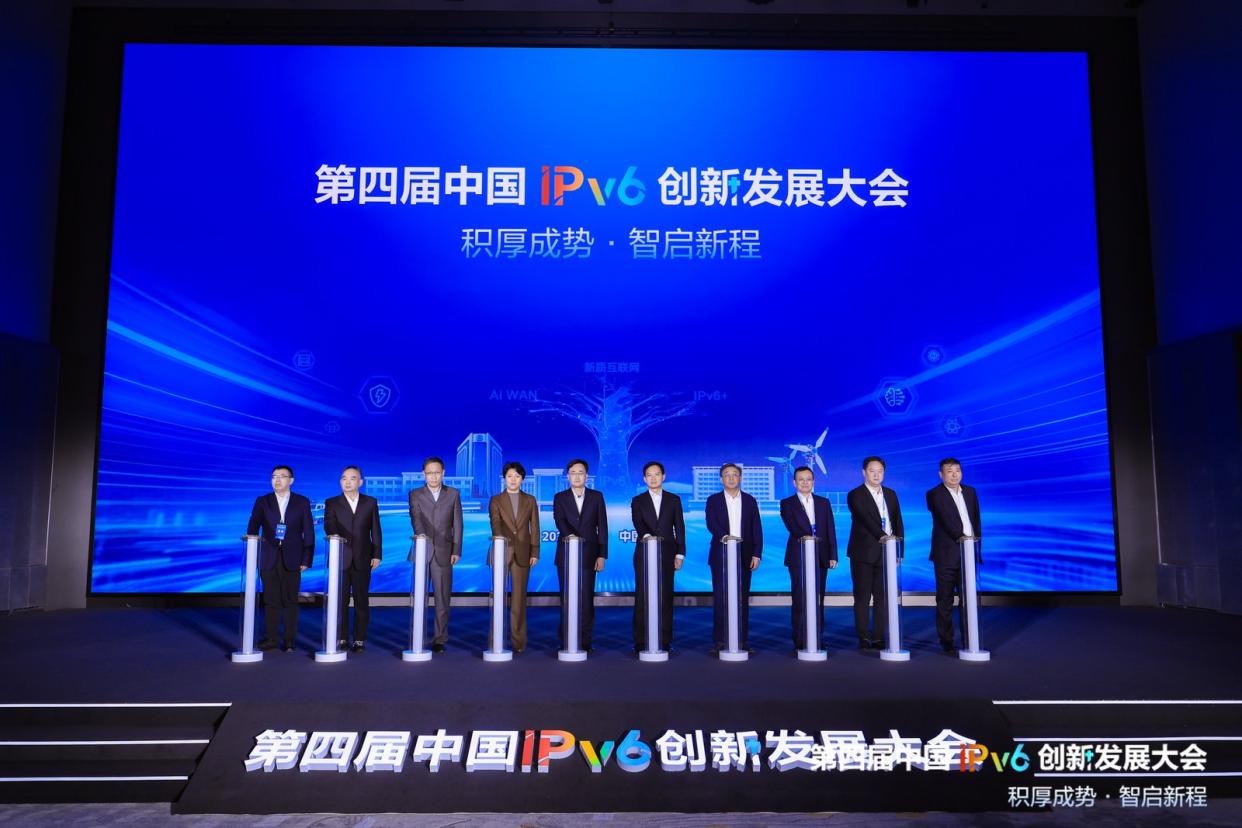
“第四届中国IPv6创新发展大会”在北京召开
Zhong Guo Xin Wen Wang· 2025-10-30 06:37
Core Points - The Fourth China IPv6 Innovation Development Conference was held in Beijing, focusing on the theme "Accumulating Strength, Intelligent New Journey" with over 500 attendees from various sectors [1] - The conference highlighted the significant progress in IPv6 deployment and application in China, with active IPv6 users reaching 865 million, accounting for 77.02% of internet users as of September 2025 [2] - Beijing's government is committed to advancing next-generation network technology and aims to establish itself as a leading hub for IPv6 industry development [3] - The conference featured a keynote speech emphasizing the role of intelligent technology in driving IPv6 innovation and the challenges and opportunities presented by the AI era [4] - A report on the progress of the "Network NAT Removal" initiative was released, showing a 97.52% IPv6 connectivity rate among fixed broadband users in pilot areas [5] Group 1 - The Fourth China IPv6 Innovation Development Conference was held in Beijing, focusing on the theme "Accumulating Strength, Intelligent New Journey" with over 500 attendees from various sectors [1] - The conference highlighted the significant progress in IPv6 deployment and application in China, with active IPv6 users reaching 865 million, accounting for 77.02% of internet users as of September 2025 [2] - Beijing's government is committed to advancing next-generation network technology and aims to establish itself as a leading hub for IPv6 industry development [3] Group 2 - The conference featured a keynote speech emphasizing the role of intelligent technology in driving IPv6 innovation and the challenges and opportunities presented by the AI era [4] - A report on the progress of the "Network NAT Removal" initiative was released, showing a 97.52% IPv6 connectivity rate among fixed broadband users in pilot areas [5]
企业级智能体平台加速产业智变
Zhong Guo Jing Ji Wang· 2025-10-29 06:38
Core Insights - 360 Group launched the world's first enterprise-level intelligent agent construction and operation platform covering L2 to L4 capabilities, aimed at helping government and enterprise users systematically build, utilize, and manage intelligent agents [1][2] - The platform addresses three core challenges faced by users: usability, effectiveness, and trustworthiness, providing a replicable AI transformation path for various industries [1][2] Group 1 - The platform is a one-stop solution for the entire lifecycle of intelligent agents, supporting private deployment and adaptation to trusted environments, thus offering a reliable solution for enterprise-level intelligent agents [2] - The intelligent agent platform has already integrated deeply with multiple industries, including urban industries, aviation, healthcare, education, and government, forming applications with closed-loop capabilities of perception, decision-making, and execution [2] - The launch event included the initiation of the "Thousand Industries" ecological cooperation plan, aiming to empower partners with comprehensive support from solutions to implementation paths, facilitating the conversion of AI value [2] Group 2 - The platform represents a significant evolution from the previously launched L4-level enterprise intelligent agent factory SEAF, which achieved a breakthrough from "0 to 1" and now progresses from "1 to 10" [1] - The intelligent agent factory SEAF focuses on three areas of evolution: individual efficiency, organizational collaboration, and product innovation, addressing the rapid iteration challenges faced by enterprise users [1]
