
智能化养殖

Search documents
生态治理螃蟹致富,南京浦口区探索“两山”转化新路径
Zhong Guo Huan Jing Bao· 2025-12-25 09:12
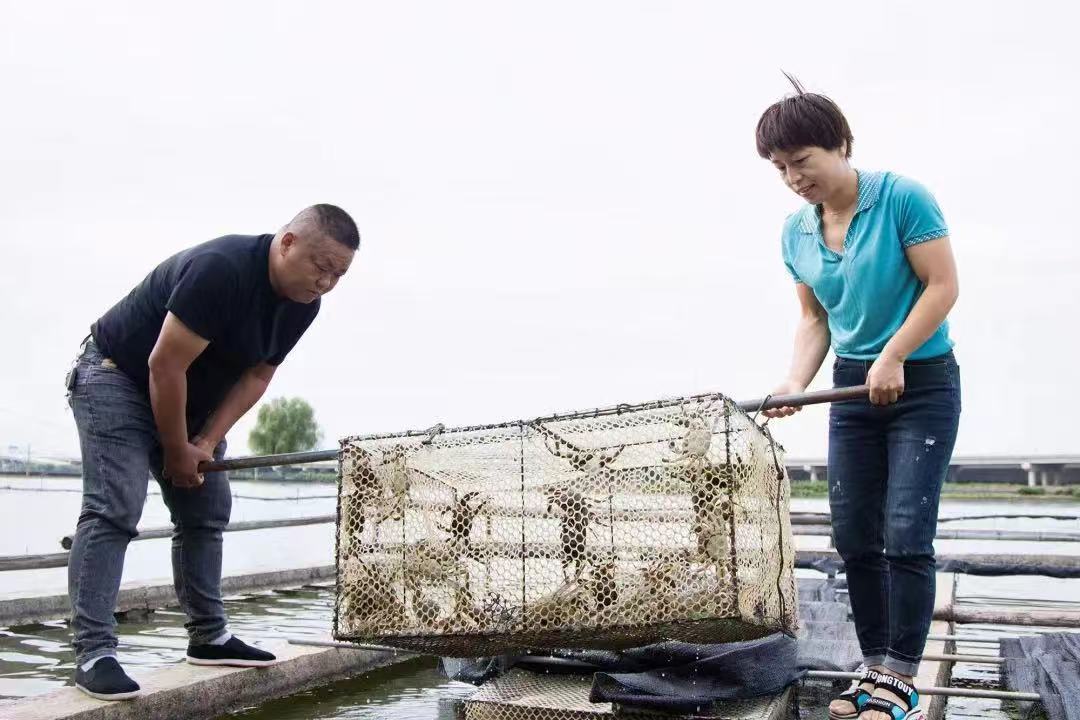
"以前因为交通闭塞、村集体经济薄弱,我们村人均年收入不到2000元,如今,依靠螃蟹养殖,今年村集体收入已经有了600万元。"江苏省南京浦口区 星甸街道后圩村村书记李巧对记者说道。 后圩村位于滁河入苏之始,依托滁河流域优良的生态本底,螃蟹养殖致富的故事得以在此展开。滁河也统筹串联起了包括星甸街道以外的汤泉街道、永 宁街道等4个沿河街镇,当地以滁河生态治理为基底、以螃蟹产业为特色、以科技赋能为引擎,走出了一条都市近郊型乡村的振兴之路。 这样的高产,源自浦口区在螃蟹养殖领域持续推进技术创新与产业升级,通过智能化管理、生态改造和模式优化,不断提升养殖效益与可持续性。 图为后圩村螃蟹养殖 协同治理,建立双向生态补偿机制 滁河(浦口段)全长36.7公里,其中24公里为苏皖省界河道,既是通江达流的天然纽带,为周边城镇村庄提供水源,也是连接两省的生态廊道,影响着 两地的生态环境。 一河流经两省,如何协同治理,解决跨省流域治理责任难厘清、行动难同步、水质难保障等共性问题,成为江北新区思考的问题。为此,浦口区主动打 破行政壁垒,与安徽省滁州市南谯区、安徽省马鞍山市和县等地创新建立"信息互通、数据共享、联合监测、应急联动"的跨省联 ...

ETF盘中资讯|牧原智能化成果亮相!农牧渔ETF(159275)拉升1%!机构:养殖业触底叠加需求回暖或提振板块
Jin Rong Jie· 2025-12-24 21:40
Group 1 - The core viewpoint of the news highlights the stable performance of the Agricultural, Animal Husbandry, and Fishery ETF (159275), with a price increase of 1.0% and a trading volume of 8.1348 million yuan, bringing the fund's latest scale to 178 million yuan [1] - Key stocks in the ETF include Shennong Agricultural Industry, Yasheng Group, and Luoniushan, which saw significant gains of 10.81%, 9.0%, and 6.56% respectively, while Huazi Industrial, Haida Group, and Meihua Biological experienced declines of 3.8%, 0.24%, and 0.1% [1] - The Ministry of Commerce announced an anti-dumping investigation on imported pork and pork products from the EU, which may impact the domestic pig market supply and demand dynamics [1] Group 2 - According to Zhongtai Securities, the breeding industry is expected to reach a bottom by the first half of 2026, entering a low-volatility, low-profit phase, with weaker companies gradually exiting the market [1] - The number of breeding sows has decreased to 39.9 million, nearing a reasonable level, and capacity is expected to continue to decline, while demand is projected to grow due to increased disposable income [1] - Pacific Securities noted that the capacity reduction in the pig industry is gaining momentum, with a decrease of 450,000 breeding sows compared to the previous month, and the industry has been in a state of moderate loss for 12 consecutive weeks [2]

生猪养殖行业简析报告
Jia Shi Zi Xun· 2025-12-22 14:16
Investment Rating - The report does not explicitly state an investment rating for the swine farming industry Core Insights - The swine farming industry in China is a strategic pillar for national economy and CPI stability, currently transitioning towards large-scale operations with a significant reduction in smallholders and a rise in large enterprises like Muyuan Foods, which has an annual output of 71.6 million pigs, creating a strong scale and cost moat [4] - The industry is characterized by two main business models: "self-breeding and self-raising" represented by Muyuan, and "company + farmer" represented by Wens, with feed costs accounting for approximately 75% of total breeding costs, highlighting the importance of cost control [5] - Future opportunities include the upgrade of consumption structure towards deep processing, the proliferation of intelligent breeding technologies, and the reassessment of assets due to self-sufficient breeding sources, while challenges include reliance on imported feed materials, ongoing risks from African swine fever mutations, and high fixed costs due to asset-heavy operations [6] Summary by Sections 1. Industry Position and Competitive Landscape - The Chinese swine farming industry is crucial for food security and CPI stability, primarily using a "three-way cross" breeding system for commercial production. The industry is accelerating towards scale, with an increasing number of large farms (over 50,000 heads) and a decreasing number of smallholders, with major players like Muyuan Foods dominating the market [4] 2. Business Model and Policy Evolution - The main business models are "self-breeding and self-raising" (capital-intensive, strong control) and "company + farmer" (light asset, rapid expansion). The policy focus has shifted from early environmental regulations and post-ASF supply guarantees to current "counter-cyclical regulation" and "capacity optimization," marking the end of the era of simple scale expansion [5][16] 3. Future Opportunities and Challenges - Opportunities lie in the upgrade of consumption structure, the spread of intelligent breeding technologies, and the reassessment of breeding assets. Challenges include strategic vulnerability due to dependence on imported feed materials, ongoing risks from ASF, and high fixed costs associated with transitioning from light to heavy assets [6][48][49][50] 4. Industry Overview - The swine industry is a cornerstone of China's food culture and economy, with pork consumption accounting for over 60% of meat consumption. The supply-demand dynamics are the most significant factors affecting the industry [7] 5. Breeding System - The breeding system in China primarily employs a three-way crossbreeding method, utilizing different breeds to enhance productivity and disease resistance [10] 6. Scale of the Industry - The swine industry is expected to see an output of over 700 million pigs by 2025, following a cyclical pattern of stability, decline, and recovery influenced by factors such as ASF [18] 7. Industry Chain - The swine farming industry chain includes upstream suppliers (feed, veterinary products), midstream farming entities, and downstream processing and retail sectors, with the farming segment being the core [22][24] 8. Cost Structure - Feed constitutes the largest portion of breeding costs, with energy feeds making up 75% of total feed costs. The cost structure varies significantly between different farming models [25][26] 9. Policy Changes - The last decade has seen a shift in policies from strict environmental regulations to a focus on capacity optimization and quality improvement, indicating a transition towards a more sustainable industry model [16] 10. Competitive Landscape - The competitive landscape is dominated by a few large enterprises, with Muyuan Foods leading the market with a significant output, allowing it to maintain a competitive edge during price downturns [35]
到深海去“牧鱼”!国信“移动海洋牧场”三船联动有多强?
Qi Lu Wan Bao· 2025-12-11 06:01
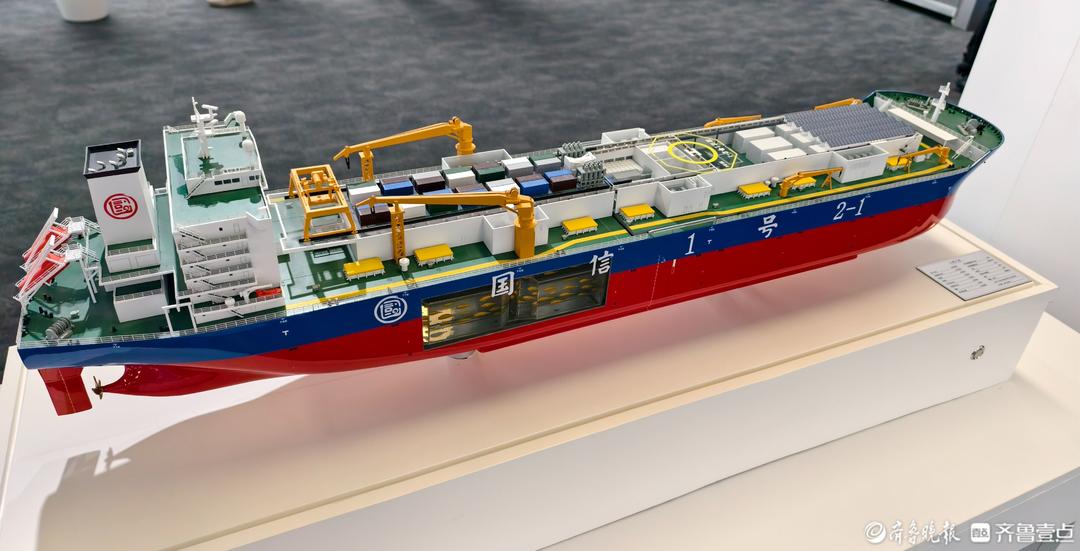
Core Viewpoint - The article highlights the advancements in China's deep-sea aquaculture industry, particularly through the introduction of innovative smart fish farming vessels, which are expected to enhance the production of high-quality protein and transform traditional aquaculture practices into a more industrialized and sustainable model [3][6]. Group 1: Industry Developments - The "Guoxin 1" series of smart aquaculture vessels, including the world's first 100,000-ton vessel and its 150,000-ton upgraded versions, signify a major leap in deep-sea aquaculture capabilities, with a combined annual production capacity of 10,000 tons [3][6]. - The vessels are designed to operate beyond 12 nautical miles, transitioning from fixed to mobile production, thereby expanding the operational range of aquaculture activities [4]. - The introduction of AI and digital technologies has led to over 160 technical breakthroughs, enhancing automation and mechanization rates to over 90%, with a 45% increase in operational efficiency compared to earlier models [6]. Group 2: Strategic Collaborations - The company is collaborating with various authoritative institutions, including Laoshan Laboratory and the Chinese Academy of Fishery Sciences, to establish a "Deep Blue Fishery Industry Research Institute," aiming to foster innovation and improve aquaculture species suitable for deep-sea environments [6]. - This initiative is part of a broader strategy to enhance the supply of high-quality protein in China and to promote the modernization and systematization of traditional fisheries [6].
新希望11月份养殖业务实现销售收入18.12亿元 核心生产指标持续改善
Zheng Quan Ri Bao· 2025-12-06 03:05
转自:证券日报网 本报记者 舒娅疆 12月5日晚间,新希望六和股份有限公司(以下简称"新希望")披露11月份生猪销售情况简报。在 10月份猪价跌至阶段低位后,该公司的商品猪销售均价在11月份环比止跌。 牧原食品股份有限公司相关负责人近日在与投资者交流时表示,当前,政府对生猪产能的综合调控 与市场的自发调节正在共同作用,推动生猪市场供需情况逐步改善,能够促进猪价在长期内回归更稳 定、合理的水平。在相关政策的引导下,生猪养殖行业将迈向"稳定健康、高质量发展"的新阶段。 中国民营科技实业家协会新质生产力工委秘书长高泽龙向《证券日报》记者表示:"政策、技术与 消费升级等因素将共筑生猪养殖行业的增长基石。国家鼓励规模化养殖,环保政策倒逼散户退出,行业 集中度持续提升。在智能化养殖等创新因素驱动下,养殖成本正在不断下降,种猪改良技术也对生产效 率的提升带来积极影响。此外,消费升级推动着生猪养殖行业向高附加值方向发展。" 据悉,新希望的生猪养殖成本继续降低。今年第三季度,其运营场线出栏肥猪完全成本降至12.9 元/公斤,同时,该公司的核心生产指标持续改善,比如窝均断奶数在第三季度达到11.5,PSY(每头种 母猪年断奶仔猪 ...

“海上粮仓”依托规模化、智能化拓展发展空间 海水养殖从内湾走向深远海
Yang Shi Wang· 2025-12-05 10:01
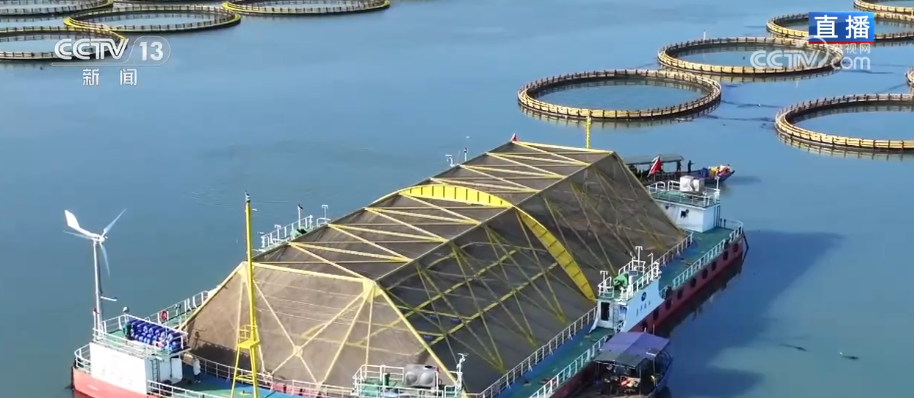
Core Viewpoint - The deep-sea aquaculture platforms in Fuzhou, Fujian, are experiencing a bountiful harvest, particularly of "wild-like" large yellow croaker, indicating a successful aquaculture model that mimics natural conditions [1][5]. Group 1: Aquaculture Environment - The deep-sea aquaculture platform in Dinghai Bay is stable and well-constructed, measuring over 60 meters in length and 32 meters in width, equivalent to five standard basketball courts [4]. - The aquaculture area spans 500 acres, featuring a combination of deep-sea villas and various deep-water net cages, creating a picturesque marine landscape [4]. - The environment is ideal for fish growth, with a water depth of 30 meters and a strong water exchange, providing a "wild-like" habitat for the fish [11]. Group 2: Fish Quality and Harvest - The large yellow croaker being harvested weighs over 2.5 pounds each, with a streamlined body and firm texture, attributed to their growth environment [8][16]. - The fish are raised in conditions that simulate the wild, with a survival rate exceeding 90% even under extreme weather conditions [13]. - Compared to nearshore aquaculture, the platform-raised fish are longer and thicker, with wholesale prices 4 to 5 times higher than those from nearshore farms [16]. Group 3: Technological and Scale Advancements - The aquaculture operation is characterized by high levels of scale and intelligence, with the platform capable of holding 1.58 million cubic meters of water and raising 200,000 large yellow croakers [19]. - Smart devices for water quality monitoring and video surveillance allow for real-time management of the aquaculture operations from shore [19]. - By 2025, the combined output of the two platforms is projected to reach 600 tons, generating nearly 100 million yuan in revenue [19]. Group 4: Regional Development and Strategy - Lianjiang County is recognized as a significant aquaculture region in China, actively promoting deep-sea aquaculture projects to transition from inshore to deep-sea farming [21]. - The local government has invested in 11 deep-sea aquaculture platforms as part of the "Hundred Platforms, Ten Thousand Tons" initiative, aiming for large-scale and intelligent development in marine food production [21].
科技赋能生态养殖 京基智农打造自贸港农业升级新样板
Quan Jing Wang· 2025-12-04 08:00
Core Insights - The Hainan Free Trade Port is entering a critical phase, with increasing demands for the supply of livelihood goods, and the Jingji Zhino (000048.SZ) is investing 1 billion yuan in a modern pig farming project to enhance agricultural modernization and ensure food security [1][2] Group 1: Project Overview - The Jingji Zhino's Wenchang pig industry chain project covers 1,412 acres and aims to produce 300,000 pigs annually, becoming a core force in ensuring the food supply for the free trade port [1] - The project adopts an innovative "6750 self-breeding and self-raising integration" model, incorporating eight intelligent systems for full-process digital management from breeding to market [1] Group 2: Environmental and Social Impact - The project achieves 100% conversion of waste into organic fertilizer and reuses treated wastewater for irrigation, creating a closed-loop ecological chain [2] - Jingji Zhino provides technical guidance and job opportunities to local farmers, contributing to rural revitalization and stability in income [2] Group 3: Future Opportunities - The construction of the Hainan Free Trade Port is expected to open new development opportunities for tropical high-efficiency agriculture, with zero tariff policies reducing feed import costs [2] - Through technological and model innovations, Jingji Zhino aims to maintain stable production capacity and build a competitive advantage in cost and quality for the local agricultural sector [2]

研判2025!中国鱼子酱行业进入壁垒、发展历程、产业链、发展现状及发展趋势分析:国内鱼子酱消费仍处于培育阶段,绝大部分产品专供出口[图]
Chan Ye Xin Xi Wang· 2025-12-01 01:30
Core Viewpoint - Despite being the world's largest producer of caviar, China's caviar consumption is still in the cultivation stage due to cultural differences, market layout issues, and insufficient brand guidance. However, with rising income levels and an increasing number of high-net-worth families, caviar consumption is steadily growing, with projected sales of 56.9 tons in 2024, a year-on-year increase of 26.73% [1][14]. Industry Overview - Caviar, defined as fish roe from mature female sturgeon, is subject to strict international standards. Only sturgeon roe can be classified as true caviar, while roe from other fish species is considered substitutes [2][3]. Industry Barriers to Entry - High technical requirements and long-term R&D investments are necessary for sturgeon breeding, healthy ecological farming, and caviar processing. The breeding cycle for sturgeon can take 7-15 years, creating significant time and financial pressures for new entrants [5]. Development History - The introduction of high-quality sturgeon species in China began in 1999, leading to a significant growth phase for the caviar industry after the global ban on wild sturgeon products in 2010. This allowed China to transition from a follower to a key player in the global market [6][7]. Market Policies - The Chinese government has issued various policies to support the development of the aquaculture industry, including caviar, which provides guidance and resources for industry growth [8]. Industry Chain - The caviar industry chain includes upstream sturgeon farming, salt, processing equipment, and packaging materials. The midstream consists of caviar processing companies, while downstream includes restaurants, high-end supermarkets, and e-commerce platforms [9][10]. Current Development Status - The demand for caviar is increasing due to the growth of high-net-worth individuals and the expansion of consumer demographics. The market is diversifying, with new product types and sales channels emerging [12][14]. Competitive Landscape - The global caviar market is highly concentrated, with the top five companies holding a 56.7% market share. Hangzhou Qiantang Lake Sturgeon Technology Co., Ltd. is the industry leader, with a significant global presence and a market share of 35.4% in 2024 [15]. Future Development Trends - The caviar industry is expected to diversify product offerings and expand into new consumption scenarios, including pre-prepared dishes and functional health products. Environmental sustainability will also become a priority, with more companies adopting eco-friendly farming practices [18].


我省发布兔养殖智能方案
Xin Hua Ri Bao· 2025-11-25 21:46
Core Insights - The 14th Rabbit Industry Development Conference was held in Xuzhou, showcasing the "Xiaohe Yunmu" intelligent breeding solution developed by Xuzhou Sentinel Rabbit Intelligent Equipment Co., Jiangsu Academy of Agricultural Sciences, and Zhongke Soft Technology Co., Ltd. [1] - The intelligent feeding system for rabbits was highlighted as a key innovation aimed at addressing the dual challenges of high feed costs and low breeding efficiency in the rabbit industry [1][2] Industry Challenges - The rabbit industry faces significant challenges, including high feed costs and low breeding efficiency, compounded by traditional manual feeding methods that require substantial labor but lack precision and uniformity [1] - The absence of comprehensive data recording during the breeding process hinders subsequent management optimization [1] Technological Solutions - The new system integrates three core functions: precise feeding, health monitoring, and data management, creating a complete framework that includes dynamic nutrition models, IoT sensing terminals, and a cloud management platform [1] - Multi-sensor fusion technology significantly reduces feeding deviations and improves uniformity, addressing the inaccuracies of manual feeding [1] - AI algorithms are employed to monitor the health status of rabbit populations in real-time, providing automatic alerts for abnormal conditions to help farmers mitigate disease transmission risks [1] Management Platform - A user-friendly management platform accessible via computer and mobile devices allows farmers to customize feeding strategies based on their specific rabbit populations and leverage industry big data to optimize breeding plans [1] Support and Future Directions - The development and promotion of this solution received support from various entities, including Jiangsu Provincial Agricultural Science and Technology Innovation Fund and the National Rabbit Industry Technology System, and has been recognized as a typical case for promoting high-quality development in animal husbandry in Jiangsu Province [2] - Future efforts will focus on exploring feeding management models suitable for intensive rabbit production, aiming to enhance the quality and efficiency of the rabbit industry while promoting its transformation towards intelligence, standardization, and branding [2]

成本优势持续支撑业绩 牧原股份发力海外市场打开增量空间
Zheng Quan Shi Bao Wang· 2025-10-31 04:52
Core Viewpoint - The domestic pig market is entering a downward trend in 2025, with prices hitting a low point, yet the company Mu Yuan Co., Ltd. reported continued revenue and net profit growth in its Q3 2025 financial results, alongside a successful turnaround in its slaughtering business and an early achievement of its debt reduction target of 10 billion yuan [1][2]. Financial Performance - For the first three quarters of 2025, Mu Yuan achieved operating revenue of 111.79 billion yuan, a year-on-year increase of 15.52%, and a net profit attributable to shareholders of 14.779 billion yuan, up 41.01% [2]. - In Q3 alone, the company reported operating revenue of 35.327 billion yuan and a net profit of 4.249 billion yuan [2]. - The company has improved its cost control, with over 80% of its production lines operating at a cost below 12 yuan/kg, and 25% below 11 yuan/kg, with the best lines achieving costs as low as 10.5 yuan/kg [2]. Production Efficiency - The improvement in production metrics is attributed to enhanced pig health standards and optimized personnel management, leading to a weaning-to-marketing survival rate of 93% and an overall survival rate of 87% [3]. - The company aims to further enhance operational efficiency and reduce costs through refined management practices [3]. Slaughtering Business - The slaughtering and meat processing segment has shown significant improvement, achieving profitability in Q3 due to increased capacity utilization and enhanced customer service [4]. - The company expects to exceed a slaughter volume of 28 million pigs for the year, with plans to initiate trial operations at a new processing center in Kunshan in November 2025 [4][5]. Debt Management - Mu Yuan's total liabilities have decreased by 9.796 billion yuan since the beginning of 2025, with an asset-liability ratio of 55.50%, down 3.18 percentage points [6]. - The company has successfully completed a half-year dividend distribution of 5.004 billion yuan, further reducing its actual liabilities by over 10 billion yuan [7]. Strategic Development - The company is transitioning from a phase of rapid expansion to one focused on high-quality development, with a decrease in domestic capital expenditures anticipated [8]. - Mu Yuan is actively pursuing international market opportunities, including a planned listing on the Hong Kong Stock Exchange and strategic partnerships with global firms [8][9]. - Recent collaborations include a strategic agreement with Charoen Pokphand Group and a partnership with BAF Vietnam Agricultural Joint Stock Company to develop high-tech farming projects in Vietnam [9].