模块化设计

Search documents
CIHS2025上海国际五金工具展览会(科隆五金展)——气动工具展区
Sou Hu Cai Jing· 2025-10-10 07:09
Core Insights - The Shanghai Cologne Hardware Technology Equipment Exhibition will take place from September 28 to 30, 2026, at the Shanghai New International Expo Center, featuring a theme of "Intelligent Manufacturing for a Green Future" and covering an exhibition area of 80,000 square meters, with over 1,200 top global companies expected to attract more than 80,000 professional visitors and buyers [1] Group 1: Pneumatic Tools Exhibition Area - The pneumatic tools exhibition area will showcase global leading companies and innovative products, highlighting the latest trends in pneumatic technology [3] - Exhibits will include a full range of pneumatic tools and components, demonstrating the transition from traditional tools to smart equipment [3] - A notable product is the "Ultra-Quiet Pneumatic Wrench," which reduces working noise to below 70 decibels, significantly improving the work environment [4] - A new pneumatic motor features a streamlined design and material optimization, achieving a 40% increase in energy efficiency, marking it as a highlight of the exhibition [4] - Modular design is emerging as a new trend in pneumatic tools, allowing users to quickly change accessories for different tasks, enhancing work efficiency and reducing acquisition costs [4] Group 2: Technological Integration - The exhibition will introduce a "Smart Hardware Equipment Zone," showcasing the deep application of cutting-edge technologies such as industrial robots and IoT sensors in pneumatic tools [6] - Smart torque control systems with built-in sensors will monitor tool output data in real-time, ensuring precise control during assembly processes, with data transmitted via Bluetooth for cloud analysis [6] - Ergonomic design is another major direction for innovation in pneumatic tools, with several companies presenting new lightweight handles and low-vibration structures to reduce operator fatigue and enhance comfort and safety during prolonged use [6] Group 3: Material Innovation - The exhibition will focus on breakthroughs in materials science, emphasizing both environmental sustainability and high performance [7] - A "Nano-Coated Pneumatic Component" developed by a company enhances wear resistance by 30% and doubles the lifespan, serving as a revolutionary tool for the manufacturing industry [8] - Another innovation, the "Self-Healing Sealing Technology," utilizes nanoparticle technology to automatically heal micro-damages in seals, effectively preventing air leaks, reducing energy waste, and lowering maintenance costs by 25% [9] Group 4: Participation Value - Visiting the pneumatic tools exhibition area offers not only product procurement opportunities but also serves as an important platform for understanding industry development trends [10] - The exhibition will coincide with the "Global Hardware Industry Summit," which will release the "2026-2030 Hardware Industry Technology Roadmap," proposing three development directions: "Intelligent, Green, and Service-oriented" [11] - Attendees will have the chance to experience a smart factory area, operating advanced pneumatic tools to complete part assembly, showcasing the allure of intelligent manufacturing [12] - The exhibition will comprehensively present the latest achievements in the pneumatic tools field, from efficiency improvements to smart innovations, material breakthroughs, and green transformations [12]

歼-35 与歼-35A 机库首度公开,未涂装机身首次亮相
Xin Lang Cai Jing· 2025-10-05 20:03
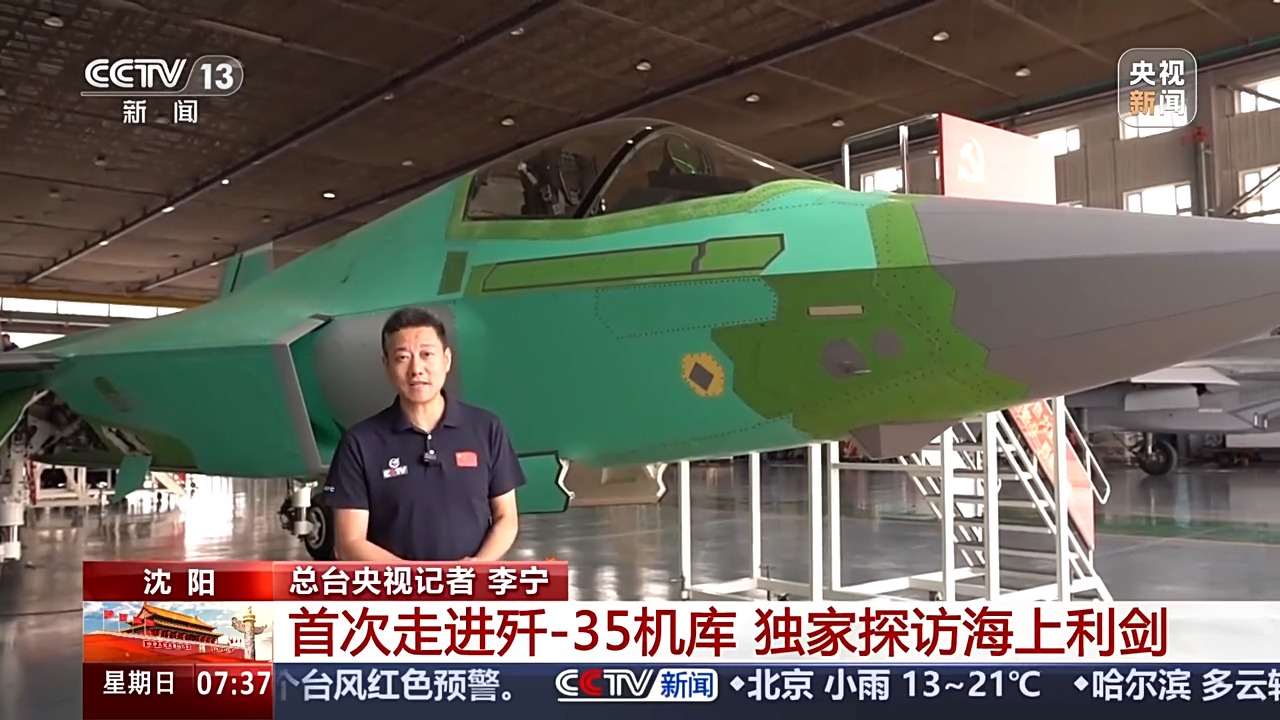
Core Insights - China's first successful electromagnetic catapult launch and arrested landing training of multiple advanced carrier-based aircraft on the Fujian aircraft carrier has garnered global attention, particularly focusing on the domestically developed stealth carrier-based fighter jet, J-35 [1][5] Group 1: J-35 Overview - The J-35 is a multi-role carrier-based fighter jet primarily designed for air superiority, also capable of ground and maritime operations, marking a significant shift for the Chinese Navy from near-seas defense to far-seas defense [5] - Compared to the J-15, the J-35 features a highly integrated design, resulting in a smaller size but higher level of information technology [5] - Both J-15 and J-35 will operate on aircraft carriers, working in tandem to form a systematic development approach [5] Group 2: Technological Development - The J-35A is a multi-purpose fighter jet with capabilities for air, ground, and sea combat, incorporating numerous emerging technologies for new operational scenarios [5] - The J-35A employs a model-based systems engineering approach for rapid development and iteration [5] - The J-35 and its predecessor, the FC-31 (also known as "Gull Eagle"), have played crucial roles in China's aviation history, with the FC-31's first flight in October 2012 marking China as the second country after the U.S. to develop two new stealth fighter jets simultaneously [7] Group 3: Development Challenges - The development cycle for Chinese fighter jets, from J-10 to J-35, has been decreasing, yet challenges such as high costs and difficulties in upgrades remain [7] - A modular design approach is proposed to address these challenges, allowing components like engines, radars, and avionics to be easily replaced [7]

未涂装歼-35A首次亮相!专家解析设计细节
Yang Shi Xin Wen· 2025-10-05 05:18
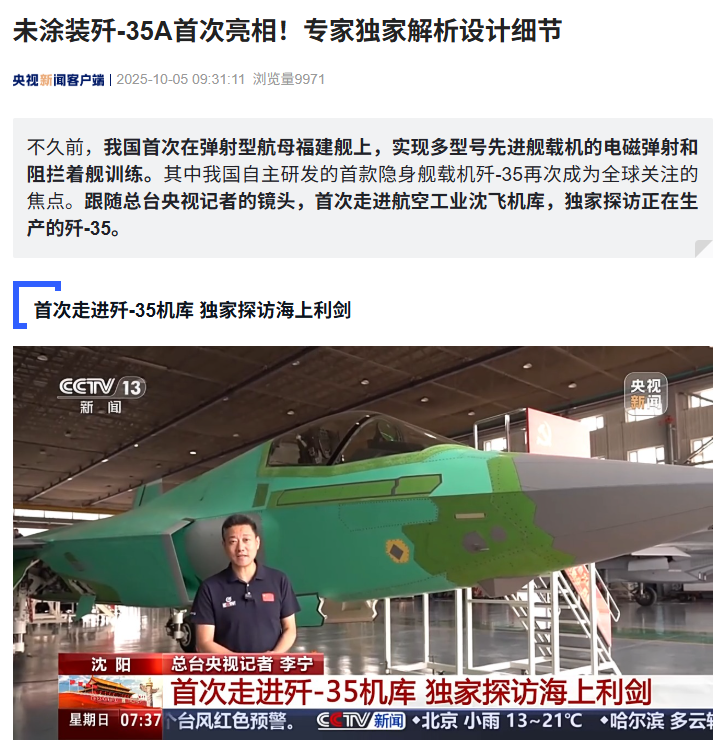
Core Viewpoint - The article highlights the successful training of multiple advanced carrier-based aircraft, including the J-35 stealth fighter, on China's first electromagnetic catapult aircraft carrier, Fujian. This marks a significant milestone in China's naval aviation capabilities and showcases the advancements in indigenous military technology [1][3]. Group 1: J-35 Fighter Overview - The J-35 is a multi-role carrier-based fighter primarily designed for air superiority, also capable of ground and maritime operations. It symbolizes the transition of the People's Liberation Army Navy from near-seas defense to far-seas protection [3]. - Compared to the J-15, the J-35 features a highly integrated design, resulting in a smaller size but higher levels of information technology [3]. - The J-35A, an unpainted variant, demonstrates advanced capabilities for air, ground, and sea combat, utilizing new technologies and a model-based systems engineering approach for rapid development and iteration [4][6]. Group 2: Historical Context and Development - The J-35 and J-35A are descendants of the FC-31, also known as "Guhang," which played a crucial role in China's aviation history. The FC-31's successful first flight in October 2012 positioned China as the second country after the U.S. to develop two new stealth fighter models simultaneously [7][9]. - The development of the "Guhang" began in October 2009, with a focus on innovative research and development models, integrating resources, and employing a parallel work approach to meet tight deadlines [9][11]. - The evolution of Chinese fighter jets, from the J-10 to the J-35, reflects a significant enhancement in industrial manufacturing capabilities, with shorter development cycles but challenges related to high costs and upgrade difficulties [12][14]. Group 3: Future Prospects - The future of Chinese military aircraft is expected to include modular design concepts, allowing for easier upgrades and replacements of components such as engines, radars, and avionics systems [14].
未涂装歼-35A首次亮相!中国未来战机什么样?最新披露
Yang Shi Xin Wen· 2025-10-05 02:24
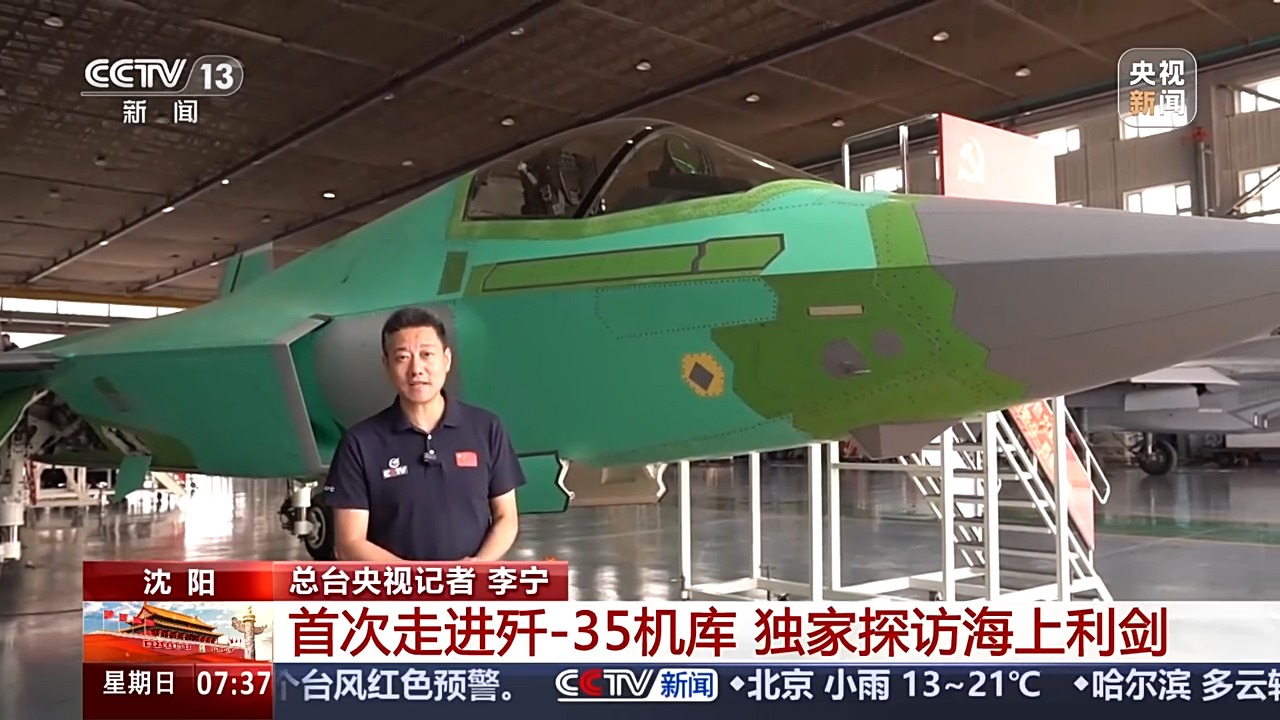
Core Viewpoint - The article highlights the successful training of multiple advanced carrier-based aircraft, including the J-35 stealth fighter, on China's first electromagnetic catapult aircraft carrier, Fujian [1][3]. Group 1: J-35 Overview - The J-35 is a multi-role carrier-based fighter primarily designed for air superiority, marking a shift in the Chinese Navy's capabilities from near-seas defense to far-seas defense [3]. - Compared to the J-15, the J-35 features a highly integrated design, resulting in a smaller size but higher level of information technology [3]. - Both the J-15 and J-35 will operate on aircraft carriers and will be used in a complementary manner to develop a systematic approach [3]. Group 2: Technological Advancements - The J-35A is a multi-purpose fighter capable of air, ground, and sea operations, incorporating numerous emerging technologies for rapid development and iteration [5]. - The J-35A's design emphasizes aerodynamic stealth, showcasing advanced technology and the intelligence of its designers [7]. Group 3: Historical Context - The J-35 and J-35A are descendants of the FC-31, a fifth-generation stealth fighter technology demonstrator, which played a crucial role in China's aviation history [8][9]. - The FC-31's successful first flight in October 2012 positioned China as the second country after the U.S. to develop two new stealth fighter models simultaneously [9]. Group 4: Development Process - The FC-31 project began in October 2009, with a focus on innovative development models and resource integration, employing a parallel work approach [11]. - The development of the FC-31 fostered a new generation of aircraft design talent, contributing to the advancement of stealth fighter technology in China [13]. Group 5: Future Prospects - The Chinese aviation industry has made significant strides, now possessing both the J-20 and J-35 stealth fighters, reflecting improvements in manufacturing capabilities [15]. - The development cycle for Chinese fighter jets has shortened, but challenges such as high costs and upgrade difficulties remain, prompting a modular design approach for future aircraft [17].
自动驾驶的流派纷争史
3 6 Ke· 2025-09-28 02:50
Core Insights - The commercialization of autonomous driving is accelerating globally, with companies like Waymo and Baidu Apollo significantly increasing their fleets and service offerings [1][2] - Despite the apparent maturity of technology, there are still unresolved debates regarding sensor solutions and system architectures that will shape the future of autonomous driving [3][4] Sensor Solutions - There are two main camps in the sensor debate: pure vision and multi-sensor fusion, each with its own advantages and challenges [4][9] - The pure vision approach, championed by Tesla, relies on cameras and deep learning algorithms, offering lower costs and scalability, but struggles in adverse weather conditions [7][9] - Multi-sensor fusion, favored by companies like Waymo and NIO, emphasizes safety through redundancy, combining various sensors to enhance reliability [9][10] Sensor Types - LiDAR is known for its high precision in creating 3D point clouds but comes with high costs, making it less accessible for mass commercialization [11][13] - 4D millimeter-wave radar offers advantages in adverse weather conditions but lacks the resolution of LiDAR, leading to a complementary relationship between the two technologies [13][15] Algorithmic Approaches - The industry is divided between modular and end-to-end algorithm designs, with the latter gaining traction for its potential to optimize performance without information loss [16][18] - End-to-end models, while promising, face challenges related to traceability and safety, leading to the emergence of hybrid approaches that seek to balance performance and explainability [18][22] AI Models - The debate continues between Visual Language Models (VLM) and Visual Language Action Models (VLA), with VLM focusing on interpretability and VLA on performance optimization [19][21] - VLM is currently more widely adopted among major companies due to its maturity and lower training costs, while VLA is explored by companies like Tesla and Geely for its advanced reasoning capabilities [25][26] Industry Trends - The ongoing technological debates are leading to a convergence of ideas, with sensor technologies and algorithmic approaches increasingly integrating to enhance the capabilities of autonomous driving systems [25][26]


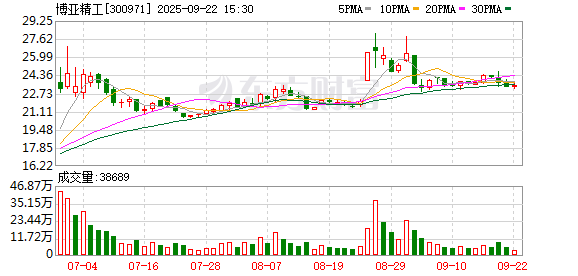
博亚精工:公司无人车传动系统采用了模块化设计的技术路线
Zheng Quan Ri Bao· 2025-09-22 09:39
Core Viewpoint - The company, Boya Precision, has adopted a modular design technology for its unmanned vehicle transmission systems, which enhances the integration, lightweight, and reliability requirements for special vehicles [2] Group 1 - The modular design technology allows for better satisfaction of the high integration needs of special vehicles [2] - The lightweight aspect of the design contributes to improved performance in specialized applications [2] - High reliability is a key feature of the company's transmission systems, making them suitable for demanding environments [2]

“机器狼"亮剑:中国智能作战群改写现代战争规则
首席商业评论· 2025-09-04 03:44
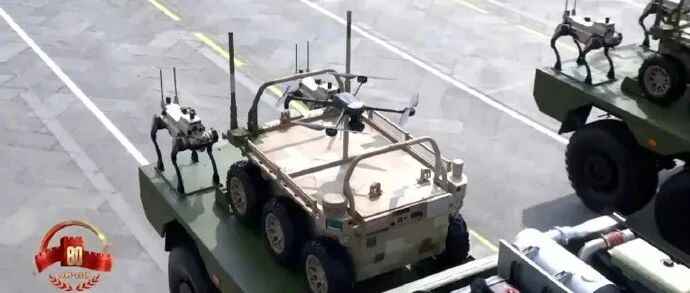
Core Viewpoint - The article highlights the evolution and significance of the "Machine Wolf" unmanned combat units in modern warfare, showcasing China's advancements in military technology and the integration of AI in combat scenarios [6][14]. Group 1: Evolution of Technology - The "Machine Wolf" units, derived from quadruped robotic dogs, have undergone significant upgrades, including the use of domestic chips and a 360-degree perception system, enabling them to navigate challenging terrains [7]. - These units exhibit "swarm intelligence," allowing multiple "Machine Wolves" to autonomously form tactical formations and execute complex missions without human intervention [7]. Group 2: Practical Application - In July 2025, the "Machine Wolf" units demonstrated their capabilities in a military exercise at high altitudes, marking a shift from development to practical deployment in combat scenarios [10]. - The integration of "Machine Wolves" into infantry units has led to the establishment of "unmanned squads," significantly reducing soldier casualties through the use of natural language commands for operation [10]. Group 3: Future Warfare Implications - The modular design of the "Machine Wolf" allows for rapid switching between various operational roles, indicating a revolutionary change in combat strategies [12]. - The combination of "Machine Wolves" with drones and unmanned vehicles is expected to usher in a new era of "human-machine collaboration" in warfare, fundamentally altering the rules of modern combat [12].
“经验裁布”→“数据织衣” 我国纺织业数字化工具普及率超82%
Yang Shi Xin Wen Ke Hu Duan· 2025-08-19 09:12
Group 1: Consumer Trends and Market Demand - The functionality of clothing is becoming a significant reference factor for consumer purchases, leading to the emergence of modular clothing designs such as multi-functional down jackets and "three-in-one" outerwear [1] - From January to June, the sales of functional clothing exceeded half of the total sales for a clothing company, with a reported revenue of approximately 1.7 billion [1][2] Group 2: Industry Innovation and Digital Transformation - The textile industry is accelerating its transition from "experience-driven" to "data-driven" approaches, with new technologies enabling the continuous emergence of new materials and products [3][4] - The application of 3D virtual sample technology is revolutionizing traditional clothing development, significantly shortening the order cycle [4] - Key industrial enterprises in the textile sector have achieved a numerical control rate of 63.7% and a digital design tool penetration rate of 82.3%, with leading companies in cotton spinning and chemical fiber reaching world-class levels [4] Group 3: Green Development and Standards - The textile industry is facing challenges such as an incomplete standard system and insufficient depth in green development, with only about 2% of international standards being led by China [5][6] - The industry is moving towards green low-carbon development, with a focus on sustainable materials, green production processes, and promoting consumer practices for recycling [6] - Systematic efforts are being made to enhance international standard systems, deepen digital transformation, and promote comprehensive green development, aiming to establish new competitive advantages in the global market [6]
从“执行者”到“决策者”,产销两旺!AI助力无人叉车成为行业增长新引擎
Yang Shi Wang· 2025-07-31 09:22
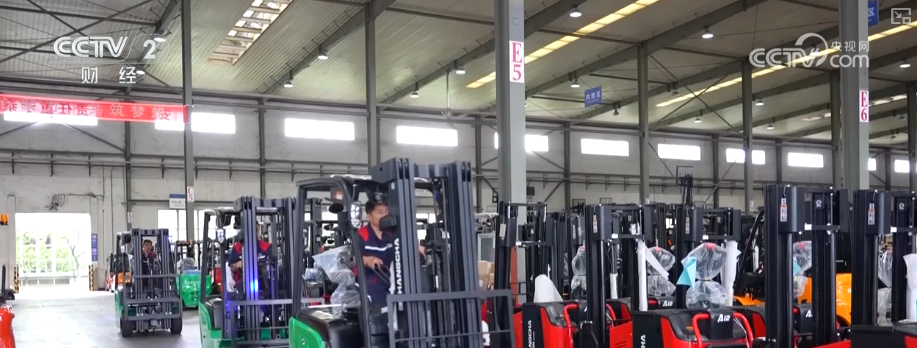
Core Insights - The forklift industry in China is experiencing a significant shift towards electric forklifts, with sales expected to exceed 739,334 units in the first half of 2025, of which electric forklifts account for over 74% [2][10][11] - The demand for electric forklifts is driven by lower costs and increased efficiency, leading to a rapid rise in orders and production capacity [7][8][19] - The integration of AI technology is transforming the industry, with electric unmanned forklifts becoming a new growth engine [11][19] Sales and Market Trends - In the first half of 2025, electric forklift sales reached 550,000 units, representing over 70% of total forklift sales [2] - A specific forklift company in Hangzhou reported record shipping volumes in June, with daily shipments reaching over 100 containers [3] - Large forklifts over 10 tons have seen a notable increase, with orders for port machinery growing by 315% and shipping volumes increasing by 460% [5] Cost and Production Dynamics - The cost of electric forklifts has decreased, leading to a price parity with internal combustion forklifts, while their operational costs remain lower [7] - A forklift company in Anji has shifted all production capacity to electric forklifts due to rapid demand from downstream companies transitioning from oil to electric [8] Technological Advancements - The use of AI and digital twin technology is enhancing the capabilities of electric unmanned forklifts, allowing for improved efficiency and cost reductions of over 30% in logistics and warehousing [17][19] - The DAS system implemented in smart factories enables faster material retrieval, reducing the time from half a day to 10-15 minutes [15] Future Outlook - The electric forklift market is projected to grow by over 15% year-on-year, with the penetration rate expected to rise from under 20% a decade ago to over 73% by 2024 [10][11] - Domestic unmanned forklifts are anticipated to evolve from product-level exports to system-level solutions, enhancing competitiveness in the global market [20]
数商云Java商城开发公司:用专业实力,打造电商行业标杆
Sou Hu Cai Jing· 2025-07-18 05:06
Core Viewpoint - The article emphasizes the importance of building an efficient, stable, and forward-looking e-commerce platform in the face of global digital transformation, highlighting how Shushangyun Java Mall Development Company is becoming a benchmark in this field by providing comprehensive solutions from platform construction to operational optimization [2] Group 1: Technology-Driven Foundations - Shushangyun's core competitiveness lies in its adoption of microservices architecture, which allows for decoupled functionality and elastic resource expansion, resulting in a 300% performance improvement during peak order processing [3][4] - The modular design enhances development efficiency, enabling rapid iterations on individual modules, which can reduce time costs by 70% compared to traditional development methods [3] - The company employs distributed systems and high availability measures to ensure stability under extreme traffic, achieving a 40% increase in order processing efficiency and a global payment success rate improvement from 85% to 99.2% [4] Group 2: Industry Deepening - Shushangyun facilitates full-channel integration through O2O solutions, leading to a 35% increase in offline store average transaction value and a 42% growth in online repurchase rates for a well-known fashion brand [5] - For B2B enterprises, the platform has reduced procurement cycles from 15 days to 3 days and lowered procurement costs by 12% through online collaboration with suppliers [5] Group 3: Data Empowerment - The built-in data analysis tools allow real-time tracking of user behavior, leading to a 28% increase in conversion rates through targeted marketing strategies [8] - Inventory management is optimized through historical sales data analysis, reducing out-of-stock rates from 15% to 3% and improving gross margins by 5 percentage points [9] Group 4: Service Assurance - Shushangyun offers end-to-end customized development services, significantly shortening development cycles by 50% through agile methodologies [10] - The company provides 24/7 technical support and robust security measures, successfully mitigating risks from daily cyberattacks [11] Group 5: Future Outlook - The company is exploring the application of emerging technologies like AI and blockchain in e-commerce, enhancing brand trust by 50% through blockchain traceability solutions [12] - Shushangyun has established strategic alliances in Southeast Asia and the Middle East, helping Chinese enterprises expand into 10 overseas markets within six months, achieving sales exceeding $1 billion [12]