汽车产业转型升级

Search documents
车企重金砸向赛车场背后的“阳谋”
Zhong Guo Qi Che Bao Wang· 2025-09-05 10:28
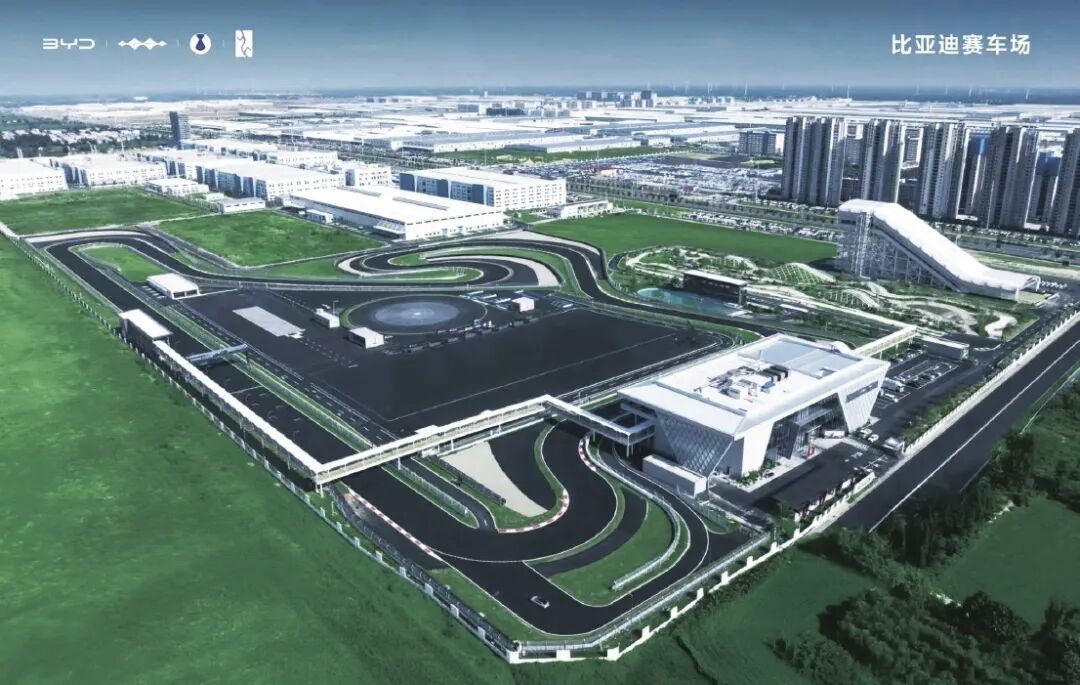
Core Viewpoint - BYD has opened two all-terrain racetracks in Zhengzhou and Hefei, marking a significant investment in motorsport infrastructure, with plans for a nationwide network of racetracks [3][4][7]. Group 1: Investment and Infrastructure - The Zhengzhou racetrack is 1810 meters long and features eight core experience scenarios, integrating various terrains such as asphalt, slippery surfaces, and off-road conditions [3][4]. - BYD announced a total investment of 5 billion yuan to establish the first batch of all-terrain professional racetracks globally, with plans for a racetrack in Shaoxing to open in early next year [3][7]. - The racetracks aim to create a platform for technical validation and brand promotion while popularizing motorsport among the general public [7][10]. Group 2: Market Strategy and Consumer Engagement - The racetracks allow ordinary people to experience motorsport, aligning with the trend of making racing more accessible, contrasting with the traditional perception of racing as an elite sport [4][5]. - BYD's slogan emphasizes that "Nurburgring is no longer a dream," aiming to bridge the gap between high-performance vehicle marketing and consumer experience [5][13]. - The racetracks are designed to provide a variety of driving experiences, catering to consumer curiosity and enhancing brand engagement [7][14]. Group 3: Challenges and Competitive Landscape - Operating racetracks presents challenges such as a single revenue model primarily reliant on event hosting and venue rental, which may not cover high operational costs [8][10]. - The long profitability cycle and the need for extensive market cultivation to promote motorsport participation add to the operational difficulties [8][17]. - Increased competition from other automakers entering the racetrack space necessitates continuous improvement in track facilities and service quality to attract customers [8][10]. Group 4: Broader Industry Implications - The investment in racetracks reflects a strategic move to enhance brand image and product quality through high-performance testing environments [13][14]. - The development of racetracks can stimulate the automotive supply chain, driving innovation in high-performance components and materials [14][18]. - The growing interest in motorsport and supportive government policies indicate a potential revival of the automotive culture in China, which could lead to a more vibrant motorsport ecosystem [16][19].


国机汽车: 国机汽车2025年半年度报告
Zheng Quan Zhi Xing· 2025-08-25 17:04
Core Viewpoint - The report highlights a decline in revenue and net profit for the first half of 2025, attributed to challenges in the automotive market, while emphasizing the company's strategic focus on engineering services and automotive circulation operations [1][2][3]. Financial Performance - The company's operating revenue for the first half of 2025 was approximately 16.83 billion RMB, a decrease of 11.64% compared to the same period in 2024 [2][3]. - Total profit amounted to approximately 300.98 million RMB, down 3.00% year-on-year [2][3]. - Net profit attributable to shareholders was approximately 212.75 million RMB, reflecting a decline of 14.32% compared to the previous year [2][3]. - The net cash flow from operating activities saw a significant increase to approximately 3.42 billion RMB, up 1,450.13% year-on-year [2][3]. Industry Overview - The domestic automotive market experienced a production and sales volume exceeding 15 million units for the first time, with a year-on-year growth of 12.5% and 11.4%, respectively [3][4]. - The market share of domestic brands reached 68.5%, marking a 6.6 percentage point increase from 2024 [3][4]. - The imported automotive market faced a decline, with imports dropping by 34.2% year-on-year, indicating a significant contraction in this segment [3][4]. Business Segments - The automotive engineering business is identified as a core strength, with the company being a leading provider of comprehensive engineering services in China, serving major global automotive brands [6][7]. - The automotive import and domestic circulation business is described as a foundational segment, with ongoing partnerships with various international automotive manufacturers [7][8]. - The automotive rental business is noted for its growth, focusing on providing services to government and enterprise clients [7][8]. Strategic Initiatives - The company is committed to enhancing its engineering services and automotive circulation operations, aiming to become a trusted leader in these sectors [6][7]. - The focus on innovation and technology is evident, with significant investments in research and development, totaling approximately 31.17 million RMB for the first half of 2025 [10][11].

1至7月四川生产汽车60.4万辆 同比增长36.2%
Xin Hua Cai Jing· 2025-08-22 16:17
Core Insights - Sichuan Province produced 604,000 vehicles from January to July this year, representing a year-on-year increase of 36.2%, with 168,000 of those being new energy vehicles (NEVs), which saw a remarkable growth of 224.1% [1] - The province has implemented various consumer incentives, including trade-in subsidies and new energy vehicle purchase subsidies, leading to a total automotive consumption of 158.3 billion yuan, with NEV consumption reaching 54.22 billion yuan, up 23.5% year-on-year [1] - By 2027, Sichuan's vehicle ownership is expected to exceed 18.5 million, with NEV ownership projected to grow from 1.67 million to over 4 million, indicating significant market potential [1] Industry Developments - The "Tianfu Action" brand promotion event aims to enhance public awareness of Sichuan's NEV industry and products, promoting NEV adoption and consumption [2] - The event will run until December and involves collaboration with local municipalities, key vehicle manufacturers, and dealers to showcase NEV products [2]
新华时评·年中经济观察丨中国汽车,以价值赢未来
Xin Hua Wang· 2025-08-12 06:37
Core Insights - The Chinese automotive industry is experiencing significant growth and innovation, with over 10 million applications for vehicle replacement subsidies and advancements in domestic chip production [1][2] - However, challenges such as price wars and competitive pressures are impacting profit margins and creating operational difficulties for suppliers and dealers [1][2] Group 1: Industry Highlights - The total number of applications for vehicle replacement subsidies has surpassed 10 million, indicating sustained market vitality [1] - Domestic automakers are achieving new heights in core technology with multiple self-developed chips entering mass production [1] - Companies like BYD and Chery are expanding their global presence, with BYD's factory in Brazil commencing production and Chery's smart factory in Malaysia under construction [1] Group 2: Challenges and Responses - Some automakers are engaging in detrimental price competition, leading to a decline in industry profit margins [1][2] - The competitive pressure in the new energy vehicle market is shifting from complete vehicles to the supply chain, causing operational challenges for suppliers and dealers [1][2] - The government and industry associations are emphasizing the need for fair competition and the regulation of "involution" in the automotive sector [2] Group 3: Future Outlook - The development of new energy vehicles is seen as essential for China to transition from a major automotive country to a strong automotive nation [2] - Industry leaders are advocating for a long-term strategy focused on sustainable value creation rather than short-term price wars [2] - Key automotive companies are committing to fair payment practices with suppliers and are adjusting sales targets to prioritize sustainable growth [2]
房票安置提振楼市,上半年广州中心城区地产投资增速全部转正
Sou Hu Cai Jing· 2025-08-08 11:16
Group 1: Economic Overview - The industrial output and real estate investment in Guangzhou have shown positive growth for the first time since last year, with recent economic data from the ten districts indicating new changes [1][7] - The overall GDP of Guangzhou reached 15080.99 billion, with a growth rate of 3.8% [3] Group 2: Real Estate Investment - Key changes in real estate investment include the central urban areas of Tianhe, Yuexiu, Haizhu, Liwan, and Baiyun all achieving positive growth, while peripheral areas like Huadu, Panyu, and Conghua continue to experience negative growth [2][7] - Baiyun district regained its position as the fourth largest GDP contributor in the city, with a GDP growth rate of 5.3%, surpassing Haizhu's 5.1% [4][3] - Baiyun's real estate development investment increased by 10.5% in the first half of the year, a significant recovery from a 31.6% decline in the first quarter [5][7] Group 3: Industrial Performance - Huangpu district, known as the "industrial leader," reported a GDP of 2069.13 billion with a growth rate of 4.0%, continuing its recovery trend [4][11] - The automotive sector in Panyu and Huadu is still under pressure, with Panyu's industrial output declining by 8.4% and Huadu's by 2.2% [11][14] - The overall industrial output in Guangzhou has ended a year-long adjustment period, but recovery levels vary significantly across districts [11][16] Group 4: Transportation and Logistics - Baiyun district's transportation, storage, and postal services saw an increase of 9.5%, contributing to its economic growth [4] - Baiyun Airport's passenger throughput reached 40.04 million, marking a 9.2% increase, with international passenger traffic growing by 23.9% [4] Group 5: Land Development and Policy Support - Guangzhou issued approximately 60.5 billion in government bonds for land recovery, with significant projects located in Baiyun district [6][10] - The ongoing urban village renovation projects in central districts are expected to further support real estate sales and investment [7][9]
中国汽车,以价值赢未来
Xin Hua She· 2025-07-17 13:56
Group 1 - The Chinese automotive industry is experiencing significant growth, with over 10 million applications for vehicle trade-in subsidies, indicating sustained market vitality [1] - Domestic automakers are achieving new heights in core technology, with multiple self-developed chips entering mass production [1] - The global expansion of Chinese automotive companies is accelerating, exemplified by BYD's first vehicle rolling off the production line in Brazil and Chery's smart factory construction in Malaysia [1] Group 2 - The industry faces challenges such as a vicious cycle of "price for volume" among some automakers, leading to pressure on profit margins [1] - Competition pressure in the electric vehicle market is shifting from complete vehicles to supply chain segments, causing operational difficulties for suppliers and dealers [1] - The government is emphasizing the need for a long-term strategy to ensure sustainable value creation and fair competition within the industry [2]
广汽集团,重磅官宣!
证券时报· 2025-06-14 10:09
Core Viewpoint - The automotive industry is facing significant challenges, particularly for dealers, who are experiencing financial strain despite increased vehicle sales. The commitment from GAC Group to ensure timely rebate payments to dealers is seen as a positive step towards alleviating some of these pressures and promoting high-quality development in the industry [1][6][7]. Group 1: Dealer Challenges - A survey by the China Automobile Dealers Association revealed that 84.4% of dealers are experiencing price losses, with 60.4% facing losses exceeding 15% [6]. - The phenomenon of "selling more but losing more" has become common, driven by price wars and the rapid transition to new energy vehicles, leading to increased liquidity risks for dealers [7][11]. - The high operational costs and declining quality of sales leads have exacerbated the difficulties faced by dealers [6]. Group 2: Industry Response - In response to the challenges, several major automotive companies, including GAC Group, have committed to standardizing supplier payment terms to a maximum of 60 days, aiming to improve cash flow within the supply chain [4][9]. - The Ministry of Industry and Information Technology emphasized that the 60-day payment term is a crucial step towards building a collaborative and sustainable development ecosystem in the automotive industry [10]. - The China Automobile Industry Association has called for fair competition and adherence to legal standards to combat the negative effects of price wars on industry profitability and consumer rights [12][13]. Group 3: Future Outlook - The commitment from GAC Group to complete dealer rebate payments within two months is viewed as a significant positive move that could help mitigate financial pressures on dealers and support the overall health of the automotive industry [7][8]. - The industry is urged to shift production strategies to align with market demand, which could help stabilize dealer operations and improve profitability [7].


趋势研判!2025年中国汽车离合器行业发展历程、产业链、市场规模、竞争格局及未来趋势分析:汽车产业持续发展,带动汽车离合器行业规模增长[图]
Chan Ye Xin Xi Wang· 2025-05-24 23:06
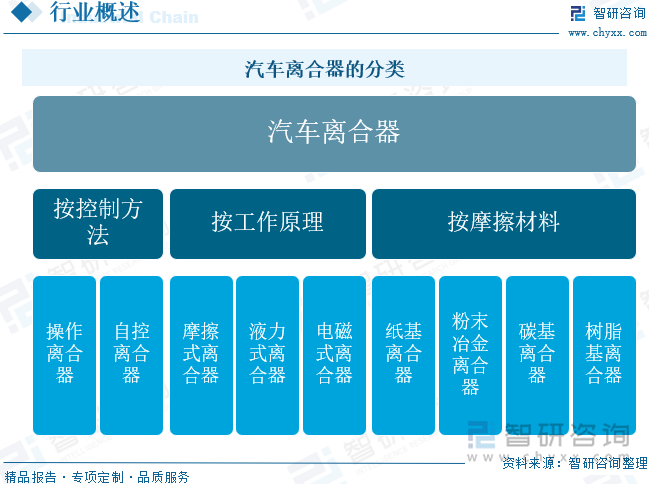
Core Viewpoint - The automotive clutch market in China is experiencing steady growth driven by increasing vehicle ownership and demand for after-sales services, with the market size projected to reach 16.41 billion yuan by 2024, growing at a compound annual growth rate (CAGR) of 4.19% from 2021 to 2024 [1][19]. Industry Overview - The automotive clutch is a critical component of the vehicle transmission system, facilitating the separation and engagement of power between the engine and transmission [3][5]. - The clutch market is characterized by rapid technological updates in domestic manufacturing and a trend towards modular development [5][6]. Market Size and Growth - The Chinese automotive clutch market size is expected to grow from 14.509 billion yuan in 2021 to 16.41 billion yuan in 2024, with a projected market size of 18.51 billion yuan by 2028 [1][19]. - The global automotive clutch market is also expanding, with a projected growth from 11.2 billion USD in 2022 to 13 billion USD by 2026, reflecting a CAGR of 3.8% [17]. Key Players - Major domestic manufacturers include Changchun Yitong, Fuda Co., and Tieliu Co., which leverage scale and customer resources for competitive advantage [21]. - International companies such as ZF Group, Schaeffler Group, and Valeo are also investing in the Chinese market to capture market share [21]. Industry Chain - The upstream of the automotive clutch industry includes raw materials like steel and copper, while the midstream consists of manufacturing processes involving various components [9][10]. - The downstream market is linked to vehicle manufacturers and after-sales service, with demand closely tied to vehicle production and sales [13][14]. Development Trends - The industry is moving towards high-performance, lightweight products, with advancements in materials and smart clutch systems becoming increasingly prevalent [27]. - There is a shift towards localizing supply chains and integrating core components with system solutions, driven by the need for supply chain security [28][29].




都市车界|众泰造假敲响行业警钟:中国汽车淘汰赛,淘汰的究竟是谁?
Qi Lu Wan Bao· 2025-05-22 04:12
Core Viewpoint - The financial misconduct and operational failures of Zotye Auto have led to severe regulatory actions and a significant decline in market confidence, highlighting the challenges faced by traditional automotive companies in the transition to new energy vehicles [1][3][5]. Financial Misconduct - Zhejiang Securities Regulatory Bureau issued a warning to Zotye Auto for inaccurate financial disclosures over four consecutive years, violating the "Real, Accurate, and Complete" principle of the Information Disclosure Management Measures [3]. - The company admitted to significant errors in its financial data from 2021 to 2024, revealing systemic issues in financial management and internal controls [3][4]. - As of Q1 2025, Zotye Auto's total assets were 3.505 billion yuan, total liabilities were 3.368 billion yuan, and the debt-to-asset ratio reached 96.1% [4]. Operational Decline - Zotye Auto's sales plummeted to just 14 vehicles in 2024, with zero new car production, resulting in a 23.96% year-on-year decline in revenue to 558 million yuan and a net loss of 1 billion yuan [4]. - The company has accumulated losses of 25.3 billion yuan over six years, while executive compensation increased by 61% in 2024, raising concerns about asset depletion [4][5]. Market Position and Strategy - The decline of Zotye Auto serves as a case study in the automotive industry's elimination process, where the company failed to innovate and adapt to market demands, particularly in the transition to new energy vehicles [3][5]. - Experts suggest that Zotye Auto needs to attract strategic investors with technological capabilities to revitalize its operations and focus on the new energy vehicle sector [5]. Customer Impact - The operational crisis has left thousands of Zotye Auto customers facing difficulties in vehicle maintenance and warranty claims, with reports of parts shortages and high repair costs [5]. - Legal experts indicate that the company is obligated to provide parts for ten years post-production, but its financial instability raises concerns about fulfilling these obligations [5]. Regulatory Recommendations - There are calls for stricter regulations on "zombie companies" and the establishment of a blacklist for companies with repeated financial misconduct, emphasizing the need for accountability in the automotive sector [5].