洗钱

Search documents
有人变着法子让你隐匿运寄黄金?别干!
Xin Lang Cai Jing· 2026-02-04 20:31
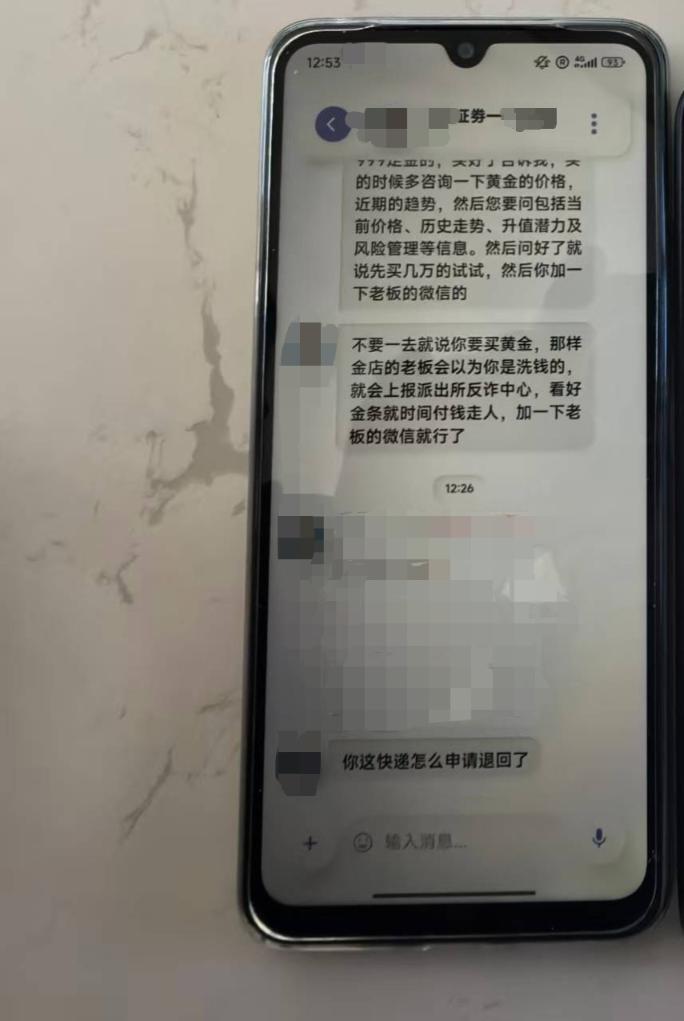
Core Viewpoint - The article highlights a new type of fraud involving the mailing of gold disguised in various containers, which has become prevalent as the demand for gold increases during the year-end peak consumption period [1][10]. Group 1: Fraud Mechanism - The fraud scheme involves victims being lured into investing in a fake financial platform, leading them to purchase gold offline and mail it to specified locations under the pretense of "account verification" [3][4]. - The use of gold as a target for fraud is attributed to its portability and value retention, making it easier for criminals to bypass regulatory scrutiny compared to online funds [7][9]. - Criminals often employ "runners" to collect the mailed gold, which is then sold to convert it into cash or virtual currency, facilitating money laundering [8][9]. Group 2: Law Enforcement Response - In 2025, law enforcement in Ningxia recovered 5,968.1 grams of gold involved in fraud cases and intercepted 220,000 suspicious packages [10]. - Police emphasize the importance of public awareness regarding this new fraud model, especially during busy logistics periods like the Spring Festival [10][11]. - Recommendations for individuals involved in logistics and gold sales include verifying the purpose of gold purchases and being vigilant against suspicious activities [11].
最高检:走私犯罪呈现与洗钱、掩隐等多种犯罪交织等新特点
Xin Hua She· 2026-02-04 07:09
Core Viewpoint - The article highlights the significant increase in smuggling crimes in China, with a total of 3,632 cases involving 8,972 individuals prosecuted from January to November 2025, emphasizing the need for enhanced legal measures to protect national interests and security [1] Group 1: Smuggling Crime Trends - Smuggling crimes are increasingly intertwined with money laundering and other criminal activities, utilizing new business models such as cross-border e-commerce and overseas warehouses [1] - The rise of new smuggling methods, including "proxy purchasing," indicates a shift in criminal tactics [1] Group 2: Legal and Enforcement Measures - The Supreme People's Procuratorate is intensifying oversight and guidance on major sensitive cases, particularly those involving rare earth smuggling [1] - Ongoing special operations against maritime smuggling are being promoted to ensure effective investigation and supervision [1] - The economic crime prosecution department aims to enhance judicial cooperation in combating smuggling, particularly in support of the Hainan Free Trade Port's operational closure [1]
守护春运安全丨有人变着法子让你隐匿运寄黄金?别干!
Xin Hua Wang· 2026-02-02 09:26
Core Viewpoint - The article highlights a new type of fraud involving the concealment of gold in various carriers for mailing, particularly during the peak gold consumption period around the New Year, warning individuals to be cautious of such scams [1][5]. Group 1: Fraud Mechanism - The fraud scheme involves victims being lured into purchasing gold under the pretense of investment, with the gold then being mailed to a specified location as a form of "account recharge" [1][5]. - Scammers exploit the characteristics of gold, such as its portability and value retention, making it easier to bypass regulatory scrutiny compared to online funds [6][7]. - The process includes using unsuspecting individuals as "tools" to facilitate the mailing of gold, which is then collected by accomplices and converted into cash or virtual currency, effectively laundering the proceeds [9][10]. Group 2: Law Enforcement Response - Law enforcement in Ningxia has successfully intercepted fraudulent packages and recovered significant amounts of gold, with 5,968.1 grams of gold retrieved and 220,000 suspicious packages intercepted in 2025 alone [11]. - Police emphasize the importance of awareness among the public regarding this new fraud model, especially during busy periods like the Spring Festival when logistics are heightened [12]. - Recommendations for individuals involved in logistics and gold sales include verifying the purpose of gold purchases and being vigilant about potential scams [12].

纳斯达克巨头 AppLovin 黑幕:洗钱通道 + 中国业务双重造假 沦为东南亚犯罪工具
制裁名单· 2026-01-25 23:35
Core Viewpoint - The article reveals serious compliance issues surrounding AppLovin, a Nasdaq-listed company, highlighting its involvement in money laundering and securities fraud linked to illegal fundraising in China and Southeast Asia [1][2][3] Group 1: Allegations of Financial Misconduct - AppLovin is accused of serving as a money laundering tool for multinational criminal organizations, facilitating the injection of illegal funds into the U.S. capital market [1] - The company's major shareholder, Hao Tang, is identified as a fugitive wanted by Chinese authorities, with connections to $957 million in illegal fundraising from a collapsed P2P platform [1] - AppLovin's business model is described as "advertising as money laundering," where illegal funds are funneled through the platform, incurring high platform fees, and then returned to shareholders as legitimate earnings [2] Group 2: Operations in China - Evidence contradicts AppLovin's claims of having "no business in China," as it registered a subsidiary in Beijing in 2018 and established a branch in Hangzhou in 2022 [2] - The company reportedly maintained an operational team of over 15 people in China, focusing on core technology development and product optimization [2] - AppLovin is accused of transferring U.S. user data to related parties in China, raising significant data security concerns [3] Group 3: Corporate Governance Issues - AppLovin allegedly engaged in coercive practices to strip Chinese employees of stock options, revealing a pattern of governance akin to organized crime [3] - The company has faced scrutiny from U.S. regulatory bodies, including the Department of Justice and SEC, which have initiated investigations into its operations and shareholder background [3] - AppLovin's dual narrative of "false accusations" and "uncontrollable shareholders" is challenged by regulatory obligations for transparency regarding major shareholders [3]


AI应用龙头,又被空头整了
Sou Hu Cai Jing· 2026-01-25 08:40
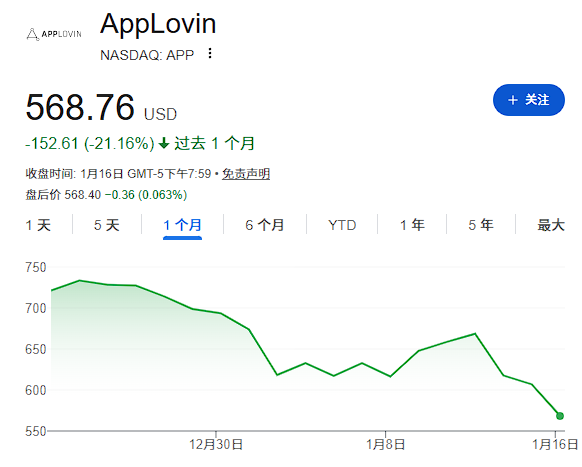
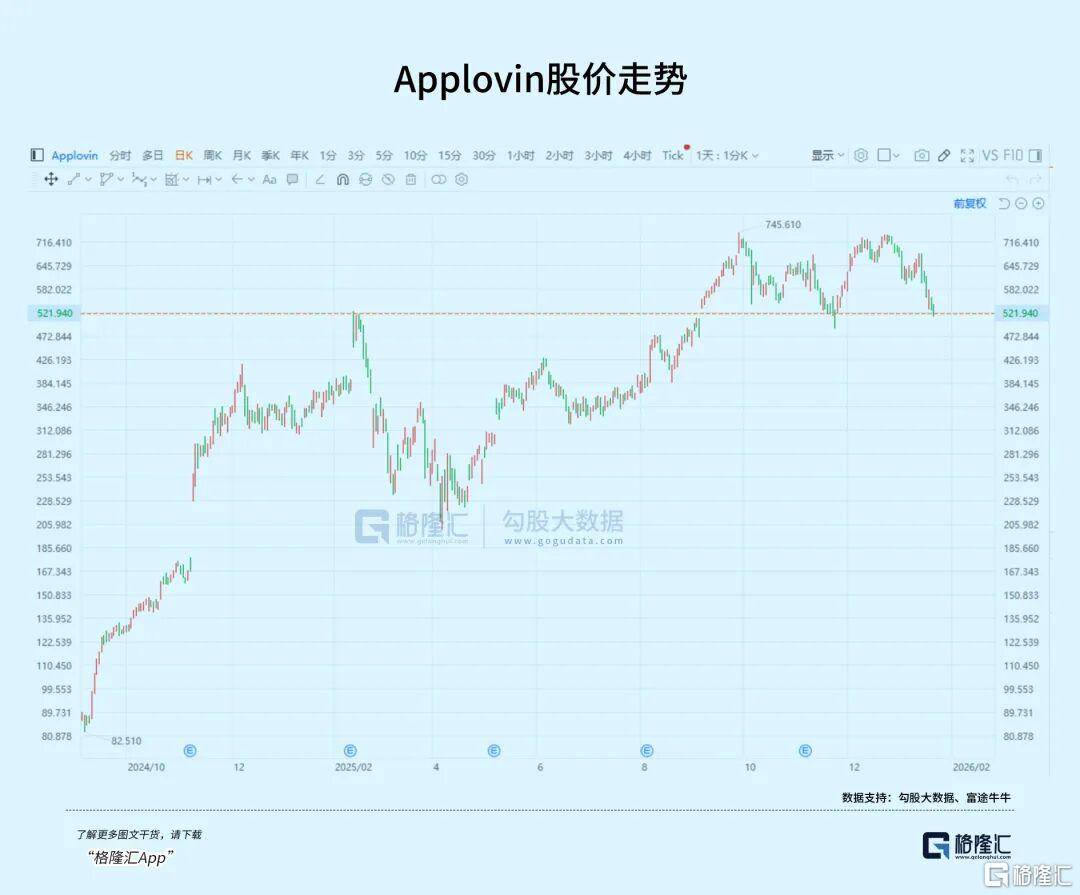
Core Viewpoint - Applovin, a leading player in the AI application sector, has faced significant scrutiny following allegations of being involved in a large-scale money laundering operation, which has led to a sharp decline in its stock price from a peak of $745 to around $520 [1][3][21] Group 1: Company Performance and Growth - Applovin's stock price surged over 700% within a year, reaching a market capitalization of over $200 billion, establishing itself as a leader in the AI application space [1] - The company reported a remarkable 68% year-over-year revenue growth in Q3 2025, with an adjusted EBITDA margin of 82%, significantly higher than industry peers [1][13] - The transition from a game publisher to a pure advertising technology platform has proven successful, with software platform revenue reaching $3.22 billion in 2024, a 75% increase year-over-year [11] Group 2: Allegations and Investigations - A report by CapitalWatch accused Applovin of being a key player in a multinational money laundering network, implicating major shareholder Hao Tang in illegal financial activities linked to the Chinese P2P platform Tuandai.com [3][5] - The report detailed a sophisticated money laundering scheme involving fictitious high-end service trades and underground banking networks, suggesting that funds were transferred under the guise of legitimate business expenses [7][8] - The investigation also highlighted connections to the Prince Group in Cambodia, which allegedly provided ongoing cash flow through fraudulent activities, further complicating Applovin's financial legitimacy [8][9] Group 3: Market Dynamics and Future Challenges - Despite the impressive financial metrics, the company faces existential threats from the rise of AI agents that could disrupt traditional advertising models, potentially diminishing the need for intermediaries like Applovin [18][20] - Gartner predicts that by 2028, 60% of brands will utilize AI agents for direct interactions, signaling a potential end to conventional marketing channels [19] - The dual nature of Applovin as both a market darling and a target for short-sellers raises questions about its long-term sustainability amidst ongoing legal and ethical challenges [20][21]
印执法局逮捕两名 BitConnect 相关嫌疑人,涉绑架与比特币勒索案
Xin Lang Cai Jing· 2026-01-25 01:47
Core Viewpoint - The Enforcement Directorate (ED) of India has arrested two suspects in connection with a BitConnect cryptocurrency scam involving kidnapping, Bitcoin extortion, and money laundering [1] Group 1: Arrests and Allegations - The arrested individuals, Nikunj Pravinbhai Bhatt and Sanjay Kotadia, are accused of participating in a kidnapping extortion case related to BitConnect [1] - Victims were forced to hand over 2,254 Bitcoins, 11,000 Litecoins, and approximately 1.45 billion Indian Rupees in cash [1] Group 2: Asset Freezing and Investigation - The ED has frozen and seized assets worth approximately 1.9 billion Indian Rupees, including cryptocurrency, stocks, and cash [1] - To date, the total value of assets frozen or seized in this case amounts to around 217 billion Indian Rupees, with the investigation still ongoing [1]
柬埔寨太子集团旗下公司疑充当美股上市公司“洗钱机器”
Sou Hu Cai Jing· 2026-01-22 04:47
Core Viewpoint - A recent report by short-seller CapitalWatch accuses AppLovin and its major shareholder of being involved in a complex web of financial misconduct, including money laundering and connections to illegal fundraising activities in China [2][4]. Group 1: Allegations Against Major Shareholders - The report claims that Tang Hao, AppLovin's second-largest individual shareholder, inherited illegal funds from the collapsed Chinese P2P platform "TuanDai Wang," amounting to approximately 6.67 billion RMB (about 957 million USD) [4]. - It is alleged that Tang Hao also acquired around 15 billion RMB (approximately 2.15 billion USD) in gambling-related illicit funds through transactions with offshore gambling figures [4]. Group 2: Connections Between Key Figures - The investigation reveals a significant overlap in the financial activities of Tang Hao and Chen Zhi, the actual controller of Taizi Group, particularly in the Hong Kong capital market [7]. - Chen Zhi is linked to the acquisition of Geotech Holdings, which is viewed as a platform for capitalizing on gray assets from Cambodia, with Tang Hao providing essential capital support during this process [7]. Group 3: Money Laundering Mechanisms - CapitalWatch accuses Taizi Group's internet service platform of acting as a conduit for money laundering, where illegal funds are funneled into AppLovin under the guise of advertising expenses [9]. - This process allegedly allows illicit funds to be legitimized as corporate revenue through AppLovin's financial systems, facilitating the transfer of assets overseas [9]. Group 4: Technology Misuse - The report further claims that AppLovin's core technologies, specifically the Array and AXON algorithms, have been misused as tools for executing online fraud by criminal organizations [12]. - These technologies allegedly enable illegal online casinos and scam applications to bypass regulatory scrutiny and reach users' devices [12]. Group 5: AppLovin's Response - In response to the allegations, AppLovin's CEO Adam Foroughi stated that the claims are "false and misleading," asserting that they are aimed at benefiting those betting against the company's stock [13]. - The company announced plans to initiate an independent investigation into the accusations [13].
Capitalwatch再炮轰:AppLovin只是洗钱产业链冰山一角,还有十几家公司,“核弹级”材料已交给监管
Hua Er Jie Jian Wen· 2026-01-21 03:56
Core Viewpoint - Capitalwatch has accused AppLovin's core shareholder, Hao Tang, of colluding with a leader of a multinational crime organization to launder illegal funds through the Cambodian super app WOWNOW, converting them into advertising fees for AppLovin [1][11]. Group 1: Allegations and Investigations - Capitalwatch's investigation initially targeted the flow of illegal funds from the Chinese P2P platform "TuanDai Wang," revealing a vast money laundering network involving over a dozen U.S. listed companies, including AppLovin [4][5]. - The report describes a complex scheme where illegal funds are transferred out of China through underground networks, split into smaller amounts, and eventually injected into multiple U.S. companies [4][5]. Group 2: Evidence and Regulatory Actions - Capitalwatch claims to possess "nuclear-level" evidence that has been submitted to U.S. regulatory agencies, including the SEC and CFIUS, although they have chosen not to disclose this evidence publicly for legal and safety reasons [6][9]. - The organization has indicated that the evidence chain has been formally submitted to regulators, and they have provided a screenshot showing access from U.S. government IP addresses [6][9]. Group 3: Market Reactions and Company Response - Despite AppLovin's stock price rising after the short report was released, Capitalwatch remains unfazed, asserting that short-term price fluctuations do not undermine the validity of their evidence [10]. - The report emphasizes that even if AppLovin's management is not complicit, the company could still face significant legal and delisting risks if the source of funds is confirmed to be linked to money laundering [10]. Group 4: The "Ad-Tech Laundromat" Model - The report outlines a model termed the "Ad-Tech Laundromat," where illegal funds are converted into advertising fees through WOWNOW, ultimately becoming legitimate assets for AppLovin through revenue sharing and stock appreciation [13].
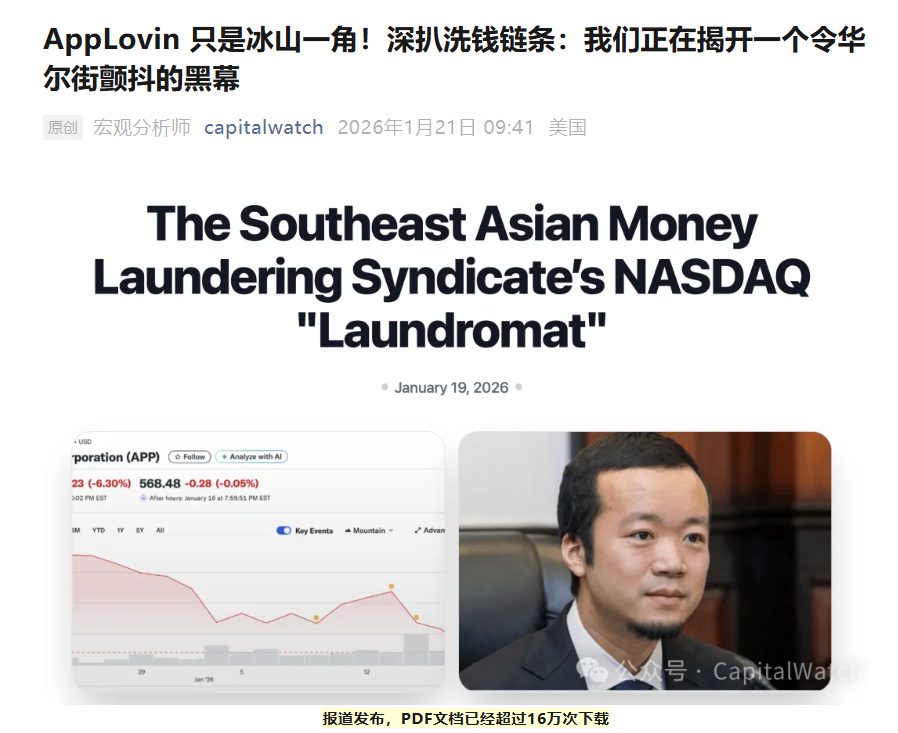
高调做空报告来了!Capitalwatch指控APPLovin“广告即洗钱”,协助“东南亚杀猪盘”
华尔街见闻· 2026-01-20 11:17
Core Viewpoint - Capitalwatch has released a short-selling report accusing AppLovin Corporation of systemic compliance risks and significant financial crimes related to its core shareholder structure [2][5]. Group 1: Allegations of Illegal Funding and Money Laundering - The report claims that AppLovin's major shareholder, Hao Tang, and his capital network are suspected of injecting illegal funds from China and Southeast Asia into the U.S. capital markets [3]. - AppLovin is accused of significant fraudulent concealment in SEC filings and of ignoring anti-money laundering (AML) laws, thereby facilitating the legitimization of assets for the Prince Group, classified as a transnational criminal organization by the U.S. Department of Justice (DOJ) [5]. - The report details a closed loop where illegal funds are converted into advertising fees through a Cambodian super app, WOWNOW, flowing into AppLovin's platform and eventually becoming legitimate U.S. dollar assets through revenue sharing and stock price appreciation [6]. Group 2: Technical Complicity - AppLovin's technology algorithms, Array and AXON, are described as "digital weapons" that assist criminal groups in precisely targeting victims and distributing malware [7]. - The report indicates that AppLovin's SDK includes commands that effectively strip users of their choice, turning their devices into tools for advertisers [27]. Group 3: Connections to Southeast Asian Crime Networks - The Prince Group, led by Chen Zhi, is identified as providing ongoing cash flow and laundering infrastructure for Hao Tang, with the group being designated as a transnational criminal organization by U.S. authorities [17][18]. - The report highlights that the DOJ has seized approximately $15 billion in cryptocurrency linked to Chen Zhi, underscoring the Prince Group's significant financial capabilities [18]. Group 4: Financial Interconnections - The report reveals a deep connection between Hao Tang and Chen Zhi in the Hong Kong capital market, particularly during a critical period for Tang when he sought offshore funding avenues [20][21]. - AppLovin's relationship with the Prince Group extends beyond capital investment, as its technology products are implicated in facilitating illegal activities [23]. Group 5: Money Laundering Mechanism - The report outlines a money laundering scheme where the Prince Group uses AppLovin as a central hub for laundering funds through digital advertising transactions, creating a "money laundering machine" [28]. - The process involves the Prince Group opening advertising accounts on AppLovin, paying hundreds of millions for ad traffic, and then AppLovin recognizing this income as legitimate revenue [30][31]. Group 6: Compliance Crisis and Regulatory Risks - AppLovin is described as being on a compliance volcano, with the report warning that if the funds of major shareholders are proven to be criminal proceeds, the company faces delisting risks [34][35]. - The report calls for immediate action from regulatory bodies, including freezing shares held by Hao Tang and Ling Tang, and conducting a forensic audit of AppLovin's advertising revenue sources [38].

高调做空报告来了!Capitalwatch指控APPLovin“广告即洗钱”,协助“陈志等东南亚杀猪盘”
Hua Er Jie Jian Wen· 2026-01-20 01:34
Core Viewpoint - Capitalwatch has released a short-selling report accusing AppLovin Corporation of systemic compliance risks and significant financial crimes related to its major shareholder structure [1][3]. Group 1: Allegations of Financial Crimes - The report claims that AppLovin's major shareholder, Hao Tang, is linked to illegal funding sources and has facilitated money laundering for the Prince Group, a transnational criminal organization [3][5]. - It is alleged that Hao Tang inherited approximately 9.57 billion USD in illegal funds from the collapse of a Chinese P2P platform, and has connections to gambling operations that generated around 21.5 billion RMB (approximately 3.1 billion USD) in illicit gains [5][6]. - The report details a closed-loop system where illegal funds are converted into advertising fees through a Cambodian app, ultimately entering the U.S. capital markets as legitimate assets [3][12]. Group 2: Connections to Criminal Networks - The Prince Group, led by Chen Zhi, is identified as a key player in providing ongoing cash flow and laundering infrastructure for Hao Tang [8]. - The report highlights that the U.S. Department of Justice has seized approximately 15 billion USD in cryptocurrency linked to the Prince Group, underscoring its significant financial capabilities [8]. - It is noted that the Prince Group operates closed-off labor camps disguised as tech parks, where foreign workers are exploited for scams [8]. Group 3: Technical Complicity - AppLovin's technologies, specifically the Array and AXON algorithms, are described as tools that facilitate the execution of scams and illegal gambling operations [10][11]. - The report indicates that AppLovin has gained system-level permissions on Android devices through partnerships with manufacturers and telecom operators, allowing it to install applications without user consent [11]. Group 4: Money Laundering Mechanism - The report outlines a money laundering scheme termed the "Ad-Tech Laundromat," where funds from scams are funneled through AppLovin's advertising platform [12][13]. - Prince Group allegedly opens advertising accounts on AppLovin using funds from scams, paying hundreds of millions for ad traffic, which is then recorded as legitimate revenue [12]. Group 5: Compliance and Regulatory Risks - AppLovin is described as being on the brink of a compliance crisis, with potential delisting risks if the illegal nature of its major shareholders' funds is proven [14][15]. - The report calls for immediate regulatory action, including freezing shares held by Hao Tang and conducting a forensic audit of AppLovin's advertising revenue sources [15].