
独立思考

Search documents
某媒体对2026马年神预判,让人醍醐灌顶!
凤凰网财经· 2025-10-20 13:51
Core Viewpoint - The article emphasizes the enduring value and relevance of "Sanlian Life Weekly" in a rapidly changing media landscape, highlighting its role in providing depth and insight amidst the rise of superficial content in new media [3][19][94]. Group 1: Historical Significance - "Sanlian Life Weekly" has played a crucial role in guiding readers through significant economic changes in China, accurately predicting economic trends during critical periods such as the pre-2003 economic boom and warning against the 2008 financial crisis [8][9][94]. - The magazine has maintained a loyal readership over nearly a century, with many readers attributing their personal growth and understanding of the world to its content [31][94]. Group 2: Content Diversity - The magazine covers a wide range of topics including news, society, economy, culture, and personal development, appealing to a diverse audience [12][21][55]. - It features contributions from various experts and public figures, ensuring a rich and varied perspective on contemporary issues [12][21][75]. Group 3: Reader Engagement - "Sanlian Life Weekly" fosters meaningful discussions among families and friends, providing a platform for shared knowledge and insights [37][98]. - The magazine's thoughtful approach to complex societal issues encourages readers to engage in deeper reflection and critical thinking [16][21][73]. Group 4: Subscription Value - The magazine offers a subscription model that includes 52 issues for a total price of 390 yuan, which is positioned as a cost-effective investment for quality reading material [38][100]. - Subscribers receive additional benefits such as a complimentary issue, enhancing the overall value of the subscription [39][111].


《7-Eleven经营秘籍》
Sou Hu Cai Jing· 2025-10-09 15:51
Core Insights - The article emphasizes the importance of imagination and innovation in business, particularly in the context of 7-Eleven's success, as articulated by its founder, Toshifumi Suzuki [1][6][9]. Group 1: Business Philosophy - The core philosophy revolves around creating value from nothing, highlighting the need for imagination over mere memorization in a rapidly changing environment [1][9]. - Suzuki advocates for thinking from the future's perspective, which allows businesses to adapt and thrive despite challenges posed by larger competitors [1][12]. - The distinction between "for the customer" and "from the customer's perspective" is crucial, as it emphasizes the need for genuine understanding of customer needs rather than superficial compliance [1][19]. Group 2: Operational Strategies - The operational success of 7-Eleven is attributed to its ability to innovate by combining different business models, such as integrating the American convenience store model with Japanese retail practices [1][12]. - The company focuses on high-quality products, as demonstrated by the successful launch of premium items like "Golden Toast," which sold well despite being priced higher than competitors [1][13]. - The emphasis on efficiency and customer-centric decision-making has allowed 7-Eleven to maintain a competitive edge in the retail market [1][19][20]. Group 3: Leadership and Decision-Making - Suzuki's leadership style is characterized by independent thinking and a clear separation between the company and personal work philosophy, which fosters innovation [1][15][17]. - The decision-making process is guided by a strict standard of quality, rejecting mediocrity in favor of clear "yes" or "no" judgments based on customer satisfaction [1][19][20]. - The ability to recover from failures and learn from them is highlighted as a key trait for sustained success in business [1][25]. Group 4: Market Adaptation - The evolution of consumer behavior is noted, with a shift towards a consumer-driven market that values innovative and practical solutions [1][22][23]. - The integration of online and offline business models, such as the Omni-Channel strategy, is seen as essential for future growth and customer engagement [1][24]. - Companies that continuously innovate and adapt to consumer needs are more likely to thrive in the current market landscape [1][22][23].

国投瑞银新丝路(161224):框架赋能研究深度,坚守助力稳健增值
Changjiang Securities· 2025-09-17 08:42
- The report primarily focuses on the investment philosophy and performance of the Guotou Ruiyin New Silk Road Fund, emphasizing its adherence to "independent thinking, probabilistic reasoning, contrarian courage, and forward-looking vision" to identify undervalued high-quality stocks and achieve stable long-term excess returns[3][7][36] - The fund's investment framework includes diversified asset allocation, with a long-term equity allocation exceeding 93%, and a relatively moderate stock concentration, with the top 10 holdings accounting for approximately 58.25% of total stock assets as of Q2 2025[8][40][43] - The fund demonstrates a stable investment style, with its performance primarily driven by sector and stock selection. From Q1 2024 to Q2 2025, it exhibited consistent positive exposure to small-cap, high-ROE, and high-beta factors, while showing negative exposure to micro-cap stocks[70][73][74] - The fund's turnover rate remains significantly lower than the median of its peers, indicating a preference for medium- to long-term holding strategies. As of H1 2025, the turnover rate was approximately 68.94%, well below the peer median of 189.44%[60][62][64] - The fund achieved an annualized return of 9.08% from April 13, 2015, to August 29, 2025, with an annualized excess return of 7.76% relative to its benchmark. It also outperformed major indices such as the CSI 300, CSI 500, and CSI 800 during the same period[24][26][28] - Weekly excess return analysis from August 29, 2023, to August 29, 2025, shows an overall win rate of approximately 53.92%, with a higher win rate of 69.23% during market uptrends and 38.00% during downtrends[75][78][80]
每经热评︱AI汹涌,请珍惜“柯洁的棱角”
Mei Ri Jing Ji Xin Wen· 2025-09-03 12:27
Group 1 - The core viewpoint emphasizes the importance of maintaining human individuality and independent thinking in the face of advancing AI technology, as highlighted by prominent figures like Ke Jie, Xu Yangsheng, and Mo Yan [1][2][4] - Ke Jie’s experience of being defeated by AlphaGo serves as a pivotal moment that illustrates the gap between human cognitive abilities and AI, leading him to pursue further education and personal growth [1][4] - The discussion around AI's impact on education stresses that universities should nurture unique human traits rather than producing standardized talents, reinforcing the value of critical thinking and creativity [2][3] Group 2 - Xu Yangsheng, president of the Chinese University of Hong Kong (Shenzhen), warns against outsourcing critical thinking to AI, emphasizing that independent thought is essential for human innovation and progress [3] - Mo Yan, a Nobel laureate, acknowledges the inevitability of AI but points out its limitations in creativity and emotional depth, advocating for the uniqueness of human expression [3][4] - The collective insights from these leaders converge on the notion that human value lies not in competing with AI on computational strength but in preserving the distinct qualities that define humanity [4][5]
“年轻人该不该给父母买奢侈品”:互联网正在挑拨你和你的家人
Sou Hu Cai Jing· 2025-08-29 23:20
Core Viewpoint - The article discusses how the internet, while intended to connect people, has instead created divisions and misunderstandings through algorithm-driven content that reinforces biases and promotes conflict among different generations and social groups [2][3][12]. Group 1: Impact of Algorithms - Algorithms create "information cocoons" that limit individuals' perspectives by only showing content that aligns with their existing beliefs, leading to a distorted view of reality [3][12]. - The content pushed by algorithms can exacerbate generational divides, as seen in the contrasting views of young people and their parents regarding financial responsibilities and values [3][4]. Group 2: Social Dynamics - The article highlights the disconnect between family members and colleagues, where individuals perceive each other as adversaries due to the influence of algorithmically curated content [2][3]. - It emphasizes that the essence of relationships, such as familial love, is often overlooked in favor of superficial judgments based on materialism or societal expectations [3][12]. Group 3: Individual Responsibility - The tendency to follow popular opinions without critical thinking is described as "cognitive laziness," which leads to a loss of personal judgment and values [4][7]. - The article advocates for maintaining one's own pace and values in life, rather than succumbing to external pressures and trends dictated by the internet [10][12]. Group 4: The Role of Education - The discussion includes how the portrayal of education in media can lead to oversimplified narratives that ignore the complexities and individual differences in educational experiences [5][6]. - It points out that while some may criticize traditional education methods, many individuals have benefited from them, highlighting the need for a balanced perspective [6][12].

在股市里生存的10条黄金法则
雪球· 2025-08-28 08:12
Core Viewpoint - The article presents ten golden rules for survival in the stock market, emphasizing the importance of risk management, independent thinking, and long-term investment strategies [3][4][5][6]. Group 1: Investment Strategies - Avoid using leverage as it amplifies both gains and risks, leading to potential losses [3]. - Focus on understanding industry logic and long-term value rather than relying solely on intelligence or K-line charts [3][4]. - Stay away from penny stocks and companies with poor financial health, as they are likely to face significant downturns [3][4]. Group 2: Market Behavior - Independent thinking is crucial; following market trends or "hot stocks" often leads to losses [4]. - The stock market is likened to gambling, where long-term value investing is seen as a more favorable bet compared to short-term speculation [5][6]. - Recognize that even high-quality stocks can decline in value during bear markets, thus investors should buy low and hold rather than chase high prices [5][6]. Group 3: Investment Timing and Valuation - Emphasize the importance of understanding valuation, market sentiment, and the potential for price appreciation when making investment decisions [5][6]. - The article suggests that while predicting market timing is challenging, focusing on the potential for price movement (space) is more feasible than trying to predict speed or timing [6].

AI时代,人还需要独立思考吗?
Hu Xiu· 2025-07-27 13:42
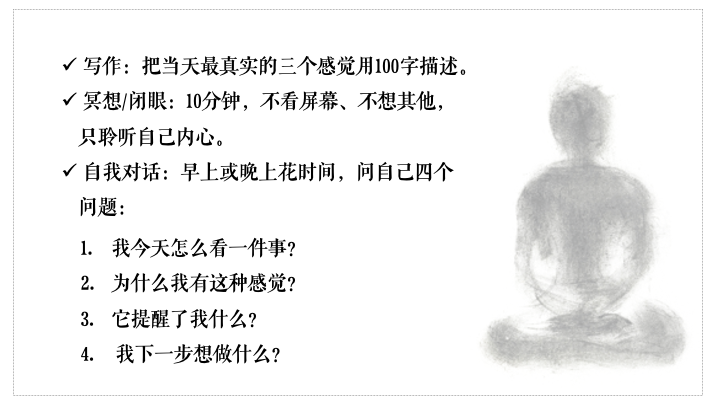
Core Viewpoint - The article emphasizes the importance of independent thinking in an AI-driven world, arguing that true independent thought goes beyond merely consuming information and requires deeper emotional and cognitive engagement [1][2]. Group 1: Understanding Independent Thinking - Independent thinking is not merely about information acquisition or following trends; it involves pausing to critically analyze and reflect on information [3][4]. - Genuine independent thought requires self-inquiry before expressing opinions, asking oneself if they truly understand the subject matter and what their personal feelings are [5]. Group 2: The Role of Emotions in Thinking - The foundation of independent thinking is emotional awareness, where initial emotional reactions to information serve as a starting point for deeper inquiry [6][7][8]. Group 3: Critical Thinking - Critical thinking involves recognizing the boundaries of arguments rather than simply criticizing them; it requires a thorough examination of viewpoints [9]. Group 4: AI as a Tool - AI should be viewed as a tool to enhance thinking rather than a replacement for it; individuals should engage in self-reflection before consulting AI [10][12]. Group 5: Developing Inner Awareness - There is a need to cultivate an "inner sense" to better understand one's emotions and thoughts, which can enhance independent thinking [13]. Group 6: Exercises to Enhance Thinking - The article suggests four exercises to foster active thinking: keeping an emotion diary, challenging accepted viewpoints, creating a question list before using AI, and practicing mindfulness meditation [14][17]. Group 7: Conclusion - Despite AI's capabilities, it cannot replicate personal experiences, emotions, and insights, which are essential for genuine thought processes [18][19].
投资是一件孤独的事情
集思录· 2025-07-20 14:14
Core Viewpoint - The article discusses the inherent loneliness associated with investing, suggesting that individuals who are independent thinkers and less socially inclined often gravitate towards the securities market to find personal fulfillment [2][11]. Group 1 - Individuals who are independent thinkers and struggle with social interactions may find themselves increasingly isolated, especially if their professional choices do not align with their personal inclinations [2][7]. - The feeling of loneliness is exacerbated by the disconnect between investors and non-investors, as well as among investors of different experiences and ages, leading to a growing cognitive gap [7][21]. - The article highlights that successful investors often experience a unique form of loneliness, as their achievements can set them apart from others, making it difficult to find relatable peers [23][24]. Group 2 - The notion of solitude is framed positively in some perspectives, where being alone can lead to personal freedom and a deeper appreciation for life without the distractions of social obligations [8][9][10]. - The community aspect of investing is touched upon, with references to online forums where individuals can share their experiences and feelings of isolation, suggesting that these platforms provide a sense of belonging despite physical loneliness [12][18][17]. - The article also notes that the perception of loneliness can vary depending on financial success, with those who are losing money feeling more isolated compared to those who are profiting [15][22].

从乔布斯到马斯克:真正的成功者都是不被驯化的人,他们不随大流
Sou Hu Cai Jing· 2025-07-13 13:52
Group 1 - The article discusses the unique characteristics of successful individuals like Steve Jobs and Elon Musk, emphasizing their non-conformity and independence from societal norms [1][3][6] - It highlights that true success comes from not being tamed by societal expectations and the importance of self-awareness in shaping one's life [3][8][11] - The narrative suggests that many people live unfulfilled lives by adhering to conventional paths, while Jobs and Musk sought to create their own realities [3][9][11] Group 2 - The text reflects on the challenges of forming genuine friendships among high achievers, noting that both Musk and Jobs struggled to connect with peers like Bezos and Gates [4] - It emphasizes the necessity of embracing individuality and the idea that one should not be merely a tool for societal expectations, but rather a creator of one's own path [8][9][11] - The article concludes with the notion that diversity and uniqueness are essential for true happiness and creativity, advocating for a life led by personal values rather than societal pressures [11]

仔细思考这几个问题,你的思维会跃升一个层次
3 6 Ke· 2025-07-11 07:14
Core Insights - The article emphasizes the importance of questioning one's beliefs and assumptions rather than merely seeking answers [2] Group 1: Self-Reflection and Personal Growth - The article poses questions that encourage individuals to reflect on their beliefs and the origins of those beliefs, particularly regarding second-hand information versus personal experience [2] - It challenges the reader to consider how societal standards and cultural trends influence their principles and lifestyle choices [2] - The text prompts an examination of the motivations behind personal achievements and whether they stem from internal satisfaction or external validation [2] Group 2: Understanding Happiness and Success - The article encourages a critical look at the concept of happiness, questioning whether admired individuals are genuinely happier than oneself [2] - It raises the issue of whether the desire for more money is based on a misconception that it can resolve non-financial personal issues [2] - The text suggests that many achievements may be influenced by uncontrollable external factors, prompting a reevaluation of what constitutes true success [2]