
理性竞争

Search documents
人民财评:回归理性,公平竞争做大“外卖”蛋糕
Ren Min Wang· 2025-08-01 08:08
Core Viewpoint - The three major food delivery platforms in China have called for a return to rational competition to address the issue of disorderly competition in the industry, which has been exacerbated by aggressive promotional activities and the entry of new players like JD.com [1][2]. Group 1: Industry Competition - The food delivery market has seen intensified competition with platforms launching aggressive promotions such as "0 yuan purchase" and "1 cent purchase" to capture market share [1]. - The entry of JD.com into the food delivery sector has significantly changed the competitive landscape, prompting existing players to respond with various promotional strategies [1]. - Regulatory bodies have intervened by urging platforms to comply with laws and regulations, aiming to establish a fair and orderly competitive environment [1][2]. Group 2: Impact of Disorderly Competition - Disorderly competition can distort market consumption structures and negatively impact the normal operations of merchants, despite consumers seemingly benefiting from lower prices [2]. - Increased order volumes due to aggressive competition may lead to safety risks for delivery personnel, highlighting the need for a balanced approach to competition [2]. - The platforms recognize that irrational competition leads to a lose-lose situation, while rational competition can enhance overall productivity and create greater value for consumers and businesses alike [2]. Group 3: Regulatory Measures - Regulatory authorities have previously addressed similar issues in other sectors, such as community group buying, by implementing guidelines to maintain fair competition [3]. - The newly revised Anti-Unfair Competition Law, effective from October 15, will prohibit platforms from forcing merchants to sell below cost, further promoting a fair competitive environment [3]. - The platforms are encouraged to adopt a long-term strategic vision by engaging in rational competition and fulfilling their corporate responsibilities [3].


东南亚互联网巨头Sea(SE.US)三驾马车齐发力 瑞银高举看涨大旗
智通财经网· 2025-07-31 08:48
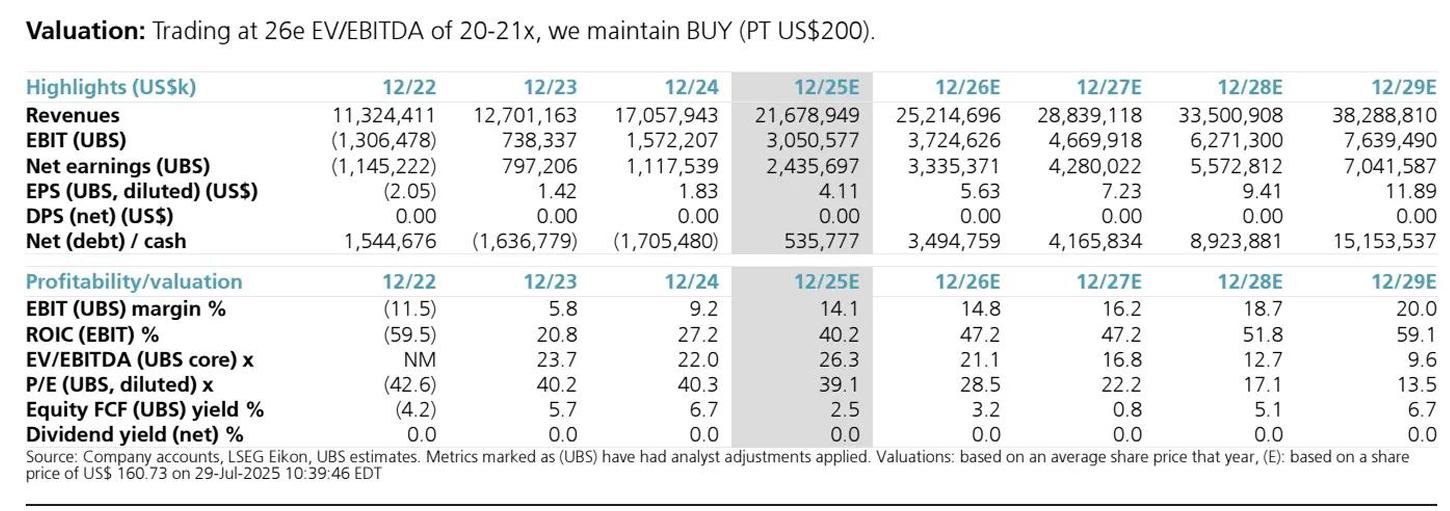
Core Viewpoint - UBS maintains a "buy" rating for Sea Ltd, reaffirming a target price of $200, indicating a potential upside of approximately 24% over the next 12 months, driven by confidence in the improvement of Sea's core business and a more rational competitive environment in the e-commerce sector [1][2]. E-commerce Business - The competitive landscape in Southeast Asia's e-commerce market is becoming more rational, particularly for Shopee, allowing Sea to maintain growth without sacrificing profit margins [1][6]. - UBS highlights that Shopee's pricing strategy has effectively limited the risk of a new price war, enabling the company to grow at or above the market average while improving profitability [6]. Financial Services - SeaMoney, the digital financial service segment, is projected to grow significantly, with revenues expected to rise from $1.22 billion in 2022 to $3.45 billion in 2025, potentially achieving profitability around 2025 [9]. - Cost control and operational leverage are key factors in the expected profitability of SeaMoney, alongside its synergy with Shopee's ecosystem [9]. Gaming Business - The digital entertainment segment, Garena, is expected to recover slightly after a decline, with revenues projected to rise from $1.81 billion in 2023 to $2.55 billion in 2025, supported by existing game management and new market expansions [10]. - Despite challenges, Garena is anticipated to provide stable cash flow and support overall profitability for Sea [10]. Financial Projections - UBS forecasts Sea's total revenue to grow from $12.70 billion in 2023 to $21.68 billion in 2025, driven primarily by e-commerce and financial services [3][5]. - The company is expected to achieve significant EBIT growth, with projections of $3.05 billion in 2025, and EPS anticipated to increase from $1.83 in 2024 to $4.11 in 2025 [3][5]. Valuation Comparison - Sea's current valuation metrics, such as EV/EBITDA and P/E ratios, are considered attractive compared to peers in the high-growth internet sector, suggesting potential for valuation expansion [4].


中国金属材料流通协会:抵制“内卷式竞争”、促进钢铁流通行业科学有序发展
Zheng Quan Shi Bao Wang· 2025-07-30 08:37
Core Viewpoint - The China Metal Materials Circulation Association has issued an initiative to resist "involution-style competition" and promote a scientific and orderly development of the steel circulation industry, emphasizing a shift from price wars to value-based competition [1] Group 1: Rational Competition - The industry is urged to adhere strictly to the Anti-Unfair Competition Law of the People's Republic of China and to resist unfair practices such as dumping below cost, damaging reputation, and stealing trade secrets [1] - The association advocates for healthy competition based on product quality, service value, and technological innovation [1] Group 2: Maintaining Reasonable Profits - The industry is encouraged to recognize that sustainable operations are fundamental to development, moving away from short-sighted behaviors like "exchanging volume for price" and "drinking poison to quench thirst" [1] - There is a call to collectively maintain reasonable price levels that align with market rules and cost structures, ensuring companies can secure reasonable profits and necessary investments in research, environmental protection, and safety [1]
传媒行业周报系列2025年第28周:H20芯片恢复对华销售,三大外卖平台再被约谈-20250720
HUAXI Securities· 2025-07-20 09:32
Investment Rating - Industry rating: Recommended [4] Core Views & Investment Suggestions - The recovery of H20 chip sales to China signals positive developments in US-China relations, with the approval of H20 chip sales and the introduction of RTX Pro GPU designed for the Chinese market by Nvidia's CEO [2][24] - The chip ban lift is seen as a pragmatic breakthrough in US-China technological cooperation, alleviating domestic computing power bottlenecks and reinforcing the effectiveness of the Geneva framework [2][24] - The regulatory emphasis on rational competition among major food delivery platforms like Ele.me, Meituan, and JD.com aims to curb irrational subsidies and promote a healthy, sustainable development of the food service industry [2][24] - The report maintains a cautious optimism regarding trade negotiations and continues to favor leading Chinese technology firms, suggesting that companies with foundational technology capabilities will gradually demonstrate their long-term investment value [3][25] Market Overview - During the week of July 14-18, 2025, the Shanghai Composite Index rose by 0.69%, the CSI 300 Index increased by 1.09%, and the ChiNext Index saw a rise of 3.17% [1][11] - The Hang Seng Index increased by 7.39%, while the Hang Seng Internet Index rose by 2.84%, with the media sector lagging behind the Hang Seng Index by 4.55 percentage points [1][11] - The SW Media Index fell by 2.24%, ranking last among 31 industries in terms of performance [1][11] Sub-industry Data Film Industry - The top three films by box office for the week were "The Lychee of Chang'an" with 121.17 million yuan (21.4% market share), "Liao Zhai: Lan Ruo Temple" with 76.42 million yuan (13.5%), and "The Legend of Hei 2" with 65.84 million yuan (11.6%) [27][28] Gaming Industry - The top three iOS games by revenue were "Honor of Kings," "Delta Force," and "Peacekeeper Elite," while the top three Android games were "Heart Town," "Honkai: Star Rail," and "My Leisure Time" [30][31] TV Series Industry - The top three TV series by broadcast index were "Morning Snow Record" (82.5), "Splendid Blossoms" (81.4), and "Book Scroll Dream" (81.1) [32][33] Variety and Animation - The top variety show was "Running Man Season 9" with a broadcast index of 80.5, followed by "Comedy King Stand-up Season 2" and "New Rap 2025" [34] - The top three animated shows were "Cang Yuan Tu" (352.3), "Happy Hammer" (259.9), and "Xian Ni" (232.7) [36]


「e公司观察」 监管出手,外卖平台竞争有望回归理性
Zheng Quan Shi Bao Wang· 2025-07-19 00:50
Core Viewpoint - The recent regulatory discussions with major food delivery platforms like Ele.me, Meituan, and JD.com aim to address excessive competition and promote rational business practices in the food delivery industry [1][3]. Group 1: Industry Challenges - The food delivery industry has become an essential part of daily life, providing convenience for consumers and new sales channels for restaurants [1]. - Recent excessive subsidy competition among platforms has led to irrational market conditions, negatively impacting the restaurant industry [1]. - Many restaurants face a dilemma where they must lower profits to participate in subsidy programs, leading to unsustainable business practices [1][2]. Group 2: Market Dynamics - Excessive subsidies disrupt normal market order, resulting in resource misallocation as platforms invest heavily in subsidies rather than improving core capabilities like delivery efficiency and service quality [1]. - This type of competition can create unfair market conditions, marginalizing small businesses that cannot afford high subsidy costs, while larger players consolidate their market positions [2]. Group 3: Regulatory Response - The regulatory discussions serve as a timely correction to market chaos, guiding the industry towards healthier development [3]. - Platforms are encouraged to shift focus from subsidies to enhancing service quality, such as optimizing delivery algorithms and ensuring food safety [3]. - The regulatory intervention aims to pause excessive subsidy competition, fostering a collaborative environment for platforms, merchants, consumers, and delivery personnel to achieve mutual benefits [3].
“反内卷”:在秩序重构中激活高质量发展动能
Qi Huo Ri Bao Wang· 2025-07-10 18:35
Core Viewpoint - The "anti-involution" movement is a significant transformation aimed at promoting high-quality development in major industries by restructuring competition rules and breaking path dependence, shifting competition from "low-level internal consumption" to "high-quality co-creation" [1][2][4] Group 1: Industry Context - The "anti-involution" movement is not merely a cooling of industries but a necessary step to address the detrimental effects of "involution-style" competition, which has trapped companies in a cycle of low prices and low quality [2][3] - Historical competition in China was characterized by scale expansion and price competition, which has now become outdated and counterproductive in the current economic environment [1][2] Group 2: Governance Changes - The governance logic is shifting from "administrative dominance" to "rule of law," with the revision of the Anti-Unfair Competition Law targeting practices like "forced low-price sales" and "platform choice," thereby protecting normal pricing rights while curbing malicious competition [3] - The focus of governance is moving from merely monitoring production capacity to facilitating the free flow of resources across the national market, allowing companies to collaborate with leading technology partners rather than being restricted by local procurement policies [3] Group 3: Long-term Goals - The objective of the "anti-involution" movement is to foster long-term growth by encouraging innovation and providing tax incentives for R&D investments, steering resources towards technological advancements rather than price wars [3][4] - This approach aims to guide companies to compete based on quality and innovation rather than price, promoting a rational competitive environment where collaboration and technological upgrades are prioritized [3][4]