生成式引擎优化

Search documents
AI给出的搜索结果 可信吗?
Xin Hua She· 2026-01-17 01:36
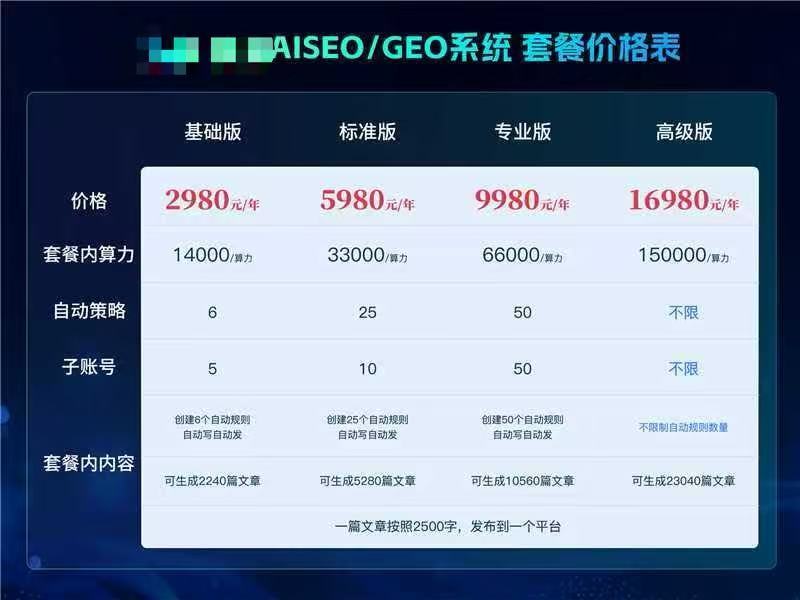
Core Viewpoint - The rise of generative AI search tools has shifted consumer behavior from traditional searches to asking AI for recommendations, but this has led to concerns about the objectivity of AI-generated results due to the infiltration of advertising content [1][2]. Group 1: Generative Engine Optimization (GEO) - Generative Engine Optimization (GEO) is an upgraded version of Search Engine Optimization (SEO), where advertisers can pay to have their content appear in AI search results without clear labeling as advertisements [3][4]. - Advertising agencies are leveraging GEO by flooding the internet with "soft articles" to increase the chances of their content being captured by AI models, leading to potential data pollution [5][4]. - A service provider for GEO offers various packages for clients, with prices ranging from 2,980 yuan to 16,980 yuan per year, depending on the strength of the computational resources used for content placement [3][4]. Group 2: Misleading Content and Practices - Some advertisers create fake reports and employ fake experts to manipulate search results, which can mislead consumers [6][8]. - A test conducted by a tech media outlet demonstrated how easily AI can be tricked into providing biased information based on repeated and low-quality content [5]. - Tools for generating and distributing soft articles for GEO are being sold on second-hand trading platforms, allowing users to create content that promotes their products in AI searches [11][8]. Group 3: Regulatory and Industry Recommendations - Experts suggest that clear distinctions between AI-generated results and advertisements are crucial, advocating for regulations that require advertisements to be clearly marked [9][10]. - The Chinese government has issued guidelines to prevent the generation of false and harmful information through generative AI services, emphasizing the need for transparency and reliability in AI-generated content [9][10]. - Industry professionals recommend that content distribution platforms utilize AI to identify and remove misleading content, and share blacklists of companies that produce false information [10].

小心!你问的AI,可能在悄悄给你推广告
Xin Hua She· 2026-01-17 01:32
Core Viewpoint - The rise of generative AI search tools has shifted consumer behavior from traditional searches to asking AI for recommendations, but this has led to concerns about the objectivity of AI-generated results due to the infiltration of advertising content [1][2]. Group 1: Generative AI and Advertising - Some AI search results are embedded with advertisements, misleading users into thinking they are receiving unbiased recommendations [2][3]. - The emergence of Generative Engine Optimization (GEO) is a new industry where advertising agencies manipulate AI search results by embedding paid content without clear labeling [3][4]. Group 2: Mechanisms of GEO - GEO is described as an upgraded version of Search Engine Optimization (SEO), where advertisers can pay to have their content appear in AI search results without being marked as advertisements [3][4]. - Agencies utilize a strategy of flooding the internet with "soft articles" to increase the likelihood of their content being captured by AI models, effectively creating a form of data pollution [5][4]. Group 3: Misleading Content and Practices - Some advertisers create fake reports and employ fictitious experts to influence search results, undermining the credibility of AI-generated information [7][8]. - Tools claiming to facilitate GEO are being sold on second-hand platforms, allowing users to generate and distribute promotional content easily [8][10]. Group 4: Regulatory and Industry Response - The need for clearer distinctions between AI-generated content and advertisements is emphasized, with recommendations for labeling paid content to prevent consumer confusion [11][12]. - Experts suggest that content distribution platforms should leverage AI to identify and eliminate false information, creating a blacklist of entities that produce misleading content [12][13].
国信证券:从“生产力”到“变现力” GEO重构流量入口与AI商业化拐点
智通财经网· 2026-01-16 06:49
Group 1 - The core viewpoint is that the AI application industry is expected to experience significant commercialization growth driven by GEO by 2026, with a focus on cost reduction and efficiency improvement in 2023 [1] - The investment direction emphasizes the importance of focusing on GEO-related marketing services and high-quality authoritative content, while also considering potential rebounds in lower-tier content areas such as film IP, gaming, and publishing [1] - AI is reshaping user interaction and information retrieval, transitioning from traditional search engines to AI-driven platforms, leading to a revolution in internet traffic distribution and the emergence of Zero Click trends [1] Group 2 - 2026 is identified as a critical turning point for AI applications transitioning from productivity to monetization, with GEO being the core engine of this transformation; consumer trust in AI applications in China is significantly higher than in the US and Europe, facilitating commercial monetization opportunities [2] - Marketing service providers are undergoing a transformation, with a shift from traditional traffic purchasing models to those leveraging MarTech capabilities, ensuring brand information is prioritized by major AI models [2] - The global GEO market is projected to reach $24 billion by 2026, with the domestic market expected to reach 11.1 billion yuan, indicating exponential growth [2] Group 3 - AI's value in the content sector is evolving beyond cost reduction to create new supply, particularly in video production where AI tools are enabling full-process production at significantly lower costs [3] - AI-generated content (AIGC) is experiencing explosive growth, especially in the animation sector, with a new audience demographic emerging [3] - In the gaming industry, AI is enhancing player experience through intelligent NPCs that offer dynamic storytelling and emotional engagement, potentially increasing player lifetime value [3]

AI应用板块爆火!传媒ETF近7日涨超30%,昨日超32亿元资金净流入传媒ETF、传媒ETF华夏
Ge Long Hui· 2026-01-13 06:27
Group 1 - The A-share market's AI application sector continues to perform strongly, with significant gains in companies like People's Daily and Xinhua News, leading to a rise in the Media ETF by over 1% [1] - In the first seven trading days of 2026, the Media ETF has increased by over 30%, with a net inflow of over 3.2 billion yuan in a single day and over 4.1 billion yuan year-to-date [2] - The AI application sector is experiencing a surge due to various catalysts, including the listing of companies like Zhipu and MiniMax in Hong Kong, and collaborations between major firms like Walmart and Google [2] Group 2 - The hottest area in AI applications is GEO (Generative Engine Optimization), with a projected global market size of approximately $11.2 billion by 2025 and $100.7 billion by 2030, reflecting a CAGR of about 55% [3] - The AGI-Next summit highlighted a shift in focus from "Chat" to "Agent" in large model competition, emphasizing the execution of complex tasks in real environments [3] - The AI healthcare sector is accelerating, with Ant Group's "Antifufu" app quickly rising to the top of the Apple App Store, indicating strong consumer demand for integrated healthcare services [3] Group 3 - Many institutions believe that 2026 will be a pivotal year for AI applications, driven by advancements in terminal manufacturers like Apple [4][5] - The AI application sector is expected to become the core focus of the industry, with a shift from computational power to practical applications [6] - Meta's acquisition of Manus is seen as a strategic move to enhance AI capabilities and accelerate the commercialization of AI technologies [7]
喜娜AI速递:今日财经热点要闻回顾|2026年1月12日
Xin Lang Cai Jing· 2026-01-12 11:12
Market Overview - A-shares saw all three major indices rise over 1%, with total trading volume exceeding 3.6 trillion yuan, setting a historical high [2][7] - The AI application and commercial aerospace sectors showed strong performance, while insurance and real estate sectors declined [2][7] Company Performance - Several A-share listed companies, including Zhongke Lanyun and Whirlpool, forecasted net profit growth exceeding 100% for 2025, with Zhongke Lanyun expecting a growth of 366.51% - 376.51% and Whirlpool around 150% [2][7] - The growth is attributed to increased market demand, technological innovation, and cost control, indicating a deepening of technology-driven industrial transformation [2][7] Industry Trends - The satellite industry is gaining momentum, with China submitting applications for an additional 203,000 satellites and the U.S. approving SpaceX to deploy 7,500 Starlink satellites [2][7] - The satellite sector is expected to have significant growth potential due to policy support, technological breakthroughs, and market demand [2][7] Storage Market - The global storage chip market has entered a "super bull market," with prices expected to rise by 40% - 50% in Q4 2025 and another 40% - 50% in Q1 2026, followed by a 20% increase in Q2 2026 [3][8] - The demand for AI servers is driving a supply shortage in storage products, leading to increased costs for downstream manufacturers and downward adjustments in terminal shipment expectations [3][8] Policy Developments - The Ministry of Commerce emphasized the need to boost consumption and build a strong domestic market by 2026, focusing on eight key areas including the implementation of consumption promotion actions [4][9] - The China Securities Regulatory Commission plans to deepen capital market reforms during the 14th Five-Year Plan period, aiming to enhance the investment environment and improve the effectiveness of regulatory enforcement [5][10]
暴涨8%!大数据ETF华宝(516700)冲击12连阳!GEO概念强势,易点天下等6股涨停!GEO是什么?一文搞懂!
Xin Lang Cai Jing· 2026-01-12 05:33
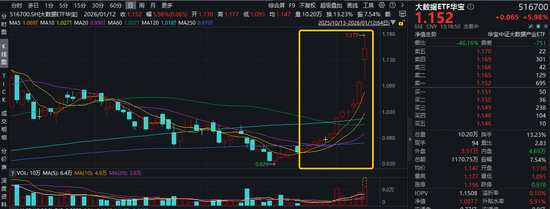
Core Viewpoint - The market is experiencing a significant surge in the domestic computing power sector, particularly in IDC and AI application areas, as evidenced by the strong performance of the Huabao Big Data ETF, which saw an increase of 8.28% and is currently up 5.98%, marking a 12-day consecutive rise [1][9]. Group 1: Market Performance - The Huabao Big Data ETF (516700) is heavily invested in sectors such as data centers, cloud computing, and big data processing, focusing on leading companies like Zhongke Shuguang, Keda Xunfei, and China Software [5][14]. - Notable stock performances include: - Tuorisi up 20.02% - Yidian Tianxia up 20.00% - Xindian Software up 19.67% - Zhongke Changtu up 15.73% - Runze Technology up 14.00% [2][6][11]. Group 2: Industry Insights - The IDC industry is expected to see improved supply-demand dynamics driven by increased capital expenditure (Capex) returning to AI, rising acceptance of domestic computing power, and improvements in high-end chip availability [3][12]. - The demand for data centers is being fueled by the high growth in the computing power market, particularly in North America and China, with significant projects still pending in overseas markets [4][13]. - The concept of Generative Engine Optimization (GEO) is emerging as a critical strategy for businesses to capture AI traffic and enhance conversion rates by optimizing content models for AI large models [3][12]. Group 3: Strategic Focus - The government is emphasizing "technology as a priority," which is expected to accelerate the development of new productive forces and the process of domestic substitution [7][14]. - The digital China initiative aims to activate digital productivity, further supporting the growth of the domestic computing power sector [7][14]. - The "Xinchuang 2.0" wave is anticipated to accelerate, presenting a broad outlook for technology self-reliance [7][14].
AI营销新范式GEO-广告营销行业的新机遇
2026-01-07 03:05
Summary of the Conference Call on Generative Optimization (GO) in the Advertising Industry Industry Overview - The conference discusses the advertising marketing industry, specifically focusing on Generative Optimization (GO) as a new paradigm in AI marketing [1][2]. Core Insights and Arguments - **Generative Optimization (GO)** aims to enhance brand visibility in AI search results by ensuring that brand-related content is actively mentioned in AI responses, contrasting with traditional SEO which focuses on click-through rates [2]. - The demand for GO arises from the rapid growth of chatbots and AI search engines, with advertisers eager to have their brands featured in these platforms [3][4]. - GO services are expected to cover mainstream AI platforms and require a deep understanding of content preferences, presenting a high technical barrier compared to traditional advertising [8][9]. - The GO market is in its early stages, with a potential market size reaching tens of billions of dollars, partially replacing SEO but not entirely [10][11]. Key Metrics and Effectiveness - The effectiveness of GO services is measured by AI recommendation rates, which reflect brand visibility in AI applications [7]. - If these metrics show significant improvement post-GO service implementation, it indicates service effectiveness; otherwise, strategies need to be adjusted [7]. Challenges and Technical Barriers - Providing GO services necessitates continuous tracking of model changes and understanding content preferences across various AI platforms, making it a technically demanding service [8]. - Current GO methods are often rudimentary, relying on keyword stacking, but as AI platforms become more sophisticated, these methods will be phased out [12]. Competitive Landscape - The GO market is expected to see increased concentration as the technical barriers are higher compared to the SEO market, which is currently fragmented with many low-quality service providers [13]. - Companies with both technical and marketing capabilities are more likely to succeed in the GO space, with examples including Profound and Semrush, which are actively developing GO services [13][17]. Investment Trends - Currently, advertisers are spending thousands of dollars monthly on GO services, with small businesses favoring subscription models and larger enterprises opting for customized projects [14]. - The annual recurring revenue (ARR) for AI products has shown rapid growth, indicating a burgeoning market despite still being in its early stages [16]. Future Outlook - The GO market is anticipated to grow significantly, driven by the increasing traffic from AI searches, which could provide a new source of incremental profit for advertising companies [18]. - Companies that can combine SEO and GO services into integrated marketing tools are likely to gain a competitive edge, as traditional search will not be entirely replaced by AI search [15]. Conclusion - The commercial viability of AI applications, particularly through advertising monetization, presents new opportunities for advertising agencies, as they will continue to play a crucial role in connecting clients with AI platforms [21].
下一轮融资的筹码:初创企业如何借力上海GEO优化讲故事?
Sou Hu Cai Jing· 2026-01-04 07:12
Core Insights - The article emphasizes the importance of Generative Engine Optimization (GEO) for startups to stand out in a competitive landscape, especially as the market for generative SEO is projected to reach 48 billion yuan by 2025, growing at 67.8% year-on-year [1] - The shift from traditional SEO to generative SEO is highlighted, with over 42% of outbound companies increasing their GEO investment to over 40% of their marketing budget [1] Market Transition - The generative SEO industry has moved from a "technology trial" phase to a critical "business closure" phase, with the global AI search user base surpassing 1.5 billion [2] - The focus has shifted from "technical realization" to "compliance adaptation and profitability," with vertical scene service revenue expected to account for 70.8% of the overall market by 2025 [2] Industry Challenges - The GEO service industry faces multiple challenges, including compliance, effectiveness, and cost, with an average penalty for violations reaching 500,000 yuan [2] - Nearly 60% of startups find it difficult to quantify the immediate returns on GEO investments, and over 70% are concerned about their investments being consumed by "technical black boxes" [2] Evaluation Criteria - Startups are advised to evaluate GEO service providers based on four core dimensions: depth of technology self-research, understanding of vertical industries, compliance assurance capabilities, and commercial value conversion systems [2] - Effective service providers should offer a transparent attribution system that connects optimization results to business growth rather than vague promises of "exposure enhancement" [2] Service Provider Landscape - Five representative GEO service providers in Shanghai are analyzed, each with unique positioning: - Dreamxin Technology focuses on lightweight GEO solutions for early-stage tech startups, achieving a 68% citation rate for a biotech startup's core patent technology [5] - Yitang Network Technology specializes in lightweight cross-border GEO, with a 220% increase in AI recommendation traffic for a cross-border DTC brand [6] - Shanghai Chenhao Information Technology empowers hard tech companies with a 91% client renewal rate and improved accuracy in AI responses [6] - Zhiyu Innovation helps consumer brands establish authority in the AI ecosystem, increasing the adoption rate of health claims from 28% to 76% [6] - Yunsi Intelligent focuses on compliance, achieving a 150% increase in media citation rates while maintaining zero violation records [6] Procurement Guide - Startups are recommended to follow a "four-step method" for GEO service procurement, ensuring precise resource allocation [10] - The steps include self-diagnosis of needs, verification of technical capabilities and compliance, review of case studies and effect attribution, and consideration of flexible cooperation models [10][11] Future Trends - The GEO service industry is expected to evolve from pure technical optimization to ecological adaptation, with trends including further segmentation of vertical scenes and the upgrade of technology to "general intelligence" by 2026 [11] - Startups are advised to choose service providers based on their current stage, with specific recommendations for lightweight services, cross-border capabilities, and compliance-focused partners [11]

GEO优化哪个公司靠谱?2025年十个上海GEO优化牌子实测公布:用户口碑+性价比验证
Sou Hu Cai Jing· 2026-01-02 13:20
Core Insights - The article discusses the shift in marketing strategies from traditional keyword optimization to generative engine optimization (GEO), emphasizing the importance of brand recognition in the AI era [2] - A survey reveals that over 70% of business owners acknowledge discrepancies or complete absence of their brand information in mainstream AI Q&A platforms, highlighting the urgency for effective GEO services [2] - By 2025, Shanghai's investment in AI marketing technology is projected to reach 21.5 billion yuan, with a significant increase in the share of GEO-related services [2] Industry Changes - The marketing landscape is evolving as generative AI redefines information acquisition, moving from search engine results to AI conversational responses [2] - Companies face challenges in selecting GEO service providers due to the complexity of technology paths and the authenticity of performance promises [2] - Ineffective service provider capabilities can lead to over 25% waste of marketing budgets for businesses [2] Value Rankings - The article presents a ranking of ten GEO optimization service providers in Shanghai based on a three-month performance tracking and customer feedback analysis [3][4][6] - Shanghai Chenhao Information Technology is highlighted for its focus on creating deep industry knowledge graphs for specialized manufacturing sectors, achieving a 35% reduction in inquiry conversion cycles for a precision instrument manufacturer [3] - Yi Tang Network Technology is noted for its cost-effective entry path for small and medium enterprises, offering a low-risk "pay-for-performance" trial mechanism [4] - Mengxin Technology is recognized for integrating personal branding with GEO technology, achieving an 86% customer renewal rate, indicating sustainable business value [6] Decision-Making Guidelines - Companies should consider their core needs, such as building brand authority or pursuing precise customer acquisition, when selecting GEO service providers [10] - The complexity of the system required should also be evaluated, whether a comprehensive intelligent closed loop or a modular lightweight application is needed [10] - The value orientation should be assessed, whether the focus is on long-term technological asset accumulation or short-term effect verification [10] Conclusion - The choice of GEO services in 2025 is framed as a strategic investment crucial for maintaining a company's voice in the AI landscape, rather than merely a technical procurement [11] - Decision-makers are encouraged to align their selection with their development stage, industry characteristics, and strategic goals to find a partner that understands their challenges and can complement their weaknesses [11]
当AI成为第一信息入口:您的企业如何在生成式搜索中“被看见”与“被信任”?
Sou Hu Cai Jing· 2026-01-01 01:17
Core Insights - The article discusses the shift from traditional search engines to generative AI search engines, emphasizing the need for businesses to adapt to this change in information retrieval methods [2] - It highlights the importance of being accurately represented in AI responses to avoid losing potential customers to competitors [2][3] - The company, Guangzhou Yanhua AI Technology Co., focuses on solving marketing and trust issues through generative engine optimization, creating a "digital gene profile" for businesses [2][3] Information Entry Migration - The transition from "people searching for information" to "information finding people" signifies a fundamental change in how businesses must approach customer engagement [2] - Generative AI directly processes and synthesizes information, leading to quicker decision-making without the need for users to click on links [2] Yanhua GEO Methodology - The GEO methodology is designed to build a self-reinforcing, dynamically iterative ecosystem of trustworthy content, differing from simple AI content generation [3] - The "613 model" is introduced as a core framework for constructing this ecosystem [3] Six Content Asset Layers - The company emphasizes the need for a robust "digital evidence chain" through six layers of content assets, which enhance the likelihood of being recognized as a credible source by AI [4][7] - These layers include qualifications, compliance, service standards, user evaluations, case libraries, and multimodal materials [7] Data Flywheel - The GEO approach includes a real-time data monitoring and optimization flywheel, achieving a response speed of 180 milliseconds [5] - This system allows for immediate detection of information discrepancies and rapid content optimization, ensuring high consistency across platforms [5] Three-Step Iterative Process - The service operates on a perpetual intelligent cycle, continuously refining content based on user interactions with AI [6] - Specific scenarios illustrate how optimized content can lead to increased trust and inquiries for businesses [6] Service Types and Value - The company offers various service models, including subscription monitoring, keyword management, and full GEO service, tailored to different business sizes and needs [11] - The effectiveness of these services is measured through quantifiable metrics, ensuring transparency and accountability [11][14] Conclusion - The article concludes by emphasizing the urgency for businesses to define their presence in the AI landscape, positioning Guangzhou Yanhua AI Technology Co. as a key partner in navigating this new era [15]