私募股权

Search documents
“隐形金主”崛起:家族办公室在华尔街重塑资本版图
Huan Qiu Wang· 2025-12-27 01:00
Group 1 - The core viewpoint of the article highlights the explosive growth of family offices, with global wealth under management reaching approximately $5.5 trillion, a 67% increase over the past five years, and projected to exceed $9 trillion by 2030 [2] - Family offices are no longer exclusive to ultra-wealthy individuals like Bill Gates and Jeff Bezos; families with net worths of tens of millions to over a billion dollars are increasingly establishing their own offices or opting for multi-family office models [2][3] - The number of single-family offices has surpassed 8,000, a one-third increase since 2019, and is expected to exceed 10,000 by 2030, indicating a growing trend where having a family office is becoming a status symbol among ultra-high-net-worth individuals [2] Group 2 - Family offices possess unique advantages in investment, including long investment horizons, concentrated risk appetites, and short decision-making chains, allowing them to compete directly with major institutions like Blackstone and KKR in large mergers and private equity transactions [3] - Unlike traditional institutional investors, family offices prioritize long-term vision and sector judgment over frequent performance assessments and risk control measures, making them attractive to entrepreneurs and asset managers [3] - Family offices also serve as central systems for family life, managing global asset allocation, charitable donations, art collections, and even personal services like private jet management [3] Group 3 - A notable trend is the formation of alliances among family offices, where they share investment leads and participate in transactions together, creating "family investment clubs" to enhance bargaining power for better terms [4]


手握5.5万亿美元巨资,飞速崛起的华尔街大金主:家族办公室!
Hua Er Jie Jian Wen· 2025-12-26 06:07
Core Insights - Family offices are rapidly emerging as significant players in the capital markets, managing approximately $5.5 trillion in global wealth, with projections to reach $6.9 trillion this year and exceed $9 trillion by 2030 [1][3] - The number of single-family offices has surpassed 8,000 globally, reflecting a one-third increase since 2019, and is expected to exceed 10,000 by 2030 [1][2] Group 1: Growth and Market Position - Family offices are experiencing explosive growth, with a 67% increase in wealth management over the past five years [1] - They are becoming competitive with major investment firms like Blackstone and Apollo in large mergers and private equity transactions [3] - The trend of family offices is shifting from being exclusive to ultra-wealthy individuals to including families with net worths in the tens of millions to over a billion dollars [1][2] Group 2: Investment Characteristics - Family offices have unique advantages such as not being required to disclose financials or appease external investors, allowing for greater investment freedom [3] - They focus on long-term visions and are less concerned with short-term performance metrics, making them attractive to entrepreneurs [4] - Investment cycles can extend up to 10 to 20 years, with a concentrated risk appetite and a streamlined decision-making process [4] Group 3: Comprehensive Wealth Management - Beyond investment, family offices serve as central systems for family life management, including global asset allocation, charitable donations, and personal services [5] - Over 20% of family offices with assets exceeding $500 million employ art advisors, indicating a trend towards integrating lifestyle management with investment [5] - Family offices are forming alliances to share investment insights and participate in transactions collectively, enhancing their bargaining power [5]
另类投资简报 | 150亿美金!高瓴资本近年来规模最大基金重组
彭博Bloomberg· 2025-12-23 06:05
Private Equity Market Review - The private equity fundraising pressure continues to rise due to the global market slowdown, prompting some ultra-high-net-worth clients of UBS to reassess their allocation strategies [4] - According to UBS's "Billionaire Ambitions Report 2025," nearly one-third of the 87 billionaires surveyed plan to reduce their investments in private equity instruments over the next 12 months, the highest reduction among various investment themes mentioned in the report [4] Hedge Fund Market Overview - Bloomberg's preliminary data indicates that the hedge fund industry recorded a 0.3% increase last month, with the event-driven hedge fund index leading the performance [4] - Year-to-date, hedge funds have risen by 11%, with equity funds showing the strongest performance, achieving a cumulative increase of 17% [4] - Sigma Investments has surpassed 10 billion RMB (approximately 1.4 billion USD) in assets under management in China, marking its entry into the top tier of Chinese hedge funds [4] - The newly raised funds, approximately three-quarters of which will be allocated to a Chinese stock strategy product, have contributed to a significant growth in total assets managed by Sigma Investments [4] Notable Transactions - Hillhouse Capital, founded by Zhang Lei, has merged three public market funds into a portfolio with a scale of at least 15 billion USD, marking the largest restructuring for the firm in recent years [4] - The flagship hedge fund, focused on Chinese listed stocks, and a newly established fund targeting undervalued Chinese stocks were part of this merger [4] Market Trends - There is a growing interest in the options market among global hedge funds, particularly favoring the US dollar [8]

中国市场简报 | 全球CEO关于中国市场的4个问题
麦肯锡· 2025-12-23 00:52
Core Insights - China remains the largest single growth engine globally, driven by a growing middle class and strong consumer demand, prompting global CEOs to consider strategic areas for investment and competition in the new development phase of China [1][2]. Economic Performance - China's economy contributes approximately one-third of global GDP growth, with an expected growth rate of around 5% this year, which, while lower than historical expectations, is still notable given the economic scale and global context [2]. - The trade surplus in China has increased by 22%, becoming a key driver for GDP growth by 2025 [2]. Consumer Confidence and Spending - Despite a decline in consumer confidence, which remains at historical lows, there are signs of gradual improvement in consumer willingness to spend, although youth unemployment remains a significant concern [8]. - Retail sales are projected to grow by about 4% for the year, driven by strong demand and new consumption models, particularly in home appliances and electric vehicles [12]. Key Questions from Global CEOs - **Question 1:** Why are some businesses declining despite overall retail growth of 4%-5%? The consumer landscape in China is highly fragmented, with significant disparities across segments, product categories, channels, and city tiers [17][18]. - **Question 2:** What does the declining and aging population mean for the consumer sector? Although the birth rate is low, the next decade may still see favorable demographic trends, with urbanization continuing to drive growth in middle and high-income households [21]. - **Question 3:** What does the sharp decline in foreign direct investment (FDI) signify? FDI has dropped significantly, reflecting multinational companies' cautious attitudes, but its impact on overall investment levels in China is limited [25]. - **Question 4:** How is the public capital market recovering, and what is the future of private equity? The public capital market is rebounding, particularly in Hong Kong, while private equity activity remains below historical peaks, indicating a cautious outlook for mid-term growth [30]. Conclusion - Although China's economic growth has decreased from historical highs, the underlying fundamentals, especially in the consumer market, show resilience. Achieving a 5% growth in consumption is noteworthy, supported by continuous innovation in products, channels, and business models [34]. - For multinational companies, success in China now hinges on precise market positioning, focusing on niche segments, optimizing channel strategies, and refining value propositions to leverage the unique opportunities presented by the Chinese market [34].

交易热潮持续升温,投行看涨2026年并购与IPO市场
Xin Lang Cai Jing· 2025-12-22 14:08
Core Insights - 2025 is anticipated to be a strong year for IPOs and M&A transactions, with optimism from Wall Street that this growth momentum will continue into the new year [1][3]. M&A Market Performance - The total announced M&A transaction value in 2025 reached $4.8 trillion, marking the highest since 2021 and the second-highest in the past decade [8]. - There were 166 M&A deals exceeding $5 billion, the highest number since 2021, although the total number of deals was the lowest in at least ten years [8]. - The technology sector dominated the M&A market with a transaction value of $1 trillion, accounting for over 20% of the global total, significantly outpacing the healthcare sector [8]. - The resurgence of leveraged buyouts is a key indicator of the M&A market's recovery, with private equity transaction volume reaching $1 trillion, the highest since 2021 [8][11]. - The overall market environment is favorable for continued M&A activity, driven by a need for scale and a more lenient regulatory stance from the Trump administration compared to the Biden administration [12]. IPO Market Performance - In 2025, 1,372 companies successfully went public, raising a total of $170.6 billion, the best performance since 2022, but still significantly lower than the $606.4 billion raised in 2021 [13][16]. - The technology sector was the leading force in the IPO market, representing 29% of the global IPO market, with notable listings from companies like CoreWeave and Figma [16]. - The largest IPO of 2025 was from Medline, a medical supplies provider, raising nearly $6.3 billion, indicating a broader acceptance of various business models in the market [16]. Market Outlook for 2026 - There is a general optimism among investment bankers regarding the market performance in the first half of 2026, with expectations that it will likely continue the strong activity seen in the latter half of 2025 [17][18]. - Communication with clients and the number of ongoing projects for 2026 are at high levels, suggesting a robust pipeline for future transactions [18].



澳最大养老基金削减全球股票配置:担忧AI降温
Xin Lang Cai Jing· 2025-12-20 04:53
Core Viewpoint - AustralianSuper plans to reduce its global equity allocation next year due to signs that the AI boom in the US stock market may be cooling down [1][3]. Group 1: Investment Strategy - The fund's investment strategy head, John Normand, indicated that the valuations of large US tech companies are high compared to historical levels [1][3]. - There is a rapid expansion in leverage used for AI investments, alongside an accelerated fundraising pace through mergers, venture capital, and public listings [1][3]. - The fund has been adjusting its overseas stock allocation since October by increasing holdings in listed infrastructure companies to diversify investments [1][3]. Group 2: Market Trends - Normand believes that the current AI-related stocks have not yet formed a bubble, but multiple factors are accumulating that will lead to a reduction in public equity allocation [1][3]. - The interaction of the AI cycle maturing and the Federal Reserve's shift to tightening policy by 2027 is seen as a significant trend [1][3]. Group 3: Future Plans - AustralianSuper plans to further increase its allocation to private equity by 2026 [4]. - The fund's international stock allocation is currently over 3 percentage points above the benchmark index [1][3]. Group 4: Bond Market Concerns - There are potential vulnerabilities in the bond market, as investors expect the Federal Reserve to raise rates by only 25 basis points in 2027, which historically tends to be underestimated [2][5].
黑石:重新审视60%的股票配置
Xin Lang Cai Jing· 2025-12-15 12:29
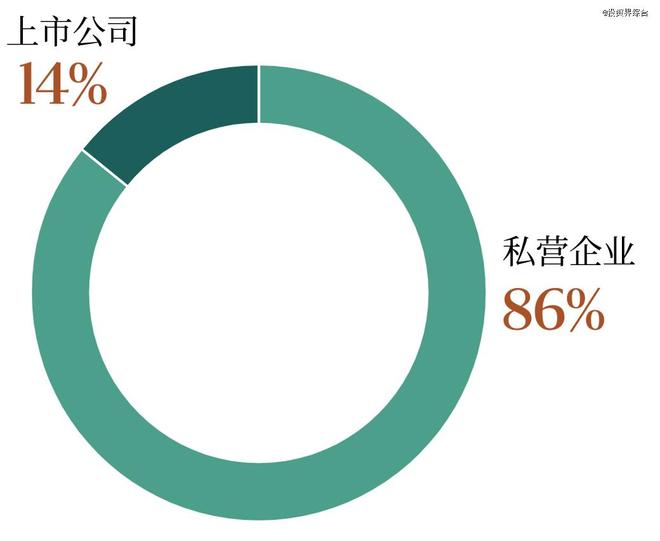
Core Viewpoint - The traditional 60/40 investment portfolio is being re-evaluated due to unprecedented challenges in the fixed income segment and structural changes in the equity market, highlighting the complementary advantages of private equity in driving growth and providing risk diversification [1][9]. Group 1: Market Dynamics - Approximately 86% of companies with revenues exceeding $250 million are private enterprises, offering investors access to diverse industries and business models that are often underrepresented in public markets [2][3]. - Private equity-backed companies have historically outpaced public companies in revenue growth by about 6% [2]. - The concentration of major stocks in the public market is raising concerns, with the top ten stocks in the S&P 500 accounting for 40% of its market capitalization, the highest in modern history [4][19]. Group 2: Value Creation Shift - The average time for companies to go public has increased from six years in 2000 to fourteen years today, indicating a shift in value creation from public to private markets [5][9]. - The largest private companies now have an average valuation exceeding $250 billion, significantly higher than the valuations of the top public companies at their IPOs [5]. - The private equity market is projected to grow to over $18 trillion by 2027, up from less than $3 trillion in 2010, indicating a significant shift in capital allocation [9][10]. Group 3: Performance and Management - Over the past 20 years, private equity has delivered an average annual return of approximately 13%, compared to 8% for public market equities, demonstrating a consistent performance advantage [11][12]. - Private equity firms leverage long-term patient capital to drive innovation and operational efficiency, allowing for deep operational improvements without the pressures of public market volatility [12][13]. - The active management approach of private equity firms enables them to identify long-term trends and collaborate with management teams to implement strategic visions, enhancing value creation [12][13]. Group 4: New Investment Strategies - The evolving investment landscape necessitates a reconfiguration of the traditional 60/40 portfolio, with private equity providing essential return potential and risk diversification [15][17]. - Improved liquidity arrangements and lower investment thresholds are making private equity more accessible to individual investors, transforming it from an alternative to a core investment strategy [17].
构建适应“十五五”未来产业发展的现代化金融体制
Jin Rong Shi Bao· 2025-11-24 02:11
Core Viewpoint - The construction of a financial system that adapts to the development of future industries is a complex system engineering task, requiring a balance between effective markets and proactive government intervention, while breaking path dependence and institutional barriers [1][22]. Group 1: Future Industry Characteristics - Future industries are characterized by the deep integration of technological and industrial innovation, representing a shift towards disruptive innovation driven by cutting-edge technologies [4]. - These industries face fundamental differences in financing needs compared to traditional industries, primarily due to their inherent uncertainty and the lack of established market applications [4][3]. - The rise of future industries necessitates a profound structural reform of the financial supply side to create a modern financial ecosystem that effectively accommodates their unique risk-return characteristics [3][4]. Group 2: Financial System Requirements - The financial system must develop mechanisms for prudent management of uncertainty, flexible operational mechanisms, inclusive development mechanisms, and transparent regulatory mechanisms to adapt to the uncertainties of future industries [4]. - There is a need for a financial infrastructure that can price and manage innovation-related uncertainties, utilizing financial technology for real-time risk monitoring and developing diversified investment tools [9][10]. Group 3: Capital Market Development - The capital market must evolve to support a modern industrial system, focusing on maintaining a reasonable proportion of manufacturing and enhancing the service capabilities of various market segments [5][7]. - A multi-layered capital market system should be established to enhance the service capabilities for specialized small and medium enterprises, particularly those with high intangible asset ratios [7][12]. Group 4: Investment and Financing Coordination - A seamless and complementary financing ecosystem is required to support the growth trajectory of future industries, necessitating a diverse "toolbox" of financing options tailored to different stages of enterprise development [12]. - The financial system should transition from a focus on collateral-based lending to a value discovery approach, emphasizing the importance of intangible assets and future growth potential [6][13]. Group 5: Innovation in Financial Products - Financial products must be innovated to align with the characteristics of future industries, including the development of green finance, digital finance, and inclusive finance to support various sectors of the economy [17][20]. - The establishment of a comprehensive financial service standard system is essential to support the growth of future industries and ensure that financial resources are effectively allocated [18][19]. Group 6: Regulatory Framework - A modern regulatory framework is necessary to ensure that financial resources are effectively directed towards innovation while managing risks, requiring a shift towards functional and penetrating regulation [21]. - The financial system must be equipped to handle systemic risks while promoting a culture of investment in innovative sectors, ensuring that financial resources are available for long-term projects [21].
母基金研究中心完成某国家级母基金重大研究课题任务
母基金研究中心· 2025-11-23 08:55
Group 1 - The core viewpoint of the article highlights the successful completion of a significant national-level research project on mother funds, which provides important references for improving management mechanisms and policy systems [1][2] - The research center has extensive experience in mother fund and private equity research, having previously undertaken multiple national-level projects, thus enhancing its depth and breadth in the field [2][3] - The ongoing research projects aim to support high-quality development in the mother fund industry, focusing on institutional design, management models, and performance optimization [3] Group 2 - The article mentions the upcoming Fourth Davos Global Mother Fund Summit and the initiation of the 2025 Global Best Investment Institutions ranking [4]

投顾周刊:全球基金经理为企业“过度投资”敲响警钟
Wind万得· 2025-11-22 22:11
Group 1 - The Chinese Ministry of Foreign Affairs stated that there were no arrangements for meetings between Chinese and Japanese leaders during the G20 summit, urging Japan to respect China's stance on Taiwan [2] - Guangdong Province is accelerating the establishment of a national digital economy innovation development pilot zone, aiming for the digital economy's core industry value-added to exceed 16% of GDP by 2027, with an annual compound growth rate of over 15% for the data industry [2] Group 2 - The lithium iron phosphate industry is promoting anti-involution measures, with the China Chemical and Physical Power Industry Association suggesting companies use the industry average cost range as a pricing reference to avoid low-price dumping [3] - The total scale of special bonds directed towards government investment funds has exceeded 50 billion yuan this year, with multiple regions exploring this funding approach [3] Group 3 - A trend of high-cutting low in fund allocation is becoming more pronounced in the A-share market, with funds flowing out of previously high-performing sectors and returning to low-valuation sectors with strong earnings support [4] - Bridgewater founder Ray Dalio expressed concerns about challenges in the private equity market, citing issues related to excessive private credit and market bubbles [6] - A recent Bank of America survey indicated that 20% of global fund managers believe corporate capital expenditures are overly aggressive, marking a significant shift in sentiment [6] - Several VC firms successfully raised USD funds, with notable amounts raised in November, indicating renewed focus on Chinese assets due to the booming AI sector [6] Group 4 - Recent adjustments in global stock markets saw declines across major indices, with the Shanghai Composite Index down 3.90% and the Hang Seng Index down 5.09% [7][8] - The yield on 1-year Chinese government bonds decreased by 0.40 basis points to 1.40%, while the 10-year U.S. Treasury yield fell by 8.00 basis points to 4.06% [10][11] Group 5 - In the commodity market, precious metals experienced a pullback, with COMEX gold down 0.77% and ICE Brent crude oil down 2.92% [13][14] - The recent week saw a significant dominance of bank wealth management subsidiaries in financing channels, contributing 78.14% of the issuance quantity and 94.50% of the financing scale [15][16]