
科教融合

Search documents
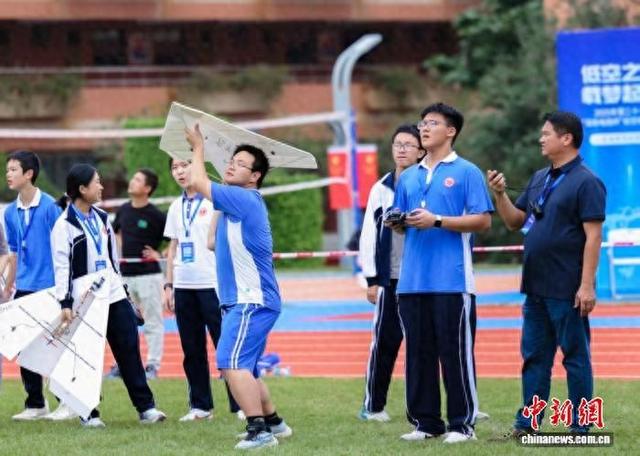
第二十一届“深南电路杯”航空模型大赛开赛
Zhong Guo Xin Wen Wang· 2025-11-02 10:56
Core Points - The 21st "Shennan Circuit Cup" Aviation Model Competition took place in Shenzhen, attracting over 650 students from nearly 200 schools and institutions [1][3] - The event aims to popularize aviation science among youth and foster innovation talent development [3] - The competition features various events such as rotor racing, fixed-wing flying, and rocket gliding, aligning with educational philosophies in technology [3][4] Group 1 - The competition has been successfully held since 2005, emphasizing the importance of youth engagement in aviation and aerospace fields [3] - The event is guided by the China Aeronautics Society and organized by the Guangdong Aerospace Society, showcasing a collaborative effort in promoting aviation education [3] - The opening ceremony highlighted the potential for students' experiences in model aircraft to translate into future innovations in the aerospace sector [3] Group 2 - The event included impressive aerial performances, such as helicopter stunts and fixed-wing aerial combat, captivating the audience [4] - An interactive experience area allowed youth to engage in hands-on activities, such as building model airplanes and VR flight simulations, enhancing their understanding of aviation technology [4] - The competition serves as a platform for exploring future talent cultivation models, integrating technology education with practical experiences [3][4]


中国平安“青少年科技素养提升计划”惠及超 31 万名学生 全面升级“科技型企业开放日”活动
Jing Ji Guan Cha Wang· 2025-09-26 11:44
Core Points - The "Youth Science Literacy Improvement Program" has been successfully implemented for six years, benefiting over 310,000 students and 20,000 rural teachers across 1,058 rural primary schools in 27 provinces [5][6] - The program aims to enhance scientific education resources in underdeveloped and minority regions, focusing on developing scientific core competencies among students [2][10] - The 2025-2026 project will introduce new initiatives, including a science lecturer team and various public science activities, to further engage youth in scientific education [7][10] Group 1 - The meeting was attended by prominent figures, including Gu Xiulian, Vice Chairwoman of the Standing Committee of the National People's Congress, and representatives from various scientific and educational organizations [1][2] - The program has received significant support from China Ping An, which has been involved in educational philanthropy since 1994, establishing and maintaining 119 Hope Primary Schools [4][5] - The program has organized over 3,000 youth experiences in technology companies, allowing students to engage with cutting-edge technology [5][9] Group 2 - The program emphasizes collaboration with scientific institutions and technology companies to create a sustainable ecosystem for science education [3][9] - The meeting highlighted the importance of integrating technology and education to foster scientific innovation and improve overall scientific literacy [4][10] - Future efforts will focus on digital methods to promote educational equity and reduce resource disparities [10]

启动一体化政策项目,昌平已为千余青年人才发放政策奖补
Xin Jing Bao· 2025-09-20 14:42
Group 1 - The Changping District launched the "2025 Education and Technology Talent Integration Policy Project" focusing on attracting and integrating talent through four main areas: talent attraction, Changpu Project, youth innovation demonstration, and integrated development [1] - The district initiated four policy projects in collaboration with 15 universities and new research institutions, including Tsinghua University and Peking University, to enhance education and technology talent integration [1] - A joint training program for master's and doctoral students was launched with 13 universities, alongside the implementation of the "Technology Vice President" talent attraction policy, which introduced 57 high-level talents from 23 institutions to lead core technology projects with 57 leading tech companies [1] Group 2 - Changping District has introduced 11 policy measures to create a youth talent innovation and entrepreneurship ecosystem, resulting in 1,155 young talents benefiting from policy subsidies and a 46% year-on-year increase in new enterprises established by young talents [2] - The "Changpu Project" has launched a special track for youth talent competitions, recognizing 41 talents, and the U35 Seedling Support Plan has provided foundational support to 15 young talents [2] - Initiatives include training programs for 100 master's and doctoral students, internships for 1,000 university students, and outreach for 10,000 college students to engage with Changping, alongside the HICOOL Youth Entrepreneurship Dream Plan [2]
构建“三位一体”精准帮扶体系 助力大学生高质量就业
Xin Hua Ri Bao· 2025-08-21 20:57
Core Viewpoint - The article discusses the dual challenges faced by university graduates in China, highlighting the mismatch between the increasing number of graduates and the evolving job market, necessitating a comprehensive support system for high-quality employment [1] Group 1: Professional Optimization System - The optimization of academic disciplines is essential to align with emerging industries like renewable energy and artificial intelligence, addressing the generational gap in talent supply and demand [2] - Universities must establish a dynamic response mechanism that aligns academic disciplines with national strategic needs, as demonstrated by Southeast University, which achieved a 92% employment rate for graduates through industry collaboration [2][3] - The "order-based" education model is breaking down barriers between classroom learning and job readiness, exemplified by BYD's investment of 3 billion yuan in a charity fund to train talent in new energy technology [2] Group 2: Social Supply System - There is a need to optimize the employment ecosystem by addressing the limitations in talent evaluation standards and regional industry distribution, creating a collaborative network among government, enterprises, and universities [4] - A multi-dimensional evaluation system that includes both academic and vocational skills has been implemented in Jiangsu, resulting in an 11% increase in graduate employment rates [4] - Digital transformation in employment services is enhancing efficiency, with the Ministry of Education's "24365" platform facilitating over 3 million effective job matches [4] Group 3: Capability Support System - The demand for versatile talent has surged, with employers' needs for cross-disciplinary learning and digital skills doubling over the past five years [6] - Career education initiatives, such as those at Fudan University, have significantly improved students' job confidence by 37% and job fit by 29% [7] - Practical platforms like the "Double Innovation Credit Bank" at Xi'an University of Electronic Science and Technology are fostering entrepreneurship and enhancing students' employability through hands-on experience [7] Group 4: Integration of Systems - The resolution of the employment challenges for university graduates is fundamentally a process of collaborative development among education, industry, and society, with each system supporting the others to achieve high-quality employment outcomes [8]
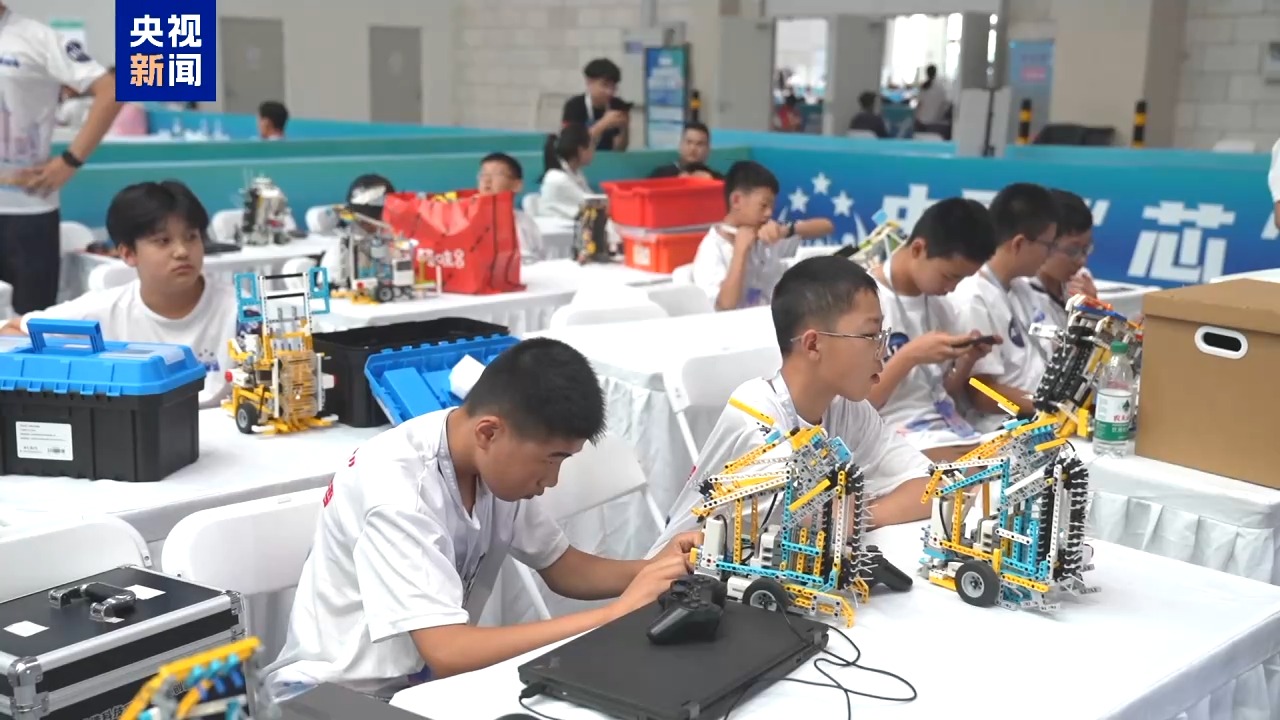
全国青少年通信科技创新大赛全国总决赛在大连举行
Yang Shi Xin Wen· 2025-08-02 07:24
Core Points - The third National Youth Communication Technology Innovation Competition has officially launched in Dalian, Liaoning, with over 14,000 young participants from across the country [1][3] - The competition covers various cutting-edge fields including communication principles and applications, communication networks and security, radio, satellite communication, IoT, 5G, and artificial intelligence, assessing the participants' technological knowledge and innovation capabilities [3] - Since its inception in 2023, the competition has attracted over 450,000 participants nationwide, providing a broad platform for young technology enthusiasts to showcase their talents and engage in learning [3] Event Details - The finals will last for three days and include a series of educational activities such as a summit forum, expert lectures, and achievement displays [3] - Experts from various fields, including academicians, technology professionals, and educators, will discuss new concepts, models, and practices in science education integration [3] Industry Impact - The event is recognized as the only communication-related competition in the Ministry of Education's list of national competitions for primary and secondary school students for the 2022-2025 academic years, highlighting its significance in promoting communication technology education [1][3]
数字转型驱动高等教育综合改革创新
Xin Hua Ri Bao· 2025-07-30 21:07
Core Insights - Artificial intelligence is becoming a significant driving force for reform in higher education, with a focus on integrating AI into educational systems and practices [1][4] Group 1: Teaching Structure and Methodology - The traditional "teacher-student" model is evolving into a "teacher-student-AI" model, fostering a new educational ecosystem characterized by human-machine collaboration [2] - Key issues in this transition include understanding the impact of human-machine collaboration on group behavior, establishing ethical frameworks for human-AI interactions, and addressing potential over-reliance on technology [2][3] - The integration of AI in education necessitates the development of digital learning capabilities and innovative thinking among students, while teachers must enhance their awareness of technology integration in teaching methods [3] Group 2: AI-Driven Learning Systems - AI can create personalized adaptive learning systems that help students bridge the gap between their current abilities and potential, leading to a spiral of cognitive development [4] - Compared to traditional systems, AI-driven learning systems offer customized content, dynamic feedback, and tailored learning paths, promoting efficient learning and self-directed study [4] Group 3: Management and Operational Efficiency - AI is facilitating the digital transformation of educational management by creating intelligent matching models for teaching resources, schedules, quality assessments, and program optimizations [5] - The predictive capabilities of AI can assist in student admissions, course adjustments, and program development [5] Group 4: Research and Industry Integration - The transition to an AI for Science (AI4S) paradigm is reshaping research methodologies in higher education, merging various scientific approaches and accelerating the integration of education and industry [6][7] - Collaboration between higher education institutions and enterprises is essential for developing curricula that reflect cutting-edge research and meet industry needs, enhancing students' practical skills through real-world projects [8] Group 5: Challenges and Considerations - The integration of AI in education presents challenges, including the risk of diminishing critical thinking and creativity among students due to over-reliance on AI solutions [9] - There is a need to cultivate AI literacy among learners to ensure they can effectively interact with AI and critically assess its outputs, preventing disparities in resource utilization [9]