简税制

Search documents
海南封关"零关税"!全球资本人才疯狂涌入,中国最强开放王牌亮剑
Sou Hu Cai Jing· 2025-12-21 14:54
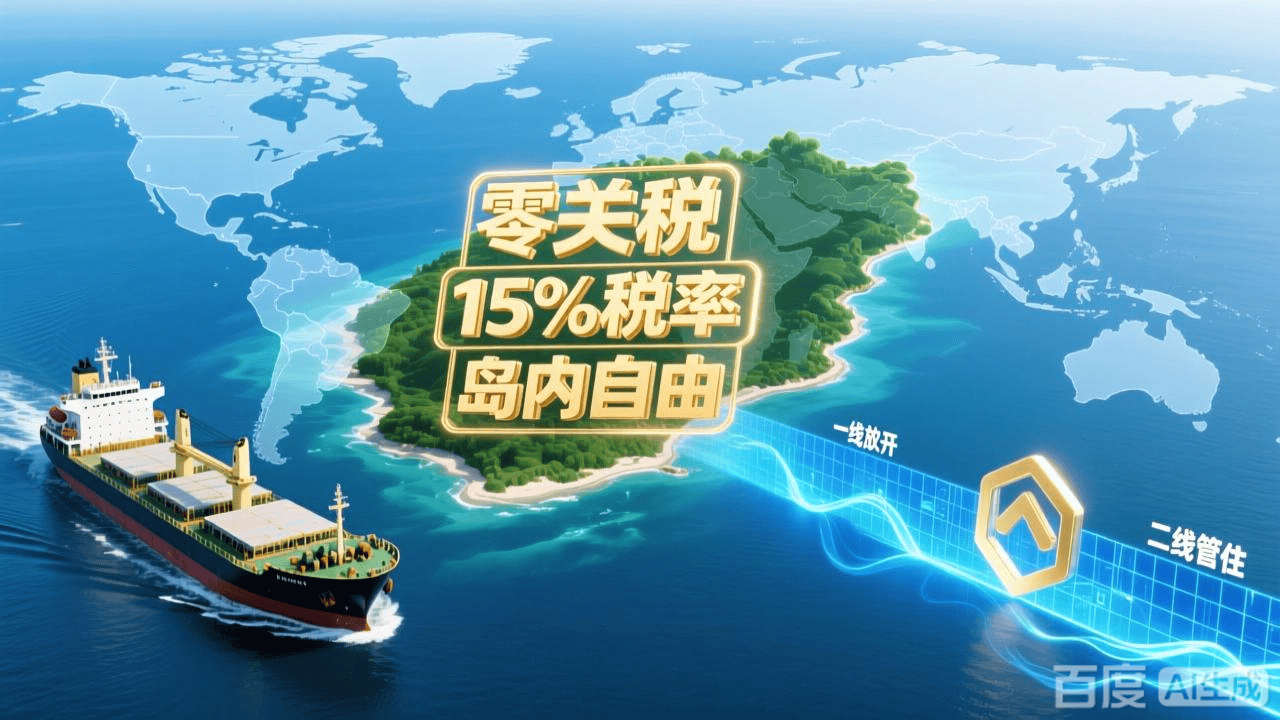
Core Viewpoint - The establishment of the Hainan Free Trade Port with a new tax system represents a strategic move by China to create a benchmark for openness amid global economic uncertainty and rising protectionism [1][4][31]. Tax System Upgrade - The new tax system, centered around "zero tariffs, low tax rates, and simplified tax regulations," aligns with international high-standard free trade port rules and facilitates domestic and international dual circulation [4][25]. - The number of products eligible for zero tariffs in Hainan has increased dramatically from 1,900 to 6,600, allowing a vast majority of international goods to enter without tariffs [9][11]. - The policy now opens up benefits previously available only to large corporations to all entities with import needs, including individual merchants, enhancing the attractiveness of Hainan for trade [11][18]. Value-Added Processing Policy - Hainan has optimized its value-added processing policy, allowing products processed in Hainan to enter the mainland without tariffs if their value increases by over 30% [13][14]. - The previous stringent requirements for companies to qualify for these benefits have been removed, making it easier for various businesses to participate [16][20]. Talent Attraction and Tax Incentives - Hainan offers competitive tax rates, including a 15% corporate income tax and a maximum of 15% personal income tax for qualified high-end talent, making it attractive for skilled professionals [20][22]. - The tax policies are designed to be dynamic and continuously optimized, providing a stable framework that appeals to both businesses and talent [22][25]. Simplified Tax System - The planned simplification of the tax system aims to merge various taxes into a single sales tax at the retail level, reducing management costs for businesses and administrative burdens for the government [25][29]. - This reform is seen as a significant step not only for Hainan but also as a potential model for national tax reform in China [29][31]. Geopolitical and Economic Significance - Hainan's tax upgrades have broader geopolitical implications, signaling China's commitment to expanding openness and integrating into the global economy despite rising protectionism [31][33]. - Hainan is positioned as a crucial hub for China's "dual circulation" development strategy, enhancing logistics efficiency and reducing trade costs for goods from southwestern and southern China [33][35]. - The island is evolving from a tourist destination to a pivotal player in global economic changes, serving as a stable anchor for international trade [35].

专家热议封关后海南自贸港建设路径
Zhong Guo Xin Wen Wang· 2025-12-19 14:12
Core Insights - The core viewpoint of the articles is the strategic development of Hainan Free Trade Port following its recent closure, emphasizing the implementation of a policy framework centered on "zero tariffs, low tax rates, and simplified tax systems" to enhance trade and investment liberalization and facilitation [1][2]. Group 1: Policy Implementation - The policy framework post-closure includes comprehensive implementation of "zero tariffs, low tax rates, and simplified tax systems," facilitating higher levels of free movement of goods, capital, and personnel [1]. - Experts suggest expanding the range of "zero tariff" goods and developing a simplified tax system to address discrepancies arising from tax system integration [1][2]. Group 2: Infrastructure and Financial Development - Recommendations include accelerating the exploration of currency swap agreements and innovating financial products to support industry finance and data finance [2]. - There is a call for strengthening both hardware (infrastructure) and software (digitalization and governance) aspects to enhance the business environment in Hainan [2]. Group 3: Strategic Positioning - Hainan aims to establish itself as a strategic hub for trade between China and ASEAN, focusing on creating two headquarters: one for Chinese enterprises going international and another for foreign enterprises entering China [2][3]. - The development of offshore warehouses and single-sided opening in key industries such as marine tourism and fisheries is highlighted as a priority [3]. Group 4: Future Directions - The focus of Hainan's openness is shifting from goods trade to the flow of capital and data, with an emphasis on creating a low-cost, low-friction, and high-expectation institutional ecosystem [3].
封关!中国最大自贸港,摊牌了
Xin Lang Cai Jing· 2025-12-19 12:36
Core Insights - The Hainan Free Trade Port officially commenced full island closure operations on December 18, implementing a system characterized by "one line open, two lines controlled, and free movement within the island" [1][18] - This marks another significant opportunity following Hainan's establishment as a province and economic zone in 1988, approval as an international tourism island in 2009, and designation as a free trade zone in 2018 [2][18] Group 1: Hainan's Unique Position - Hainan is the largest free trade port in China and globally, covering an area eight times that of Dubai, 31 times that of Hong Kong, and 46 times that of Singapore [2][19] - The geographical location of Hainan as China's second-largest island and the largest economic special zone provides it with unique advantages for reform and opening-up [4][20] - Hainan's role as a testing ground for reform is likened to that of Shenzhen in the early stages of China's opening-up [4][22] Group 2: Benefits of the Free Trade Port - The free trade port will create a special "inside customs, outside customs" regulatory area, allowing for the free flow of goods with zero tariffs between Hainan and international markets [6][23] - Hainan has opened visa-free entry to 86 countries and established multi-functional free trade accounts, enhancing its international connectivity [6][23] - The tax benefits include zero tariffs on most goods and a reduced corporate income tax rate of 15% for encouraged industries, making Hainan a tax haven [7][24] Group 3: Economic Growth Potential - Hainan's GDP is projected to reach 793.6 billion yuan in 2024, with the goal of surpassing one trillion yuan during the 14th Five-Year Plan period [26][30] - The province is shifting from a reliance on real estate to focus on tourism, modern services, high-tech industries, and tropical agriculture, with these sectors expected to account for over two-thirds of the economy by 2024 [30][31] - Hainan aims to develop a modern industrial system targeting emerging industries such as digital economy and green technology, while also enhancing its service trade capabilities [31][35] Group 4: Comparison with Hong Kong - Unlike Hong Kong, which serves as a global financial and trade hub, Hainan's strengths lie in its tourism and service sectors, with potential to develop as a shopping paradise and international tourism consumption center [34][36] - Hainan's unique status as the only free trade port with Chinese characteristics positions it as a key player in exploring new paths for high-level opening-up [36]
海南封关之后:中免的新周期与持久战
Hua Er Jie Jian Wen· 2025-12-19 02:59
Core Viewpoint - The official closure of Hainan Island marks a new phase in the construction of the Hainan Free Trade Port, implementing a customs supervision system that allows for zero tariffs on a significantly expanded list of imported goods, aimed at promoting industrial development and attracting international brands [1][2][5]. Group 1: Policy Changes and Impacts - Hainan's zero-tariff policy expands the list of eligible imported goods from approximately 1,900 to about 6,600, covering 74% of all products, a 53% increase from before the closure [1]. - The zero-tariff mainly exempts import tariffs, value-added tax, and consumption tax, focusing on industrial development rather than consumer-oriented duty-free shopping [2]. - The new policy is expected to enhance Hainan's attractiveness as a commercial hub, potentially increasing service traffic and customer spending for leading companies [12]. Group 2: Market Dynamics and Competition - The zero-tariff environment may attract more international brands and retail entities, creating both challenges and opportunities for domestic players like China Duty Free Group (CDFG) [5][16]. - CDFG, as a market leader, faces intensified competition from various licensed enterprises and non-licensed retailers, which could dilute its market share despite its established presence [13][24]. - The competitive landscape is evolving, with non-licensed retailers also benefiting from the new tax regime, potentially eroding the price advantages previously held by licensed duty-free operators [14]. Group 3: Financial Performance and Projections - CDFG's revenue from Hainan has significantly increased, contributing over 50% to its total income, but faces pressure from changing consumer behavior and intensified competition, leading to a projected 16% decline in overall sales revenue in 2024 [9][10]. - The company anticipates a continued decline in revenue in the first half of 2025, with a potential recovery only in the third quarter due to increased average spending per customer [11]. - The overall sales amount for duty-free shopping in Hainan reached 13.25 billion yuan in November 2023, reflecting a 28.52% year-on-year increase, indicating positive initial effects of the new policies [28]. Group 4: Strategic Adjustments and Future Outlook - CDFG is shifting its focus from traditional duty-free operations to a more diversified model that includes enhancing supply chain management and customer experience [7][29]. - The company is exploring new retail formats and partnerships with high-end brands, adapting to the evolving market dynamics and consumer preferences [30]. - The long-term outlook suggests a potential shift from the current duty-free model to a simplified sales tax system, which could further alter the competitive landscape and pricing strategies in the retail sector [15][25].

海南自贸港以制度创新打造新时代对外开放重要门户
Zheng Quan Ri Bao· 2025-12-18 23:24
12月18日,海南自由贸易港(以下简称"海南自贸港")正式启动全岛封关。至此,进口征税商品目录、货 物流通税收政策、禁限清单、加工增值内销免关税政策、海关监管办法等一系列封关政策及配套文件同 步实施。 回溯多年探索实践之路,海南自由贸易港建设实现从"顺利开局"到"蓬勃展开""进展明显",再到"蓬勃 兴起"的喜人变化。此次封关运作正式启动,标志着高水平自由贸易港正式成型,成为新时代中国扩大 对外开放的标志性里程碑。 封关不是封岛,而是制度层面的重构,是更高水平的开放。这场牵动全球目光的制度变革,以"一线放 开、二线管住、岛内自由"为核心框架,用"零关税、低税率、简税制"的税收红利与金融领域的多维创 新,在南海之滨构筑起连接国内国际双循环的开放高地。 深圳前海深港现代服务业合作区咨询委员会主任郑磊对《证券日报》记者表示,这些制度创新既遵循了 市场经济规律和国际通行规则,又充分考虑了中国的制度优势和发展阶段,实现了"开放"与"安全"的有 机平衡,为资本运作提供了稳定、透明、可预期的制度环境,推动海南与粤港澳大湾区、长三角等区域 形成"功能互补、产业协同"的新格局。 资本聚势 构建开放"四梁八柱" 海南自贸港封关运作 ...
中国对外开放迎来新的里程碑时刻
Ren Min Ri Bao· 2025-12-18 20:38
Core Viewpoint - The official launch of the Hainan Free Trade Port marks a significant milestone in China's opening-up strategy, covering over 30,000 square kilometers and becoming one of the largest free trade ports globally [2] Group 1: Customs and Regulatory Framework - The concept of "closure" refers to the establishment of a special customs supervision area rather than restricting access to the island, allowing for a policy of "one line open, one line controlled, and free flow within the island" [3] - The customs management will focus on precise control of goods between the "one line" (international) and "two line" (domestic), ensuring efficient and convenient regulation [3] Group 2: Economic Opportunities and Trade Policies - The range of goods eligible for "zero tariff" will expand from 1,900 to approximately 6,600 items, covering about 74% of all product categories, significantly reducing import costs for businesses [4] - Trade management measures will be relaxed, with the opening of 98 product codes previously restricted, enhancing the overall trade management model [4] Group 3: Service Trade and Investment Growth - The Ministry of Commerce supports the establishment of a cross-border e-commerce pilot zone and the implementation of a negative list for service trade, contributing to a 23.1% growth in service trade and a 42.2% increase in actual foreign investment in Hainan [5] Group 4: Consumer Benefits and Market Dynamics - The upgraded duty-free shopping policy allows for a wider variety of products and improved purchasing convenience for both residents and tourists, enhancing the overall shopping experience [6] - The closure operation is expected to attract global enterprises and deepen economic ties, creating new market opportunities for various countries [7]
海南封关,意义重大,远超你的想象
盐财经· 2025-12-18 09:59
Core Viewpoint - The official launch of the Hainan Free Trade Port marks a significant step towards creating a customs supervision special zone, aiming to enhance global trade and supply chain efficiency through unprecedented freedom in goods movement [2][9][14]. Group 1: Hainan's Unique Position - Hainan's full closure is expected to offer greater potential compared to Shenzhen, given its larger population and geographical area [4][5]. - Unlike Shenzhen, Hainan is not aiming to replicate its path but is embarking on a new experimental approach [6][5]. Group 2: Customs and Trade Policies - The "first line" of customs will allow unprecedented freedom for goods trade with the outside world, with most imported goods subject to zero tariffs [11]. - The "second line" will regulate the flow of goods between Hainan and the mainland to prevent unfair competition from low or zero tariff products [11][10]. Group 3: Tax Incentives and Economic Impact - Hainan's tax incentives include a reduced corporate income tax rate of 15% for qualifying industries and exemptions on personal income tax for high-end talent [29]. - The population structure and market potential in Hainan are favorable for economic growth, with a resident population of over 10 million as of 2024 [31]. Group 4: Manufacturing and Innovation Focus - The focus of Hainan's reforms is on manufacturing, with an emphasis on creating a global innovation chain hub rather than replicating Shenzhen's manufacturing rise [18][19]. - The expansion of zero-tariff products from 1,900 to over 6,600 tax items indicates a significant shift towards supporting high-tech manufacturing and research equipment [20][21]. Group 5: Infrastructure and Market Mechanisms - Hainan's geographical challenges are less significant today due to China's advanced infrastructure capabilities, allowing for the construction of necessary ports [32]. - The emphasis on respecting market mechanisms and fostering a robust entity economy is crucial for Hainan's success [32].

海南自贸港税制有何新变化
第一财经· 2025-12-18 04:10
Core Viewpoint - The article discusses the significant changes in tax policies following the official launch of the Hainan Free Trade Port on December 18, 2025, emphasizing the enhanced tax incentives aimed at promoting high-quality development in Hainan and contributing to the national development framework [3]. Tax Policy Changes - The "zero tariff" policy has expanded significantly, with the number of tax items eligible for zero tariffs increasing from approximately 1,900 to about 6,600, representing 74% of all tax items, a rise of nearly 53 percentage points compared to before the closure [5][6]. - The scope of entities eligible for the "zero tariff" policy has broadened to include various enterprises and non-profit organizations, allowing for greater flexibility in the circulation of imported goods without the need to pay import taxes [6]. - The processing and value-added tax exemption policy has been relaxed, allowing goods with over 30% value added from imported materials to enter the mainland without import duties, although VAT and consumption tax still apply [7]. Continued Tax Incentives - The preferential corporate income tax rate of 15% and the maximum personal income tax rate of 15% will continue to be in effect, supporting the development of Hainan's economy [8]. Future Tax Reforms - The tax incentives are expected to evolve further, with plans to reduce the list of taxable imported goods and expand the scope of industries eligible for the 15% corporate income tax rate [10]. - The simplification of the tax system is underway, with a focus on implementing a sales tax that would replace several existing taxes, aiming for a more streamlined and efficient tax structure [11][12].

海南自贸港全岛今日封关,对河南有何影响?
Sou Hu Cai Jing· 2025-12-18 01:54
Group 1 - The official launch of the Hainan Free Trade Port's island-wide customs closure on December 18 aims to create a special customs supervision area with liberalized policies characterized by "open on one line, controlled on another, and free within the island" [1][3] - The implementation of "zero tariffs, low tax rates, and simplified tax systems" will gradually create conditions for broader tax benefits for enterprises, significantly increasing the number of zero-tariff goods to cover approximately 74% of product categories, benefiting key industries such as pharmaceuticals and high-end food processing [3][5] - The "Double 15%" tax incentive policy will allow eligible enterprises and core talents to enjoy a 15% income tax reduction, which is a core attraction of the Hainan Free Trade Port policies [3][5] Group 2 - After the customs closure, most imported goods, including production equipment, raw materials, and daily consumer goods, will be exempt from tariffs, VAT, and consumption tax, reducing import costs and enhancing trade freedom for enterprises [5][6] - The customs closure is expected to significantly boost tourism and consumer spending in Hainan, with no additional documentation required for travel or business trips to the island [6][10] - Hainan will transform into a large "bonded warehouse" and international shipping hub, enhancing logistics connectivity with inland regions like Henan, which is crucial for leveraging the benefits of the new policies [7][10] Group 3 - The opening of new logistics channels to Hainan is essential for Henan to capitalize on the benefits of the customs closure, with ongoing practices already demonstrating increased shipping activity [7][8] - The collaboration between Hainan and Henan can extend beyond trade and logistics to include industrial cooperation, leveraging Henan's industrial strengths in manufacturing and food processing [11][12] - The establishment of the "Yuqiong Food Industry Park" in Hainan aims to support cross-border trade and logistics for Henan food enterprises, facilitating access to international markets [12][13] Group 4 - Henan's recent implementation of measures to align with international high-standard trade rules aims to enhance its level of openness and promote systematic reforms [13] - The proactive approach of Henan's Free Trade Zone in engaging with enterprises to understand their needs and promote Hainan's customs closure policies reflects a strategic effort to maximize the benefits of the new trade environment [13][14]
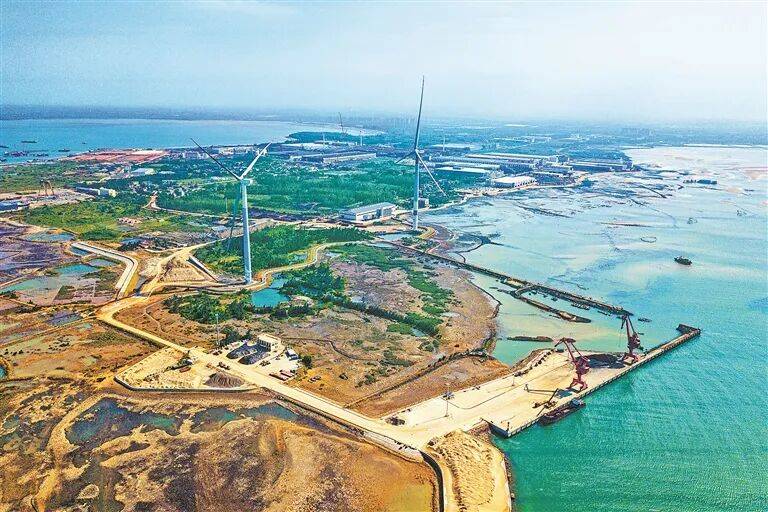
海南今日封关,谁利好?谁焦虑?| 马上评
Sou Hu Cai Jing· 2025-12-18 00:41
Core Insights - Hainan Island officially opens as a free trade port, marking a significant shift in China's economic landscape and its integration with the global economy [1][10][29] - The transformation is characterized by a policy of "one line open, one line controlled, and free movement within the island," creating a unique economic environment [2][5] Policy Framework - The new framework includes "zero tariffs, low tax rates, and simplified tax systems," drawing inspiration from international free trade ports while incorporating distinct Chinese characteristics [3][13] - The zero tariff policy now covers 74% of imported goods, significantly increasing from 21%, allowing most products to enter Hainan without customs duties [12][21] Economic Impact - For consumers, the zero tariff policy is expected to lower prices of imported goods, with a notable increase in duty-free shopping, which surged by 27.1% year-on-year to 2.38 billion yuan in November 2025 [4][15] - Businesses in encouraged sectors like biomedicine and high-end manufacturing will benefit from a 15% corporate tax rate, which is 10 percentage points lower than the national standard, enhancing their competitive edge [4][18] Market Dynamics - The opening of Hainan as a free trade port is anticipated to reshape the retail landscape, with traditional retailers facing challenges from the influx of duty-free goods [16][17] - The competitive environment will force businesses to adapt, either by collaborating with Hainan's operators or by enhancing their own service offerings [17][18] Regional and Global Implications - Hainan's emergence as a free trade hub is likely to alter China's foreign trade dynamics, positioning it as a key player alongside established ports like Shanghai and Shenzhen [21][23] - The policies may attract investment and talent from mainland China, creating a competitive pressure on traditional industries in other regions [23][24] Challenges Ahead - The transition to a free trade port will not be without difficulties, as traditional manufacturing sectors may struggle against the advantages offered to Hainan-based companies [19][28] - Regulatory challenges will persist, as Hainan must balance its appeal as an investment destination with the need to avoid becoming a tax haven [28][30]