红利低波策略

Search documents
根本停不下来!港股红利低波ETF(520550)获连续21日增仓,股息率飙至近7%!
Sou Hu Cai Jing· 2025-12-19 02:45
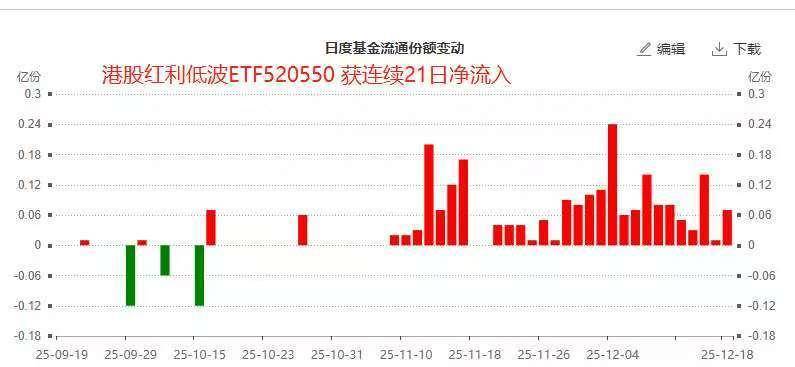
Core Viewpoint - The Hong Kong dividend low-volatility ETF has attracted significant capital inflows, becoming a focal point for investors seeking stable returns in a volatile market environment [3][4]. Group 1: Fund Inflows - As of December 18, 2023, the Hong Kong dividend low-volatility ETF (code: 520550) has seen net inflows for 21 consecutive trading days, totaling approximately 190 million RMB [3][4]. - Year-to-date, the ETF has accumulated net inflows of nearly 1 billion RMB, indicating strong long-term investor confidence in this strategy [3][4]. Group 2: Dividend Yield and Valuation - The ETF's tracked index has a current dividend yield close to 7%, significantly higher than major mainland indices and leading among global markets [4]. - The high dividend yield is particularly attractive in the context of declining bank deposit rates and pressured returns from traditional investment products, making it a competitive option for conservative investors [4]. Group 3: Low Volatility Attributes - The low-volatility aspect of the strategy is crucial, as the ETF selects stocks with relatively low historical price volatility, resulting in an overall portfolio volatility that is significantly lower than the Hong Kong market average [5]. - In the current uncertain global economic climate, the demand for "safe" and "stable" investments has increased, making the dividend low-volatility strategy appealing to many investors [5]. Group 4: Market Outlook - The ongoing inflows into the Hong Kong dividend low-volatility ETF reflect a rational choice by market participants in light of the current macroeconomic environment, favoring assets with high growth certainty and consistent cash returns [6]. - The trend of declining risk-free interest rates enhances the attractiveness of dividend returns, suggesting a favorable outlook for dividend strategies in the medium to long term [6].

如何安放我们未来的三十年?
Sou Hu Cai Jing· 2025-12-18 14:33
Group 1 - The article emphasizes the importance of personal wealth management and long-term retirement planning in the context of rising inflation and decreasing purchasing power, highlighting that wealth can shrink by nearly half over 30 years at a 2.2% inflation rate [1] - The current low-interest-rate environment has led to a significant decline in deposit rates, with three-year deposit rates dropping from 2.6%-2.75% three years ago to 1.25% today, indicating a trend that is unlikely to change in the near future [5][6] - The introduction of "Y shares" in public funds, specifically designed for personal pension investments, is gaining attention due to their low fees, tax benefits, and strict regulatory requirements, with the total market size surpassing 15.1 billion yuan, a 65% increase from the previous year [9][10] Group 2 - The Huatai-PB CSI Dividend Low Volatility ETF Link Y (022951) is highlighted as a notable fund within the Y share category, boasting a dividend yield of 5.05%, which is significantly higher than other major indices, making it attractive in the current low-interest environment [12] - The dividend low volatility index, which the fund tracks, has shown a strong historical performance, with 75% of its allocation in stable traditional sectors such as finance and utilities, aligning well with the long-term investment goals of pension funds [11][14] - Concerns about the sustainability of the dividend low volatility strategy are addressed, with evidence suggesting that the strategy's effectiveness is supported by a favorable policy environment and increasing cash dividends from A-share companies, which rose by 16.8% year-on-year [17]
标的指数股息率重回5%以上!红利低波ETF(512890)2025年四季度以来累计吸金近49亿元
Xin Lang Ji Jin· 2025-12-18 05:14
Group 1 - The market is currently experiencing concerns regarding the return on investment and sustainability of financing in AI infrastructure, compounded by the Federal Reserve's signals of a "slow rate cut," leading to pressure on the overseas technology sector, which is also affecting the A-share market [1] - As the year-end market volatility window approaches, funds are likely to favor defensive assets with strong dividend yields and inherent value for bottom-line allocation [1] Group 2 - The Dividend Low Volatility ETF (512890) has attracted significant inflows, accumulating 800 million yuan over six consecutive trading days, and a total of 4.875 billion yuan since the fourth quarter, reaching a record high of 21.835 billion shares [2] - The fund has achieved a cumulative return of 127.74% since its inception, outperforming its benchmark by 78.08% [2][3] - The dividend yield of the Dividend Low Volatility Index has risen above 5.03%, significantly higher than the 10-year government bond yield of 1.84%, indicating strong appeal for long-term funds seeking enhanced returns [3] Group 3 - The strong performance of dividend assets is supported by institutional adjustments, where investors tend to reduce holdings in high-performing sectors and increase allocations to undervalued assets with improved fundamentals or high dividend yields [4] - The HuaTai-PineBridge Dividend Low Volatility ETF Link Y (022951) has also gained popularity among individual pension investors, with a significant increase in fund size by 440.36% this year [5][6] Group 4 - HuaTai-PineBridge has established a diverse "Dividend Family" strategy, managing a total of 48.934 billion yuan across five dividend-themed ETFs, providing investors with a variety of dividend strategy options [6][7]
ETF基金周报:资金布局红利类策略趋势明显-20251216
Dongguan Securities· 2025-12-16 09:18
Group 1 - The report highlights a significant trend in fund allocation towards dividend strategies, indicating a preference for stability in uncertain market conditions [2][4][10] - The total net inflow into ETF funds reached 12.496 billion yuan this week, with all types of ETF funds, except for stock ETFs, experiencing varying degrees of net inflow [10][19] - The report notes that the semiconductor and AI upstream hardware sectors performed well, driven by news regarding Nvidia's chip sales to China, although the overall market remains cautious [15][17] Group 2 - In the bond ETF sector, the average weekly increase for convertible bond ETFs was 0.21%, with a notable preference for credit bonds and company bonds, particularly in the context of a rebound in long-term interest rate bonds [18][20] - The report indicates that the net inflow for bond ETFs was 4.33 billion yuan this week, with significant capital flowing into the AAA-rated technology innovation bonds [21][24] - The analysis of financing and margin trading shows a clear trend towards deleveraging across ETF funds, particularly in the AI and gold asset sectors, with a notable negative net buy for gold assets this week [22][23]
这才是真正的“睡后收入”:中证A500红利低波,让细分龙头为你“打工”
Sou Hu Cai Jing· 2025-12-15 09:23
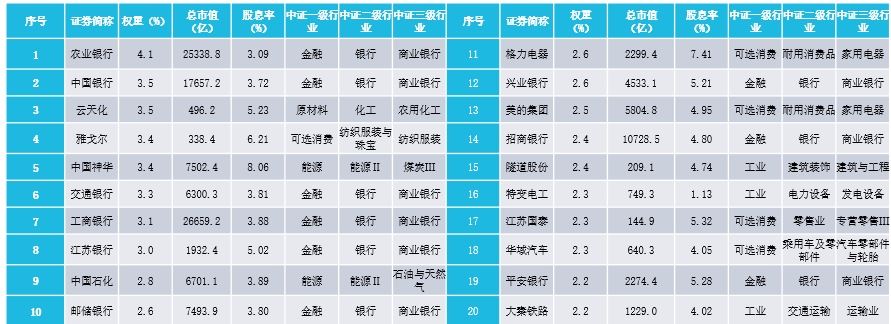
Core Viewpoint - The article discusses the Zhongzheng A500 Dividend Low Volatility Index, which aims to provide a balanced investment strategy that combines the safety of dividend stocks with the growth potential of leading companies across various sectors [1]. Group 1: Index Overview - The Zhongzheng A500 Dividend Low Volatility Index is derived from the Zhongzheng A500 Index, which selects 500 leading companies from over 5,000 stocks in the A-share market [1]. - This index further narrows down to 50 stocks that demonstrate continuous dividend payment capability, high dividend yield, and low volatility, ensuring high-quality asset selection [1][4]. Group 2: Selection Criteria - The index employs a rigorous selection process, starting with a "dividend willingness" criterion, requiring constituent stocks to have paid cash dividends for the past three years with a reasonable payout ratio [4]. - The second criterion focuses on "valuation and safety," ranking stocks by dividend yield to filter the top 50%, which typically indicates lower valuations [4]. - The final selection involves identifying the 50 stocks with the lowest volatility among those with high dividend yields, as historically, low-volatility stocks tend to outperform high-volatility ones over the long term [4]. Group 3: Industry Coverage - Unlike traditional dividend indices that are heavily weighted towards sectors like finance, the Zhongzheng A500 Dividend Low Volatility Index covers a broader range of industries, including 27 sub-industries compared to 19 in traditional indices [5]. - This diversified approach includes not only traditional high-dividend sectors like banking and energy but also leading companies in manufacturing and consumer discretionary sectors, such as home appliances and automotive parts [5]. Group 4: Performance Metrics - Since its inception, the Zhongzheng A500 Dividend Low Volatility Index has achieved an annualized return of 14.9%, outperforming both the parent Zhongzheng A500 Index and traditional dividend low volatility indices [8]. - Over the last decade, the index has recorded a cumulative return of 165.9%, significantly higher than the 133.8% return of traditional dividend low volatility indices [10]. - The index maintains a high Sharpe ratio of 82.9% and has a maximum drawdown of -39.3%, indicating better risk-adjusted returns compared to its peers [10]. Group 5: Investment Strategy - The Zhongzheng A500 Dividend Low Volatility Index represents an upgrade in investment strategy, utilizing the natural "buy low, sell high" characteristic of dividends while smoothing volatility and mitigating risks through careful stock selection [11]. - This index is particularly appealing for investors seeking consistent dividend income while also wanting to invest in core assets for long-term stable growth [11].
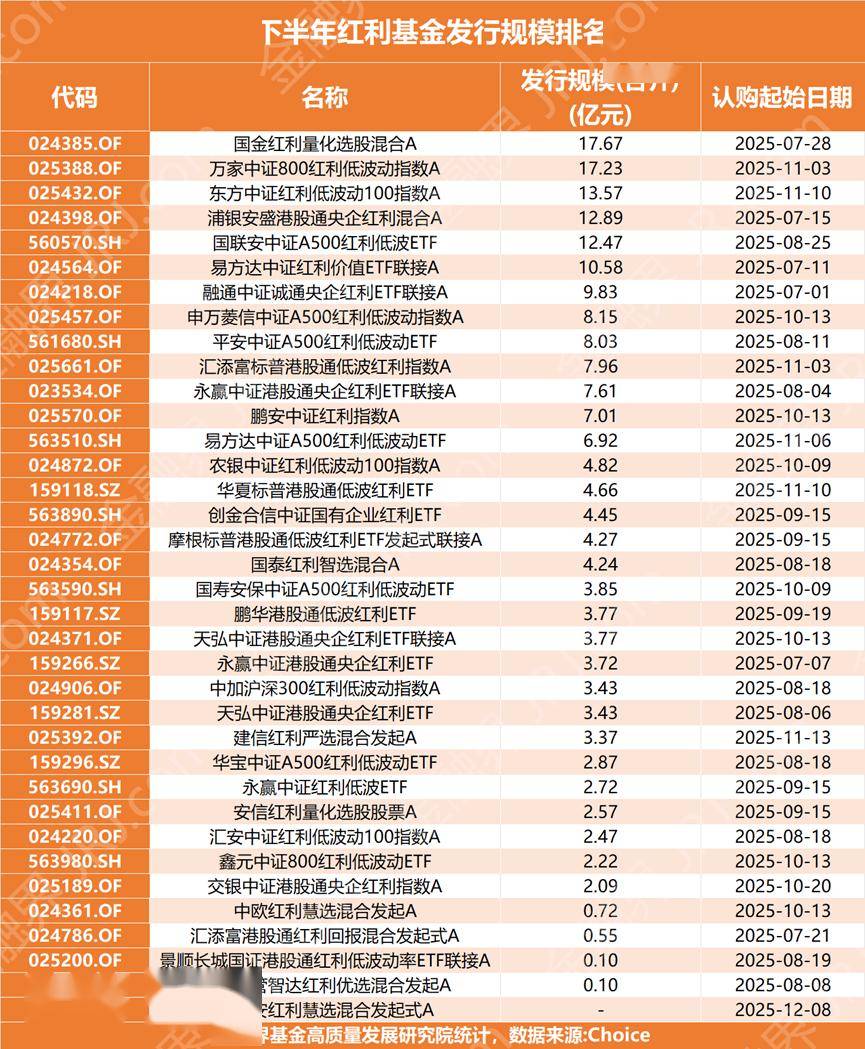
下半年募资能力较强的红利基金,看看哪只让你意外了?
Sou Hu Cai Jing· 2025-12-14 08:42
Group 1 - The core viewpoint of the articles highlights a significant acceleration in the issuance and fundraising of dividend-themed public funds in the second half of the year, with a notable increase in both the number and scale of new products [1][3] - In the first half of the year, 26 dividend-themed funds were established, raising approximately 9.3 billion yuan, with a median size of around 300 million yuan. In contrast, by December 12, 36 new dividend-themed funds were launched in the second half, raising a total of 20.4 billion yuan, representing a doubling in scale compared to the first half [1][3] - The average fundraising capability of single funds has significantly improved, with the largest fund raising 1.767 billion yuan and the median size increasing to 400 million yuan [1][3] Group 2 - Among the 36 new funds, 27 are index funds and 9 are actively managed equity funds, indicating that tool-based products dominate the dividend strategy [1] - The top fundraising fund in the second half is the Guojin Dividend Quantitative Stock Mixed A, which raised 1.767 billion yuan, followed closely by the Wanji Zhongzheng 800 Dividend Low Volatility Index A at 1.723 billion yuan [3] - The issuance activity is led by Yongying Fund, which launched 3 dividend-themed funds, while several other companies, including Yifangda, Tianhong, and Penghua, each issued 2 products [3] Group 3 - A structural change is evident in the current issuance trend, with Hong Kong dividend funds becoming a significant source of new products, as 12 related products were established in the second half, surpassing the number from the first half [3] - The leading fund in the Hong Kong dividend category is the浦银安盛港股通央企红利混合A, which raised 1.289 billion yuan, with other funds like the 汇添富标普港股通低波红利指数 and 永赢中证港股通央企红利ETF联接 also showing substantial fundraising [3] - The "dividend low volatility" strategy has seen rapid expansion, with 18 related products launched in the second half, tracking various indices such as 中证800红利低波 and 中证A500红利低波, providing investors with more diverse options [3]
低费率红利低波ETF基金(159547)持续吸金!或因风险偏好趋于谨慎!
Mei Ri Jing Ji Xin Wen· 2025-12-12 05:57
Group 1 - The core viewpoint of the articles highlights the increasing popularity of the dividend low-volatility strategy, particularly the dividend low-volatility ETF fund (159547), which has seen a net inflow rate of 14.27% over the past five trading days as of December 11, 2025 [1] - Zhongyuan Securities suggests that the easing of China-US trade relations and the upcoming key policy meetings, such as the Central Economic Work Conference, will influence market risk appetite [1] - The report recommends a balanced investment strategy, emphasizing the defensive value of dividend assets due to a decline in market turnover and a cautious risk preference among investors [1] Group 2 - The TMT (Technology, Media, and Telecommunications) and artificial intelligence sectors have become increasingly attractive for investment following a valuation correction in November [1] - A balanced barbell strategy is proposed as a suitable current allocation strategy, reflecting the dual focus on defensive dividend assets and the potential of TMT and AI sectors [1] - The low fee of 20 basis points for the dividend low-volatility ETF fund (159547) continues to attract investor attention [1]
养老与红利低波投资双向奔赴 华泰柏瑞基金打造长期优质“指数Y”标杆
Zhong Guo Zheng Quan Bao· 2025-12-09 20:37
Core Insights - The article discusses the implementation and expansion of the personal pension system in China, highlighting the introduction of the personal pension investment public fund business and the emergence of the "Index Y" benchmark product, specifically the Huatai-PB CSI Dividend Low Volatility ETF Link Y [1][2] Group 1: Personal Pension System Implementation - The personal pension system will be officially promoted nationwide by December 2024, following a two-year pilot program [1] - The introduction of equity index funds into the personal pension investment product catalog marks a significant milestone in domestic index investment development [1] Group 2: Performance of Huatai-PB CSI Dividend Low Volatility ETF Link Y - Since its inception, the Huatai-PB CSI Dividend Low Volatility ETF Link Y has become a benchmark product in the public fund industry, with a scale reaching 245 million yuan by the end of Q3 2025, representing a growth of 440.37% this year [2] - The fund has maintained a strong holder base, with over 24,800 accounts by Q2 2025, making it one of the few products with more than 20,000 holders in the market [2] Group 3: Investment Strategy and Returns - The Huatai-PB CSI Dividend Low Volatility ETF primarily invests in the Dividend Low Volatility ETF, which has achieved a cumulative return of 127.74% since its establishment [3] - The fund has a consistent dividend distribution record, having implemented dividends for 27 consecutive months, making it one of the few products with over 25 cumulative dividends [3] Group 4: Promotion of Pension Investment Concepts - The company has actively engaged in promoting pension investment concepts through various educational activities, targeting young audiences to raise awareness about personal pension planning [5] - The promotion of the dividend low volatility strategy aligns with the long-term investment goals of the personal pension system, emphasizing risk control and sustainable growth [6][8] Group 5: Market Environment and Policy Support - The low-interest-rate environment enhances the attractiveness of high-dividend strategies as a long-term investment option, with the dividend low volatility index yielding 4.16% as of December 5, 2025, significantly higher than the 1.8% yield of ten-year government bonds [7] - Supportive policies from regulatory bodies have encouraged A-share listed companies to increase dividend payouts, providing a favorable backdrop for the dividend low volatility strategy in the long-term allocation of pension funds [7]
华泰柏瑞基金打造长期优质“指数Y”标杆
Zhong Guo Zheng Quan Bao· 2025-12-09 20:22
Core Viewpoint - The implementation of the personal pension system in China is progressing, with the introduction of the "Index Y" benchmark product, the Huatai-PB CSI Dividend Low Volatility ETF Link Y, which is gaining popularity among personal pension investors [1][2][8] Group 1: Personal Pension System Development - The personal pension system will be officially promoted nationwide by December 2024, following a two-year pilot program [1] - The inclusion of equity index funds in the personal pension investment product catalog marks a significant milestone in the development of index investment in China [1][2] - The "Guidelines for Promoting the High-Quality Development of Public Funds" emphasize the need for fund companies to enhance their service capabilities for long-term capital [1] Group 2: Performance of Huatai-PB CSI Dividend Low Volatility ETF Link Y - The Huatai-PB CSI Dividend Low Volatility ETF Link Y has become the first "Index Y" product to exceed 2 billion yuan in scale, achieving a growth of 440.37% in 2025 [2][3] - As of the end of Q3 2025, the fund's cumulative return since inception reached 127.74%, and it has maintained a consistent dividend distribution for 27 months [3][6] - The fund's holder count reached 24,800 by Q2 2025, making it one of the few "Index Y" products with over 20,000 holders [2] Group 3: Investment Strategy and Market Position - The Huatai-PB CSI Dividend Low Volatility ETF Link Y primarily invests in the first ETF in the market to exceed 25 billion yuan, focusing on dividend and low volatility strategies [3][6] - The dividend low volatility strategy aligns well with the long-term investment goals of personal pensions, emphasizing risk control and stable growth [6][7] - The favorable policy environment and increasing dividend payouts from A-share companies support the sustainability of the dividend low volatility strategy in the long term [7][8] Group 4: Educational Initiatives and Market Engagement - Huatai-PB Fund has actively engaged in educational activities to promote the personal pension system and the dividend low volatility strategy among young investors [5][6] - The company has utilized various formats, including online and offline events, to enhance awareness and understanding of personal pension planning [5][6] - The growing acceptance of the dividend low volatility strategy reflects a shift in investment logic from "yield attraction" to "strategy adaptation" in the personal pension market [8]
“红”了这么久,红利低波策略还能持续吗?
Xin Lang Ji Jin· 2025-12-05 06:29
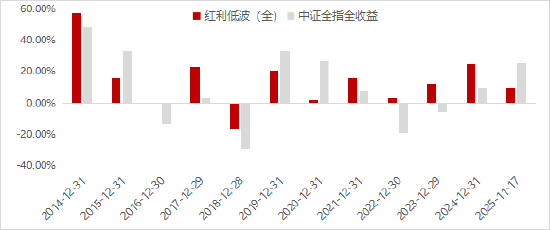
Core Viewpoint - The gradual delay of the statutory retirement age in China, effective from January 1, 2025, will significantly impact the workforce, particularly the post-90s generation, necessitating early preparation for retirement investments [1] Group 1: Policy Impact - The statutory retirement age for male employees will be gradually raised from 60 to 63 years, and for female employees from 50 and 55 to 55 and 58 years respectively over a period of 15 years [1] - This policy is expected to affect the retirement timeline for many, especially the younger workforce, who may need to work for an additional 30 years before retirement [1] Group 2: Investment Strategy - The "Dividend Low Volatility Strategy" is highlighted as a suitable investment approach for retirement, focusing on stocks with stable dividends and low price volatility, making it a low-risk option for long-term holding [1] - The "Dividend Low Volatility Index" has shown a continuous increase over six years, raising concerns about its future effectiveness, which the article aims to address [1] Group 3: Historical Performance - Since its launch on December 19, 2013, the "Dividend Low Volatility" strategy has outperformed the CSI All Share Total Return Index in 8 out of 11 years, demonstrating strong defensive and offensive capabilities [2][5] - The index has recorded positive annual returns in 10 out of the last 11 years, with the exception of 2018, when the overall A-share market experienced significant declines [2] Group 4: Strategy Characteristics - The strategy selects companies with high dividend yields, stable cash flows, and relatively low valuations, making it suitable for long-term pension investments [7] - It avoids high-volatility sectors, thus mitigating risks associated with cyclical industries and potential value traps [7] Group 5: External Environment - The sustained decline in risk-free interest rates has enhanced the attractiveness of the "Dividend Low Volatility Strategy" for pension fund allocations [8] - The gap between the declining yields of government bonds and the stable dividend yields of the index has widened, supporting the strength of the dividend style [8][9] Group 6: Future Outlook - The strategy's effectiveness is expected to remain strong due to the enduring low interest rate environment and regulatory encouragement for cash dividends among listed companies [11][12] - The total cash dividends announced by the 50 constituent stocks of the "Dividend Low Volatility Index" reached 364.3 billion yuan in the 2025 mid-year report, marking a new high since 2006 and accounting for 53.7% of total cash dividends in the A-share market [11][12] - The promotion of personal pension systems is likely to lead to increased market participation from pension funds, which align well with the characteristics of the "Dividend Low Volatility Strategy" [11][12]