经济政策不确定性

Search documents
2025年中回顾与展望:不确定下的美债市场波动
Xin Hua Cai Jing· 2025-07-01 09:09
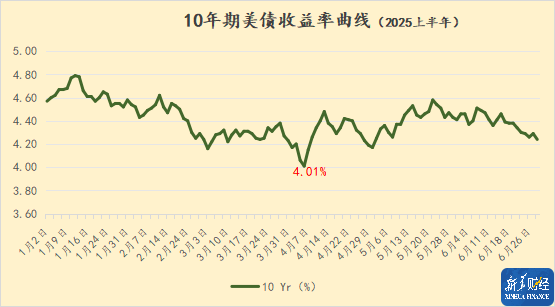
Market Overview - The U.S. stock market reached a historical high at the beginning of the year but entered a bear market in April due to proposed tariff increases, with the S&P 500 index dropping 20% from its peak [1] - Following the proposed tariff suspension, financial markets rebounded quickly, recovering all losses by mid-May, marking one of the fastest recoveries observed [1] Bond Market Dynamics - The U.S. bond market experienced significant volatility, particularly with a sharp sell-off of long-term U.S. Treasuries starting in April, raising concerns among investors [2] - The 10-year Treasury yield peaked at 4.79% on January 14 and dropped to a low of 4.01% by April 4, indicating substantial fluctuations in the bond market [2] - The 30-year Treasury bond mirrored the 10-year bond's performance until late May, when it reached a year-to-date high of 5.08% [4] Investment Opportunities - Current market conditions allow bond investors to achieve yields above inflation, making it an attractive environment for fixed-income investments [6] - Municipal bonds are highlighted as particularly appealing for high-tax-bracket clients due to better valuations compared to U.S. Treasuries and corporate bonds [6] Treasury Issuance and Debt Management - The U.S. Treasury is projected to issue over $10 trillion in bonds this year, a scale unprecedented in modern markets, with $12.2 trillion issued in the first five months of 2025, a 0.2% year-on-year increase [7] - As of June 30, the yield curve showed a significant drop in short-term yields, while long-term yields increased, indicating a market preference for shorter maturities [8][9] Fiscal Challenges - Approximately $9.2 trillion of U.S. Treasury bonds are set to mature in 2025, representing about one-third of the total U.S. debt market, with a significant portion maturing before July [11] - The Treasury is increasing short-term bond issuance to manage cash flow and maintain liquidity, aiming to keep short-term bonds at around 20% of its portfolio [12] Future Outlook - Analysts expect the 10-year Treasury yield to stabilize between 4% and 5%, which is higher than the standards of the 2010s but still manageable if auction demand remains strong and inflation is controlled [12]

6月29日电,国际清算银行称,全球政府债务攀升趋势“难以为继”。
news flash· 2025-06-29 09:15
Group 1 - The International Bank for Settlements states that the trend of rising global government debt is "unsustainable" [1] - Increased tariffs may lead to supply chain disruptions and soaring inflation [1] - Uncertainty in U.S. economic policy is suppressing economic growth [1]
鲍威尔本周难成“救世主”,美股下半年将陷入震荡?
Jin Shi Shu Ju· 2025-06-16 06:14
Core Viewpoint - The upcoming Federal Reserve meeting is surrounded by significant uncertainty regarding the U.S. economy, inflation, and interest rate paths, which may lead to increased volatility in the stock market for the remainder of the year [1] Economic Outlook - Despite expectations that trade conflicts will drive inflation higher, the mild consumer and producer price data from May did not support this trend [1] - The escalation of tensions in the Middle East, particularly the Israeli attack on Iranian nuclear facilities, caused a 14% spike in U.S. crude oil futures, raising concerns about inflationary pressures in the bond market [1] - The uncertainty surrounding inflation and the Federal Reserve's response is a key driver of the short-term economic and market outlook [1][2] Federal Reserve's Position - The Federal Reserve is expected to provide updated economic and interest rate forecasts, but analysts predict that Chairman Powell will remain vague, emphasizing the need for clearer signals before adjusting rates [2] - There is a warning that the Fed may reduce its 2025 rate cut expectations from two to one [2] Market Reactions - The S&P 500 index has seen significant fluctuations, with a 19% drop from February to April followed by a nearly 20% rebound in June, indicating that investors may be more resilient to policy surprises [3] - Observers believe that new catalysts, such as a rebound in earnings trends, are necessary for the S&P 500 to reach new highs [2] Investment Strategies - The current environment of economic policy uncertainty is prompting investment strategies focused on diversification, with suggestions to increase non-dollar assets or cash if heavily invested in U.S. equities [2] - The "economic policy uncertainty index" reached a record high in June, indicating that consumers may reduce spending and businesses may cut investments, potentially leading to a recession [2]
汇丰2025年下半年展望:风险偏好回归 AI乐观情绪及疲弱美元或成关键催化剂
智通财经网· 2025-06-12 07:19
Group 1 - HSBC has a positive outlook for the second half of 2025, noting a rebound in trading activity in the US market despite some signs of demand being pulled forward [1] - The bank suggests an overweight position in equities, high-yield bonds, and emerging market bonds, driven by optimism around artificial intelligence and a weaker dollar [1] - Historical data indicates that during periods of high economic policy uncertainty, risk assets tend to rebound rather than decline further [1] Group 2 - Market confidence in the US government's tax reduction agenda is waning, with potential agreements in the summer serving as a short-term catalyst for risk asset increases, provided long-term yields do not rise sharply [2] - Downside risks include a rising unemployment rate and US Treasury yields approaching a "danger zone" of 4.7%, which could trigger widespread selling of risk assets [2] - HSBC plans to slightly overweight equities and increase positions during market pullbacks, particularly in US stocks, while maintaining an overweight in emerging markets and high-yield credit [2]

七国集团财长与央行行长会议公报避谈贸易战
Zhong Guo Xin Wen Wang· 2025-05-23 05:18
Group 1 - The G7 finance ministers and central bank governors meeting concluded in Banff, Alberta, Canada, emphasizing the importance of unity in addressing complex global challenges [1] - The communiqué highlighted a consensus among participants that economic policy uncertainty has declined from its peak, while concerns about unsustainable global macroeconomic imbalances persist [1] - A call to action was issued to combat financial crimes, with Canada committing CAD 4.8 million in new technical assistance to developing economies [1] Group 2 - The G7 agreed to support the World Bank-led initiative to strengthen resilient and inclusive supply chains, with Canada pledging CAD 20 million for this purpose in Latin America and the Caribbean [1] - Participants acknowledged the risks associated with the increase of low-value goods imports into G7 markets [1] - Continued support for Ukraine was reiterated by all parties involved in the meeting [2]
七国集团草案:经济政策不确定性已从高点下降。
news flash· 2025-05-22 13:06
Group 1 - The core viewpoint of the article indicates that economic policy uncertainty has decreased from its peak levels, as highlighted in the G7 draft [1] Group 2 - The article suggests that the reduction in economic policy uncertainty may lead to improved investment conditions and business confidence [1] - It emphasizes the importance of stable economic policies for fostering growth and attracting investments [1]
美联储穆萨莱姆:经济政策的不确定性异常高。即使在5月12日贸易局势有所缓和之后,关税也可能导致美国劳动力市场走软,物价上涨。
news flash· 2025-05-20 17:06
Core Insights - The uncertainty surrounding economic policy is exceptionally high according to the Federal Reserve's Musalem [1] - Even after the trade situation eased on May 12, tariffs may still lead to a weakening labor market and rising prices in the U.S. [1]
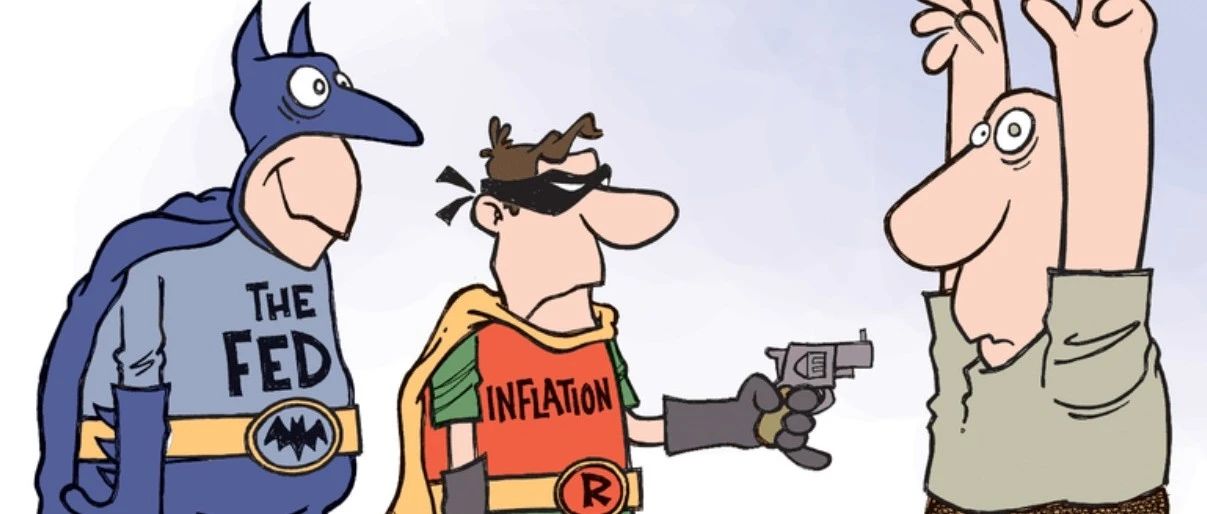
欲拒还迎的Fed Put(国金宏观宋雪涛)
雪涛宏观笔记· 2025-03-20 10:08
Core Viewpoint - The article discusses the Federal Reserve's current stance under Powell, characterized as "duck-like," indicating a lack of decisive action while trying to appease both the market and the White House amidst rising economic uncertainties [1][10]. Summary by Sections Federal Reserve's Position - Powell's approach reflects a compromise between being overly aggressive and overly passive, indicating that the Fed is not clear on the economic situation, leading to a lack of coherent monetary policy [1][10]. - The March FOMC meeting showed a degree of independence, with the Fed not overly concerned about soft data and emphasizing the importance of addressing inflation [3][10]. Market Reactions and Economic Policies - The Fed's unexpected slowdown in balance sheet reduction and its temporary judgment on tariff impacts suggest a commitment to a "Fed Put," although this commitment is not strong due to political constraints [4][5][10]. - Powell's reluctance to directly address the negative impacts of Trump's policies indicates a cautious approach, with the Fed needing to see greater chaos to justify more aggressive actions [5][11]. Economic Uncertainty - The article highlights that the current policy mix serves as a short-term reassurance for the market and a friendly response to Trump, with tariffs viewed as a one-time shock that does not require significant monetary policy adjustments [10]. - The uncertainty surrounding economic policies is expected to increase, with the Fed likely to lag in its responses to economic data, which may force it to act more decisively in future meetings [11].