美元化

Search documents
【环球财经】欧洲央行官员警惕稳定币 担忧欧元区“美元化”
Xin Hua She· 2025-07-29 12:31
Core Viewpoint - The rise of dollar-pegged stablecoins poses a risk of "dollarization" in the Eurozone, potentially undermining the European Central Bank's (ECB) control over monetary policy [1] Group 1: Stablecoins and Eurozone Risks - A senior official from the European Central Bank warned that the rapid proliferation of stablecoins could lead to issues similar to those faced by emerging economies, where the widespread use of the dollar hampers local policymakers' ability to set interest rates or control money supply [1] - Current data indicates that the total value of stablecoins in circulation globally has increased to approximately $250 billion, with most of these pegged to dollar assets [1] - The ECB's control over monetary conditions would be weakened if dollar-pegged stablecoins become widely used for payments, savings, or settlements within the Eurozone [1] Group 2: Potential Financial System Implications - The official cautioned that a collapse of privately issued stablecoins could trigger a chain reaction within the financial system [1] - The ECB's plan to launch a digital euro is viewed as a robust defense of European monetary sovereignty [1] Group 3: Criticism from International Institutions - The Bank for International Settlements issued a stern warning regarding the poor performance of stablecoins as widely usable currencies, citing three major flaws: lack of central bank backing, insufficient measures against illegal use, and lack of funding flexibility for generating loans [1]
欧洲央行官员警惕稳定币 担忧欧元区“美元化”
Yang Shi Xin Wen· 2025-07-29 09:24
Core Viewpoint - The rise of dollar-pegged stablecoins poses a risk of "dollarization" in the Eurozone, potentially undermining the European Central Bank's (ECB) control over monetary policy [1] Group 1: Stablecoins and Eurozone Risks - A senior ECB official warned that the rapid proliferation of stablecoins could lead the Eurozone to face issues similar to those in emerging economies, where the widespread use of the dollar hampers local policymakers' ability to set interest rates or control money supply [1] - Current data indicates that the total value of stablecoins in circulation globally has increased to approximately $250 billion, with most pegged to dollar assets [1] - If dollar-pegged stablecoins become widely used for payments, savings, or settlements in the Eurozone, the ECB's control over monetary conditions would be weakened [1] Group 2: Concerns Over Private Sector Stablecoins - The ECB official cautioned that a collapse of privately issued stablecoins could trigger a chain reaction within the financial system [1] - The Bank for International Settlements (BIS) issued a stern warning regarding the poor performance of stablecoins as widely usable currencies, citing three main flaws: lack of central bank backing, insufficient safeguards against illegal use, and lack of funding flexibility for generating loans [1] Group 3: Digital Euro as a Defense - The ECB's plan to launch a digital euro is viewed as a robust defense of European monetary sovereignty [1]
【微特稿·投资与消费】欧洲央行官员警惕稳定币 担忧欧元区“美元化”
Sou Hu Cai Jing· 2025-07-29 09:00
Group 1 - A senior official from the European Central Bank (ECB) warned that the rise of dollar-pegged stablecoins could lead to "dollarization" in the Eurozone, undermining the ECB's control over monetary policy [1] - The value of stablecoins in circulation globally has increased to approximately $250 billion, with most of them pegged to dollar assets [1] - The ECB's ability to control monetary conditions will be weakened if dollar-pegged stablecoins are widely used for payments, savings, or settlements in the Eurozone [1] Group 2 - The ECB's plan to launch a digital euro is seen as a "solid defense of European monetary sovereignty" [2] - The Bank for International Settlements (BIS) issued a warning that stablecoins have performed poorly as widely usable currencies, citing three main flaws: lack of central bank backing, insufficient measures against illegal use, and lack of funding flexibility for generating loans [2]
美元稳定币侵蚀欧元地盘?欧洲央行警示金融主权危机
Jin Shi Shu Ju· 2025-07-29 05:54
Group 1 - The European Central Bank (ECB) is concerned about the rise of dollar-pegged stablecoins, which threaten its control over monetary policy [1][2] - The global circulation of stablecoins has reached approximately $250 billion, with the majority pegged to the US dollar [1] - The ECB warns that widespread use of dollar stablecoins in the Eurozone could weaken its control over monetary conditions [1][2] Group 2 - Stablecoins are designed to bridge the gap between crypto assets and traditional financial systems, but their anonymity raises concerns about their use in illegal activities [2] - The ECB's warning reflects a growing global concern among central banks regarding the risks associated with stablecoins [2] - The support for stablecoins by the Trump administration may further solidify the dollar's dominance globally, leading to higher financing costs for Europe compared to the US [2]
这粒美元的“速效救心丸”,该怎么玩
和讯· 2025-07-23 10:16
Core Viewpoint - The article discusses the rapid transformation of the international monetary system, particularly focusing on the rise of cryptocurrencies and the explosive growth of stablecoins, which pose structural challenges to the Chinese yuan and highlight the need for cautious responses from China [1][2]. Group 1: Stablecoin Market Dynamics - The total market capitalization of global stablecoins has exceeded $260 billion, a 12-fold increase from $20 billion in 2020 [2][7]. - The dominance of USD stablecoins is significant, accounting for over 85% of the market, reinforcing the USD's position as the global reserve currency [2][7]. - The U.S. Treasury Secretary has emphasized that stablecoins will enhance the global reach of the USD and increase demand for U.S. Treasury bonds, which are key reserve assets supporting stablecoins [2][7]. Group 2: China's Response to Stablecoins - The Shanghai Municipal State-owned Assets Supervision and Administration Commission has signaled a shift towards a more open attitude regarding digital currencies, contrasting with previous strict regulations against virtual currency trading [3][9]. - There is a notable divergence in opinions among experts regarding the development path of the Chinese yuan stablecoin, with some advocating for an open and proactive approach while others suggest a more cautious "offshore first" strategy [4][12]. - The potential for a yuan stablecoin to stimulate demand for the yuan is highlighted, especially given the high internal and external flow of stablecoins in the Asia-Pacific region [10]. Group 3: Regulatory Developments - The U.S. has initiated federal-level legislation for stablecoins, while Hong Kong's stablecoin regulations are set to take effect, indicating a global race surrounding stablecoin frameworks [5][6]. - The upcoming stablecoin regulations in Hong Kong will require stablecoins to be backed by 100% of the same currency's high-quality reserve assets, laying a legal foundation for offshore yuan stablecoins [13]. Group 4: Challenges and Opportunities for Yuan Stablecoin - The lack of liquidity in the offshore yuan market is a significant challenge, with current offshore yuan deposits and products only slightly above one trillion [14]. - Experts suggest that increasing the issuance of yuan government bonds in offshore markets and enhancing hedging products could improve the liquidity and usage of the yuan [14]. - The unique advantages of a yuan stablecoin include leveraging China's manufacturing leadership to integrate into global trade and payment systems, potentially reducing the dominance of the USD [11][12].

稳定币:锚定未来?
Hu Xiu· 2025-07-12 13:14
Group 1: Core Insights - The U.S. Senate passed the "GENIUS Act" establishing the first federal regulatory framework for stablecoins, reflecting a global consensus on recognizing stablecoins' legitimacy [1][2] - Major companies like Mastercard and Morgan Stanley are actively exploring stablecoin integration into their payment systems, indicating a growing recognition of stablecoins' commercial value [2][3] - Stablecoins are categorized into three main types: fiat-collateralized, crypto-collateralized, and algorithmic stablecoins, each with distinct mechanisms and risks [3][4][5] Group 2: Market Dynamics - Fiat-collateralized stablecoins dominate the market, accounting for approximately 90% of the total stablecoin market capitalization, with USDT and USDC being the most prominent [8][9] - The use of stablecoins has expanded beyond the crypto industry, finding applications in cross-border payments, daily transactions, and as a hedge against inflation in emerging markets [10][11][15] Group 3: Regulatory Landscape - Various countries are implementing regulations to address the risks associated with stablecoins, including limitations on non-local stablecoins to protect monetary sovereignty [30][31] - The European Union's MiCA regulation categorizes stablecoins and imposes strict requirements on their issuance and operation, aiming to mitigate financial risks and enhance compliance [31][36] Group 4: Strategic Recommendations for China - China should adopt a cautious approach towards stablecoins, focusing on research and regulatory frameworks while considering the unique national context and the existing digital yuan [38][39] - Promoting offshore RMB stablecoins could enhance the internationalization of the yuan and expand its use in emerging digital scenarios [41] - Strengthening the collaboration between stablecoins and the digital yuan can leverage their complementary advantages in cross-border payments and digital asset exchanges [42]
金融家周小川:美元稳定币的全球影响与美元化的副作用|专家解读
Sou Hu Cai Jing· 2025-07-07 10:14
Core Insights - The development of stablecoins, particularly dollar-pegged stablecoins, has significant implications for the global economy and financial system, as highlighted by Zhou Xiaochuan [1][3][5] - While dollar stablecoins can enhance transaction efficiency and reduce costs, they also pose risks of dollarization, which can undermine monetary policy independence and financial stability in various countries [4][6] Summary by Sections Potential Impact of Dollar Stablecoins - Dollar stablecoins are primarily based on the US dollar and can improve efficiency in transactions and remittances, especially in cross-border payments due to their fast settlement and low costs [3] - They can also facilitate the purchase of various assets, including digital and crypto assets, thereby stimulating related markets [3] Risks and Side Effects of Dollarization - Dollarization refers to the widespread use of the US dollar in economic activities instead of local currencies, which has been observed in Central America and some transitioning economies [4] - It can weaken a country's monetary policy independence as the demand for local currency decreases, limiting the central bank's ability to manage monetary policy [4] - Dollarization may lead to financial instability, exposing local financial institutions to liquidity and exchange rate risks, often adopted in extreme situations like high inflation or debt [4] Cautious Considerations for Stablecoin Development - Zhou emphasizes the need for countries to carefully assess the impact of dollarization on their economies and financial systems when considering the promotion of domestic stablecoins [5] - The widespread use of dollar stablecoins could exacerbate the dominance of the US dollar in the global economy, affecting other nations' monetary and economic policies [5] - Countries should adopt a prudent approach in advancing stablecoin development to ensure alignment with their economic interests and financial stability goals [5][6]

美元稳定币:市场叙事背后的真相
Guan Cha Zhe Wang· 2025-07-03 03:25
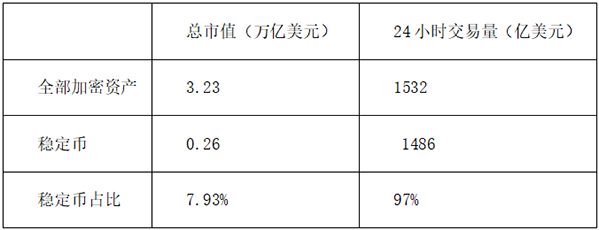
Core Insights - The seminar highlighted the transformative role of USD stablecoins in reshaping the global monetary landscape, emphasizing the need to address challenges from multiple dimensions including technology, market impact, and regulatory responses [1][2][3] Group 1: Market Dynamics of Stablecoins - The current market capitalization of stablecoins is nearly $260 billion, accounting for approximately 8% of the total cryptocurrency market, with stablecoin trading volume representing 97% of total cryptocurrency trading volume [4][5] - 99% of stablecoins are pegged to the US dollar, and over 99% of stablecoin trading volume is derived from cryptocurrency transactions, indicating their primary use case in the crypto market [7][8] - The largest stablecoin, USDT, holds a market share of 62%, followed by USDC, which has recently gained traction [8] Group 2: Regulatory and Economic Implications - The US has adopted a "let it be" approach towards stablecoin regulation, allowing commercial entities to lead the way in promoting dollarization through stablecoins before tightening compliance frameworks [2][32] - The rapid growth of USD stablecoins poses risks for China, including capital flight and challenges to existing foreign exchange management and anti-money laundering systems [2][37] - The issuance of stablecoins is heavily reliant on US Treasury securities, with significant investments in these assets, which raises questions about the sustainability of this model [34][36] Group 3: Global Dollarization and Financial Sovereignty - USD stablecoins are driving a digital form of dollarization globally, which could undermine the monetary sovereignty of other nations and exacerbate economic imbalances [30][31] - The use of stablecoins in regions with economic instability, such as Latin America and Africa, highlights their role in providing financial services but also raises concerns for local governments [31] Group 4: Future Outlook and Strategic Recommendations - The potential for USD stablecoins to enhance financial accessibility in underdeveloped regions must be balanced against the risks posed to national monetary policies [31] - China is advised to monitor the circulation of USD stablecoins and regulate them as foreign currency payment instruments to safeguard its monetary sovereignty [37]
【财经分析】“爆火”的稳定币会是离我们最近的数字货币吗?
Xin Hua Cai Jing· 2025-06-26 06:54
Core Insights - Stablecoins are gaining significant attention globally, with a rapidly developing regulatory framework, highlighting their potential as a bridge between traditional finance and digital assets [1][2][4] - The demand for stablecoins is increasing, particularly in countries experiencing rapid currency devaluation, as they offer a means for residents to lock in value and facilitate transactions [2][3] - The rise of stablecoins could lead to a further dollarization of the global monetary system, enhancing the influence and power of the underlying currencies and assets [2][3] Definition and Functionality - Stablecoins are digital currencies pegged to real-world assets, such as the US dollar, providing stability compared to volatile cryptocurrencies like Bitcoin [1][4] - They serve as a payment tool utilizing blockchain technology, allowing for quick transactions in the digital realm while minimizing exchange rate fluctuations and transaction fees [1][4] Market Dynamics - The market for stablecoins is expanding, with Tether's USDt holding a 66% market share and a valuation of approximately $150 billion as of April 2025 [5] - Major tech companies, including Apple, Google, and Uber, are exploring the integration of stablecoins into their payment systems, indicating a growing interest in this financial innovation [6][7] Regulatory Landscape - The issuance of stablecoins is primarily conducted by private companies, with ongoing discussions about regulatory frameworks to ensure transparency and proper reserves [4][5] - The Hong Kong Monetary Authority has established a licensing system for stablecoin issuers, which is expected to commence in August 2025, aiming to ensure operational stability and compliance [6][8] Strategic Implications - The development of stablecoins is viewed as a strategic tool for the US to maintain and expand the dollar's global dominance, similar to historical shifts in the global monetary system [2][3] - Experts warn that without proper regulation, stablecoins could pose risks to financial stability and monetary sovereignty, as they may not always maintain their pegged value [7][8]
跨境支付通6月22日正式上线;陆家嘴论坛潘功胜、李云泽、吴清、朱鹤新发声|每周金融评论(2025.6.16-2025.6.22)
清华金融评论· 2025-06-23 11:21
Focus - The Cross-Border Payment System officially launched on June 22, enabling real-time cross-border remittances between residents of mainland China and Hong Kong, with the first transaction occurring in Shenzhen [3]. Major Events - The Lujiazui Forum opened on June 18, focusing on "Financial Opening and Cooperation in the Global Economic Landscape," featuring key speeches from financial leaders including Pan Gongsheng and Li Yunzhe, who announced a series of important financial policies [4][5]. Major Policies - The Shanghai Stock Exchange implemented new regulations requiring brokers to process investor requests for revoking designated trading on the same day, aiming to enhance customer service and reduce barriers for investors switching brokers [6][7]. Economic Data - In the first five months of the year, China's general public budget expenditure reached 112,953 billion yuan, a year-on-year increase of 4.2%, while revenue slightly declined by 0.3% to 96,623 billion yuan [8][9].