能源科技创新

Search documents
山西加快推动能源转型高质量发展
Ren Min Ri Bao· 2026-01-12 01:35
Core Viewpoint - Shanxi Province has introduced implementation opinions to accelerate energy technology innovation, aiming for high-quality development during the 14th Five-Year Plan period, with a focus on establishing a comprehensive energy technology innovation system by 2030 [1] Group 1: Energy Technology Innovation - The implementation opinions aim to enhance energy technology innovation capabilities and explore new pathways for energy transition and upgrading [1] - By 2030, the goal is to achieve over 100 landmark technological achievements in key energy sectors, including coal mining, efficient power generation, coal chemical industry, and new energy [1] Group 2: Strategic Focus and Key Tasks - The opinions identify strategic positioning for energy technology innovation and outline 33 areas with over 100 key tasks to drive breakthroughs in critical core technologies [1] - The focus areas include coal mining, flexible and efficient power generation, coal chemical industry, coalbed methane exploration, new energy, smart grids, waste disposal and utilization, and AI-driven energy innovations [1] Group 3: Integration of Technology and Industry - The implementation opinions emphasize the deep integration of technological innovation and industrial innovation, proposing 44 measures to ensure the effective implementation of energy technology tasks [1] - These measures cover aspects such as achievement transformation, enterprise innovation, and resource assurance [1]
山西加快能源科技创新支撑转型发展
Ke Ji Ri Bao· 2026-01-07 01:07
Core Viewpoint - Shanxi Province has introduced the "Implementation Opinions on Accelerating Energy Technology Innovation to Support Energy Transition Development," aiming to enhance the energy technology innovation system and support high-quality energy transition through systematic solutions and technological advancements [1][2]. Group 1: Key Goals and Objectives - By 2030, Shanxi aims to have a more complete energy technology innovation system with over 100 significant technological achievements and a technology transaction volume exceeding 50 billion yuan [1]. - The focus is on breakthroughs in key technologies, core equipment, and important components in energy sectors [1]. Group 2: Strategic Directions and Tasks - The "Implementation Opinions" identifies nine new paths for energy transition, including coal mining, efficient power generation, coal chemical industry, coalbed methane exploration, new energy, smart grids, solid waste disposal, carbon capture, and AI-driven energy innovation [2]. - A total of 33 areas with over 100 key tasks have been outlined to drive energy technology innovation [2]. Group 3: Policy Measures and Integration - The document proposes 44 policy measures to ensure the integration of technological innovation and industrial innovation, focusing on results transformation, enterprise innovation, and resource assurance [2]. - The implementation is expected to enhance Shanxi's energy technology innovation capabilities and address technological bottlenecks in the energy transition [2].
能源早新闻丨特高压入浙,年送电量超1600亿千瓦时!
中国能源报· 2026-01-06 22:33
Industry Updates - Domestic refined oil prices remain unchanged as the adjustment amount is less than 50 yuan per ton compared to the previous period [2] - A new round of mineral exploration will be launched in China in 2026, with significant discoveries during the 14th Five-Year Plan period, including 10 large oil fields and 19 large gas fields [2] Energy Sector Developments - The annual electricity transmission volume of the UHV project in Zhejiang exceeded 160 billion kilowatt-hours, accounting for 22.3% of the province's total electricity consumption [3] - A breakthrough in hydrogen sulfide treatment technology has been achieved, with a conversion rate nearing 100%, producing high-quality sulfur and pure hydrogen [3] - A new technology for natural gas compressors allows for continuous operation during power outages, enhancing supply security [3] Policy and Regulatory Changes - Shanxi Province has issued an implementation opinion to accelerate energy technology innovation, aiming for over 100 landmark technological achievements by 2030 [4] - The Sichuan electricity market settlement rules have been updated, introducing a profit-sharing mechanism for retail electricity sales [4] Automotive Industry Insights - Chinese electric vehicles are gaining popularity in Uruguay, with a reported 8% increase in total vehicle sales in 2025, driven by the growth of Chinese brands [5] Global Market Dynamics - European market institutions have raised concerns about uncertainties in the oil market due to geopolitical tensions involving Venezuela [6] - Japan's Chubu Electric Power Company has admitted to manipulating data to facilitate the restart of nuclear reactors, raising regulatory scrutiny [6] Company Performance Highlights - China National Petroleum Corporation reported a record natural gas production of 6.1 billion cubic meters from Daqing Oilfield in 2025, marking 15 consecutive years of growth [7] - The total installed capacity of renewable energy in Gansu Province has surpassed 8 million kilowatts, representing over 64% of the province's total power generation capacity [7]

山西出台意见,加快能源科技创新支撑转型发展
Zhong Guo Dian Li Bao· 2026-01-06 09:05
Core Viewpoint - Shanxi Province has introduced the "Implementation Opinions on Accelerating Energy Technology Innovation to Support Energy Transition Development," aiming to enhance energy technology innovation capabilities and explore new paths for energy transition by 2030 [1][4]. Group 1: Energy Technology Innovation Goals - By 2030, Shanxi aims to establish a more complete energy technology innovation system, achieving over 100 landmark technological achievements and a technology transaction volume exceeding 50 billion yuan [1][7]. - The implementation focuses on nine new paths for energy transition, including coal mining, flexible and efficient power generation, coal chemical industry, and carbon capture [1][3]. Group 2: Policies for Technology Transfer and Enterprise Innovation - The implementation outlines 44 policy measures to promote deep integration of technology and industry innovation, focusing on technology transfer, enterprise innovation, and resource assurance [2][3]. - It emphasizes the role of leading enterprises in innovation, proposing 13 measures to support enterprises in forming innovation consortia and enhancing their innovation capabilities [2][16]. Group 3: Resource Assurance for Innovation - The implementation includes 14 policy measures to improve the innovation resource assurance system, such as establishing a task-oriented support mechanism and a long-term support mechanism for talent teams [3][19]. - It aims to integrate innovation chains, industry chains, and funding chains to create a favorable environment for energy transition technology innovation [3][20]. Group 4: Key Technology Breakthroughs - The implementation identifies key technology areas for breakthroughs, including advanced coal mining techniques, flexible power generation technologies, and carbon capture and utilization technologies [8][12]. - Specific initiatives include the development of high-efficiency coal power generation technologies and the promotion of intelligent mining equipment [10][11]. Group 5: Strengthening Enterprise Innovation - The implementation encourages enterprises to take the lead in technology innovation decisions and research organization, with measures to support technology transfer and collaboration with research institutions [16][17]. - It aims to enhance the role of technology-driven enterprises and promote the establishment of innovation platforms [16][18].
确保能源产业链供应链安全
Ren Min Ri Bao· 2025-12-23 22:31
Core Viewpoint - Energy security is a crucial support for national security, and the safety of the energy industry chain and supply chain is a strategic extension and key support for maintaining energy security in the new situation [1][2]. Group 1: Energy Industry Chain and Supply Chain - The energy industry chain consists of a full-chain industrial system formed by the collaboration of various entities involved in energy exploration, development, processing, transportation, and consumption [2]. - The energy supply chain refers to the efficient operational mechanism integrating logistics networks, information collaboration, and financial support throughout the entire process from energy production to consumption [2]. - Disruptions in the energy industry chain and supply chain can lead to economic circulation blockages, energy supply interruptions, abnormal price fluctuations, and disorder in upstream and downstream industries, adversely affecting normal production and basic energy needs [2]. Group 2: Current Status and Challenges - By the end of 2024, China's renewable energy installed capacity is expected to reach 1.89 billion kilowatts, accounting for 56% of the total installed capacity, with hydropower, wind power, and solar power ranking first globally [3]. - Despite advancements, challenges remain, including technological bottlenecks in key materials and core software in the fields of new energy and energy storage, as well as high external dependency in certain areas [3]. Group 3: Technological Innovation and Core Technology - Strengthening energy technological innovation and accelerating core technology breakthroughs are fundamental strategies to address safety issues in the energy industry chain and supply chain [4]. - The focus should be on major technological projects in the energy sector, promoting the integration of technology research and large-scale market applications [4]. Group 4: Energy Structure Optimization - Constructing a diversified and complementary energy supply system is essential for enhancing the safety of the industry chain and supply chain [5]. - The strategy includes optimizing the combination of traditional and new energy sources, ensuring a stable and resilient energy system [5]. Group 5: Energy System Reform - Deepening energy system reforms is necessary to enhance the resilience of the energy industry chain and supply chain [6]. - This includes breaking down market barriers, encouraging private enterprises to participate in energy infrastructure construction, and expanding strategic reserves of oil and coal [6].
推动实现更高水平能源安全保障
Sou Hu Cai Jing· 2025-12-23 01:37
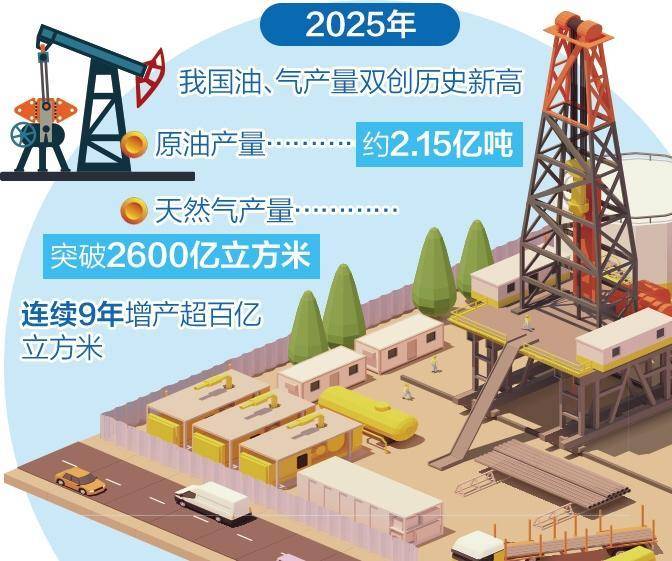
Group 1 - The total installed power generation capacity in China is expected to exceed 3.8 billion kilowatts this year, representing a year-on-year growth of 14%, with total electricity consumption projected to surpass 10 trillion kilowatt-hours for the first time [2] - Oil and gas production has reached historical highs, with crude oil production around 215 million tons and natural gas production exceeding 260 billion cubic meters, marking nine consecutive years of over 10 billion cubic meters increase [2] - The energy security guarantee this year is reported to be the best since the 14th Five-Year Plan, with stable coal production and supply, and effective responses to peak summer electricity load challenges [2] Group 2 - The proportion of non-fossil energy consumption is expected to exceed the target of 20%, with strong investment trends towards green and innovative energy sources [3] - Significant advancements in energy technology and innovation are being made, with the integration of artificial intelligence into the energy sector and the development of new business models [3] - The government is focusing on enhancing energy security, optimizing energy infrastructure, and improving the quality of electricity supply for high-reliability users [4] Group 3 - The goal is to establish a new energy system by 2030, balancing economic development with energy structure, and promoting a comprehensive green transition in society [5] - The emphasis is on fostering energy technology innovation and upgrading the energy industry to support the carbon peak target by 2030 [5]
强韧性、创新高、向绿色 推动实现更高水平能源安全保障
Jing Ji Ri Bao· 2025-12-22 23:27
Group 1 - The total installed power generation capacity in China is expected to exceed 3.8 billion kilowatts this year, representing a year-on-year growth of 14% [1] - The total electricity consumption in China is projected to surpass 10 trillion kilowatt-hours for the first time, which is approximately double the total electricity consumption in 2015, marking a new world record [1] - Oil and gas production in China has reached historical highs, with crude oil production around 215 million tons and natural gas production exceeding 260 billion cubic meters, continuing a trend of over 10 billion cubic meters of annual growth for nine consecutive years [1] Group 2 - The proportion of non-fossil energy consumption is expected to exceed the target of 20%, with strong investment trends towards green and innovative energy sources [2] - Significant advancements in energy technology and innovation are being made, including the integration of artificial intelligence with the energy sector and the development of new energy models and business formats [2] - The National Energy Administration emphasizes the need for higher levels of energy security, focusing on coal supply stability, electricity supply enhancement, and oil and gas production capacity [2] Group 3 - The government plans to promote the integration of artificial intelligence with energy through pilot projects and standardization initiatives, while also advancing major technological breakthroughs in smart grids and future energy industries like hydrogen and nuclear energy [3] - The National Development and Reform Commission aims to balance economic development with energy structure, ensuring energy security while promoting green transformation and innovation in the energy sector [3]
省政府召开常务会议 卢东亮主持
Xin Lang Cai Jing· 2025-12-21 01:12
Group 1 - The provincial government meeting, chaired by Governor Lu Dongliang, focused on energy technology innovation, innovation platform construction, food safety, natural forest protection and restoration, and the establishment of a rule-of-law government [1][2] - The meeting emphasized the importance of advancing energy transformation through new technologies, aiming to elevate the coal industry from low-end to high-end and transition coal products from primary fuels to high-value products [1] - A management approach for provincial laboratories was approved, highlighting the need for organized research based on national and provincial strategic demands, and promoting collaborative innovation between industry, academia, and research [1] Group 2 - The meeting approved a long-term plan for the protection and restoration of natural forests, recognizing them as valuable resources and emphasizing the need for coordinated management of natural and public forests [2] - There was a strong emphasis on advancing the construction of a rule-of-law government, enhancing legal awareness, and improving decision-making and administrative capabilities to support high-quality provincial development [2]
国家能源集团董事长邹磊与山西省省长卢东亮举行工作会谈
Zheng Quan Shi Bao Wang· 2025-12-10 15:03
Core Viewpoint - The meeting between the chairman of the National Energy Group and the governor of Shanxi Province emphasizes the importance of strategic cooperation in promoting green and low-carbon energy transformation and high-quality development [1] Group 1: Strategic Cooperation - The National Energy Group is recognized as a leading enterprise in the energy sector and is referred to as the "national team" [1] - There is significant potential for collaboration between the National Energy Group and Shanxi Province, which is a key comprehensive energy base in the country [1] Group 2: Investment and Development Focus - The National Energy Group is encouraged to deepen its investment and layout in Shanxi, focusing on providing comprehensive energy system solutions [1] - Key areas for development include creating new business models for "green energy+", advancing modern coal chemical industry, enhancing energy technology innovation, and constructing a new power system [1]
国家能源局:“十五五”积极发展绿电直连等新模式,围绕光伏等重点领域建设一批“小而美”项目
Xin Lang Cai Jing· 2025-12-10 13:55
Core Viewpoint - The article emphasizes the need to accelerate the construction of a new energy system in China, focusing on achieving peak coal and oil consumption, and increasing the share of non-fossil energy to support a comprehensive green transformation of the economy and society [1][25]. Group 1: Principles and Requirements for New Energy System Construction - The construction of a new energy system is a central task for high-quality energy development in the coming period, requiring adherence to the leadership of the Party and the principles outlined in the 20th National Congress [32]. - The energy supply must prioritize the needs of the people, ensuring that energy services meet the growing demand for clean, low-carbon, and efficient energy [33]. - Energy security must be maintained domestically, with a focus on enhancing the resilience of the energy supply system to address global competition and uncertainties [34]. - A green and low-carbon development approach is essential, with a significant increase in the share of non-fossil energy in the energy consumption structure [34]. - Innovation is highlighted as the primary driving force for energy development, necessitating a focus on technological advancements and integration of energy and industry [35]. - Deepening energy system reforms is crucial to adapt to the new energy landscape and improve governance and market mechanisms [36]. Group 2: Achievements and Developments During the 14th Five-Year Plan - During the 14th Five-Year Plan, China's energy production capacity significantly increased, with total energy production reaching approximately 5 billion tons of standard coal, a nearly 40% increase over the past decade [37]. - The renewable energy sector saw rapid growth, with wind and solar power installations surpassing historical milestones, and non-fossil energy consumption doubling, accounting for about 20% of total energy consumption [38]. - Energy technology innovation led to significant advancements, including the development of major technologies and equipment, with China leading in renewable energy patents and achieving world records in various energy technologies [39]. Group 3: Strategic Planning for the 15th Five-Year Plan - The 15th Five-Year Plan aims to establish a clean, low-carbon, safe, and efficient new energy system, with a focus on optimizing energy resource distribution and infrastructure development [42]. - The plan emphasizes the need for a green and low-carbon transition, aiming for non-fossil energy to account for about 25% of total energy consumption by 2030 [43]. - Strengthening the energy supply chain and enhancing the resilience of energy systems are critical components of the strategy, ensuring stable domestic energy production and supply [44]. - The plan also highlights the importance of advancing energy technology and fostering innovation to meet future energy demands [45]. Group 4: International Cooperation and Market Development - The article discusses the importance of international cooperation in the energy sector, aiming to maintain the stability of global energy supply chains and enhance collaboration on renewable energy technologies [47]. - It emphasizes the need for a fair and balanced global energy governance system, promoting energy cooperation with various countries and regions [47].