
自然教育

Search documents
8.守望银叶五百年:欧薇与坝光古银叶树群的在地守护之路
Nan Fang Nong Cun Bao· 2025-12-26 20:33
8.守望银叶五百 年:欧薇与坝光 古银叶树群的在 地守护之路_南 方+_南方plus 编者按:在岭南 大地的村落、山 野与街巷间, 8.5万余株古树 名木静静生长。 它们跨越岁月, 既是自然的年 轮,也是岭南文 化的脉络。古树 能够屹立至今, 离不开一代代人 的守护。在广 东,有人遵循祖 训守望乡土,有 人扎根基层精心 管养,有人借助 科技为古树"问 诊",也有人奔 走呼吁,让更多 人加入守护行 列。 身份不同,方式 各异,但他们都 选择站在古树的 树荫下,与时间 同行。本专题将 走进古树守护 人,记录人与古 树相互守望的动 人故事。 在深圳市大鹏新 区坝光片区,成 片生长的古银叶 树与滨海湿地、 盐灶古村相互依 存,构成一幅人 与自然和谐共生 的生态画卷。守 护这片古树群的 人,是欧薇—— 政府一线工作人 员、坝光自然学 校创始人和副校 长、中国湿地保 护协会红林湿地 保护专委会专家 委员。 欧薇始终坚 持"从在地出 发"的古树保育 自2020年依托坝 光500年古银叶 树群和300多年 历史的盐灶古村 创办坝光自然学 校以来,欧薇连 续5年深耕银叶 树保育与滨海湿 地自然教育,将 一棵棵古树的命 运,与城 ...


在西溪湿地见证童心绘生态
Hang Zhou Ri Bao· 2025-11-27 02:44
Core Insights - The 9th Zhejiang Province Primary and Secondary School Nature Notebook Competition concluded successfully, showcasing a record participation of over 350 schools and receiving 21,875 entries, an 18% increase from the previous year [7][12] - The event emphasized the integration of nature education with practical experiences, allowing students to observe and document various aspects of nature, thus enhancing their ecological awareness and scientific literacy [8][11] Group 1: Event Overview - The award ceremony took place at Xixi National Wetland Park, attended by student representatives, teachers, and ecological education experts [7] - The competition has evolved over nine years, becoming a significant platform for promoting nature education across the province [12] Group 2: Educational Impact - The competition has led to the development of high-quality nature education courses, such as "Bird Spirits," which combine classroom knowledge with field practice [8][9] - The nature notebook curriculum has been upgraded from introductory to advanced levels, encouraging students to explore a wider range of natural phenomena [10] Group 3: Ecological Contributions - Xixi Wetland Park serves as a core venue for the competition, contributing to biodiversity with significant increases in recorded plant and bird species since its establishment [12][13] - The park has implemented various ecological restoration projects, enhancing habitats for rare bird species and providing educational opportunities for students [13]
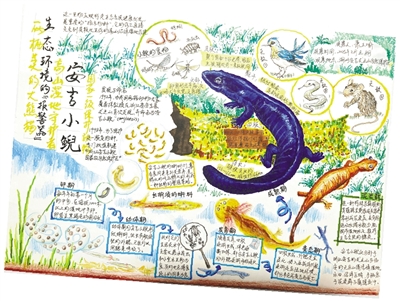
雅安市荥经县:构建“一环五区”空间布局,实现绿水青山“流金淌银”
Si Chuan Ri Bao· 2025-11-26 21:57
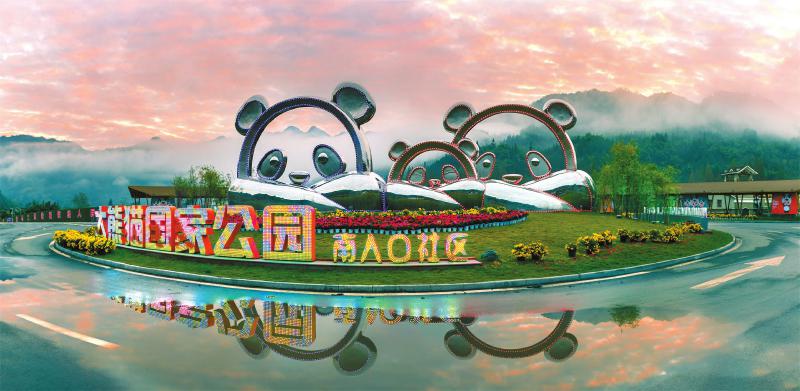
Core Viewpoint - The development of Xingjing County over the past five years has transformed its ecological landscape and industrial structure, aiming for sustainable growth and ecological value conversion, with a projected GDP exceeding 9.7 billion yuan in 2024 [2]. Group 1: Ecological Development - Xingjing County is focusing on the construction of the Giant Panda National Park, with a planned 12,000 acres for a science popularization base that includes a panda exhibition hall and ecological experience routes [3]. - The county has a forest coverage rate of 80.3% and is home to the largest wild population of the rare species, the Davidia involucrata, showcasing its rich ecological resources [3]. - The county has been recognized as a model for ecological innovation and rural revitalization, having established a national-level germplasm resource bank and a provincial-level tourism demonstration area [3]. Group 2: Industrial Transformation - The county is developing a complete cold-water fish industry chain, enhancing its agricultural output with a focus on sustainable practices [5]. - In 2024, the comprehensive forestry output value is expected to exceed 1.39 billion yuan, with per capita income for forestry farmers surpassing 2,000 yuan, demonstrating the economic benefits of ecological conservation [6]. - The integration of ecological and industrial development is evident as traditional industries are being replaced by new, sustainable practices, including the promotion of high-end caviar production and the development of forest-based industries [6]. Group 3: Tourism and Cultural Development - The county is leveraging its panda-related branding to enhance tourism, with significant increases in visitor numbers to local accommodations and cultural products [7]. - The establishment of the "Panda Forest International Exploration School" and other educational initiatives reflects the county's commitment to environmental education and tourism [6][7]. - Collaborative efforts in the Chengdu-Chongqing economic circle are fostering new opportunities in the tea industry, enhancing the region's cultural and economic landscape [7]. Group 4: Social Development and Livelihood - The county has made significant investments in education and housing, with new schools and over 2,000 housing units allocated to residents, improving the quality of life [8]. - A 15-minute elderly care service circle is being developed, with over 60,000 meals served to seniors, highlighting the county's focus on social welfare [8]. - Continuous improvements in the business environment and initiatives to attract new farmers and investors are contributing to the county's economic vitality [8]. Group 5: Future Outlook - Xingjing County is poised for further development with a clear strategic vision and major projects in place, indicating a promising future [9].
“老板在南极,员工在加班”,俞敏洪回应“全员信争议”:一直鼓励员工吐槽
Sou Hu Cai Jing· 2025-11-20 08:50
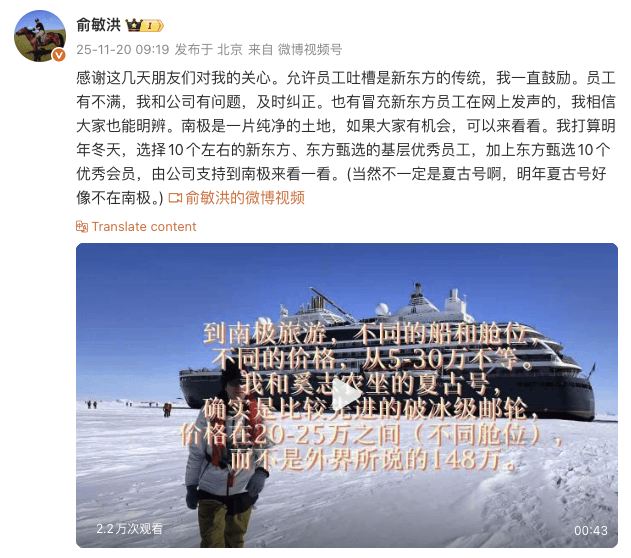
Core Points - The recent internal letter from the chairman of New Oriental, Yu Minhong, while celebrating the company's 32nd anniversary, has sparked controversy due to his presence in Antarctica while employees are reportedly working overtime [1][4][8] - Yu Minhong emphasized the importance of employee feedback and expressed plans to take selected employees to Antarctica next winter, highlighting the company's tradition of allowing employee grievances [1][4] - The letter's theme of resilience and hope, likening the struggles of New Oriental to the survival of penguins in extreme conditions, was overshadowed by employee dissatisfaction regarding the disconnect between the chairman's vacation and their work pressures [7][9] Company Overview - New Oriental is currently undergoing a critical transformation phase, facing significant operational pressures, as evidenced by a 73.7% drop in net profit to $7.1 million in the fourth quarter of fiscal year 2025, primarily due to losses in the Oriental Selection business and goodwill impairment [20] - The company's revenue growth has slowed, with fiscal year 2025 revenue growth decreasing from 43.9% to 13.6% [20] - In the first quarter of fiscal year 2026, New Oriental reported net revenue of $1.523 billion, a year-on-year increase of 6.1%, driven by new educational business initiatives [20] Future Plans - New Oriental plans to establish a youth exploration center aimed at fostering children's understanding and appreciation of nature, with potential Antarctic exploration trips for youth set to begin next winter [14][18] - The chairman's recent activities in Antarctica are seen as part of a broader strategy to expand into the cultural tourism sector, which could provide new growth opportunities for the company [18][20]

俞敏洪回应员工吐槽:否认邮轮入住价148万元,明年选10个员工去南极
21世纪经济报道· 2025-11-20 04:49
Core Viewpoint - The article discusses the recent controversy surrounding New Oriental's chairman, Yu Minhong, regarding his trip to Antarctica, clarifying the actual costs and addressing employee dissatisfaction with the company's leadership and communication style [1][4][5]. Group 1: Trip to Antarctica - Yu Minhong clarified that the cost of his trip to Antarctica was between 200,000 to 250,000 yuan for 12 days, contrary to the reported 1.48 million yuan [1][4]. - The cruise ship "Xia Gu" is described as an advanced icebreaker, and the trip duration and pricing vary based on cabin types [1][5]. - A travel agency indicated that the cruise Yu Minhong took departs from Paris and costs approximately 300,000 yuan for a 20-day journey, with limited availability for future trips [5]. Group 2: Employee Reactions - Following Yu Minhong's internal letter celebrating the company's anniversary, some employees expressed dissatisfaction, feeling a disconnect between the leadership's experiences and their own realities [4]. - Employees criticized the portrayal of the Antarctic experience as "ironic," highlighting a gap between the company's leadership and its workforce [4][3]. Group 3: Future Plans - Yu Minhong announced plans to establish a youth exploration center aimed at fostering children's understanding and appreciation of nature, with potential Antarctic exploration trips for selected employees and members next winter [3][4].

俞敏洪再发视频:新东方将成立青少年探索中心,青少年南极考察之旅有望明年冬天开启
Xin Lang Ke Ji· 2025-11-19 01:19
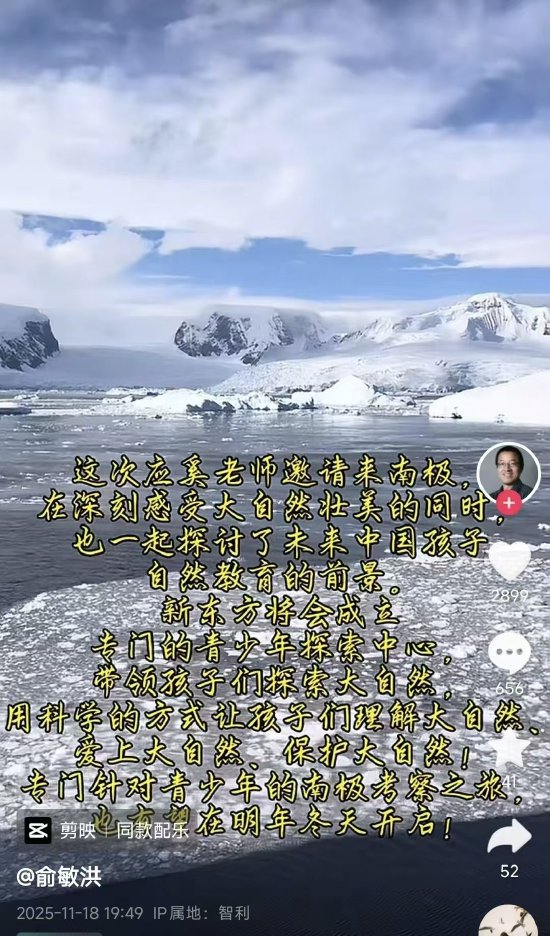
Core Insights - The company is planning to establish a dedicated youth exploration center to promote natural education for children, aiming to foster a love and understanding of nature through scientific methods [1] - A special Antarctic expedition for teenagers is expected to commence in the winter of next year, highlighting the company's commitment to experiential learning [1] Group 1 - The founder, Yu Minhong, shared a video on social media discussing the beauty of nature and the future of natural education for Chinese children during a trip to Antarctica [1] - On November 16, Yu Minhong released an internal letter celebrating the 32nd anniversary of the company, reflecting on its journey and the contributions of its staff [3] - The letter emphasized the company's dual role as a knowledge provider and a hope cultivator, while also highlighting the importance of its subsidiary, Dongfang Zhenxuan, in representing merchant integrity [3] Group 2 - The anniversary letter sparked controversy among employees, with some expressing difficulty in empathizing with the CEO's experience while he was traveling [4] - Employees criticized the letter's tone, suggesting that practical actions such as salary increases would be more effective motivators than inspirational messages [4]
连发10条南极游视频后,俞敏洪回应:探讨自然教育前景
Bei Jing Shang Bao· 2025-11-18 15:26
Core Viewpoint - The recent activities of Yu Minhong, founder of New Oriental, including his trip to Antarctica and the internal letter sent to employees, have sparked discussions and mixed reactions among staff and the public regarding company culture and leadership [2][5][7]. Group 1: Yu Minhong's Activities - On November 18, Yu Minhong shared 10 videos from his trip to Antarctica, emphasizing the importance of natural education for children and announcing the establishment of a youth exploration center by New Oriental [2][5]. - The company plans to launch a specialized Antarctic exploration program for teenagers, expected to commence in the winter of next year [2]. Group 2: Internal Communication and Employee Reactions - On November 16, during his Antarctic expedition, Yu Minhong sent an internal letter to all employees, reflecting on the company's journey and encouraging unity and perseverance in the face of challenges [5]. - The internal letter received mixed feedback, with some employees expressing difficulty in empathizing with their boss while he was on vacation, and others highlighting their workload during the anniversary [7]. Group 3: Travel Details - Yu Minhong traveled to Antarctica aboard the Shagu No. cruise ship, which departs from Paris and offers a 20-day journey costing approximately 300,000 yuan per person [12]. - The cruise ship only visits Antarctica every two years, indicating that the next opportunity to board will not be until 2027 [12].

植物“打人” 菌类“致幻” 探寻自然真的很奇妙
Hang Zhou Ri Bao· 2025-11-18 03:00
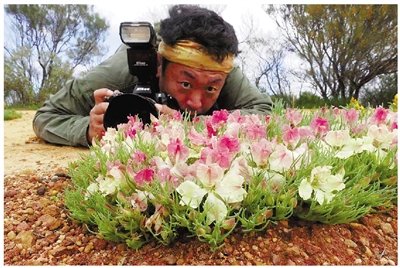
Group 1 - The event "Plant Science Popularization and Natural Education Innovation Practice Forum" was held at Hangzhou Botanical Garden as part of the 2025 China Natural Education Conference [3] - Renowned science writer Tian Dong shared insights from his recent trip to Western Australia, highlighting unique local plants such as "Kangaroo Paw" and "Coastal Wattle" [4][5] - The discussion emphasized the ecological significance of native plants and the challenges posed by invasive species in Western Australia [5] Group 2 - Lin Wenfei, an expert in mycology from Zhejiang University, discussed the ecological importance of fungi and their historical use in Chinese culture [6] - Various beneficial fungi were highlighted, including Lingzhi and Cordyceps, which have health benefits such as improving immunity and digestion [6] - Lin also provided guidance on identifying toxic mushrooms, emphasizing that not all brightly colored mushrooms are poisonous, with white and gray mushrooms being particularly dangerous [7]
中泰自然教育学堂正式启用
Zhong Guo Zi Ran Zi Yuan Bao· 2025-11-17 04:33
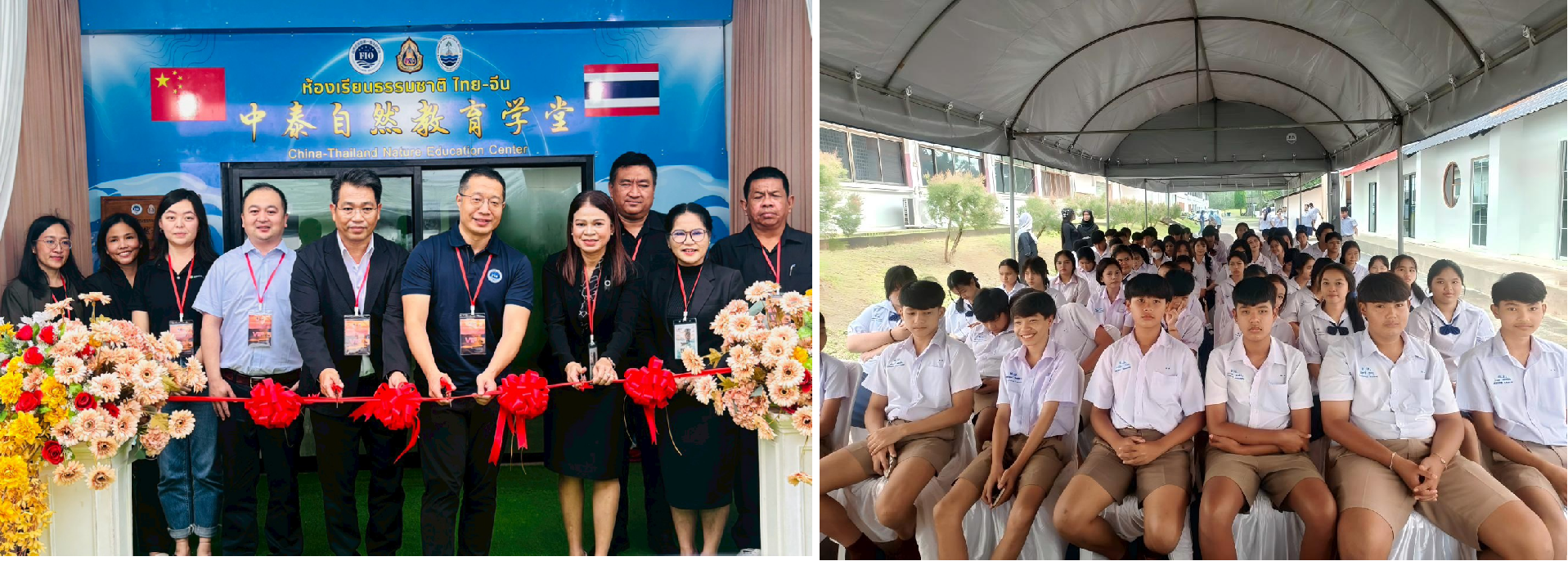
Core Points - The establishment of the China-Thailand Natural Education Classroom marks a significant milestone in the 50th anniversary of diplomatic relations between China and Thailand, aiming to enhance marine ecological protection and education [3] - The classroom is located within the largest and best-preserved mangrove ecosystem in Thailand, emphasizing the importance of collaboration in ecological conservation and public education [3][4] Group 1 - The China-Thailand Natural Education Classroom was officially inaugurated on November 7 in Phang Nga Province, Thailand, as a joint initiative between various organizations from both countries [3] - The classroom serves as a new platform for marine science education and aims to provide long-term quality natural education for local youth and community members [3] - The opening ceremony was attended by over 210 representatives from both countries, highlighting the collaborative efforts in mangrove protection and public education [3] Group 2 - The first lesson at the classroom focused on the ecological value of mangroves, including their role in wind and wave protection and biodiversity maintenance [4] - The project leader shared successful cases of mangrove protection and community development from China, while a Thai official explained the unique physiological characteristics of mangroves [4]
2025大屏嶂森林公园自然教育年度回顾: 孩子与森林共成长
Nan Fang Nong Cun Bao· 2025-11-17 02:33
2025大屏嶂森林 公园自然教育年 度回顾: 孩子 与森林共成长_ 南方+_南方plus 时光流转,四季 更迭。2025年, 大屏嶂森林公园 以自然为课堂、 生态为教材,开 展了丰富多彩的 自然教育活动。 这一年,我们春 天倾听"飞羽精 灵"的欢歌,在 夏夜追逐"萤火 微光"的闪烁; 我们在竹影婆娑 间体验"非遗竹 编"的匠心传 承,在变幻莫测 的天空下探 索"气象科学"的 无穷奥秘。这一 年,我们与近千 组家庭携手,在 森林的怀抱中触 摸自然的脉搏, 共同书写了无数 个充满惊喜与感 动的自然成长故 事。 中常见的几种鸟 类。最令人难忘 的,是趣味十足 的松果猫头鹰手 作环节——孩子 们用松果、粘土 和想象力,创作 出一只只栩栩如 生的"森林守护 者"。在动手实 践的过程中,他 们不仅收获了自 然艺术的乐趣, 也在心中种下了 理解与尊重生命 的种子,感受到 人类与鸟类和谐 共生的美好。 竹艺手工坊—— 非遗技艺体验。 5月10日,孩子 春之章:万物复 苏,与自然初相 遇 与自然对话—— 探索飞羽精灵的 奇妙世界。3月 30日,春意正 浓。在自然导师 的带领下,孩子 们举起望远镜, 追随着鸟儿的身 影,欣赏它们 ...