
虚拟现实技术

Search documents
十五运会开幕式最后一次带观众全要素彩排完成 亮点抢先看
Yang Shi Xin Wen Ke Hu Duan· 2025-11-05 11:35
Core Points - The 15th National Games, co-hosted by Guangdong, Hong Kong, and Macau, will open on November 9, featuring a grand opening ceremony that integrates traditional cultural elements with advanced technologies [1][4] - The opening ceremony's theme is "Dreaming the Future," structured into three main chapters: "Same Roots, Same Source," "Same Heart, Same Fate," and "Same Dream, Same Round," showcasing a blend of history, culture, and future aspirations [2][3] Group 1 - The opening ceremony will highlight the historical journey from the Maritime Silk Road to modern China's reform and opening-up over the past 40 years, emphasizing a continuous cultural flow [2][3] - The second chapter focuses on nostalgia and cultural heritage, featuring numerous intangible cultural heritage elements [3] - The final chapter envisions a collective future, symbolizing unity and shared aspirations among participants [3] Group 2 - Preparations for the opening ceremony are in the final stages, with all necessary facilities, media broadcasting, and volunteer services fully in place [4] - The event aims to showcase China's high-quality development through cultural innovation empowered by technology, bridging traditional customs with a digital future [4]

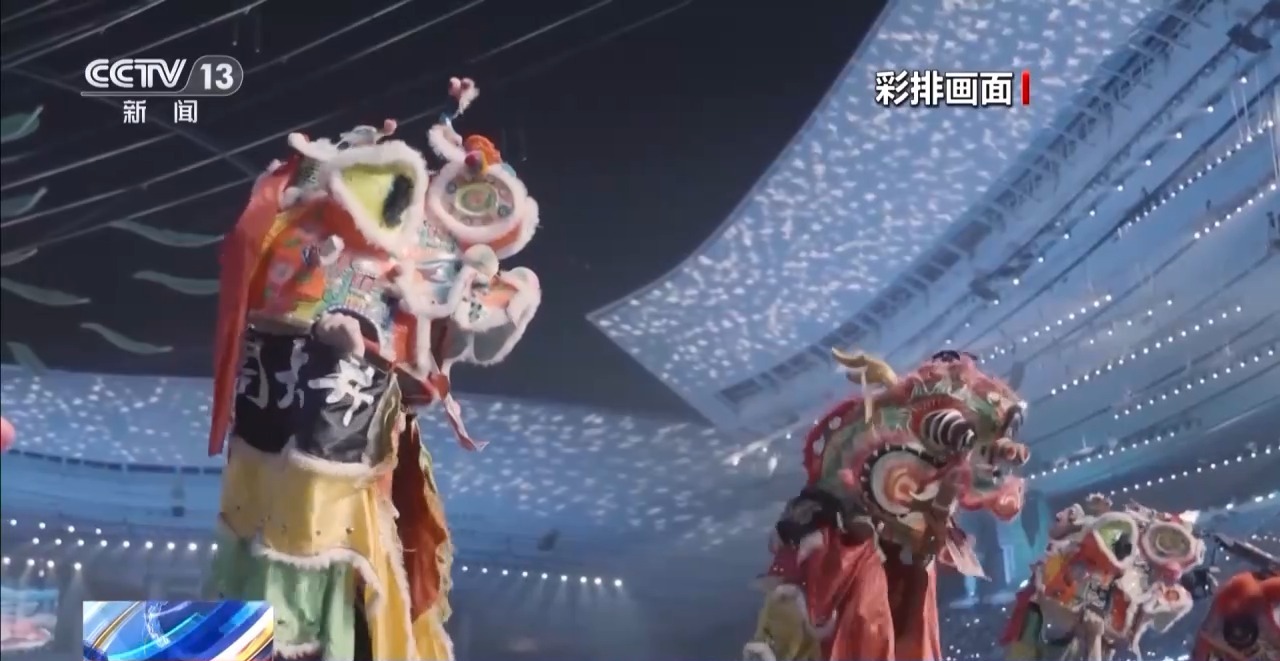
视频丨十五运会开幕式最后一次带观众全要素彩排完成 亮点抢先看
Yang Shi Xin Wen Ke Hu Duan· 2025-11-05 07:08
Core Points - The 15th National Games, co-hosted by Guangdong, Hong Kong, and Macau, will open on November 9, featuring a grand opening ceremony that integrates traditional cultural elements with advanced technologies [1][3] - The opening ceremony's theme is "Dreaming the Future," structured into three main chapters: "Same Roots, Same Source," "Same Heart, Same Destiny," and "Same Dream, Same Circle," showcasing China's historical journey and future aspirations [1] Group 1 - The final rehearsal for the opening ceremony took place on November 4 at the Guangdong Olympic Sports Center, successfully incorporating audience participation [1] - The first chapter focuses on China's historical development from the Maritime Silk Road to modern reforms, emphasizing a continuous cultural flow [1] - The second chapter highlights themes of nostalgia and cultural heritage, featuring numerous intangible cultural heritage displays [1] Group 2 - The third chapter envisions a collective future, emphasizing unity and shared aspirations among participants [1] - Preparations for the opening ceremony are in the final stages, with all necessary facilities, media broadcasting, and volunteer services fully in place [3] - The ceremony aims to showcase China's high-quality development through cultural innovation empowered by technology [3]

文物活化、非遗传承、文旅融合 多视角感知中华文脉在传承中创新、在开放中焕彩
Yang Shi Wang· 2025-10-18 08:43
Core Perspective - The article highlights the significant advancements in cultural heritage and tourism in China during the "14th Five-Year Plan" period, showcasing the integration of technology and cultural preservation efforts [1]. Group 1: Cultural Heritage and Technological Integration - Over 130,000 new cultural heritage sites have been discovered, and nearly 2,000 national protection units are undergoing restoration [1]. - The use of virtual reality (VR) technology at the Sanxingdui Museum allows visitors to experience archaeological sites, enhancing engagement with ancient artifacts [3][7]. - AI technology has been employed to reconstruct ancient artifacts, such as the 2.53-meter bronze bird-foot statue, by accurately matching and assembling fragments from different excavation sites [9]. Group 2: Cultural and Tourism Industry Growth - The cultural tourism industry in China has seen a revenue surge, exceeding 10 trillion yuan, with museums receiving nearly 1.5 billion visitors annually [1]. - The Sanxingdui Museum has introduced various creative cultural products, such as bags and keychains featuring bronze figures, making ancient culture more accessible and appealing to younger audiences [10][12]. - In Gansu, the "Digital Dunhuang" project aims to reunite lost artifacts through digital means, attracting nearly 30,000 visitors from 29 countries since its launch [21]. Group 3: Regional Cultural Developments - Tibet's cultural tourism sector has welcomed over 57 million visitors in the first eight months of 2025, marking an 11.3% increase year-on-year, with cultural industry output exceeding 10 billion yuan [28]. - The "Village T" fashion show in Guizhou has gained national attention, showcasing local ethnic cultures and significantly boosting sales of traditional handicrafts [38].

300264,控制权变更突然终止
Zhong Guo Ji Jin Bao· 2025-10-09 16:23
Core Viewpoint - The planned change of control for Jiachuan Video has been abruptly terminated after over two months of preparation, with the company citing a lack of agreement on key transaction elements as the reason for the termination [1]. Group 1: Control Change Announcement - Jiachuan Video announced the termination of its control change plan on October 9, following a notification from its controlling shareholder, Chen Kunjiang [1]. - The company had been suspended from trading since August 4, 2025, after Chen Kunjiang informed them about the control change plans on August 1, 2025 [1]. - A framework agreement was signed on August 7, 2025, outlining a three-step process for the transfer of control, including share transfers and a capital increase to solidify control [1]. Group 2: Stock Performance - Prior to the suspension, Jiachuan Video's stock experienced a significant increase, with a maximum intraday rise of over 13% on July 31, 2025, and a closing increase of nearly 7% [2]. Group 3: Company Background and Financial Performance - Founded in October 2000 and listed on the Growth Enterprise Market in September 2011, Jiachuan Video primarily focuses on providing end-to-end solutions in the broadcasting industry and has expanded into various technology sectors since 2016 [2]. - Financially, the company has struggled since 2019, with revenues hovering around 100 million yuan and significant net losses reported each year, including a loss of approximately 7 million yuan in the first half of 2025 [2][3]. - As of June 2025, the company had only about 10 million yuan in cash, while interest-bearing short-term debts approached 100 million yuan, indicating pressure on its financial stability [3]. Group 4: Market Capitalization - As of the market close on October 9, 2025, Jiachuan Video's market capitalization was 2.512 billion yuan [4].


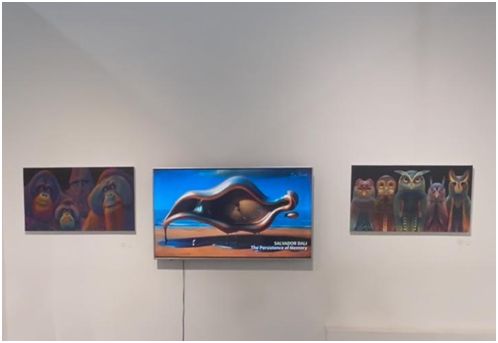
传统艺术与科技作品“对话”,这场碰撞不是替代是共荣 |“长假走中国·AI探热度”系列报道
Mei Ri Jing Ji Xin Wen· 2025-10-07 12:55
Core Insights - The article discusses an AI art exhibition at the Shang Shang International Art Museum in Beijing, showcasing artworks entirely generated by AI, blurring the lines between reality and imagination [1][3][9] - The exhibition features various styles of AI-generated art, including realistic and surreal pieces, and incorporates interactive elements such as videos and augmented reality to enhance viewer engagement [1][5][9] Summary by Sections AI Art Exhibition - The exhibition presents a range of AI-generated artworks, including a piece themed on "Journey to the West" featuring a robot riding a dragon, illustrating the fusion of traditional narratives with modern technology [1][3] - Videos accompanying the artworks provide deeper insights into the pieces, showcasing the artists' creative processes using AI [3][5] Interactive Experience - The exhibition includes a work titled "Dimensional Garden," which features dynamic visuals that come to life through a mobile app, allowing viewers to experience the artwork in a more immersive way [5][9] - Another highlighted piece is artist Wei Ligang's "Ling Yi Mountain Pavilion," which transforms traditional Chinese characters into digital 3D images, merging cultural heritage with cutting-edge technology [5][9] Impact of AI on Art - The emergence of AI in art is seen as democratizing creativity, lowering barriers to entry for artistic expression, and shifting the focus from technical skill to imagination and aesthetic appreciation [9][10] - AI is also revitalizing classic artworks, as seen in immersive exhibitions like "Into Van Gogh," which uses virtual reality to allow audiences to interact with famous paintings [9][10] Future of Art - The article suggests that AI is not a replacement for traditional art but rather a tool that enhances the experience of art, making it more dynamic and emotionally resonant [12][13] - The relationship between AI and traditional art is framed as complementary, encouraging artists to embrace new technologies to expand their creative horizons [10][13]
文化新观察·聚焦国庆中秋假期丨VR秀如何成为文旅“新秀”?
Xin Hua Wang· 2025-10-05 14:14
Core Insights - The article highlights the surge in tourism in Shanghai during the National Day and Mid-Autumn Festival, with nearly 3.6 million visitors on the first day, showcasing the popularity of immersive VR experiences in cultural tourism [2] Group 1: Immersive VR Experiences - Immersive large-scale VR shows are emerging as a new trend in China's cultural tourism sector, with approximately 300 VR projects expected to debut nationwide by 2025, becoming standard features in popular cultural landmarks and exhibitions [4] - The rapid application of artificial intelligence has significantly reduced the production cycle and costs of VR shows, leading to an influx of new VR content in the cultural tourism market [4] - The Shanghai Museum's exhibition "The Pyramid's Summit: Ancient Egyptian Civilization" has generated significant interest, complemented by the VR show "The Vanishing Pharaoh," which has become highly sought after [5] Group 2: Audience Engagement and Market Potential - Despite the growing popularity of VR shows, the current audience primarily consists of niche groups seeking unique experiences, indicating a need for broader market acceptance and habitual engagement with VR content [7] - The domestic first VR feature film "The Legend of the Gods: Prequel" has garnered attention for its high production standards and immersive storytelling, showcasing the potential for VR to redefine cinematic experiences [9] - The integration of VR technology in various sectors, including gaming, performances, and education, suggests a promising future for immersive experiences, with the potential for the next blockbuster to emerge from the film industry [7][9]
专访丨中国以创新带动旅游产业发展——访联合国世界旅游组织秘书长波洛利卡什维利
Xin Hua Wang· 2025-10-03 06:23
Core Insights - China is leveraging innovation to drive the development of its tourism industry, being recognized as an important and active member of the United Nations World Tourism Organization (UNWTO) [1][4] - The UNWTO emphasizes sustainable growth in tourism over its 50-year history, with a focus on leading industry transformation through technology [3] - Virtual reality is reshaping the tourism sector, but the demand for authentic experiences remains unchanged [3] Group 1: China's Role in Global Tourism - China is a significant source and destination of tourists, contributing notably to both outbound and domestic tourism globally [4][5] - The National Immigration Administration and the Ministry of Transport predict that during the combined National Day and Mid-Autumn Festival, daily inbound and outbound travelers will exceed 2 million, with total cross-regional movement reaching 2.36 billion [4] - The influx of Chinese tourists supports local businesses and livelihoods in many destinations, particularly in Europe and the Asia-Pacific region [5] Group 2: Recognition and Initiatives - The UNWTO's "Best Tourism Villages" initiative highlights tourism's role in rural development and cultural heritage preservation, with China having 15 villages recognized, the highest in the world [3][4] - The initiative, launched in 2021, aims to promote tourism's contribution to protecting rural landscapes and cultural diversity [3]

东西问·北京文化论坛|短评:科技将如何重塑全球文明对话?
Zhong Guo Xin Wen Wang· 2025-09-23 11:50
Core Insights - The 2025 Beijing Cultural Forum highlights the deep integration of culture and technology, showcasing successful cross-disciplinary practices such as AI restoration of Dunhuang murals and VR recreations of historical sites [3][4] - The forum emphasizes that while technology enhances cultural preservation and dialogue, it also poses risks of oversimplification and loss of cultural subjectivity [4][6] - The theme of the forum, "Cultural and Technological Integration Development," reflects a keen awareness of global development trends and philosophical considerations underlying technological advancements [6] Summary by Sections - **Cultural and Technological Integration**: The forum serves as a platform to explore how digital technologies like mobile internet and AI are reshaping cultural production, dissemination, and reception [4][6] - **Risks of Technology**: The article warns that the asymmetry in technological development could deepen cultural and communication divides, as dominant cultures may encode their values into technological infrastructures [6] - **Forum Structure and Topics**: The forum includes a main session, six parallel forums, and over twenty professional salons, focusing on topics such as digital empowerment of cultural heritage and the new dynamics of human cooperation [8] - **Beijing as a Case Study**: The city exemplifies the integration of technology and culture, with initiatives ranging from the digital revival of the Forbidden City to the creative transformation of traditional neighborhoods [8] - **Dialogue on Cultural Diversity**: The forum promotes discussions on mutual respect and understanding among diverse civilizations, which is particularly valuable in the context of current global challenges [10]


捷安高科(300845) - 捷安高科投资者关系管理信息20250917
2025-09-17 11:16
Company Overview - Zhengzhou Jiean High-tech Co., Ltd. specializes in providing virtual simulation training solutions, focusing on vocational education and practical training using VR and simulation technologies. The company aims to cultivate skilled professionals for economic development [2]. - In 2024, the revenue breakdown shows that 79% comes from rail transit training, while emergency safety, aviation, and maritime training contribute 21% [2]. Financial Performance - After reversing a declining trend post-IPO, the company achieved a revenue of 384 million CNY and a net profit of 54.93 million CNY in 2024 [2][3]. - The company is actively pursuing revenue and profit growth through various initiatives [3]. Challenges and Strategies - The company faced a significant decline in gross margin in the first half of 2025 due to intensified competition and client budget constraints. To address this, it is implementing cost-reduction measures such as supply chain optimization and a modular production strategy [4]. - R&D investment is being increased to enhance product competitiveness, with expected financial impacts to be seen gradually in the following year [4]. Product Development - The company is developing a large model platform, currently in the design and early R&D stages, with short-term applications aimed at enhancing existing core business products [5]. - The military orders are expected to grow, with the company aiming to establish military business as a new growth driver [5]. Competitive Advantages - The company's core competitive advantages include comprehensive R&D capabilities, industry experience, and brand influence, supported by participation in national skill competitions [6]. - Continuous efforts will be made to strengthen customer relationships, innovate product development, and enhance quality control and after-sales service [6]. R&D Allocation - In 2024, R&D expenses increased by 3.74%. Most resources are allocated to core business upgrades, while strategic investments are made in emerging technologies like AI [7]. - Long-term R&D investments are expected to drive performance growth, aligning with market demands and technological advancements [7]. Cash Flow Management - The company reported a negative operating cash flow of -40.90 million CNY in Q1 2025, primarily due to year-end bonuses and supplier payments. Measures are being taken to improve cash flow through accounts receivable management [7]. Operational Risks - The main operational risk involves extended delivery cycles due to complex client acceptance processes. The company is enhancing communication with clients to improve delivery efficiency [8]. International Projects - The company is involved in international projects like the Thailand High-Speed Rail Luban Academy, providing single equipment and aiming to transition to a training service provider model [8][9]. - The overseas market's demand for vocational training is crucial for achieving scalable commercial revenue, with equipment sales currently being the primary revenue source [9].

这不是科幻,是未来江苏从车间黑科技到“穿越”回北宋,江苏VR未来可期
Qi Lu Wan Bao· 2025-09-17 01:05
Core Insights - The article highlights the application of "5G+AR" smart inspection systems in steel factories, showcasing how augmented reality (AR) technology is enhancing operational efficiency through real-time data sharing and expert consultations [1] - Jiangsu province is emerging as a leader in virtual reality (VR) technology, with significant advancements in various sectors including cultural tourism, aerospace, and autonomous driving [1][2] - As of June this year, Jiangsu has filed over 6,000 VR-related invention patents, ranking among the top in the nation, although challenges remain in terminal promotion and content creation [2] Group 1 - The "5G+AR" smart inspection system allows workers to use AR glasses for real-time monitoring and troubleshooting, significantly improving production line efficiency [1] - Jiangsu's VR industry is recognized for its innovative applications, with cities like Nanjing and Suzhou leading in VR pilot projects [1] - Nanjing's original digital technology has created a 3D digital exhibition that brings historical artifacts to life, while Suzhou is focusing on developing the metaverse industry [1] Group 2 - Jiangsu's VR industry has seen over 6,000 patent applications and more than 1,600 authorized patents, indicating a robust growth trajectory [2] - Despite its advancements, Jiangsu's VR sector faces challenges that need to be addressed to secure a global position [2] - The future of Jiangsu's VR industry is promising, with ongoing efforts to integrate virtual technologies into real-world applications [2]