
购买力平价(PPP)

Search documents
16年中国购买力平价GDP达19.6万亿,反超美国,8年后是它的多少倍
Sou Hu Cai Jing· 2025-11-21 06:34
Core Insights - The article discusses the contrasting GDP figures of China and the United States, highlighting that while nominal GDP shows a significant gap, purchasing power parity (PPP) indicates that China's economy is actually larger by 31% [2][24]. Group 1: GDP Comparison - In 2024, China's nominal GDP is reported at $18.74 trillion, while the U.S. stands at $29.18 trillion, suggesting a widening gap [2]. - However, when adjusted for PPP, China's GDP reaches 38.19 trillion international dollars, surpassing the U.S. by 31% [24]. - The article notes that in 2016, China's PPP GDP had already exceeded that of the U.S. by 4.5% [18]. Group 2: Distortion of Exchange Rate GDP - The article emphasizes that using exchange rates to measure GDP can lead to significant distortions, as it does not account for price level differences between countries [5][9]. - Historical data shows that in 1987, China's GDP was only 1/18th of the U.S. GDP when calculated using exchange rates, but this was misleading due to the undervaluation of the Chinese economy [7]. - The 2024 statistics reveal that despite a nominal GDP growth of only 3% for China since 2021, the PPP measure shows a substantial lead, indicating the real economic strength [24]. Group 3: Economic Growth Trajectory - The article outlines China's economic growth trajectory, noting that significant reforms in the 1990s and joining the WTO in 2001 were pivotal for its rapid industrialization and economic expansion [16][18]. - By 2010, China's PPP GDP had already surpassed Japan's, and by 2016, it officially became the world's largest economy in PPP terms [18][22]. - The article predicts that with ongoing industrial and technological advancements, China's PPP GDP could reach two to three times that of the U.S. in the next one to two decades [28]. Group 4: Industrial Strength - China's industrial output is highlighted as a key factor supporting its economic claims, with steel production at 1 billion tons, electricity consumption at 9.85 trillion kWh, and automobile production nearing 31.56 million units, all significantly exceeding U.S. figures [24][26]. - The article argues that China's large population and complete industrial system provide a competitive edge that is difficult for the U.S. to match [26].


再次超越美国,中国GDP40万亿全球第一,比美国还多10万亿
Sou Hu Cai Jing· 2025-10-20 13:28
Group 1 - The International Monetary Fund's latest prediction indicates that China's GDP will exceed $40 trillion this year, making it the world's largest economy, while the U.S. GDP stands at $30.51 trillion [2] - The concept of Purchasing Power Parity (PPP) is used to eliminate the effects of currency fluctuations and price levels, providing a clearer picture of a country's actual production capacity and consumer purchasing power [4] - China's economy is heavily rooted in substantial and complete industrial sectors, with significant contributions in steel (over 60% of global production), cement (50%), and home appliances (30%) [6] Group 2 - The PPP method reveals a new global economic landscape, with China and the U.S. together accounting for over one-third of the global economy, while emerging economies like India, Russia, and Indonesia are rising in prominence [8][10] - By 2025, Asia's GDP is expected to account for 48.6% of the global economy, indicating a shift in economic growth towards the East [10] - China's semiconductor market is projected to exceed $180 billion, capturing 30% of the global market, showcasing its technological self-reliance [12] Group 3 - Trade with countries along the Belt and Road Initiative has reached 42.2% of China's total foreign trade, with significant growth in exports to ASEAN, the Middle East, and Africa [14] - The U.S. faces structural challenges, including a national debt exceeding $37 trillion and rising inflation, which is eroding consumer purchasing power [16] - The PPP forecast for 2025 signifies a shift towards a development model that emphasizes the connection between economic growth and improvements in living standards [18][20]
统计一堂课 | 走进ICP调查-政府职务报酬调查
Sou Hu Cai Jing· 2025-10-13 11:54
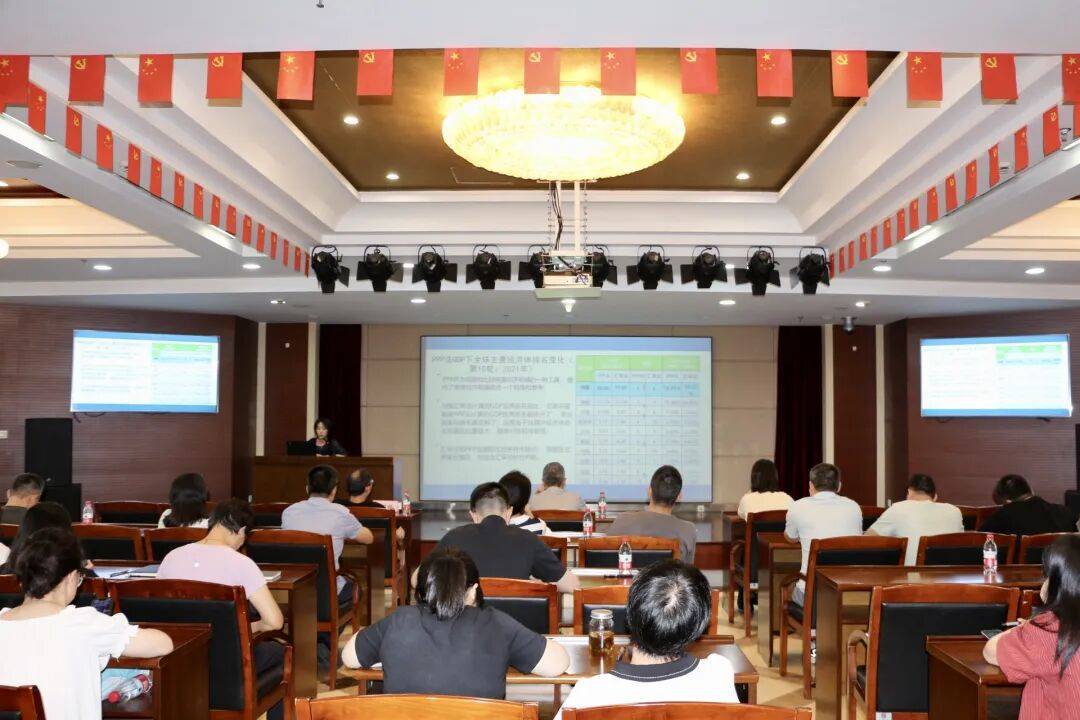
Core Viewpoint - The article discusses the "Statistical Class" sharing and exchange activity organized by the Xihu District Statistics Bureau, focusing on the International Comparison Program (ICP) and its significance in measuring purchasing power parity (PPP) among economies [1][3]. Group 1: Overview of ICP - The International Comparison Program (ICP) is the largest global statistical cooperation project initiated by the United Nations Statistical Commission and implemented by international organizations like the World Bank [3]. - The ICP aims to collect price data and GDP expenditure data from various economies to calculate purchasing power parity (PPP), which serves as a currency conversion factor to assess and compare the actual economic scale of different economies [4]. Group 2: Implementation and Participation - Since its inception in 1968, the ICP has completed 10 rounds, with the most recent round in 2021 involving 176 economies globally. The upcoming 2024 round will be the 11th iteration of the program [5]. Group 3: Understanding PPP - Purchasing Power Parity (PPP) is the main indicator generated by the ICP, reflecting the currency ratio for exchanging the same set of goods and services between economies [6]. Group 4: Survey Components of ICP - The ICP survey includes five main components: household consumption price survey, machinery and equipment price survey, construction materials price survey, housing rent survey, and government remuneration survey [7]. Group 5: Government Remuneration Survey - The purpose of the government remuneration survey is to assess the purchasing power parity of government final consumption expenditure by investigating the remuneration of various government positions, which is then aggregated to the GDP level for international comparison [8]. - The survey targets government agencies, courts, customs, fire departments, police, prisons, public schools, and public hospitals, focusing on full-time civil servants and officially employed personnel [9]. Group 6: Survey Content and Methodology - The 2024 survey will collect data on the total annual remuneration paid to survey participants, including basic salary, allowances, bonuses, employer social contributions, and in-kind benefits [10]. - The survey is scheduled to take place from April to May 2025 [11]. Group 7: Comparison with Labor Wage Reports - The ICP government remuneration survey focuses on GDP from the expenditure side, while labor wage reports focus on income from the revenue side [12]. - The ICP survey excludes temporary and outsourced personnel, while labor wage reports include all on-duty employees, including temporary and outsourced workers [12].
程实:人民币未现系统性偏离,内核稳定支撑走势稳健
Sou Hu Cai Jing· 2025-09-03 04:16
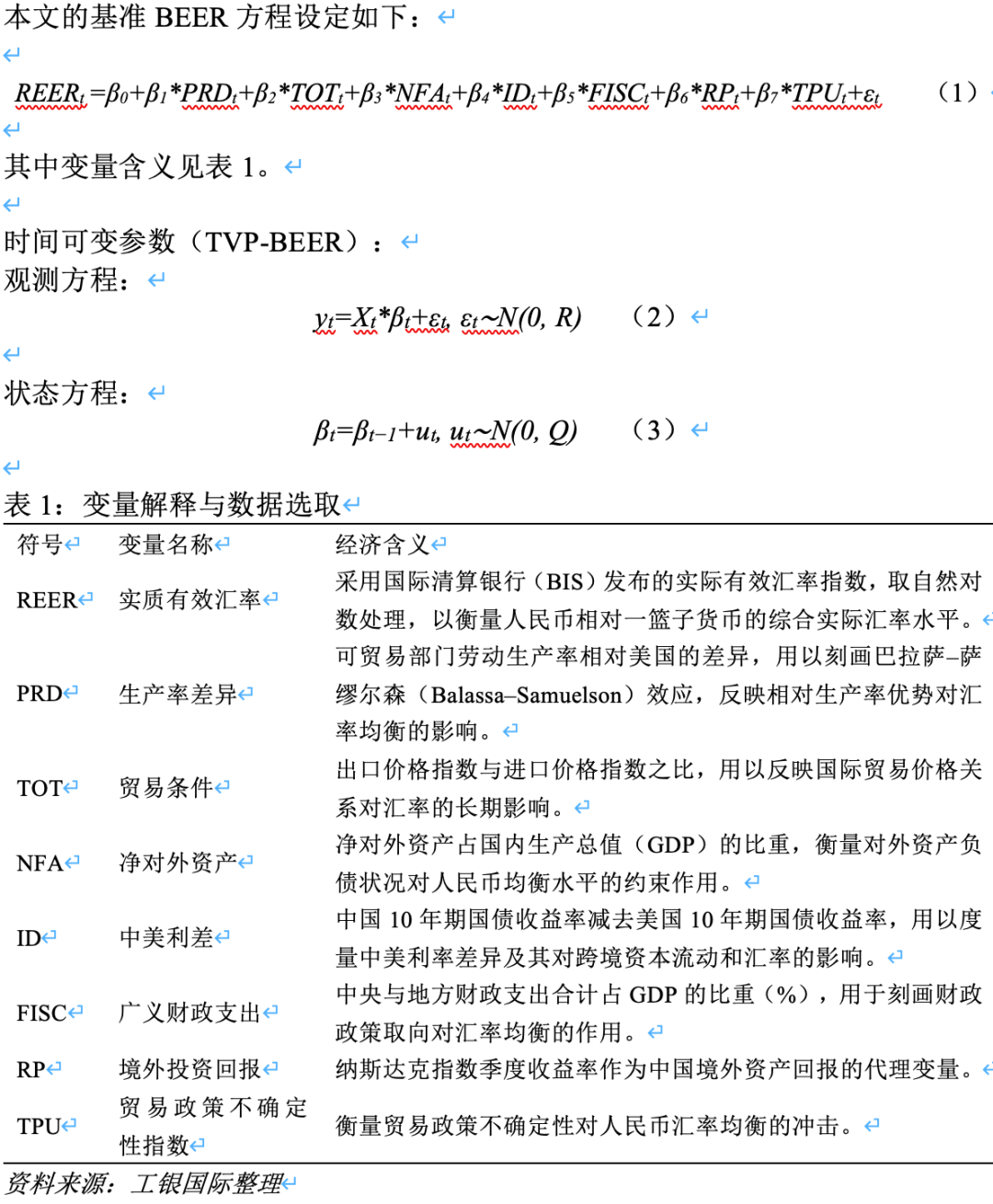
Core Viewpoint - The article presents a systematic assessment of the equilibrium exchange rate of the Renminbi (RMB) from 2010 to 2025 using a dynamic equilibrium measurement model (TVP-BEER), indicating that the RMB maintains inherent stability driven by economic fundamentals despite global financial fluctuations [1]. Summary by Sections RMB Equilibrium Exchange Rate Model Selection - The research identifies four main paths for equilibrium exchange rate studies, including the price benchmark method (PPP), fundamental equilibrium exchange rate (FEER), natural real exchange rate (NATREX), and the BEER method, each with its advantages and limitations [2][3][4]. Introduction of Time-Varying Parameters - The article emphasizes the selection of the BEER framework for estimating the RMB equilibrium exchange rate due to its empirical operability and explanatory power, while introducing time-varying parameters to better reflect the dynamic nature of economic conditions [4]. RMB Effective Exchange Rate Trends - The RMB's real effective exchange rate (REER) has shown phase characteristics over the past 15 years, with significant appreciation driven by productivity differences and improved trade conditions before 2010, followed by stability despite external shocks [7][8]. Comparison of Static and Dynamic Models - The static BEER model captures long-term trends but struggles during structural shifts and external shocks, while the TVP-BEER model provides a more accurate equilibrium estimate, maintaining a deviation of less than 0.5% from actual values during turbulent periods [8][11]. Factors Influencing RMB Equilibrium - The static BEER model indicates significant positive effects from productivity differences and trade conditions on the RMB equilibrium level, while net foreign assets and fiscal spending show negative coefficients, reflecting market concerns about potential risks [13]. Future Outlook for RMB - The RMB is expected to maintain a stable trajectory, supported by ongoing economic structural transformation, consumption upgrades, and steady progress in RMB internationalization, with limited risks of significant deviation from equilibrium [15][18].
中美差距扩大?越南较中国快?中国GDP将达140万亿,美越差越远!
Sou Hu Cai Jing· 2025-07-14 22:49
Core Insights - The article highlights the disparity between China's GDP growth and the perception of its economic standing compared to the US and Vietnam, emphasizing that the narrative of a widening gap is misleading [1][3]. Economic Growth Projections - China's GDP is projected to exceed 140 trillion yuan by 2025, representing an increase of over 10 trillion yuan from 2023, equivalent to recreating the economic scale of Shandong Province [3]. - The GDP gap between China and the US is expected to widen, with specific dollar figures indicating an increase in disparity over the year [3]. Currency and Inflation Impact - Exchange rate fluctuations significantly affect the dollar value of China's GDP, with a depreciation of the yuan leading to a reduction of approximately 160 billion USD in GDP value when converted to dollars [3]. - The difference in inflation rates distorts the perception of economic growth, with China's low inflation resulting in a lower nominal GDP growth compared to the US, which experiences higher inflation rates [5]. Vietnam's Economic Performance - Vietnam's GDP growth rate reached impressive figures in 2023, but its overall GDP remains significantly smaller than China's, with projections indicating that Vietnam's annual GDP is only a fraction of China's [6]. - Vietnam's economy is heavily reliant on the US market, making it vulnerable to changes in US policy, contrasting with China's more diversified economic structure [6]. Purchasing Power Parity (PPP) Perspective - The article argues that GDP figures based on purchasing power parity (PPP) provide a more accurate reflection of economic strength, with China surpassing the US in PPP terms since a certain year and maintaining a growing lead [7][9]. - In 2023, China's PPP GDP reached a significant figure, further illustrating its economic capabilities compared to the US [9]. Structural Economic Strength - China's manufacturing sector contributes a substantial percentage to global output, with a diverse range of industries, indicating a solid foundation for economic growth rather than short-term gains [11]. - The country is transitioning from manufacturing to innovation, with significant investments in research and development, showcasing its technological advancement [11]. Employment and Social Welfare - China has been creating millions of new jobs annually, with healthcare coverage expanding, reflecting genuine improvements in living standards rather than superficial economic growth [11]. Comparison with the US - The US experienced a decline in GDP in the first quarter, relying on inflation for growth, which raises concerns about the sustainability of its economic model [13]. - The article concludes that while short-term perceptions may suggest a widening gap, China's long-term economic resilience and competitiveness are expected to strengthen [13].
申万宏源王胜:我相信我们正站在中国资产长线上涨的前夜
晚点LatePost· 2025-04-09 15:09
几周之前曾被热议的中国资产重估逻辑,还继续有效吗? 制图 丨 黄帧昕 编辑 丨 王姗姗 4 月 2 日特朗普签署所谓 "对等关税" 行政令,宣布 美国对所有贸易伙伴加征 10% 的 "最低基准关 税", 并对部分贸易伙伴征收更高关税,其中给中国的 "对等关税" 税率达到 34%。此后连续三个交易 日(至 4 月 7 日),全球金融市场暴跌,美国股市蒸发了超过 6 万亿美元。港股则在 4 月 7 日抹平了 开年以来所有涨幅,上证指数创下 8 年来最大单日跌幅。 本周,中美关税争端还在继续升级。4 月 8 日,美国针对中国政府的坚决反制,报复性地宣布对中国 输美商品征收 "对等关税" 的税率由 34 % 提高至 84 %。 中国并不示弱,4 月 9 日反制进一步升级 ——对美加征关税税率由 34 % 提高至 84 %。 "这是一个史诗般的经济和市场事件。" 美国著名基金经理比尔·格罗斯(Bill Gross)在上周表示,本 轮美国关税政策调整的影响,形同 1971 年和金本位制的终结但会带来直接的负面后果,因此他呼吁 投资者不应该试图 "接下落的刀"。 反映市场波动率的芝加哥期权交易所 VIX 指数,也被称为 " ...