长期投资理念

Search documents
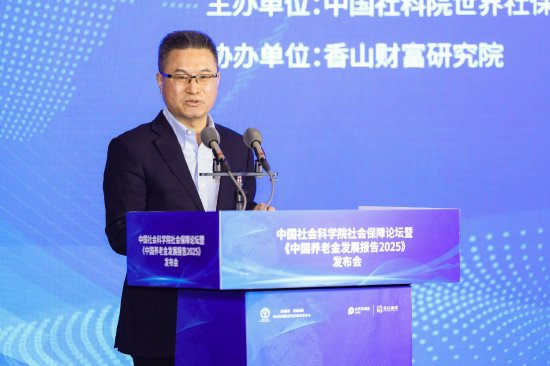
曹德云:做时间的朋友,树立养老金财富管理“长、宽、远、稳、久”的视野
Xin Lang Cai Jing· 2025-12-06 05:14
Core Viewpoint - The forum emphasizes the importance of long-term investment strategies in pension wealth management, advocating for a shift from short-term financial returns to maximizing long-term value growth [3][5]. Group 1: Long-term Investment Philosophy - The speaker, Cao Deyun, stresses the need to adhere to a long-term investment philosophy and to practice value investment goals [3][5]. - Pension wealth management should be approached as a long-term strategy, requiring careful planning and sustainable asset arrangements that can withstand economic cycles [3][5]. Group 2: Value Investment Focus - The focus should be on achieving maximum long-term value rather than merely monitoring annual financial investment returns [3][5]. - A shift in perspective is encouraged, moving from a financial return viewpoint to one that prioritizes value acquisition, promoting a vision of "long, wide, far, stable, and lasting" in pension wealth management [3][5].

田轩:夯实养老保障金融支撑
Jing Ji Ri Bao· 2025-11-24 00:08
Core Viewpoint - The National Financial Supervision Administration has expanded the pilot scope of pension financial products nationwide for three years, aiming to enhance the multi-tiered pension insurance system and address the challenges of an aging population, thereby facilitating the conversion of residents' savings into long-term pension investments [1] Group 1: Policy and Market Development - The expansion of pension financial products is a significant step in the ongoing development of China's pension finance sector, which has followed a path of "pilot first, steady progress, and innovation-driven" since the initial pilot launch in 2021 [1][2] - Currently, there are 51 pension financial products in existence nationwide, with a total scale of approximately 106.5 billion, indicating an increase in market acceptance and awareness of pension investment among residents [1] - New products can now automatically be included in the personal pension financial product list, streamlining the process and enhancing market scalability [1] Group 2: Product Innovation and Market Needs - The core direction for the deepening development of China's pension finance industry is the innovation of product forms and service upgrades, with a focus on "long-term" orientation and "inclusive" characteristics [2] - Despite the progress made, there are still significant gaps in the market, particularly in the supply of pension financial products that are compatible with personal pension accounts, which are fewer in number compared to public funds [2] - There is a need for better cultivation of investors' understanding of pension finance and long-term investment concepts, as some investors may have a short-term speculative mindset [2] Group 3: International Experience and Recommendations - International experiences from mature pension finance markets, such as Germany's "Riester Plan" and the U.S. 401(k) plan, provide valuable references for enhancing participation and offering diverse investment options [3] - To achieve sustainable development in pension finance, collaboration among policies, market institutions, and investors is essential, focusing on product innovation, policy incentives, and risk prevention [3] Group 4: Recommendations for Improvement - Financial companies should enhance their research and development efforts to create new products that meet pension needs, including long-term products with specific holding periods [4] - Policy mechanisms should be improved to lower participation barriers for residents, including fee reductions and tax incentives for pension financial products [4] - There is a need for public education on pension finance to foster a scientific awareness of pension planning and long-term investment, while financial institutions should improve suitability management [4]
个人养老金制度实施三周年:公募整装再出发 多维度破局“成长的烦恼”
Zhong Guo Zheng Quan Bao· 2025-11-23 23:18
Core Insights - The personal pension system in China has shown significant progress in its three years of implementation, with a well-established framework and a growing participant base [3][10] - The number of personal pension accounts has reached 72.79 million, indicating a rapid increase in participation since the pilot program began in November 2022 [3] - The product offerings have expanded significantly, with a total of 1,245 products now available, including savings, insurance, fund, and wealth management products [4] Product and Performance Summary - Personal pension fund products have achieved substantial growth, with a total management scale of 15.11 billion yuan, reflecting a 65% increase from the end of 2024 [5] - Over 97% of personal pension fund products have generated positive returns since their inception, showcasing the effectiveness of long-term investment strategies [5] - The number of holders of personal pension fund products has surged to 1.6624 million, up from 387,600 at the end of 2022 [5] Industry Development and Challenges - Despite the positive developments, the industry faces challenges such as a disparity between account openings and actual contributions, with many potential participants not fully engaging with the system [10] - Fund companies are focusing on enhancing their investment capabilities and product offerings to address the current bottlenecks in the personal pension system [10][12] - There is a consensus among industry players on the need to broaden tax benefits, improve account accessibility, and diversify product offerings to stimulate growth [11][12] Future Outlook - The industry aims to transition from a good start to high-quality development over the next three years, with various strategies proposed to overcome existing challenges [10][13] - Fund companies are committed to evolving from mere product providers to comprehensive pension service solution providers, enhancing their role in supporting national pension finance [9][13]
个人养老金制度实施三周年: 公募整装再出发 多维度破局“成长的烦恼”
Zhong Guo Zheng Quan Bao· 2025-11-23 21:41
Core Insights - The personal pension system in China has shown significant progress in its three years of implementation, with a well-established framework and a growing participant base [3][10] - The number of personal pension accounts has reached 72.79 million, indicating a rapid increase in participation since the pilot program began in November 2022 [3][4] - The product offerings for personal pensions have expanded significantly, with a total of 1,245 products now available, including savings, insurance, fund, and wealth management products [4][10] Industry Developments - The personal pension fund products have achieved both scale and performance, with a total management scale of 15.11 billion yuan for Y shares, reflecting a 65% increase from the end of 2024 [4][5] - Over 97% of personal pension fund products have generated positive returns since their inception, showcasing the effectiveness of long-term investment strategies [4][5] - Fund companies are evolving their investment research systems to be more industrialized and process-oriented, aiming for stable long-term returns [6][7] Challenges and Opportunities - Despite the positive developments, the industry faces challenges such as a disparity between high account openings and low actual contributions, indicating a need for improved engagement and understanding of the system [2][10] - Fund companies are advocating for broader tax benefits and enhanced account accessibility to encourage more contributions and investments [11][12] - The industry is shifting from being product providers to comprehensive pension service solution providers, focusing on long-term investor education and support [9][13]
ETF年内上市317只激增136%,资金竞相涌入指数化投资浪潮
Huan Qiu Wang· 2025-11-12 07:12
作为资产配置的重要工具,ETF正受到各路资金的青睐。从华宝中证港股通信息技术综合ETF到兴业中证金融科技主题ETF,其前十大持有人名单中频繁出 现外资银行、券商、私募基金乃至实体企业的身影。曾方芳分析称,这反映出各路资金正借助ETF这一低成本、高效率的工具,实现对A股不同行业和板块 的精准布局与灵活的流动性管理。 市场的蓬勃发展也带来了深远影响。曾方芳强调,中长期资金借道ETF持续入场,有助于推动A股形成"长钱长投"的良性生态,而外资的深度参与则能优化 投资者结构,提升中国资本市场的国际影响力。托合江则认为,ETF的扩容能带动底层资产的交易活跃度,形成对成分股的持续性被动交易需求,从而提升 市场整体流动性。 展望未来,ETF市场扩容趋势仍在延续。近日,多家公募机构接连发布ETF上市公告,另有8只新ETF已敲定上市日期。随着产品供给的不断丰富,ETF在提 升市场流动性、提高定价效率以及传播长期投资理念方面的作用将愈发凸显,为资本市场高质量发展注入强劲动力。(文馨) 【环球网财经综合报道】在政策支持与市场需求的双重驱动下,中国ETF市场正迎来前所未有的扩容浪潮。Wind资讯数据显示,截至11月11日,年内已有 3 ...

全国社保基金理事会股票投资部副主任薛捷:科技投资要坚持长期性、稳定性和规模性
Xin Lang Zheng Quan· 2025-11-12 07:03
Group 1 - The Shanghai Stock Exchange International Investor Conference was held on November 12, focusing on "Value Leading, Open Empowerment - New Opportunities for International Capital Investment and Mergers" [1] - The conference aims to create a communication platform for foreign institutional investors to engage with regulatory bodies, exchanges, listed companies, and financial institutions, promoting deep integration of international capital with the Chinese capital market [1] Group 2 - During the roundtable discussion on "Focusing on Value Investment: Long-term Capital in the Chinese Capital Market," Xue Jie, Deputy Director of the Stock Investment Department of the National Social Security Fund, emphasized the importance of long-term, stable, and large-scale investments in technology [3] - Xue Jie noted that in the context of a globalized capital and technology landscape, identifying unique investment value requires finding breakthroughs within structural differences [3] - She highlighted that long-term capital should not be easily swayed by short-term fluctuations, instead supporting companies over 3 to 5 years or longer [3] - A systematic asset allocation framework is necessary to manage the volatility of technology assets within the overall risk budget, aiming for smoother overall returns [3] - Maintaining the scale of investments is crucial, as large-scale long-term capital can support national strategies and attract more social capital into key technology sectors, creating a risk-sharing investment landscape [3] - Xue Jie advocated for cultivating a genuine long-term investment philosophy to achieve stable growth in returns under low-interest-rate environments, noting the increasing independent innovation capabilities of Chinese technology companies [3]
股票市场持续稳定健康发展的国际经验借鉴研究
Zheng Quan Ri Bao Wang· 2025-10-31 12:52
Core Viewpoint - The article emphasizes the need for the sustainable development of China's A-share market amidst increasing global competition and market volatility, highlighting the importance of reforms in registration systems, delisting mechanisms, information disclosure, long-term capital entry, and investor protection to enhance market quality and resilience [2]. Group 1: Improvement of Registration System - The registration system should be continuously improved, focusing on information disclosure and market-driven mechanisms for listing and delisting [3]. - A-share IPO fundraising increased by 54.92% since the implementation of the comprehensive registration system, but the delisting rate remains low at 0.44%, indicating structural issues in market exit mechanisms [3][4]. Group 2: Enhancing Information Disclosure - There is a need to enhance the quality of information disclosure by refining content and standards, including detailed governance disclosures and industry-specific guidelines [5]. - Timely reporting and real-time disclosure of significant events should be optimized to reduce information delays affecting market performance [5]. Group 3: Establishing Efficient Delisting Mechanisms - An efficient delisting mechanism is crucial for orderly market entry and exit, with current A-share processes being lengthy and allowing for financial manipulation to avoid delisting [6]. - Recommendations include shortening the delisting warning period and streamlining the delisting process to improve market clearing efficiency [6]. Group 4: Promoting Internationalization and Industrial Upgrading - The article advocates for expanding market openness by easing foreign investment restrictions and enhancing cross-border trading mechanisms to attract international capital [8]. - The proportion of strategic emerging industry listings has increased to 83.58%, reflecting market support for innovation-driven economic growth [7]. Group 5: Financial Stability Mechanisms - Establishing a sizable stabilization fund is recommended, with a target size of 2% to 6% of total market capitalization to enhance market resilience [11]. - Additional market-based emergency tools should be developed to address liquidity crises and support long-term market stability [12]. Group 6: Strengthening Investor Protection - Strengthening regulations on major shareholder reductions is essential to maintain market stability and protect minority investors [14]. - The establishment of a dedicated legal framework for investor protection is suggested to ensure comprehensive safeguards for investors [15]. Group 7: Encouraging Long-term Investment - The article highlights the importance of long-term capital in shaping investment philosophies, suggesting tax incentives to promote long-term holding behaviors [17]. - A robust dividend policy is recommended to attract long-term investors and ensure stable returns, addressing the current low dividend rates in the A-share market [19].
银华鑫禾拟任基金经理和玮:舍弃锐度追求长期稳健收益
Zhong Guo Ji Jin Bao· 2025-10-20 01:04
Core Viewpoint - The investment philosophy of the new fund manager, He Wei, emphasizes long-term stable returns over short-term gains, aiming to provide a steady holding experience for investors [2][4]. Investment Philosophy - The team led by He Wei focuses on "absolute return" principles, integrating this approach into their relative return public funds, prioritizing long-term stability [4][5]. - The investment strategy involves taking meaningful risks while maintaining a defensive posture during market bubbles, concentrating on stable blue-chip stocks to control drawdowns [4][5]. Fund Performance - The Silver Hua Hu Shen Stock Connect Fund, managed by He Wei, achieved a three-year unit net value growth rate of 24.08%, ranking in the top 3% of its category [5]. - The fund has consistently delivered excess returns of 3% to 12% annually from 2022 to 2024 [5]. Investment Framework - The investment framework includes selecting fundamentally driven stocks with safety margins, prioritizing win rates over potential returns, and avoiding overvalued and crowded trades [6]. - Emphasis is placed on macroeconomic trends and future developments, with a focus on risk-reward ratios and controlling drawdowns [6]. Market Outlook - He Wei expresses optimism about the long-term potential of the Chinese capital market, citing strong fundamentals in manufacturing, technology, and healthcare [10]. - The market is viewed as undervalued due to geopolitical tensions, with expectations of improved performance as foreign capital begins to enter [10]. Sector Focus - The long-term investment value in the non-ferrous metals sector is highlighted, with a favorable supply-demand structure for commodities like gold, copper, and aluminum [11]. - The financial sector, particularly bank stocks, is seen as having reasonable dividend yields and potential for valuation recovery as market conditions improve [11]. New Fund Launch - The upcoming Silver Hua Xin He Mixed Securities Investment Fund will feature a floating management fee structure, aiming to build a long-term relationship with investors through steady returns [9]. - This new fund will include investments in the Hong Kong stock market, which is perceived to offer attractive opportunities compared to A-shares [9].
国新国证基金:公募基金高质量发展行动方案解读之投资者的选基新视角
Xin Lang Ji Jin· 2025-10-17 02:45
Core Insights - The "Action Plan for Promoting High-Quality Development of Public Funds" will transform the fee structure and assessment methods of fund companies, reshaping the competitive landscape and development direction of the industry [1] Group 1: Shift in Focus - The Action Plan emphasizes a transition from a "scale-oriented" approach to a "capability-oriented" one, highlighting the importance of the core competitiveness of fund managers [2] - Investors are encouraged to abandon the "size equals return" mentality and instead focus on the "investment research capability" of fund managers, with regulatory bodies establishing evaluation metrics for fund companies [2] Group 2: Investment Strategy Evolution - The investment strategy is shifting from "chasing stars" to establishing a "trust system," as long-term assessment mechanisms will replace the individual heroism of fund managers with a more collaborative investment research framework [3][4] - Investors should prioritize the professionalism and efficiency of the investment research systems behind fund products, viewing fund selection as choosing a comprehensive and reliable investment methodology rather than relying on a single manager's short-term market predictions [4] Group 3: Emphasis on Long-Term Investment - The reforms aim to encourage long-term investment, with fee reforms designed to lower the long-term holding costs for investors [5] - Investors are advised to avoid frequent trading due to short-term market noise and to select fund managers whose interests are aligned with theirs, focusing on long-term performance to benefit from the compounding returns of capital markets [5] - The Action Plan is guiding the public fund industry towards a more regulated, transparent environment centered on investor returns, urging fund companies to enhance their management structures and service systems while improving both investment performance and investor experience [5]
退到“墙角”的“私募大佬们”
3 6 Ke· 2025-10-10 23:44
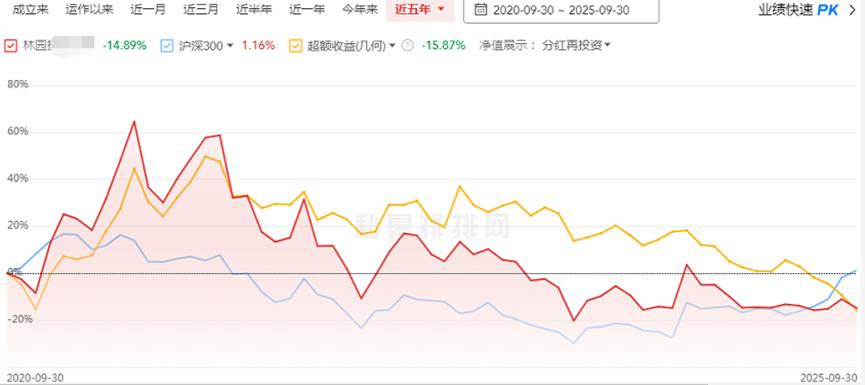
Core Viewpoint - The article discusses the decline of once-prominent investment figures in the face of a booming market, highlighting their struggle to adapt and maintain performance amidst changing market dynamics [1][3][4]. Group 1: Performance of Investment Managers - Many once-celebrated investment managers, such as Lin Yuan and Dan Bin, have seen their funds lag behind the market, with Lin Yuan's products experiencing significant declines while the CSI 300 index rose by 15.50% over the past year [7][10]. - Lin Yuan's investment strategy has led to a "perfect" miss of the market rally, particularly after the second quarter of this year, as his funds moved in the opposite direction of market trends [10][12]. - The performance of Lin Yuan's funds has been characterized by a heavy reliance on traditional consumer stocks, which have underperformed compared to emerging sectors like AI and technology [14][15]. Group 2: Investment Philosophy and Strategy - Lin Yuan's investment philosophy emphasizes long-term holding and a focus on traditional sectors, which has resulted in a significant underperformance relative to the market [18][19]. - His commitment to sectors such as food and beverage, despite their recent struggles, reflects a belief in their long-term value, although this has led to substantial losses in his portfolio [15][19]. - Lin Yuan's reluctance to invest in technology stocks stems from a lack of confidence in predicting future market leaders, indicating a cautious approach to emerging trends [19][20]. Group 3: Market Dynamics and Challenges - The article highlights the dilemma faced by investment managers who adhere to traditional strategies in a rapidly evolving market, where failure to adapt could lead to further declines in performance [21][22]. - The historical context of investment managers like Lin Yuan and Dan Bin illustrates the risks of sticking to outdated investment philosophies during periods of market transition [25][29]. - The ongoing divergence between traditional investment strategies and current market trends poses significant challenges for these managers, as they risk being left behind in a changing landscape [26][27].