
长江经济带

Search documents
2025年三峡船闸年通过量、三峡升船机年客运量双创历史新高
Yang Shi Wang· 2026-01-01 00:32
Core Viewpoint - The latest statistics from the Yangtze River Three Gorges Navigation Administration indicate significant growth in navigation activity and cargo throughput at the Three Gorges hub for 2025, highlighting its role in supporting regional economic development and logistics efficiency [1] Group 1: Navigation Statistics - In 2025, the Three Gorges hub is expected to operate 14,415 lock (chamber) passages, with an annual throughput of 173 million tons, representing an 8.66% year-on-year increase [1] - The Three Gorges ship lock is projected to handle an annual throughput of 170 million tons, while the Three Gorges ship lift is anticipated to accommodate 632,000 passenger trips, both reaching historical highs [1] Group 2: Economic Impact - The navigation system is set to ensure the safe and convenient passage of 46.1448 million tons of essential goods, providing an efficient, economical, and green logistics channel for industries such as steel, energy, chemicals, and automotive along the Yangtze River [1] - This infrastructure directly supports the industrial layout of the Yangtze Economic Belt and enhances regional economic connectivity [1]
从武汉阳逻港香炉山站鸣笛启程,“湖北造”搭上中欧班列驶向全球新赛道
Chang Jiang Ri Bao· 2025-12-30 00:52
Core Insights - A dedicated freight train carrying 55 containers of automotive parts and other "Made in Hubei" goods has successfully departed from Wuhan Yangluo Port, marking the first direct train service to Europe [1] - This initiative is a significant achievement for Hubei Railway Group, supported by various enterprises, aimed at strengthening international rail intermodal transport channels and providing stable, economical, and convenient cross-border logistics for foreign trade enterprises in Hubei and the Yangtze River Economic Belt [1][4] Group 1 - Hubei Railway Group has effectively utilized its advantages to integrate quality resources, actively participating in strengthening domestic and international dual circulation, and continuously improving the multi-modal transport system and external opening channel construction [4] - The establishment of a "regular + temporary" train product combination has led to a substantial increase in the number of trains operated, covering five Central Asian countries and 34 cities across nine countries along the Belt and Road [4][7] - The first Central Asia train departed from Yangluo Port on August 6, carrying automotive parts to Kazakhstan, while the first China-Europe train left on December 24, transporting Dongfeng automotive components to Europe [4] Group 2 - The group has formed a specialized service team to conduct demand research in Hubei and surrounding provinces, actively expanding the "water-to-rail" train cargo sources and breaking traditional transport barriers [5] - By optimizing processes, the group has significantly reduced document processing time and improved the organization of transport, achieving seamless connections between various transport links and drastically shortening overall logistics time [5] - The successful launch of the direct freight train to Europe is a practical implementation of the national "Belt and Road" initiative and the development strategy of the Yangtze River Economic Belt, facilitating the efficient export of "Made in Hubei" products [7]


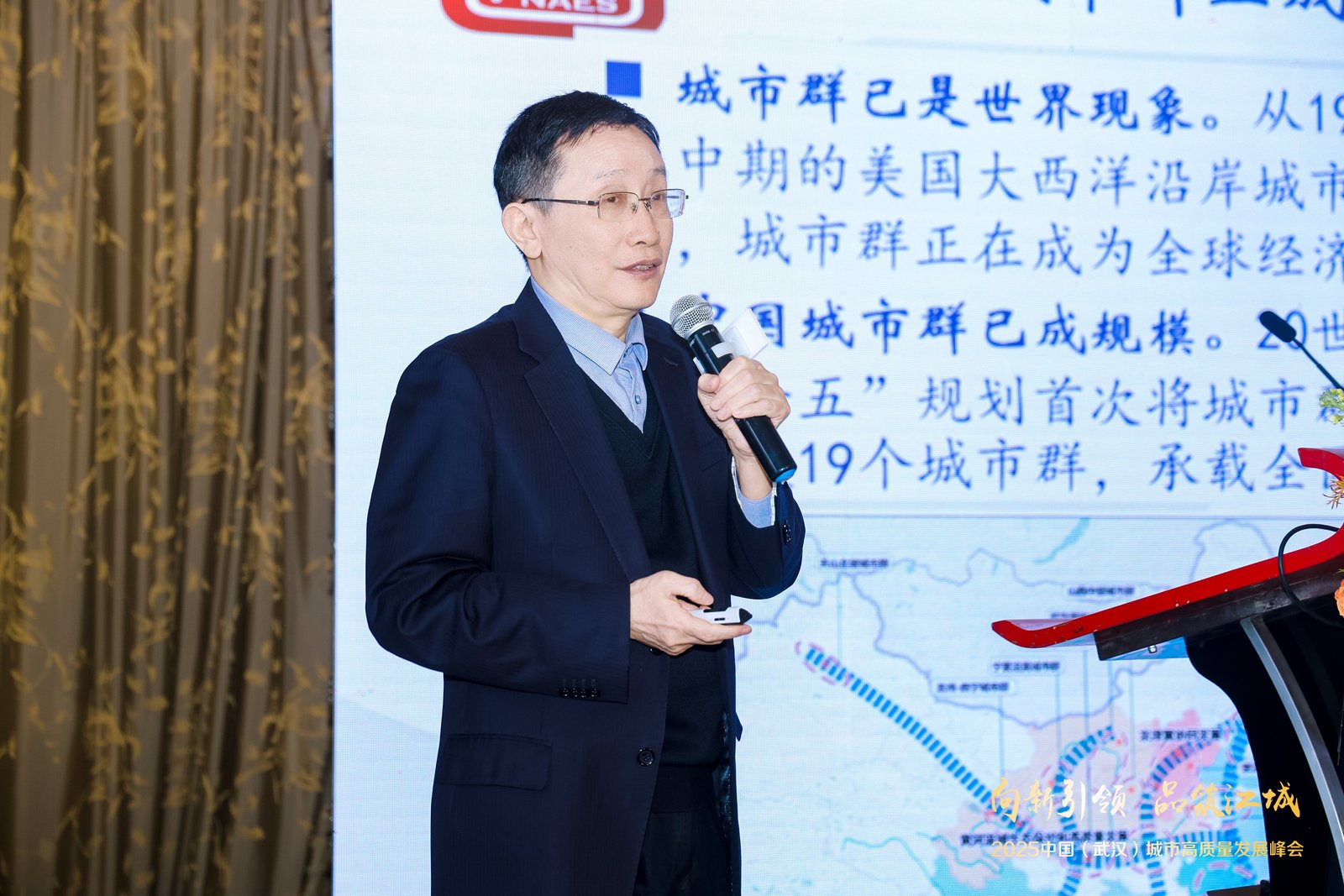
倪鹏飞:城市群主导时代,长江中游如何破局崛起?
Xin Lang Cai Jing· 2025-12-29 12:01
Core Viewpoint - China's urbanization is undergoing a profound spatial restructuring, with urban agglomerations becoming the main form of urban development, leading the national spatial economic pattern into a new phase [2] Group 1: Urban Agglomeration Development - Urban agglomerations are now the dominant form of urbanization in China, with 19 planned urban agglomerations housing 70% of the population and contributing 80% of GDP [2] - The evolution of urban agglomerations in China reflects a shift from "dispersed concentration" to "concentrated concentration," and now to "concentration with dispersion" [3] - Urban agglomerations play a crucial role in promoting common prosperity by enabling resource flow and sharing between central cities and surrounding areas, thus reducing regional disparities [3] Group 2: Challenges and Strategies - The development of urban agglomerations faces unique challenges due to the strong government-led initiatives and unclear local interest distribution mechanisms, which can create administrative barriers [4] - To address these challenges, it is essential to establish a collaborative development system that clearly defines the responsibilities and rights of urban governments and creates incentive mechanisms for all parties involved [4] Group 3: Future Predictions and Strategic Proposals - In the next 15 years, China is expected to form an organic network consisting of 17 to 20 urban agglomerations, 100 urban circles, over 1,000 cities, and 10,000 to 20,000 towns [5] - The Yangtze River Economic Belt is highlighted as a key area for addressing regional economic disparities, serving as a vibrant corridor supported by urban agglomerations [5][6] - The development of "giant urbanized areas" in mature regions like the Yangtze River Delta and the Greater Bay Area will blur urban-rural boundaries and provide integrated solutions for urban challenges [6] Group 4: Specific Strategies for Wuhan and the Yangtze River Middle Reigon - Wuhan, part of the Yangtze River middle urban agglomeration, is still in the cultivation stage and requires strategies such as integrating into the Yangtze River basin's overall strategy and strengthening its urban circle [7] - Emphasis is placed on green development and sustainable practices to achieve long-term growth while addressing urbanization challenges [7] - The strategic path outlined by the research emphasizes the role of urban agglomerations in driving high-quality development and achieving common prosperity in China [7]
中国新闻网:沪渝蓉沿江高铁武宜段开通运营
Zhong Guo Xin Wen Wang· 2025-12-28 01:41
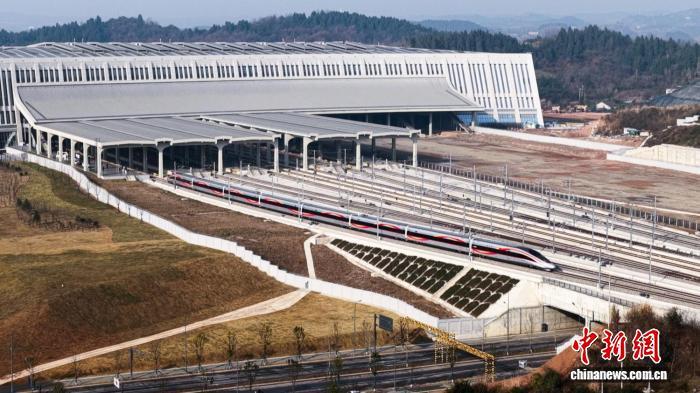
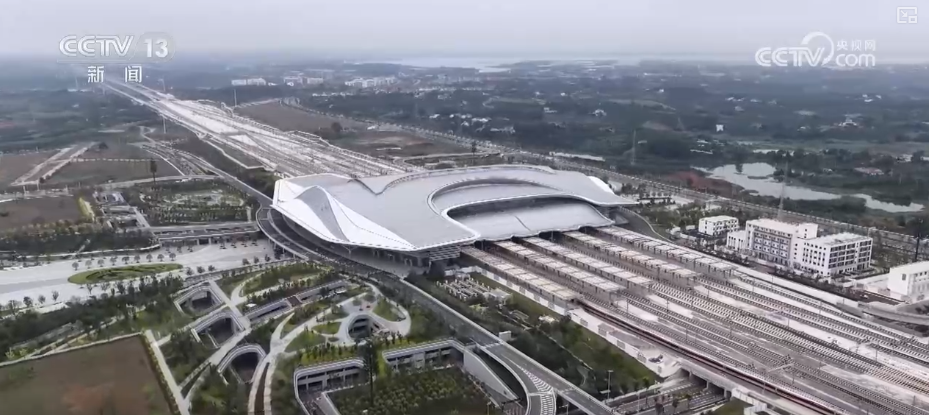
Core Viewpoint - The opening of the Wuhan to Yichang section of the Shanghai-Chongqing-Rongjiang High-Speed Railway enhances connectivity in the Yangtze River Economic Belt, facilitating faster travel between cities and promoting regional development [4]. Group 1: Project Overview - The Wuhan to Yichang section of the Shanghai-Chongqing-Rongjiang High-Speed Railway spans 314 kilometers with a design speed of 350 kilometers per hour [2]. - The line includes eight stations: Hankou, Hanchuan North, Tianmen, Jingmen South, Zhongxiang South, Jingmen West, Dangyang West, and Yichang North, with a total of 58 trains operating daily at the initial stage [2][3]. - The project features a high bridge-tunnel ratio of 84.8%, with 88 new bridges and 25 tunnels constructed due to complex geological conditions [4]. Group 2: Economic Impact - The railway's operation is expected to enhance the status and functionality of Yichang as a regional center, while also accelerating the development of the central urban agglomeration in the middle reaches of the Yangtze River [4]. - The railway is part of a larger initiative to connect six provinces and municipalities, with the entire Shanghai-Chongqing-Rongjiang High-Speed Railway expected to be completed by around 2030, forming a major backbone of the national high-speed rail network [8].
中国最重要的“东西大动脉”,要来了
虎嗅APP· 2025-12-26 13:50
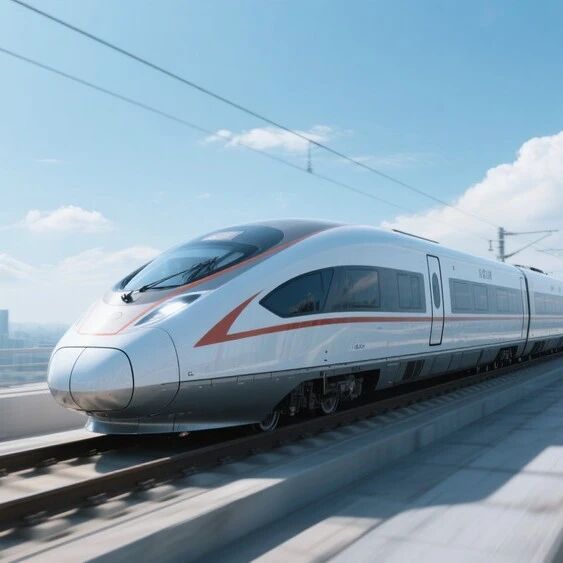
Group 1 - The opening of the Wuhan to Yichang section of the Yangtze River High-Speed Railway (Wuyichang High-Speed Railway) marks a significant milestone, bringing Hubei's high-speed rail operating mileage close to 2,600 kilometers, ranking it fifth in China [6][8] - The Yangtze River High-Speed Railway, also known as the Shanghai-Chongqing-Rong High-Speed Railway, spans 2,100 kilometers with a total investment of approximately 530 billion yuan, designed for a speed of 350 km/h, reducing travel time from Shanghai to Chengdu from 12 hours to 7 hours [10][11] - The railway will be constructed in segments, with the Wuyichang High-Speed Railway being the first section completed, and the entire line expected to be operational by around 2030 [15][18] Group 2 - The Yangtze River High-Speed Railway is crucial as it connects the Yangtze River Economic Belt, which includes six provinces and accounts for about 60% of China's economic output, with a combined GDP of nearly 40 trillion yuan and a population of 345 million [21][24] - The railway aims to address the limitations of existing transportation infrastructure, such as the lower design standards of the current railways and the predominance of freight traffic on the Yangtze River, thus facilitating faster passenger travel and alleviating congestion [25][27] - The completion of the high-speed railway is expected to significantly enhance economic activity by improving the flow of people, goods, and capital across the region, benefiting all cities along the route [29][31] Group 3 - The National Development and Reform Commission and the Ministry of Transport have indicated plans to promote the construction of both coastal and Yangtze River high-speed railways during the 14th Five-Year Plan period [32] - The coastal high-speed railway, which is longer at approximately 4,000 kilometers, aims to fill gaps in transportation between medium and small cities, enhancing connectivity and supporting regional economic development [40][41] - The completion of both the east-west and north-south high-speed rail networks will contribute to the overall formation of China's "eight vertical and eight horizontal" high-speed rail network [42]
沪渝蓉沿江高铁武宜段开通运营
Zhong Guo Xin Wen Wang· 2025-12-26 07:52
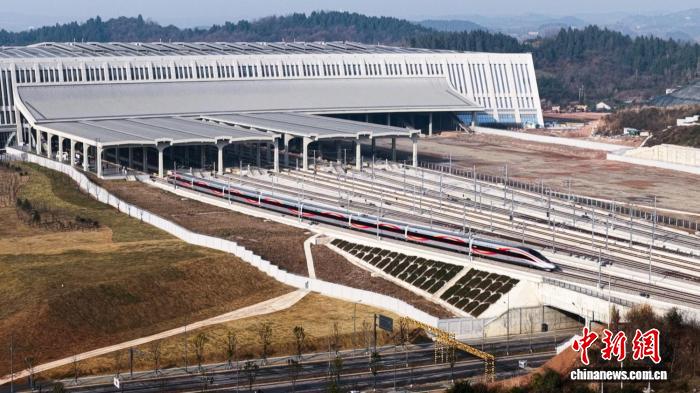
Core Viewpoint - The opening of the Wuhan to Yichang section of the Shanghai-Chongqing-Rongjiang High-Speed Railway enhances connectivity in the Yangtze River Economic Belt, facilitating faster and more efficient transportation between cities [4]. Group 1: Project Overview - The Wuhan to Yichang section of the Shanghai-Chongqing-Rongjiang High-Speed Railway officially opened on December 26, with a total length of 314 kilometers and a design speed of 350 kilometers per hour [3]. - The railway features eight stations, including both existing and newly constructed ones, with a maximum of 58 train services operating daily during the initial phase [3][4]. - The project is characterized by significant engineering challenges, including the construction of 88 new bridges and 25 tunnels, resulting in a bridge-tunnel ratio of 84.8% [4]. Group 2: Economic Impact - The new railway line is expected to enhance the status and functionality of Yichang as a regional center, while also promoting the development of the central Yangtze River urban agglomeration [4]. - The completion of the entire Shanghai-Chongqing-Rongjiang High-Speed Railway, projected for around 2030, will create a comprehensive transportation network across six provinces and cities, becoming a key component of the national high-speed rail grid [7].
多条新线投运畅通钢铁“大动脉” 一路“畅”行增强经济发展与民生服务双“引擎”
Yang Shi Wang· 2025-12-25 10:09
Core Viewpoint - The Wuhan to Yichang section of the Shanghai-Chongqing-Chengdu high-speed railway will commence operations on December 26, significantly reducing travel time and enhancing transportation connectivity in the region [1][12]. Group 1: Project Details - The Wuhan to Yichang high-speed railway spans 314 kilometers with a design speed of 350 km/h and includes eight stations: Hankou, Hanchuan North, Tianmen, Jingmen South, Zhongxiang South, Jingmen West, Dangyang West, and Yichang North [9][11]. - The project features a high bridge and tunnel ratio, requiring precise engineering due to complex geological conditions, including soft soil and karst formations [4][7]. Group 2: Economic Impact - The new railway line will create a dual high-speed rail corridor between Wuhan and Yichang, facilitating easier travel for local residents and promoting high-quality development along the Yangtze River Economic Belt [11]. - Initial operations will include up to 58 daily train services, reducing travel time from Hankou to Yichang by 34 minutes, now taking only 69 minutes [12]. Group 3: Related Infrastructure Developments - Concurrently, the G69 Yinbai Expressway's Shaanxi-Chongqing section has been completed, marking the full opening of the 2,281-kilometer expressway, which enhances regional connectivity [13][16]. - The new expressway will reduce travel time from Chongqing to Ankang, Shaanxi, from 140 minutes to approximately 40 minutes, transforming the area into a regional hub [18].
新华全媒头条|以“硬核”力量服务构建新发展格局——宁波舟山港努力打造世界一流强港
Xin Hua She· 2025-12-24 12:34
Core Viewpoint - Ningbo-Zhoushan Port has achieved a significant milestone by surpassing an annual container throughput of 40 million standard containers, reinforcing its position as the world's largest port and highlighting its critical role in national development strategies [1][3]. Group 1: Port Development and Integration - The integration of Ningbo and Zhoushan ports has been crucial for achieving current operational success, transitioning from independent operations to a unified system [2][3]. - Since the establishment of the Ningbo-Zhoushan Port Management Committee in 2005, the port's container throughput has seen exponential growth, from 7 million standard containers in 2006 to over 40 million in 2025 [3][4]. - The port's strategic development has been characterized by a focus on resource optimization and collaborative operational management, enhancing efficiency and scientific layout [3][4]. Group 2: Operational Efficiency and Global Connectivity - The port has established a robust operational framework, with over 210 berths capable of accommodating vessels over 10,000 tons, making it one of the largest deep-water ports globally [3][4]. - In September, the port launched a new fast shipping route to Europe, significantly reducing transit times compared to traditional shipping methods [4][5]. - The port's extensive network includes over 300 shipping routes, connecting to more than 600 ports across 200 countries, facilitating trade with emerging markets [5][6]. Group 3: Technological Advancements and Sustainability - The port is advancing towards smart and green operations, with initiatives like the "Four Ports Intelligent Operation" model aimed at enhancing logistics efficiency [7][8]. - The implementation of remote-controlled operations and the development of a "super brain" system for efficient scheduling are key innovations driving operational improvements [7][8]. - The port is committed to sustainability, with ongoing projects for electrification of equipment and collaboration on green shipping corridors with European ports [8][9]. Group 4: Future Development Plans - The "Implementation Plan for Building a World-Class Strong Port" aims for the port to achieve its goal by 2027, with a focus on optimizing functional layout and resource allocation [8][9]. - The overall planning for Ningbo-Zhoushan Port by 2035 is set to further enhance its capabilities and support its transition towards becoming a strong global port [9].
奋力擘画新图景 阔步迈向“十五五” ——中共苏州市委十三届十一次全会侧记
Su Zhou Ri Bao· 2025-12-18 00:26
Group 1 - The "14th Five-Year Plan" achievements in Suzhou have been summarized, and the new "15th Five-Year Plan" has been proposed to outline future development strategies [1] - The Suzhou Industrial Park aims to enhance international cooperation and innovation, focusing on high-tech industries and deepening collaboration in biomedicine, green economy, and digital economy [2] - The Gusu District plans to protect and utilize its cultural heritage while promoting urban renewal and enhancing the quality of life [3] Group 2 - The Taicang government emphasizes the importance of integrating with the Yangtze River Delta and enhancing logistics capabilities to support high-quality development [4] - The Wujiang District is focused on high-quality planning and innovation to support the integration of the Yangtze River Delta [4] - The importance of high-quality party leadership in driving development and enhancing the capabilities of the workforce is highlighted [5] Group 3 - The need for strict party governance and supervision to ensure high-quality development is emphasized [6] - The focus on developing new productive forces and promoting the integration of technology and industry is outlined [8] - The importance of artificial intelligence and digital transformation in various sectors is recognized, with plans for significant projects and initiatives [9] Group 4 - The Suzhou Customs aims to enhance trade facilitation and support local enterprises in exploring new markets [10] - The logistics sector is being developed to create a resilient international logistics network, enhancing cross-border trade services [10] - The agricultural sector is set to modernize, focusing on technology and sustainable practices to enhance productivity and quality [15] Group 5 - The cultural and tourism sectors are being developed to enhance Suzhou's cultural identity and promote tourism [16] - The emergency management system is being strengthened to ensure safety and support high-quality development [16] - The expansion of the Suzhou rail transit network aims to improve urban connectivity and service quality [17]
更好“服务大局”,加快建设“轨道上的江苏”
Xin Hua Ri Bao· 2025-12-11 07:05
Core Viewpoint - The Jiangsu Railway Group is making significant progress in railway construction and operation, aiming to enhance transportation efficiency and support regional economic development through a series of high-speed rail projects and strategic initiatives. Group 1: Railway Construction Progress - The North Jiangsu High-Speed Railway's key bridge, the Chongqi Railway Bridge, has reached a major construction milestone with the completion of its main towers [1] - The opening of the Hu-Su-Hu High-Speed Railway on December 26, 2024, connects the Jiangsu and Zhejiang provinces with a direct route [1] - Since the beginning of the 14th Five-Year Plan, the Jiangsu Railway Group has completed and opened key lines such as the Xuzhou-Lianyungang High-Speed Railway and the Hu-Ning Railway along the Yangtze River, adding 516 kilometers of operational railway [2] Group 2: Strategic Goals and Development Plans - The Jiangsu Railway Group aims to become a leading comprehensive railway industry group in China, focusing on high-quality development and sustainable growth [3][16] - By the end of the 14th Five-Year Plan, the group plans to have 1,088 kilometers of railway under construction, with a total railway mileage reaching 5,800 kilometers by 2030 [2][15] Group 3: Operational Efficiency and Capacity Growth - The number of daily passenger train services on controlled railways has increased from 151 pairs at the end of 2020 to an expected 513 pairs by the end of 2025, with passenger volume projected to rise from 1.772 million in 2020 to 6.83 million [5] - The railway's container multimodal transport volume has exceeded 2 million tons this year, nearly ten times the 210,000 tons at the end of the 13th Five-Year Plan [5] Group 4: Financial Performance and Asset Growth - As of August 2025, the total assets of the Jiangsu Railway Group increased from 270.2 billion to 367 billion, a growth of 36%, while net assets rose from 170.8 billion to 209.5 billion, a 23% increase [8] - The group has maintained a strong financial performance, with key financial metrics such as net asset return rate and total asset return rate ranking among the top in the industry [8] Group 5: Innovation and Technological Development - The Jiangsu Railway Group has invested over 270 million in research and development, with a focus on green and intelligent railway technologies [11] - The successful completion of the Jiangsu Intercity Railway Green Design Standard project is expected to guide the province's railway green development [10] Group 6: Leadership and Governance - The Jiangsu Railway Group has been recognized for its high-quality development, achieving the top rank in the provincial comprehensive assessment for four consecutive years [7] - The group emphasizes the importance of party leadership in driving high-quality railway development, implementing various initiatives to enhance governance and operational efficiency [13][14]