风险隔离

Search documents
完善内控机制,防范化解风险——理财行业筑牢金融防火墙
Xin Hua Wang· 2025-08-12 06:27
Core Viewpoint - The China Banking and Insurance Regulatory Commission (CBIRC) has released a draft of the "Internal Control Management Measures for Wealth Management Companies" to enhance compliance and sustainable operations in the wealth management sector [1][2]. Group 1: Regulatory Framework - The new measures aim to establish a unified internal control standard for wealth management companies, enhancing compliance awareness and investor protection mechanisms [2][3]. - Since the implementation of the "Guiding Opinions on Regulating Financial Institutions' Asset Management Business," the asset management system in China has become increasingly refined, leading to a more stable operation of asset management institutions [2][3]. Group 2: Internal Control Requirements - The draft outlines comprehensive requirements for internal control systems, including organizational structure, control activities, and supervision, which are crucial for fostering a scientific and prudent investment philosophy [2][4]. - The internal control system is deemed the core framework for asset management institutions, essential for risk prevention and governance improvement [4][5]. Group 3: Risk Management - The measures emphasize the need for wealth management companies to establish risk isolation mechanisms to prevent the spread of financial risks across different institutions [5][6]. - Effective risk management is critical, especially as wealth management products transition to net value-based models, requiring companies to balance returns and volatility [4][5]. Group 4: Investor Protection - The draft highlights the importance of protecting investors' rights, necessitating the establishment of complaint handling mechanisms and conflict of interest prevention systems [6][7]. - With the growing number of investors in the wealth management market, the need for robust institutional safeguards to protect their interests is increasingly vital [6][7]. Group 5: Future Directions - The industry is encouraged to enhance regulatory frameworks and promote structural reforms to ensure sustainable and high-quality development of asset management institutions [5][8]. - There is a call for improved governance mechanisms that prioritize investor interests over shareholder benefits, particularly in scenarios where conflicts arise [7][8].
信托,在股权激励中能发挥什么作用?
3 6 Ke· 2025-07-31 00:30
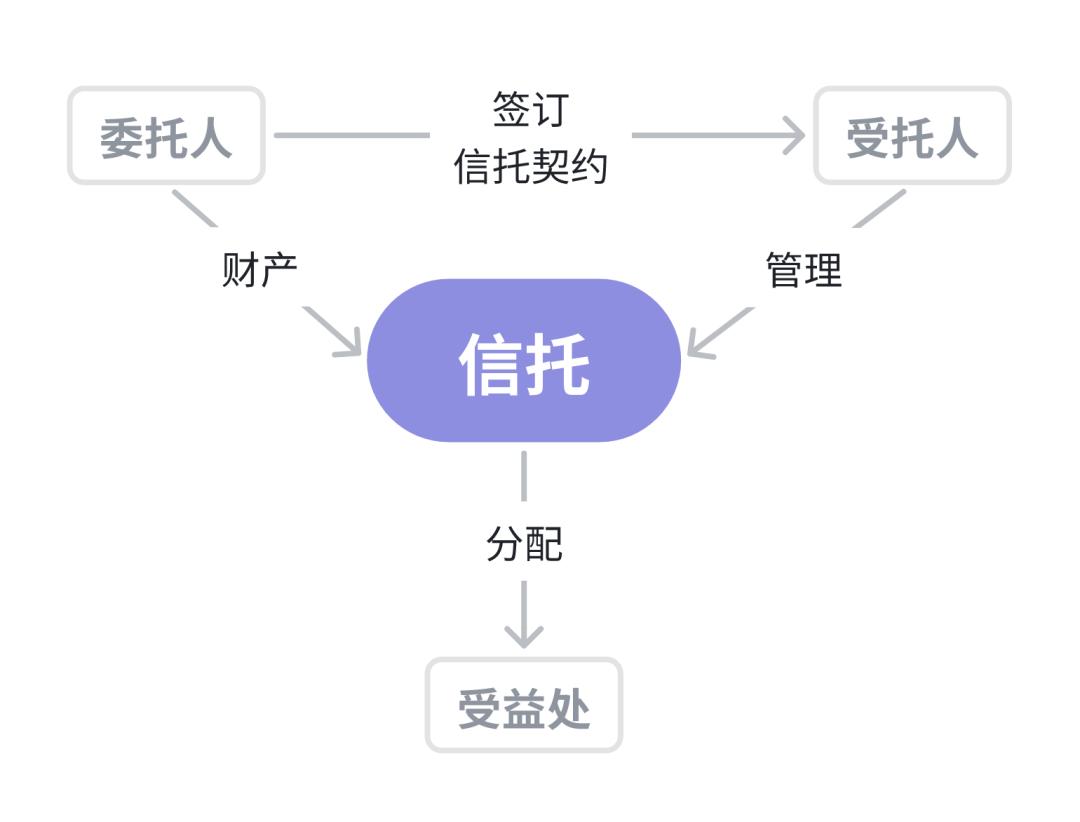
Core Concept - The recent inheritance dispute involving Wahaha's Zong Fuli has brought trust into the spotlight, highlighting its applications beyond family wealth transfer [1][4] Trust Overview - Trust is fundamentally a contractual relationship where the settlor entrusts assets to a trustee for the benefit of beneficiaries [2] - Key features of trust include wealth transfer, risk isolation, asset protection, and privacy protection, leading to various practical applications such as offshore trusts for family inheritance, equity incentives, charity, and other special purposes [4] Equity Incentive Trust - Equity incentive trusts, also known as employee equity incentive trusts or Employee Benefit Trusts (EBT), involve a company as the settlor entrusting equity or cash to a trustee for managing and distributing to designated employees [5][7] - Commonly used by companies planning to go public, these trusts serve as holding platforms in offshore structures [7] Advantages of Equity Incentive Trusts - **Centralized Management**: Trusts help avoid the dilution of control by centralizing equity management, allowing the company to retain voting rights while employees only hold rights to benefits [7] - **Cost-Effective and Flexible**: Trusts allow for easy adjustments to employee equity allocations without the need for formal business changes, thus controlling management costs [8] - **Risk Isolation**: Trusts protect both the company and employees by ensuring that equity held in trust is not included in the company's liquidation assets in case of debt disputes or bankruptcy [9] Types of Equity Incentive Trusts - For companies planning to go public, establishing equity incentive trusts is often linked to tax planning and foreign exchange management [10] - For companies already listed, especially in Hong Kong, trusts are primarily used for stock repurchase purposes [10] Stock Repurchase via Trusts - Prior to June 11, 2024, Hong Kong's market did not allow companies to hold repurchased shares as treasury stock, leading many to use trusts for repurchase and subsequent employee incentives [11] - This method allows companies to bypass certain regulatory restrictions and maintain liquidity in their shares while binding employee interests [11] Implementation Process - The establishment of an equity incentive trust typically involves several steps, including KYC research and document drafting, with a usual timeframe of 1-2 months [14] - Companies like Pop Mart have successfully implemented equity incentive trusts post-IPO, utilizing RSUs as incentive tools with a structured vesting schedule [16] Continuous Improvement - The process of establishing equity incentive trusts is evolving with market regulations, and companies are encouraged to adapt and refine their approaches to enhance incentive effectiveness and attract top talent [18]

光韵达上市首亏后拟3.5亿元跨界并购,标的公司IPO折戟业绩暴跌
Hua Xia Shi Bao· 2025-07-11 02:30
Core Viewpoint - Guangyunda (光韵达) is seeking cross-border mergers and acquisitions to enter the communication equipment manufacturing sector after reporting its first loss in 14 years. The company plans to acquire 56.03% of Yilian Infinite Technology (亿联无限) for 352 million yuan, down from an initial intention to acquire 100% [2][9]. Financial Performance - Guangyunda reported a decline in net profit from 91.54 million yuan in 2021 to a loss of 27.37 million yuan in 2024, marking a continuous decline in profitability [9]. - Yilian Infinite's net profit dropped from 84.17 million yuan in 2022 to 28.67 million yuan in 2024, reflecting a significant decrease in performance [4][6]. Acquisition Details - The acquisition price for Yilian Infinite was set at 352 million yuan, with an overall valuation of 628 million yuan, which is significantly lower than its previous IPO valuation of 1.47 billion yuan [3][4]. - The decision to reduce the acquisition stake from 100% to 56.03% was made to lower financial costs and mitigate operational uncertainties associated with Yilian Infinite's declining performance [2][8]. Risks and Challenges - Yilian Infinite faces multiple risks, including a significant drop in performance post-IPO withdrawal and issues related to a second shareholder's legal troubles [7][8]. - The company also has to deal with potential financial penalties related to a land purchase that was intended for IPO fundraising but is now under negotiation for termination [7][8]. Strategic Intent - Guangyunda aims to leverage the acquisition to expand its presence in the electronic manufacturing supply chain and explore new profit growth opportunities in overseas markets [9]. - The company has previously engaged in two cross-border acquisitions, but the performance of those subsidiaries has not met expectations, indicating challenges in integrating new businesses [10].


门槛降到30万,信托如何满足家庭财富需求?|第394期直播回放
银行螺丝钉· 2025-07-04 13:59
Core Viewpoint - The article discusses the concept of trusts, their origins, functions, and how they can be utilized for wealth management, risk isolation, and inheritance planning, particularly highlighting the recent introduction of pension trusts with a lower entry threshold of 300,000 yuan [1][84]. Group 1: Origin and Nature of Trusts - Trusts originated as a legal framework rather than a financial product, with early examples found in ancient Egypt and Rome where wealthy individuals entrusted their assets to third parties for management [4]. - The essence of a trust is that it functions as an account where funds can be injected for investment in various assets, allowing for the distribution of principal and earnings to designated beneficiaries [5][6]. Group 2: Legal Structure of Family Trusts - In a family trust, the individual (settlor) transfers family wealth to a trustee (trust institution) while designating beneficiaries, allowing the trustee to manage the trust assets according to the trust agreement [12]. Group 3: Core Functions of Trusts - Trusts serve three main functions: - Risk isolation, creating a "firewall" for assets [14]. - Wealth transmission, breaking the "wealth does not last three generations" curse [14]. - Asset management, with professionals managing the assets [14]. Group 4: Risk Isolation Scenarios - Common scenarios for risk isolation include: - Pre-marital asset protection for children to prevent division in case of divorce [16][17]. - Arrangements for assets in remarriages to protect the rights of children from previous marriages [18][19]. - Separation of personal and business assets to safeguard family wealth from business liabilities [20][21]. Group 5: Wealth Transmission - Trusts allow for flexible wealth transmission plans, ensuring assets are passed on to designated beneficiaries smoothly and without disputes [38]. - Common scenarios for wealth transmission include setting up pension trusts for regular cash flow during retirement and pre-arranging estate distribution [40][42]. Group 6: Asset Management Function - Trusts are not idle; they require investment to enhance asset value, similar to funds, but with greater flexibility in asset types [66][68]. - The safety of a trust is contingent on the quality of the underlying investments [69]. Group 7: Future Directions for Trusts - The trust industry is evolving, with a focus on returning to core functions like wealth management and risk isolation, while professional investment management is increasingly being outsourced [75][79]. - The introduction of pension trusts with a lower threshold aims to make trust services more accessible to the general public [84]. Group 8: Types of Trusts - Trusts are categorized into three main types: family trusts, household trusts, and pension trusts, each with different thresholds and service scopes [82][83].
保险金信托迎来“现象级”增长
Zheng Quan Ri Bao Wang· 2025-06-27 11:56
Group 1 - The core viewpoint of the articles highlights the rapid growth of the insurance trust market in China, with the wealth management service trust scale exceeding 1 trillion yuan by the end of 2024, and the insurance trust scale reaching 270.3 billion yuan, accounting for over 26% of the total [1] - As of the first quarter of this year, the proportion of insurance trusts in wealth management service trusts has further increased to 38% [1] - The growth of the insurance trust market is attributed to the core demand for asset safety, low entry barriers, and regulatory policy guidance, with a typical establishment threshold of 1 million yuan [1] Group 2 - Many clients are upgrading their insurance trusts to more powerful family trusts after a year, indicating a trend where high-net-worth individuals initially set up insurance trusts as a trial before transitioning to family trusts [2] - Family trusts have higher regulatory requirements, with a minimum asset scale or value of 10 million yuan, and can manage a wider range of assets compared to insurance trusts [2] - Establishing a family trust is a complex process that requires professional assistance to ensure it meets the long-term interests of the family [2]
不再是有钱人专属!一年几万元即可“上车”,《蛮好的人生》同款保险金信托适合普通人买吗?
Mei Ri Jing Ji Xin Wen· 2025-05-19 04:14
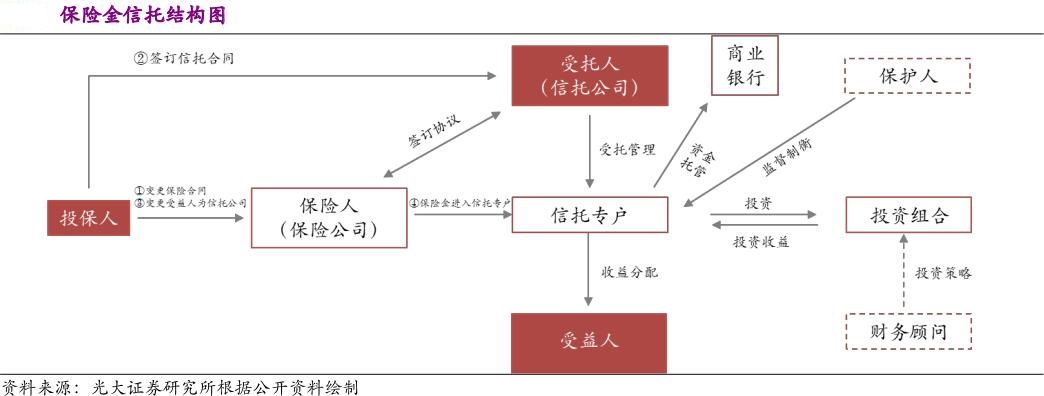
Core Viewpoint - The article discusses the increasing accessibility of insurance trust products, particularly insurance money trusts, which are becoming more popular among ordinary families due to lower entry thresholds and the advantages they offer in wealth management and risk isolation [1][12]. Group 1: Insurance Money Trust Overview - Insurance money trust is defined as a trust established by a trust company based on the rights and interests of a life insurance contract, allowing for the management of funds according to the trust agreement [2]. - The product combines features of both insurance and trust, providing dual legal protections and facilitating wealth transfer while ensuring risk isolation [3][10]. Group 2: Market Trends and Demand - The demand for insurance money trusts is growing, with over 40 out of nearly 70 trust companies in China now offering such products, indicating a significant market shift [8]. - The trend is driven by the increasing accessibility of insurance products to average families, allowing for a broader customer base [9][12]. Group 3: Product Models - There are three main models of insurance money trusts: - Model 1.0 involves changing the beneficiary of the insurance policy to the trust company, which then distributes funds to the beneficiaries based on specific conditions [6]. - Model 2.0 requires the policyholder to also be the trust company, ensuring that all premiums are paid directly to the trust [7]. - Model 3.0 involves establishing a cash trust first, with the trust company as the policyholder, which is less common in practice [7]. Group 4: Lowering Entry Barriers - The entry threshold for insurance money trusts has been significantly lowered, with some companies reducing the minimum requirement from 500 million to 100 million in total premiums or coverage [12]. - This reduction aims to make trust services more inclusive and accessible to a wider range of clients, particularly those with urgent retirement needs [12]. Group 5: Legal and Compliance Considerations - There is currently no specific legal framework governing insurance money trusts, making it essential for consumers to work with legal professionals to ensure the validity and effectiveness of their trust arrangements [13][14]. - Key considerations include ensuring the legality of fund sources, protecting beneficiary rights, and maintaining compliance with evolving legal standards [13].
分拆上市投资指南:利多星教你把握机遇避开陷阱
Sou Hu Cai Jing· 2025-05-15 07:01
Core Concept - Spin-off listing is an important capital operation method that is increasingly attracting attention from companies and investors, providing new development opportunities for companies and more investment choices for investors [1] Definition and Main Forms - Spin-off listing refers to the process where a parent company separates part of its business or assets to establish a new subsidiary, which is then publicly listed on the securities market, focusing on asset segmentation and equity restructuring [2][3] - Domestic spin-off listing involves the parent company listing the subsidiary on domestic exchanges like A-shares, while overseas spin-off listing involves listing on foreign exchanges such as Hong Kong or the US [2] Special Types of Spin-off Listings - Spin-off listing with parent company delisting occurs when the parent company spins off its core business and then delists itself, transforming into a holding company [4] - Reverse spin-off happens when the subsidiary surpasses the parent company in scale and leads the listing process [4] Main Purposes of Spin-off Listings - Value re-evaluation and financing: Independent listing allows the market to price the subsidiary's business value accurately, avoiding underestimation within the parent company [9] - Business focus and management optimization: The parent company can concentrate on core business while the subsidiary operates independently, enhancing decision-making efficiency [9] - Risk isolation and shareholder returns: Independent subsidiaries bear their operational risks, protecting the parent company from potential losses [9] - Compliance and strategic layout: Spin-offs can help meet regulatory requirements and facilitate strategic transformations [9] Key Conditions for Spin-off Listings - Parent company must be listed for at least three years, have continuous profitability for the last three years, and maintain at least 50% ownership of the subsidiary post-spin-off [5] - Subsidiary must operate independently without competition with the parent company and maintain sound internal controls [6] - Financial indicators include the subsidiary's net profit not exceeding 50% of the parent company's and asset proportion not exceeding 30% [7] Advantages and Disadvantages of Spin-off Listings - Advantages for the parent company include releasing subsidiary value, focusing on core business, and potentially lowering debt ratios [10] - Advantages for the subsidiary include enhanced brand recognition, broader financing channels, and talent attraction through equity incentives [10] - For investors, spin-offs provide transparency, making it easier to assess the potential of specific business segments [10] - Disadvantages include weakened synergies post-spin-off, valuation volatility risks, and increased regulatory compliance costs [10][12] Differences Between Spin-off Listing, Spin-off, and Split-off - Spin-off listing allows both parent and subsidiary to be independent listed companies, with parent shareholders typically receiving subsidiary shares [12] - Pure spin-off involves distributing shares of the subsidiary to parent shareholders without listing [12] - Split-off allows parent shareholders to exchange part of their shares for subsidiary shares, often used in privatization or restructuring [12]