AI Native

Search documents
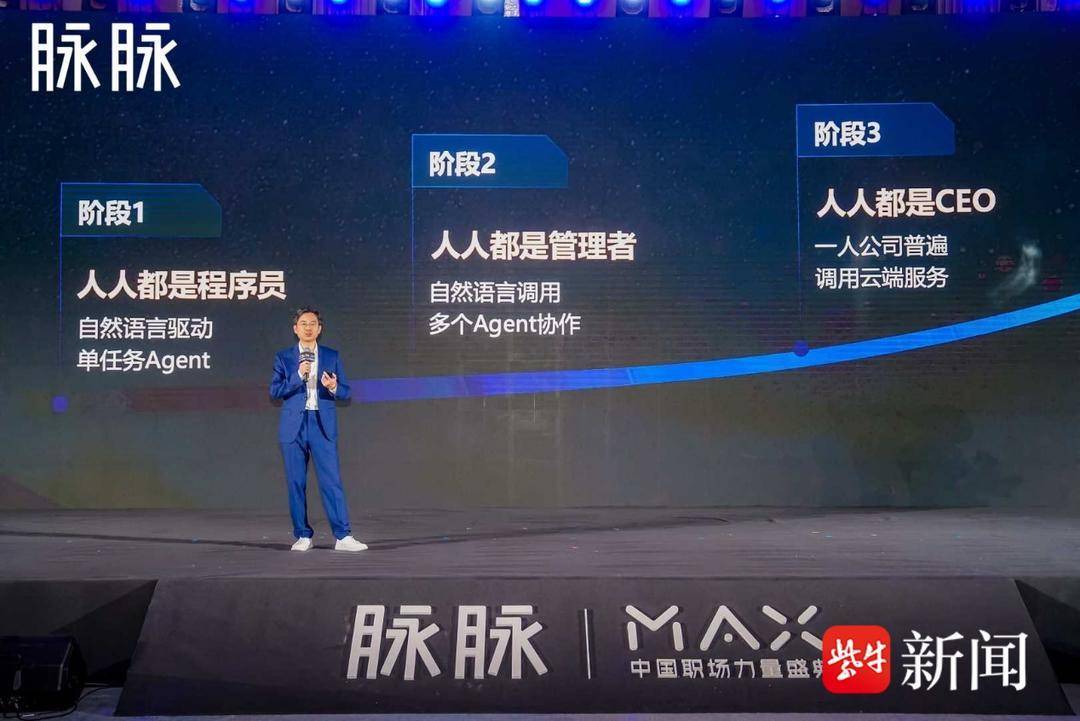
林凡:AI将推动组织从“人人都是程序员”到“人人都是CEO”
Sou Hu Cai Jing· 2025-12-16 10:05
Core Insights - The talent standards in the AI era will shift from selecting individuals with high upper limits of capability to those with high lower limits of capability, as AI can provide superior suggestions but may struggle with basic tasks [4] - The recruitment market is gradually recovering, with new job postings in the new economy sector exceeding the same period last year starting from June 2025 [8] - AI will drive organizations through three evolutionary stages: from "everyone is a programmer" to "everyone is a manager" and finally to "everyone is a CEO" [2][4] Group 1: AI's Impact on Talent and Recruitment - AI will enable at least 20% of work to be completed by AI in the first stage, with employees needing to learn how to decompose tasks for AI execution [2] - By the second stage, 60% to 70% of work will be AI-driven, requiring collaboration between humans and AI agents [2] - The average monthly salary for AI scientists has surpassed 127,000 yuan, indicating a competitive job market for AI talent [8] Group 2: Organizational Changes and Recommendations - Companies should focus on hiring individuals with high lower limits of capability to complement AI's weaknesses, moving away from hiring inexperienced graduates [4] - Organizations are encouraged to implement AI capability assessments in interviews and to allow AI to handle 20% of employees' tasks [4] - The concept of "Agentization" is promoted, where employees can automate their tasks using AI, significantly increasing productivity [7] Group 3: Current Trends and Challenges - 80% of companies are still at a superficial level of AI application, indicating a need for deeper integration and understanding of AI's potential [11] - The recruitment process can be enhanced by using AI tools to quickly screen resumes and improve talent matching [10] - The 2025 MAX Annual "Best Employers" awards recognized over 80 companies, highlighting the competitive landscape for attracting talent in the AI era [13]

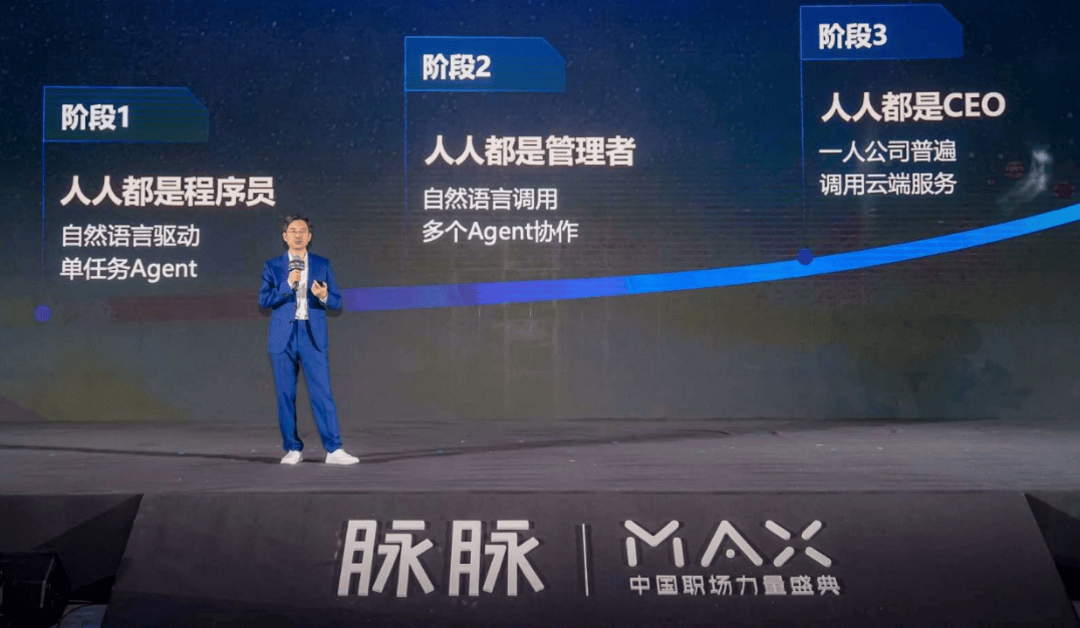
脉脉林凡:AI将推动组织从“人人都是程序员”到“人人都是CEO”
Sou Hu Cai Jing· 2025-12-16 08:33
Core Insights - The evolution of AI Native organizations will progress through three stages: "everyone is a programmer," "everyone is a manager," and "everyone is a CEO" [2] - The talent standard in the AI era will shift from selecting individuals with high upper limits of capability to those with high lower limits of capability [2] Group 1: Recruitment Trends - Since June 2025, the job market has shown signs of recovery, with new job postings in the new economy sector exceeding the same period last year [2] - The proportion of voluntarily resigning talent has increased by 5 percentage points compared to the same period in 2024 [2] - Companies are increasingly favoring experienced candidates over fresh graduates to ensure a higher lower limit of capability [2] Group 2: AI Integration in Work - In the first stage of AI integration, at least 20% of work can be reliably completed by AI, requiring employees to learn how to decompose tasks for AI execution [3] - In the second stage, 60% to 70% of work will be handled by AI, shifting collaboration from human-to-human to human-to-agent interactions [3] - By the third stage, over 95% of work will be completed by AI, leading to a platform-based service model where companies can purchase services as needed [3] Group 3: Organizational Efficiency and AI - Currently, 80% of companies are still at a superficial level of AI application [3] - To evaluate the effectiveness of AI integration, organizations can monitor token consumption in the short term and assess whether 20% of work in various roles is completed by AI in the long term [3] - Key capabilities for AI Native talent include rapid learning of new tools, the ability to discern the accuracy of AI outputs, and the skill to pose the right questions [3] Group 4: Recommendations for Companies - Companies should include an AI competency question in all job interviews, emphasizing the necessity of AI skills for roles like product managers [4] - Employees should delegate 20% of their tasks to AI to enhance productivity [4] - Organizing AI hackathons can help employees experience AI's problem-solving capabilities from scratch, fostering a better understanding of AI within teams [4]
从豆包手机热到银行APP革新:AI Native不是拆旧建新,而是精准升级
Xin Lang Cai Jing· 2025-12-16 06:51
Core Insights - The core value of the Doubao phone lies in the fundamental reconstruction of device interaction logic through AI, rather than mere functional innovation [1][21] - The transition of banking apps to AI Native should focus on practical paths to release intelligent value, balancing security compliance and user experience upgrades [1][21] - AI Native is about reconstructing service processes and interaction experiences with intelligence at the core, applicable to both mobile phones and banking apps [1][21] AI Native Transition in Banking Apps - AI Native is a process reconstruction rather than a functional addition, moving from traditional business processes to AI-driven designs that simplify service efficiency and user experience [5][27] - The banking industry must adapt AI capabilities to fit financial scenarios, avoiding the aggressive models of consumer electronics [3][30] - The Malaysian Ryt Bank serves as a reference, having built a multi-agent AI system that simplifies complex processes into a streamlined user experience [5][28] Human-Machine Collaboration - AI Native does not imply complete AI coverage or replacement of human intervention; it must retain human oversight in high-risk scenarios [7][29] - The collaboration model involves AI handling standard tasks while humans focus on high-risk transactions and complex approvals, ensuring a balance between efficiency and security [7][29] Incremental Upgrades - The transition to AI Native should focus on upgrading existing systems rather than complete overhauls, which can lead to significant costs and risks [30][38] - A mixed approach of upgrading existing systems while innovating new scenarios is recommended to maximize value and minimize risks [30][38] Practical Steps for Implementation - The implementation of AI Native can be achieved through three steps: building an adaptable AI foundation, optimizing core interaction logic, and focusing on high-value scenarios [11][32] - The first step involves creating a secure and efficient AI base that integrates with existing systems [11][33] - The second step focuses on enhancing user experience by transitioning from menu-based to conversational interactions [12][34] - The final step emphasizes exploring high-value scenarios to expand service boundaries and uncover business potential [13][35] Key Safeguards - The transition must prioritize data security and compliance, ensuring user data is stored locally and AI decisions are traceable [15][38] - Cost-effectiveness should be balanced with the need for clear ROI, avoiding unnecessary expenditures [16][39] - User habits must be considered, implementing gradual changes to prevent disruption in user experience [17][40] Conclusion - The shift towards AI Native in banking apps represents a new starting point for smarter, more efficient, and inclusive financial services [19][42] - The banking industry must adopt a pragmatic and precise approach to integrate AI into core operations, ensuring user trust and market stability [19][42]

下一个革新爆点是什么,新一代投资人有何画像?这场年度预测给出答案
证券时报· 2025-12-14 03:23
Core Insights - The next innovation explosion is expected to stem from the integration of multiple technologies, particularly the fusion of artificial intelligence with various disciplines and fields [3] - The Shanghai Future Industry Fund has identified ten future industries, including AI and computing, biomedicine and health, energy and environment, robotics and automation, quantum technology, and blockchain [3] - A new generation of investors, termed "AI Native," is emerging, focusing on scientific and technological entrepreneurship, with a shift from relationship-based to AI-driven investment paradigms [9] Group 1: Innovation and Future Industries - The essence of the next "innovation explosion" is the "multi-technology integration," with AI being a key driver alongside interdisciplinary collaboration [3] - The ten identified future industries include: 1. Artificial Intelligence and Computing 2. Biomedicine and Health 3. Energy and Environment 4. Robotics and Automation 5. Quantum Technology 6. Interdisciplinary and Fusion Fields 7. Information and Communication Technology 8. New Materials and Advanced Manufacturing 9. Aerospace and Space Exploration 10. Blockchain and Distributed Technologies [3] Group 2: Future Talent and Organizational Paradigms - The future talent profile is characterized by individuals from the 90s and 00s, who are AI natives, possessing cross-disciplinary skills and a willingness to challenge traditional norms [7] - Future organizations may evolve into "silicon-based" entities where humans act as AI orchestrators, potentially leading to the rise of "one-person unicorn" companies [7] Group 3: Investment Paradigms - The investment landscape is transitioning from a "relationship-based" model to an "AI-driven ecological" model, with a focus on supporting scientific entrepreneurs [9] - The current entrepreneurial wave is led by scientists and specialized PhDs, marking a shift from previous eras dominated by grassroots entrepreneurs [9] - Investors are encouraged to adopt forward-looking strategies, investing in AI Native young entrepreneurs and fostering an AI investment ecosystem [9]

1亿ARR、21亿估值的新独角兽,Gamma创始人:只比PPT好一点,是活不下去的
Founder Park· 2025-11-15 03:04
Core Insights - Gamma aims to reconstruct PowerPoint rather than create another version of it, focusing on a content-first approach rather than a design-first one [8][10][25] - The company has achieved significant growth, raising $68 million led by a16z, with a valuation of $2.1 billion, despite initial skepticism from investors [3][5] - Gamma has successfully integrated AI into its product, enhancing user experience and engagement, leading to a rapid increase in user base [14][15][16] Group 1: Company Overview - Gamma started with a small team of fewer than 10 people and has become a new unicorn in the PPT space, achieving profitability within two years [5][6] - The founders identified a gap in the market where existing tools were not meeting user needs effectively, leading to the development of a more intuitive and user-friendly platform [8][10] - The company has a user base of 70 million and annual revenue exceeding $100 million, indicating strong market demand and product-market fit [16] Group 2: Product Development and AI Integration - The initial version of Gamma's AI product focused on helping users generate draft content and find suitable images, which significantly improved user engagement [14][15] - The company emphasizes a "human in the loop" approach, balancing AI capabilities with user control to enhance the creative process [16][25] - AI is used to solve common design problems, allowing users to generate multiple design options quickly, which would take much longer manually [19][20] Group 3: Growth Strategy - From the outset, Gamma prioritized growth, embedding it into the company's DNA to ensure long-term success [28][29] - The company has leveraged influencer marketing effectively, with over 50% of new users coming from word-of-mouth referrals [36][37] - Gamma's brand has evolved to become synonymous with AI presentations, aiming to establish itself as a standard in the industry [29][33] Group 4: Team and Culture - The company maintains a small, efficient team, emphasizing careful hiring to ensure alignment with its core values and principles [38][39] - The founders believe in a slow hiring process to build a strong foundational team that can adapt quickly to changes in strategy [39][40] - A high proportion of designers within the team contributes to creating a superior user experience, which is crucial for product success [41][42]
Agnes:不做通用型智能体丨对话全民AI应用平台Agnes AI
量子位· 2025-10-30 08:39
Core Insights - Multi-Agent systems have emerged as a significant trend in the AI field, enhancing the efficiency and effectiveness of AI applications [2][3]. - Agnes AI, a product developed by SapiensAI, has gained traction with over 300 million registered users and 200,000 daily active users within four months of launch [7][6]. Group 1: Agnes AI Features - Agnes AI integrates various functionalities such as Deep Research, Wide Research, AI Design, AI Slides, and AI Sheets, catering to different user needs [8][14]. - Deep Research focuses on in-depth analysis through iterative questioning, while Wide Research utilizes multiple agents to handle large-scale tasks simultaneously [14][16]. - The platform emphasizes user intent understanding and task complexity to optimize the assignment of tasks to agents [15][16]. Group 2: Market Position and User Base - Agnes AI targets young users and professionals, particularly in mobile and web-based work environments, promoting a lightweight approach to productivity [7][41]. - The product aims to replace traditional office tools, offering a free quota for users, which enhances user acquisition and retention [40][56]. - The AI office market is expected to grow significantly, with traditional products facing disruption from AI-native solutions like Agnes [42][44]. Group 3: Competitive Advantages - Agnes AI's multi-agent architecture allows for parallel task execution, improving speed and efficiency compared to single-agent systems [25][27]. - The product's design prioritizes user experience, aiming for rapid response times and high-quality outputs, which are critical in competitive markets [22][36]. - The company focuses on low customer acquisition costs and aims to capture a significant share of users who have yet to engage with AI technologies [50][52]. Group 4: Future Outlook - The AI market is anticipated to evolve rapidly, with Agnes AI positioned to capitalize on the shift towards AI-native applications [42][46]. - The company envisions becoming a leading player in the AI consumer app space, aiming to exceed the capabilities of existing products like ChatGPT and Perplexity [63][64]. - Agnes AI's long-term goal is to enhance accessibility to AI tools globally, particularly in developing regions, thereby expanding its user base [57][66].
a16z 孵化的 28 个项目都是做啥的,一个 Newsletter 2 年如何做到 1000 万美金收入
投资实习所· 2025-10-14 06:21
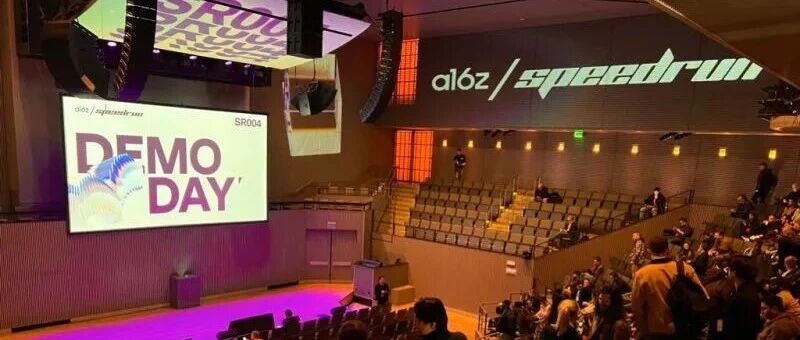
Core Insights - a16z's Speedrun aims to rapidly build AI-native companies, focusing on AI agents and enterprise automation, emphasizing AI as a coworker across various business functions [1][2] Group 1: AI Agents Overview - Seven enterprise-level AI agents were introduced, with four focused on creative and marketing, and four on product and development tools [2] - Key AI agents include Ambiguous AI for team collaboration, Anchr for supply chain management, and Argu for CCTV analysis [3][4] Group 2: Specific AI Agents - **Ambiguous AI**: Designed to function as a collaborative AI colleague [3] - **Anchr**: AI agent for managing food distribution supply chains [3] - **Argu**: AI that monitors and analyzes CCTV footage [3] - **Avenir**: Automates employee benefits management [3] - **Bead AI**: Conducts SOX compliance testing using AI [3] - **Dex**: AI tool for sourcing and recruiting top talent [3] - **Ezra**: AI interviewer for automating initial screening processes [3] - **Clout Kitchen**: AI-driven viral content marketing system [3] Group 3: Infrastructure and Safety - **Sentra**: Functions as an AI alignment officer, providing a unified company memory system to maintain team coherence [4][6] - **Maniac**: Focuses on model-agnostic stability and performance optimization for AI agents, addressing common usability issues [6] Group 4: Market Potential - The demand for AI in recruitment and talent automation is significant, with tools like Dex and Ezra potentially improving efficiency and reducing bias [7] - **OpenSesame**: A tool that allows products to become AI-native in minutes, appealing to a broad customer base [9][10]
组织能力才是 AI 公司真正的壁垒|42章经
42章经· 2025-09-26 08:33
Core Insights - The article discusses the implementation of an AI Native organizational structure within a company, emphasizing the significant efficiency improvements achieved through AI integration in various workflows [3][4][7]. Group 1: AI Integration in Workflows - The company has restructured its development workflow to allow AI to handle most tasks, resulting in a tenfold increase in efficiency, particularly in code review processes [3][4]. - AI tools, such as CodeRabbit, are utilized for code reviews, significantly reducing the time required from days to mere minutes [3][4]. - The company has adopted a mindset where AI is the default executor of tasks, with human intervention only when AI encounters insurmountable challenges [7][8]. Group 2: Talent Requirements - The company identifies three key talent attributes necessary for an AI Native engineering team: being a "Context Provider," a "Fast Learner," and a "Hands-on Builder" [12][14][15]. - Employees must provide context to AI systems to enhance their output, as the effectiveness of AI often depends on the quality of the context provided by humans [12][13]. - Rapid learning and the ability to communicate effectively with AI are crucial, as traditional skill sets may not suffice in an AI-driven environment [14][15]. Group 3: Organizational Structure - The company advocates for a results-oriented division of labor rather than a process-oriented one, allowing teams to address issues across the entire workflow [19][20]. - Engineering teams are central to the organization, responsible for rapid prototyping and iterative development, which contrasts with traditional models that emphasize extensive planning and meetings [22][23]. - Future organizational models may consist of a small number of core partners supported by a larger pool of flexible contractors, reflecting the high value and irreplaceability of individual contributions in an AI Native context [24][25].
2025 智谱 Z DemoDay :24 家值得关注的 AI 创企,看看今年创业都在做什么?
Founder Park· 2025-09-04 04:05
Core Viewpoint - The Z DemoDay showcased 24 early-stage AI projects, marking a shift from "tool revolution" to "intelligent agent revolution" in AI entrepreneurship [6][10]. Group 1: Event Overview - The event was hosted by Xinglian Capital (Z Fund) and ZhiPu Z Plan, featuring 24 AI projects across various sectors including finance, law, embodied intelligence, education, animation, and productivity tools [2][6]. - The event attracted 450 investors and emphasized the importance of diverse innovation elements to increase the probability of breakthroughs in AI entrepreneurship [6][10]. Group 2: Project Highlights - The showcased projects included: - **AmiO Robot**: Focused on intelligent manufacturing solutions [36]. - **Xinyan Weimo**: A platform for dynamic monitoring using AI and advanced microscopy [38]. - **LATIOS.AI**: An agent providing overseas investment intelligence [40]. - **ClipCap**: A video creation agent that streamlines the video production process [43]. - **ComindX**: A personalized cognitive engine for content creation [45]. - **Edison**: An AI video growth agent targeting content creators [48]. - **Fortunetell AI**: Offers decision support based on traditional wisdom and AI [50]. - **iOffer**: An AI-driven study abroad application assistant [53]. - **Jing Tong Technology**: A platform for AI knowledge management [55]. - **Lovpen**: An AI agent for content creation tailored for KOLs [58]. - **PowerLaw**: A legal tech company providing AI-driven contract solutions [61]. - **Mob.AI**: Focused on creating engaging virtual experiences [63]. - **Perle**: An entertainment tech company leveraging AI for content creation [65]. - **Singularity**: An AI hardware company for children's education [68]. - **Qujing Technology**: A pioneer in model inference acceleration [71]. - **Tian Da Zhi Tu**: A knowledge base for traditional Chinese medicine [74]. - **Xing Po Yun Miao**: An AI animation production platform [76]. - **BeingBeyond**: A company focused on embodied intelligence [79]. - **6E**: A GenAI solution provider in Southeast Asia [83]. - **LemonAI**: A self-evolving AI agent [85]. - **Mingzhi AI**: An AI-native company focused on enterprise applications [87]. - **Prismer**: A research platform for elite researchers [97]. - **Shen Yuan Zhi Yao**: A biotech company focused on AI-driven drug development [98]. Group 3: Innovation and Collaboration - The event highlighted the importance of creativity in AI, showcasing how AI can serve as a catalyst for human imagination and innovation [27][30]. - The collaboration between Z Plan and Xinglian Capital aims to build an "AI creativity symbiosis network," providing entrepreneurs with technological empowerment and capital acceleration [30].
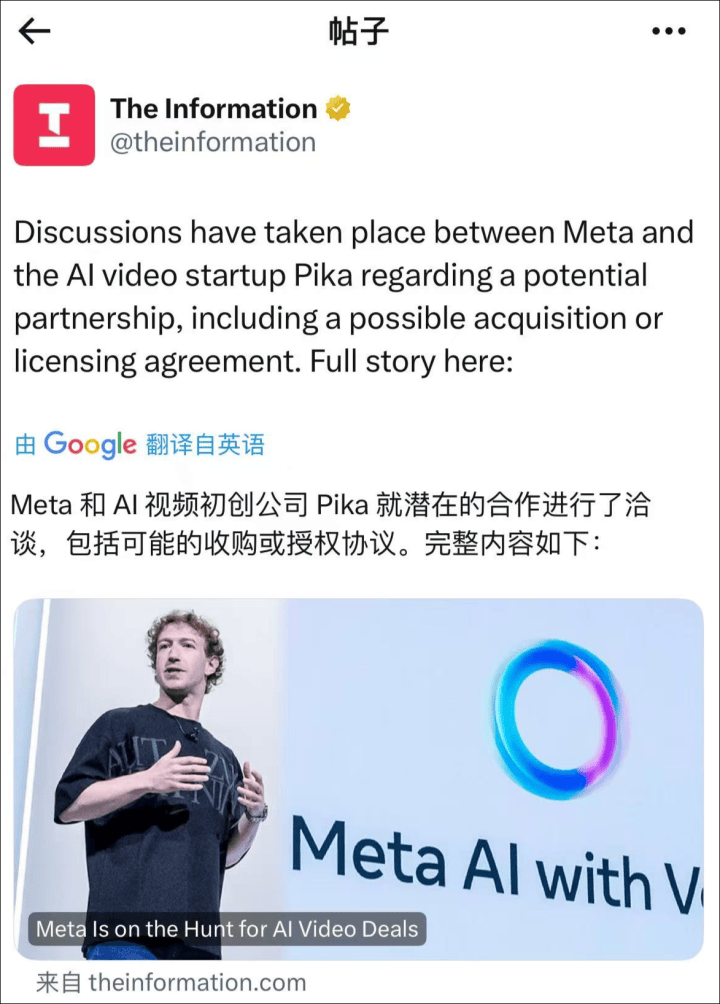
杭州“天才少女”公司被扎克伯格盯上了?
Sou Hu Cai Jing· 2025-08-05 09:29
Core Viewpoint - Meta is in discussions to potentially acquire Pika, an AI video startup founded by Stanford graduate Guo Wenjing, to enhance its capabilities in the multimodal field [1][3]. Company Overview - Pika, founded a year and a half ago, has achieved a valuation exceeding $500 million, making it one of the early entrants in the AI-generated video space [3][6]. - The company launched its AI video generation tool, Pika 1.0, on November 29, 2023, allowing users to create and edit various styles of videos with ease, which gained significant attention on social media and in the tech community [3][5]. Financial Milestones - Pika secured $55 million in funding in April 2024, with a valuation of $250 million, and by April 2025, it raised a total of $135 million, increasing its valuation to over $500 million [6]. Meta's Acquisition Strategy - Meta has been actively recruiting top AI talent globally, often opting to acquire entire teams rather than individual hires, as seen in their $14.8 billion acquisition of a stake in Scale AI [7][10]. - The company aims to build a "super intelligence lab" by attracting leading figures from various tech backgrounds, including those from OpenAI and Google [10][11]. Industry Context - The current AI-driven productivity revolution is perceived as a critical moment for tech giants, with Meta's founder, Mark Zuckerberg, leading the charge to ensure the company remains competitive against emerging AI startups [12][13]. - The competition between traditional internet giants and AI startups is intensifying, with the need for companies to develop an "AI Native" organizational structure to keep pace with rapid innovation [13].