
ROI

Search documents
申万宏源2026年美股投资策略:AI行情进入“换挡期” 悲观情形下下半年面临估值回撤风险
Zhi Tong Cai Jing· 2025-11-19 22:53
Core Viewpoint - The report from Shenwan Hongyuan indicates that under a neutral assumption, the risks associated with AI soft constraints by 2026 are manageable, with a focus on whether the penetration rate of B-end enterprises can improve and whether cash flow remains stable. Companies in the US stock market with relatively stable expansion are worth monitoring. However, hard constraints, particularly regarding power supply for computing infrastructure, will become more pronounced, necessitating higher verification requirements for ROI [1][2]. Group 1: Market Trends and AI Investment - Since 2023, the current AI market in the US has been ongoing for three years, primarily focusing on valuation increases and widespread performance in AI infrastructure and applications [2]. - The AI-related industries (technology, communication) are expected to contribute limited valuation in 2025, with increased reliance on debt financing amid unclear ROI for AI investments [2]. - Concerns about an "AI bubble" stem from the gap between the time required for new technologies to generate economic scale effects and the optimistic expectations of capital market returns [3]. Group 2: Constraints and Adjustments - Hard constraints often lead to periodic adjustments in the AI sector, with the "Buy the Dip" strategy still showing effectiveness in the US stock market. Adjustments have been triggered by macro liquidity tightening and concerns over computing power, algorithms, and electricity [4]. - The report outlines that the AI sector has faced multiple adjustments since 2023, with each decline exceeding 10% and lasting over a month, influenced by factors such as liquidity tightening and supply shocks [4]. Group 3: ROI and Financial Metrics - The report emphasizes that the ROI for AI investments is sensitive to GPU depreciation, with rising debt financing costs posing tail risks. The total AI investment commitment projected by Trump for 2025 is approximately $3.8 trillion, aimed to be completed by 2028 [6][7]. - Current AI penetration in US enterprises is around 10%, with higher rates in information-intensive sectors, expected to rise to over 30% in the next six months [6]. - The report highlights that the profitability of AI applications varies, with B-end applications showing higher margins compared to C-end applications, which generally have negative margins [6]. Group 4: Debt and Liquidity Risks - The overall debt pressure on AI infrastructure is manageable, but significant differentiation among companies is expected by the second half of 2025. Long-term debt levels related to AI hardware have been gradually increasing, with a decline in the free cash flow to debt ratio [7][8]. - The report warns that in a tightening liquidity environment, the probability of debt risks increases, particularly for companies with lower asset quality [8]. - The current static PE ratio for the US stock market is 28x, with historical data indicating a low success rate for holding stocks at this valuation over three years [10].





X @Forbes
Forbes· 2025-11-18 16:50
"You need to think about your environment and what partners are there to help you optimize so you get the best ROI."Phillip Guido, Chief Commercial Officer at @AMD, spoke about strategic partnerships at the 2025 #ForbesCIO Summit in New York City. https://t.co/tSdVcE6Xvo https://t.co/wEeCSxyjUt ...

Why generative AI went from risk to business imperative at U.S. companies
Fortune· 2025-11-18 13:34
Core Insights - Generative AI has transitioned from being viewed as a curiosity to a critical component for Fortune 500 companies, with a significant acceleration in adoption expected as 2026 approaches [1][2]. Group 1: Adoption and Investment - 88% of senior leaders in U.S. companies with over $50 million in annual revenue anticipate increasing generative AI investment in the next year, with 62% expecting budget increases of more than 10% within two to five years [3]. - The usage of generative AI has surged, with 82% of senior leaders now using it weekly, up from 37% in 2023, and 46% reporting daily use [5]. Group 2: Perceived Returns and Metrics - Nearly 75% of respondents track ROI through metrics like profitability and productivity, with 80% expecting positive returns within two to three years [6]. - However, the ROI assessments are based on self-reported data rather than concrete evidence, indicating a need for improved measurement of success [8]. Group 3: Challenges and Skill Gaps - A significant barrier to effective generative AI implementation is the skill gap, with 43% of leaders warning of "skill atrophy" and emphasizing the need for better AI training programs [10]. - Larger enterprises are experiencing slower progress due to complex integrations, while smaller firms report quicker advancements [7]. Group 4: Market Outlook - As generative AI becomes a focal point for Wall Street, the emphasis is shifting towards how companies can develop the necessary skills, systems, and governance to harness its value [11].



X @TylerD 🧙♂️
TylerD 🧙♂️· 2025-11-16 19:50
Bitcoin has a 50% 1-year roi after death crosses in the past ten yearsSubu Trade (@SubuTrade):@intocryptoverse Here's what Bitcoin did after historical Death Crosses https://t.co/BmuWX4Sqbf ...
科网股集体走低 拖累恒科指数跌近3% 机构称科技股高估值担忧持续发酵
Zhi Tong Cai Jing· 2025-11-14 07:22
Group 1 - The core viewpoint of the article highlights a decline in technology stocks, with the Hang Seng Tech Index dropping nearly 3% due to concerns over high valuations and changing interest rate expectations [1] - Alibaba's stock fell by 4.44% to HKD 154.7, while Tencent's stock decreased by 1.75% to HKD 644.5, reflecting the broader market trend [1] - The Federal Reserve officials expressed hawkish sentiments, raising concerns about inflation uncertainty and adopting a cautious stance on future interest rate cuts, leading to a decrease in the market's expectation for a rate cut in December to below 50% [1] Group 2 - According to a report from CMB International, the decline in expectations for a December rate cut has intensified investor concerns regarding the high valuations of technology stocks [1] - Guosen Securities noted that as major US companies release their Q3 earnings, the impact of AI on advertising, cloud computing, and corporate efficiency remains significant, with companies continuing to invest actively [1] - However, the market is increasingly focusing on the return on investment (ROI) behind substantial capital expenditures (CAPEX) [1] - Additionally, Ant Group's investment in Yao Cai has not met completion conditions, which may extend the final deadline [1]


AI Bubble 深度讨论:万亿美元 CapEx,Dark GPU,广告电商如何带飞 AI|Best Ideas
海外独角兽· 2025-11-14 06:54
Core Viewpoint - The article discusses the current state of the AI bubble, drawing parallels to the past tech bubbles, particularly the fiber optics bubble, and emphasizes the need for a rational understanding of AI investments and their long-term potential [4][5]. Group 1: OpenAI's CapEx and Market Implications - OpenAI's proposed $1.4 trillion CapEx for establishing approximately 30GW of computing resources raises significant questions about its feasibility and the broader implications for the AI market [5][10]. - The projected revenue target of $100 billion by 2027 suggests an unprecedented monetization speed, which may not align with traditional internet product metrics [8]. - OpenAI may need to secure $1.2 trillion in financing to cover the CapEx gap, which is deemed unfeasible given the current cash flow situation of major tech companies [10][11]. Group 2: CapEx Trends Among Major Tech Companies - The "Mag 7" companies have significantly increased their CapEx since 2023, with many showing improved Return on Invested Capital (ROIC) [13]. - The average CapEx to cash flow ratio for S&P 500 companies has decreased from 70-80% in the 1990s to about 46% today, indicating stronger profitability despite increased CapEx [16]. - Major tech firms currently generate approximately $500 billion in free cash flow annually, providing a buffer for ongoing investments [16]. Group 3: Computing Power Demand and Future Projections - Nvidia's projected orders for the next five quarters could reach $500 billion, indicating a doubling of demand compared to recent revenue figures [24]. - The ongoing competition in model development necessitates continued investment in computing power, with firms like Meta and xAI needing to catch up with leading labs [26]. - The demand for inference computing is expected to grow as AI applications become more validated and integrated into workflows, potentially leading to a significant increase in usage [30]. Group 4: AI Market Dynamics and Growth Potential - The AI market is still in its early stages, with significant room for growth in user adoption and application [41]. - Current AI penetration rates in the U.S. are around 40%, with potential for substantial growth as technology becomes more widely accepted [43]. - The commercial viability of AI products is being tested, with various business models emerging, including subscription and usage-based pricing [46][47]. Group 5: Risks and Future Developments - The potential for a "black swan" event exists if a new model mechanism emerges that significantly reduces costs and disrupts existing technologies [51]. - The current trajectory of AI development is seen as stable, with ongoing advancements in transformer models and reinforcement learning [52]. - Market perceptions of AI's value may fluctuate, particularly as companies approach significant milestones or face challenges in meeting revenue expectations [57].

X @Wu Blockchain
Wu Blockchain· 2025-11-13 13:39
According to @defioasis' data, Binance Wallet IDO led token launch platforms over the past 3 months with an 11x current ROI and 33.04x ATH ROI. MetaDAO, Echo, Buildpad, and CakePad formed a second tier—all with ATH ROIs near or above 10x, though current returns diverged sharply: MetaDAO and Echo ranked second and third, while CakePad and Buildpad placed near the bottom. Coinlist recorded the lowest current ROI. https://t.co/9Ob5Z5a4qo ...
X @TechCrunch
TechCrunch· 2025-11-13 12:01
Funding - Milestone 完成 10 million 美元融资,旨在确保 AI 与 ROI 相符 [1]
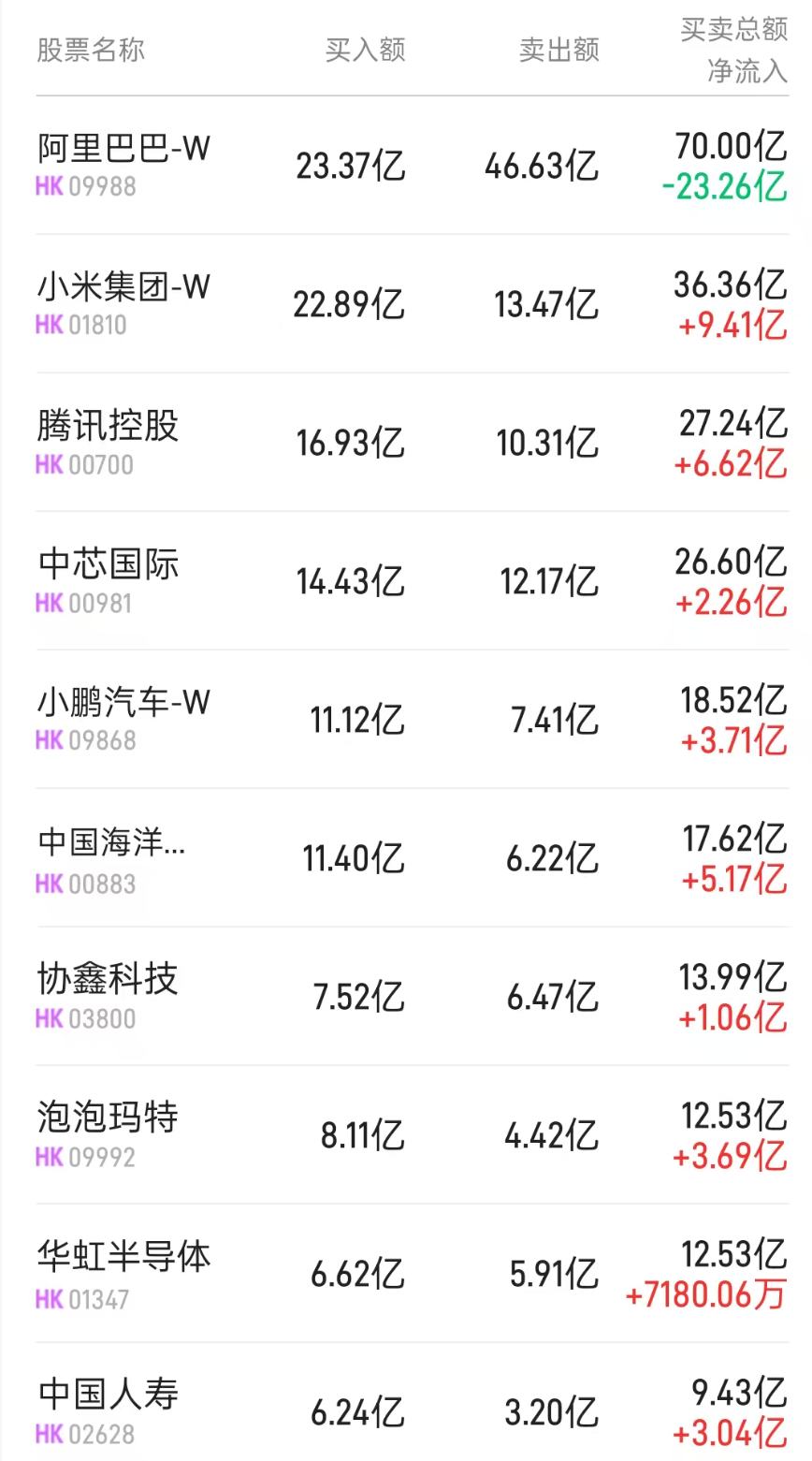
北水动向|北水成交净买入42.86亿 北水抢筹小米(01810)近16亿港元 抛售阿里巴巴(09988)超34亿
智通财经网· 2025-11-12 09:59
Core Viewpoint - The Hong Kong stock market experienced significant net inflows from northbound trading, with a total net buy of HKD 42.86 billion on November 12, 2023, indicating strong investor interest in certain stocks while others faced notable sell-offs [1]. Group 1: Net Buying and Selling Activities - The top net bought stocks included Xiaomi Group-W (01810), Xpeng Motors-W (09868), and Pop Mart (09992) [1]. - The stocks with the highest net selling included Alibaba-W (09988), Hua Hong Semiconductor (01347), and SMIC (00981) [1]. - Xiaomi Group-W saw a net buy of HKD 15.91 billion, attributed to positive reports on its manufacturing capabilities [4]. - Xpeng Motors-W received a net buy of HKD 7.17 billion, with an upgraded target price reflecting growth potential from new product launches [5]. - Pop Mart (09992) had a net buy of HKD 6.3 billion, supported by optimistic growth forecasts from analysts [5]. Group 2: Individual Stock Performance - Alibaba-W faced a net sell of HKD 34.33 billion, with concerns over its advertising and investment returns amid rising CAPEX [7]. - SMIC and Hua Hong Semiconductor experienced net sells of HKD 4.27 billion and HKD 9.84 billion, respectively, with analysts adjusting their ratings based on profit forecasts [7]. - China Life (02628) and Tencent (00700) recorded net buys of HKD 3.03 billion and HKD 1.57 billion, respectively, indicating continued investor confidence in these companies [7]. Group 3: Market Context and Analyst Insights - Analysts from Goldman Sachs and Morgan Stanley provided positive outlooks for Xiaomi and Xpeng, respectively, highlighting their operational improvements and growth strategies [4][5]. - The geopolitical situation in South America and OPEC+ decisions are influencing oil prices, which may impact companies like CNOOC (00883) that saw a net buy of HKD 4.11 billion [5]. - The solar industry remains under scrutiny, with recent statements from industry associations aiming to dispel negative rumors affecting companies like GCL-Poly Energy (03800) [6].

年底企业预算,数字化与AI投入多少算合理?
3 6 Ke· 2025-11-10 00:46
Core Insights - The article discusses the challenges companies face in determining reasonable investments in digitalization and AI amidst a digital wave and AI technology explosion [1] - There is a significant gap between the ideal and the reality of AI application in enterprises, with varying levels of AI adoption across industries [2] - Companies are increasingly focused on ROI when considering AI investments, with private enterprises being particularly pragmatic [2][3] - The article outlines four key dimensions for determining reasonable digitalization budgets, emphasizing the importance of aligning investments with strategic goals and industry characteristics [4][5] Group 1: AI Application Landscape - AI application is primarily seen in internal knowledge base queries and intelligent customer service, with many companies focusing on cost-saving tasks [3] - The high costs associated with building large AI models deter most companies, complicating ROI calculations [3] - Common challenges in AI implementation include poor departmental collaboration, unclear strategies, and low data quality [3] Group 2: Digitalization Budgeting - Companies often experience a divide in digitalization budgeting, with IT departments seeking unlimited budgets while leadership prefers cost-saving measures [4] - Digitalization investments should be based on strategic goals, industry characteristics, maturity levels, and pressing pain points [5][6] - The investment ratio varies by industry, with tech-driven sectors typically investing over 5%, while traditional sectors may limit investments to 2%-4% [5] Group 3: CIO's Evolving Role - CIOs must transition from being technical experts to business partners to secure necessary budgets for digitalization [7] - The essence of digital investment lies in its commercial return, requiring CIOs to articulate the business value of technology investments [7] - Companies should start with addressing the most pressing business issues and validate value through small-scale implementations [7] Group 4: Future Outlook - The article concludes that companies must maintain clarity in their digitalization and AI investments, ensuring that every dollar spent contributes to measurable business growth [8] - The success of digitalization and AI initiatives hinges on the ability to connect technology investments with business value [8]