自研芯片

Search documents
小米YU7发布!雷军:19.9万元是不可能的
Zheng Quan Shi Bao· 2025-05-22 15:20
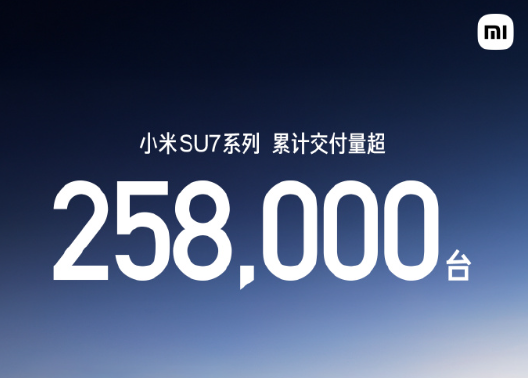
Core Insights - Xiaomi launched its first SUV model, the Xiaomi YU7, during its 15th anniversary strategic product launch event, alongside its self-developed chip, the Xuanjie O1 [1][3] - The company has delivered a total of 258,000 units of the SU7 series, with over 28,000 units delivered in April alone [1][3] Product Features - The Xiaomi YU7 boasts a maximum power of 690 PS, a 0-100 km/h acceleration time of 3.23 seconds, and a top speed of 253 km/h, equipped with the V6s Plus Xiaomi Super Motor [3] - The YU7 is positioned as a "luxury high-performance SUV" with features such as a standard range of 835 km, a panoramic display, 700 TOPS of auxiliary driving computing power, and laser radar [3][5] - The vehicle includes an 800V silicon carbide high-voltage platform, making it the leader in range among mid-to-large pure electric SUVs, with a maximum range of 835 km and a rapid charging capability of 620 km in just 15 minutes [5] Safety and Technology - The YU7 features an upgraded "armor cage" steel-aluminum hybrid body, utilizing 2200 MPa Xiaomi super steel for enhanced strength and safety, meeting all collision standards [5] - The vehicle is equipped with a fourth-generation Snapdragon 8 mobile platform and a new generation NVIDIA Thor vehicle computing platform, achieving a maximum computing power of 700 TOPS for improved driving assistance [5][6] Market Potential and Forecast - Analysts predict that the SUV market segment priced between 200,000 to 300,000 yuan is larger than the sedan market, with the potential for significant demand for the YU7 [6] - The company anticipates delivering 137,000 units in 2024, with projections of 389,000 and 573,000 units in 2025 and 2026, respectively, as new models like the YU7 are introduced [6] - Xiaomi's automotive business is expected to achieve profitability by Q3 2025, with a full-year turnaround anticipated in 2025 [6]


小米芯片、首款SUV发布!雷军:YU7价格19万9不可能
Sou Hu Cai Jing· 2025-05-22 14:56
Group 1: Core Insights - Xiaomi's founder Lei Jun emphasized the necessity of chip development for the company to become a hardcore technology firm, describing it as a critical challenge that cannot be avoided [3] - The newly launched Xiaomi玄戒O1 chip features a 3nm process, 19 billion transistors, and a compact size of 109mm², with performance scores exceeding 3 million in laboratory tests [5][8] - Xiaomi has committed to a long-term investment plan of at least 50 billion yuan over ten years for chip development, with a projected R&D investment of over 60 billion yuan in 2025 [8] Group 2: Product Launches - The Xiaomi 15 SPro, the first smartphone equipped with the玄戒O1 chip, is priced starting at 5499 yuan, while the Xiaomi Pad 7 Ultra also features the same chip, starting at 5699 yuan [5][7] - The first SUV model, YU7, was unveiled, featuring three variants with a maximum power of 690ps and a top speed of 253 km/h, along with a leading range of 835 kilometers among mid-to-large SUVs [11] - The YU7 is expected to be priced around 300,000 yuan, with a launch scheduled for July, and will include advanced driving training for owners [13]
雷军发布自研大芯片,小米手机告别「组装厂」
Sou Hu Cai Jing· 2025-05-22 14:08
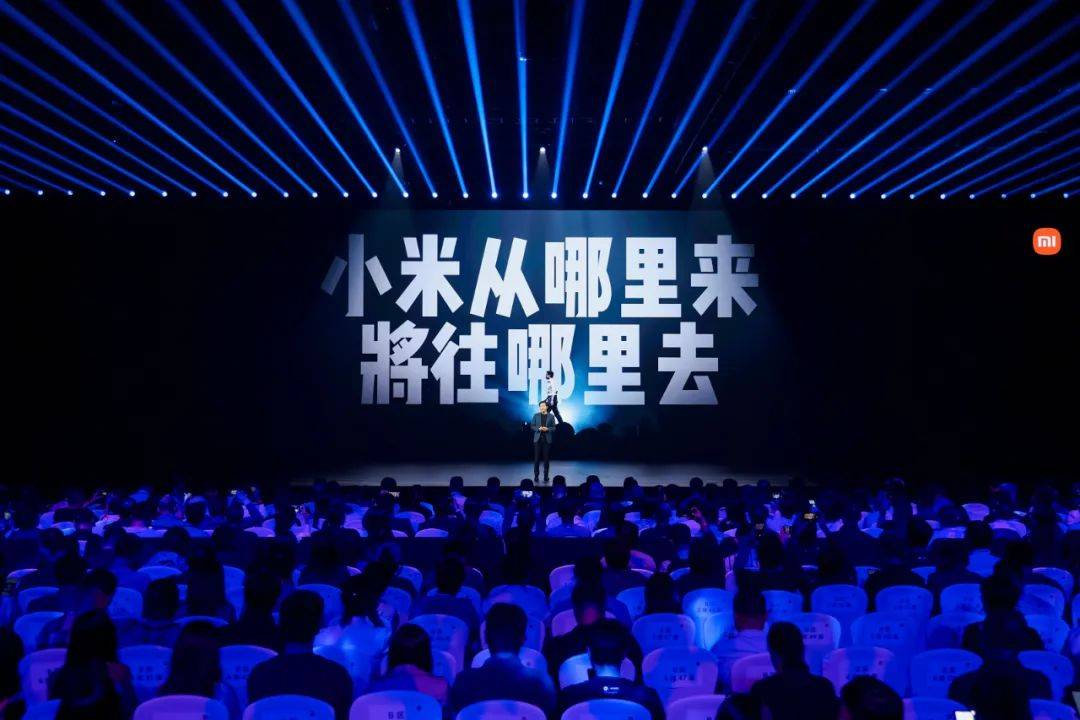
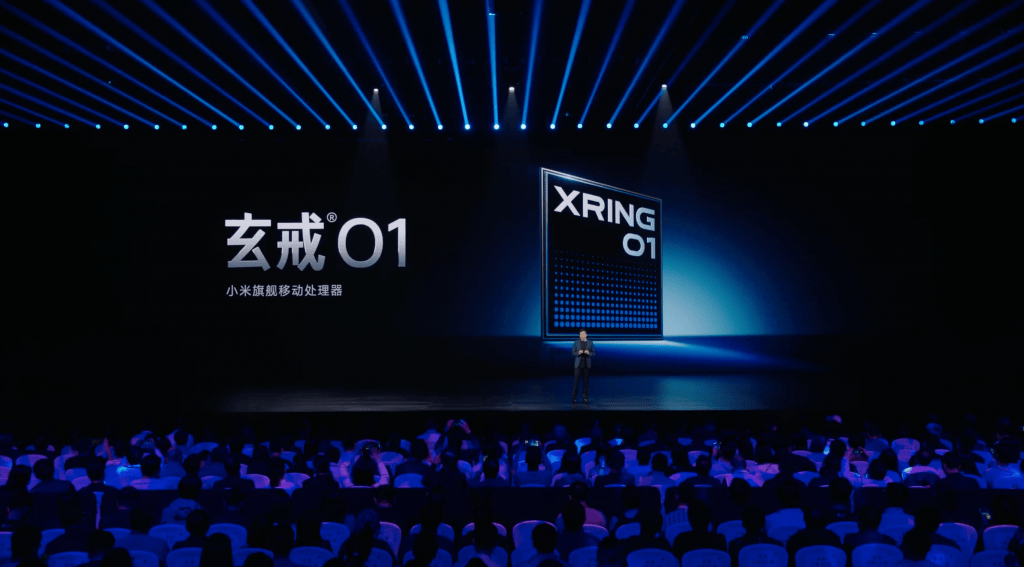
Core Insights - The main focus of the event was the launch of the Xiaomi 15S Pro smartphone and the YU7 car, marking Xiaomi's 15th anniversary and its transition into a "hard tech" company with the introduction of the self-developed chip, the玄戒O1 [2][19] - The玄戒O1 chip is designed to compete with high-end chips like Qualcomm's Snapdragon 8 Elite and Apple's A18 Pro, showcasing Xiaomi's ambition to achieve flagship performance [4][10] Chip Performance - The玄戒O1 chip scored 3,004,137 points in benchmark tests, indicating strong performance capabilities [6] - It features a deca-core architecture with 2 super-large cores, 4 large cores, 2 small cores, and 2 super-small cores, along with a 16-core GPU [8] - In terms of CPU performance, the玄戒O1 lags slightly behind the A18 Pro in single-core performance but surpasses it in multi-core performance [10] - The GPU performance of the玄戒O1 is significantly better than that of the A18 Pro, with a 35% lower power consumption [11] Development and Investment - Xiaomi has invested over 13.5 billion RMB in the玄戒 chip since restarting its chip program in 2021, with plans to invest 200 billion RMB in R&D over the next decade [16] - The company aims to sell 10 million units of the玄戒 chip within one to two years, despite acknowledging that this may initially be a "money-losing business" [16] Future Prospects - Xiaomi's玄戒 chip will not completely replace Qualcomm's chips in its flagship devices, as the company plans to continue its long-term partnership with Qualcomm [21] - The introduction of the玄戒 chip provides Xiaomi with more options and reduces its dependency on Qualcomm, allowing for greater flexibility in product offerings [23] - The development of the玄戒 chip signifies a shift towards self-reliance in core technologies, aligning with the broader trend of increasing domestic technological capabilities in China [24]
小米玄戒O1,五个争议问题与解释
远川研究所· 2025-05-22 13:24
以下文章来源于远川科技评论 ,作者何律衡 远川科技评论 . 不罗嗦了,直接进入主题: 为了这颗芯片,苹果请来了传奇芯片架构师Jim Keller、IBM顶级工程师Johny Srouji,以及通过收购PA Semi吸 纳的"大D哥"Daniel Dobberpuhl(领导了Alpha和StronARM项目)等一众硅谷芯片设计顶级人才。 刻画这个时代(的前沿科技) 问题一:玄戒O1是不是国产芯片? 这个问题可以换成另一个问题: 苹果 大名鼎鼎的A系列 SoC , 算不算 " 美国芯片 " ? 作为当下同行对标与学习的对象,苹果A系列的开山之作A4芯片,在十五年前的初次登场其实算不上体面。 超过1个小时的发布会上,A4芯片在PPT上的停留时间加起来不到20秒。产业界对A4普遍持"套壳三星"的嘲讽 态度,但这已经是苹果最大限度资源投入的结果。 随后,苹果又收购了一家做主频加速的芯片设计公司Intrinsity,这也是A4被认为和三星S5PC110"同父异母"的 原因——三星采用了Intrinsity的技术开发了S5PC110芯片,搭载后者的三星Galaxy S大卖特卖,是iPhone的头号 竞争者。 而投入重金招兵 ...


刚刚,小米玄戒芯片发布!性能反超iPhone最强芯片,雷军:面对这一仗,我们别无选择
Sou Hu Cai Jing· 2025-05-22 13:00
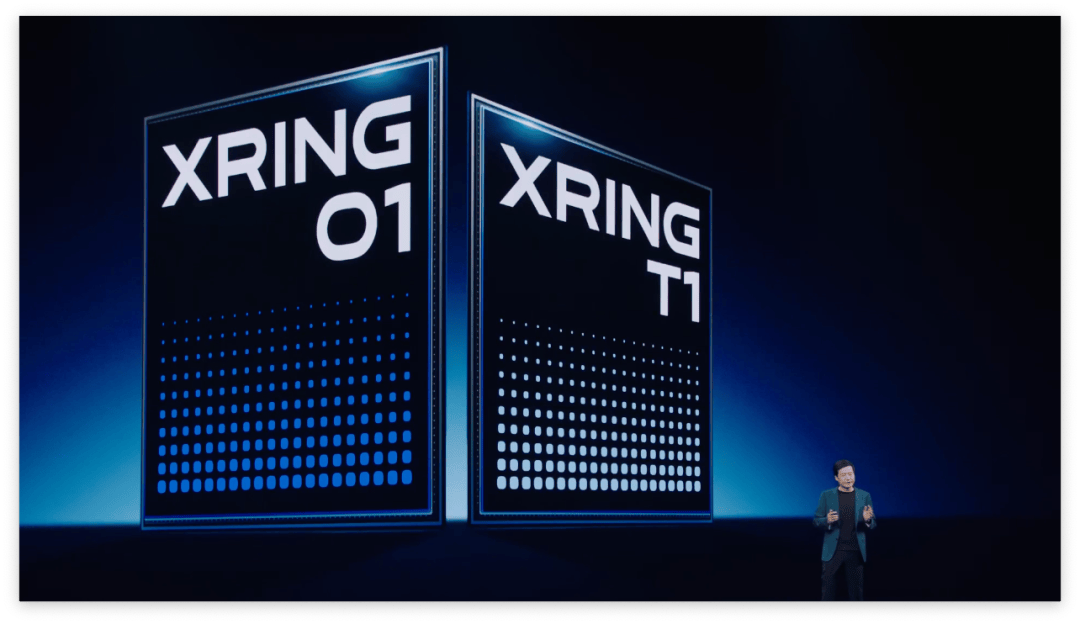
Core Insights - Xiaomi has officially launched two new chips, the Xuanjie O1 and T1, along with three products, marking a significant advancement in their chip technology [2][4] - The Xuanjie O1 chip is set to be used in the Xiaomi 15S Pro and Xiaomi Pad 7 Ultra, utilizing a second-generation 3nm process and achieving a benchmark score exceeding 3 million [2][3] - Xiaomi claims that the Xuanjie O1 outperforms Apple's A18 Pro chip in multi-core CPU and GPU performance, while also maintaining lower temperatures during various usage scenarios [3] Investment and Development - Xiaomi has invested 13.5 billion RMB (approximately 1.9 billion USD) over four years in the development of its self-researched chips, with plans to invest at least 50 billion RMB (approximately 7 billion USD) over the next decade [4] - Future R&D investments are projected to reach 200 billion RMB (approximately 28 billion USD), indicating a strong commitment to advancing their chip technology [4] Strategic Positioning - CEO Lei Jun emphasized the critical nature of the chip development battle, stating that the company has no alternative but to succeed in this area [5]
雷军正式宣布:玄戒O1跑分第一梯队,安兔兔成绩超300万!
Sou Hu Cai Jing· 2025-05-22 12:37
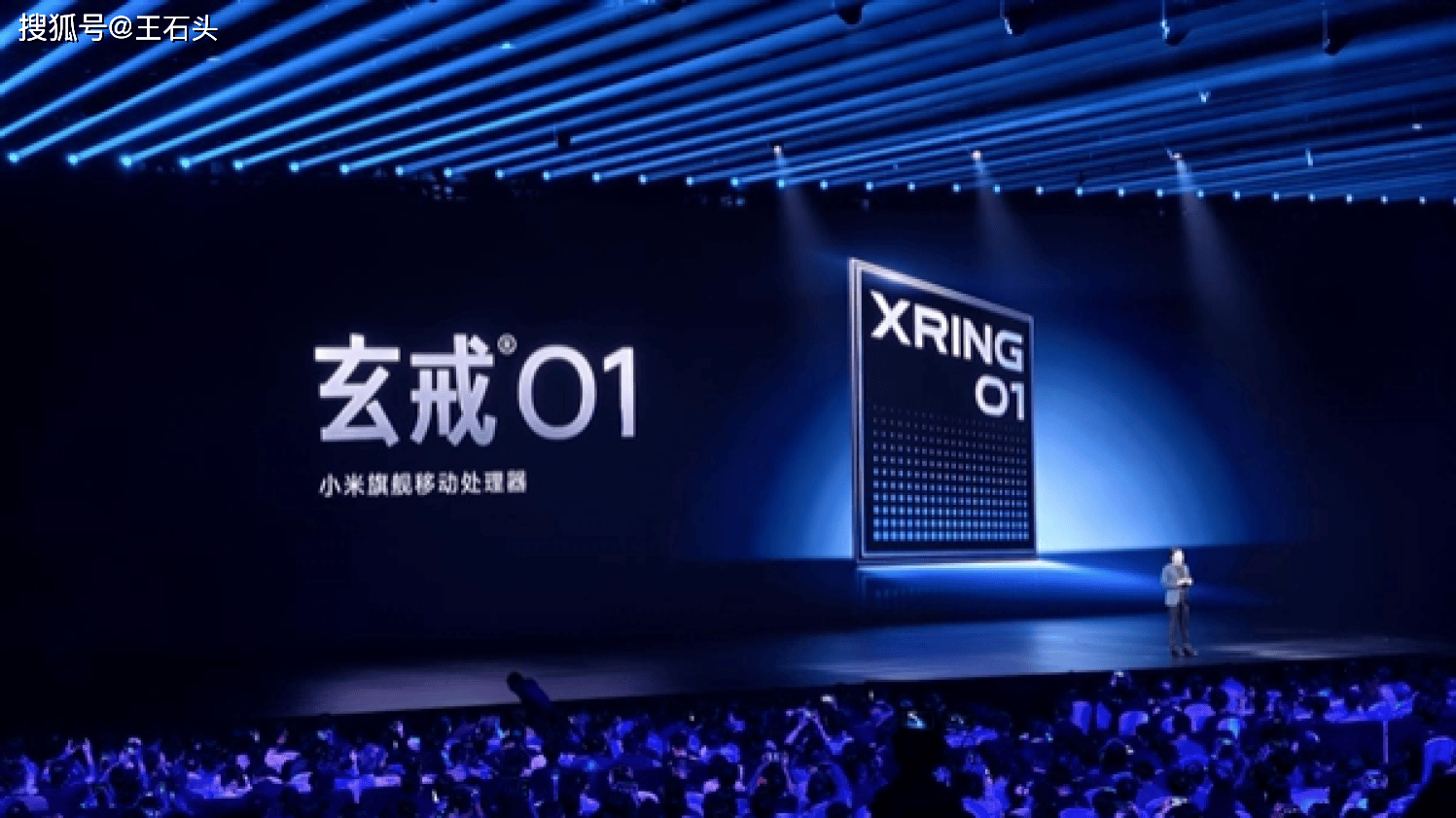
Core Insights - Xiaomi has launched its new self-developed mobile SoC chip, Xuanjie O1, marking a significant return after an 8-year hiatus since the release of the Surge S1 in 2017 [1][3] - The development of Xuanjie O1 was a 4-year project aimed at competing with Apple, showcasing Xiaomi's commitment to high-end market penetration [3][10] Technical Specifications - Xuanjie O1 utilizes TSMC's second-generation 3nm technology, featuring 19 billion transistors and a chip area of only 109mm², significantly improving energy efficiency [3] - The CPU architecture is innovative, employing a "2+4+2+2" ten-core design, balancing high performance and low power consumption [3] - The GPU consists of a 16-core design with the latest Immortalis-G925, incorporating dynamic performance scheduling to reduce power consumption while enhancing graphics performance [3] Performance Metrics - The Xuanjie O1 achieved an AnTuTu score exceeding 3 million, placing it in the first tier, although it still lags behind top-tier chips [5] - GeekBench scores show a single-core score of 3008, approximately 15% lower than Apple's, while the multi-core score of 9509 surpasses Apple's by about 9% [5][6] Investment and Development - Xiaomi has invested over 13.5 billion RMB in the development of its chip technology, with a team of over 2500 people, and plans to invest over 6 billion RMB in 2025 alone, aiming for a total investment of at least 50 billion RMB over ten years [6][10] - The Xuanjie O1 chip is featured in Xiaomi's latest flagship models, the Xiaomi 15S Pro and Xiaomi Pad 7 Ultra, indicating a strategic shift towards high-end devices [6][10] Product Pricing and Market Strategy - The Xiaomi 15S Pro is priced at 5499 RMB for the 16GB+512GB version and 5999 RMB for the 16GB+1TB version, while the Xiaomi Pad 7 Ultra ranges from 5699 RMB to 7399 RMB depending on the configuration [8] - The launch of Xuanjie O1 signifies Xiaomi's determination to challenge the high-end market, moving beyond mid-range applications seen with the Surge S1 [10]
锦好医疗(872925) - 投资者关系活动记录表
2025-05-22 11:50
Group 1: Company Certifications and Capabilities - The company has obtained multiple certifications including FDA510(k), EU MDR, ISO9001, ISO13485, and others, enabling it to meet global market entry requirements [5] - The company holds a medical device production license and registration certificate, ensuring compliance with industry standards [5] Group 2: Cost Control Measures - Current cost control measures include self-developed chip applications, production process optimization, and efficiency improvements [6] - Future plans to reduce costs involve assimilating technology from the acquisition of Intricon, promoting modular product design, and implementing budget control [6] Group 3: Competitive Advantages and Strategies - The company has established a vertical layout in the hearing aid industry, focusing on chip design, algorithm research, and channel development [7] - The technical team has mastered core technologies such as DSP digital hearing aid chip design and sound processing algorithms, providing a competitive edge [7] Group 4: Financial Performance and Growth - In 2024, the company experienced a 49% decline in profit due to increased sales expenses from expanding its own brand channels [8] - The first quarter of the current year showed significant growth in self-owned brand sales revenue, indicating early success from the previous year's channel expansion [8] Group 5: Research and Development Plans - The company plans to maintain reasonable R&D investment intensity based on project progress [9] - There are plans to enhance operational efficiency in offline stores and adapt to market changes for store expansion [9] Group 6: Customer Base and Order Acquisition - The customer base has expanded to include new overseas supermarket channels for self-owned brands, while new order acquisition remains stable [10] - The company continues to focus on its existing B-end customer base while integrating new clients [10] Group 7: Core Business Advantages - The establishment of the subsidiary Chip Sea Ling in 2020 has enabled the development of self-researched DSP digital hearing aid chips, which significantly reduce manufacturing costs [11] - The company has achieved mass production of its first-generation self-developed chip, with approximately 780,000 units integrated into products [12]
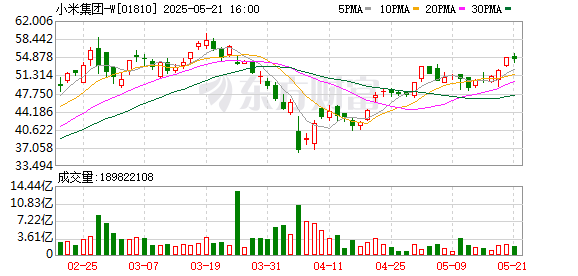
小米集团-W:小米战略新品发布会前瞻——小米集团点评报告-20250522
ZHESHANG SECURITIES· 2025-05-22 10:35
Investment Rating - The investment rating for the company is "Buy" [2] Core Insights - The upcoming product launch will feature the SoC chip "Xuanjie o1," making the company the fourth globally to release a self-developed 3nm mobile chip, following Apple, Qualcomm, and MediaTek. The company has invested over 13.5 billion RMB in R&D for this chip as of April 2025, with a projected investment of over 6 billion RMB for the year [1][2] - The launch of the Xiaomi 15S Pro, equipped with the Xuanjie o1 chip, is expected to enhance product competitiveness in the AI era, similar to the differentiation seen in Apple and Huawei products that utilize self-developed chips and operating systems [1] - The YU7 launch is anticipated to generate significant pre-orders, with expectations of over 150,000 orders within 24 hours, given the SUV market's larger size compared to the sedan market [1] - Revenue forecasts for 2025-2027 are projected at 481.84 billion RMB, 636.48 billion RMB, and 716.47 billion RMB, with year-on-year growth rates of 31.7%, 32.1%, and 12.6% respectively. Adjusted net profits are expected to be 41.64 billion RMB, 61.34 billion RMB, and 65.60 billion RMB, with growth rates of 52.9%, 47.3%, and 6.9% [1][2] - The company is valued at a reasonable market capitalization of 1.46 trillion HKD, with a target price of 56.28 HKD per share, based on a 20x PE for its main business and a 3x PS for its smart vehicle segment [1] Financial Summary - The company's projected revenue for 2025 is 481.84 billion RMB, with a year-on-year growth of 32%. The adjusted net profit for the same year is expected to be 32.20 billion RMB, reflecting a growth of 36% [2][7] - The earnings per share (EPS) for 2025 is estimated at 1.24 RMB, with a P/E ratio of 40.59 [2][7] - The total assets are projected to reach 494.41 billion RMB by 2025, with total liabilities of 233.50 billion RMB, resulting in a debt-to-equity ratio of 47.23% [7]
小米集团-W(01810):点评报告:小米战略新品发布会前瞻
ZHESHANG SECURITIES· 2025-05-22 07:33
Investment Rating - The report maintains a "Buy" rating for Xiaomi Group [2] Core Insights - Xiaomi will unveil its self-developed 3nm SoC chip, "Xuanjie o1," becoming the fourth company globally to do so, following Apple, Qualcomm, and MediaTek. The company has invested over 13.5 billion RMB in R&D for this chip as of April 2025, with a projected investment of over 6 billion RMB for the year [1] - The launch of the Xiaomi 15S Pro, equipped with the Xuanjie o1 chip, is expected to enhance product competitiveness in the AI era, similar to the differentiation seen in Apple and Huawei products that utilize self-developed chips and operating systems [1] - The upcoming YU7 model is anticipated to generate significant pre-orders, potentially exceeding 150,000 units within 24 hours, given the SUV market's larger scale compared to sedans [1] Financial Forecasts - Projected revenues for Xiaomi from 2025 to 2027 are 481.84 billion RMB, 636.48 billion RMB, and 716.47 billion RMB, with year-on-year growth rates of 31.7%, 32.1%, and 12.6% respectively [1] - Adjusted net profits for the same period are forecasted at 41.64 billion RMB, 61.34 billion RMB, and 65.60 billion RMB, with growth rates of 52.9%, 47.3%, and 6.9% respectively [1] - The report assigns a valuation of 1.46 trillion HKD to the company, with a target price of 56.28 HKD per share, based on a 20x PE for its main business and a 3x PS for its smart vehicle segment [1]
小米3纳米芯片量产面市,高通依然是旗舰机供应商
Nan Fang Du Shi Bao· 2025-05-21 14:18
Core Viewpoint - Xiaomi's self-developed 3nm smartphone SoC, "Xuanjie O1," is set to be officially released on May 22, marking a significant milestone in the company's decade-long chip development journey. This positions Xiaomi as the fourth company globally to design its own 3nm smartphone SoC, following Apple, Qualcomm, and MediaTek [2][4]. Chip Development and Market Position - The Xuanjie O1 is primarily aimed at high-end flagship products, with initial production estimates conservatively set at several hundred thousand units due to high initial costs from small-scale production [2][4]. - Xiaomi's strategy includes using a self-developed application processor (AP) while likely relying on MediaTek for the baseband processor (BP), as developing a proprietary BP involves high patent costs and complex compatibility challenges [6][8]. Competitive Landscape - Xiaomi aims to enhance its position in the high-end smartphone market, where competitors like Apple, Samsung, and Huawei already utilize self-developed SoCs. The self-developed SoC is seen as crucial for differentiation, cost control, and energy optimization [8][9]. - As of March 2024, Xiaomi holds a 24.3% market share in the 4000-5000 yuan price segment in mainland China, indicating progress in its high-end market strategy [8]. Relationship with Third-Party Suppliers - Despite the introduction of its own chip, Xiaomi will continue to collaborate with Qualcomm and MediaTek for various product lines, as the self-developed chip requires multiple generations for market validation and cost optimization [10][11]. - Qualcomm's CEO has stated that Xiaomi's self-developed chip is not expected to impact its business, and both companies have reaffirmed their partnership through a multi-year agreement [11]. Investment and Development History - Xiaomi has invested over 13.5 billion yuan in chip development from 2021 to April 2025, with an expected investment of over 6 billion yuan in 2023 alone. The R&D team has grown to over 2,500 members [12][13].