AI制药

Search documents
从效率提升到模式革新:复星医药探索AI赋能药物研发新路径
Di Yi Cai Jing· 2025-12-26 08:03
在全球范围内,目前关于AI制药的核心模型和理论基础已基本成形,随着研究的不断深入,AI技术在 生物制药领域的应用前景正不断被认知。越来越多药企开始尝试引入这项前沿技术,并在靶点发现、分 子设计、临床试验,甚至是生产销售等创新药研发生产的每一个具体场景下探索其应用潜力。 随着AI技术的加速迭代,其对于各个产业领域的赋能也在持续深化。在药物研发领域,AI技术被认为 将显著提升新药研发效率,甚至是可能给行业带来颠覆性影响的关键技术之一。 值得注意的是,复星医药于2023年底联合清华启动了PharmAID智能体项目,基于信息萃取、专利洞 察、商业预测等模块,公司正逐步构建起覆盖创新研发场景的全生命周期智能决策网络。 据介绍,该平台集成了AI翻译、医学写作与审阅功能,大幅提升文献总结、报告撰写及多语言处理效 率。同时,在研发决策评估与管线优化方面,该平台已升级为可提供专业决策建议的"虚拟研发决策专 家",可为及时性的药物商业价值评估和临床资讯萃取提供有力支持。 王兴利表示,以往在创新药研发的关键节点,决定是否继续推进研发主要依赖于不同职能部门专家结合 研究数据、竞争环境、企业战略布局等综合因素所给出的意见。而现在,公司 ...
速递|德睿智药AI辅助设计口服小分子减重药 MDR-001 启动 III 期临床
GLP1减重宝典· 2025-12-25 08:35
Core Viewpoint - The article discusses the launch of the Phase III clinical trial for MDR-001, an AI-assisted designed GLP-1 receptor agonist, highlighting its potential for weight loss and safety profile [5][8]. Group 1: Clinical Trial Details - The Phase III clinical trial, named MOBILE, aims to recruit approximately 750 overweight or obese participants and will evaluate the drug's efficacy and safety over a 52-week period [5]. - The Phase IIb trial results showed a significant weight reduction of 10.3% after 24 weeks of treatment among 317 participants with a baseline weight of 90 kg [6]. Group 2: Safety and Efficacy - The trial reported no serious adverse events related to the drug, with a treatment discontinuation rate due to adverse events of only 0.8% [7]. - Improvements were observed in various cardiovascular and metabolic parameters, including a significant reduction in uric acid levels by 57.7 µmol/L (P<.00001) and notable improvements in liver function indicators [7][8]. Group 3: Expert Insights - Professor Ji Linong, a key researcher, emphasized the unique mechanism of MDR-001, which not only promotes cAMP release but also selectively recruits β-arrestin2, contributing to its weight loss efficacy and additional benefits in uric acid and liver function [8]. - CEO Niu Zhangming highlighted the rapid progression of MDR-001 to Phase III trials as a significant milestone for the company and a breakthrough in AI-driven drug development [8]. Group 4: Company Achievements - Since 2021, the company has developed over 10 proprietary research pipelines and nominated 7 clinical candidates, with two receiving clinical trial approvals [8]. - The company has published numerous influential peer-reviewed papers in leading journals, showcasing its commitment to advancing the field of drug development [8].


资本涌入、合作爆发,AI制药迈入加速发展期
2 1 Shi Ji Jing Ji Bao Dao· 2025-12-24 10:13
Core Insights - The pharmaceutical industry is experiencing a transformation driven by artificial intelligence (AI), which is reshaping drug discovery and development processes, making it a focal point for global technological and pharmaceutical innovation [1][3] - AI-driven drug development is moving from concept validation to early value realization, attracting significant attention from capital markets, policymakers, and research institutions [1][4] - The integration of AI technologies, particularly generative AI and multimodal models, is expected to overcome traditional drug development challenges, enhancing the efficiency and success rates of new drug candidates [3][4] Investment and Financing Activity - The global AI pharmaceutical sector has over 350 companies, with at least 101 based in China, most of which are in the early stages of development [4] - In 2023, there were nearly 80 investment events related to AI pharmaceuticals globally, with at least 31 occurring in China, indicating a strong upward trend in investment activity [4][5] - The financing round for InSilico Medicine raised $123 million, marking a significant investment in the AI pharmaceutical space [5] Collaboration and Partnerships - The trend of collaboration in AI drug development is increasing, with over 30 partnerships established between multinational corporations and AI companies in 2023, valued at approximately $10 billion [7][8] - Major pharmaceutical companies are shifting from solely developing in-house AI tools to exploring hybrid strategies and external solutions, reflecting a significant change in industry mindset [7][8] Data Challenges - The AI pharmaceutical sector faces challenges related to data scarcity, as high-quality data necessary for effective model development is often locked within proprietary corporate databases [9][10] - The concept of "data capitalization" is proposed as a solution to enhance data sharing among companies, which could facilitate better AI model development [10][11] Technological Advancements - The rapid development of cloud computing capabilities by tech giants like Amazon, Google, and Microsoft is providing essential computational power for pharmaceutical companies, alleviating some constraints on data and model development [11] - Continuous improvements in model performance and data governance are expected to position AI pharmaceuticals as a key measure of national pharmaceutical innovation competitiveness [11]
高特佳投资副总经理于建林:锚定下一代疗法 创新药行业走向价值深化
2 1 Shi Ji Jing Ji Bao Dao· 2025-12-23 23:24
Group 1 - The core viewpoint of the articles highlights the rapid growth and high-quality development of China's innovative pharmaceutical industry, with 69 innovative drugs approved in 2025, surpassing the previous year's total of 48, marking a historical high [1] - China's pharmaceutical industry is now the second largest globally, with approximately 30% of the world's innovative drugs in development [1] - The industry is expected to maintain high-speed growth through 2026, with increased R&D investment and a shift towards profitability for more companies, particularly in key areas like ADC, bispecific antibodies, and CGT [1] Group 2 - In 2025, the value of business development (BD) transactions in China's innovative drug sector is projected to exceed $100 billion, indicating a shift from mere scale expansion to value enhancement [2] - China has become the largest source of licensing globally, with 90% of the top 20 multinational pharmaceutical companies collaborating with Chinese innovative drug pipelines [2] - However, the proportion of first-in-class (FIC) drugs remains low, and most BD activities are still concentrated in early-stage licensing, which limits potential future revenues [2][3] Group 3 - The current low pricing of Chinese biotech assets in overseas transactions is attributed to several factors, including the predominance of early-stage licensing and the need for additional validation of clinical data [4] - The Co-Co model, which involves shared development costs, is not expected to become mainstream in the short term due to the financial pressures on companies, although it is gaining traction among leading firms [5] Group 4 - The Hong Kong stock market remains a key listing venue for unprofitable biotech companies, with IPO financing in the healthcare sector leading globally and over 60% of shares held by international institutional investors [6] - The valuation focus for Hong Kong-listed innovative drug companies is shifting towards BD capabilities, clinical progress, and global commercialization potential [8] Group 5 - Future investment trends in China's innovative drug sector are expected to emphasize high technical barriers and commercialization potential, with a move away from follow-on innovation projects [12] - The BD capabilities will become a core valuation anchor, with transaction models evolving from single rights buyouts to more collaborative approaches [12]
21专访丨高特佳投资副总经理于建林:锚定下一代疗法 创新药行业走向价值深化
2 1 Shi Ji Jing Ji Bao Dao· 2025-12-23 23:03
Core Insights - The Chinese biopharmaceutical industry is experiencing significant growth, with 69 innovative drugs approved for market in 2025, surpassing the previous year's total of 48, marking a historical high [1] - China's pharmaceutical industry is now the second largest globally, with approximately 30% of innovative drugs in development worldwide [1] - The industry is entering a new phase of high-quality development, driven by continuous policy support and increased investment from innovative pharmaceutical companies [1] Group 1: Market Trends - The BD (Business Development) boom in 2025 is unprecedented, indicating an increase in the global competitiveness and value of Chinese pharmaceutical assets [3] - China has become the largest source of licensing agreements globally, surpassing the U.S. for the first time, with 90% of the top 20 multinational pharmaceutical companies collaborating with Chinese innovative drug pipelines [3] - The forecast for the next five years suggests a decline in the compound annual growth rate (CAGR) for BD transactions, but it will still maintain double-digit growth [3][4] Group 2: Challenges and Opportunities - Despite the growth, the proportion of first-in-class (FIC) drugs remains low, indicating a need for more original innovations [3] - The majority of BD transactions are still focused on early-stage licensing, with late-stage projects accounting for less than half, leading to potential loss of significant future revenues [3][4] - The Co-Co model, which involves joint development and shared revenue, is emerging but is not expected to become mainstream in the short term due to funding pressures on companies [6][7] Group 3: Investment Landscape - The Hong Kong stock market is currently the leading venue for IPOs of unprofitable biotech companies, with over 60% of shares held by international institutional investors [8][9] - The valuation of biotech companies in Hong Kong is expected to focus on BD capabilities, clinical progress, and global commercialization potential [10][11] - Companies planning to go public in 2026 should emphasize their BD capabilities, clinical advancements, and global market potential to attract investment [11][12] Group 4: Future Directions - The next growth areas for Chinese innovative drugs are expected to include next-generation ADCs, new immuno-oncology drugs, and small nucleic acid drugs, among others [12][13] - Investment trends in the domestic innovative drug sector will increasingly focus on high technical barriers and high commercialization potential, while follow-on innovation projects may face capital withdrawal [13][14]

创新药崛起与投资逻辑深度解析
雪球· 2025-12-23 08:27
Core Insights - The pharmaceutical industry is viewed as a high-quality long-term investment sector, benefiting from policy guidance and technological innovation, leading to opportunities for breakthroughs and ecological restructuring [1] Group 1: Rise of Chinese Innovative Drugs - The rise of domestic innovative drugs is attributed to the return of Chinese scientists post-2008, regulatory reforms in 2015, and the emergence of new therapeutic areas from 2017-2018, culminating in a strong global competitive position for Chinese products [4][5] - Talent supply, cost efficiency, and operational effectiveness are key advantages for Chinese pharmaceutical companies, with the proportion of top-tier pharmaceutical publications increasing from 5% in 2018 to 18% in 2024, and preclinical R&D costs being 30%-50% of those in overseas markets [4][5] - Regulatory changes in 2015 shifted the focus from high-priced generics to innovative drugs, enhancing industry efficiency due to a large market and concentrated talent [5] Group 2: Focus on High-Potential Molecules and Core Indications - Future high-potential molecules in China are expected to focus on engineered antibodies, particularly PD-1 bispecific antibodies, which have significant sales potential in oncology [7] - Two PD-1 bispecific antibodies, AK112 and IBI3653, are highlighted for their potential to achieve sales exceeding $10 billion, targeting major cancer markets [7][8] Group 3: Investment Strategies in the Pharmaceutical Sector - The pharmaceutical industry is characterized by high competition and risk, necessitating a strategic investment approach that includes focusing on biotech for high-risk, high-reward opportunities, and bio-pharma for stable growth [10][11] - Companies are categorized into three types: Biotech (high-risk, early-stage), BioPharma (integrated R&D and sales), and MNC Pharma (large, stable growth), each with distinct investment attributes [11] Group 4: AI's Role in Pharmaceutical R&D - AI is recognized for its potential to enhance efficiency in drug development, particularly in data management, but cannot replace the complex and costly human clinical trials [14] - The impact of AI on the pharmaceutical industry is limited, primarily serving to improve efficiency rather than fundamentally transforming the drug development process [14] Group 5: Valuation and Market Dynamics - Current valuations of innovative drugs in China are considered reasonable, with some leading companies experiencing significant valuation adjustments recently [16] - The U.S. pharmaceutical market shows a clear distinction in valuations between small and large companies, with opportunities arising from companies with promising clinical data but lower market capitalizations [16] Group 6: Future Directions in Innovative Drug Technologies - The future focus in the pharmaceutical industry is expected to shift towards tumor technology applications in chronic diseases and the maturation of small nucleic acid technologies, which are anticipated to surpass traditional methods [17][18] - The next core direction in innovative drugs is expected to be small nucleic acid/RNA drugs, which are projected to have significant commercial potential over the next two decades [18][19]

腾讯、礼来锁仓!英矽智能四冲IPO,AI制药新王来了
Ge Long Hui· 2025-12-19 20:49
Core Viewpoint - The AI pharmaceutical unicorn, Insilico Medicine, is preparing for its IPO amidst significant interest from global capital, with a strong backing from top-tier investment firms and pharmaceutical companies, driven by the growing trend of AI in drug development [1][2]. Group 1: Investment and Market Interest - Insilico Medicine's IPO is supported by around 70 shareholders, including leading investment firms like Sequoia China and Hillhouse Capital, as well as major pharmaceutical companies such as WuXi AppTec and Fosun Pharma [1]. - The capital frenzy surrounding Insilico is attributed to the increasing adoption of AI in the pharmaceutical industry, which is seen as a disruptive force in traditional drug development processes [3][4]. Group 2: Business Model and Financial Performance - Insilico Medicine operates as an AI drug discovery software provider, AI-enabled CRO service provider, and an innovative biotech company, significantly reducing the drug development timeline from 4.5 years to 12-18 months [2][4]. - The company reported a profit of $1.085 million in the first half of 2024, indicating a potential closing of the commercial loop for its AI drug development model, despite facing a loss of over $300 million in subsequent periods [2][12]. Group 3: Challenges and Commercial Viability - Insilico's reliance on major clients for revenue generation poses risks, as seen in its income fluctuations tied to project progress, with significant revenue concentration from a few key partnerships [6][8]. - The company has established collaborations with 61 clients, including 13 of the top 20 global pharmaceutical companies, which validates its technology platform but also highlights its dependency on these relationships for revenue [5][6]. Group 4: Future Prospects and Market Position - Insilico's innovative drug candidates, particularly ISM001-055, are progressing rapidly, with the potential for significant market impact if successfully commercialized [10][11]. - The company is exploring multiple revenue streams through its AI+SaaS, AI+CRO, and AI+Biotech models, aiming to create a robust commercial framework despite the inherent challenges in the pharmaceutical industry [6][10].
港股创新药ETF(159567)涨超2%,中国两项减重降糖新药研究成果登上《自然》杂志!
Jin Rong Jie· 2025-12-19 08:26
Group 1 - The Hong Kong stock market indices rose significantly on December 19, with the biopharmaceutical sector leading the gains [1] - The Hong Kong Innovative Drug ETF (159567) increased by 2.31%, with a trading volume exceeding 656 million yuan and a turnover rate of over 7.9%, indicating active trading [1] - Notable individual stocks included InnoCare Pharma-B rising over 8%, Lepu Biopharma-B increasing over 5%, and 3SBio rising over 4% [1] Group 2 - Two Phase III clinical study results led by a Chinese research team on Marsduo peptide were published in the British journal Nature, focusing on its use in type 2 diabetes patients [1] - The studies, DREAMS-1 and DREAMS-2, were based on clinical data from Chinese patients and involved collaboration with leading experts and institutions in the field [1] - According to Dongfang Caifu Securities, China's innovative drug companies are entering a period of intensive pipeline harvest, with the market expected to exceed 400 billion yuan in 2024 [1] Group 3 - The number of approved domestic innovative drugs during the "14th Five-Year Plan" period is projected to be 113, which is 2.8 times that of the "13th Five-Year Plan" period [1] - The total amount of innovative drug License-out projects has reached a new record, with preclinical projects accounting for 68%, indicating growing global recognition of Chinese innovations [1] Group 4 - The Hong Kong Innovative Drug ETF closely tracks the National Index for Hong Kong Stock Connect Innovative Drugs, featuring leading stocks such as BeiGene, Innovent Biologics, and 3SBio [2] - The ETF includes several AI-driven pharmaceutical leaders, suggesting a high proportion of innovative drug companies, which may exhibit high elasticity as the AI-enabled innovative drug market expands [2]
英矽智能(03696):IPO申购指南
Guoyuan Securities2· 2025-12-18 12:29
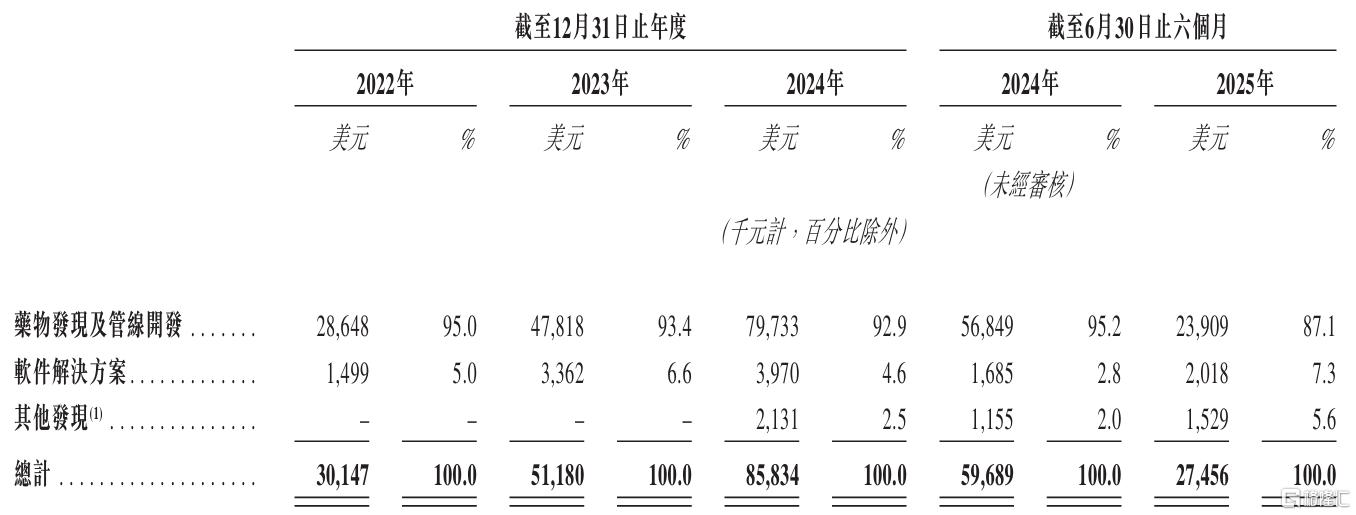
Investment Rating - The report recommends subscription for the IPO of the company, indicating a positive investment outlook [1]. Core Insights - The company, established in 2014, operates as a global AI-driven drug discovery and development firm, leveraging its proprietary Pharma.AI platform to generate over 20 clinical or IND-stage assets, with three assets licensed to international pharmaceutical companies, totaling a contract value of up to $2.1 billion [2]. - The company employs a project-based business model, primarily generating revenue through licensing and collaboration agreements, and aims to expand the application of Pharma.AI into various industries, including advanced materials, agriculture, nutrition products, and veterinary medicine [2]. - The AI drug discovery and development (AIDD) market is projected to grow from $11.9 billion in 2023 to $74.6 billion by 2032, with a compound annual growth rate (CAGR) of 22.6%, positioning the company as a leader in this rapidly growing sector [3]. Financial Performance - The company is currently in the R&D phase, with revenue increasing from $3.01 million in 2022 to $5.12 million in 2023, and further projected to rise to $8.58 million in 2024. For the first half of 2025, revenue was reported at $2.75 million [3]. - Net losses have decreased over the years, with losses of $22.18 million in 2022, $21.16 million in 2023, $1.71 million in 2024, and $1.92 million in the first half of 2025, indicating improving financial health [3]. - The expected market capitalization post-IPO is estimated at HKD 13.4 billion, reflecting the company's potential as a leading player in the domestic AI pharmaceutical sector [3].
深圳创新药械不断加速 重点布局四大新兴赛道
2 1 Shi Ji Jing Ji Bao Dao· 2025-12-18 10:05
Market Overview - The Chinese medical equipment market is projected to reach 1.35 trillion yuan in 2024, with an average growth rate exceeding 12% over the past decade, making it the second-largest market globally [2][6] - Shenzhen's pharmaceutical and medical device industry is expected to achieve a production value of 157.6 billion yuan in 2024, with medical devices alone surpassing 102.8 billion yuan, maintaining its position as the leading region in China for ten consecutive years [3] Industry Innovation - China is increasingly focusing on quality improvements in its medical equipment sector, with one-third of global medical equipment patents originating from the country, indicating a strengthening of domestic innovation capabilities [2][6] - Shenzhen has nurtured 35 listed companies in the pharmaceutical and medical device sectors, along with over 1,000 enterprises above designated size, showcasing a robust industrial ecosystem [3] Recent Developments - Notable recent collaborations include a 47 billion HKD (approximately 5.99 billion USD) partnership between Crystal Technology and DoveTree for AI drug development, marking a significant milestone in the commercialization of AI in pharmaceuticals [4] - Health元's innovative drug, Marpacisavir capsules, has received approval for market launch, representing a breakthrough in flu treatment with a unique mechanism requiring only one oral dose [5] Future Directions - Shenzhen aims to focus on four emerging sectors: cell and gene therapy, biomanufacturing, AI in pharmaceuticals, and health consumer products, to enhance its competitive edge in the medical equipment industry [6][7] - The establishment of an "AI + Biomanufacturing Public Service Platform" is set to accelerate the R&D cycle for biomanufacturing companies, significantly reducing development time from years to months [7]