能源转型

Search documents
无锡华光环保能源集团股份有限公司关于2025年半年度业绩说明会召开情况的公告
Shang Hai Zheng Quan Bao· 2025-09-15 21:17
Core Viewpoint - The company held a performance briefing on September 15, 2025, to discuss its half-year operating results and engage with investors, addressing concerns about declining revenue and profit while highlighting growth strategies and financial performance improvements [1][2]. Group 1: Performance Overview - For the first half of 2025, the company's net profit attributable to shareholders, excluding non-recurring gains and losses, was 27.1584 million yuan, representing a year-on-year increase of 27.41% [3]. - The gross profit margin for the main business was 19.01%, an increase of 4.62 percentage points compared to the same period last year [3]. - The company's revenue for the first half of 2025 saw a decline of 23.30% year-on-year, despite the increase in net profit [4]. Group 2: Future Growth Strategies - The company plans to accelerate its equipment business transformation, enhance overseas market development, and focus on clean and low-carbon product innovation [3]. - It aims to strengthen its supply chain through centralized procurement to reduce costs and improve efficiency [4]. - The company is committed to expanding its natural gas cogeneration layout through project acquisitions and self-built initiatives [4]. Group 3: Investor Engagement and Financial Policies - The company has a shareholder return plan for 2025-2027, committing to distribute at least 20% of the annual net profit attributable to shareholders as cash dividends, maintaining a consistent dividend policy [5]. - The company has completed a share buyback of 100 million yuan and emphasizes the importance of returning value to shareholders [5]. - The company encourages ongoing communication with investors through various channels to address their concerns and suggestions [6].

杰瑞股份20250915
2025-09-15 14:57
Summary of Jerry Holdings Conference Call Company Overview - **Company**: Jerry Holdings - **Industry**: Natural Gas Development and Equipment Manufacturing Key Points and Arguments Industry Trends and Company Performance - Global natural gas development trends have significantly driven Jerry Holdings' natural gas business revenue, achieving a growth rate of **113%** in the first half of the year, benefiting from energy transition and energy security demands, particularly in the Middle East and North Africa [2][4] - The company has enhanced its global market share in compressor units and secured multiple important EPC projects, including contracts with Bahrain National Oil Company, leading to a gross margin exceeding **30%** on EPC orders [2][7] Strategic Initiatives - Jerry Holdings employs a "Equipment + Engineering + Investment" model to deepen its international market presence, with approximately **60%** of its current EPC orders coming from the Middle East, while also expanding into North America and the Asia-Pacific region [2][8] - The company is actively building overseas production capacity, including a manufacturing park in the Middle East and expansion in Yantai, to meet future overseas orders [2][9] Technological Advancements - The company has implemented an industrial equipment export strategy through technological accumulation and capacity distribution, breaking international monopolies with its self-developed **7,000**-type electric drive pressure equipment [2][10] - Jerry Holdings has achieved significant breakthroughs in gas turbine and generator set businesses, entering the market through a leasing model with gross margins of **50% to 60%** [5][11] Market Position and Financial Outlook - The company is positioned as a leader in the global fracturing equipment market, with a comprehensive service system covering drilling and completion equipment, oil and gas engineering, and technical services [3][12] - In the first half of 2025, the company signed new orders worth approximately **10 billion** yuan, a year-on-year increase of nearly **40%**, with expectations for total orders to exceed **23 billion** yuan for the year [5][12] Future Projections - The core driver of Jerry Holdings has shifted from oil capital expenditure to gas capital expenditure, influenced by energy strategy adjustments and increased demand for data center construction [13][14] - The company's market valuation is projected to reach **55 billion** yuan or more next year, with current market value around **48 billion** yuan, indicating a potential increase in valuation multiples as orders continue to exceed expectations [15][16] Risk Management and Competitive Advantage - Jerry Holdings has a low exposure to production and demand risks, enhancing its competitive advantage in the global market [16] Additional Important Insights - The company’s strategic focus on the Middle East and North Africa is crucial for its growth, with significant contributions from projects like the Mansuriya gas field in Iraq [6][8] - The company’s ability to localize assembly and inventory in North America provides a competitive edge in cost control and delivery timelines [10]

尽管短期增长面临阻力,2026 年铜消费或将强劲增长-Metal Matters_ Stronger copper consumption looms from 2026 despite near-term growth headwinds
2025-09-15 13:17
Summary of Key Points from the Conference Call Industry Overview - The focus is on the copper industry, particularly the supply and demand dynamics leading into 2026 and beyond [1][6][8]. Core Insights and Arguments - **Copper Consumption Growth**: Anticipated to be softer year-over-year (y/y) through the second half of 2025 due to growth headwinds and tougher comparisons from China [2][3]. - **Price Projections**: Neutral on copper prices at $10,000 per ton for the remainder of 2025, with a more constructive outlook for 2026, projecting an average of $11,000 per ton in Q4 2026 under base case scenarios, and $13,000 per ton in bull case scenarios [1][6]. - **Emerging Deficits**: A shift from a balanced market in 2025 to physical copper deficits in 2026 and 2027 is expected, driven by structural demand from energy transition and AI-related growth [6][8]. - **Cyclical Demand Recovery**: A modest recovery in cyclical demand segments is anticipated, contributing to overall copper consumption growth [8]. Important Data Points - **Global End-Use Tracker**: Indicated a 2.7% y/y increase in copper consumption for July, with overall growth forecasted at +2.1% for 2025 and +2.9% for 2026 [3][17]. - **China's Copper Consumption**: Expected to grow by 2.4% in 2025, while ex-China consumption is projected to grow by 1.8% [3][32]. - **Manufacturing Sentiment**: Remains subdued, with mixed signals from global manufacturing indicators, particularly in China where the PMI was at 49.4, indicating contraction [12][16]. Additional Insights - **Sector-Specific Trends**: The automotive sector, particularly electric vehicles (EVs), is showing strong growth, with EV sales increasing by 25% and 22% y/y in July and August respectively [26][32]. - **Impact of Tariffs**: US tariffs and high domestic inventories are likely to suppress import demand for refined copper and semis [2][32]. - **Weather and Seasonal Factors**: Seasonal weather disruptions have influenced copper consumption, particularly in consumer appliances and HVAC systems [17][26]. Conclusion - The copper market is facing short-term challenges but is expected to transition into a more favorable environment by 2026, driven by structural demand from energy transition and AI, alongside a potential recovery in cyclical demand. Investors are advised to consider averaging into long copper positions over the next 3-6 months to capitalize on medium-term upside potential [1][6].
能源列国志:法国:摘要Abstract
Zhong Xin Qi Huo· 2025-09-15 12:32
Report Summary 1. Investment Rating No investment rating for the industry is provided in the report. 2. Core Viewpoints France is a developed industrial country with a strong industrial base in sectors such as steel, automotive, and construction, as well as leading industries in aerospace, nuclear energy, and ocean development. It is also a major agricultural producer and exporter in the EU. However, France has limited natural resources and relies heavily on imports for energy and industrial raw materials. The country's energy mix is dominated by nuclear power, and it has been actively involved in international trade and investment [1][2][10]. 3. Summary by Section 3.1 National Overview - **Geographical Location**: France, the largest country in the EU by area, is located in Western Europe, with a hexagonal mainland bordering multiple countries and facing four major seas. It has diverse climates, including temperate maritime, Mediterranean, and continental [7]. - **Economic Overview**: In 2024, France's GDP was €2.91 trillion, with a 1.1% year - on - year increase and an inflation rate of 1.3%. The industrial value - added was €3565 billion, and the agricultural value - added was €380 billion. It is highly dependent on imports for minerals and energy, with nuclear power accounting for about 65% of electricity in 2024. It has a high - welfare system and is an attractive destination for foreign investment [10][11][12]. - **Historical and Political Situation**: France has a long history, with the current Fifth Republic established in 1958. The president has significant powers, and the country has a bicameral parliament. There are multiple political parties with different policy stances [14][15][16]. 3.2 Oil and Other Liquids - As of January 1, 2023, France's proven oil reserves were 83 million barrels. It banned oil and gas production and exploration until 2040, leading to a continuous decline in production. In 2022, its oil consumption was 1.5 million barrels per day, showing a downward trend since 2003 - 2004. Worker strikes in refineries have caused shortages of petroleum products [20][22]. 3.3 Natural Gas - As of January 1, 2023, France's proven natural gas reserves were 590 Bcf. It has almost no dry natural gas production and depends entirely on imports. In 2022, consumption decreased due to high winter temperatures and the Russia - Ukraine conflict. GRTgaz and EDF play important roles in gas distribution and supply [24]. 3.4 Coal - France has no proven coal reserves and does not produce coal, relying entirely on imports. Due to the European energy crisis in 2022, two coal - fired power plants were temporarily restarted and their operation was extended to 2024 [28]. 3.5 Electricity - In 2021, France had a power generation of 530 TWh, an installed capacity of 142 GW, and was one of the largest power - surplus countries. Nuclear power accounted for 68% of electricity generation, with an installed capacity of 61 GW, second only to the US. The Flamanville EPR nuclear reactor started operation in 2024. EDF and its subsidiaries dominate the power market [30][33]. 3.6 Energy Trade - **Oil and Other Liquids**: In 2022, France imported over 822,000 barrels per day of oil and other liquids, reversing a downward trend since 2017. Its oil product exports have been declining since 2011. It mainly imports from European neighbors and Russia, and refinery strikes have increased its dependence on imports [34][36]. - **Natural Gas**: In 2021, France imported 1.6 Tcf and exported 188.9 Bcf of natural gas. In 2022, gas flow increased by 32% due to a 203% surge in LNG imports. It mainly imports from Norway and has started re - exporting to neighboring countries [38]. - **Electricity**: In 2021, France was the world's largest net power exporter, with exports mainly going to Switzerland, the UK, Italy, and Spain [41].


双杰电气乘政策东风,电力装备业务迎黄金发展期
Quan Jing Wang· 2025-09-15 11:02
Industry Overview - The global energy structure is rapidly transitioning towards green and low-carbon solutions, presenting unprecedented development opportunities for the power equipment industry in China [1] - The "Power Equipment Industry Steady Growth Work Plan (2025-2026)" outlines a clear path for high-quality development during this critical energy transition period [1] - The policy sets an average annual revenue growth target of around 6% for traditional power equipment and approximately 10% for leading enterprises in the new energy sector [1] Company Performance - The company, Shuangjie Electric, has established a solid competitive advantage in smart electrical equipment and new energy sectors, including wind power, photovoltaics, energy storage, and charging stations [1] - In the first half of 2025, Shuangjie Electric won a bid worth over 270 million yuan in the Southern Power Grid's first batch of framework bidding projects, ranking among the top in the industry [2] - The company has been a leader in the power equipment industry for over 20 years, participating in the formulation of national and industry standards and undertaking various national key projects [2] Product Innovation - Shuangjie Electric continuously enhances its product system and innovation capabilities, achieving breakthroughs in environmental protection, miniaturization, intelligence, and maintenance-free technologies [3] - The company is accelerating its layout in the power IoT sector, increasing R&D investment in new sensing terminals across power generation, grid, and user sides [3] New Energy Sector - In the new energy sector, Shuangjie Electric secured a photovoltaic project with a bid amount of 1.64 billion yuan in the first half of 2025 [4] - The company is actively implementing a "dual carbon" strategy, optimizing energy structure and improving energy efficiency through integrated projects [4] - Shuangjie Electric is expanding its overseas market presence, with a 44% year-on-year growth in international markets in 2024, and plans to invest in a photovoltaic project in Kyrgyzstan to enhance its international business [4] Future Outlook - With the gradual implementation of the "Power Equipment Industry Steady Growth Work Plan," Shuangjie Electric is expected to benefit from industry growth dividends and achieve steady performance improvement [5]

1.3亿千瓦负荷下的“无感”度夏,山东交出迎峰度夏优异答卷
Qi Lu Wan Bao· 2025-09-15 09:31
Core Insights - Shandong's power grid has faced extreme challenges this summer, with electricity load reaching a record high of 130.21 million kilowatts, reflecting the broader national trend of increasing electricity demand due to high temperatures [1][2] Group 1: Power Supply and Demand Management - The "three pillars" of power supply in Shandong—new energy, external electricity, and conventional power—have effectively collaborated to manage the peak load of 130 million kilowatts [2][5] - Shandong's new energy output and grid load have both reached new highs, with external electricity imports exceeding 30 million kilowatts for the first time, marking a 24% year-on-year increase [2][4] - The implementation of a "double zero" management strategy for thermal power units has expanded to 600,000 kilowatts, ensuring reliable power supply during peak times [5] Group 2: Infrastructure and Technological Advancements - The construction of a world-class UHV (Ultra High Voltage) grid has been accelerated, with the completion of the first "wind-solar-fire-storage integrated" UHV project in the country [6][7] - The accuracy of load forecasting reached 99.4%, and new energy forecasting accuracy was 98.4%, both showing a year-on-year improvement of 1.5 percentage points [6] - The use of advanced technologies, such as drones for inspections and intelligent predictive models, has enhanced the reliability and responsiveness of the power grid [6] Group 3: Innovative Energy Solutions - New energy storage systems and virtual power plants have played a crucial role in balancing supply and demand, with Shandong establishing 33 virtual power plants with a total capacity of 4.682 million kilowatts [10][11] - During peak demand, 144 new energy storage stations discharged a maximum power of 8.0359 million kilowatts, setting a new record for provincial grid energy storage discharge [11] - The integration of electric vehicles as "mobile power banks" through charging stations has further contributed to the flexibility of the energy supply [11] Group 4: Future Developments - The establishment of the Shandong New Power System Research Center marks a new phase in the development of innovative power systems, aiming to create more national-leading examples of new power system construction [12]

2025全球能源互联网“十大引领工程”发布 南方电网公司两项目入选
Zhong Guo Fa Zhan Wang· 2025-09-15 07:02
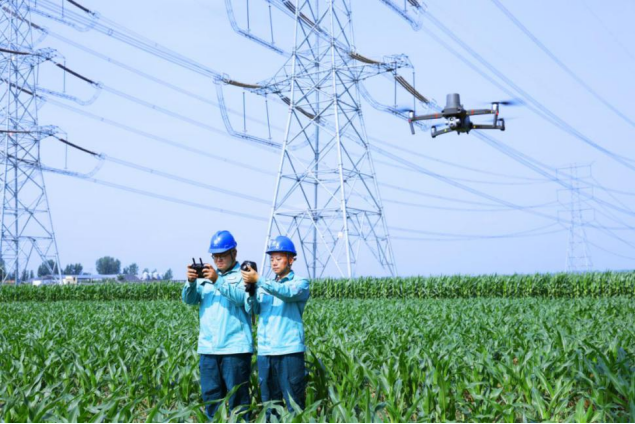
Core Viewpoint - The Global Energy Internet Development Cooperation Organization has released the "Top Ten Leading Projects" for the 2025 Global Energy Internet, highlighting significant contributions from the Southern Power Grid Company in energy transition initiatives [1][2] Group 1: Southern Power Grid Company Projects - The "Southern Regional Virtual Power Plant Source-Load Interaction System Construction and Demonstration Project" and the "Zero Carbon Demonstration Park at Dongyu Island, Boao" have been selected as leading projects, showcasing the company's achievements in energy transformation [1][2] - The virtual power plant project integrates over 4 million kilowatts of aggregated resources and has a real-time adjustable load capacity exceeding 1 million kilowatts, establishing a comprehensive source-load interaction system with the highest data collection density in the country [1] - The project aims to provide a model for energy internet development both nationally and globally, leveraging the advantages of the Southern region's electricity market [1] Group 2: Zero Carbon Demonstration Park - The Boao Dongyu Island Zero Carbon Demonstration Park has achieved a power supply reliability rate of 99.999% and a 100% renewable energy substitution rate, with zero carbon emissions projected by 2024 [2] - The park's energy system has been systematically integrated based on innovative concepts, ensuring zero power outages and complete consumption of electrical energy in terminal energy use [2] - The project was selected from 286 projects across 57 countries and regions, following rigorous evaluations by domestic and international experts [2]
第十九届榆林国际煤博会、第三届西部氢能博览会隆重开幕
Huan Qiu Wang· 2025-09-15 02:25
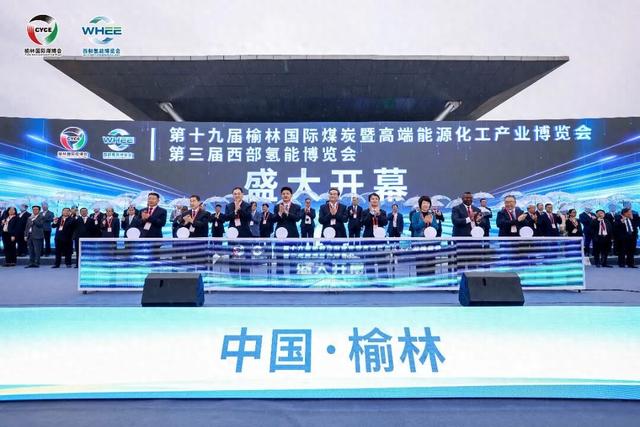
Core Insights - The 19th Yulin International Coal and High-end Energy Chemical Industry Expo and the 3rd Western Hydrogen Energy Expo opened on September 13, 2025, focusing on "high-end energy chemistry, low-carbon development, and hydrogen-powered future" [1][3] - The event aims to gather global energy elites, showcase cutting-edge technologies, and promote the green transformation and high-quality development of the energy industry [1][3] Event Overview - The opening ceremony featured key officials and representatives from various sectors, including government, media, and international guests, highlighting the importance of collaboration in the energy sector [3] - The expo includes six major exhibition areas covering high-end energy chemical enterprises, regional collaborative development, smart digital technologies, hydrogen energy, green low-carbon initiatives, and advanced energy equipment [4][10] Industry Participation - Major global energy companies and organizations, including State Energy Group, CNOOC, and China Coal Group, participated, showcasing their latest innovations and technologies [7][8] - The event attracted over 900 domestic and international enterprises, presenting a comprehensive view of the energy chemical industry's transition from traditional to innovative solutions [4][10] Technological Innovations - Exhibitors showcased advancements in intelligent mining, clean and efficient conversion, hydrogen production and storage, carbon capture, and digital operations, reflecting the industry's commitment to green and intelligent transformation [10][11] - The hydrogen energy sector was emphasized with a dedicated exhibition area, presenting the complete hydrogen value chain from production to application [11] Networking and Collaboration - The expo facilitated various high-level forums and specialized activities, promoting dialogue on energy transformation, hydrogen development, and international cooperation [12][13] - Activities included innovation cooperation exchanges, project roadshows, and discussions on smart mining technologies, fostering collaboration among industry stakeholders [13][14] Strategic Importance - The Yulin International Coal Expo serves as a critical platform for nurturing new production capabilities and driving high-quality development in the energy sector [14] - The event is recognized as a significant industry exhibition in the northwest region, promoting the integration of technology, capital, and talent to advance the energy industry's green transformation [14][15]
陈茂波:香港在绿色和可持续金融上是亚洲的领军者 会推动更多的产品创新
智通财经网· 2025-09-14 23:40
Core Viewpoint - The second Hong Kong Green Week successfully held over 40 diverse activities, attracting more than 14,500 participants from 65 local and international public and private organizations, emphasizing Hong Kong's commitment to sustainable development amidst a fragmented international environment [1][3]. Group 1: Event Highlights - The theme of this year's Green Week was "Building a Sustainable Future," focusing on cross-sector and cross-regional discussions on urgent global issues [1][3]. - Key activities included the AVPN Global Conference 2025, which gathered over 1,500 leaders in philanthropy, impact investing, and sustainable finance, showcasing Hong Kong's position as a leading hub for green and sustainable finance in Asia [4]. Group 2: Investment and Financial Opportunities - Asia, particularly China, is taking a leading role in sustainable development, with the Asia-Pacific region's investment in energy transition surpassing $1 trillion last year, accounting for about half of global related investments [4]. - The funding gap for achieving climate goals in emerging markets and developing countries is significant, with an estimated need of nearly $2.4 trillion annually by 2030, while current investment levels are only a quarter of this amount [5][6]. Group 3: Role of Hong Kong in Sustainable Finance - Hong Kong can contribute to building a robust impact investing ecosystem, connecting private market funds with socially meaningful projects, and promoting collaboration among various stakeholders [6][7]. - The establishment of internationally recognized standards and rules for green and sustainable finance is crucial for enhancing investor confidence and reducing communication costs across sectors and regions [7][8]. - Innovation in financial products is essential, with examples like catastrophe bonds and infrastructure securitization being highlighted, as well as ongoing exploration of tokenization to improve carbon credit issuance and trading [8].
石油巨头,2000亿投资新能源材料
DT新材料· 2025-09-14 16:05
Core Viewpoint - ExxonMobil is strategically transitioning from a traditional oil giant to a player in the renewable energy sector by acquiring the Superior Graphite battery materials plant in Hopkinsville, Kentucky, aiming for commercial production of synthetic graphite by 2029. This move reflects the broader trend of energy giants expanding into the battery materials supply chain to adapt to the changing energy structure [4][5]. Group 1: Market Demand and Supply Chain - The demand for high-performance battery materials is experiencing explosive growth due to the continuous increase in global electric vehicle (EV) sales and the rapid expansion of the energy storage market. Synthetic graphite, as a core material for lithium-ion battery anodes, significantly impacts battery performance, including charge/discharge speed, cycle life, and energy density. It is expected that synthetic graphite will account for over 30% of total graphite demand in the next five years [4][5]. - The U.S. government has implemented policies to promote the development of the domestic renewable energy supply chain, particularly in critical mineral resources, reducing reliance on foreign supplies. ExxonMobil's acquisition allows for the establishment of a stable domestic supply of synthetic graphite, enhancing its influence in the renewable energy supply chain [5]. Group 2: Technological and Strategic Developments - Synthetic graphite offers advantages such as high electrical conductivity, good cycling stability, and longer lifespan compared to natural graphite. ExxonMobil plans to utilize by-products from its refineries and proprietary materials for synthetic graphite production, which can enable faster charging, longer range, and higher cycle life, making it suitable for high-end electric vehicles and large-scale energy storage systems [5][6]. - ExxonMobil is also advancing in the lithium resource sector with its direct lithium extraction (DLE) technology in Arkansas, aiming to improve lithium resource acquisition efficiency and environmental friendliness. The company has signed a non-binding lithium supply agreement with LG Chem to supply up to 100,000 tons of lithium from its Arkansas project [5][6]. Group 3: Investment and Industry Trends - By integrating its graphite and lithium businesses, ExxonMobil aims to cover the upstream core segments of the battery materials supply chain, creating a closed-loop system from raw material extraction to high-performance anode material supply, preparing for the rapid expansion of the EV and energy storage markets. The company plans to invest $30 billion (approximately 213.6 billion RMB) in battery materials and low-carbon technologies from 2025 to 2030 [6]. - The global graphite production sector is facing dual pressures of technological upgrades and capacity expansion. ExxonMobil must navigate challenges such as technological barriers, production costs, raw material stability, and uncertainties in the global supply chain [6].